Bird's Nest Coral
Seriatopora hystrix

Andreas Pridzun at German Wikipedia · CC BY-SA 3.0 · source
Gallery
Birdnest coral: When the branches fill in
Look through the side of a birdnest colony. Fine branches cross, fork and disappear behind one another. Pointed tips catch the light. Deeper inside, the nest becomes a maze of small openings and shadow.
That tangled shape is the reason to keep Seriatopora hystrix. It also gives you a useful place to focus your attention. As the branches fill in, water needs to reach the middle, neighboring corals need breathing room, and the base deserves a regular look.
In the wild, this coral can form extensive stands. Its branches sometimes fuse where they meet, adding another twist to the tangle. Pink is a familiar color, with cream, blue and green also recorded. A little frag carries plenty of possibility.
Source: Corals of the World. https://www.coralsoftheworld.org/species_factsheets/species_factsheet_summary/seriatopora-hystrix/
Care at a glance: Advanced care. High light. High flow. Top placement. Peaceful. Fast growth.
Start with a good branch
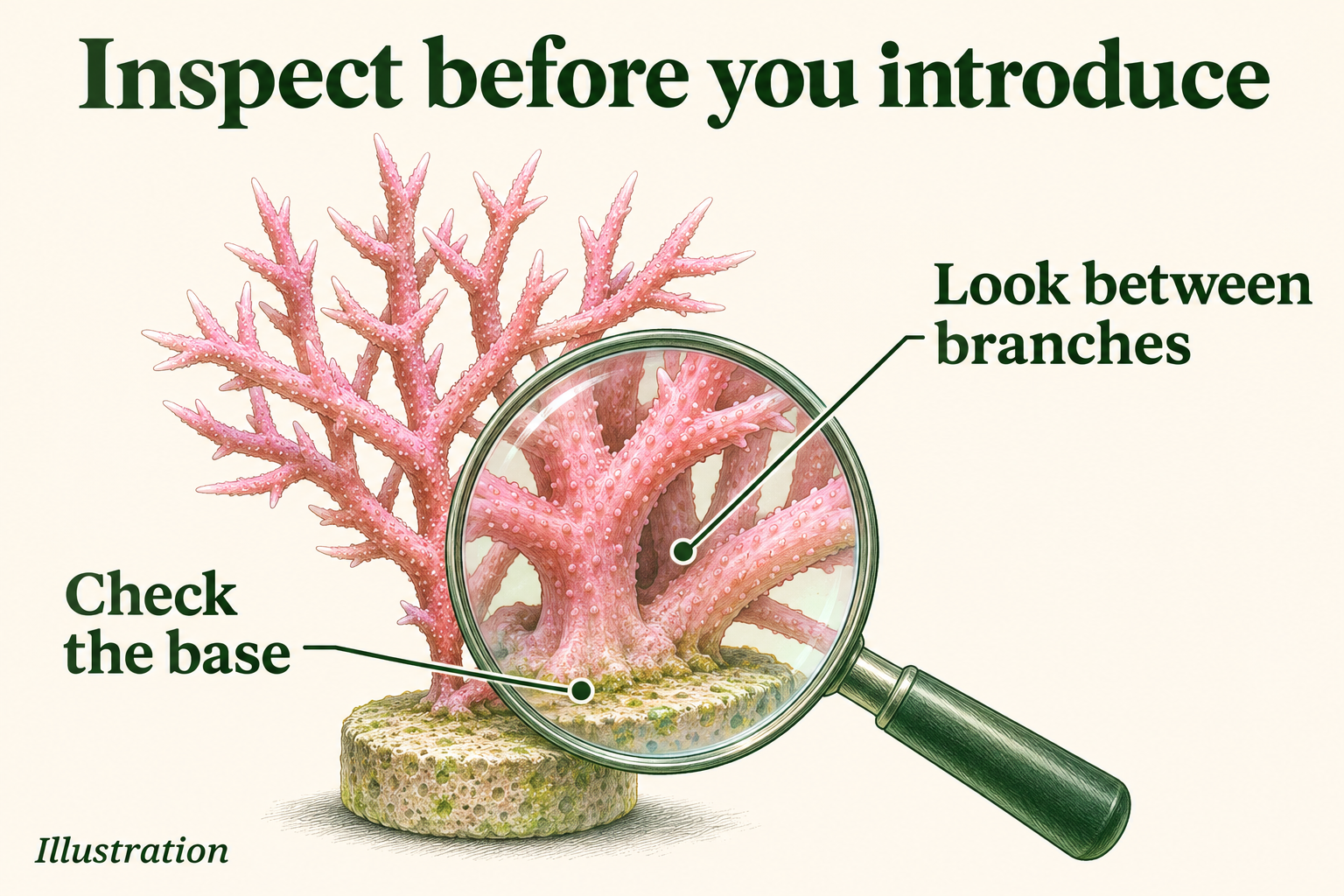
A healthy, well-established frag gives you a useful head start. Look closely at the base and between the branches for intact tissue, damage, pests and patches of exposed skeleton. Ask the grower about its lighting, water conditions and recent growth.
Birdnest is a common name shared by several Seriatopora species. This entry covers S. hystrix, with its fine, sharply pointed branches. Corals of the World treats it as a species complex, so a shop label or a pink photograph offers limited certainty about an individual coral’s identity.
When it comes home, handle the plug or base gently. Follow the supplier’s acclimation guidance and keep transport water out of the display. A suitable coral quarantine system gives you time to inspect a new arrival. If you use a coral dip, follow the product’s instructions for concentration and exposure time. Keep copper-based fish treatments away from the coral system.
Source: OATA’s SPS care guidance. https://ornamentalfish.org/what-we-do/advice-information/care-sheets/corals/how-to-look-after-small-polyp-stony-corals/
Take your time getting upstairs
The care card points you toward high light and the upper rockwork. First, find out what the frag is used to.
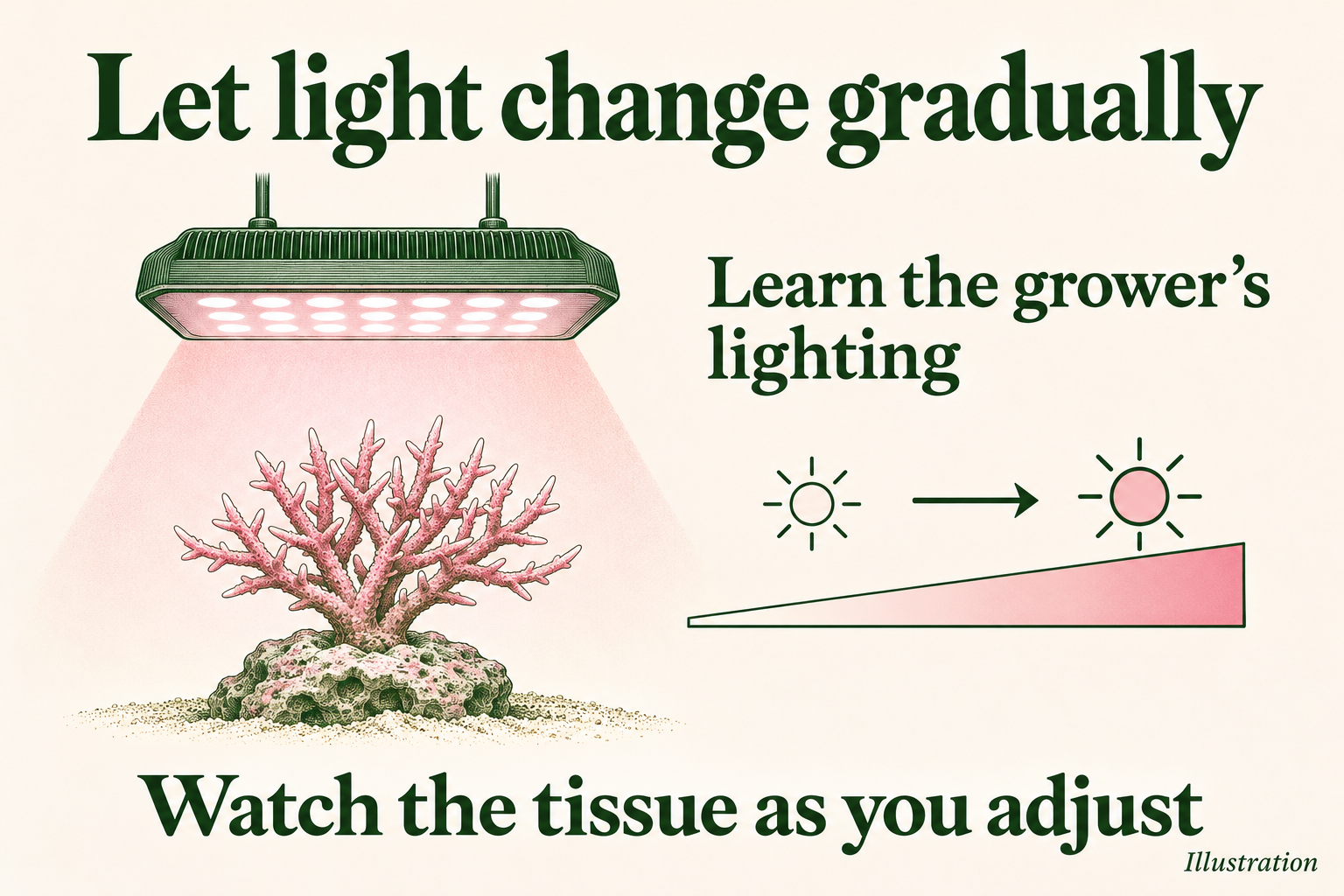
ORA recommends medium to high lighting and middle to top placement for its Pink Birdsnest, which it identifies as S. hystrix. That is a useful grower reference, with room for different lamps and aquariums. A PAR meter helps you measure the light reaching the coral’s actual position.
Source: ORA’s Pink Birdsnest profile. https://www.orafarm.com/product/pink-birdsnest/
Give a new arrival time to adjust. Increase exposure gradually and watch the tissue as you go. Once it is settled and growing, resist the urge to move it around every few days in search of a better pink.
Light intensity and spectrum can change how a birdnest looks. Tidal Gardens also reports different lighting preferences among the varieties it grows. Keep photographs under similar lighting so you can judge changes with a useful reference.
Source: Tidal Gardens’ care notes. https://tidalgardens.com/stock-pink-birds-nest-seriatopora.html
Get the current into the middle
A small frag leaves plenty of open water around every branch. A full colony changes the flow around itself.
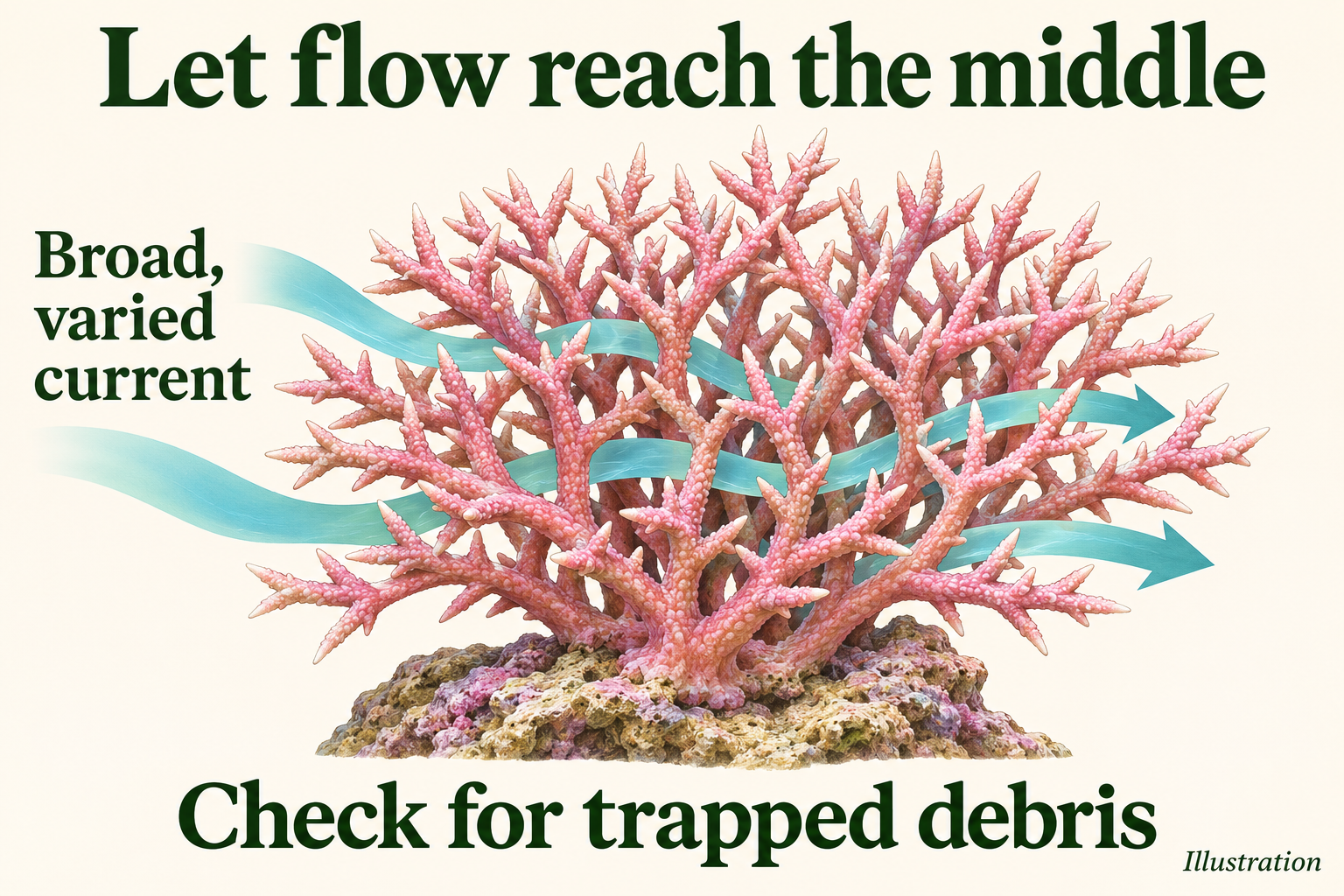
Give it broad, varied circulation that passes through the gaps. Aim pumps so their streams spread and mix before reaching the coral. The base should be secure and the hard branches should stay still.
Make a habit of looking inside the nest during maintenance. Drifting particles can help you see where water is moving. Debris collecting in the same pocket deserves attention. A gentle puff from a baster can lift loose material, followed by a check of the surrounding circulation.
As the colony thickens, review pump direction and clean equipment that has lost output. Tidal Gardens specifically warns that a growing birdnest needs increasing attention to flow through its center. This is one of those jobs that becomes more important when the coral is doing well.
Growth shows up in the test kit
Every new branch needs building material. The coral takes calcium and carbonate from the water to make its skeleton. As a reef fills with growing stony corals, its daily demand can increase.
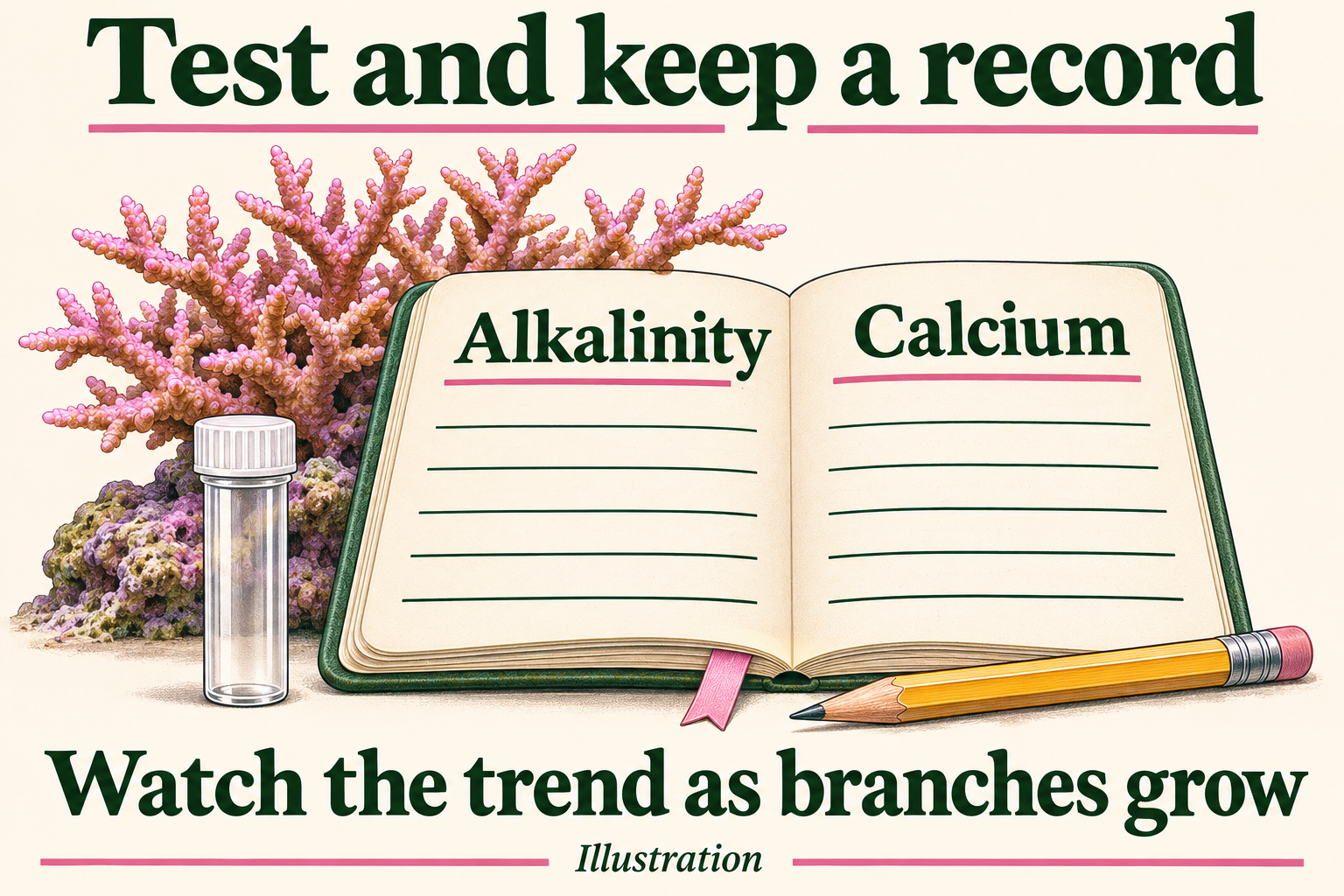
Keep records of alkalinity and calcium, and check magnesium as part of the routine. Match supplementation to measured consumption. Review the trend after a growth spurt, a dosing change or a substantial pruning session.
For general reef care, salinity near 35 ppt, calcium around 400 to 450 ppm and magnesium around 1,250 to 1,400 ppm are useful starting references. Published alkalinity guidance spans roughly 7 to 11 dKH, with low-nutrient SPS systems often managed toward the lower end. Choose an appropriate target for your system and keep it consistent. Those numbers describe general reef husbandry; they are not an established species-specific optimum.
Source: Reef chemistry reference. https://www.reef2reef.com/ams/optimal-parameters-for-a-coral-reef-aquarium-by-randy-holmes-farley.79/
Keep temperature steady around an appropriate tropical reef setting, commonly 24 to 26°C. Check your heater, thermometer and top-off routine too. Replace evaporated water with suitable fresh water, and make measured, gradual corrections when a test shows something needs attention.
Keep the menu small
Much of a birdnest’s energy comes from microscopic algae living in its tissue. Under suitable lighting, those algae make sugars and other compounds the coral can use. The polyps can also capture small food particles passing through the water.
Source: NOAA’s coral biology guide. https://oceanservice.noaa.gov/facts/coral.html
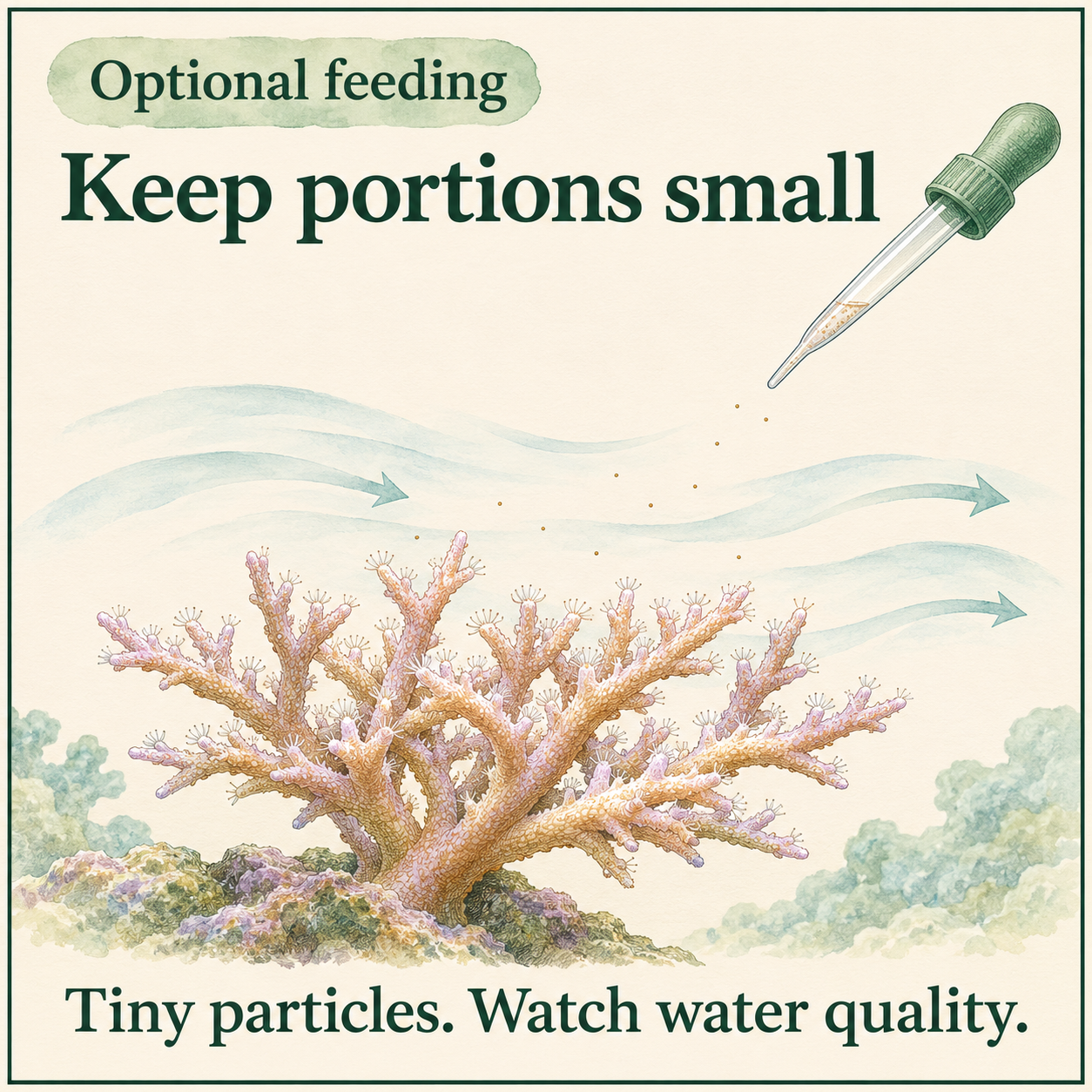
If you offer supplemental food, choose fine particles suited to tiny mouths and begin with a small amount. Let circulation distribute them. Watch what happens to water quality as feeding changes.
In his published birdnest care notes, Mike Rice describes supplemental feeding as usually unnecessary in a well-lit reef and emphasizes very small plankton foods when feeding is offered. Fit feeding to the aquarium’s existing routine.
Source: Birdsnest spotlight. https://www.reef2reef.com/threads/coral-spotlight-birdsnest.510258/
Track nitrate and phosphate alongside feeding and filtration. Both are nutrients, and driving them too low can cause problems. A growing colony needs a dependable supply of light, food and building materials.
Leave the next ledge empty
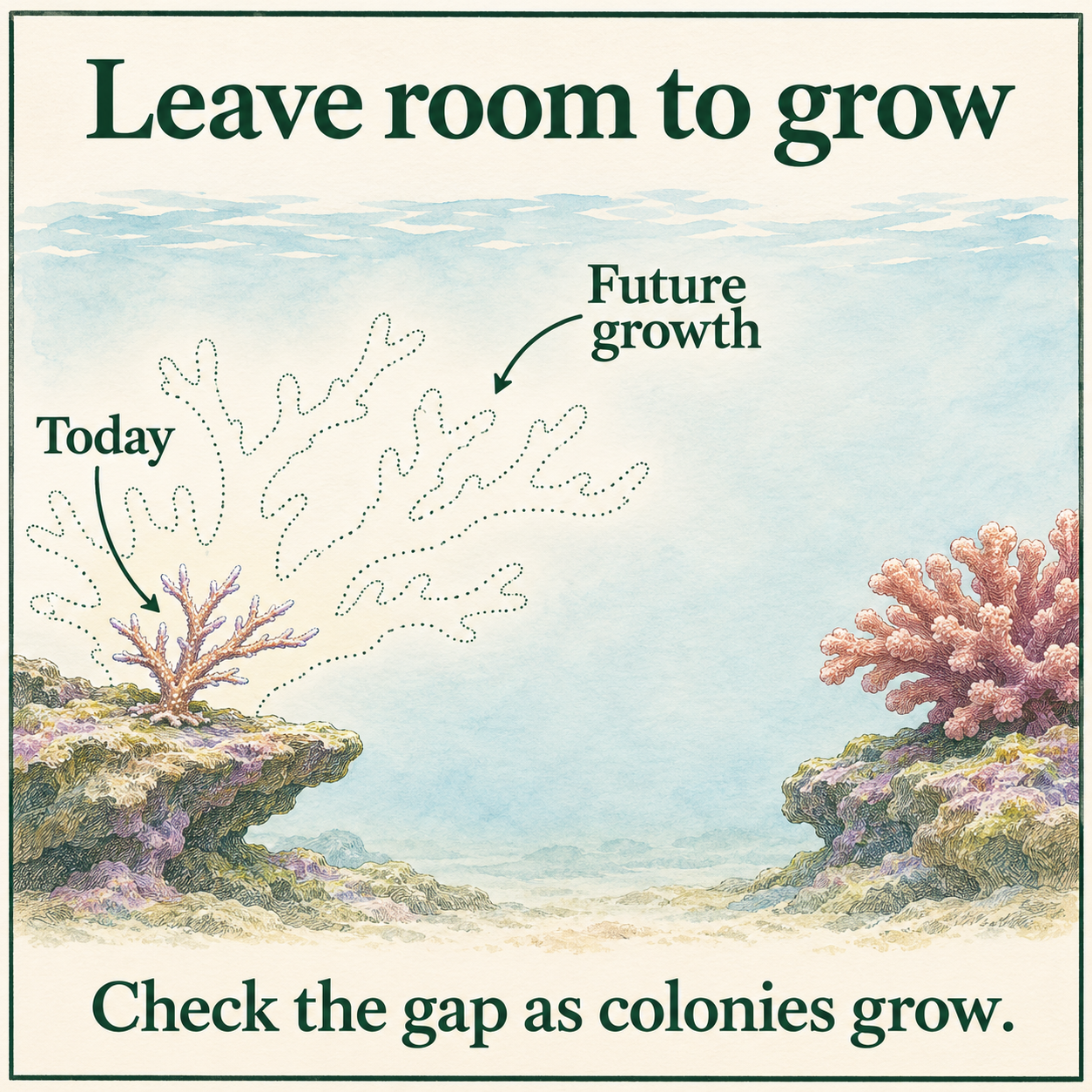
Give a birdnest room for the colony you hope to grow.
Choose a firm perch with open water around it and enough access for cleaning. Leave a clear gap from neighboring corals, accounting for their growth and the reach of any stinging tentacles. Check those gaps again as the tank fills out. Birdnest has its own small stinging tentacles, and close contact can damage coral tissue.
Think about the light beneath the colony too. A thickening canopy can shade whatever sits below it.
Eventually, a healthy colony may need trimming. Use suitable coral cutters, gloves and eye protection, and support the base while you work. Healthy cut branches can be mounted as new frags. Seriatopora is widely propagated in captivity, and its brittle branches make careful handling part of the job. Allow new pieces to recover and establish before moving or sharing them.
A spare frag kept in another suitable, established system can preserve a line if something goes wrong. Plan that arrangement while the colony is healthy.
Look below the pretty tips
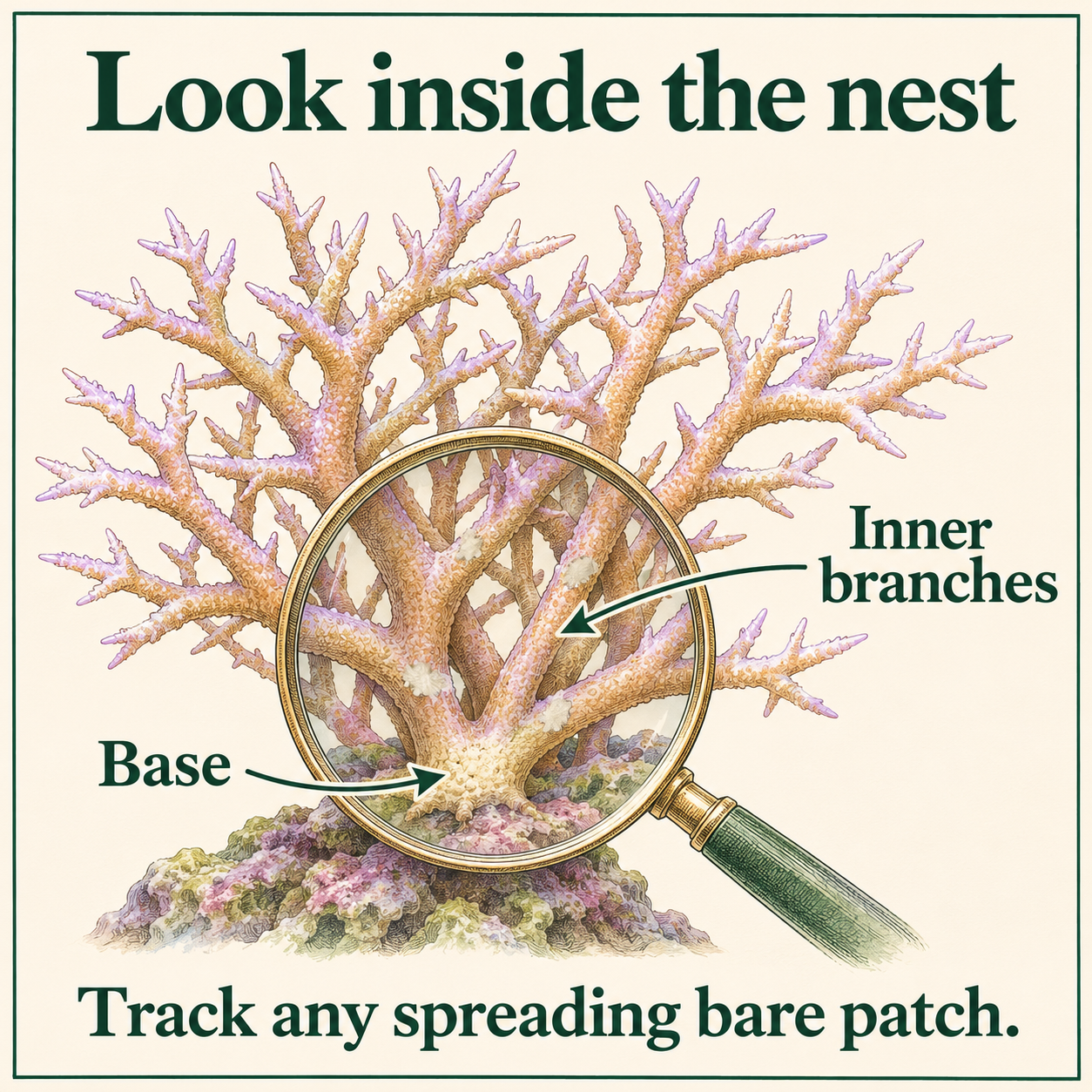
Take a quick look at the base and inner branches whenever you check the tank. Learn the colony’s usual appearance through the day. S. hystrix can keep its polyps tucked away during daylight, so judge changes against its own normal pattern.
If an area turns pale, look closely at the tissue. Bleaching can leave living, translucent tissue over the white skeleton. Exposed skeleton shows that tissue has been lost. The appearance of a white patch alone gives you too little information to choose a treatment.
Source: NOAA’s bleaching and tissue guidance. https://cdhc.noaa.gov/coral-disease/characterized-diseases/discolored-tissue-and-bleaching-2/
Peeling tissue or a spreading bare patch needs prompt attention. Check temperature, salinity, alkalinity and equipment. Review recent changes to dosing, lighting, feeding and flow. Look for debris, damage or contact with another coral. Photograph the affected area so you can track its progress.
Seek experienced help quickly if tissue keeps disappearing, including advice about isolation and whether healthy branches can be saved. Keep interventions focused on the evidence you have.
Field notes: Two tanks, two light stories
On December 3, 2017, Reef2Reef keeper Charterreefer reported that a birdnest had struggled higher in the tank and was doing better under lower light, at a reported 200 PAR. Raising nitrate and phosphate to detectable levels also accompanied improvement. Those overlapping changes leave the cause uncertain.
Source: Charterreefer’s post. https://www.reef2reef.com/threads/birdsnest-and-lighting-distance.341625/post-4253149
In the same discussion on December 26, keeper jda described growing birdnest outdoors in Missouri summer sunlight. They reported a colony expanding from roughly golf-ball size to basketball size over one season, eventually requiring a lower position as its tips reached the surface.
Source: jda’s post. https://www.reef2reef.com/threads/birdsnest-and-lighting-distance.341625/post-4311940
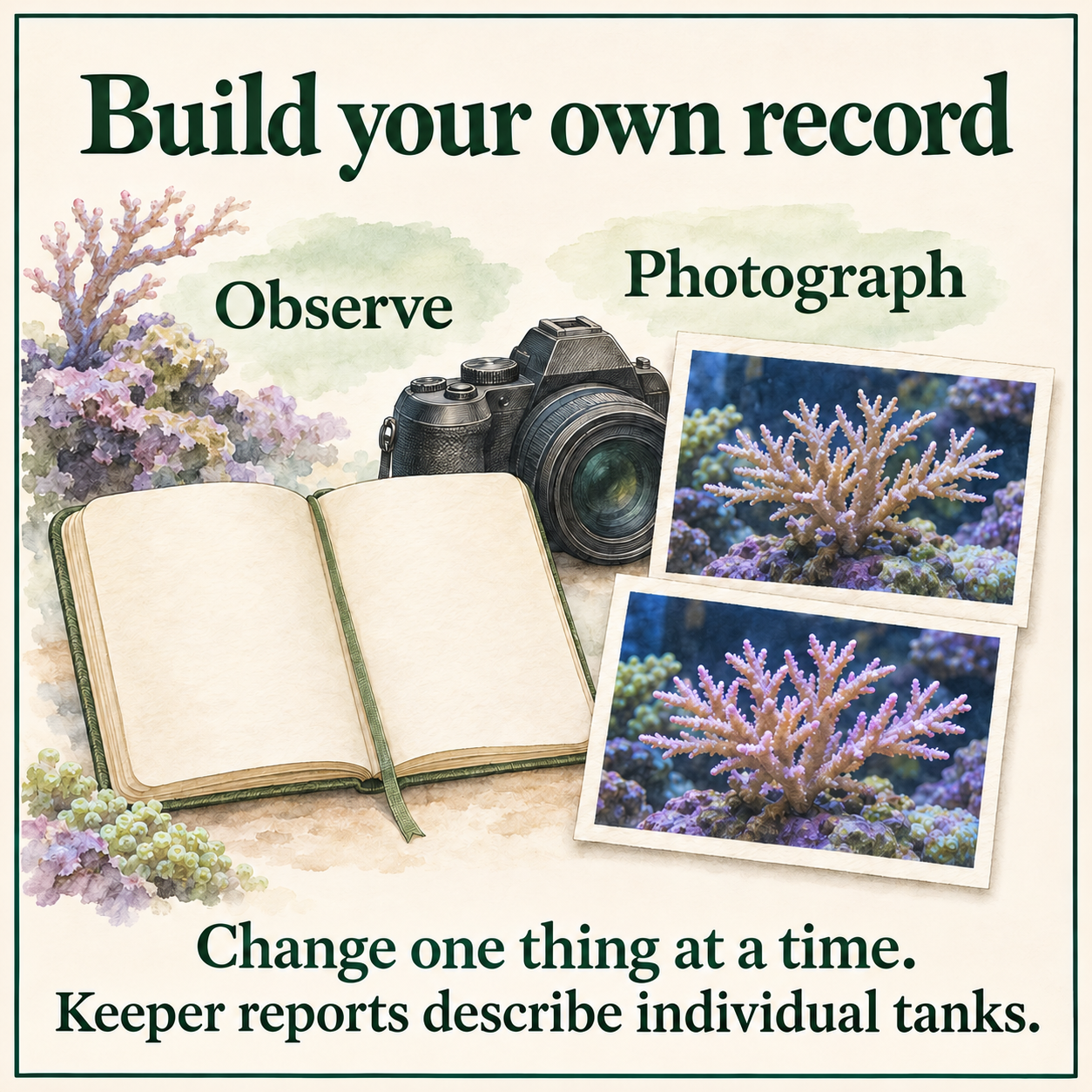
These are individual keeper reports. The corals’ species identities and growing conditions were not independently verified. Use them as reasons to learn a frag’s history, acclimate carefully and record its response. Your own photographs and test results will make the next adjustment easier to judge.
Then keep looking. The outer branches are easy to admire. A thriving birdnest also rewards the keeper who remembers to check the middle.
Field Notes
Related species
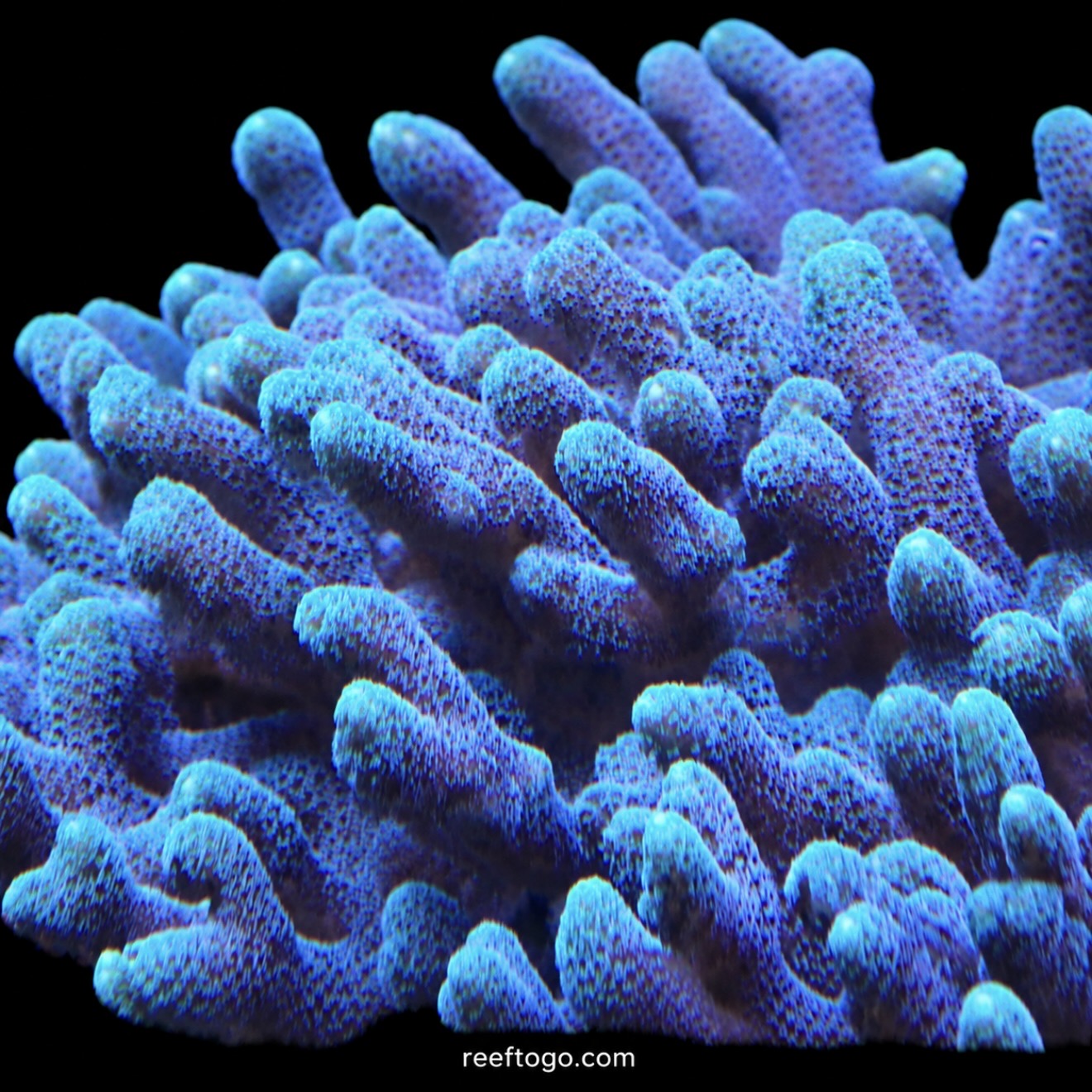
Blue zing birdnest
Seriatopora sp.
Same genus

Caliendrum Seriatopora
Seriatopora caliendrum
Same genus
Green Birdsnest Coral
Seriatopora caliendrum
Same genus
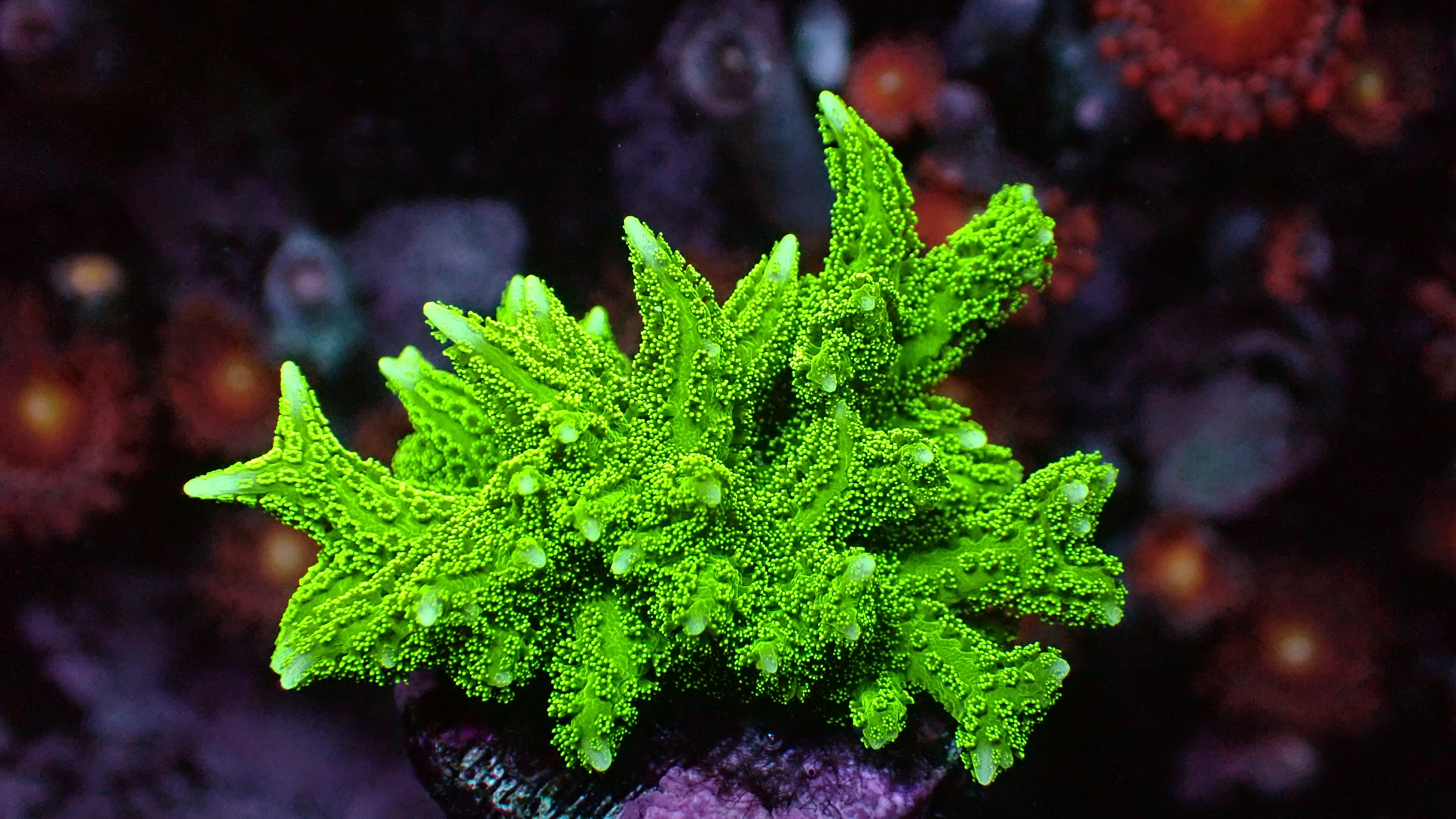
Jade birdnest
Seriatopora sp.
Same genus
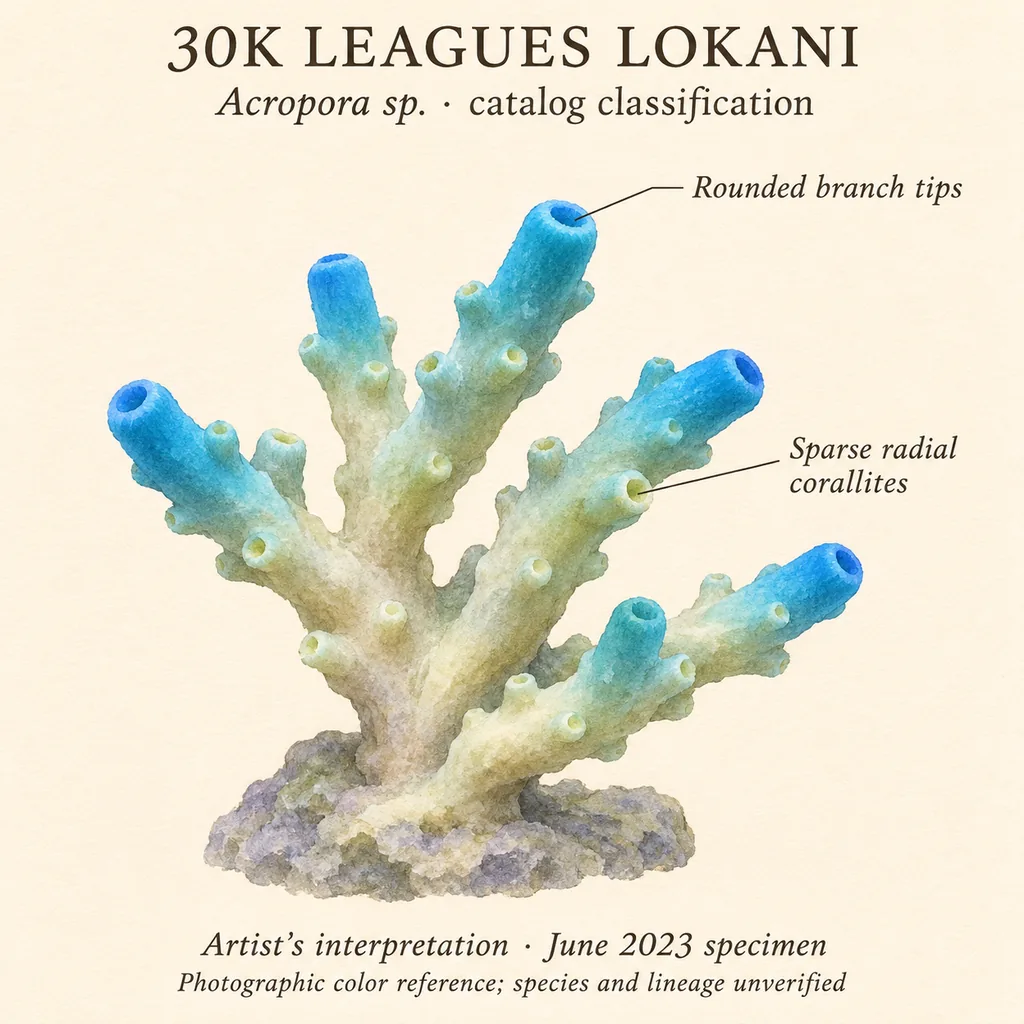
30K Leagues Lokani
Acropora sp.
Similar care · SPS
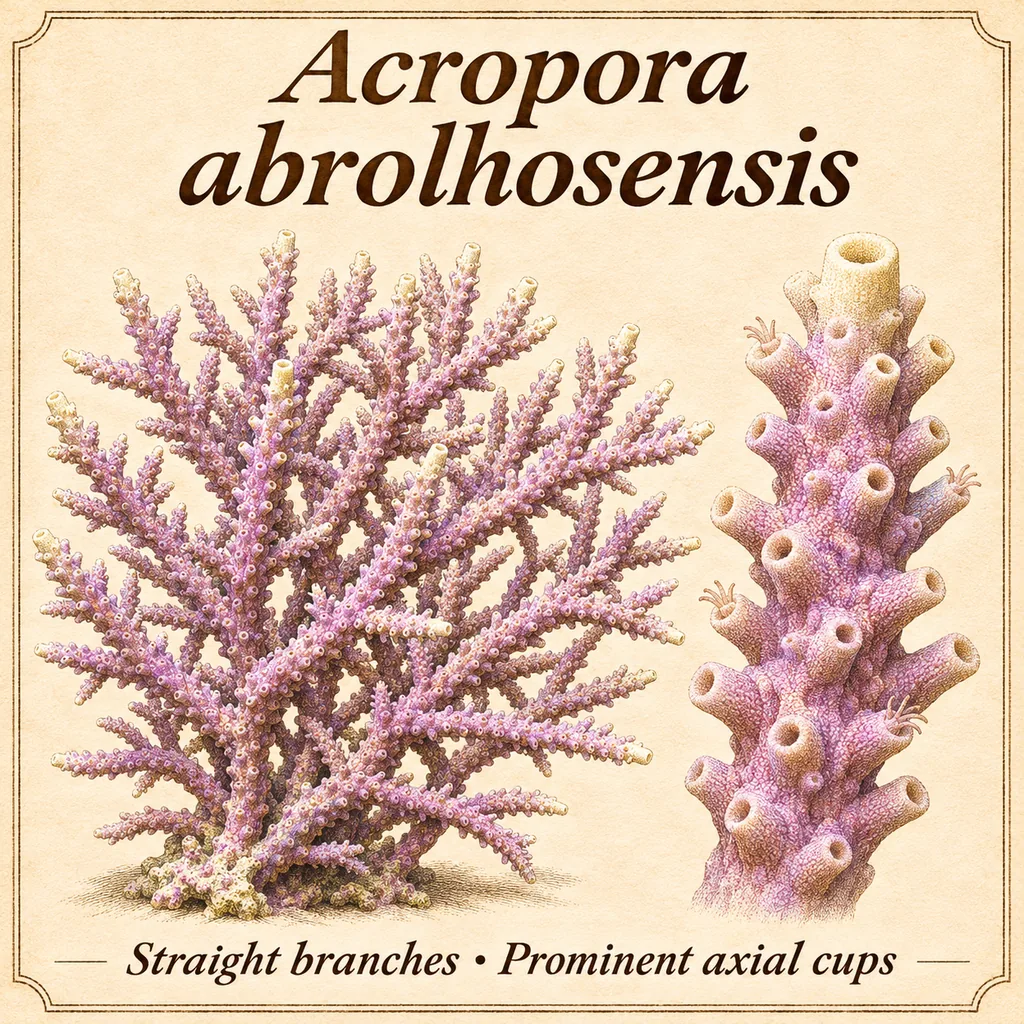
Acropora abrolhosensis
Acropora abrolhosensis
Similar care · SPS
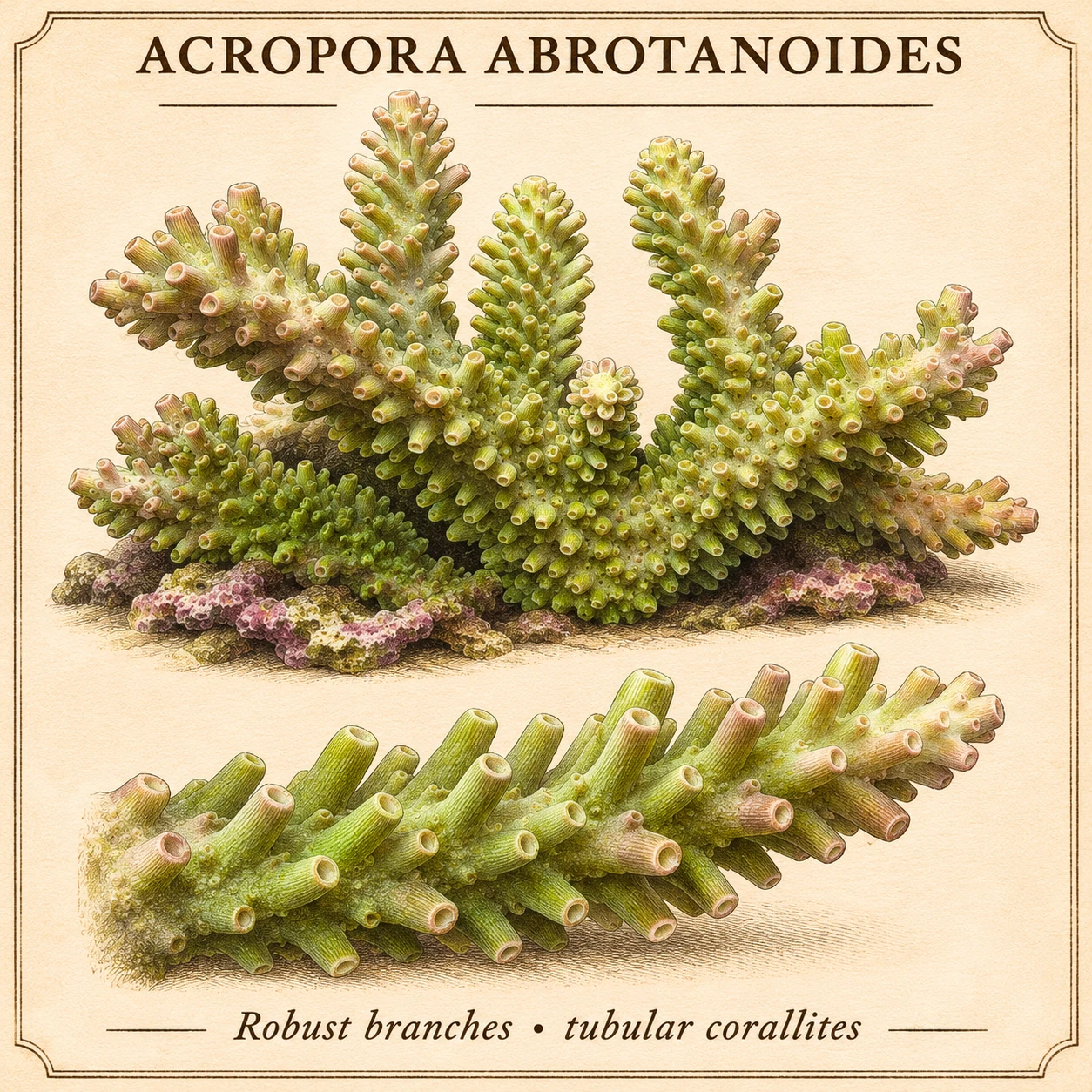
Acropora abrotanoides
Acropora abrotanoides
Similar care · SPS
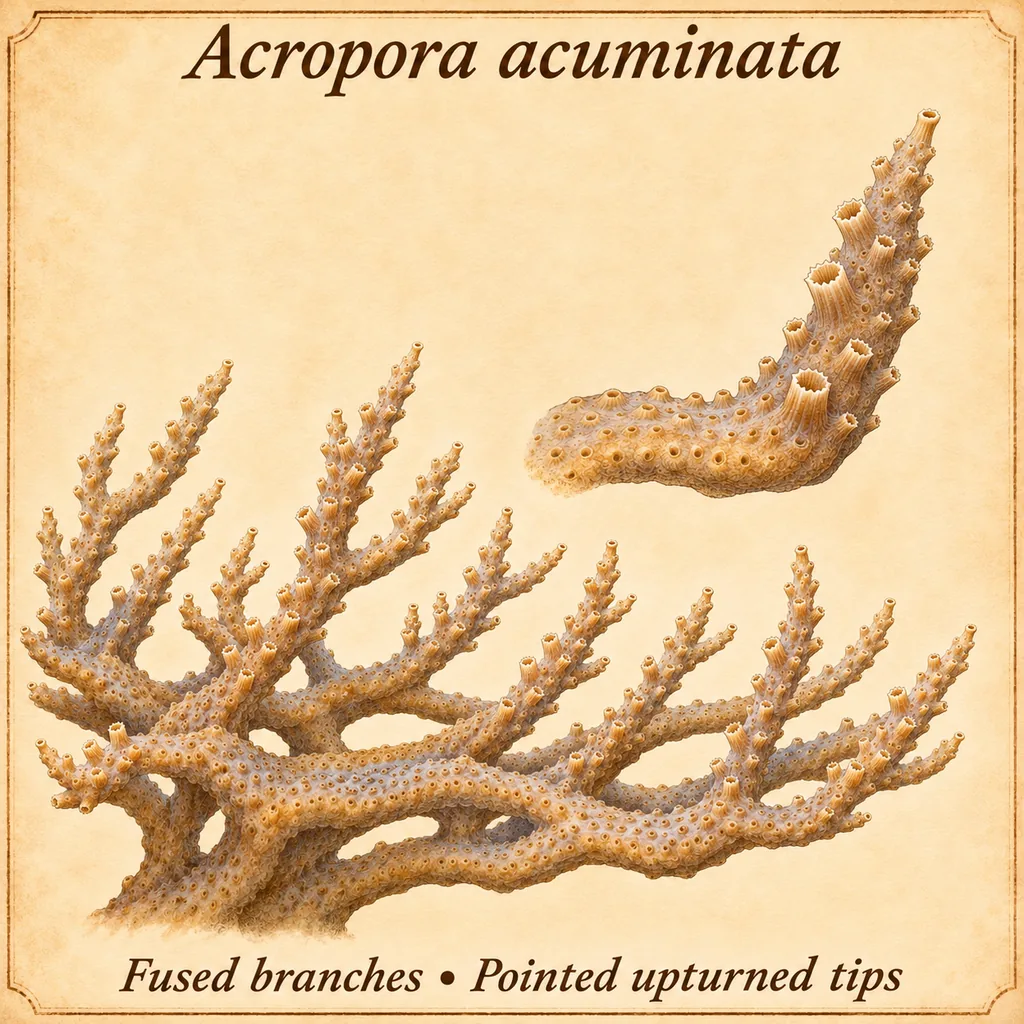
Acropora acuminata
Acropora acuminata
Similar care · SPS