Flowerpot Coral
Goniopora djiboutiensis

Nhobgood Nick Hobgood · CC BY-SA 3.0 · source
Photo: [Nhobgood Nick Hobgood](https://commons.wikimedia.org/wiki/File:Goniopora_djiboutiensis.jpg), [CC BY-SA 3.0](https://creativecommons.org/licenses/by-sa/3.0/), via Wikimedia Commons.*
Gallery
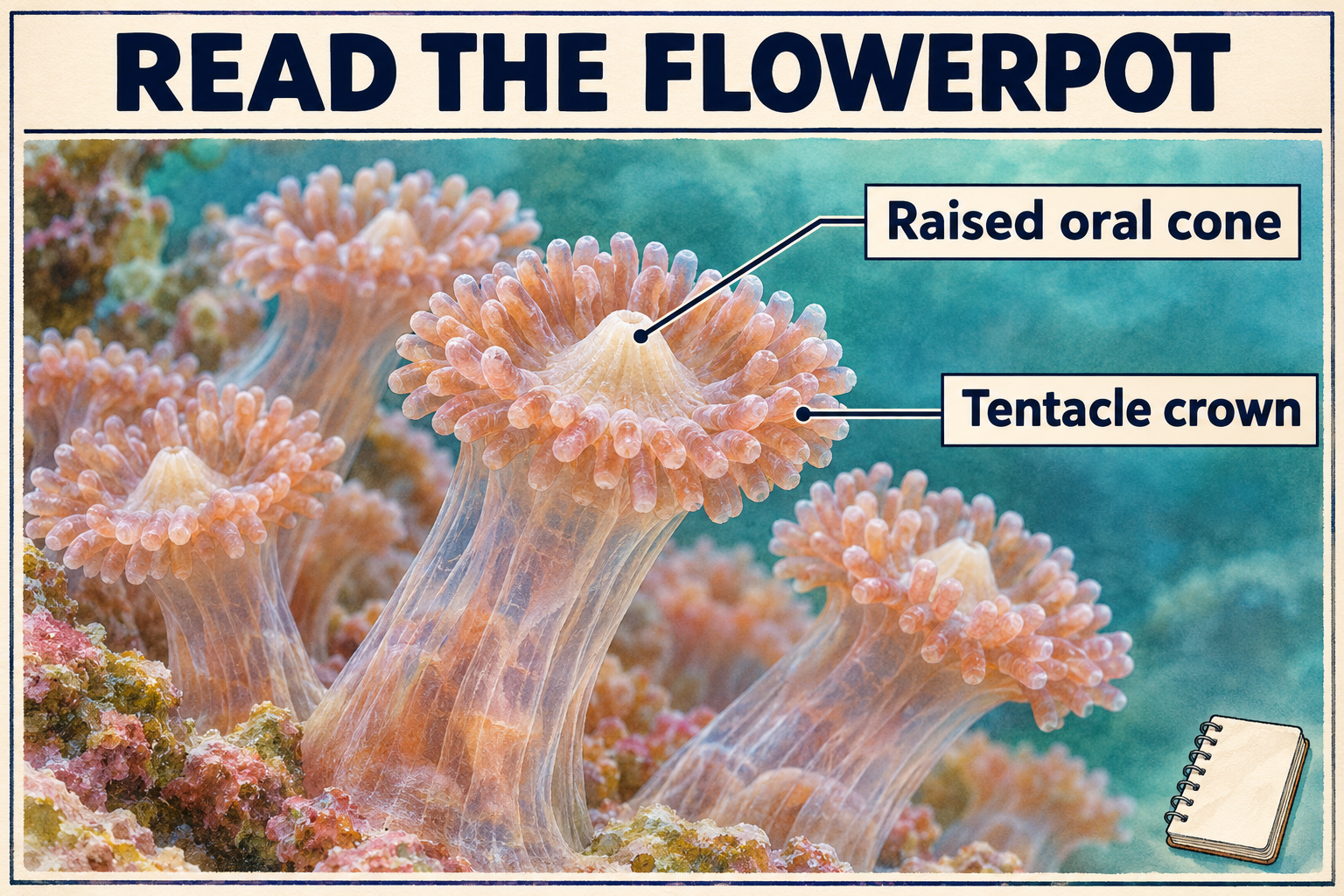
A patch of little flowers rocks back and forth on the reef. Each bloom is an animal! Look for the raised center inside each crown of tentacles. That little mound gives this Flowerpot Coral, Goniopora djiboutiensis, its best close-up.
History of the coral
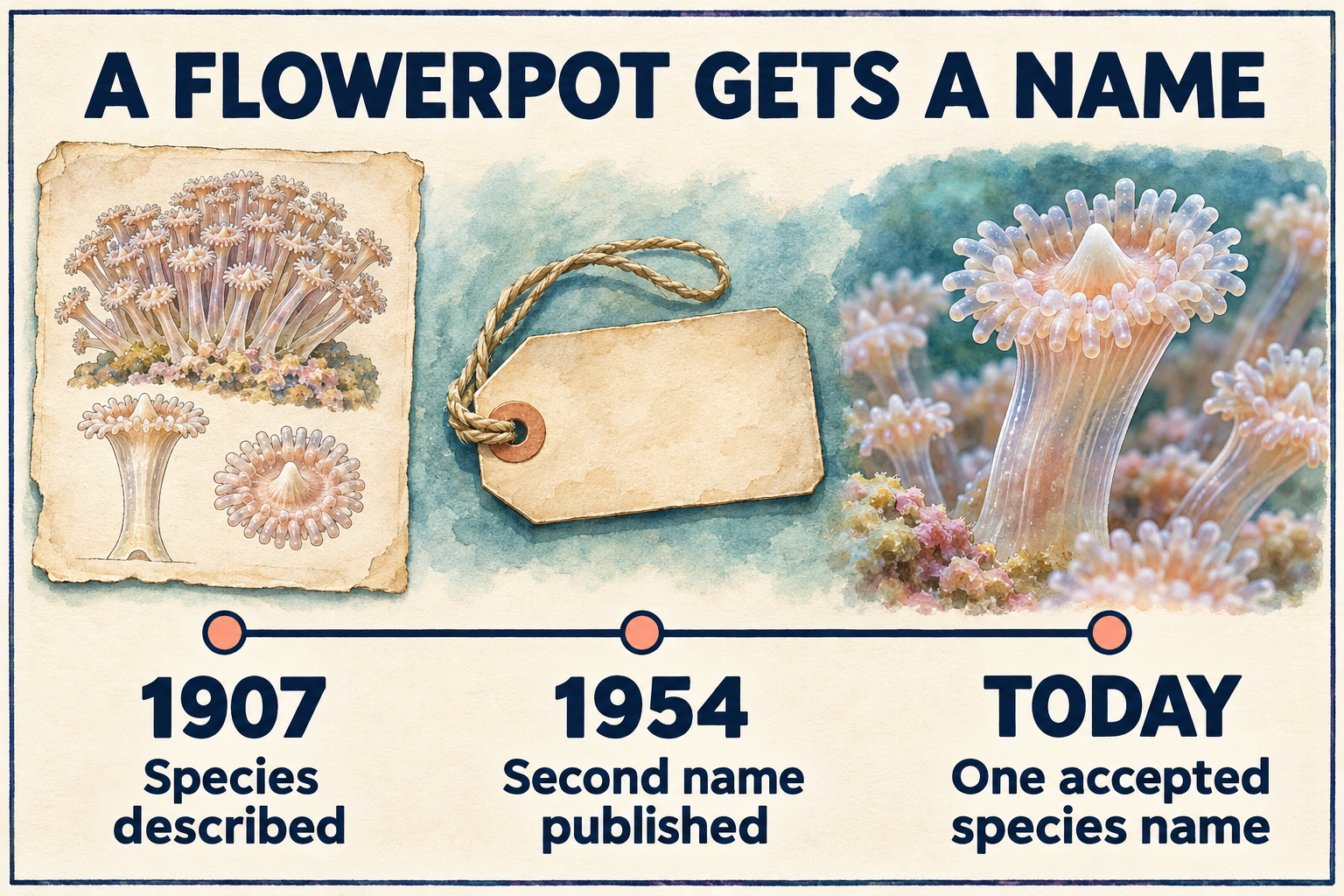
1. A name from the Gulf of Aden. In 1907, Thomas Wayland Vaughan described this coral from material collected near Djibouti. Its name still carries that place with it.
2. Two names, one species. A later description used the name Goniopora pulvinula. Today that name points back to Goniopora djiboutiensis. Flowerpot is a nickname shared by several corals.
How they live in the wild
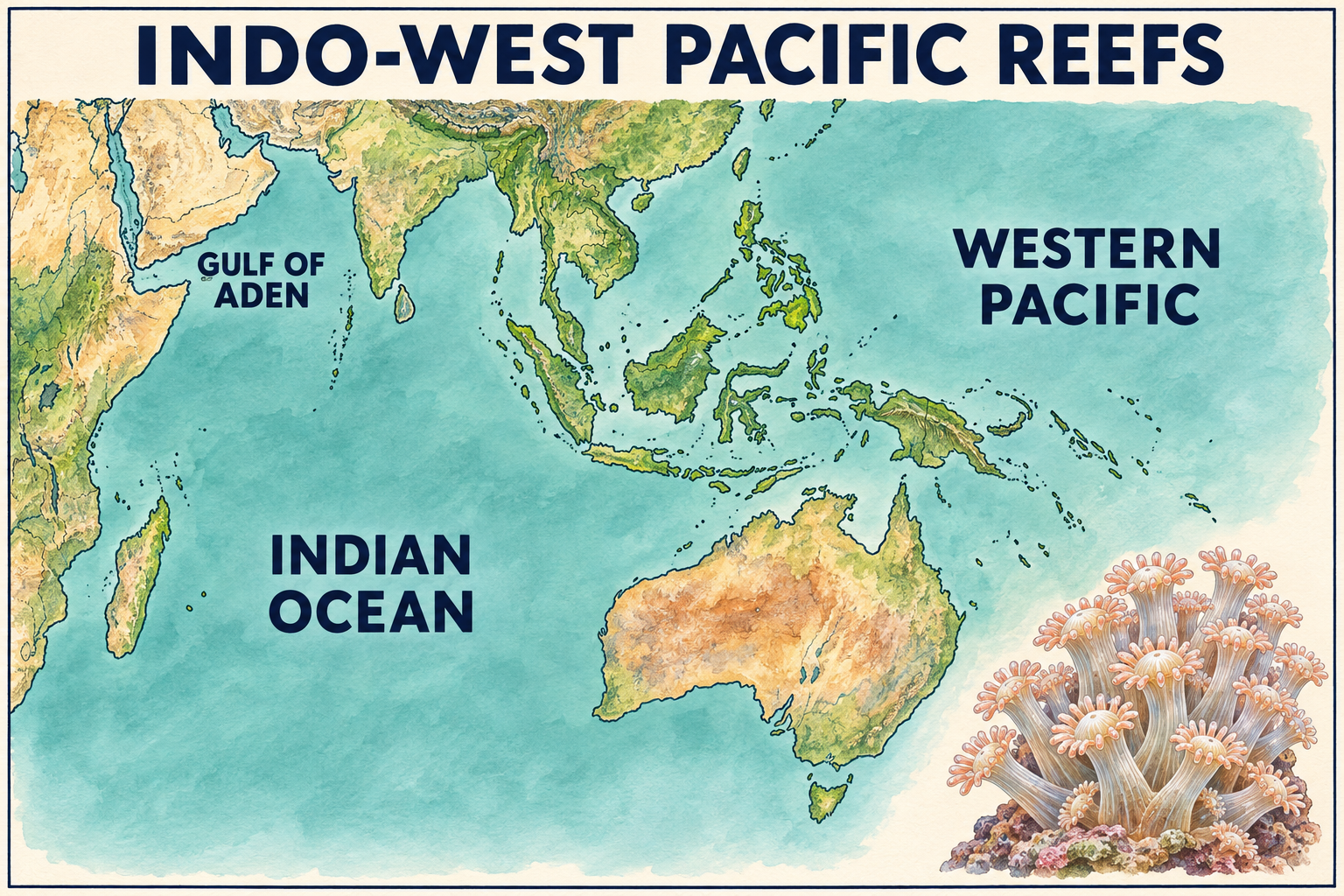
3. A meadow under the waves. This flowerpot grows on reefs from the Gulf of Aden across the Indo-West Pacific. In cloudy water, whole stands of it grow side by side. Picture a meadow that sways with the tide.
4. A garden built on stone. The colony grows as a mound or a cluster of short, thick columns. Each polyp sits in a tiny cup in the skeleton. The long stalks cover that hard base when the colony opens.
Light, flow and placement
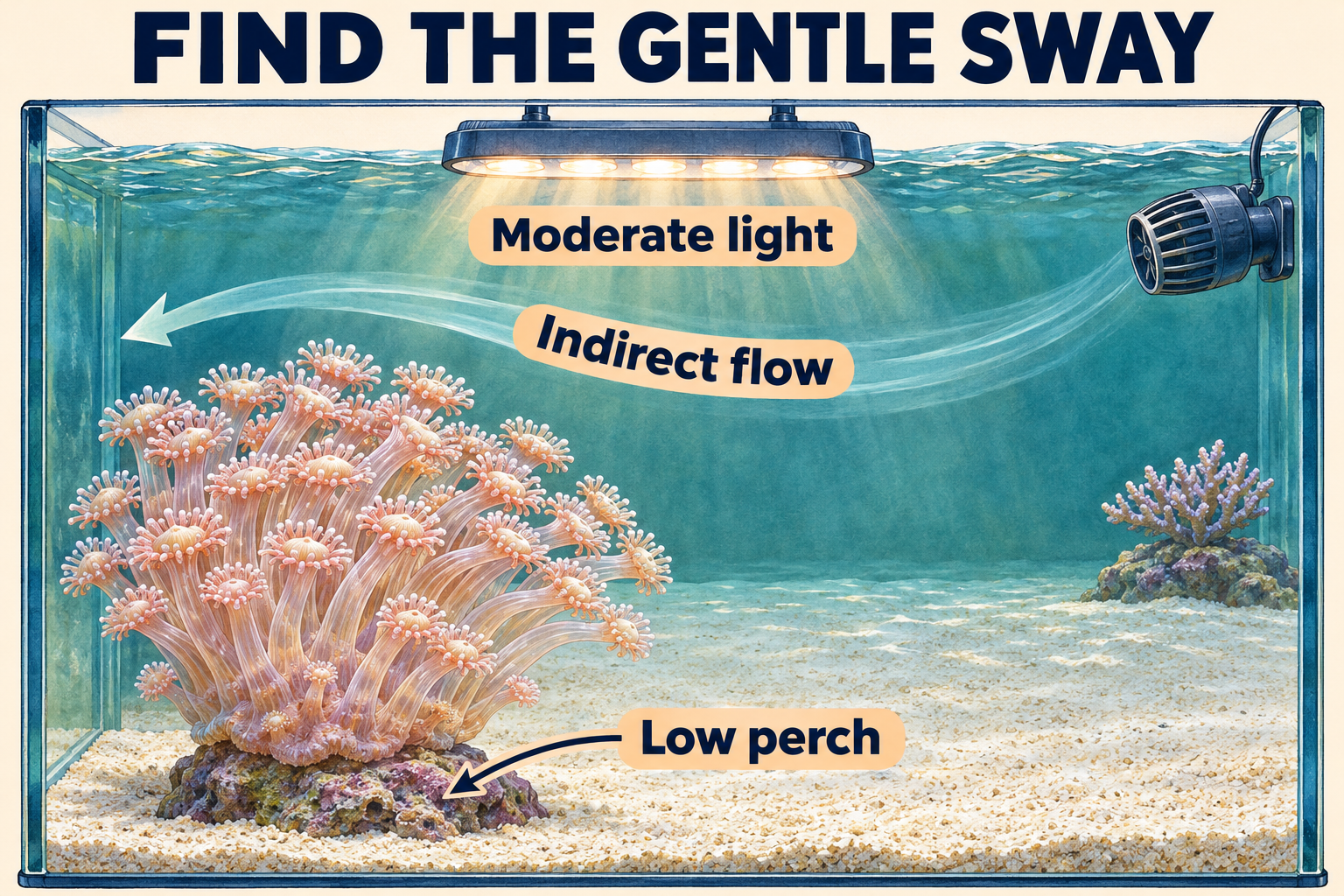
5. Start on a low perch. Set the coral on a stable rock near the bottom where sand won't collect on it. Start under moderate light and make changes gradually. Bottom placement is a starting spot, so check the light at the coral.
6. Look for a lazy sway. Aim for gentle, indirect flow that moves the crowns without flattening them. Redirect a pump if it pins the polyps to one side. Give the full canopy room to open without brushing its neighbors.
Keep the water steady
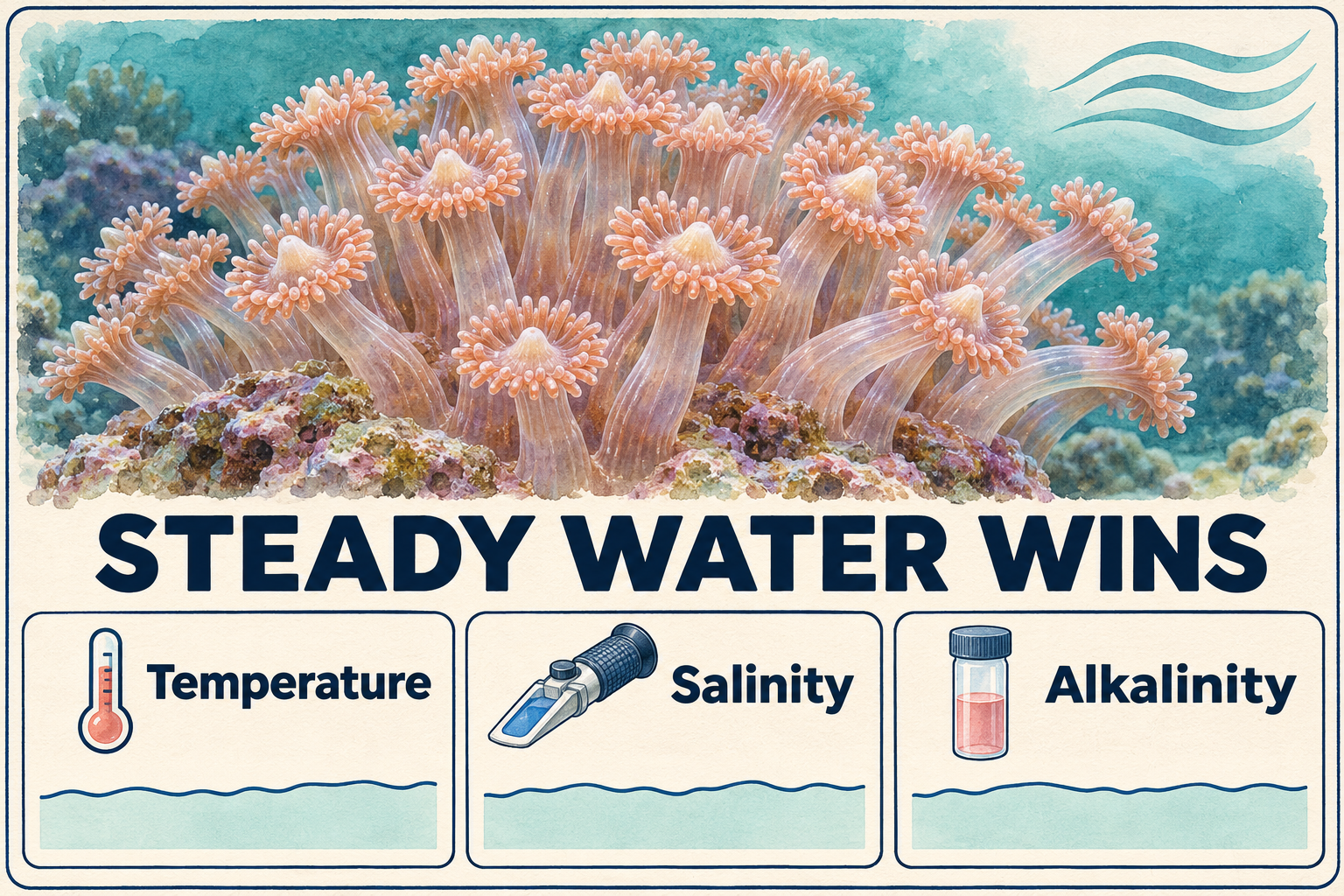
7. Give it a settled reef. This is an advanced coral. Track temperature, salinity and alkalinity. Correct a drift steadily and change one thing at a time so you can see what helped.
8. Watch the edge of the colony. Growth takes time. Take a photo from the same angle and under the same light every few weeks. The rim and base tell you more about tissue loss than a quick glance at the waving tops.
Feeding the flowerpot
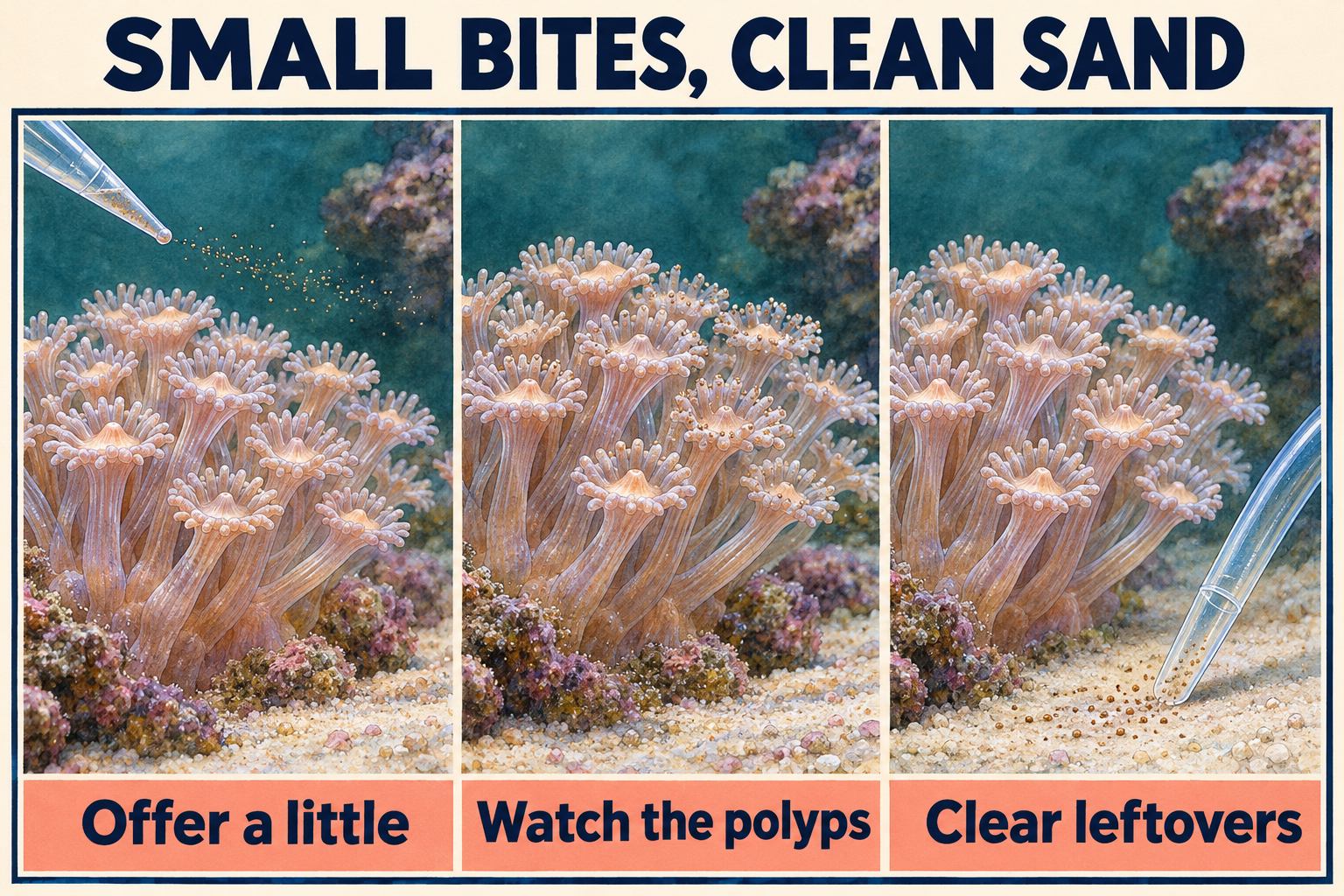
9. Offer food the size of dust. Tiny algae inside the tissue make food from light. At feeding time, let a little fine coral food drift past the open tentacles. Keep the feeding stream soft and look for particles to stick.
10. Keep the serving small. Repeat small feedings as part of your regular tank routine. Check nitrate and phosphate trends before increasing the amount. Siphon food that settles and restore normal circulation if you slowed the pumps.
Field notes
11. Find the raised center. Look down at an open polyp. The raised mound around the mouth is the oral cone. Nearby flowerpot species share that feature, so a close-up helps you spot the shape but does not settle the species on its own.
12. A bad day or a pattern? A brushed polyp pulls in. Tissue peeling back from the skeleton or a colony staying closed for days calls for a check. Look for a direct jet, a nearby sting, settled debris or a water change that shifted salinity.
Pick a calm corner of a mature reef and give this flowerpot time to settle. Once the whole crown starts waving, it will be the first thing you spot when you walk by.
*Hero
Field Notes
Related species

Column Flowerpot Coral
Goniopora columna
Same genus
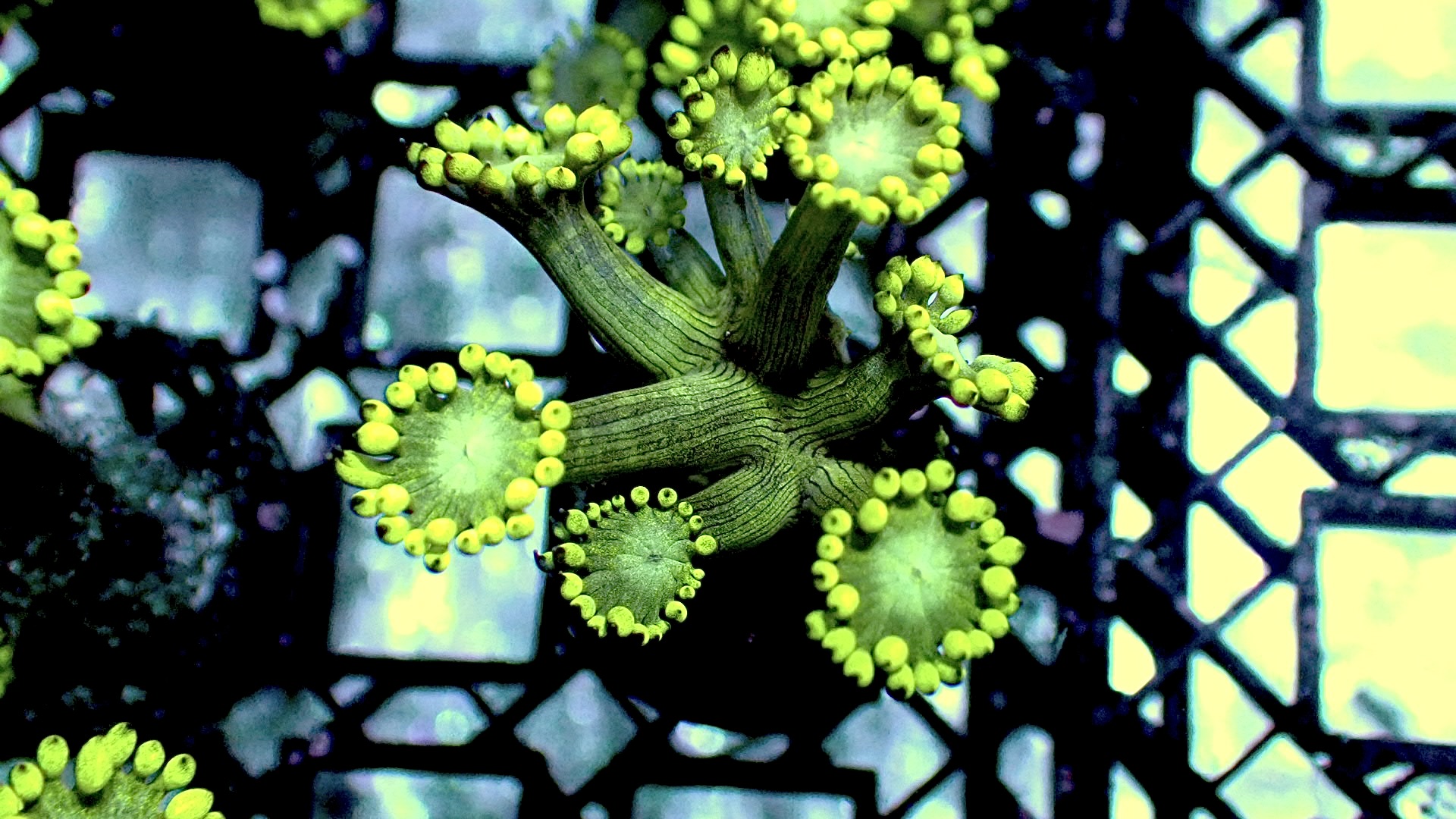
Bulbasaur goniopora
Goniopora sp
Same genus
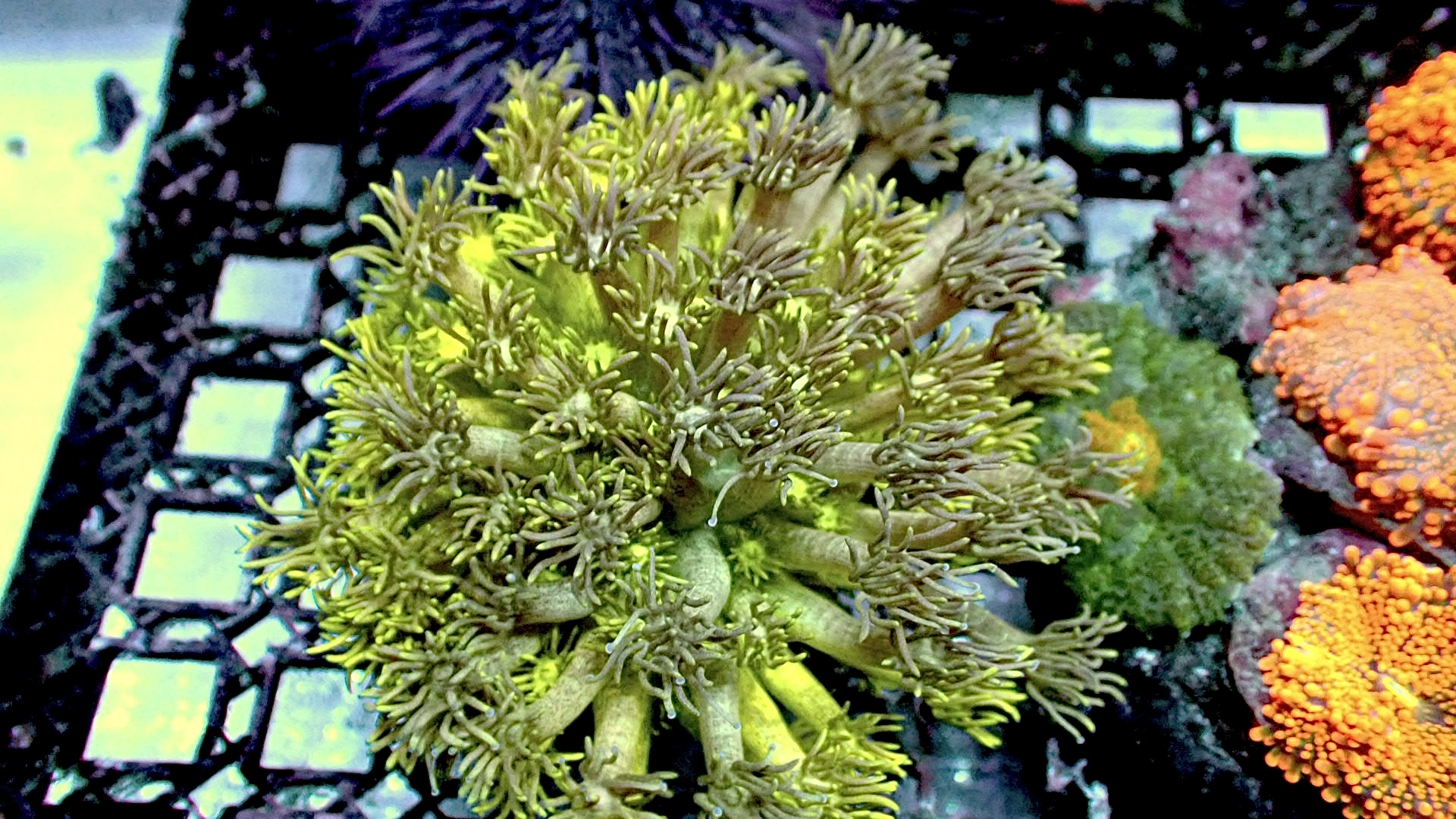
Citrus goniopora
Goniopora sp
Same genus
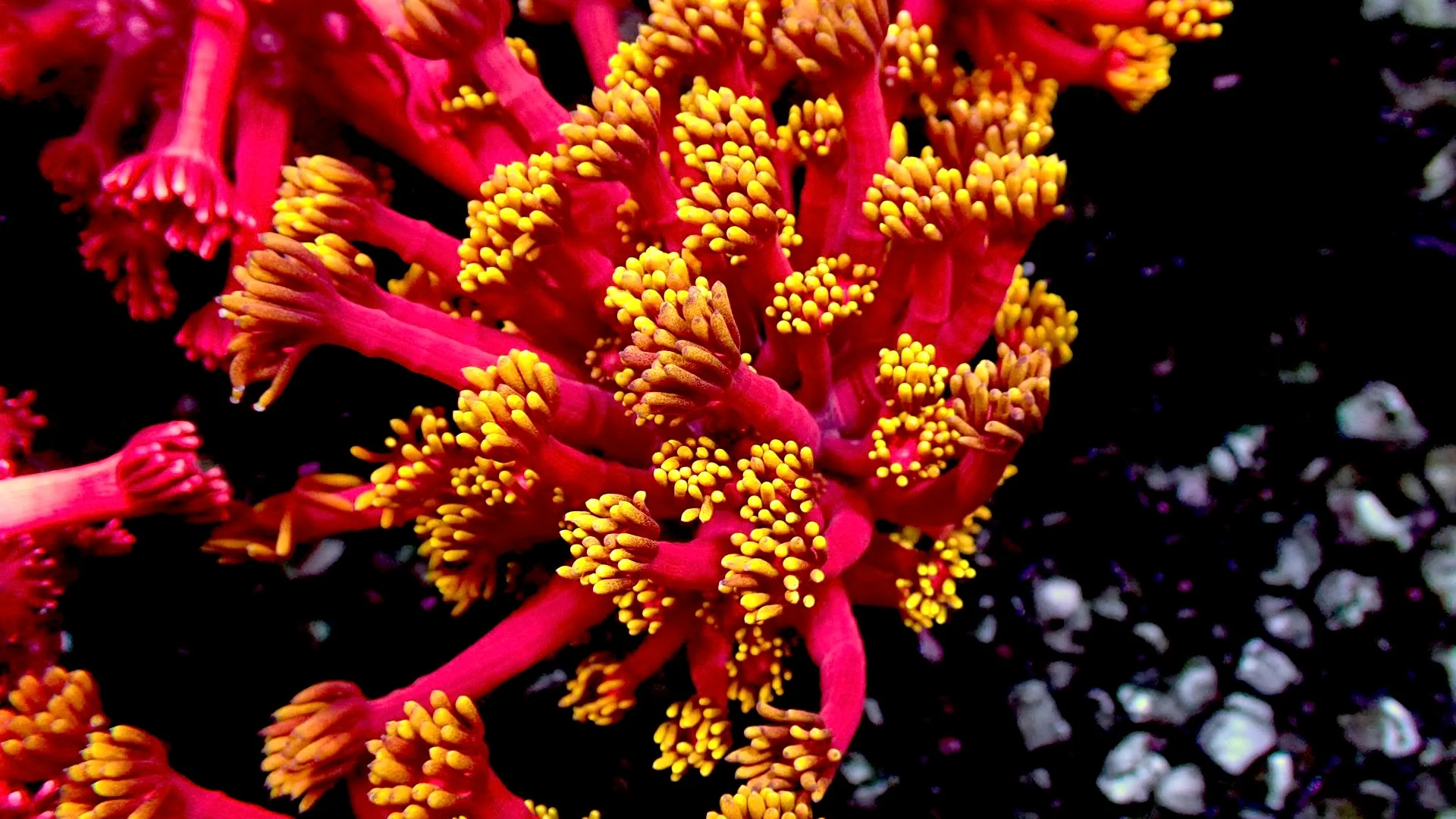
Iron Man Goni
Goniopora sp
Same genus
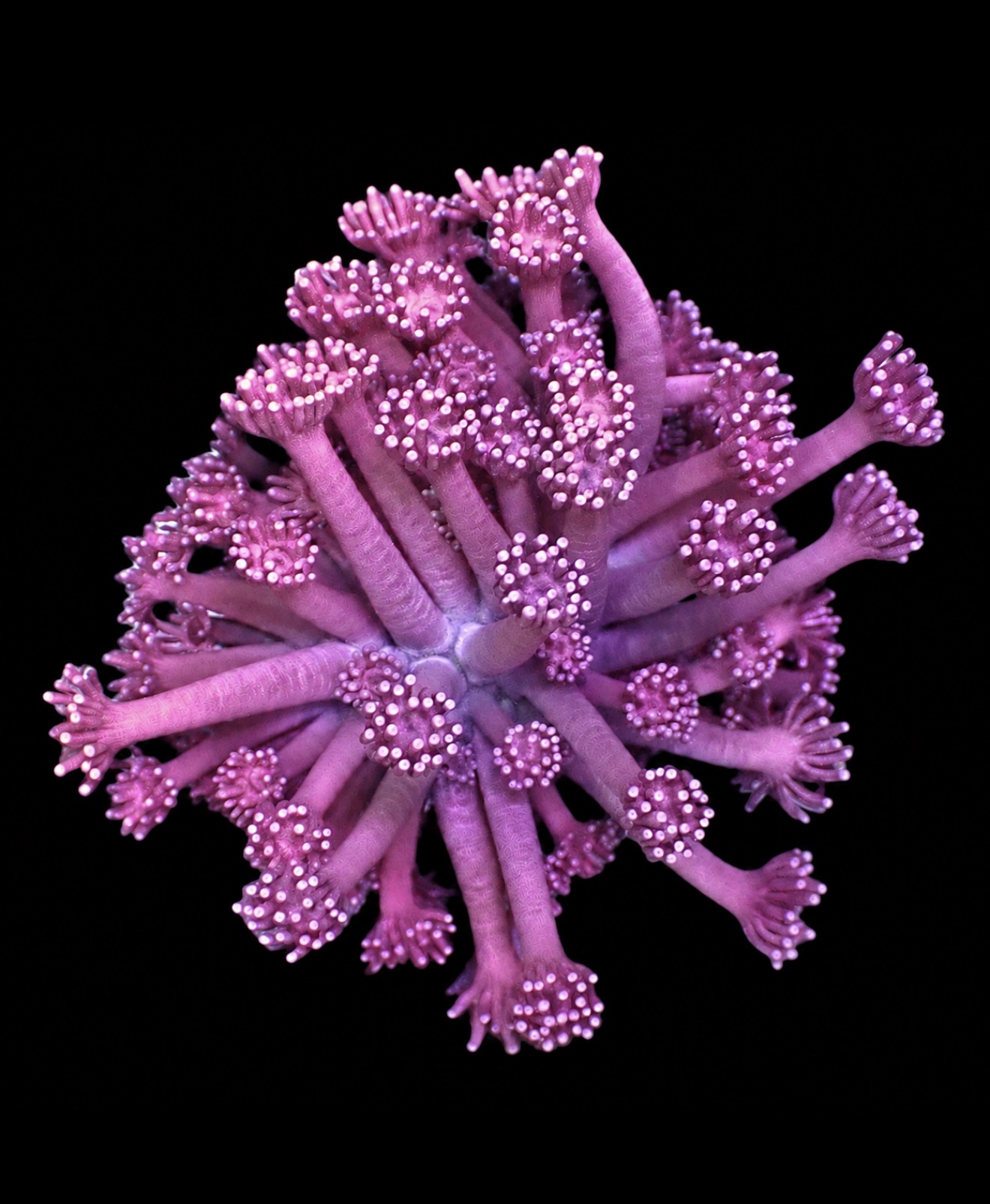
Barney the dinosaur Goni
Goniopora sp.
Same genus
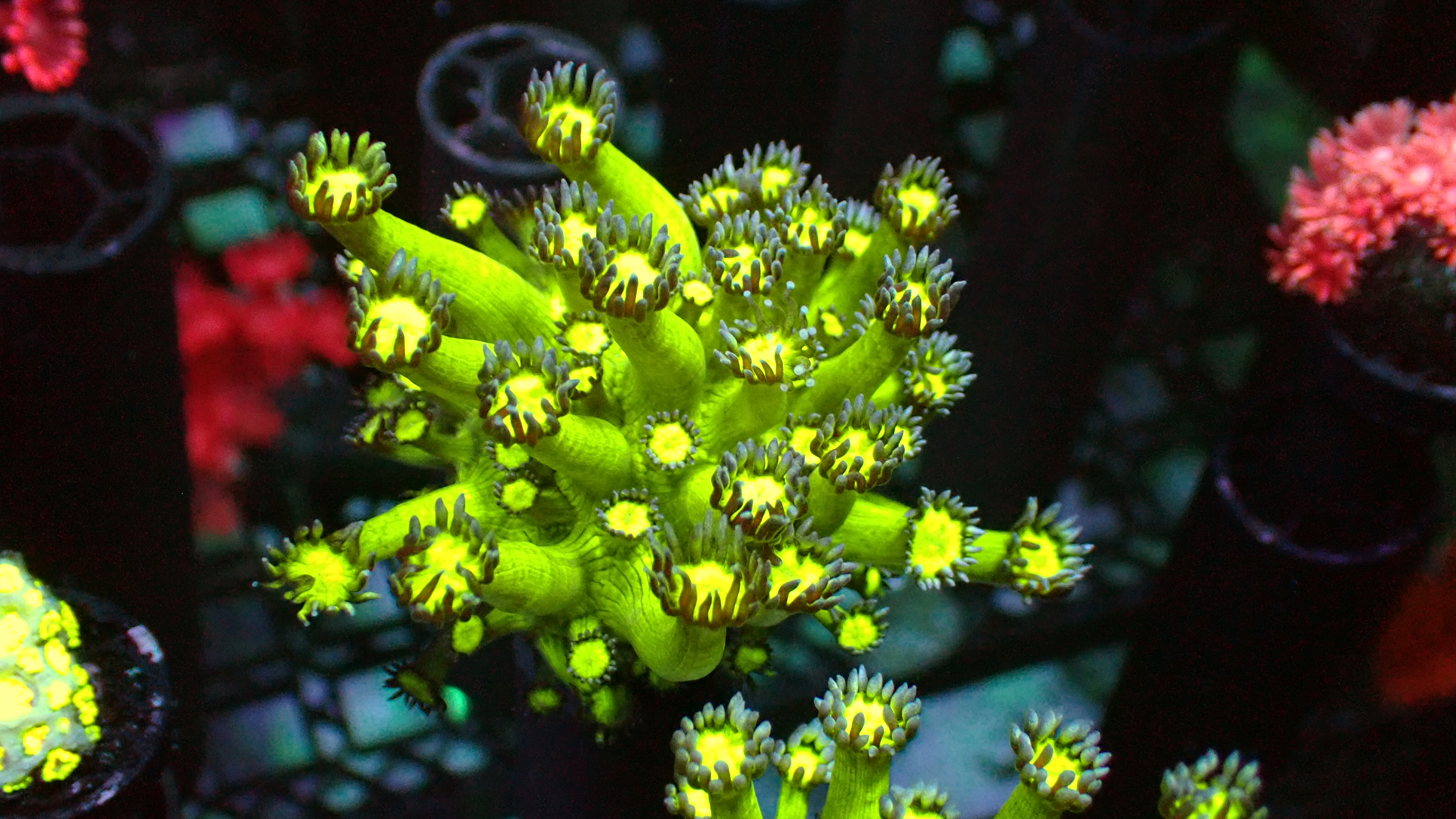
Bootleg glitter Goni
Goniopora sp
Same genus

Lava lamp goniopora
Goniopora sp
Same genus

Lavender Goni
Goniopora sp
Same genus