Monasteriata Montipora
Montipora monasteriata

Care facts
- Care
- Intermediate
- Light
- High
- Flow
- Medium
- Place
- Mid
- Space
- Peaceful
- Growth Rate
- Moderate
Gallery
A Montipora can grow like a rug or build a shelf. This one does both. Look closely and you’ll see tiny polyp cups tucked among bumps in the skeleton. That rough surface is a better clue than a bright rim or a fancy color.
History of the coral
1. A name from the Red Sea. Peter Forskål’s 1775 description called this coral Madrepora monasteriata. Today it belongs to Montipora, a group of corals with tiny polyps.
2. Look closer than the color. This Monti grows bumps around small, sunken cups. Some bumps join into short ridges. When you buy a frag, keep the grower’s label and stock details; color alone won’t settle the species.

How they live in the wild
3. One coral, lots of shapes. On Indo-Pacific reefs it grows over rock, builds thick plates or forms low mounds. One Lizard Island colony spread about 90 centimeters across.
4. From the lagoon to the slope. It’s common on upper reef slopes. At Ashmore Reef it grows in shallow lagoons; at Rowley Shoals it’s been found on outer slopes at 15 to 35 meters. Sunlight and wave action vary across those spots.

Light and flow
5. Bring the light up slowly. Start a new frag under gentler light. Raise exposure in steps, and use a bright mid-level perch once it settles. Watch for paling after a lighting change.
6. Send water past the rim. Give it medium, indirect flow. Water should sweep over the colony and past folds and ledges. Redirect the pump if debris keeps settling in one spot.

Keep the water steady
7. Test before you dose. Check alkalinity, calcium and salinity regularly. Match dosing to what the tank uses as the coral builds skeleton. Make changes in small steps.
8. Keep feeding simple. Run a steady reef feeding routine and follow your nutrient trends. This coral gets energy from algae living in its tissue. You don’t need to target-feed it on a schedule.

Space to grow
9. Leave bare rock at the edge. An encrusting colony spreads sideways and takes up rock your neighbors might need. Leave an open patch between colonies, and check that gap as they grow.
10. Look below the shelf. A thick plate casts a shadow. Give light-loving neighbors their own patch of rock outside that shadow, and keep a clear view under the rim.

Field notes
11. Light can draw the edge. One keeper’s Monasteriata stopped spreading where rock cast a shadow. Another keeper’s plating Montis grew wide enough to shade neighbors even with pruning. Look at both the light on the rim and the shadow it casts.
12. Check for stowaways. Inspect new Montis away from the display. Look under folds and around the plug for tiny sea slugs, egg clusters or fresh bare patches. Isolate suspect frags and check them again before adding them.

Give this Monti its own patch of rock and take a photo from the side. Then watch where the living edge goes. That’s your best clue to where it’ll need space next.
Photo credit: [Anne Hoggett via Wikimedia Commons](https://commons.wikimedia.org/wiki/File:Montipora_monasteriata,_colonia.jpeg), [CC BY 3.0](https://creativecommons.org/licenses/by/3.0/).
Field Notes
Related species

Aequituberculata Montipora
Montipora aequituberculata
Same genus

Leaf Plate Montipora
Montipora capricornis
Same genus
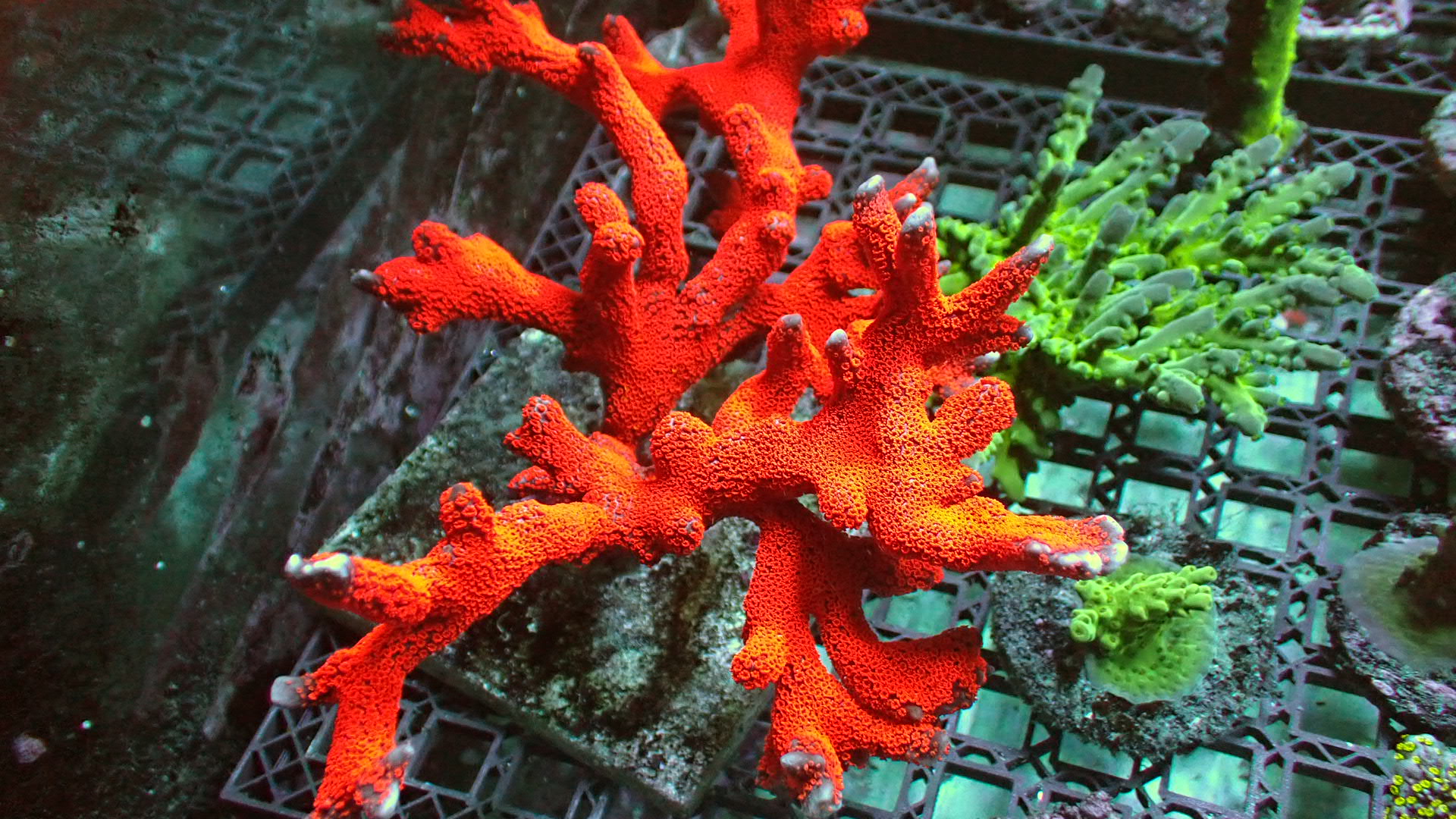
Bubblegum digitata
Montipora digitata
Same genus

Confused Rainbow Montipora
Montipora sp.
Same genus

Neon Green Montipora Spongodes
Montipora spongodes
Same genus

Orange monti cap
Montipora capricornis
Same genus

Tubbs blue digitata
Montipora digitata
Same genus
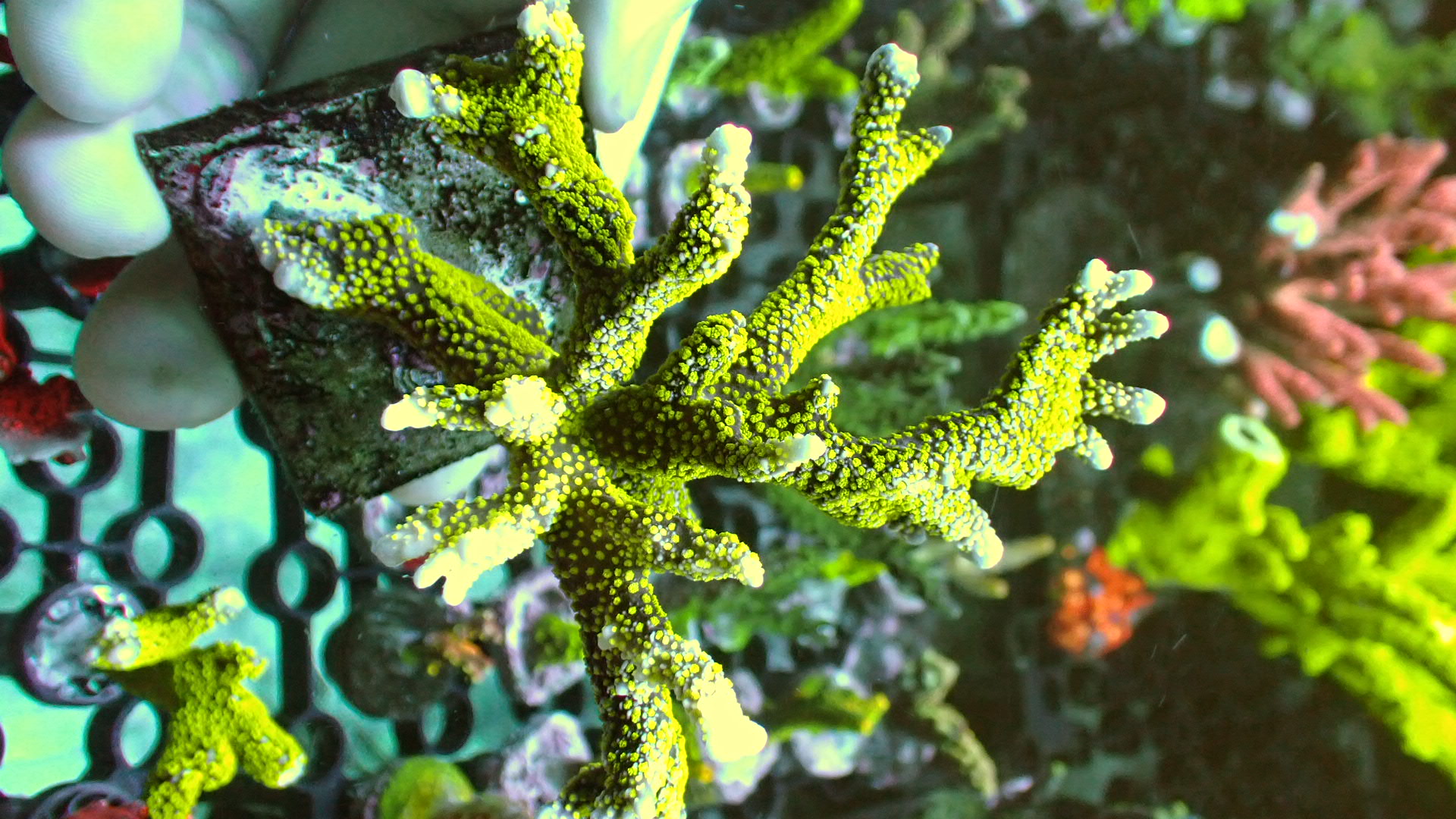
Tubbs Stellata Montipora
Montipora stellata
Same genus