Rock Flower Anemone
Epicystis crucifer
Reef Safe
With Caution
Gallery
Videos
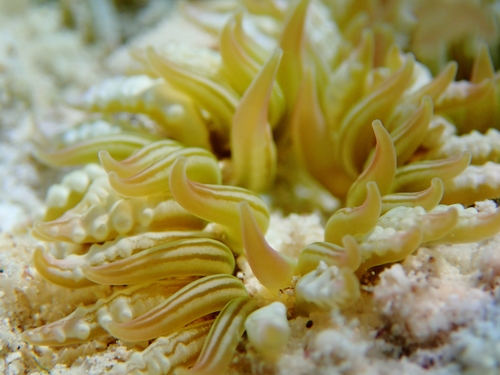
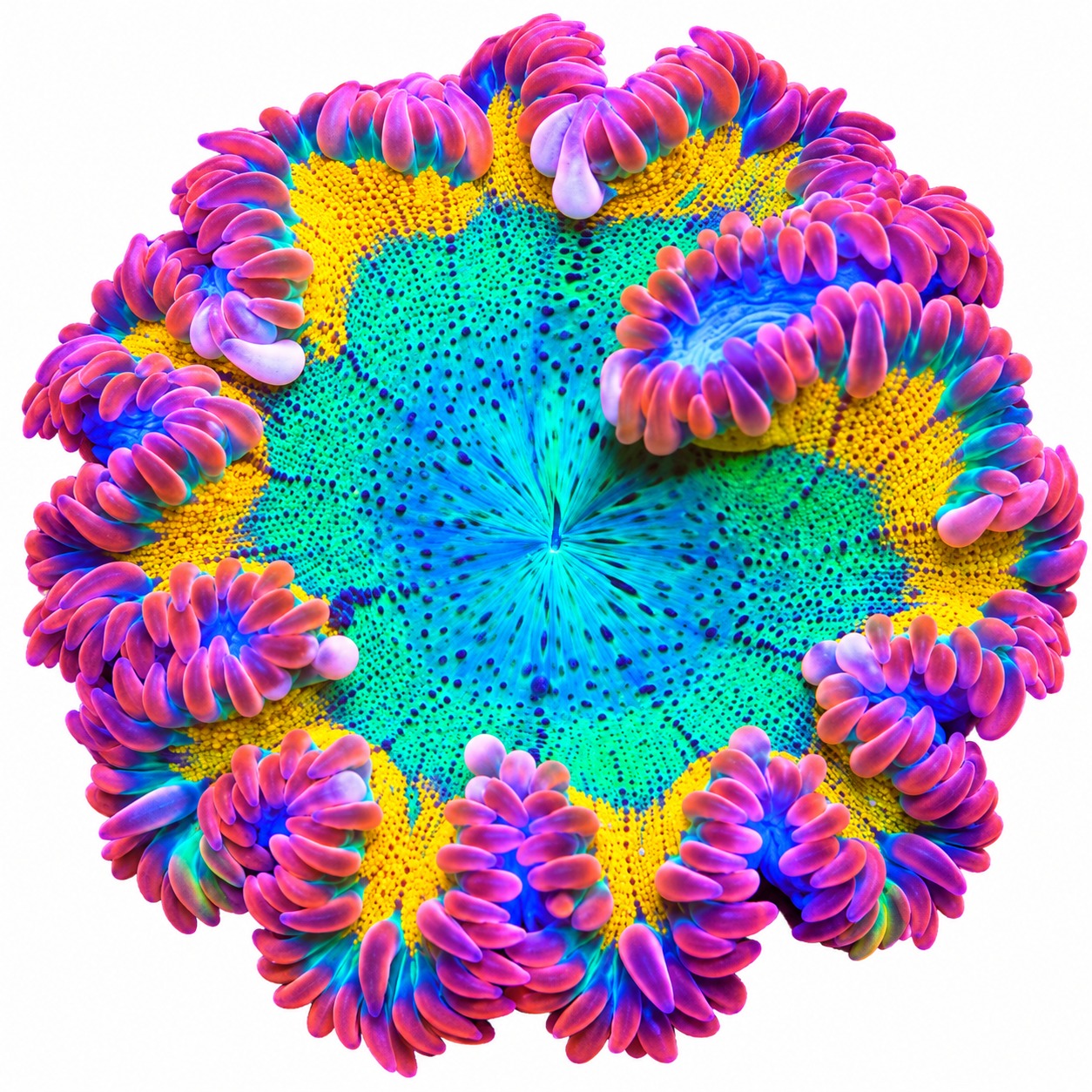
The Rock Flower Anemone packs more color per inch than almost any other anemone in the hobby. The oral disc comes in marbled combinations of red, orange, green, purple, and cream, ringed by a fringe of short, beaded tentacles that often contrast with the disc — a mint-green fringe around a burnt-orange face is a classic look. Under blue light the pigments fluoresce hard, and no two individuals pattern alike, which is why collectors keep several side by side as an anemone garden.

Origin and habitat
In the wild these anemones live in the tropical western Atlantic and Caribbean, tucked into rock crevices and the rubble-and-sand edge of shallow reefs. They anchor the foot deep into a crack or under a rock lip and sit low, and that habit carries straight into the aquarium: a rock flower picks a spot, plants itself, and almost never wanders. Rock flowers do not host clownfish, and they ask for far less light than the hosting species, which removes the two biggest hurdles of anemone keeping.

Placement, light and flow
Care is beginner-friendly by anemone standards. Give one a low spot on the rockwork or the rock-and-sand boundary, moderate light, and moderate indirect flow — enough movement to keep the tentacles swaying gently, never a direct blast. Standard reef parameters suit it: 77–79°F, salinity near 35 ppt, alkalinity 8–10 dKH, calcium 400–450 ppm. It carries a real sting despite its size, so keep a small gap between the anemone and neighboring corals, and take care with sweeping LPS nearby, whose tentacles can damage it and drive it to relocate.

Feeding and health
Feed it small meaty foods — mysis, chopped shrimp, or a pea-sized piece of seafood — once every one to two weeks. The disc folds around the food within minutes. Regular feeding keeps the colors saturated and the animal thick through the middle; a rock flower that starts shrinking or fading is usually an underfed one. Given a crevice it likes and steady conditions, a rock flower will hold the same spot for years, and healthy adults occasionally spawn or bud off small clones in the tank.
Field notes — what keepers report
- Keepers are split on how much these anemones wander. Some report theirs settled on day one and never moved again, while others watch individuals leave the sand bed entirely and set up on the rockwork. One keeper with around fifteen rock flowers says some move and some stay put, and a trick passed around the forums is seating a new one in a PVC end cap filled with small rubble, buried in the sand, so it can grip something without roaming.
- The sting gets described as mild in most threads, and keepers often house rock flowers in the middle of zoanthid patches with no harm done. Reports conflict on LPS neighbors: one keeper has watched rock flowers sting LPS corals down to bare white skeleton, so a little clearance around fleshy LPS is the cautious read of the reports.
- Keepers who target feed report a clear difference. Anemones on an occasional feeding schedule are described as pale and prone to shrinking, then filling out once they get very small meals — a few pellets, a puff of fine plankton food — close to daily. Spawned babies get the same advice with more urgency: keepers say the tiny juveniles waste away within weeks unless the area around them is fed small-particle food often.
- New keepers sometimes report a rock flower "splitting" the way a bubble-tip does. Experienced keepers answer that true rock flowers reproduce sexually and release tiny brooded babies instead, and that a splitting look-alike in the tank is usually a Borneman anemone, a close relative with a weaker sting.