
Brocken Inaglory (CC BY-SA 3.0)
Spaghetti Worms
Family Terebellidae (e.g. Loimia spp.)
Tube-dwelling detritivores that collect fine organic particles and have no sting and no interest in corals, clams, or fish.
Identification
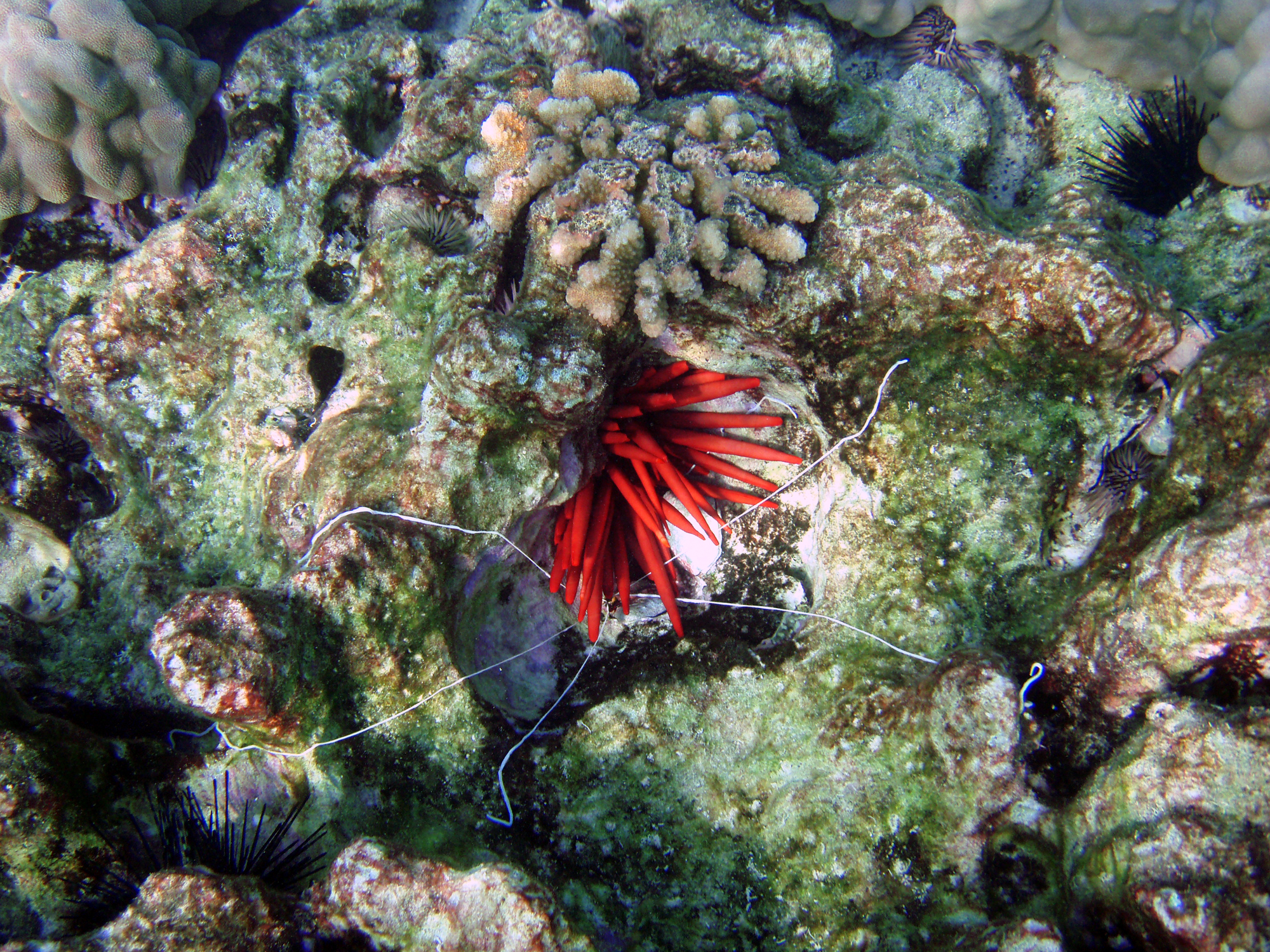
The worm itself stays hidden in a mucus-and-sand tube in rockwork or at the rock–sand boundary. All that shows is a spread of many long, thin, white to translucent feeding tentacles draped over the surrounding sand and rock, sometimes reaching several inches from the tube opening, waving gently and hauling specks of food back toward the centre.
Often confused with
Pest worms and hydroids, because a fan of pale threads looks alarming at first glance. The tell is arrangement and behaviour: spaghetti worm tentacles are numerous, soft, and unbranched, lying flat as they sweep the surface for detritus from a single fixed tube, and they slide back in when touched. Hydroids form upright, often branching or feathery colonies with stinging polyps that stay put as a colony. A related harmless worm, the spionid, shows only two feeding palps rather than a whole bundle of tentacles.
Natural predators
No natural predators are listed.
Field notes
Around-the-clock detritus processors that mop up fine waste before it can fuel algae growth. A spaghetti worm in the sand bed counts as a sign the cleanup crew just got better — leave it in place.