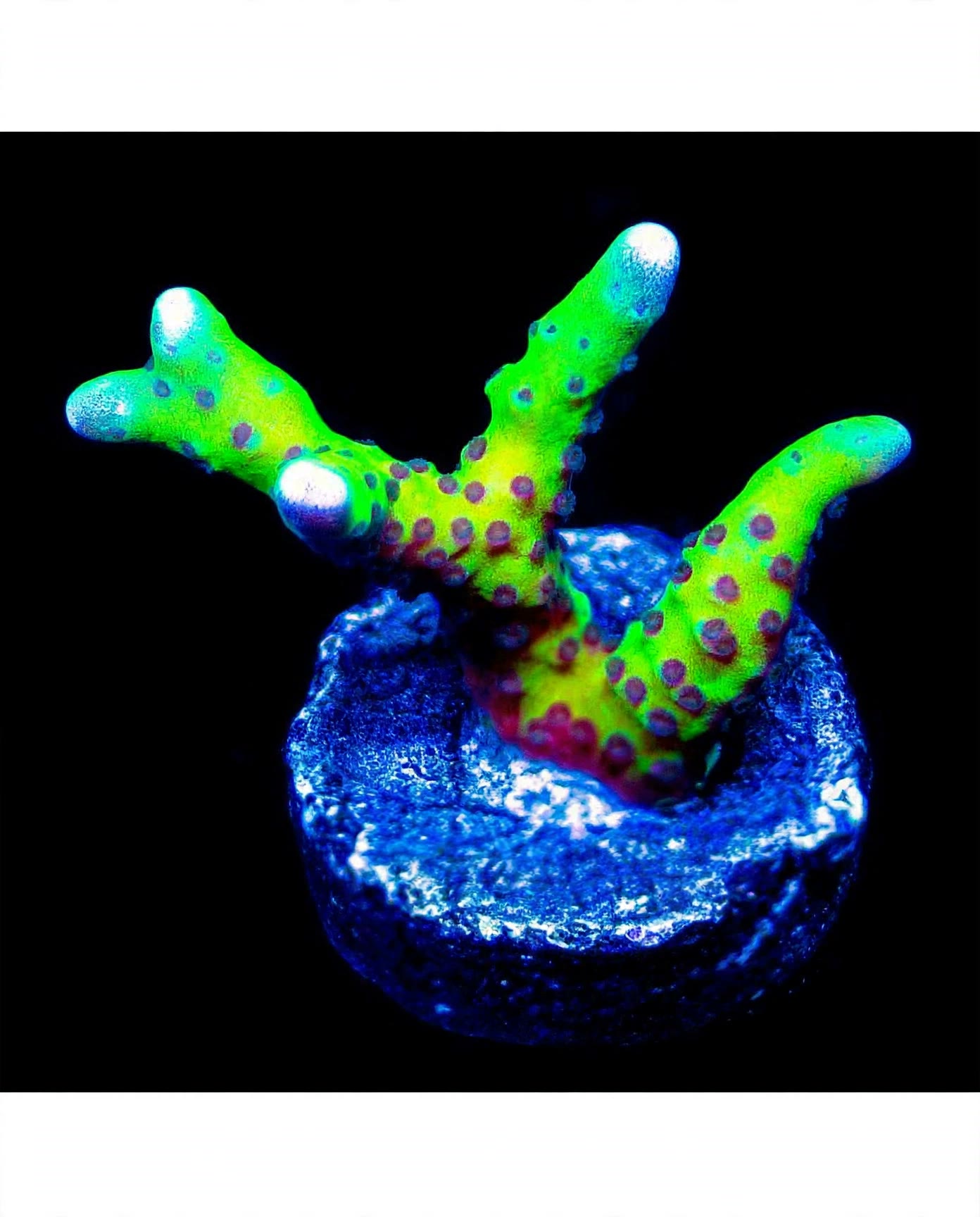
Aquaman Montipora

Care facts
- Care
- Intermediate
- Light
- Medium-High
- Flow
- High
- Place
- Top
- Space
- Not recorded
Gallery
A Monti can turn a bare rock into living pavement. Tiny polyps dot the surface, and the growing edge creeps right over the frag plug. With Aquaman, that tiny rim is half the fun.
History
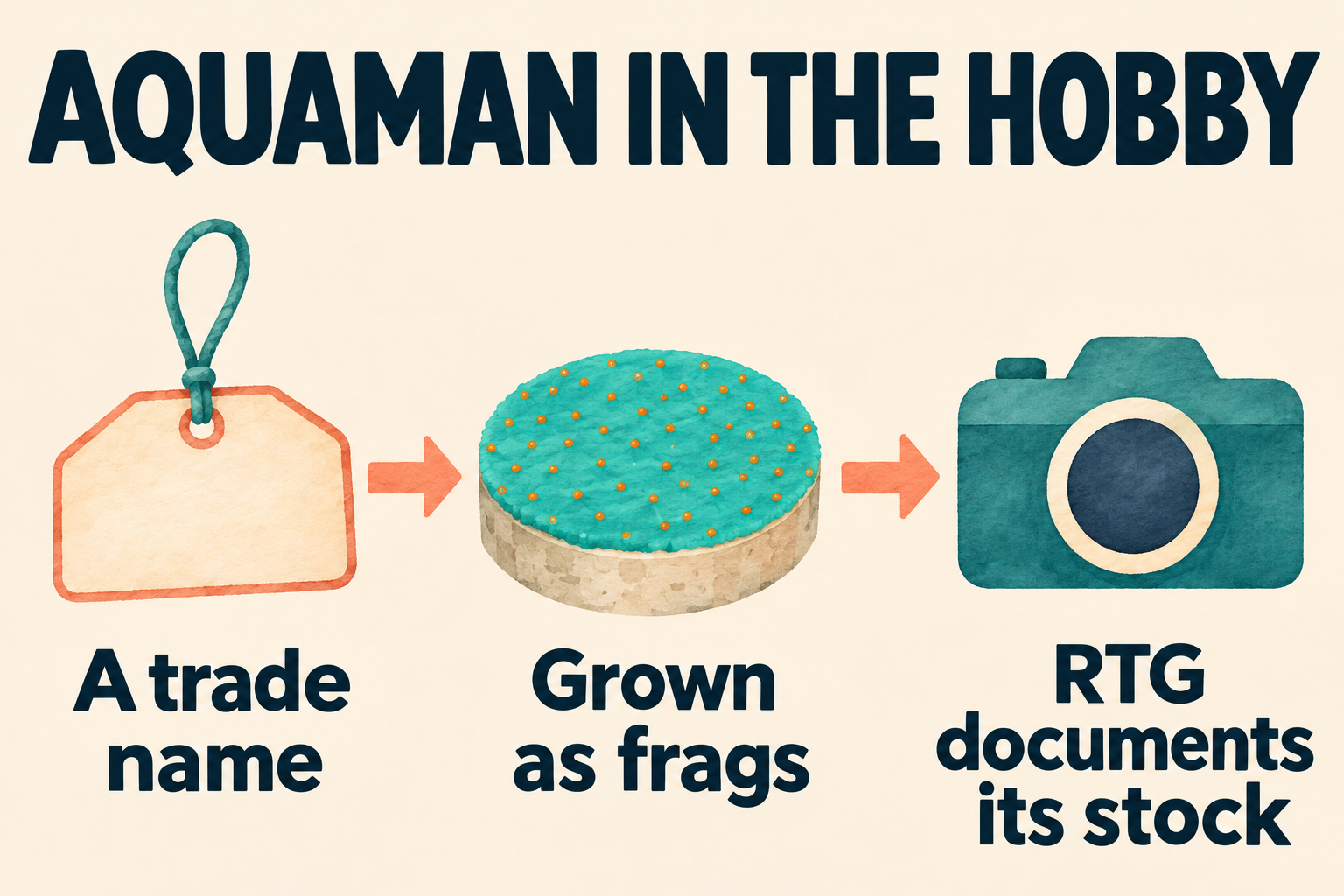
1. A name from the frag rack. Aquaman is an aquarium trade name. Montipora is the coral group. The Reef To Go line is grown in the U.S., and its orange polyps stand out over the pale green base in the photo.
2. A little piece starts a new patch. A frag is a piece of a living colony. Once it settles, it lays down new skeleton and spreads over its plug. That’s how aquaculture keeps named corals in the hobby.
In the wild
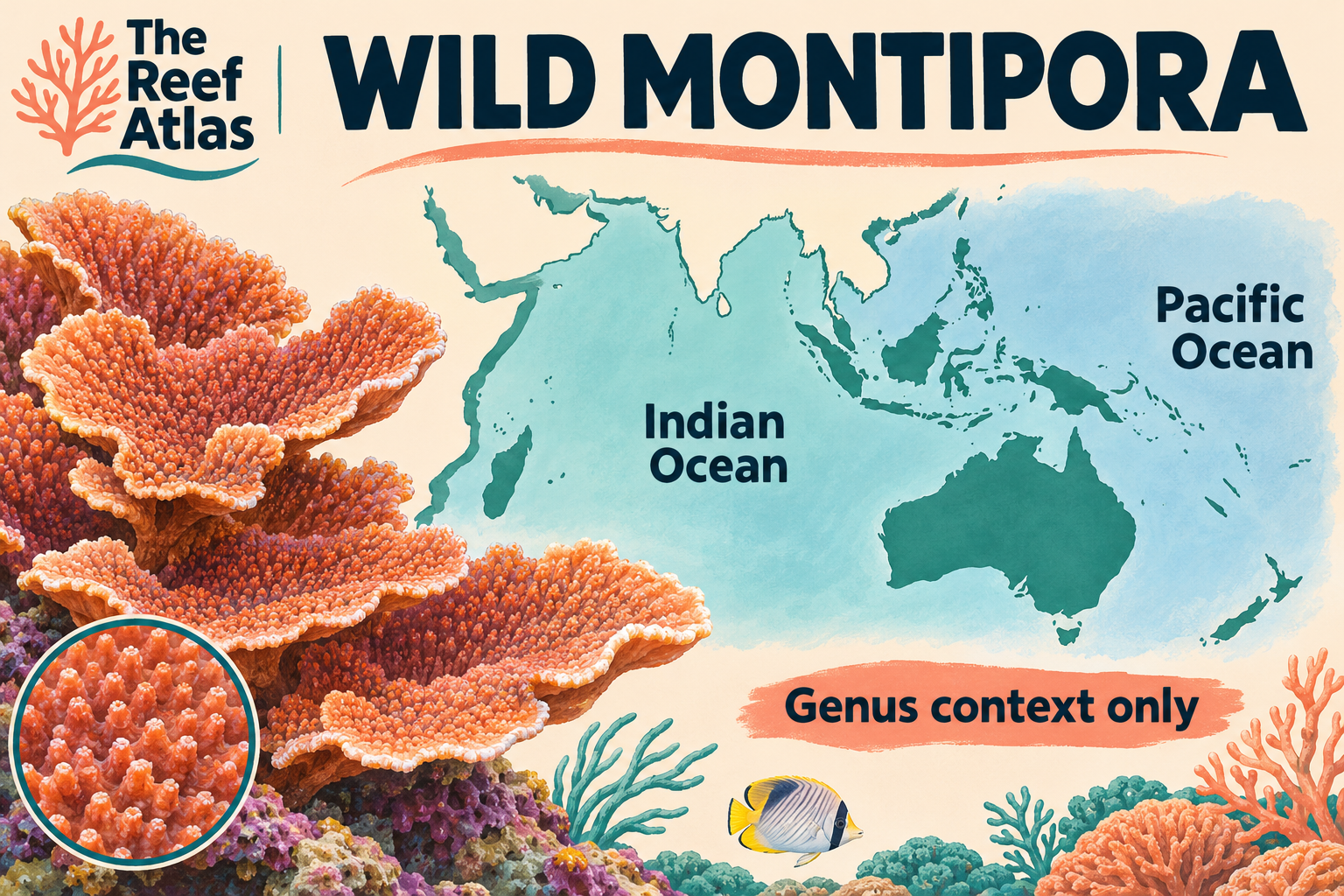
3. A big ocean family. Wild Montipora live across the Indo-Pacific. Their homes include lagoon reefs, reef flats and slopes. Aquaman’s trade name gives us no collection site or wild depth for this line.
4. A reef has bright spots and quiet spots. Shallow reef flats catch strong sun. Open reef edges get surges, while sheltered lagoons get gentler water. Depth, shade and moving water shape where each wild Monti grows.
Light and flow
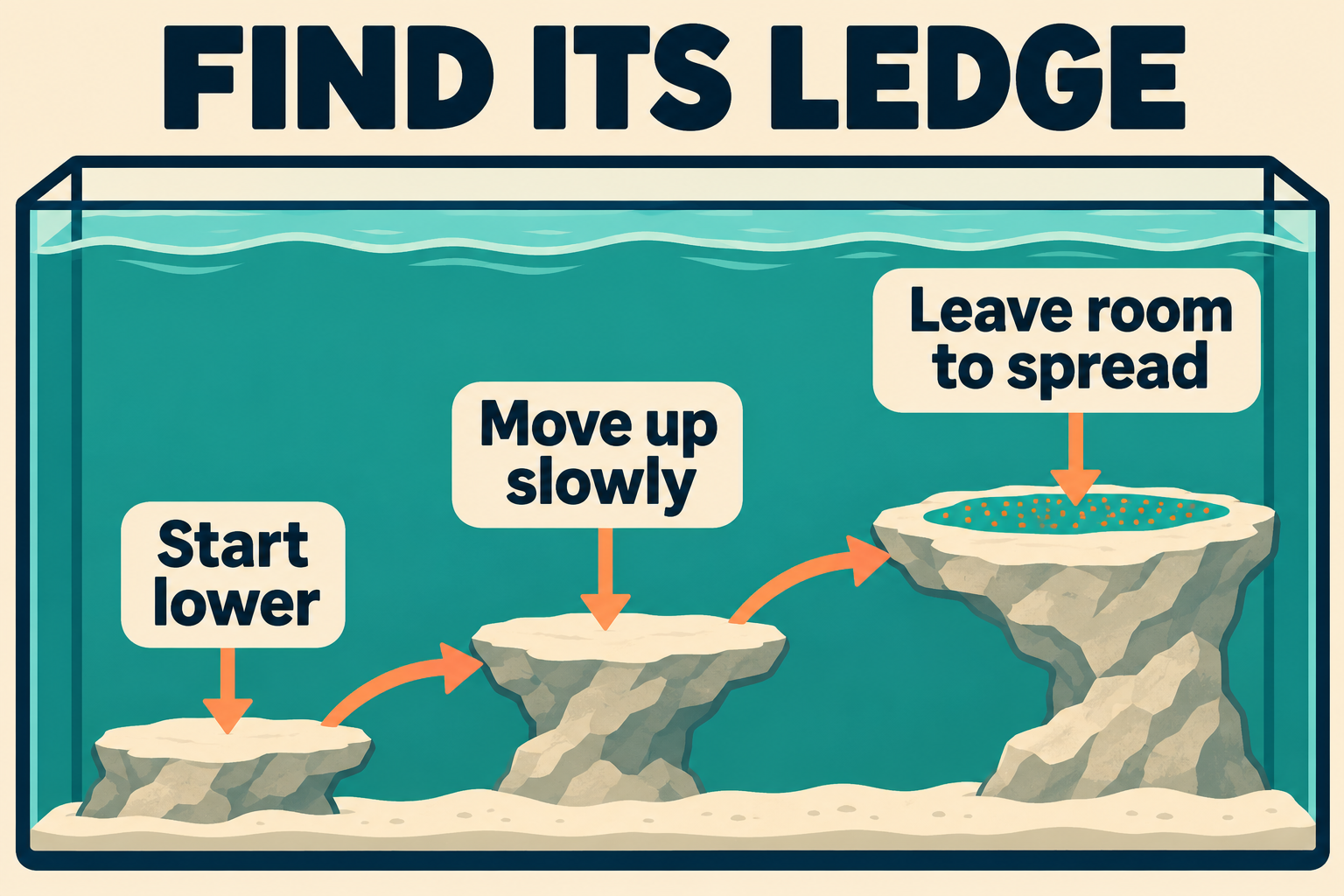
5. Turn up the sun in steps. Start the new frag lower under moderate light. Use a PAR meter to check how much light reaches the plug. Move it toward brighter light in small steps over a few weeks, and pause if the tissue pales.
6. Let the water cross the whole patch. Give it strong, varied flow that sweeps loose grit away. Aim pumps past the coral so the current passes over it from different directions. Check the flow again as the colony spreads.

Placement and growth
7. Pick a ledge with a landing strip. After acclimation, secure the frag to a stable upper ledge. Leave a couple of inches of open rock around it to start. Give stinging neighbors more room and widen the gap as things grow.
8. Follow the growing edge. Look for living tissue creeping over the plug. Keep sand and loose debris off the rim. A small rock you can move makes it easier to keep the colony away from its neighbors.
Water and frag checks
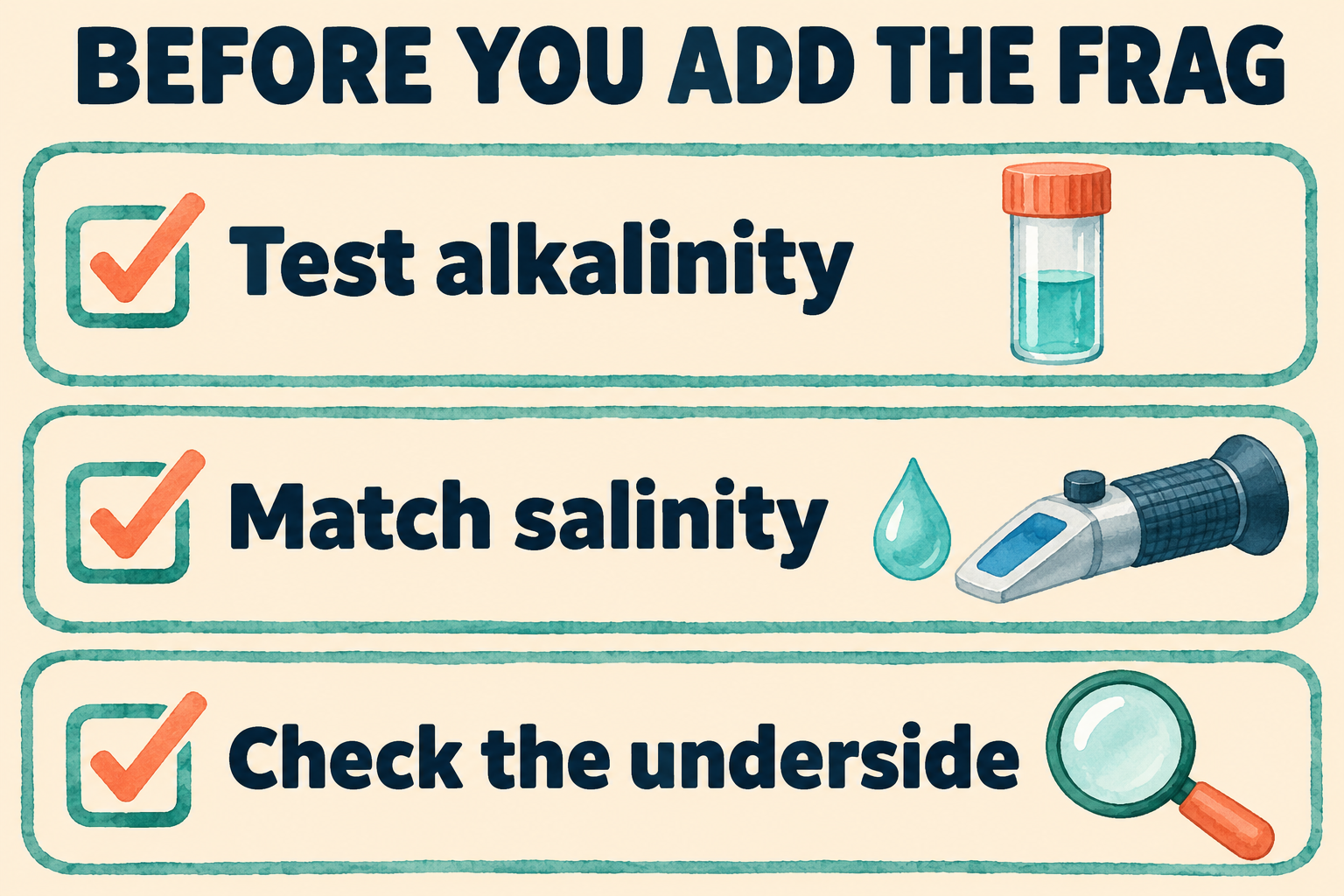
9. Keep the numbers steady. Put this SPS in a mature reef. Test alkalinity regularly and keep calcium, magnesium, salinity and temperature steady. Light powers the algae in its tissue, so start with normal tank feeding.
10. Look under the plug. Inspect the underside and rim with a flashlight before the frag goes in the display. Look for pale feeding scars, tiny white nudibranchs and egg clusters. Isolate a suspect frag so the rest of your Montis stay safe.
Field notes — what keepers report
11. A fast patch in one tank. One reefer kept an Aquaman high and to the side and called it their fastest Monti. Another account put Aquaman growth at just a few millimeters a month. Track your own colony a little at a time.
12. Color has its own clock. A grower saw the base shift from metallic green to aqua under different lighting. Take photos from the same angle under the same light. That makes it easier to tell a color shift from actual growth.

Give Aquaman steady water, a bright ledge and a clear path across the rock. Then take a close-up today and another in a few weeks. The quiet little edge is where the action happens.
Photo: Tin Huynh / Reef To Go, Aquaman Montipora.
Field Notes
Related species
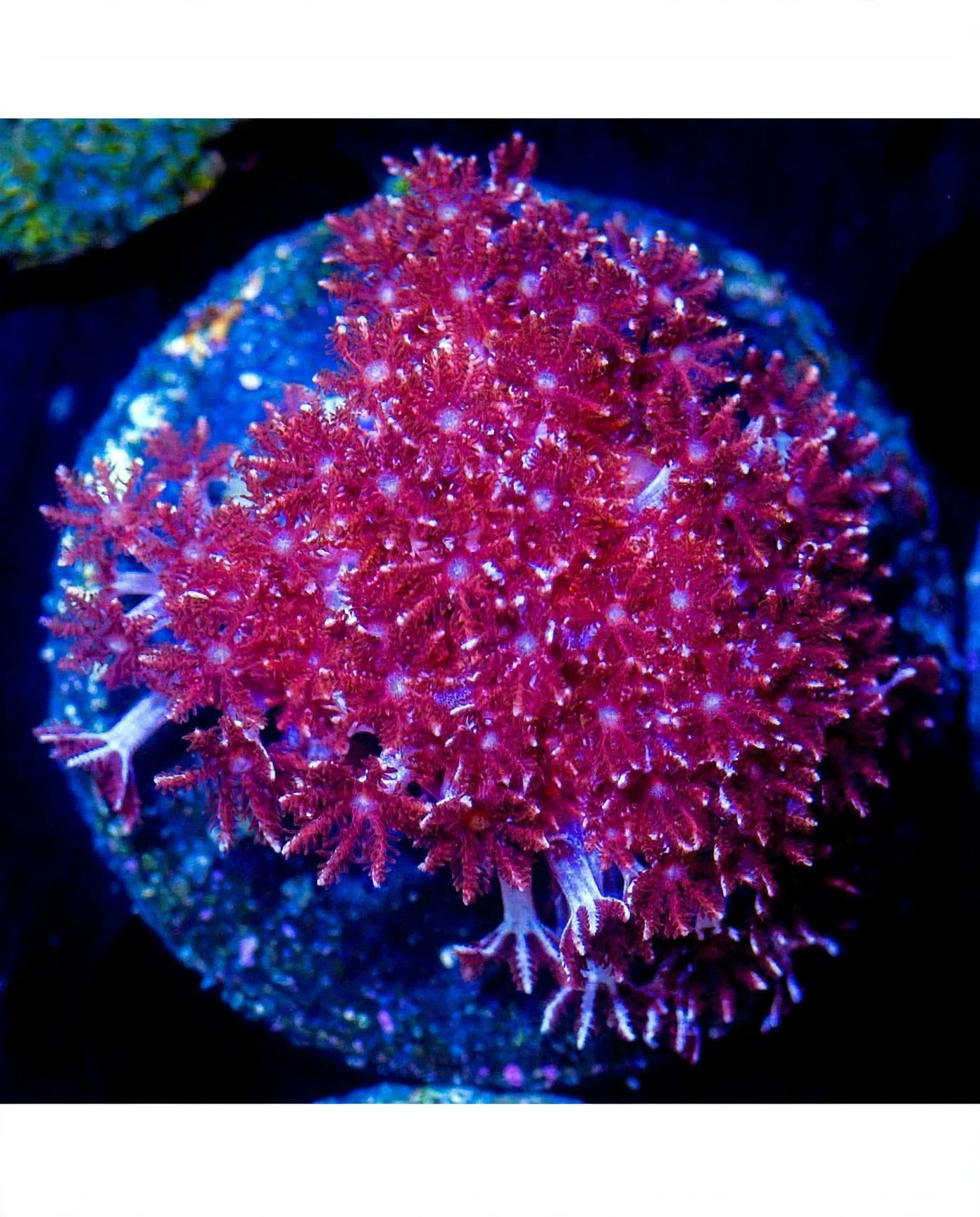
Cookies & Cream Cauliflower Coral
Similar care · SPS
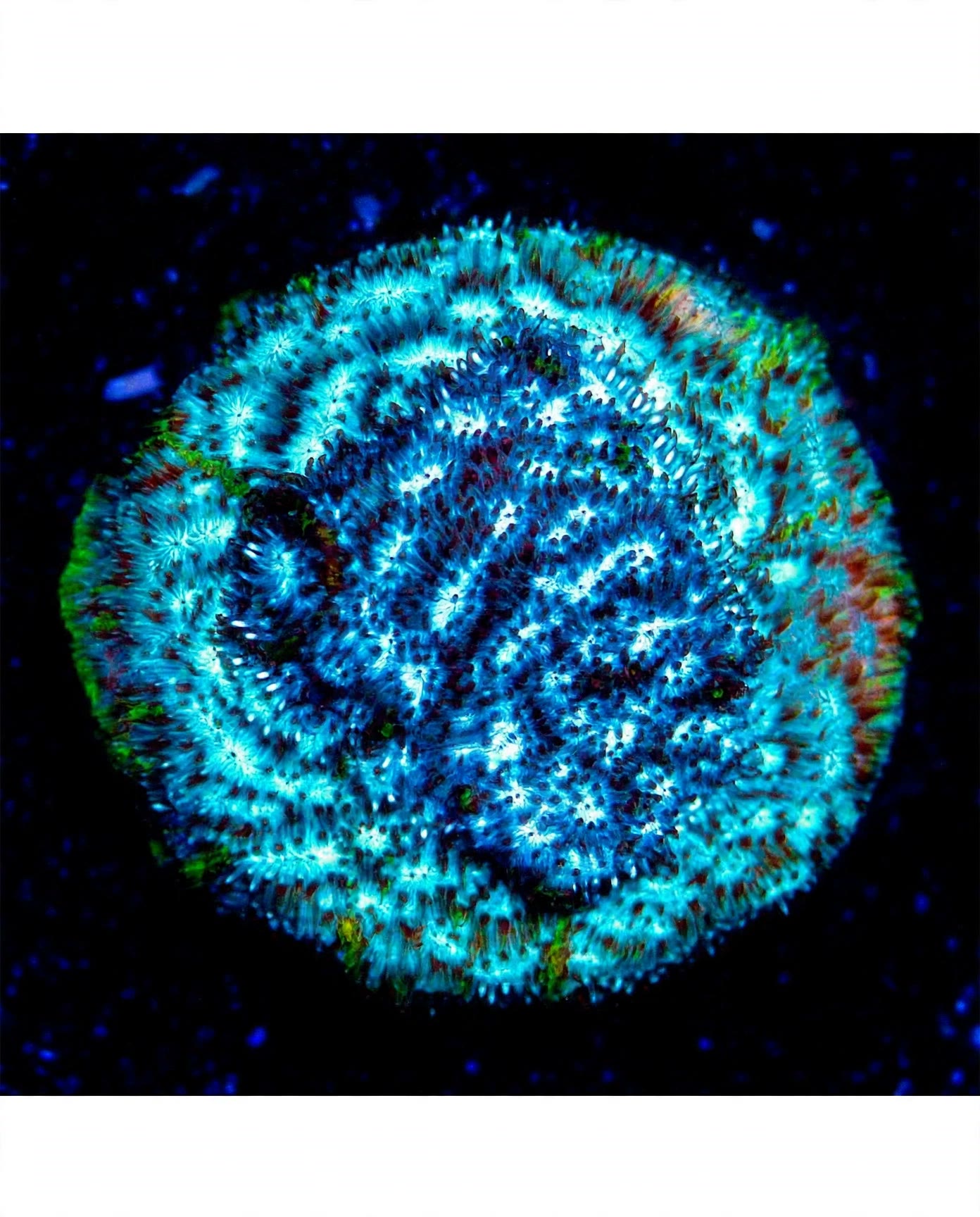
Frankenstein Leptoseris
Similar care · SPS

Golden Charm Psammocora
Similar care · SPS

Green slimer acropora
Acropora yongei
Similar care · SPS
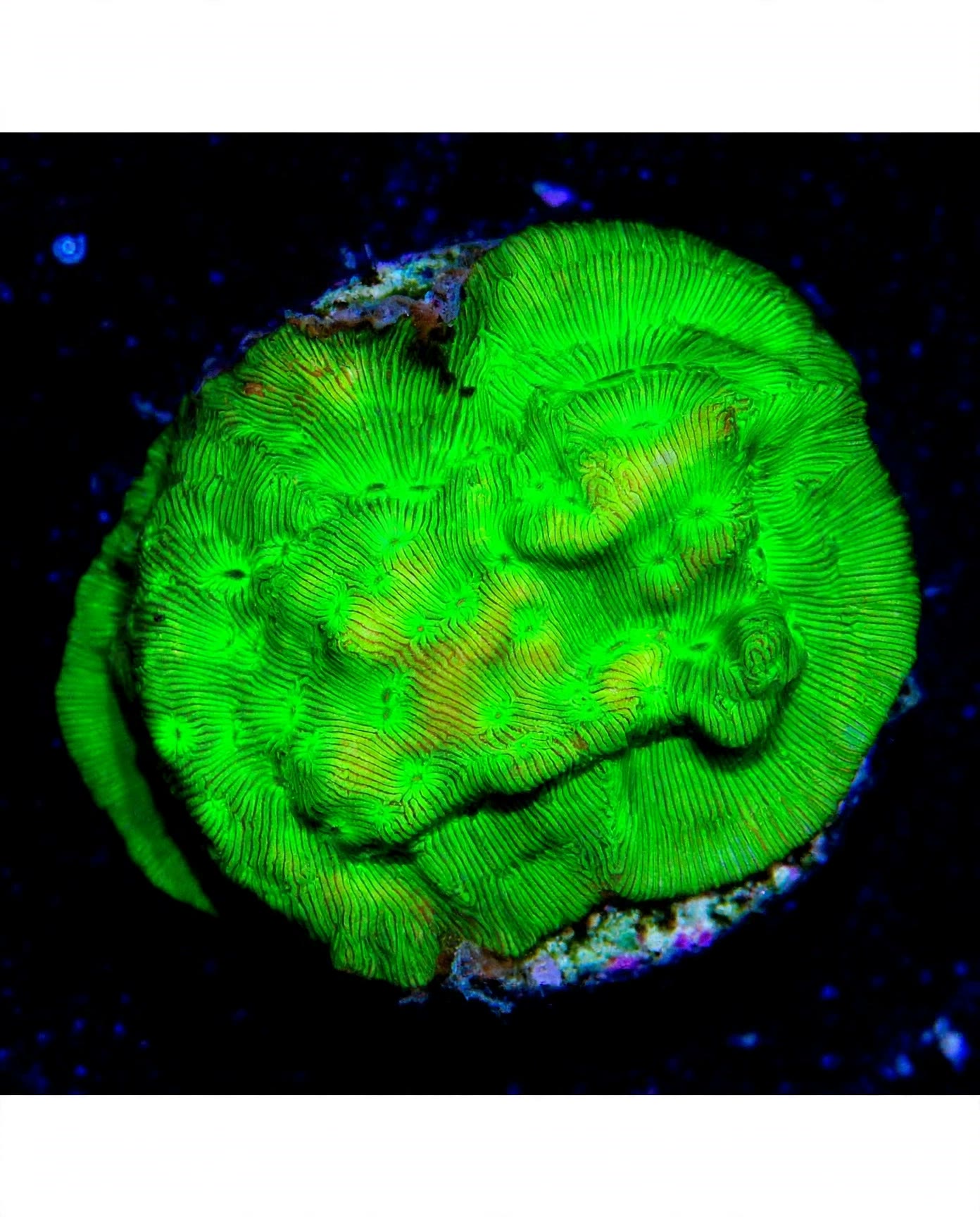
Kiwi Fusion Leptoseris
Similar care · SPS
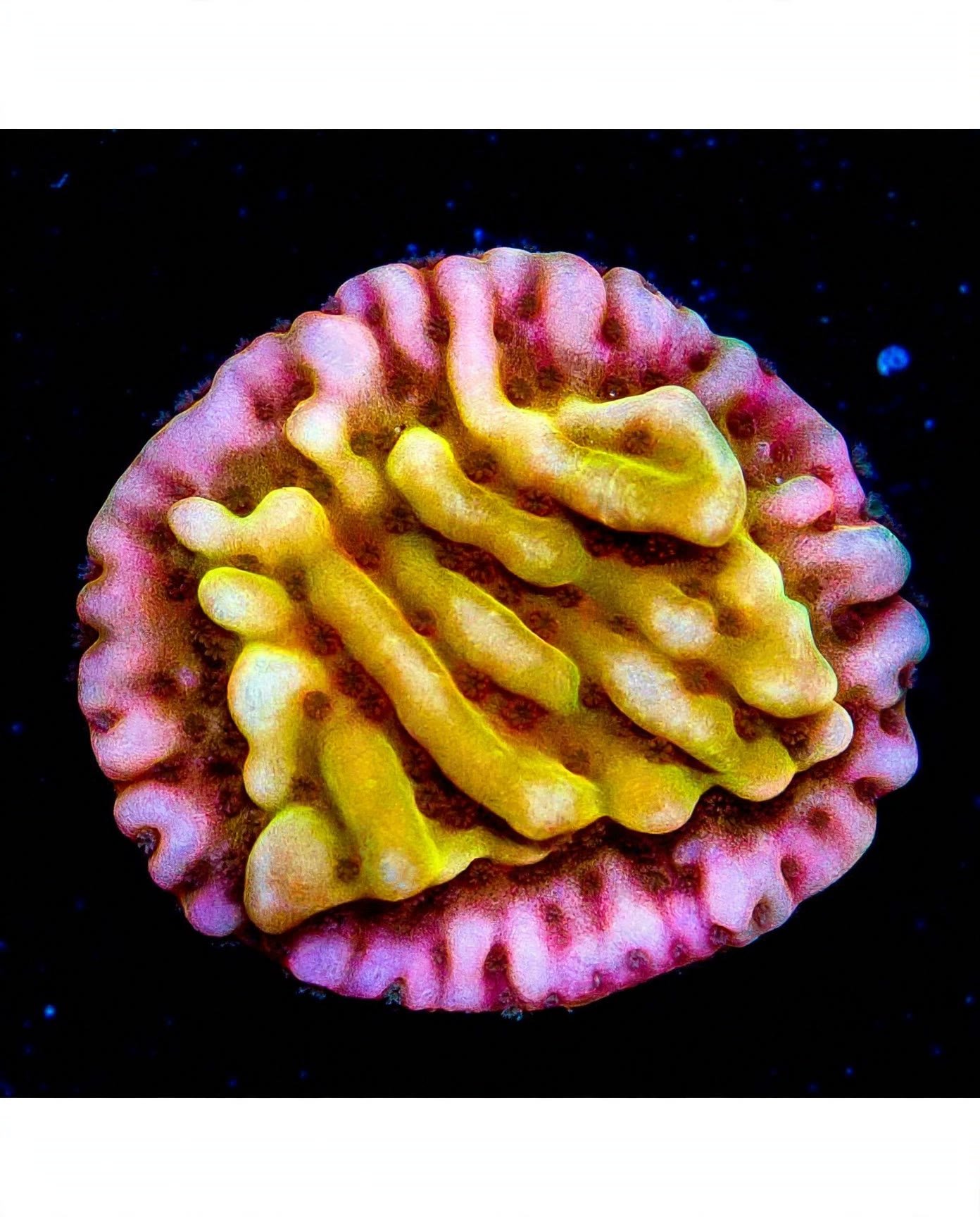
Love Shack Montipora
Similar care · SPS
Luminescence Anacropora
Similar care · SPS

Mystic Sunset Montipora
Similar care · SPS