Green slimer acropora
Acropora yongei
 ▶ Video
Care facts
- Care
- Intermediate
- Light
- Medium-High
- Flow
- High
- Place
- Mid
- Space
- Peaceful
- Growth Rate
- Fast
Gallery
Videos
# Green Slimer Acropora
A little Green Slimer frag can become the branchy centerpiece of a reef. The catch is in the word can. This coral has a reputation for being forgiving among Acropora, not for making an unstable tank forgiving.
Give it a steady home first. Then make room for what it may grow into.
Meet the Green Slimer
Green Slimer is a trade name associated with Acropora yongei. Reef To Go records this entry under that scientific name. We are keeping that record, not claiming to have confirmed the species from its photograph.
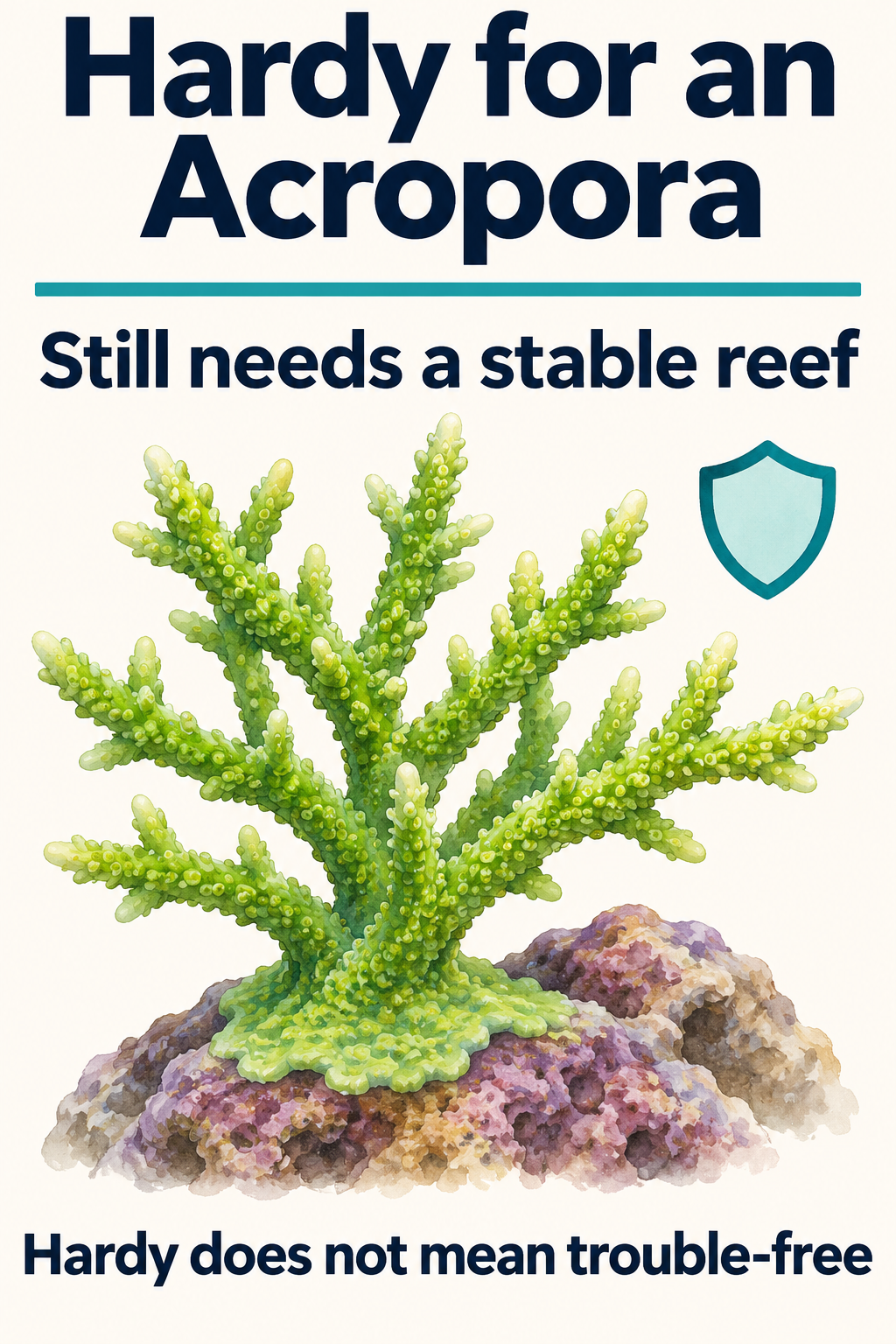
That distinction matters. Corals of the World describes several similar-looking species. Its account of wild A. yongei describes dense stands of short branches in shallow reef habitats. An aquarium name and a green photograph are not a substitute for a species identification. [Corals of the World](https://www.coralsoftheworld.org/species_factsheets/species_factsheet_summary/acropora-yongei/)
The aquarium strain is sold for its bright green color and branching growth. World Wide Corals calls it relatively resilient while still rating care intermediate to advanced. Both statements can be true: it may be an approachable Acropora for someone already keeping a stable reef, without being a good first coral. [WWC Green Slimer](https://worldwidecorals.com/collections/sale-frag-collection/products/green-slimer-acropora)
Enjoy the color, but do not judge success by matching a sales photograph. Lighting and camera settings change what you see. Watch the living tissue and the coral's progress too.
Light and flow without the shock
The goal is enough light for growth, introduced without a sudden jump. The old guide's roughly 200–350 PAR is a starting reference, not a pass-or-fail test. BRS lists a broader medium-to-high range for its WWC Green Slimer. Ask about the source tank and measure your own proposed spot when possible. [BRS Green Slimer](https://www.bulkreefsupply.com/green-slimer-acropora-world-wide-corals.html)
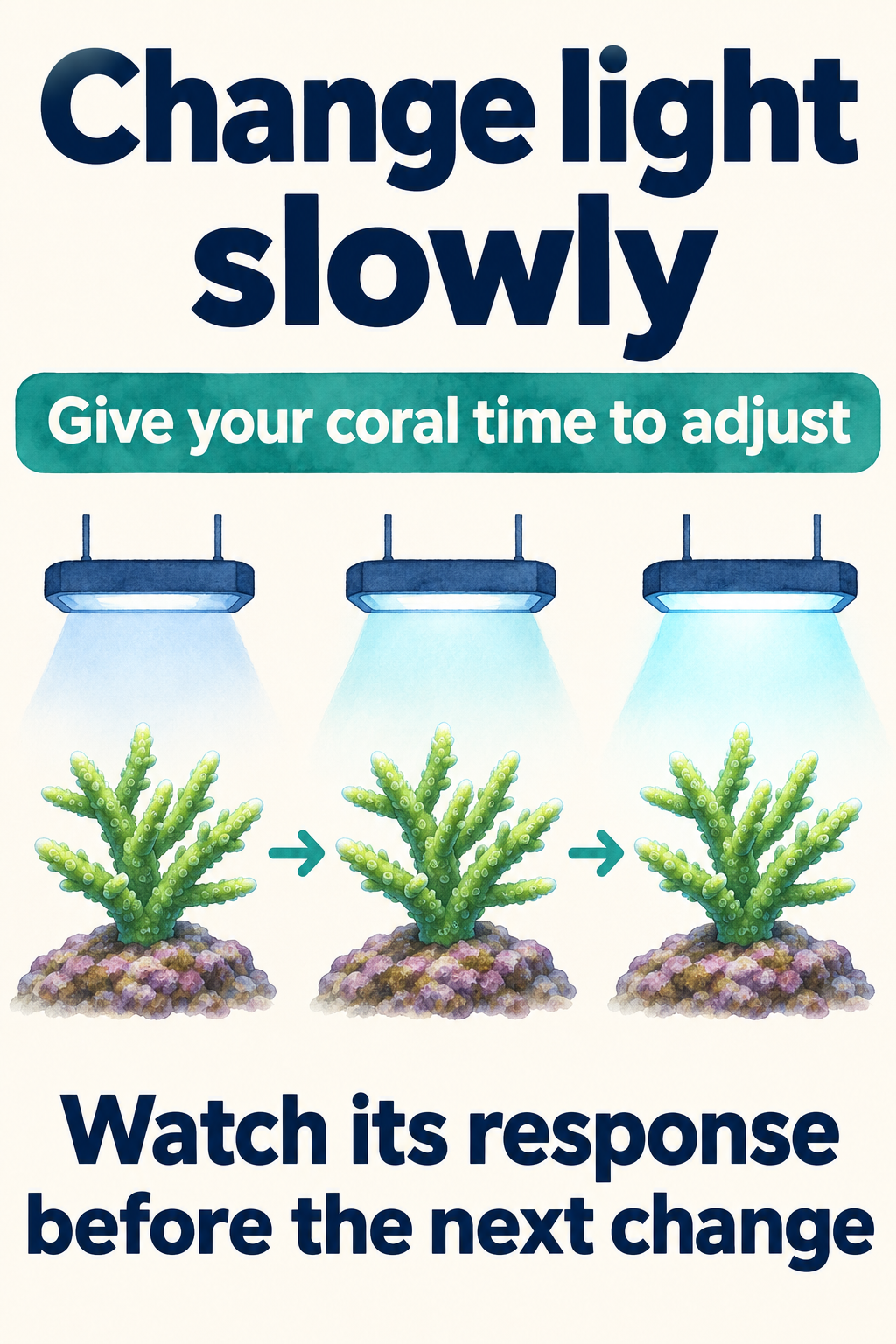
Do not move a newly shipped frag straight into the brightest spot just because it is an Acropora. Start more gently and increase exposure gradually. If you change both the light and the location repeatedly, it becomes harder to tell what helped.
Tidal Gardens recommends strong, changing flow for Acropora and notes that a growing colony can alter the circulation around it. Check the base and the spaces between branches, not just the tips. A pump layout that suited a small frag may need adjusting later. Its advice is genus-level guidance, not a Green Slimer experiment. [Tidal Gardens Acropora care](https://tidalgardens.com/stock-silver-surfer-acropora.html)
High flow does not mean holding the coral in a narrow, constant jet. Look for water moving around the colony from different directions. [Reef Culture Co. Acropora guide](https://reefcultureco.com/pages/acropora-coral-care-guide)
Keep the water steady
Growing a stony skeleton uses calcium and alkalinity. As your reef grows, its demand can change. BRS specifically recommends testing these in a Green Slimer system and replacing what the corals use. Dose for your measurements, not for someone else's colony. [BRS Green Slimer](https://www.bulkreefsupply.com/green-slimer-acropora-world-wide-corals.html)

Make a simple habit of checking trends. Is alkalinity staying near your chosen operating level? Is salinity drifting? Has the temperature changed? A surprising result deserves a second check before a large correction.
Food is part of the picture too. Acropora receive much of their energy through their symbiotic algae, but that does not mean they need light and nothing else. Tidal Gardens discusses small suspended foods alongside photosynthesis. If you try a coral food, keep the trial modest and watch the tank's response. A feeding experiment is not a reason to stop checking water quality. [Tidal Gardens Acropora care](https://tidalgardens.com/stock-silver-surfer-acropora.html)
Do not chase zero nitrate and phosphate as a badge of cleanliness. Available nutrients and stable conditions matter more than making every test read as low as possible. Nor is adding more food automatically the answer to slow growth. [Reef Culture Co. Acropora guide](https://reefcultureco.com/pages/acropora-coral-care-guide)
Give the branches room
Plan around a future colony, not today's frag plug. Green Slimer is known for upright branching growth. WWC suggests mid-to-upper placement, but the right position in your tank depends on the actual light and circulation there. The existing Mid care-card value remains a useful starting point. [WWC Green Slimer](https://worldwidecorals.com/collections/sale-frag-collection/products/green-slimer-acropora)
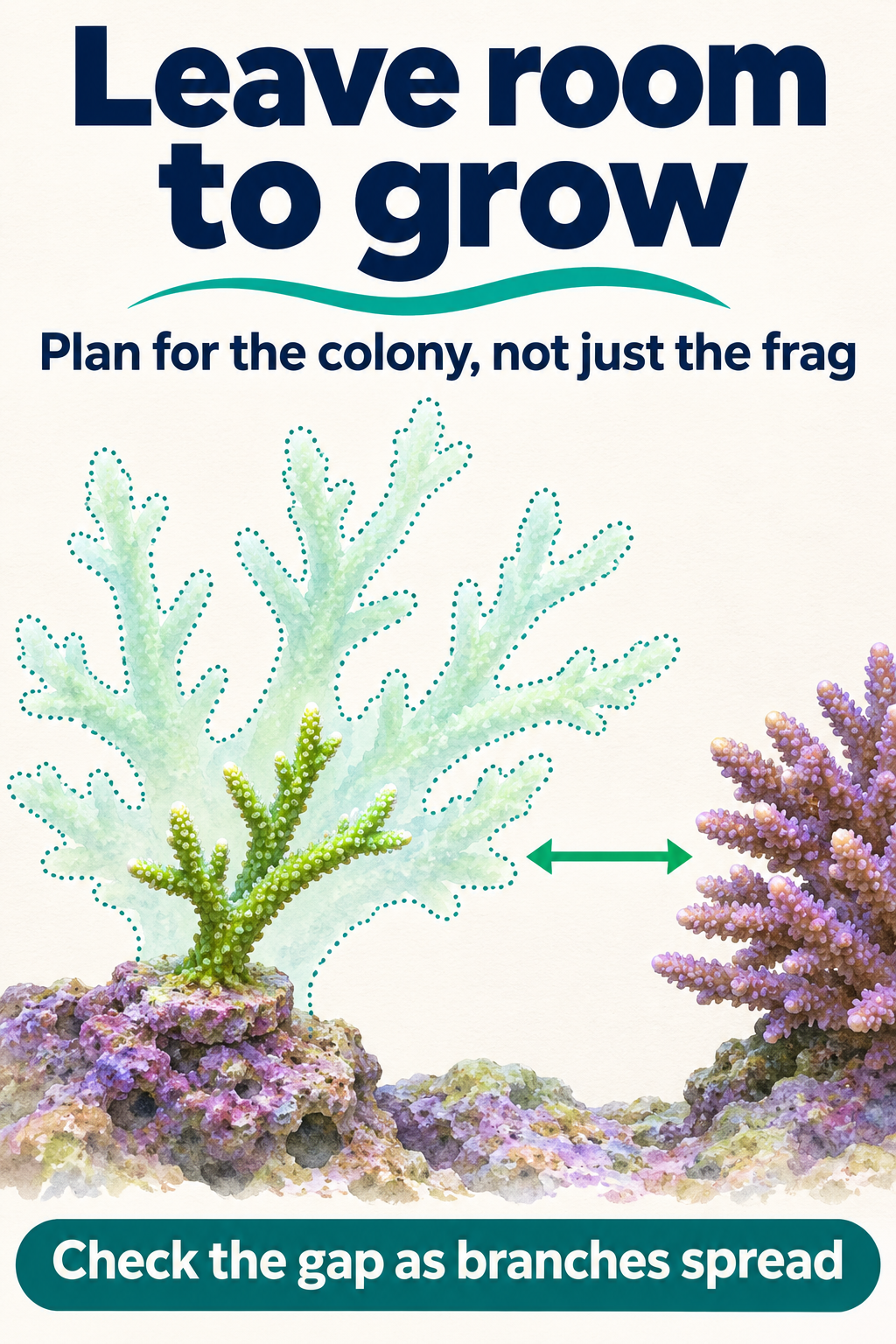
The old four-inch spacing advice should not be read as permanent protection. A gap shrinks as either neighbor grows. Leave room to inspect the base, clean nearby glass, and reach the colony when maintenance is needed. Check for shading and approaching contact during routine observation.
The care card calls this coral Peaceful, matching the supplier classification. That is not permission to let it touch another coral. Avoid placing it within reach of a neighbor that can sting or overgrow it. [BRS Green Slimer](https://www.bulkreefsupply.com/green-slimer-acropora-world-wide-corals.html) [Placement guidance](https://reefcultureco.com/pages/acropora-coral-care-guide)
If the colony is outgrowing its spot, plan the next step before branches collide. Propagation can help manage space, but this guide does not prescribe a cutting method for an unseen colony. Frag a healthy, settled coral with suitable clean tools and a plan for securing and healing the pieces. Seek experienced help if you have not done it before.
Check before you dip
A closed polyp or a dull patch is a reason to look closer, not a diagnosis. Photograph changes under consistent lighting. Check recent maintenance, equipment and test results before deciding what treatment the coral needs.
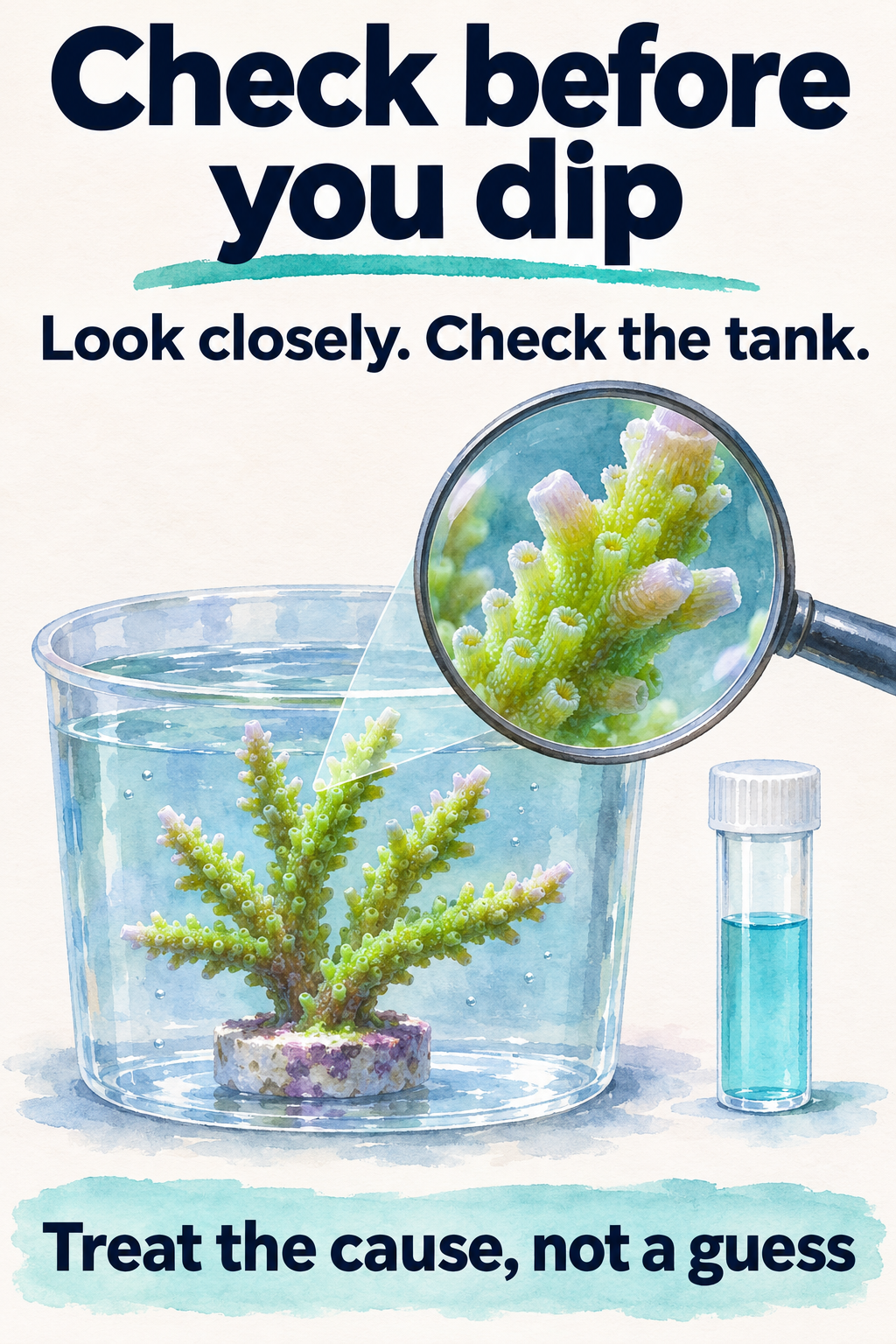
Inspect new Acropora separately before they join the display. Acropora-eating flatworms are one reason quarantine matters. Practical Fishkeeping explains that a dip may affect the worms without eliminating their eggs. A single dip is therefore not proof that a coral is pest-free. [Practical Fishkeeping on Acropora flatworms](https://www.practicalfishkeeping.co.uk/features/how-do-i-stop-flatworms-eating-my-acropora/)
If pests are suspected, separate observation and a pest-specific plan are better than guessing with a succession of bottles. Use only a dip suitable for Acropora and follow its current instructions. Do not improvise a concentration or pour dip water into the display. [Reef Culture Co. Acropora guide](https://reefcultureco.com/pages/acropora-coral-care-guide)
Bare skeleton is different from living tissue that has become pale. If tissue loss is spreading, act promptly to investigate and get experienced help. The appearance alone does not tell you whether the cause is a pest, environmental stress or disease. This guide does not offer a universal cure or a diagnosis from a photograph.
Field notes — what keepers report
Green Slimer's fast-growth reputation is real in hobby reports, but it is not everyone's experience.
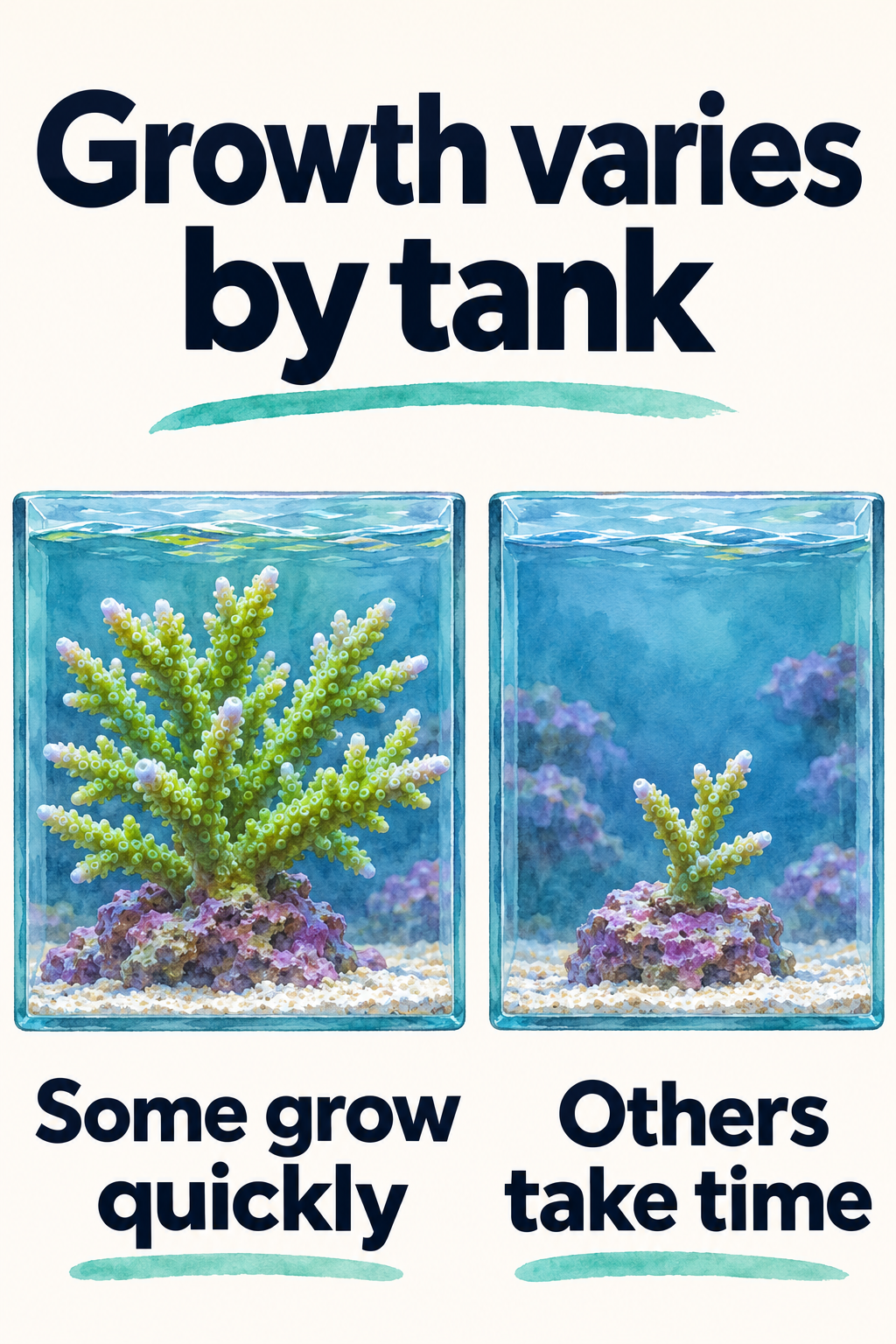
In a Reef2Reef discussion, Reeffraff reported new branching within weeks, and ca1ore called it the fastest-growing Acropora in that tank. In the same thread, Gordonm described little early progress, while Ef4life reported months without visible growth even though other corals were growing. Those are individual accounts, not controlled comparisons. [Reef2Reef: Green slimer](https://www.reef2reef.com/threads/green-slimer.718082/)
The useful lesson is not to copy the fastest keeper's settings. Their lighting, water, starting frag and observation period may differ from yours. Fast growth is possible. An exact timetable is not promised.
Keep a few photos from the same angle and lighting. Look for changes at the base as well as branch tips. If progress stalls, review the whole setup rather than raising light or adding supplements on the strength of one forum reply. Change one thing for a reason, then give yourself a fair chance to see what happened.
A good Green Slimer story starts with a steady reef. The branches come after that.
---
Sources reviewed for this guide on 9 November 2026 are linked beside the relevant passages. Supplier advice describes aquarium practice, not controlled research; keeper reports are explicitly anecdotal. General Acropora guidance is identified as such rather than presented as a test of this exact strain.
Field Notes
Related species

Red slimer acropora
Acropora sp.
Same genus

GARF Bonsai Acropora
Acropora valida
Same genus
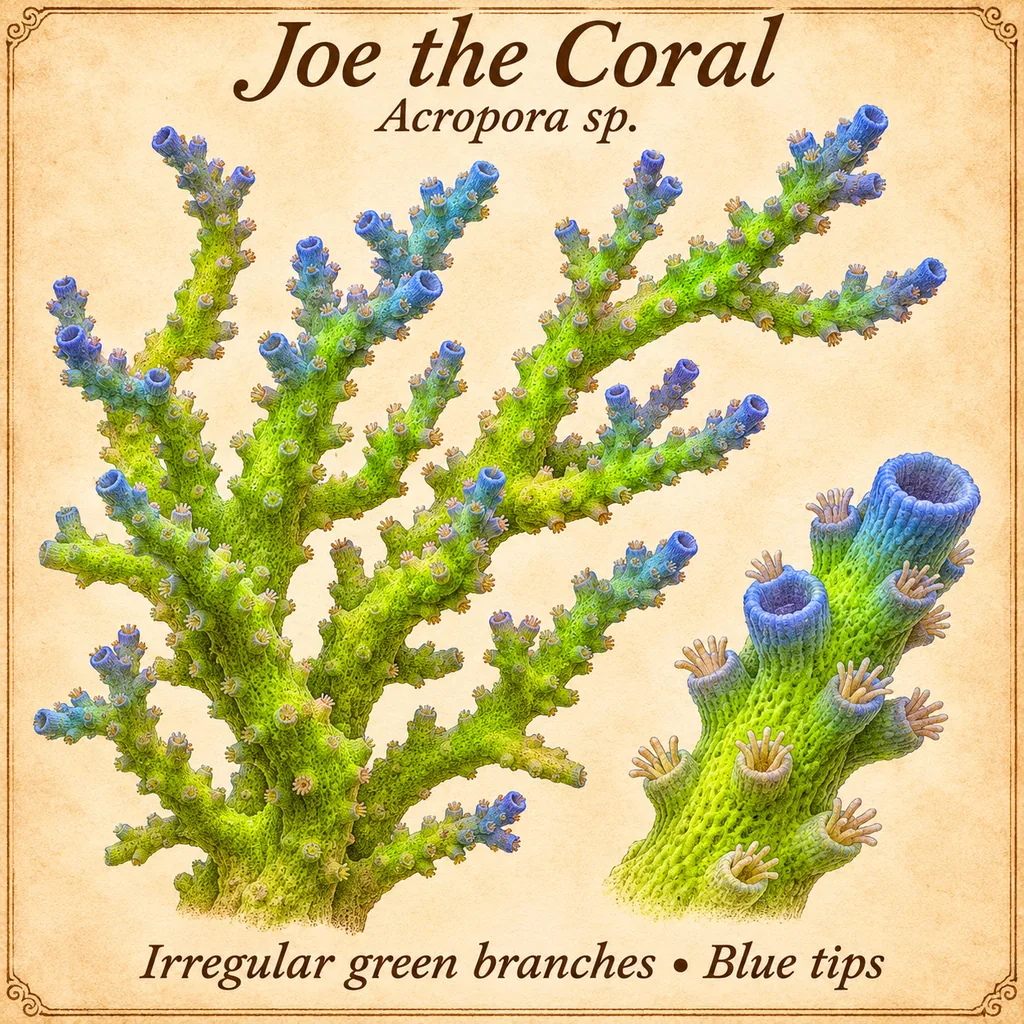
Joe the Coral
Acropora sp.
Same genus
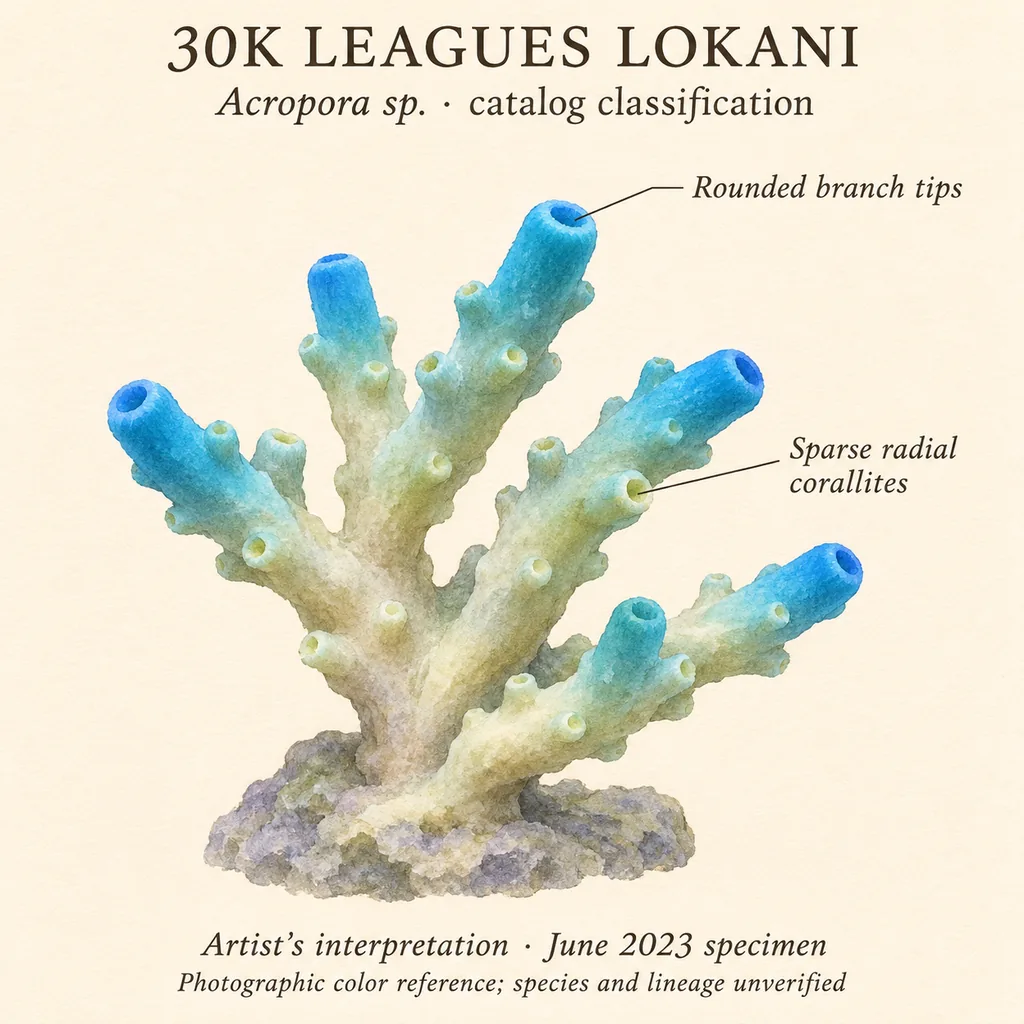
30K Leagues Lokani
Acropora sp.
Same genus
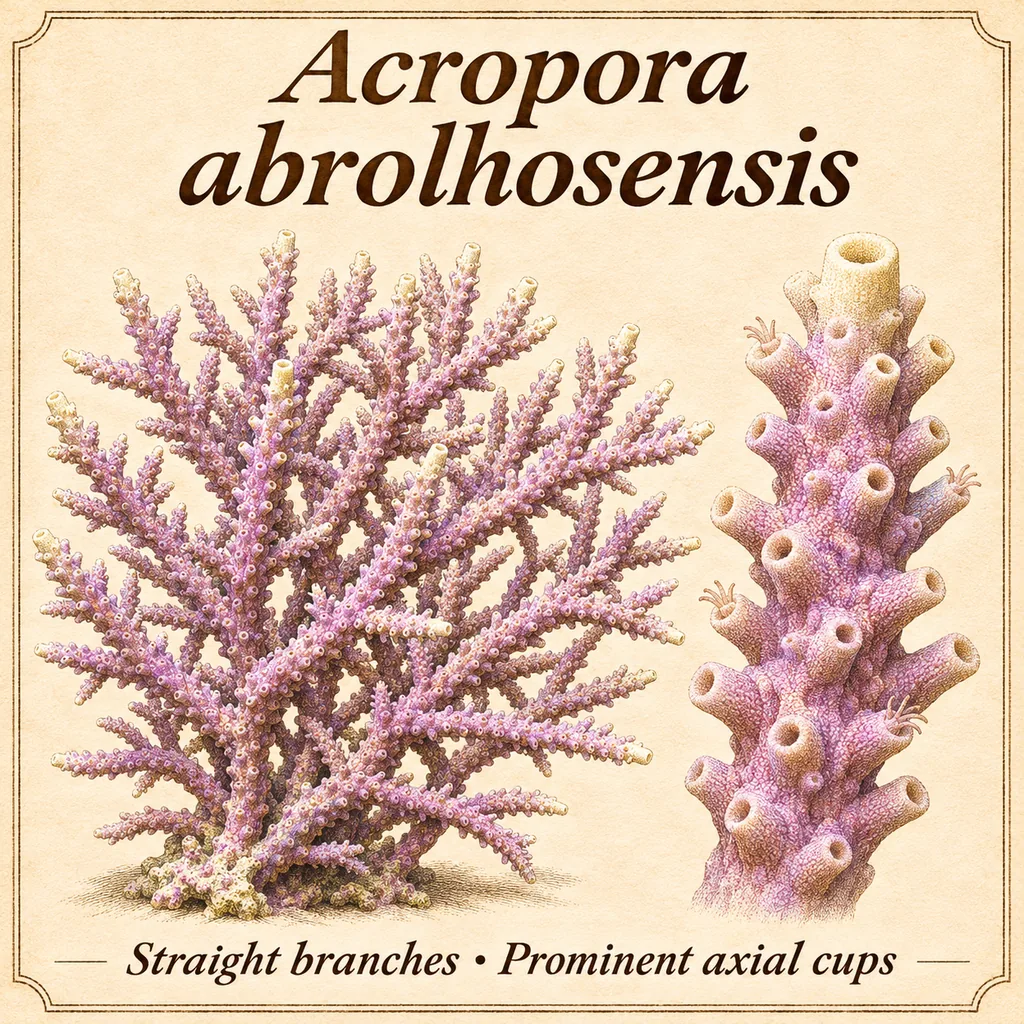
Acropora abrolhosensis
Acropora abrolhosensis
Same genus
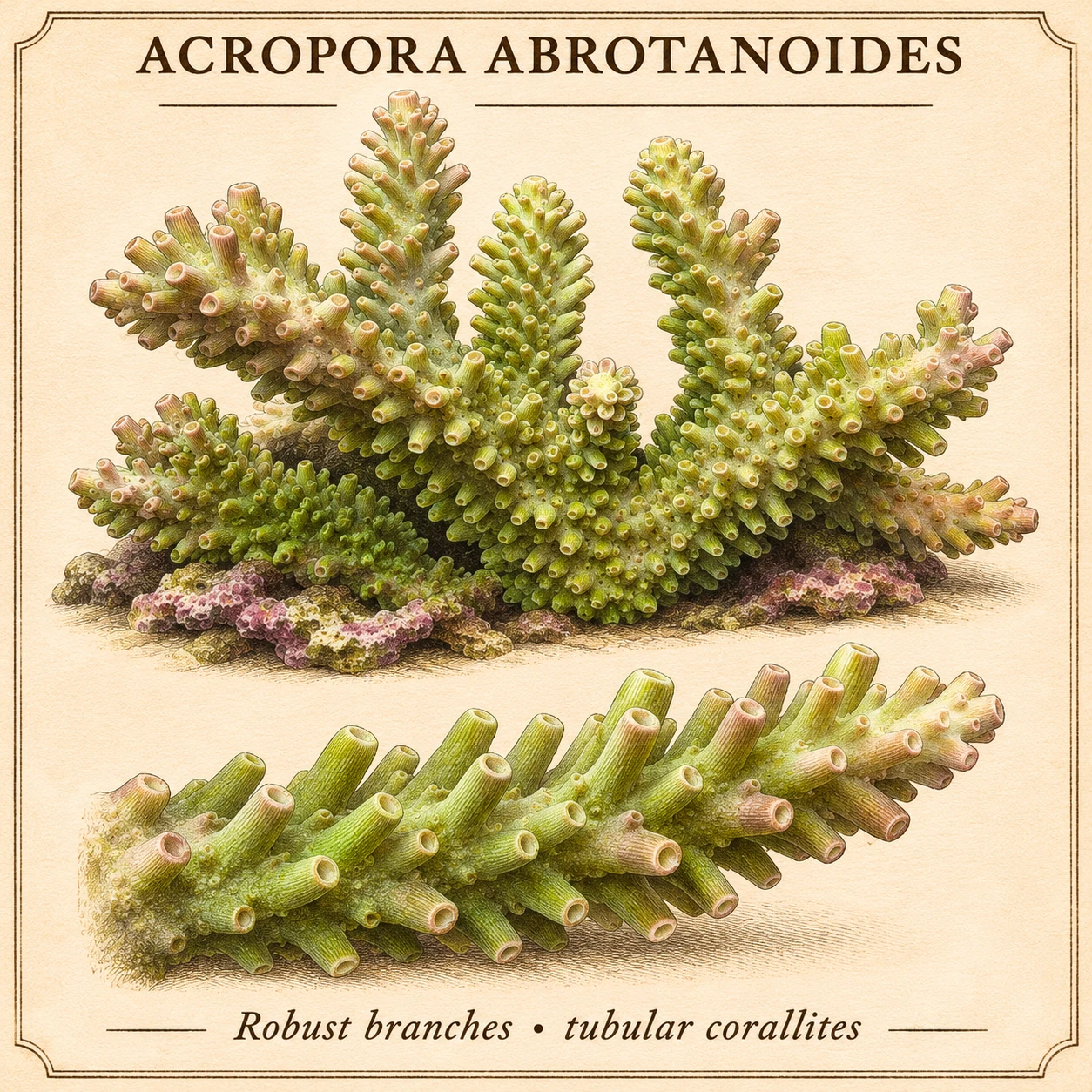
Acropora abrotanoides
Acropora abrotanoides
Same genus
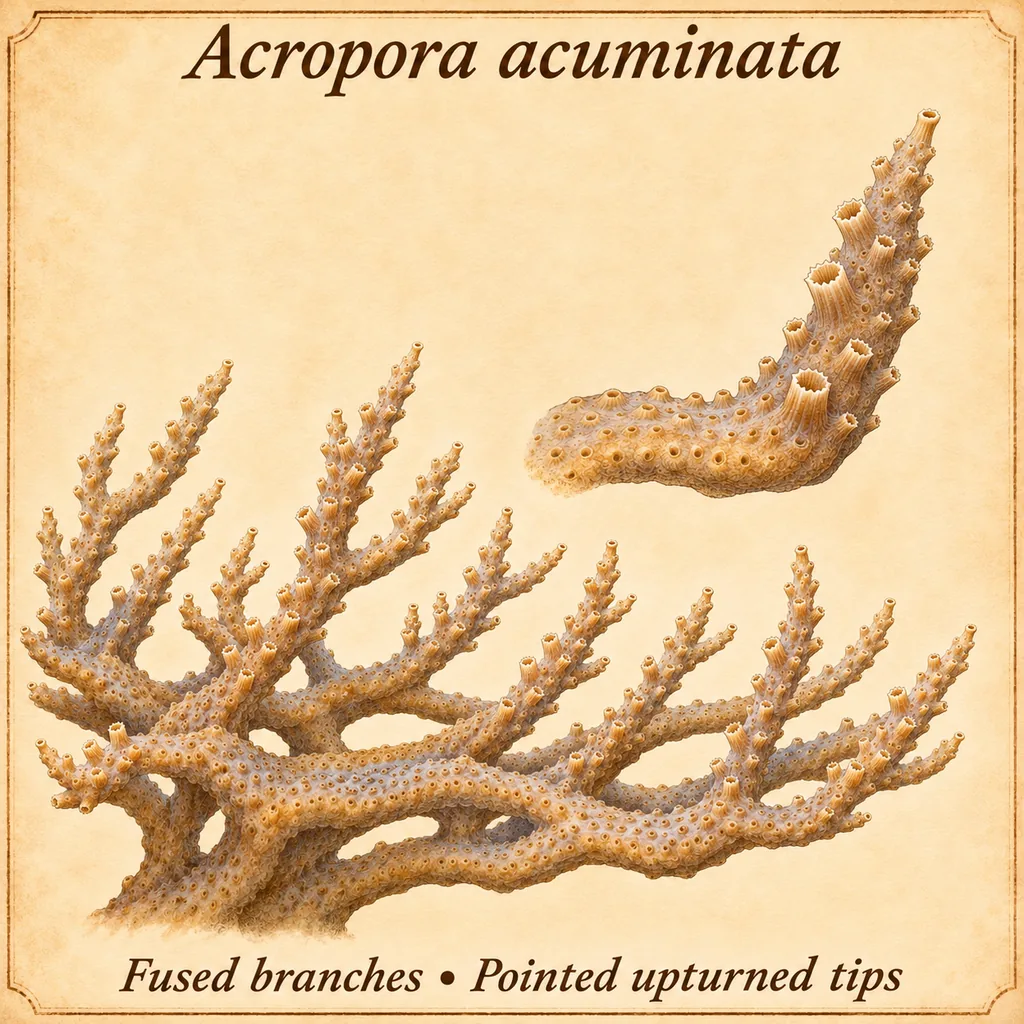
Acropora acuminata
Acropora acuminata
Same genus
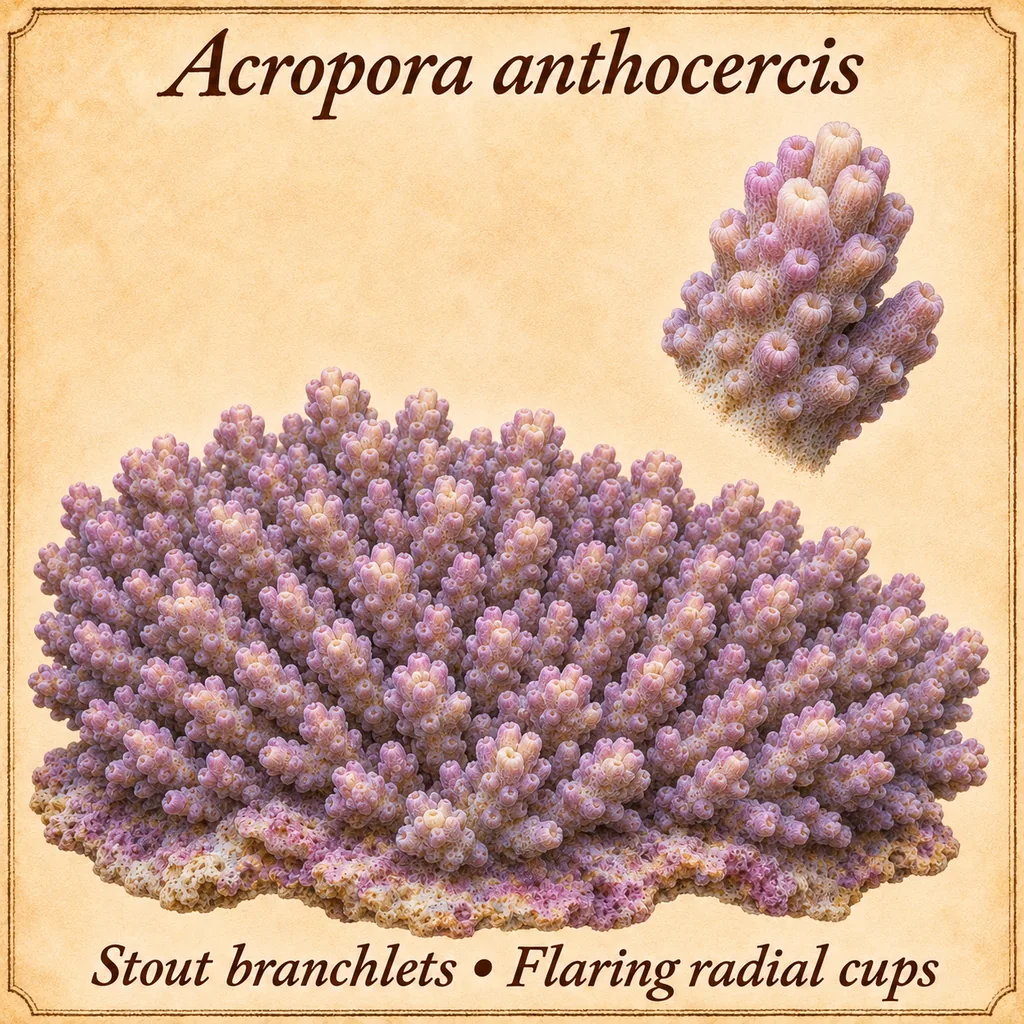
Acropora anthocercis
Acropora anthocercis
Same genus