
C-137 zoas
Zoanthus sp.
Also known as: ["C-137 Zoanthids", "C137 zoas"]
Care Summary
C-137 is a vivid green zoanthid strain — a saturated, almost radioactive green across the disc and skirt that holds its color under both blue and whiter light. The name is a pop-culture nod (Dimension C-137), and the strain earns it: few green zoas stay this bright once they settle in, which makes it a anchor piece for zoa gardens that need a true green rather than another teal.
Care follows the standard hardy zoanthid pattern: low to medium light (about 75 to 200 PAR), moderate indirect flow, and placement on low to mid rockwork while the mat establishes. Green morphs are notably light-tolerant for zoas and keep their color higher in the tank than most, so C-137 can fill mid-level spots that wash out fussier strains.
Zoanthids feed mostly from their zooxanthellae, so light matters more than target feeding, but most colonies respond well to a light broadcast of fine planktonic food or amino supplements once a week. Keep nutrients present rather than zeroed out — colonies kept in ultra-low-nutrient water often stall, shrink, or close up. Stable alkalinity between 8 and 10 dKH, calcium 400 to 450 ppm, salinity around 1.025 to 1.026, and temperatures of 77 to 79°F cover the basics.
Placement is about growth control as much as light. Zoanthids spread by a creeping mat and will overgrow slower neighbors, so many keepers give a named strain its own rock island with sand on all sides. A new frag should start low while it acclimates, then move up gradually if you want tighter polyps and stronger color.
Handling note: zoanthids can contain palytoxin. Wear gloves and eye protection when handling or fragging, wash hands afterward, and never boil or pressure-wash zoanthid-covered rock.
Field notes — what keepers report
Keepers report the green stays true in photos taken under blue light with an orange filter — a strain that looks in person the way it looks online. Several say it is one of the faster green zoas they have kept, with mats doubling in a few months in a fed tank. Reports also note it tolerates being moved and fragged well, reopening within a day, and that polyps stay open under light levels that make many other strains stretch or close.
Care
Field Notes
Related species

Circuit Breaker Cyphastrea

Citrus Burst Cyphastrea
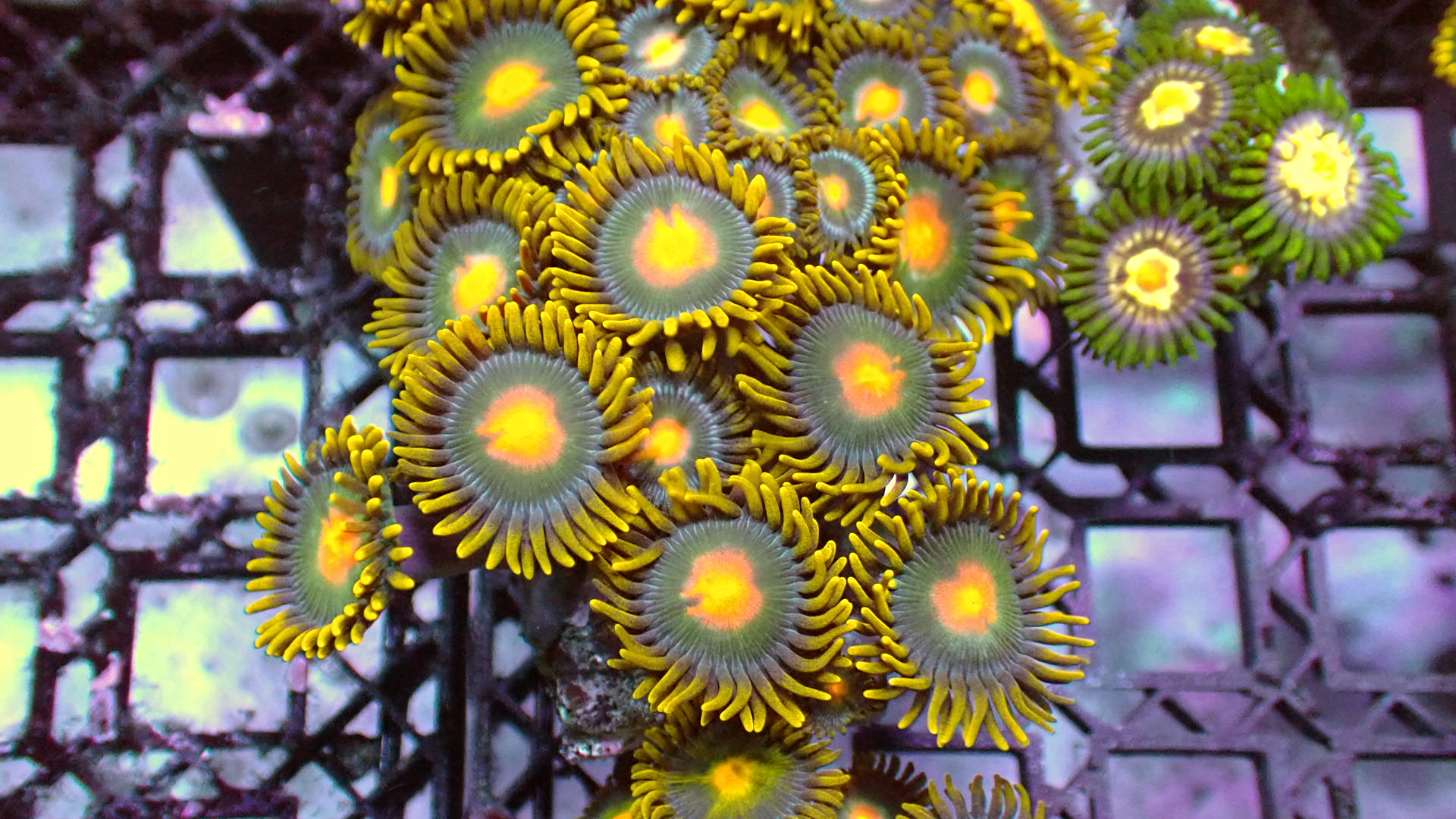
Green Bay Packers zoanthids
Zoanthus sp
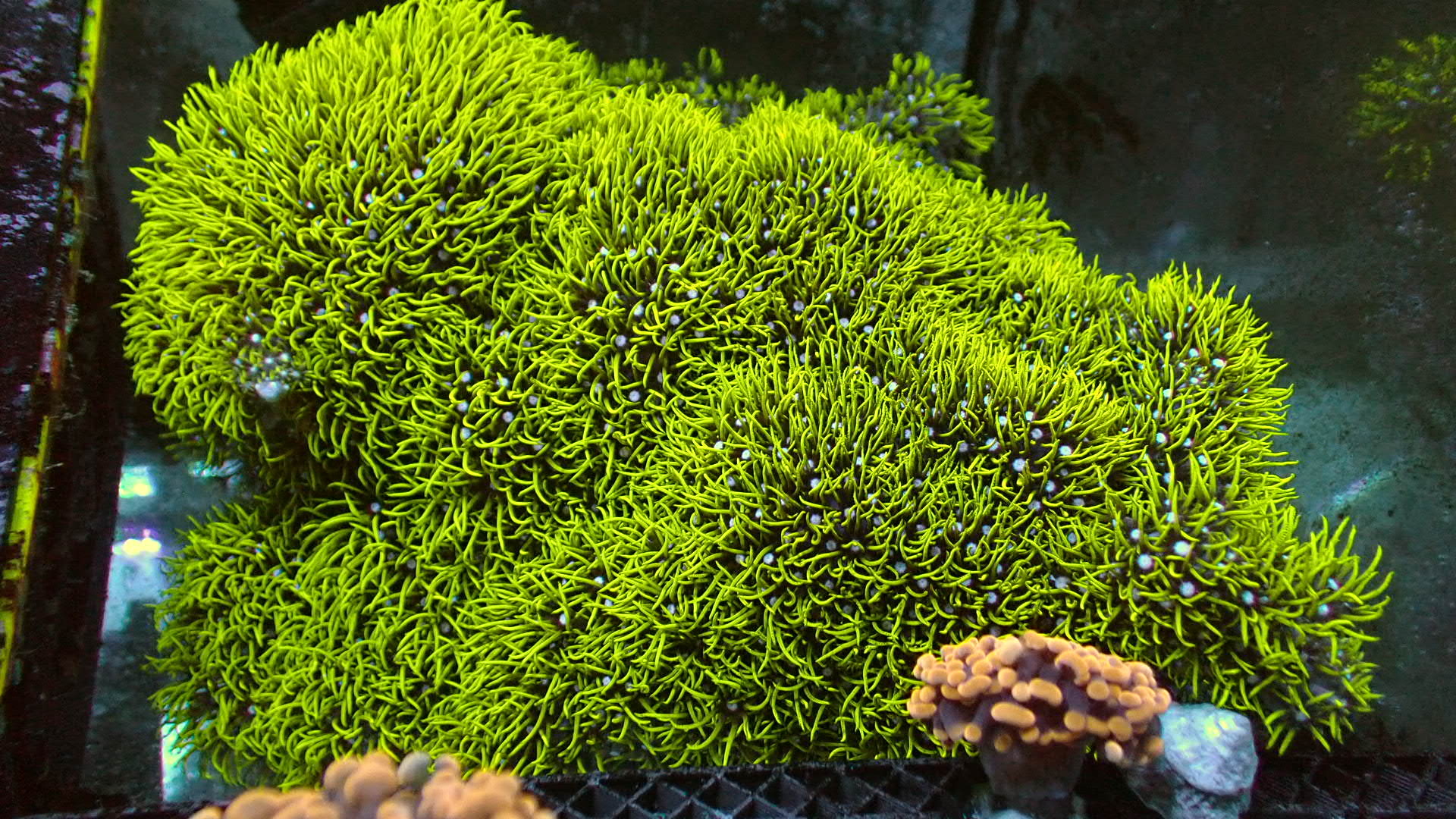
Green star polyps
Pachyclavularia violacea

Lunar eclipse zoanthids
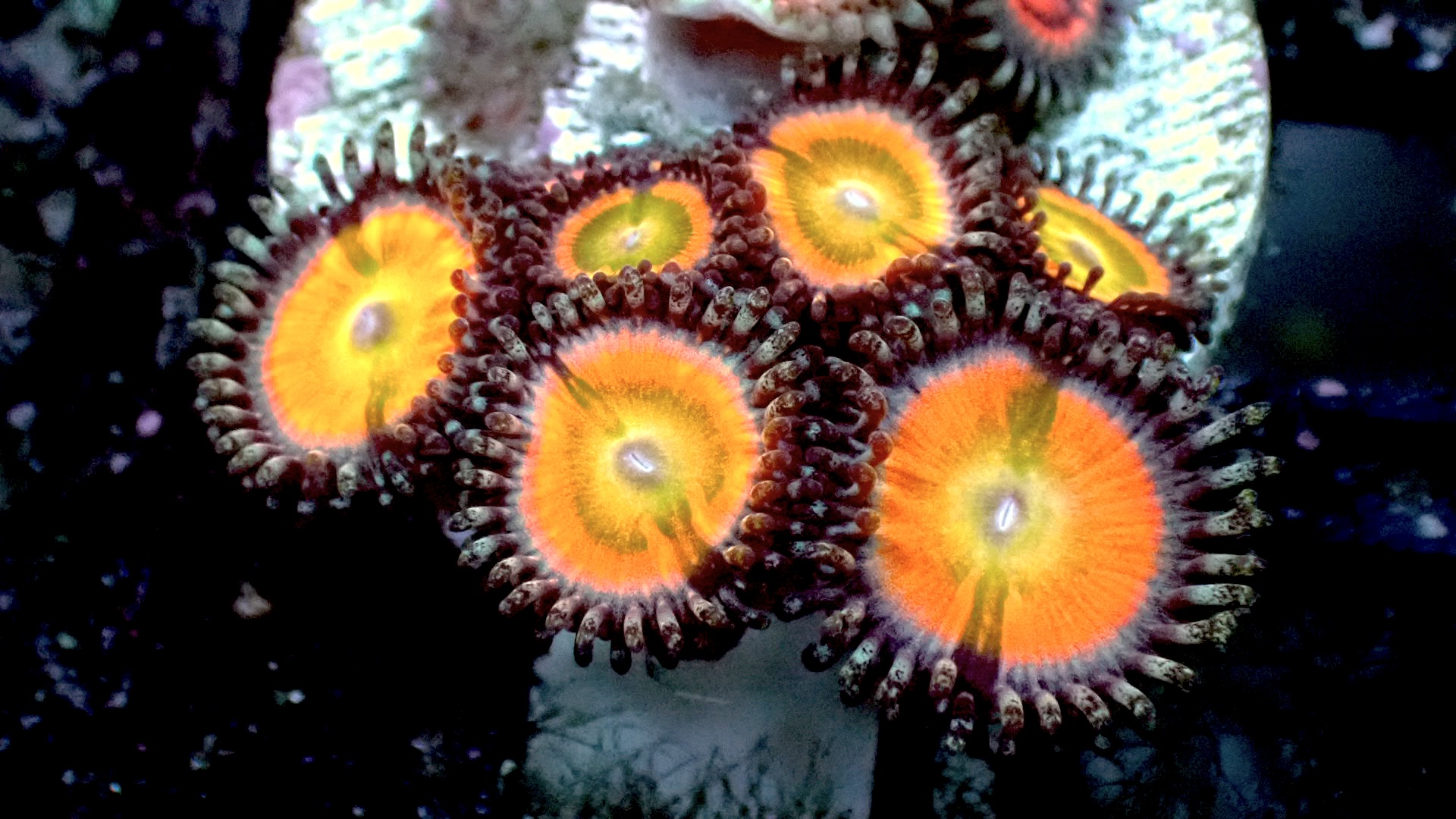
Rainbow infusion zoanthids
Zoanthus sp

Sunny d zoanthids
Zoanthus sp
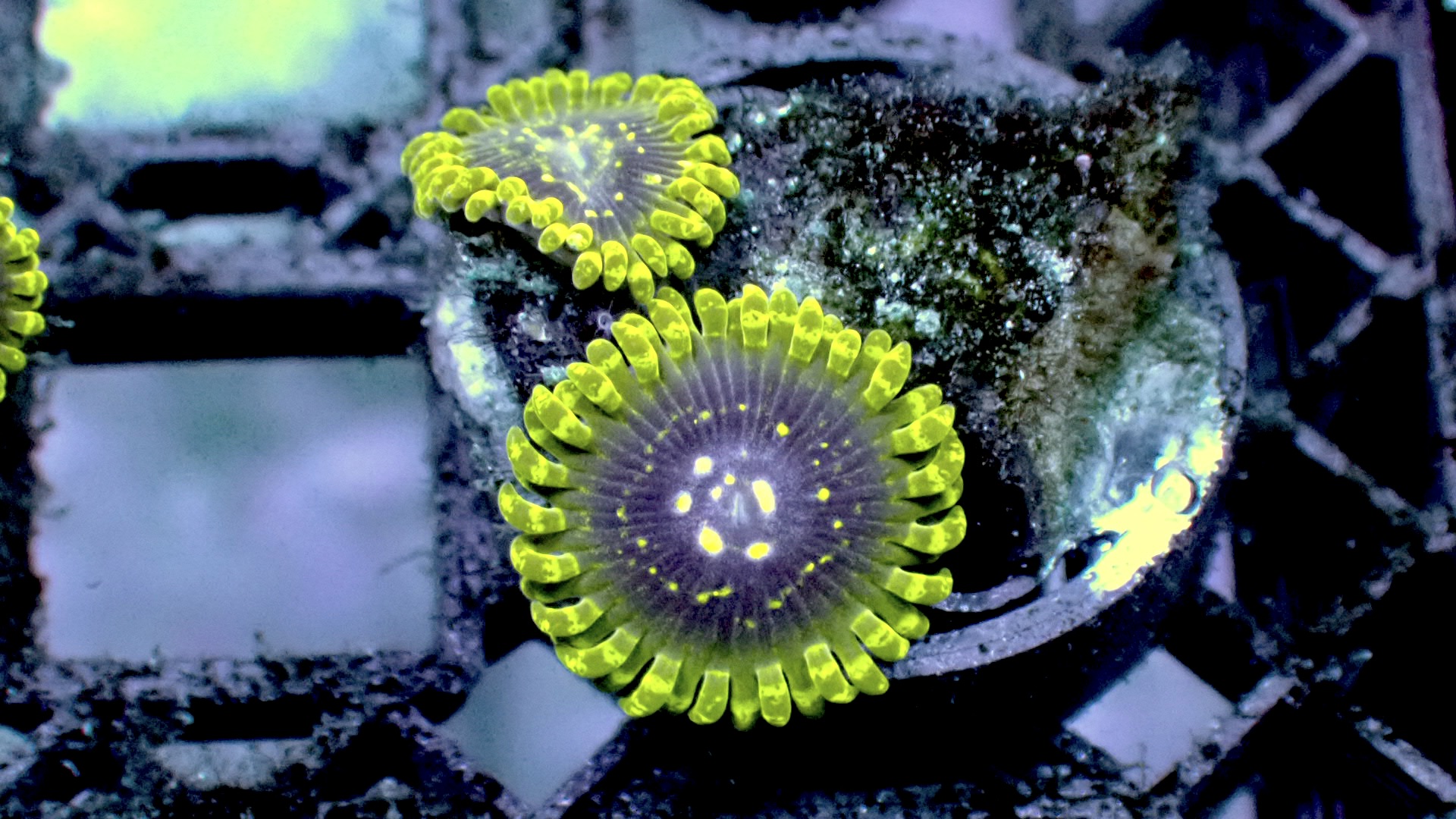
Exosphere zoanthids
Zoanthus sp