Fire Fly Goniopora

Diego Delso · CC BY-SA 4.0 · source
Photo: Diego Delso, delso.photo, CC BY-SA 4.0, via Wikimedia Commons. Goniopora albiconus, Ambalihabe, Madagascar. Genus reference, not Fire Fly stock. Unmodified original.
Care facts
- Care
- Intermediate
- Light
- Medium
- Flow
- Medium
- Place
- Low
- Space
- Moderate
- Growth Rate
- Moderate
Gallery
A Goniopora looks like a bunch of daisies until the flowers pull back and show the hard skeleton underneath. Fire Fly is a trade name, not a species ID. The hero photo shows a wild Goniopora albiconus from Madagascar as a genus reference. It does not show Reef To Go's Fire Fly stock.
A bouquet that moves
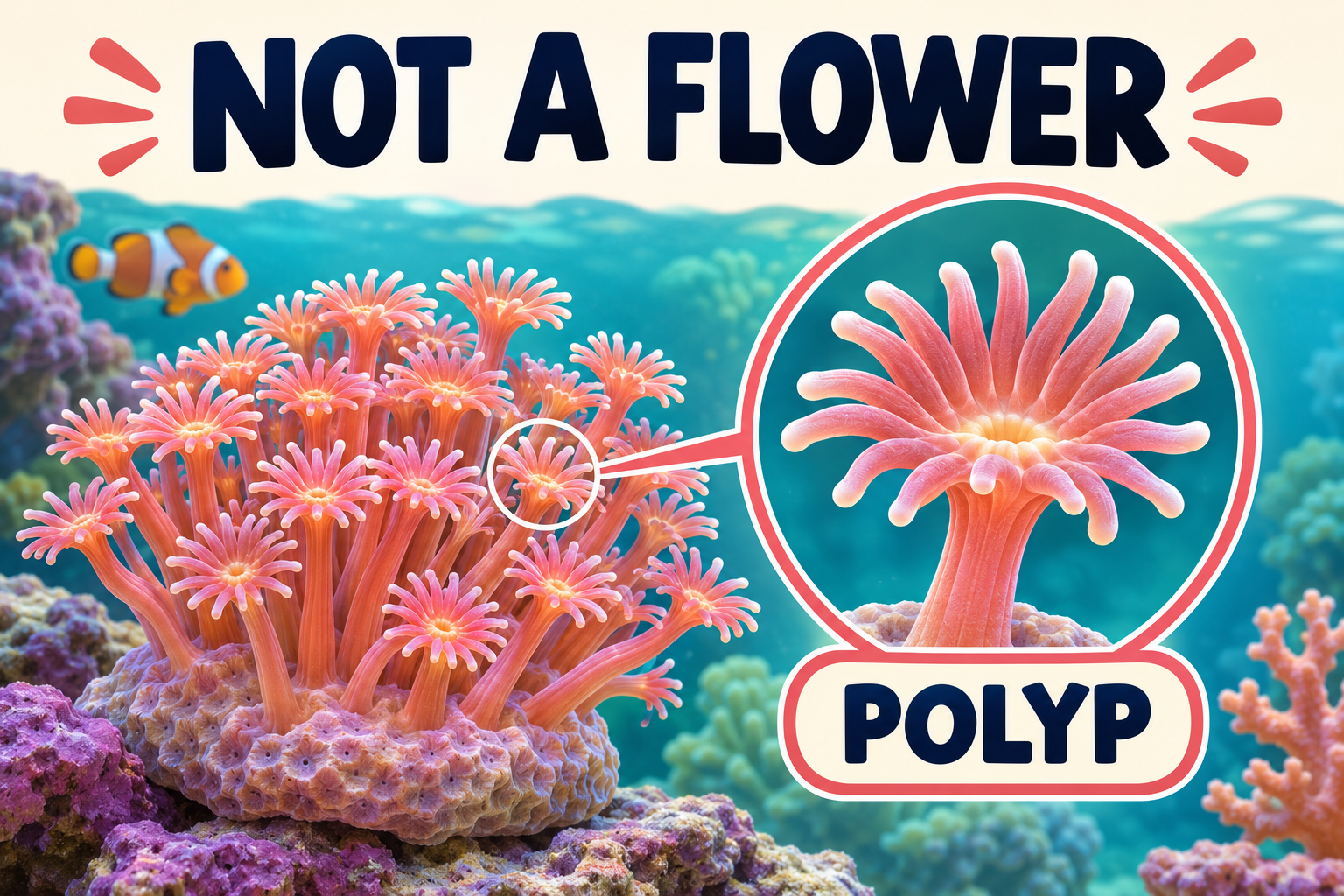
1. Those flowers are animals. Each flower is a polyp, with a mouth ringed by tentacles. Together the polyps share one hard skeleton.
2. The name is about the trade line. Fire Fly is sold as yellow-green with purple-tipped polyps under blue reef lighting. Under whiter lights, expect a different look.
Start low with moderate light
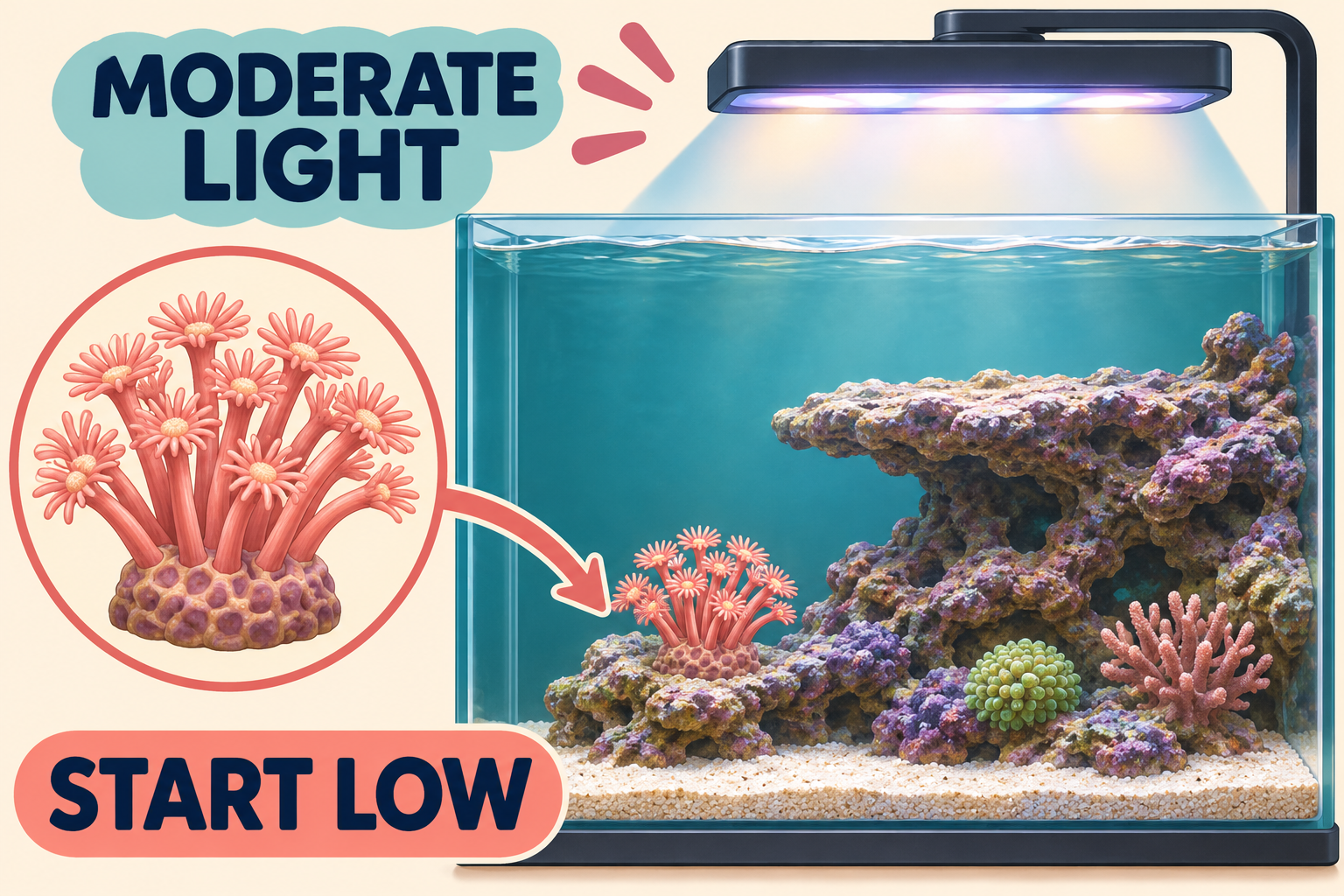
3. Pick a low spot. Set the frag on a firm lower ledge or a stable base near the sandbed. Keep the living tissue clear of shifting sand.
4. Change light slowly. Start in moderate light. If you move the frag or change the lamp, make one small adjustment and watch how it opens over several days.
Give it a gentle sway
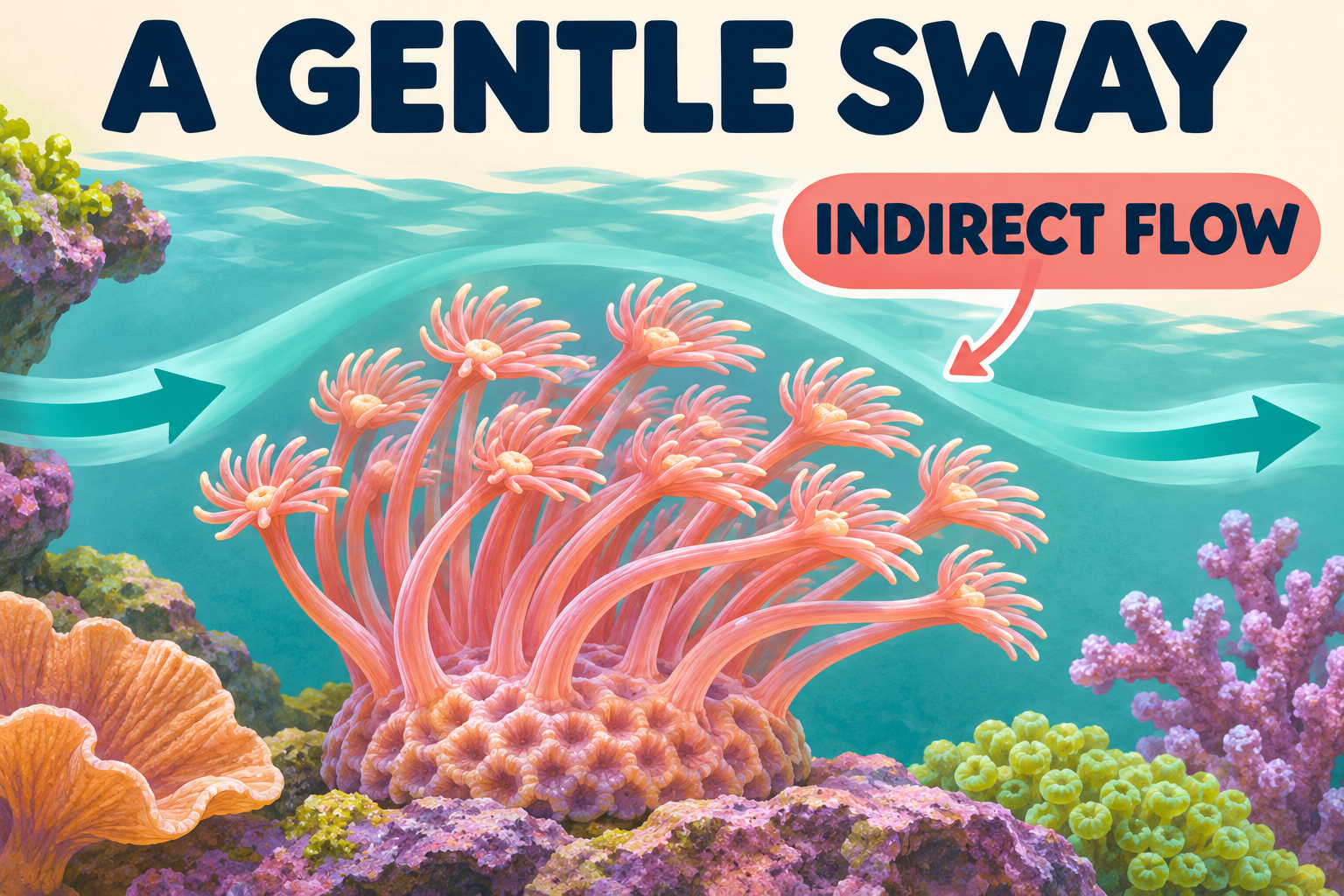
5. Aim the pump past it. The polyps should wave, not fold over in one direction. Let water sweep around the colony instead of firing a jet at it.
6. Check more than the pump setting. Rockwork and coral growth change the current. If one side stays shut, check for a jet, debris, or a neighbor brushing that side.
Small food, steady water
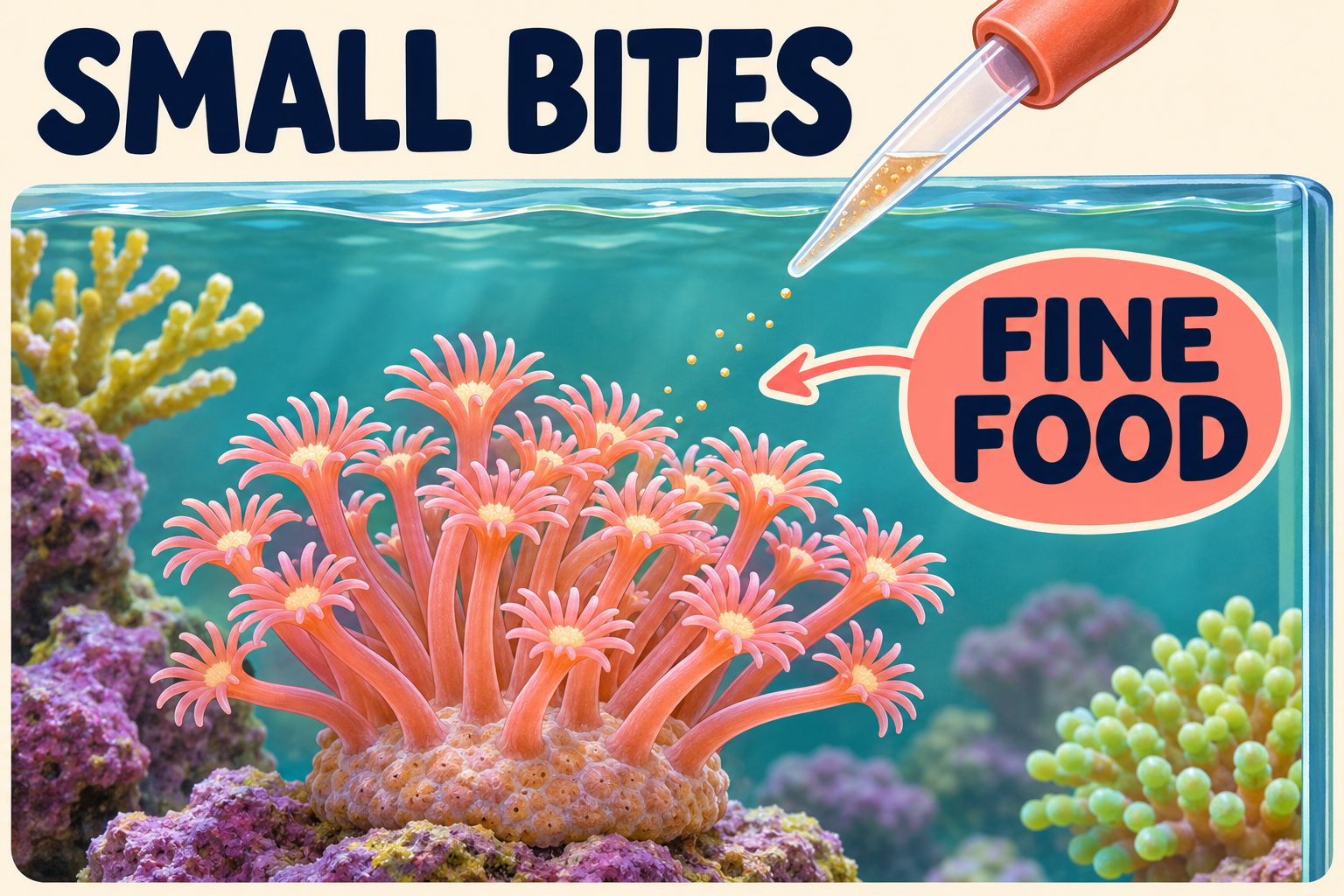
7. Offer fine food. Try a small amount of fine coral food when the polyps are open. Start with a light feed and avoid dumping in enough to cloud the tank.
8. Keep the basics steady. Use a mature tank and keep temperature, salinity, alkalinity, and calcium steady. If the coral stays closed, check those basics before adding supplements.
Give the flowers room
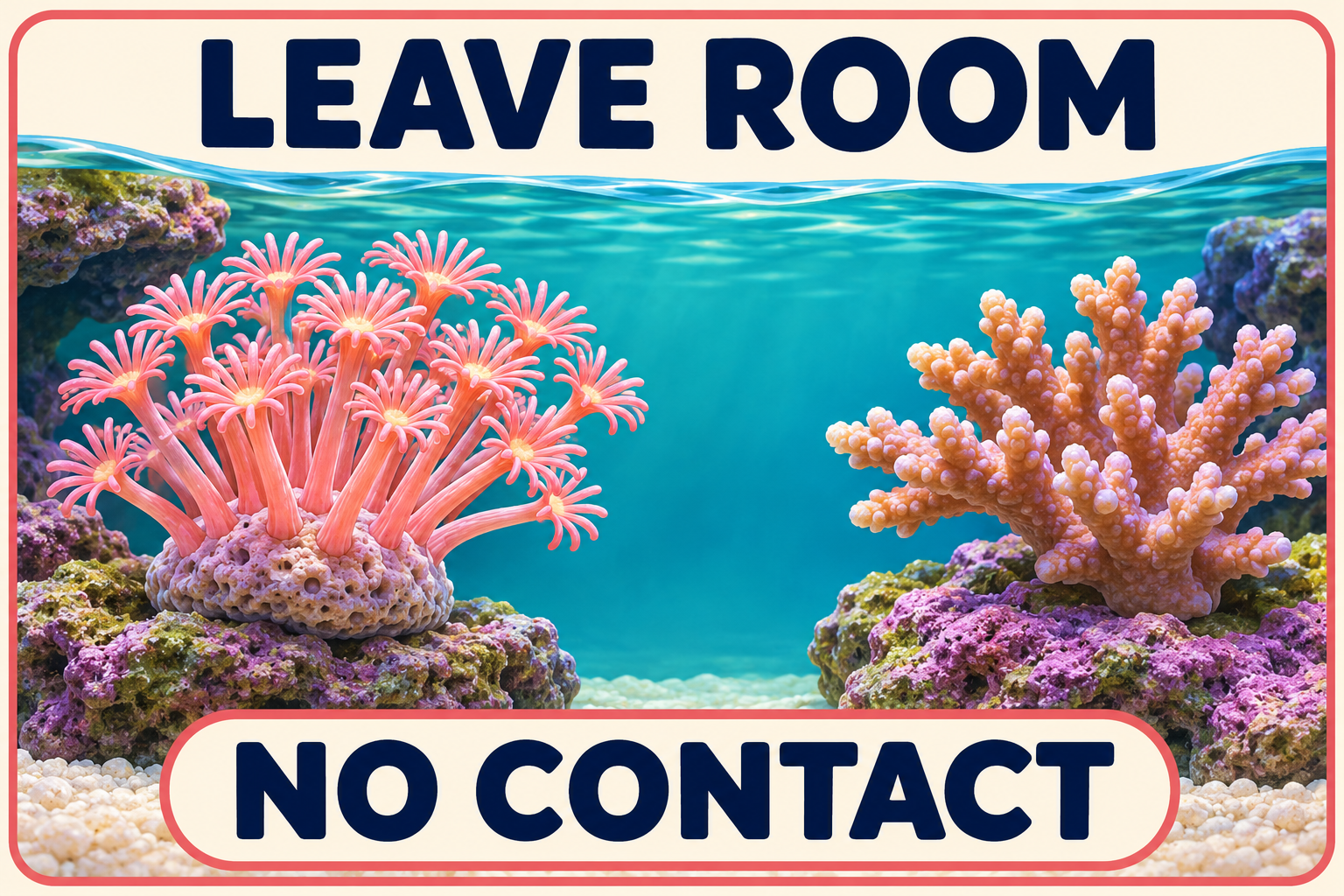
9. Space it when it's open. Check the reach of the longest polyps when both corals are extended. Leave a gap so neither colony touches the other, even when the current shifts.
10. Watch the edge. A brief tuck is different from tissue pulling back and leaving bare skeleton. If the bare patch spreads, check for contact, a direct jet, or a recent shift in water chemistry before moving the coral again.
Field notes — what keepers report
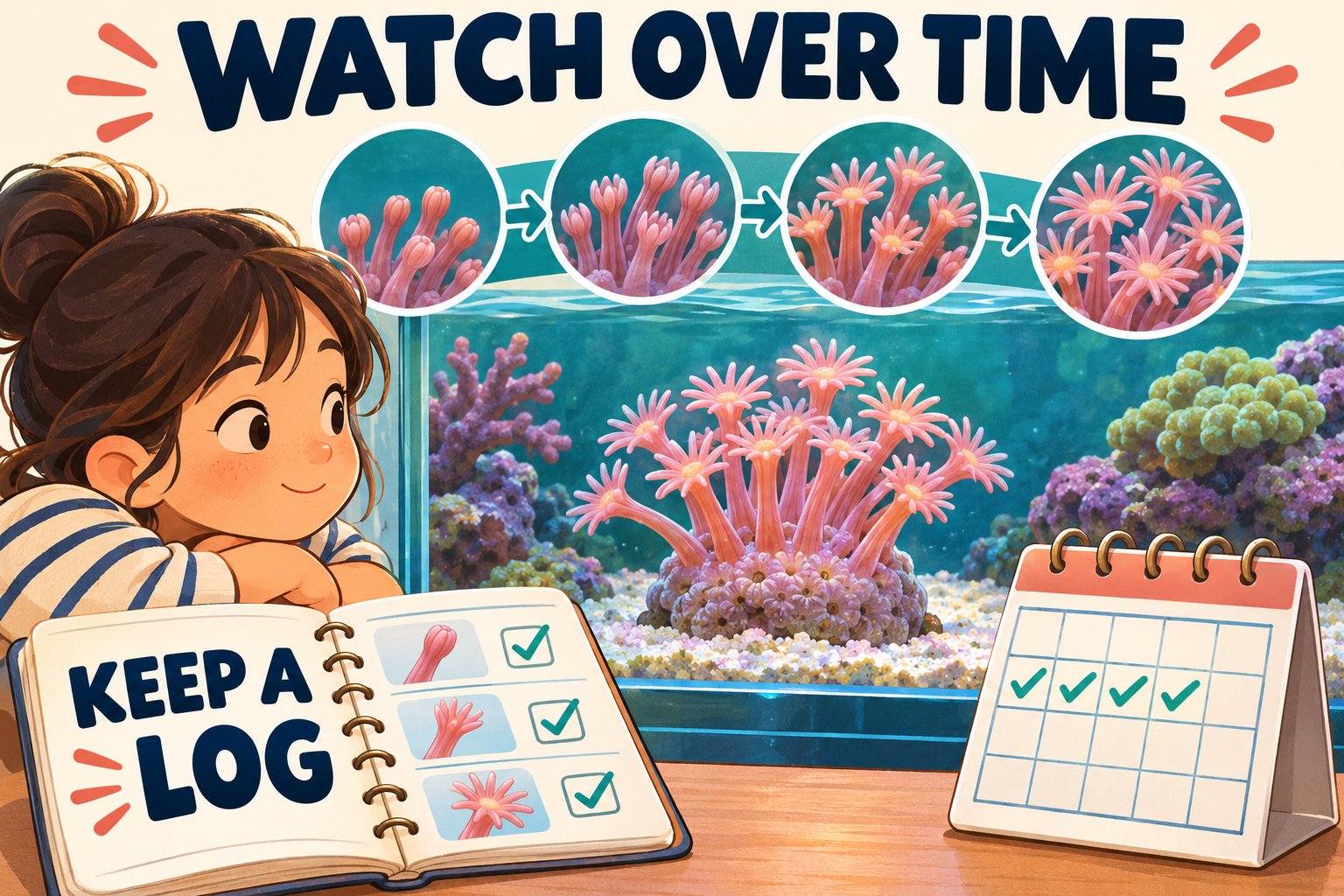
11. A little less glare helped. One keeper's Goniopora opened farther after a move away from directly under the lamp. This was a general goni report, not a Fire Fly grow-out.
12. Other gonis grew under brighter light, too. Another keeper grew different colonies under both dimmer and brighter setups, with different flow. Neither report sets a light target for Reef To Go's Fire Fly.
Start low, give the polyps room to sway, and track what changes from week to week. A steady reef and an open colony tell you more than one number or one photo.
Field Notes
Related species
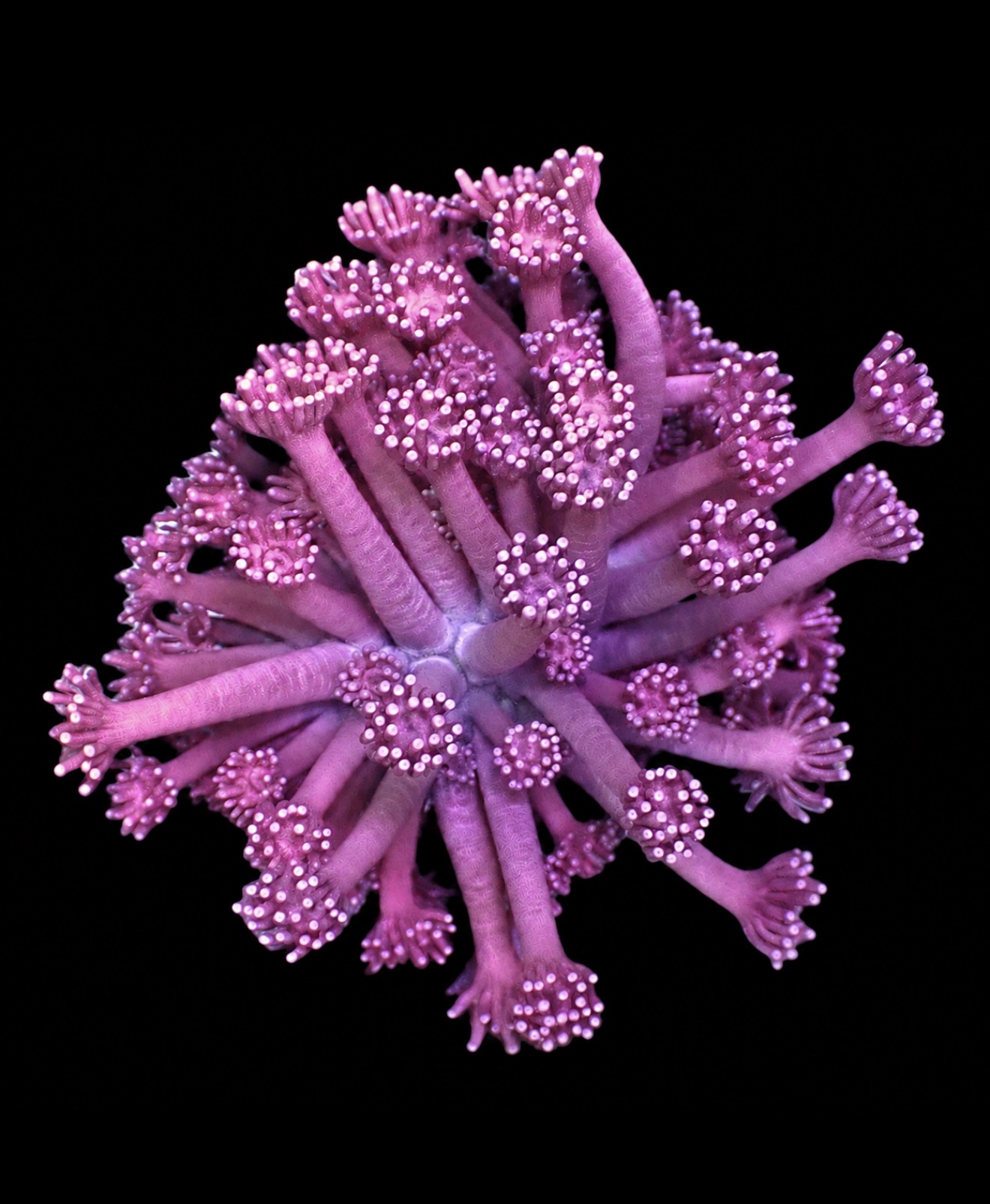
Barney the dinosaur Goni
Goniopora sp.
Similar care · LPS

Blue rim acan lord
Acanthastrea lordhowensis
Similar care · LPS
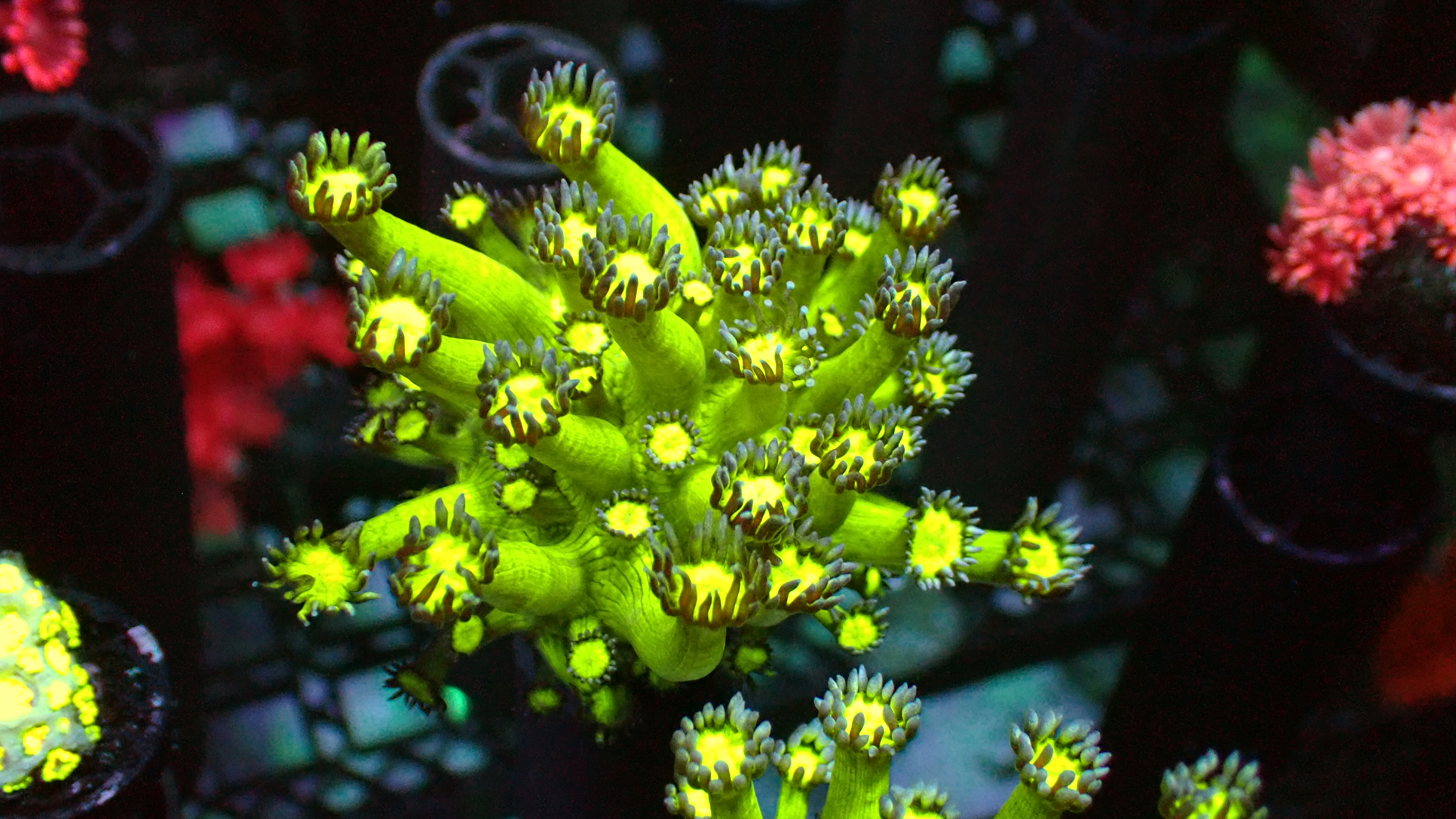
Bootleg glitter Goni
Goniopora sp
Similar care · LPS

Charged Lithium war coral
Acanthastrea sp
Similar care · LPS
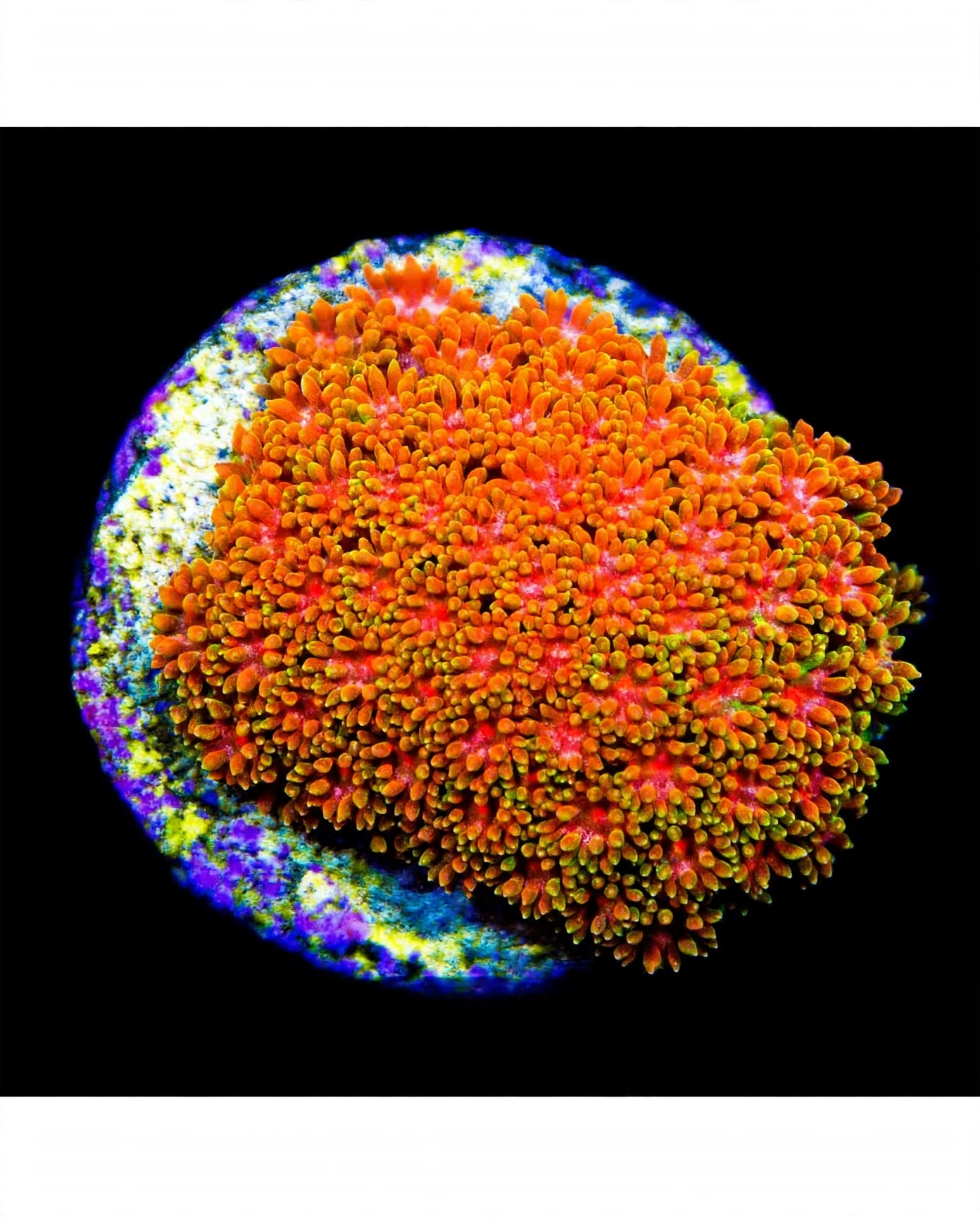
Citrus Orange Short Polyp Goniopora
Similar care · LPS
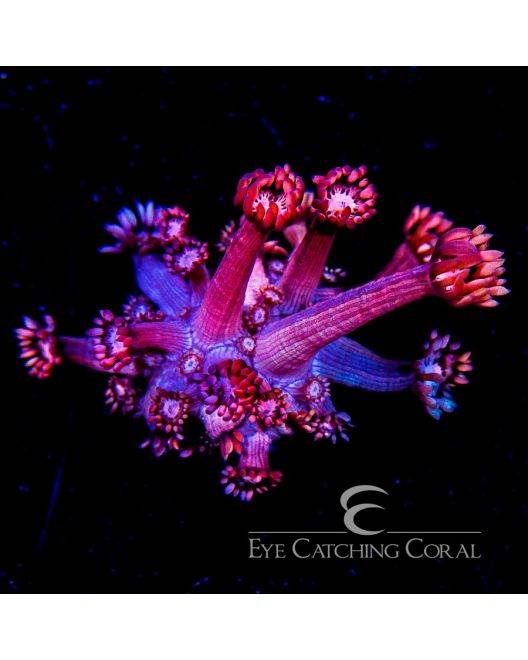
Confetti Grafted Goniopora
Similar care · LPS
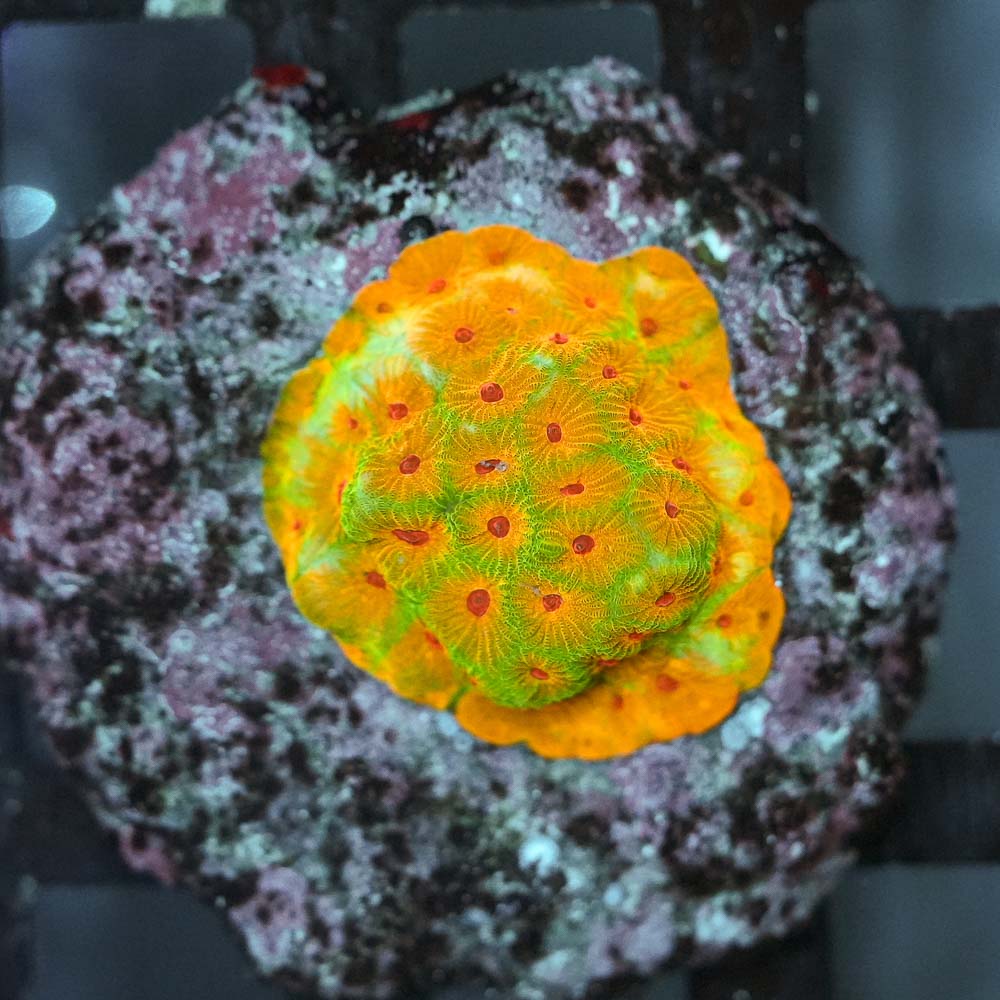
Fascination favia
Favites sp
Similar care · LPS

Hollywood stunner chalice
Similar care · LPS