

Blue rim acan lord
Acanthastrea lordhowensis
Blue rim acan lord is an LPS morph listed as Acanthastrea lordhowensis, the species hobbyists know as the acan lord. The colony grows as a cluster of large, fleshy polyps packed shoulder to shoulder, each polyp puffing up over its own corallite and sharing the colony's low, domed profile. Settled tissue sits thick and textured, with a mouth at the center of every polyp. The blue rim name follows the cool blue ring carried around the edge of each polyp, a rim that frames the warmer body of the polyp inside it and stands out sharply under blue-leaning light.
The entry lists intermediate care, medium light, medium flow, bottom placement, moderate aggression, and moderate growth. The original notes call for target feeding for the best color and growth. Place the frag low, on flat rock or a stable base at the bottom of the tank, with the polyps facing up. Medium light at a bottom placement holds the blue rim and keeps tissue full. Strong light raised too fast can pale the polyps and pull tissue tight to the skeleton, while deep shade dulls the rim and slows the colony's edge.
Medium flow should move across the colony in a broad, changing pattern. The current needs to lift waste out from between the polyps, where detritus settles into the seams of the flesh. A direct jet can press one side flat and keep those polyps retracted. Indirect flow that reaches the whole colony is the pattern to set, with flow lowered briefly when food is offered so the polyps can take it in.
Feeding genuinely rewards this coral. The mouths open when food reaches the water, often most visibly in the evening, and each polyp can take small meaty offerings, finely chopped seafood, or LPS pellets placed directly at the mouth. Offer food once or twice a week in portions each polyp can finish. Light supplies part of the energy, and fed colonies hold thicker tissue, keep stronger color, and add polyps at the edge more steadily. Remove food the colony leaves, because leftovers rest directly on the flesh and foul it.
Aggression is listed as moderate. Acan lords put out feeding tentacles and can sting a neighbor they touch, with most of the activity happening after dark. Leave a clear ring of space on all sides, give the colony room judged by nighttime reach, and keep other LPS outside that ring. Protect the colony in return, because a lord that loses a contact fight heals slowly, and recession often starts at the injured edge and works inward.
Growth is listed as moderate. New polyps bud along the margin, the colony spreads as a fleshy mat of heads over its base, and the whole dome widens with time in a settled spot. Stable alkalinity, calcium, and magnesium carry the skeleton under the tissue. Polyps staying small and tight, a rim losing its blue, or tissue receding at one edge usually point first to light, then to feeding, then to an overnight sting or a recent chemistry swing.
Common pitfalls include pushing the frag into bright light chasing a stronger rim, letting detritus collect between the polyps, and skipping feeding while expecting fast growth. Start low at medium light, keep indirect flow moving, feed the mouths on a routine, and space for the night.
Field notes — what keepers report
- Feeding reports lean strongly positive for this species. Keepers who target-feed describe plumper polyps and new heads appearing at the edge within a season, while keepers who rely on broadcast feeding alone describe healthy colonies that grow more slowly. Both sides agree on small portions, because food left sitting on the tissue causes harm.
- Color reports split by light level. Keepers at medium light near the bottom describe the blue rim held at full strength over thick tissue, while keepers who moved a colony higher describe paler polyps that took weeks to color back after a move down. Both sides describe patience, because acan color answers a change slowly.
- Spacing reports carry a consistent caution. Keepers describe neighbors stung overnight at distances that looked safe in the day, and other keepers report no trouble at all once a generous clear ring was left around the colony. Judging space by the nighttime colony is the shared practice across both kinds of report.
Field Notes
Related species

Citrus Orange Short Polyp Goniopora

Confetti Grafted Goniopora

Lava lamp goniopora
Goniopora sp

Pink Goni
Goniopora sp

Red goniopora
Goniopora sp

Elegance coral
Catalaphyllia jardinei
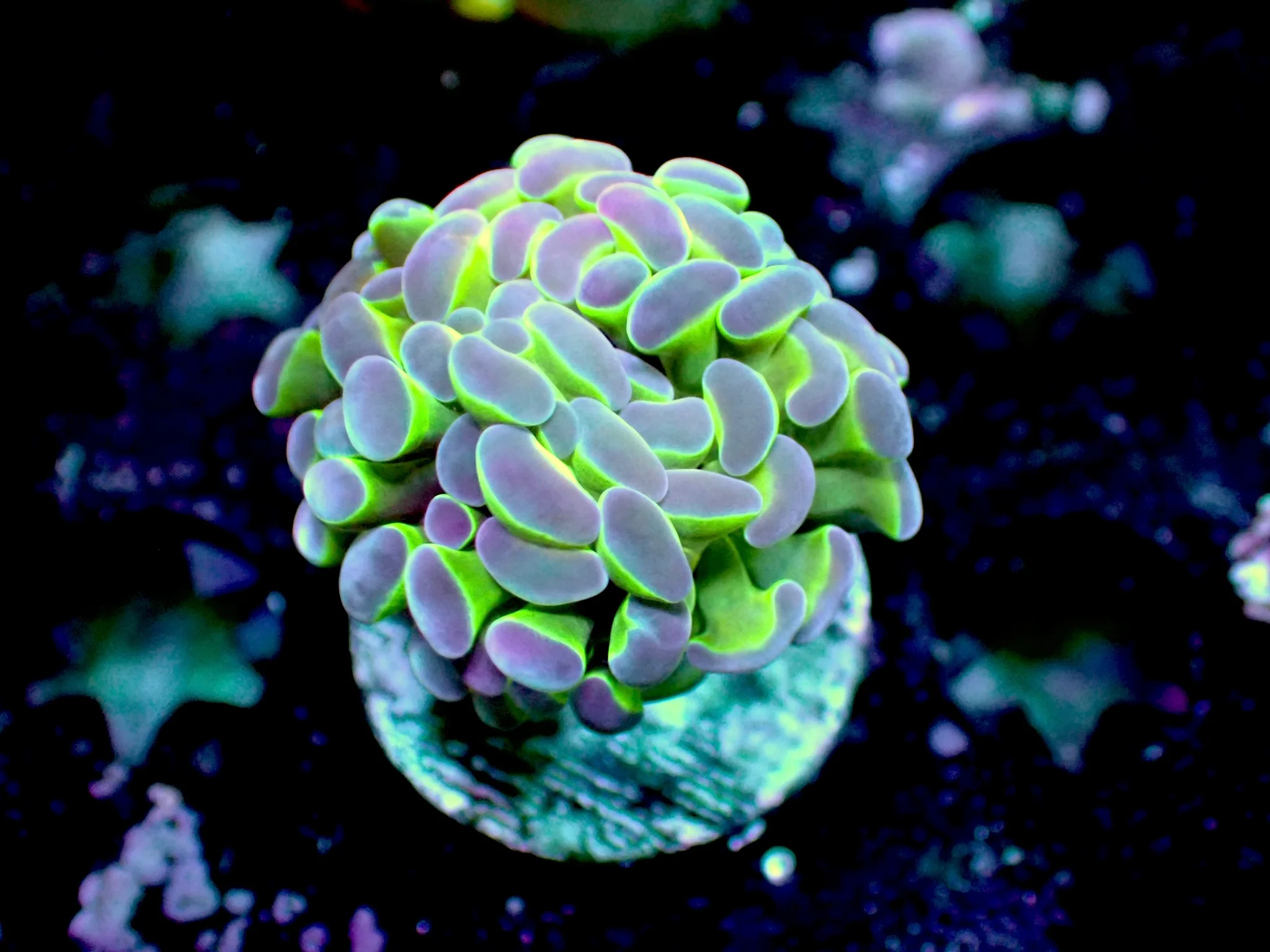
Hologram hammer
Fimbriaphyllia paraancora

Avatar chalice
Echinophyllia aspera
In the shop now


Love this species? No tank needed.
Reef art from the shop — for the wall, not the tank.


Get notified when Reef To Go has Blue rim acan lord in stock or up for auction. One email when it's in — no spam.