Holy Grail Micromussa
 ▶ Video
Gallery
Videos
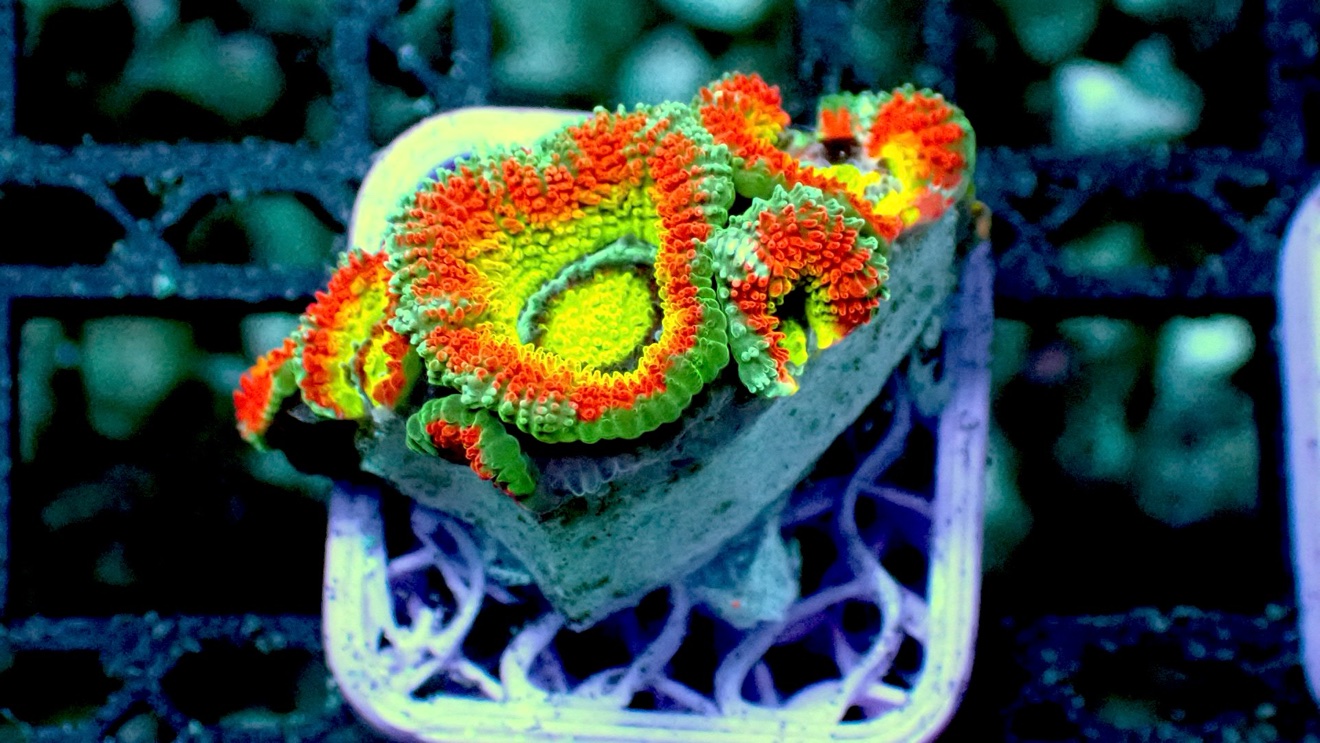
Holy Grail Micromussa looks like a handful of tiny bullseyes. Red, orange and green rings circle bright little mouths. Watch at feeding time and you’ll see a soft fringe of tentacles turn each bullseye into a dinner trap.
History
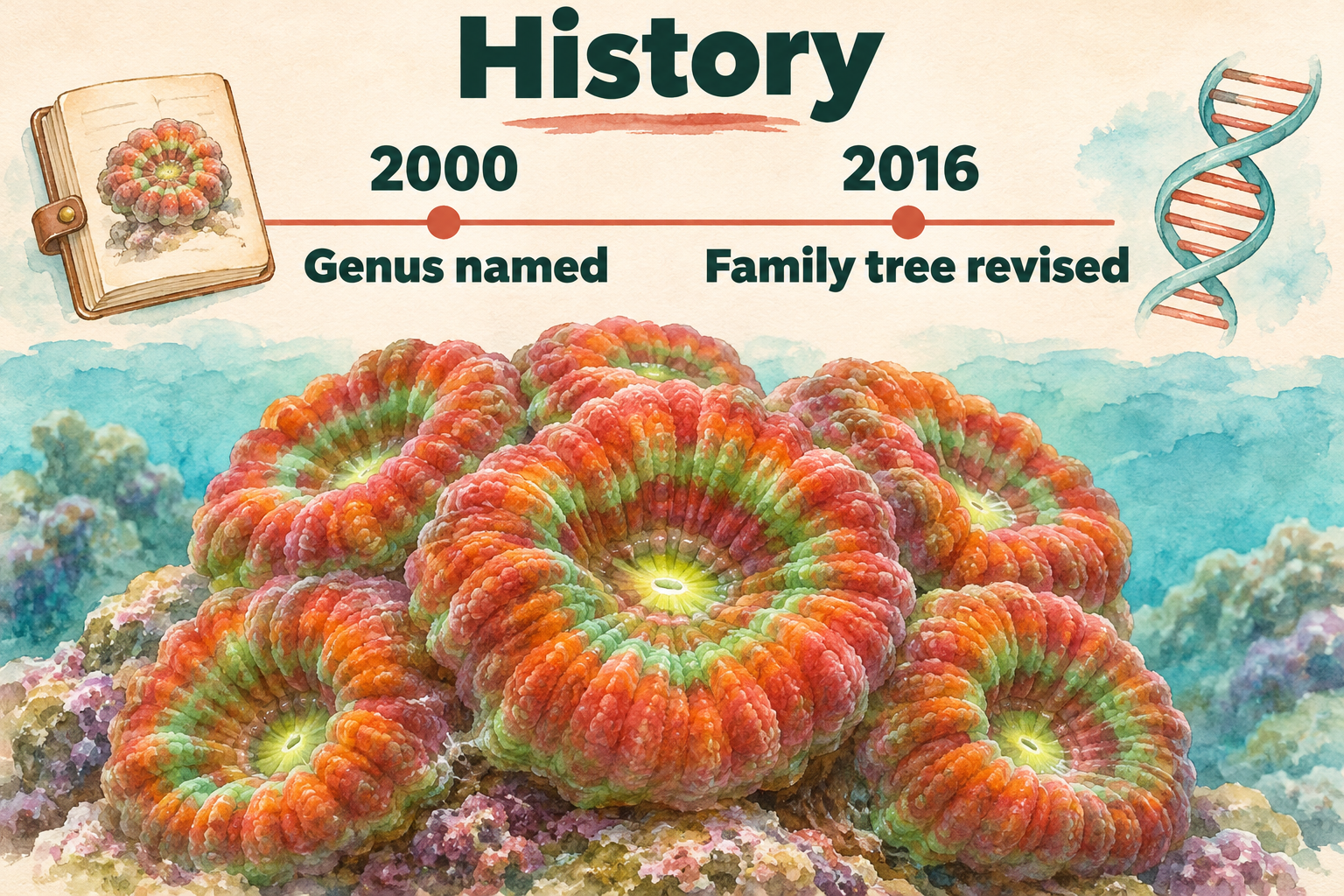
1. Meet the micros. Scientists named the genus Micromussa in 2000. In 2016, DNA and skeleton details redrew its family tree. The old shop name acan lord still sticks to some of its cousins.
2. A name for the rings. Holy Grail is the trade name for this Reef To Go frag, with bright centers and rings of red, orange and green. Plenty of coral names describe a look. Keep the name attached to the line it came with.
In the wild
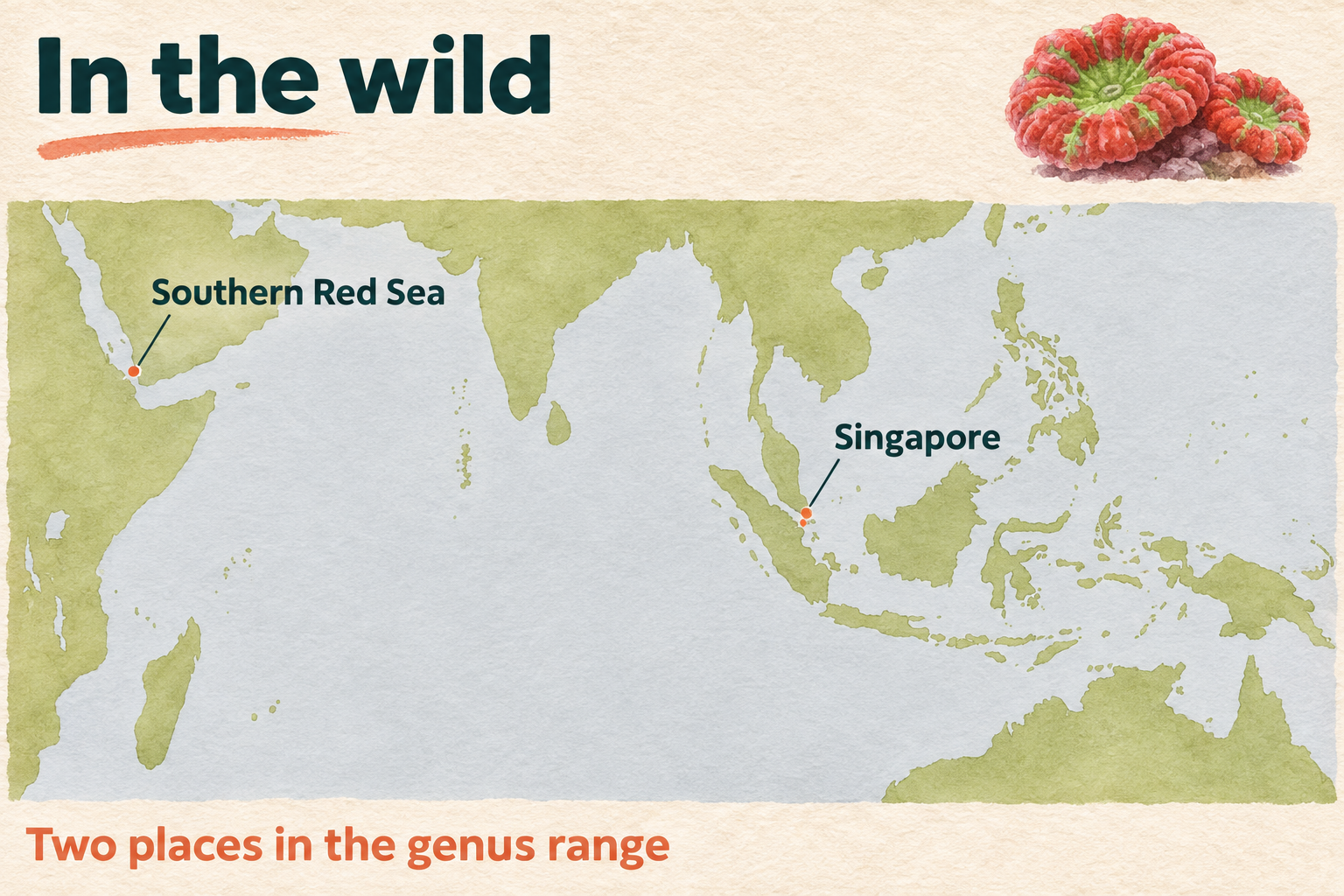
3. From the Red Sea to the Pacific. Wild Micromussa species live on reefs from the southern Red Sea through the Indo-Pacific. Their footprints differ by species. The two places on the map are examples for the genus.
4. Life close to the rock. In Singapore, one wild relative grows on rock about 2 to 5 meters down. In turbid water, even shallow sunlight can be muted. Water moves past the polyps and carries tiny food particles.
A low place to start
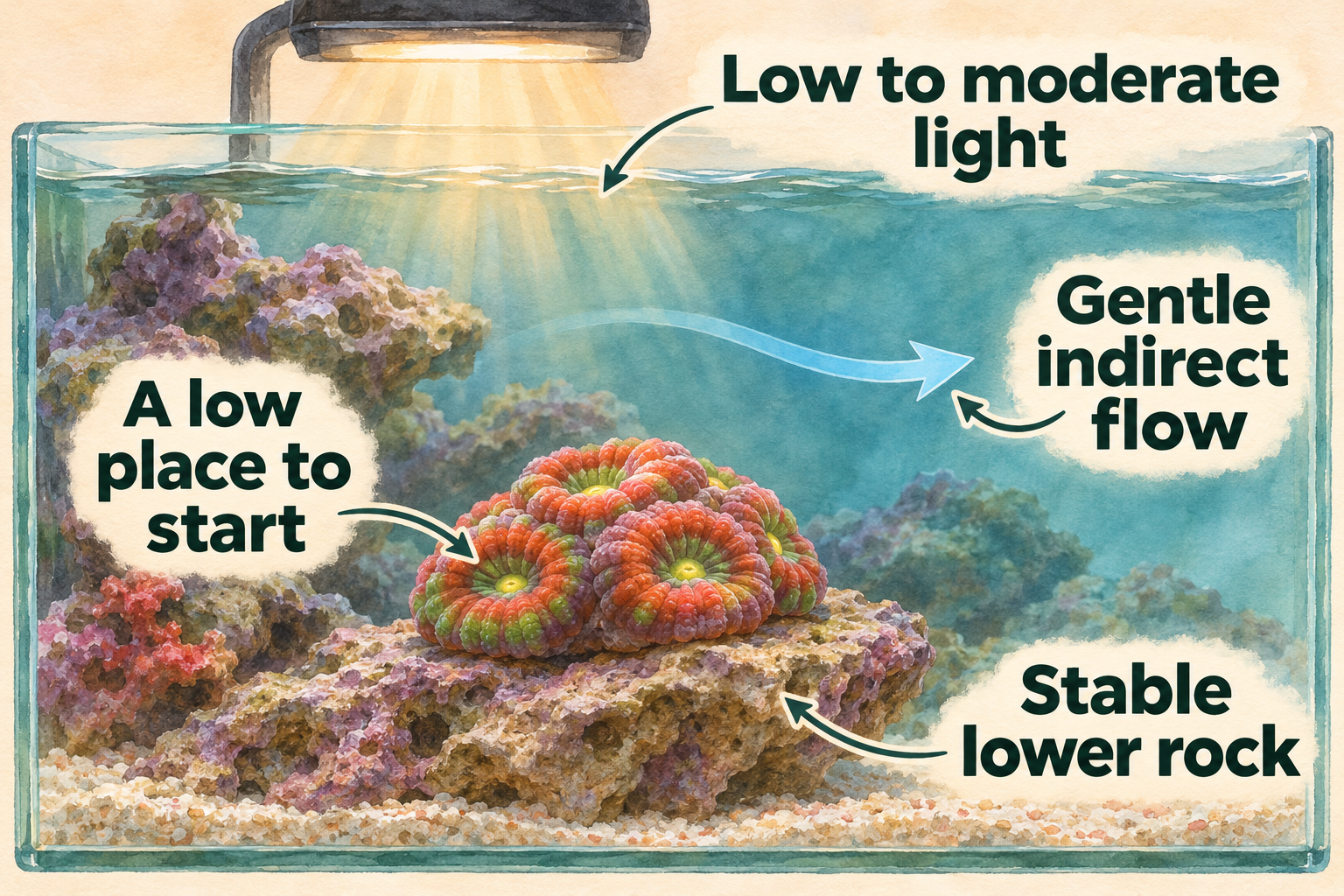
5. Go low first. Set the frag on stable lower rockwork. Start in low to moderate light and make changes slowly. Keep its soft edge free of shifting sand or a sharp rock corner.
6. Sweep past the flesh. Aim for gentle to moderate indirect flow. Clear away settling grit and turn the pump if it pins the flesh. Keep salinity, temperature, alkalinity and calcium steady.
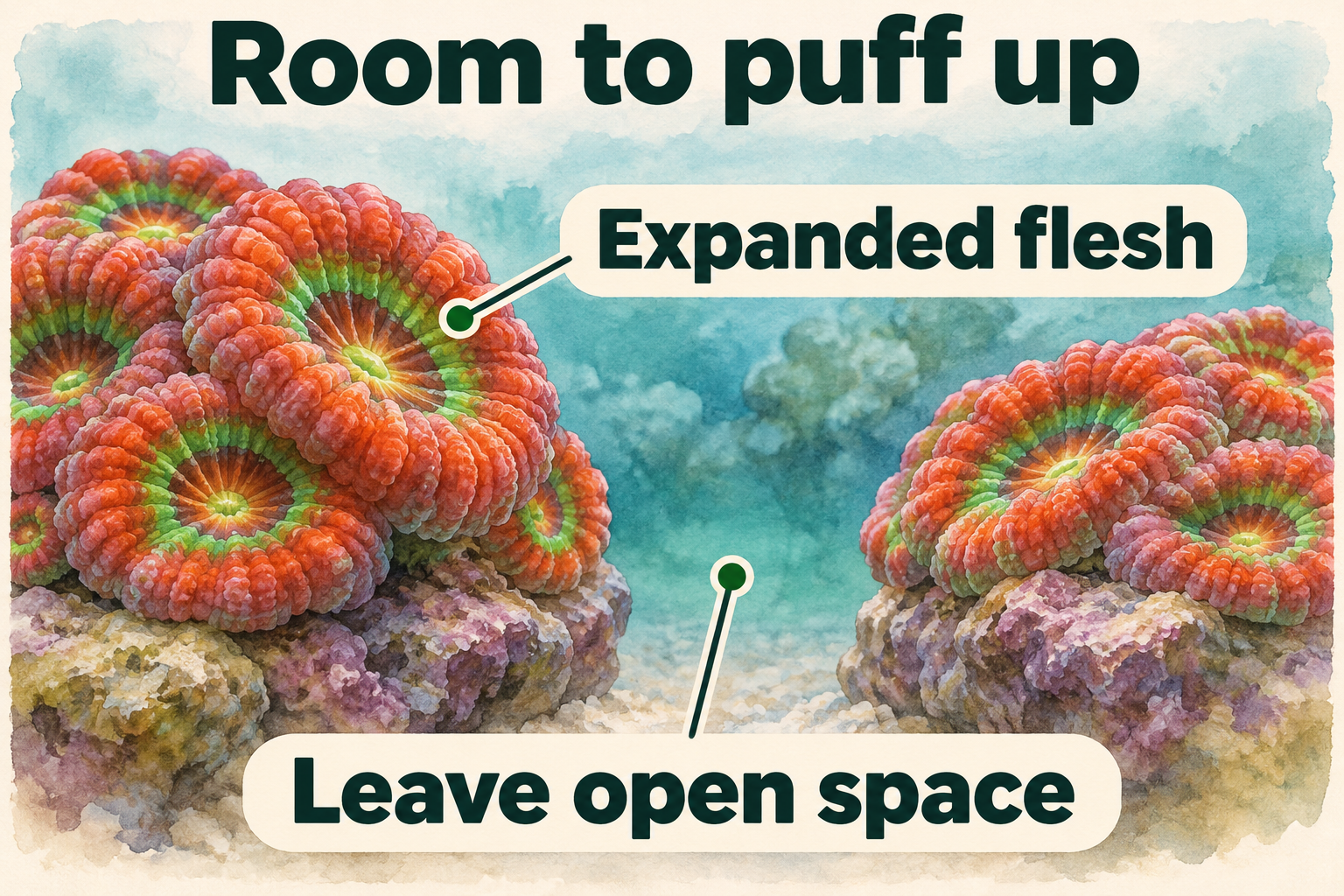
Room to puff up
7. Measure from the rim. Keep a few inches of open space to start. Check when the polyps are fully open and again after dark. Move a neighbor if tentacles can reach it.
8. Keep the base steady. Lift the frag by its plug or hard base if you need to move it. Leave bare rock by the edge for new mouths. A weekly photo from the same angle helps you see what changed.
Small bites
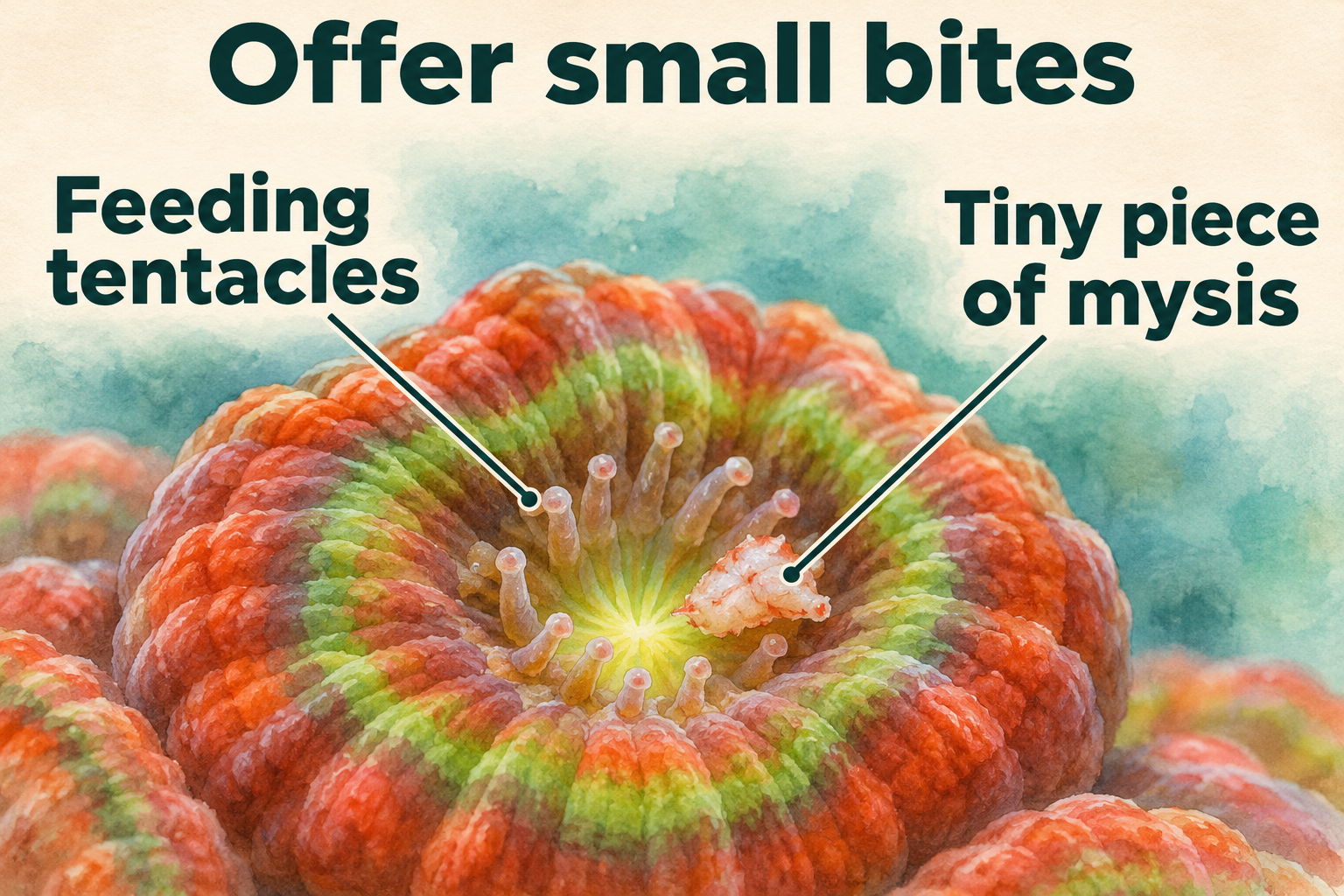
9. Watch for the fringe. Offer a little thawed mysis when the feeding tentacles come out. Put it near a mouth and let the coral pull it in. Skip the big chunks.
10. Give it time to grab. Briefly slow the flow if food blows away. Turn it back on after feeding and remove leftovers. Start with an occasional small feed and watch how the coral responds.
Field notes — what keepers report
11. Fuller tissue. One acan keeper saw flesh fill out with target feeding, without any faster growth. Photograph the same polyp at the same time of day so you can compare its shape.
12. A faster patch. Another keeper saw plumper polyps and faster growth when they fed their acans directly. Track new mouths and the colony edge as well as how puffy each polyp looks.
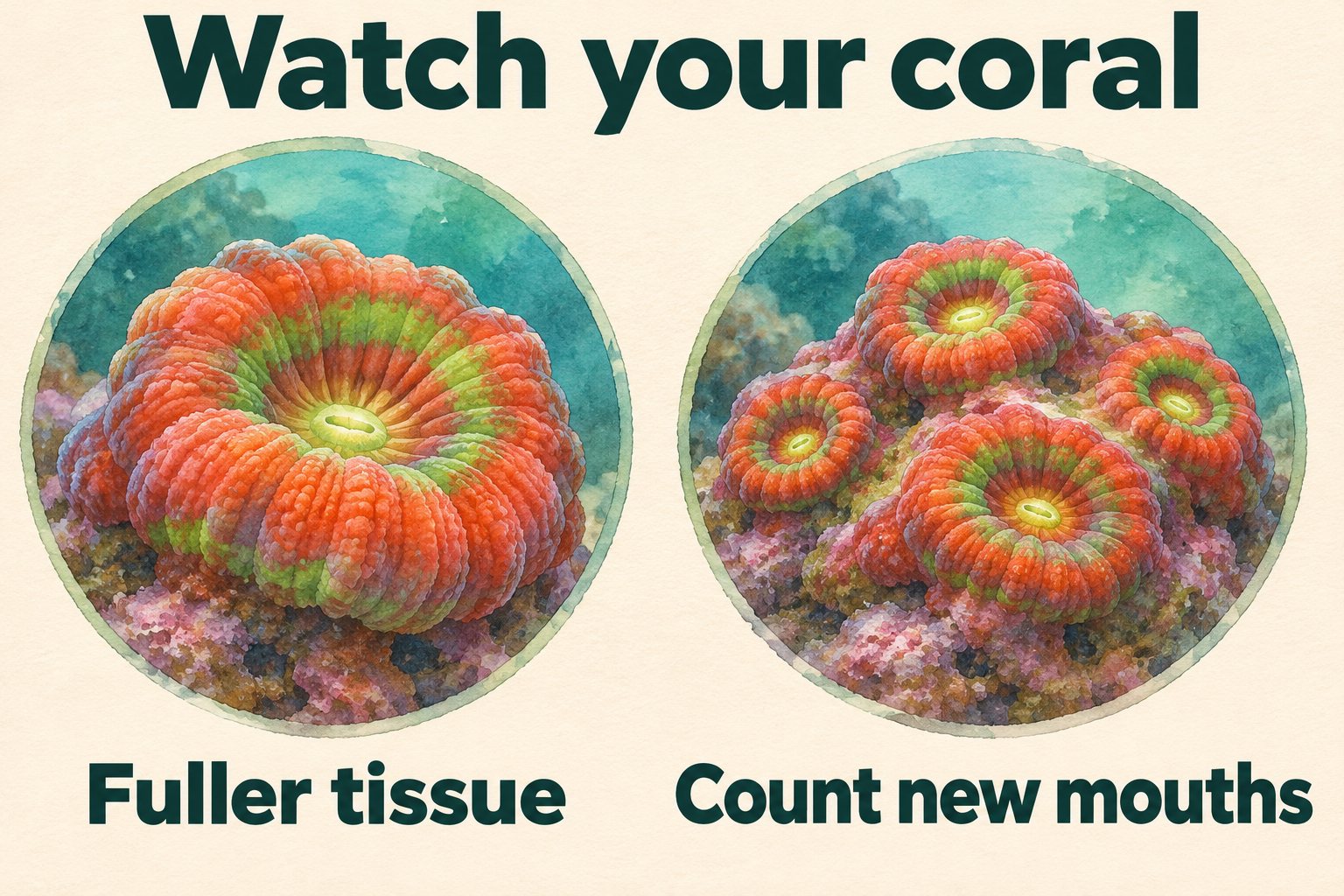
Start low, leave a gap and watch those rings open. Once you know how the frag looks on an ordinary day, a new mouth at the edge is easy to spot.
Photo: Tin Huynh / ReefToGo photo, Holy Grail Micromussa.
Field Notes
Related species
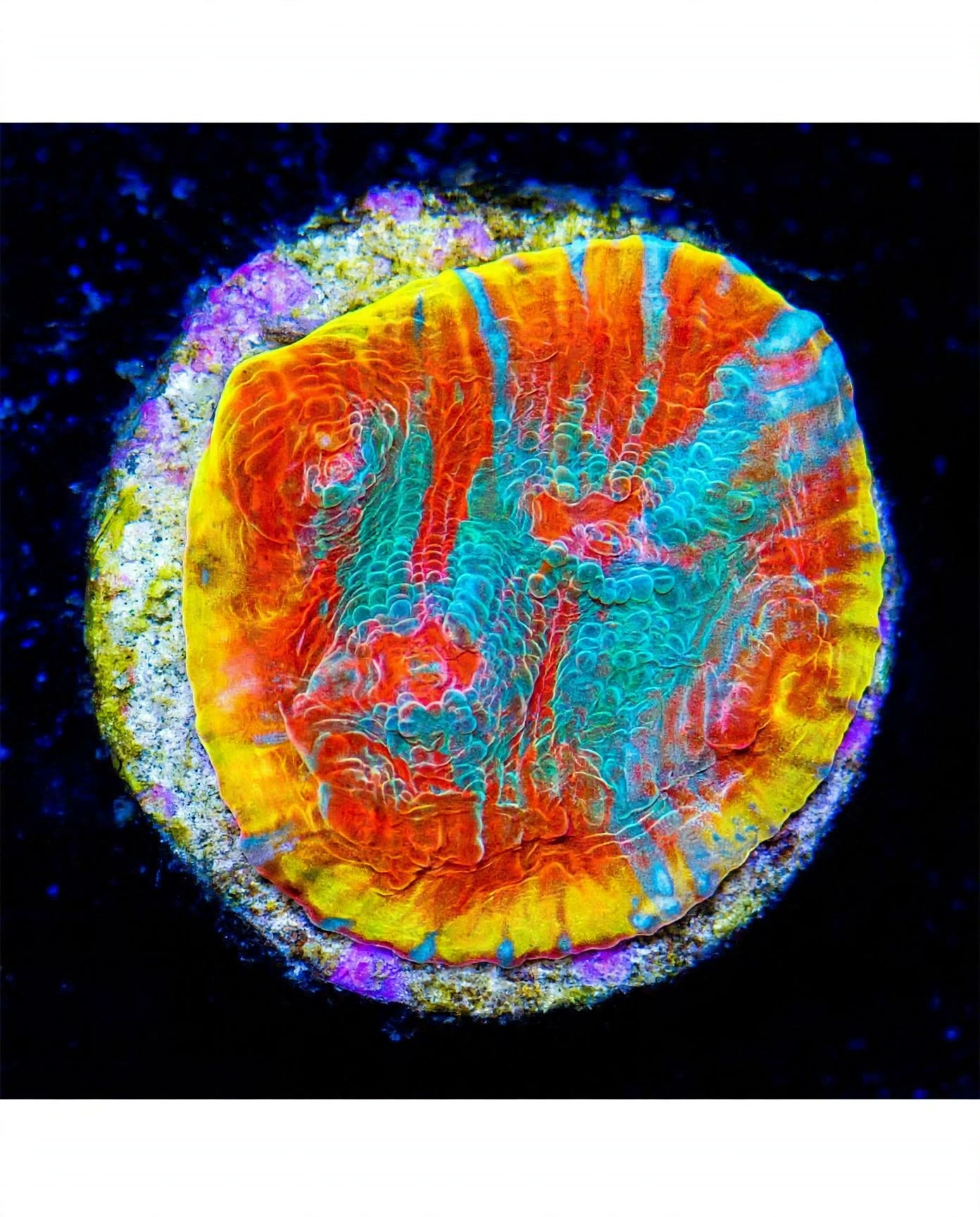
Aphrodite Chalice
Similar care · LPS
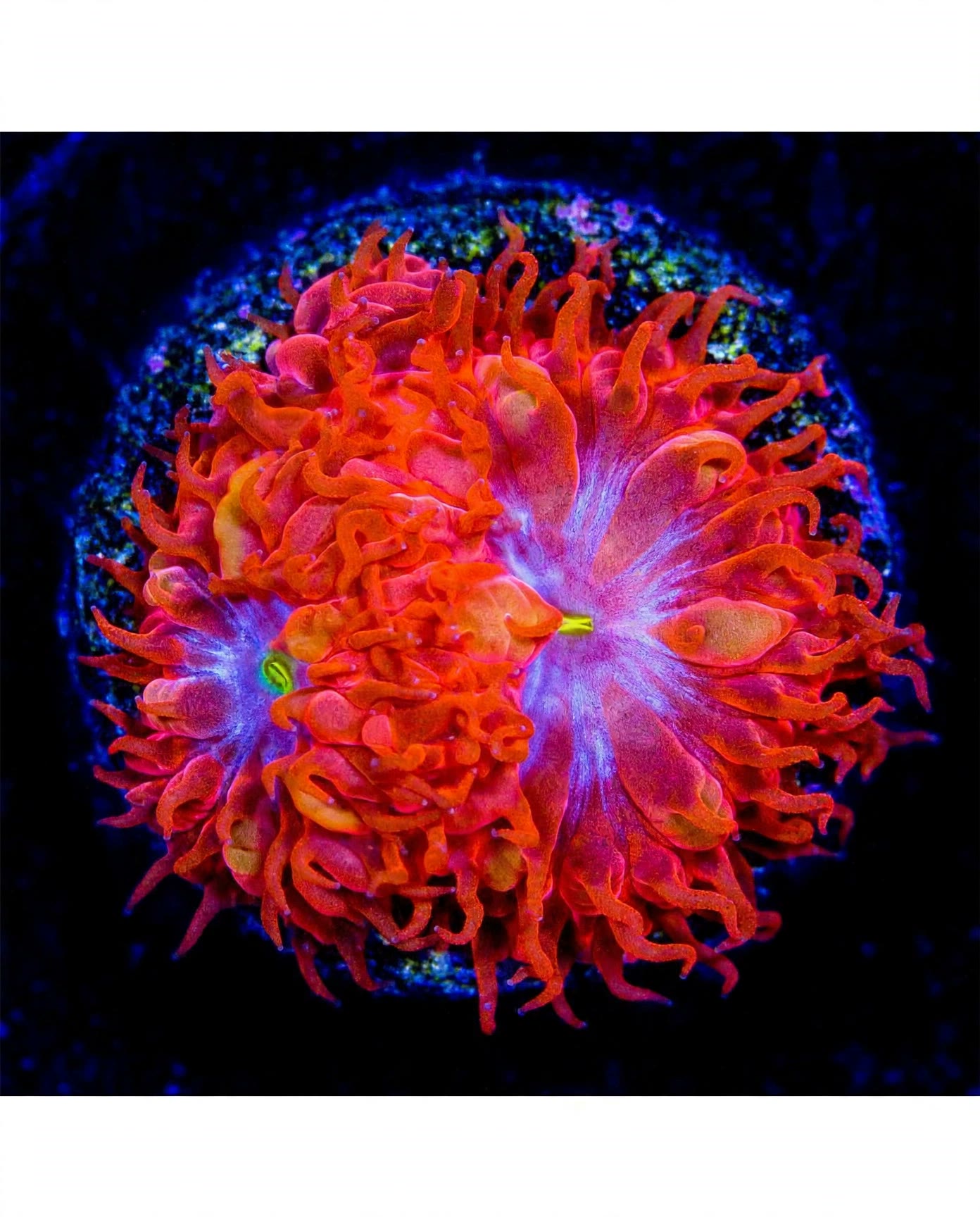
Blue Raven Blasto Merletti
Similar care · LPS
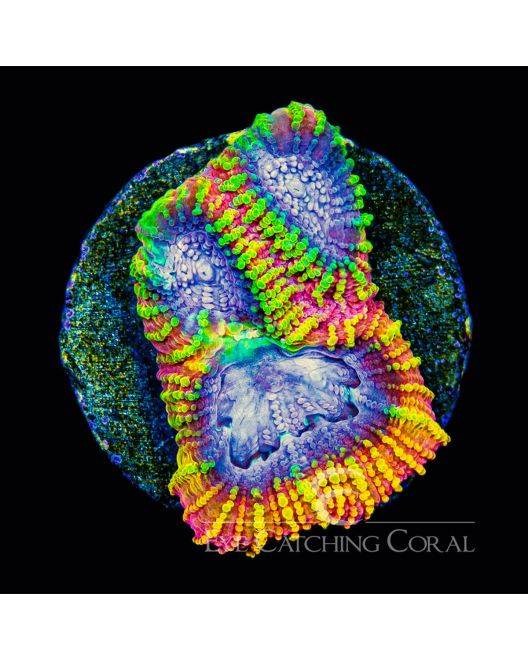
Burning Passion Favia
Similar care · LPS
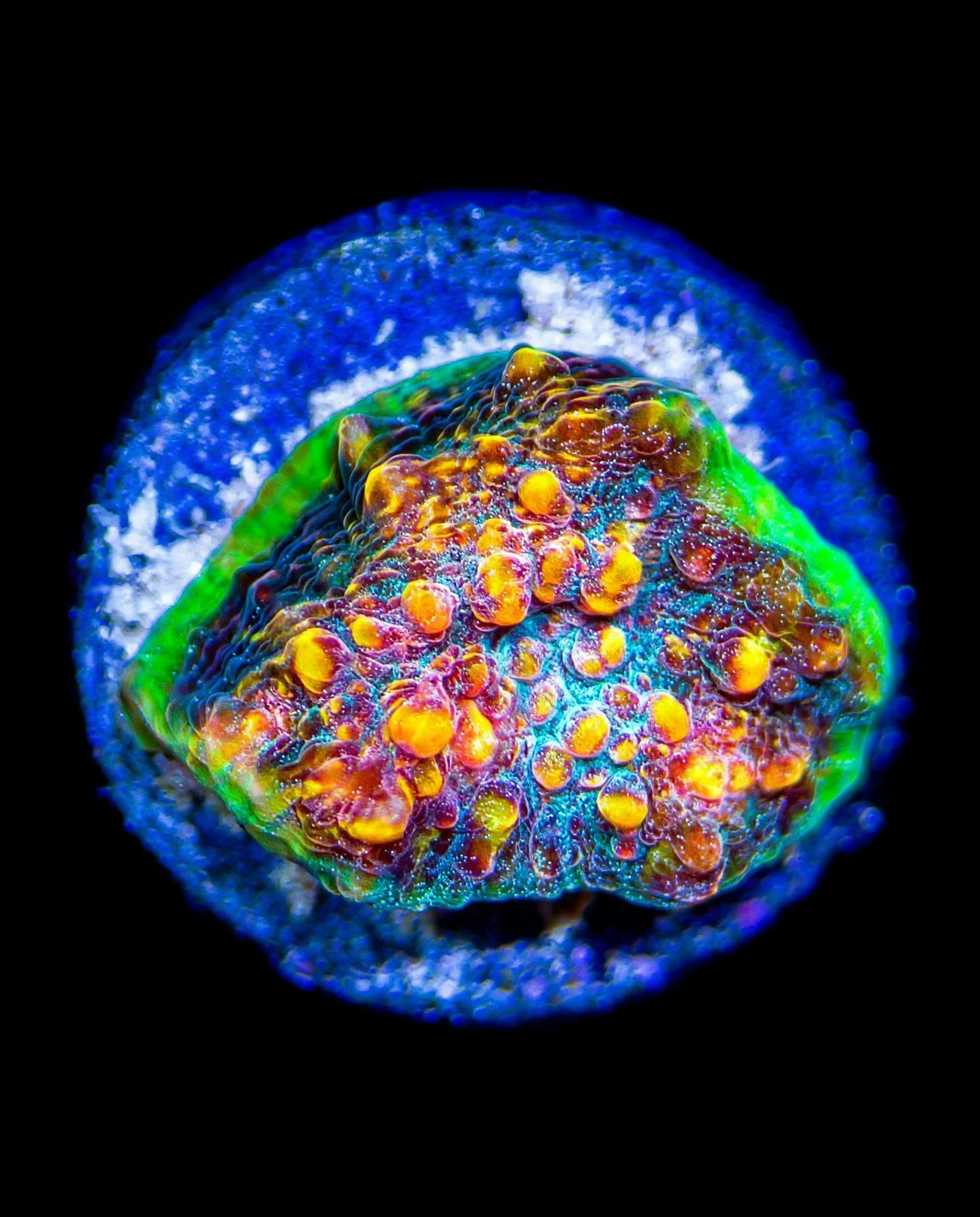
Chalice Borealis
Similar care · LPS
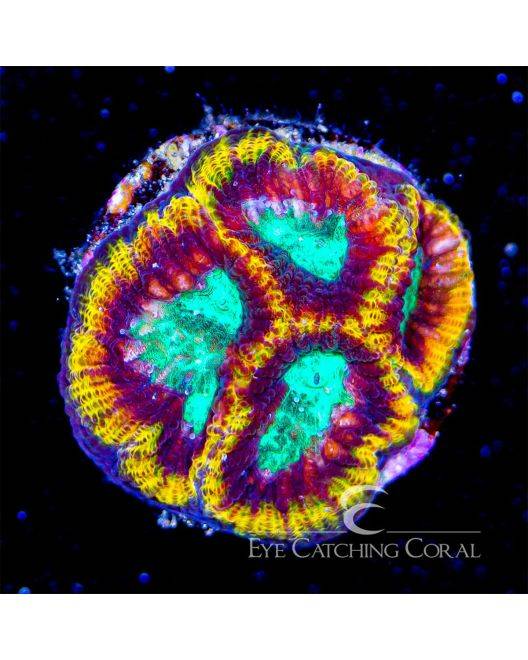
Dawn Awakens Favia
Similar care · LPS
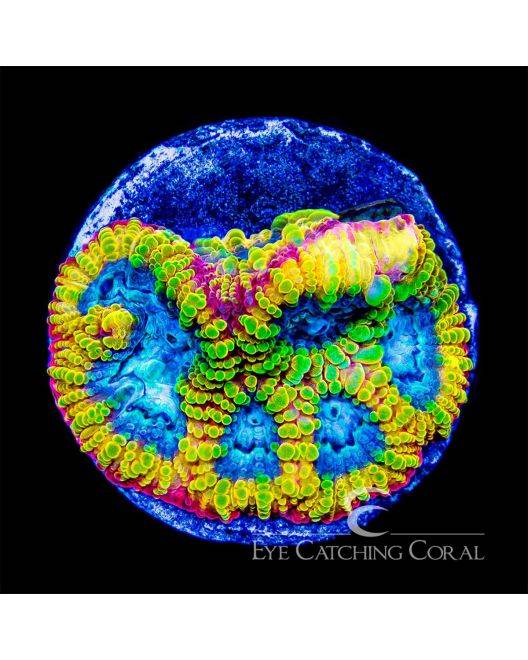
Electric Daisy Favia
Similar care · LPS
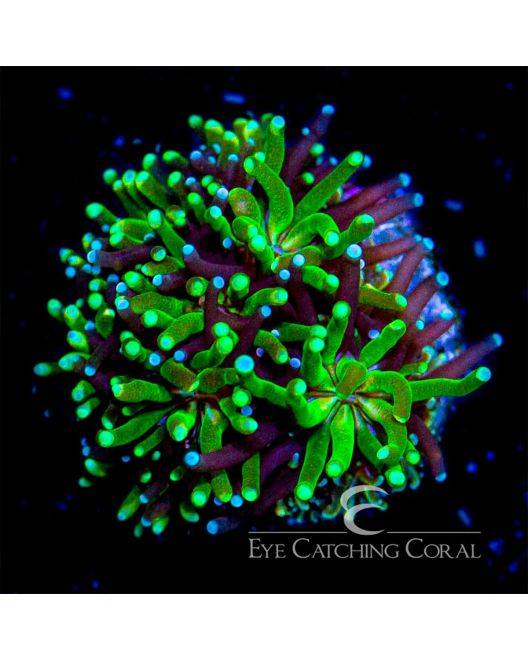
Emerald Galaxea
Similar care · LPS
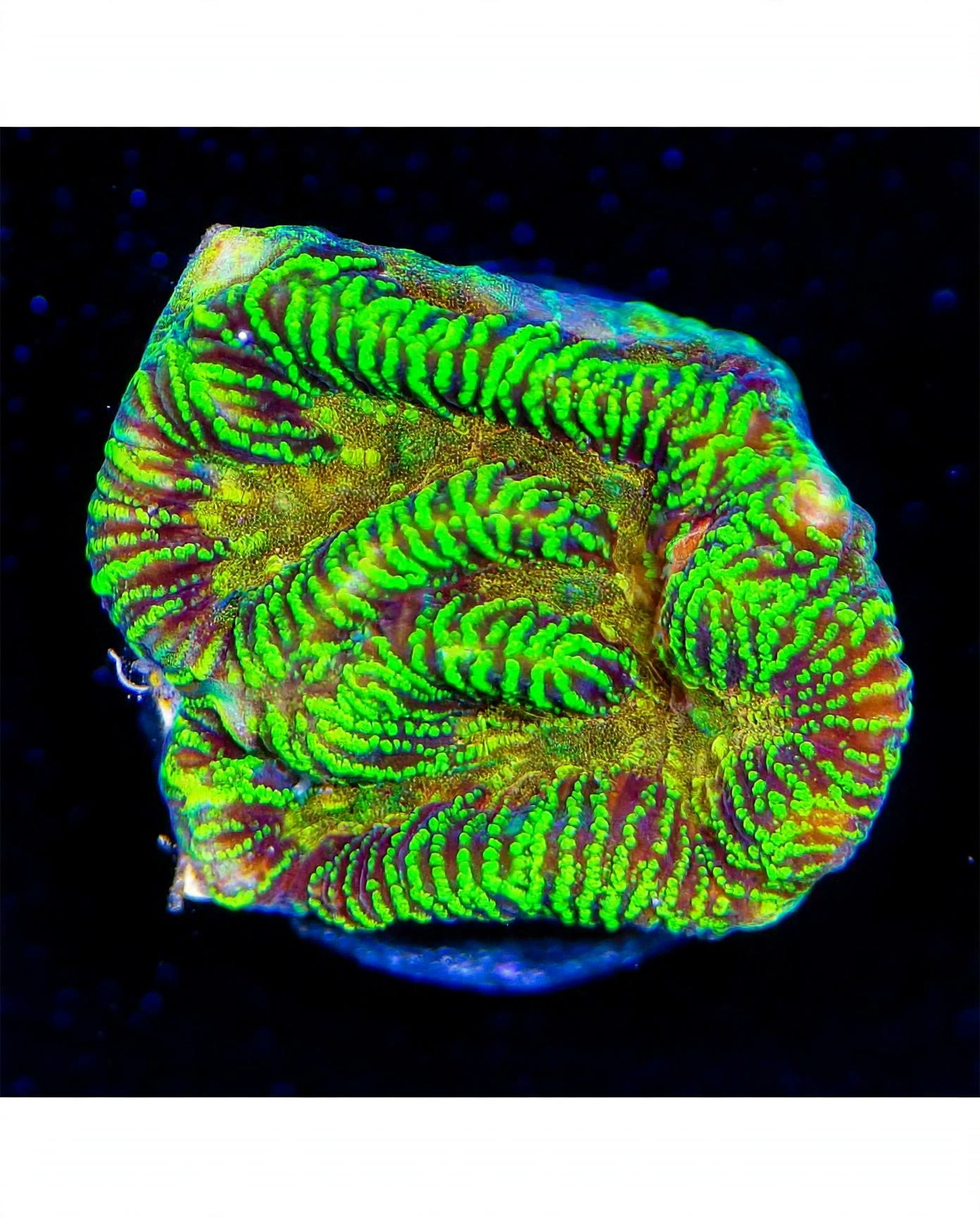
Firewater Platygyra
Similar care · LPS