Plate Coral
Fungia fungites

Stickpen · Public domain · source
Care facts
- Care
- Intermediate
- Light
- Medium
- Flow
- Low
- Place
- Bottom
- Space
- Moderate
- Origin
- Indo-Pacific
- Growth Rate
- Slow
Gallery
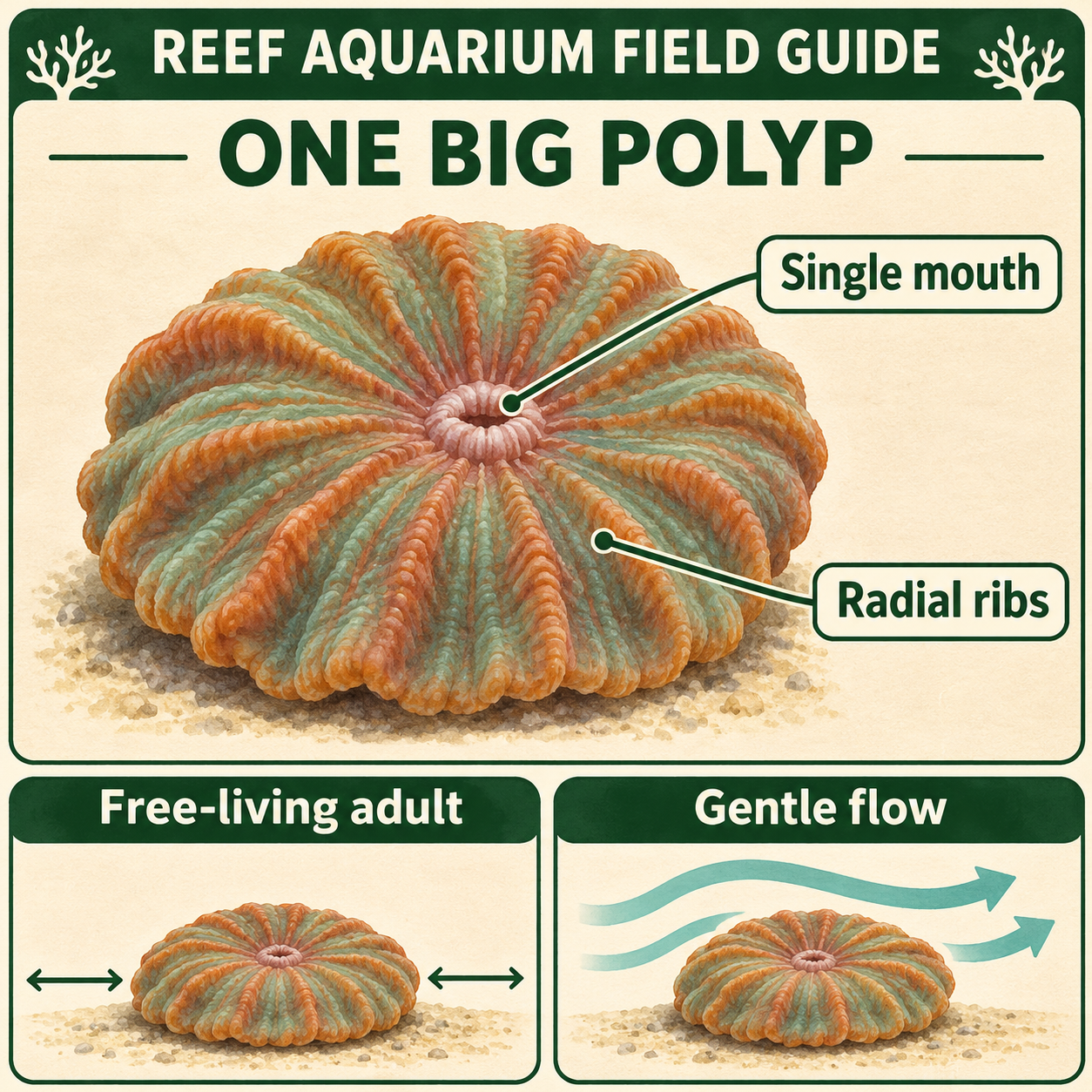
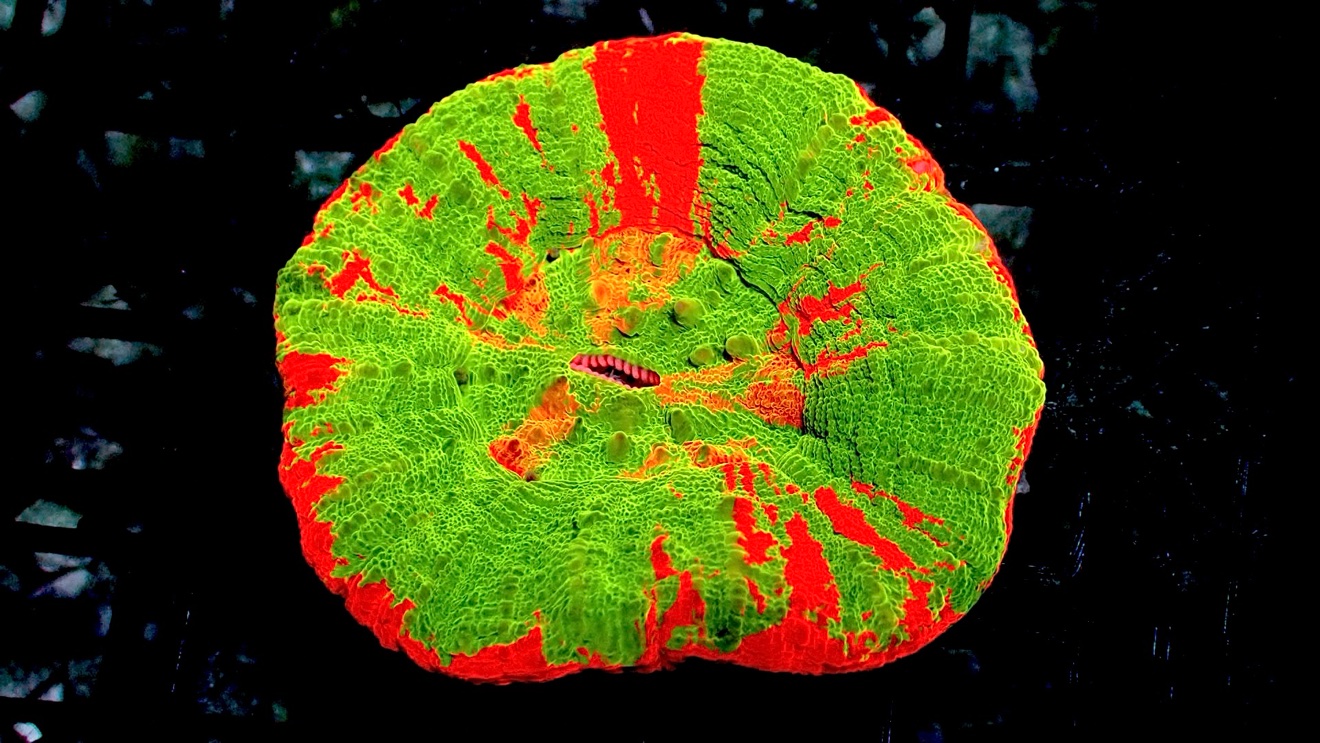
A coral that can change parking spots? Meet Plate Coral, Fungia fungites. This round reef animal lives loose as an adult instead of cementing itself to your rockwork. Its fleshy disc hides a hard skeleton, and its small tentacles bring food toward a central mouth. Give this slow mover room!
One disc, one big animal
1. A whole polyp! This is a solitary coral, not a cluster of tiny heads. Ridges spread outward across its disc like spokes on a wheel. A grown wild polyp can reach about 28 centimetres across.
2. Movement is real. Free-living mushroom corals can shift themselves, and water can move them too. A changed position is not proof that a coral is unhappy. Watch the animal and its surroundings together.
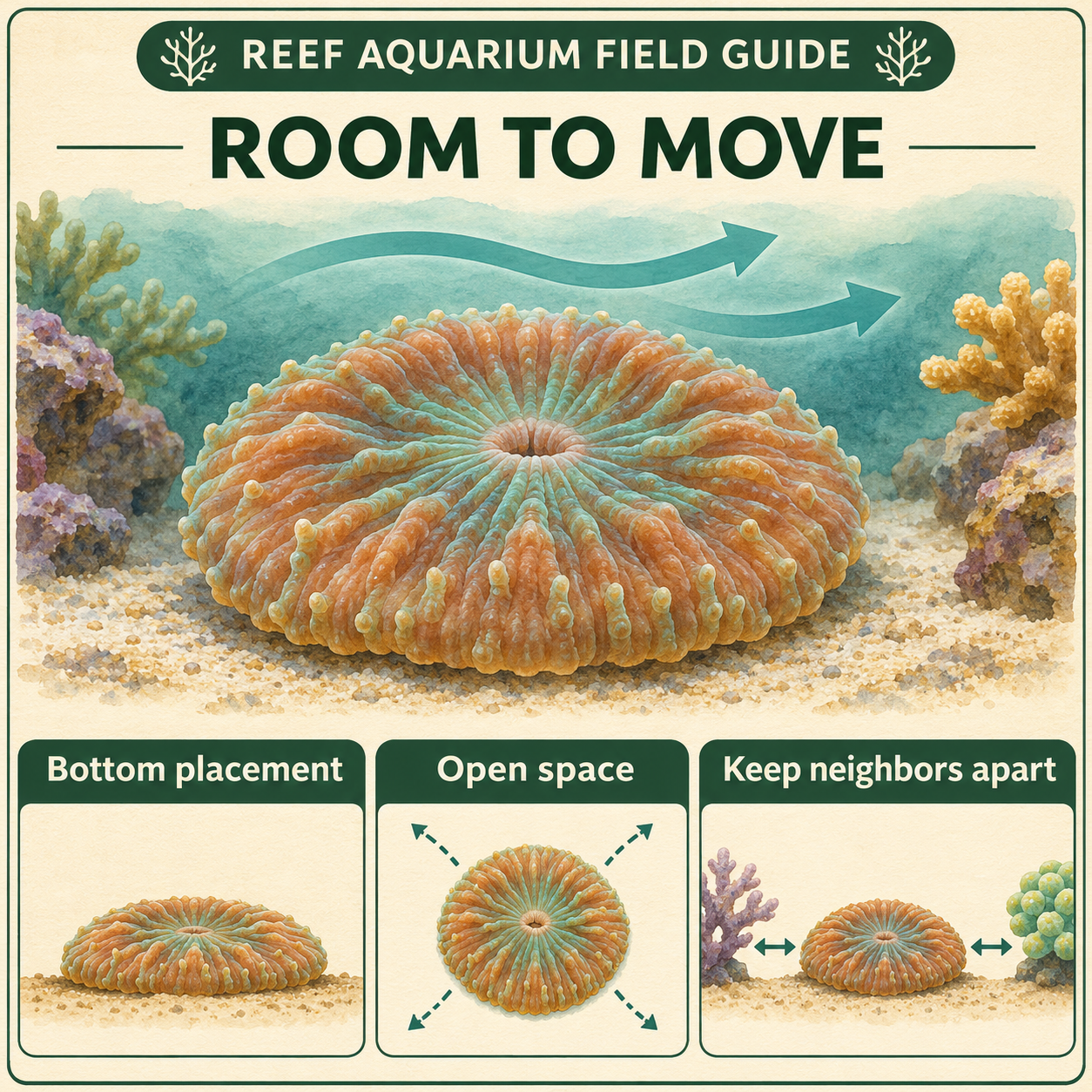
Make room on the bottom
3. Skip the cliff. Set it on a stable, open bottom area, not a high rock ledge. Leave room for the flesh to expand and the coral to shift.
4. No touching match. Keep neighbouring corals beyond contact. Recheck the gap as animals grow or move. A plate is not harmless just because it sits low.
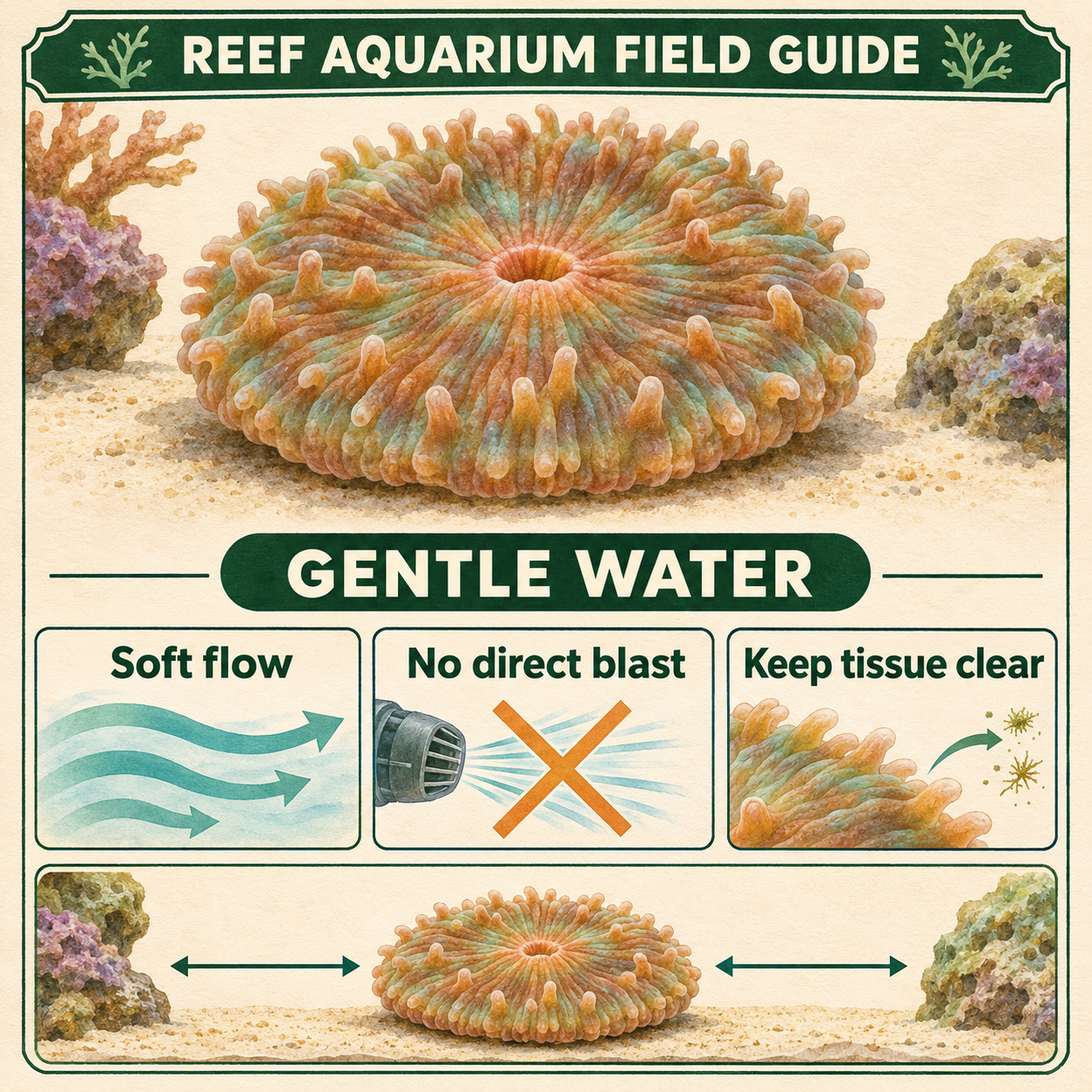
Gentle water, clear tissue
5. Keep the blast away. Use gentle flow across the plate. Redirect a jet that folds its flesh against the skeleton or pushes the whole coral around.
6. Do not bury the disc. Check for settling grit and drifting sand. Fix the source of repeated deposits rather than treating the coral as a sand catcher.
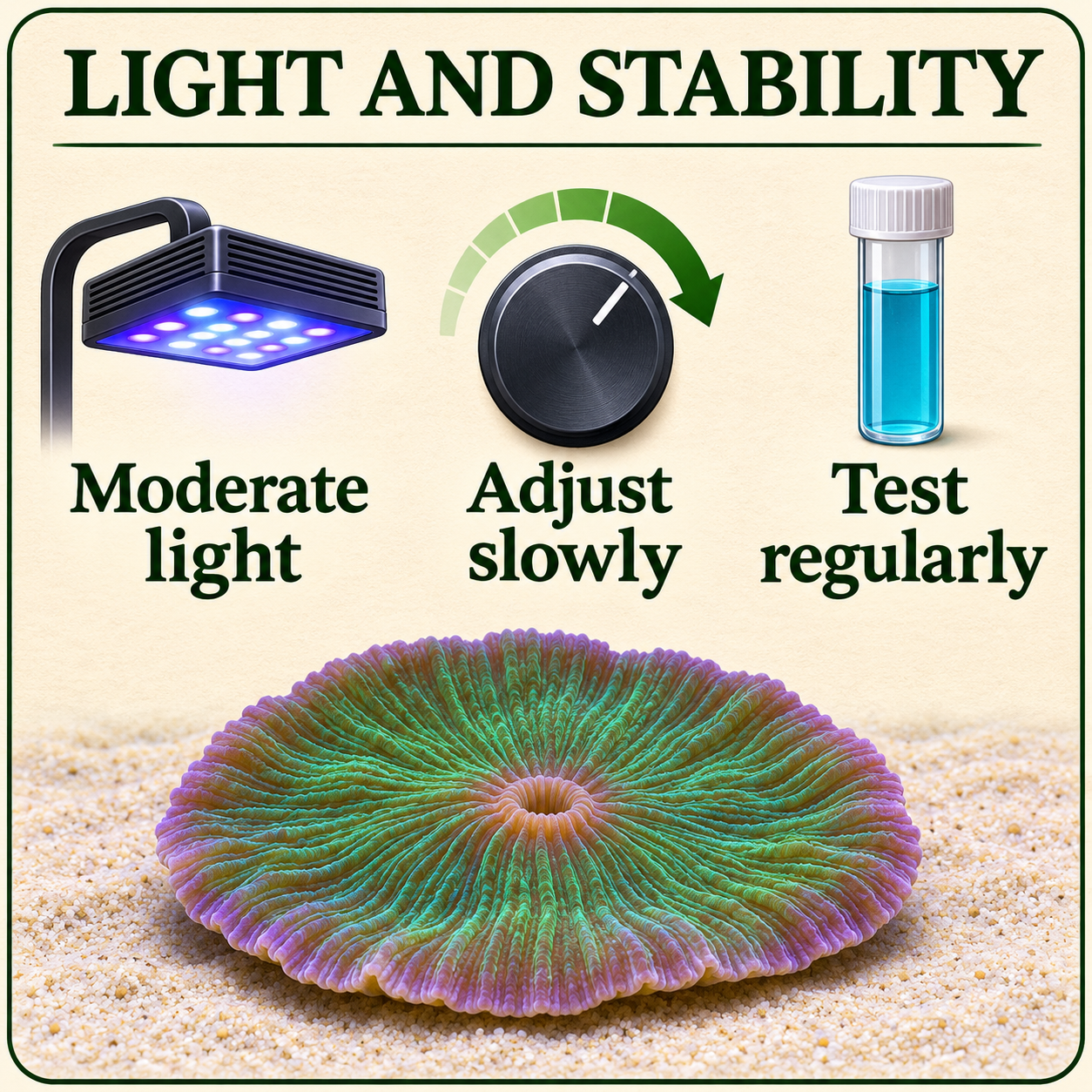
Light and a steady routine
7. Ease into the light. Moderate reef lighting is a useful starting point. Make lighting changes gradually, not in one big jump.
8. Test before tweaking. Track salinity, temperature and your reef chemistry. Keep alkalinity, calcium and magnesium steady with a measured routine. Do not chase one odd test result with a large dose.
A mouth worth watching
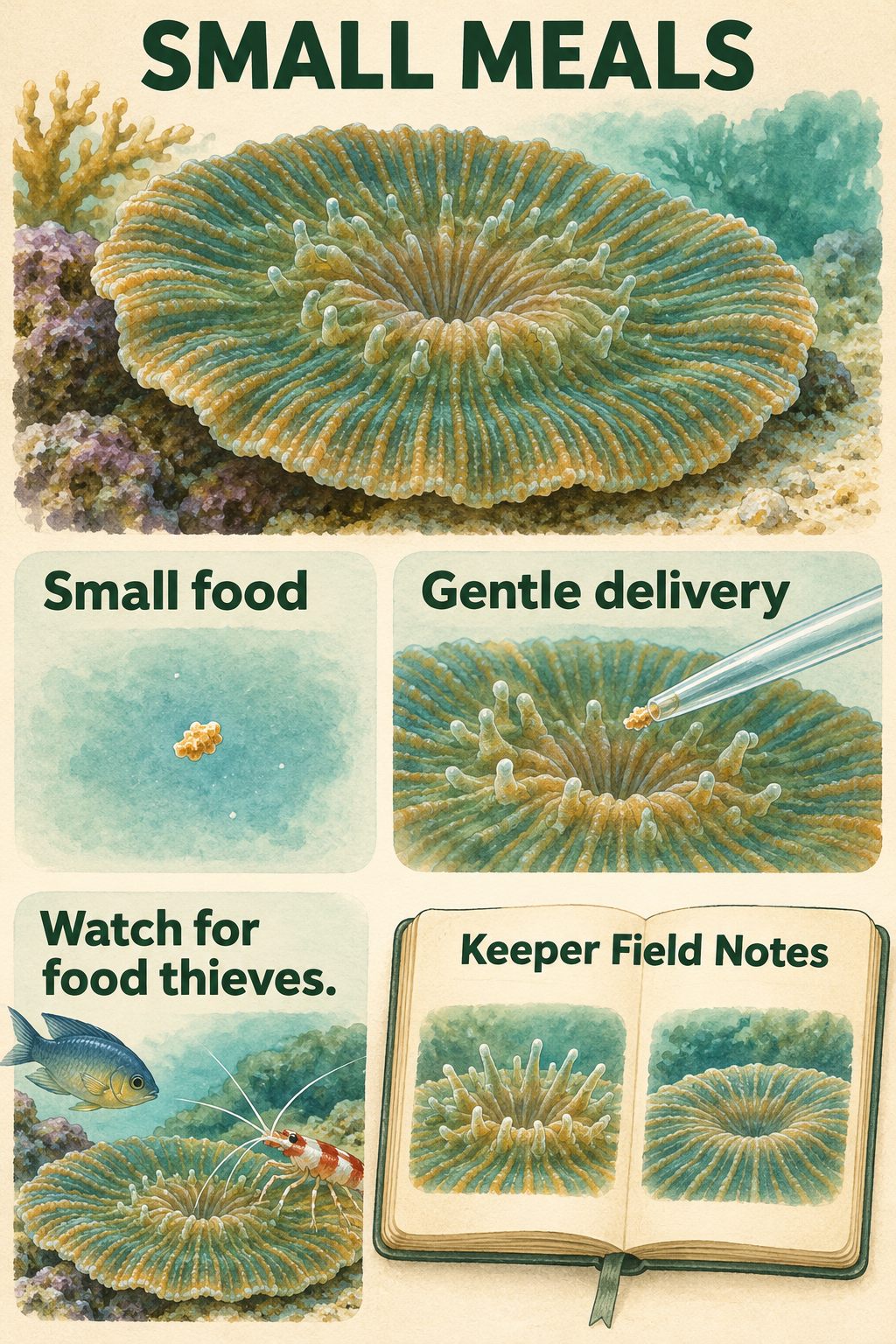
9. Think small bites. Offer a little finely sized meaty food, such as mysis. Let the tentacles carry it inward. Never push food into the mouth.
10. Guard dinner, not a schedule. Watch for fish or shrimp stealing the meal. Remove uneaten food. More feeding is not automatically better care.
Field notes: what keepers report
11. General plate reports: wandering. One keeper describes a plate doing well in a dim bottom corner, then slowly travelling away. Another warns that plates can leave rock ledges. These are general Fungia-style plate experiences, not verified Fungia fungites trials.
12. General plate reports: different routines. Some keepers use sand and frequent target feeding. A coral grower prefers coarser substrate and reports poor results from feeding too often. These observations do not establish one substrate or feeding timetable for every plate.
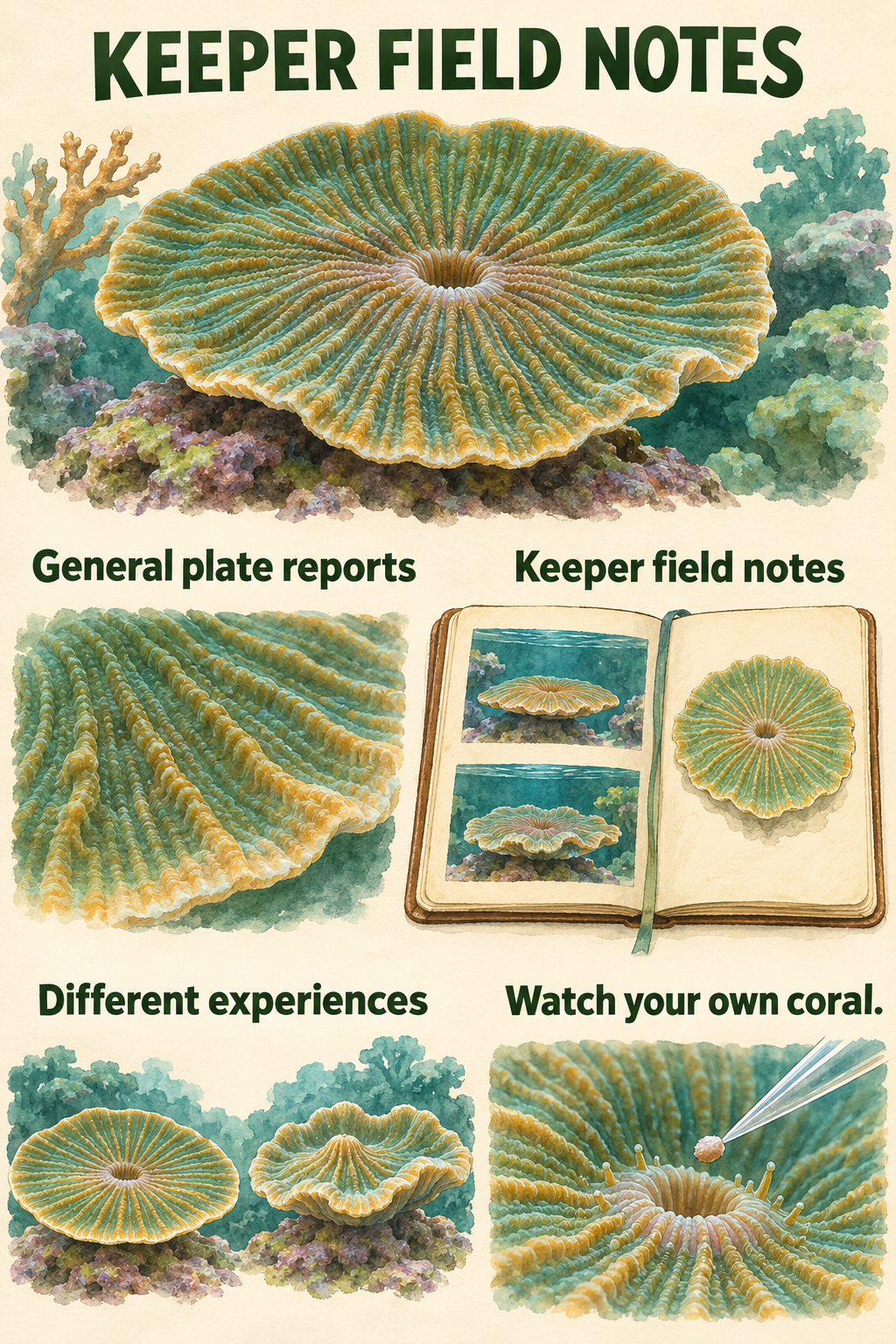
Give this living disc a clear patch of reef floor and a steady home. Watch the slow changes: a feeding response, a fuller rim, a little shift in position. The small details are half the fun.
Field Notes
Related species
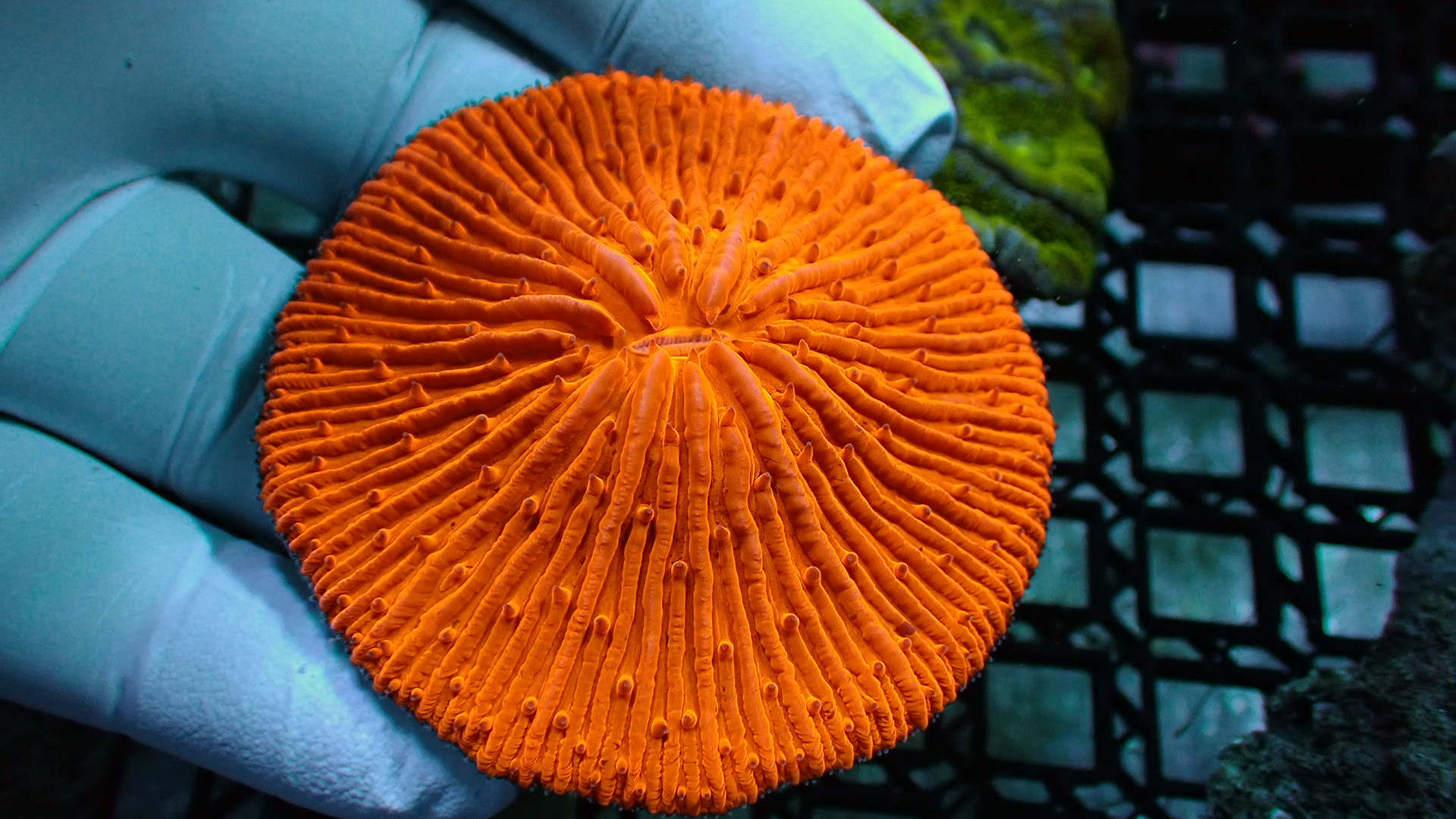
Orange plate coral
Fungia sp.
Same genus
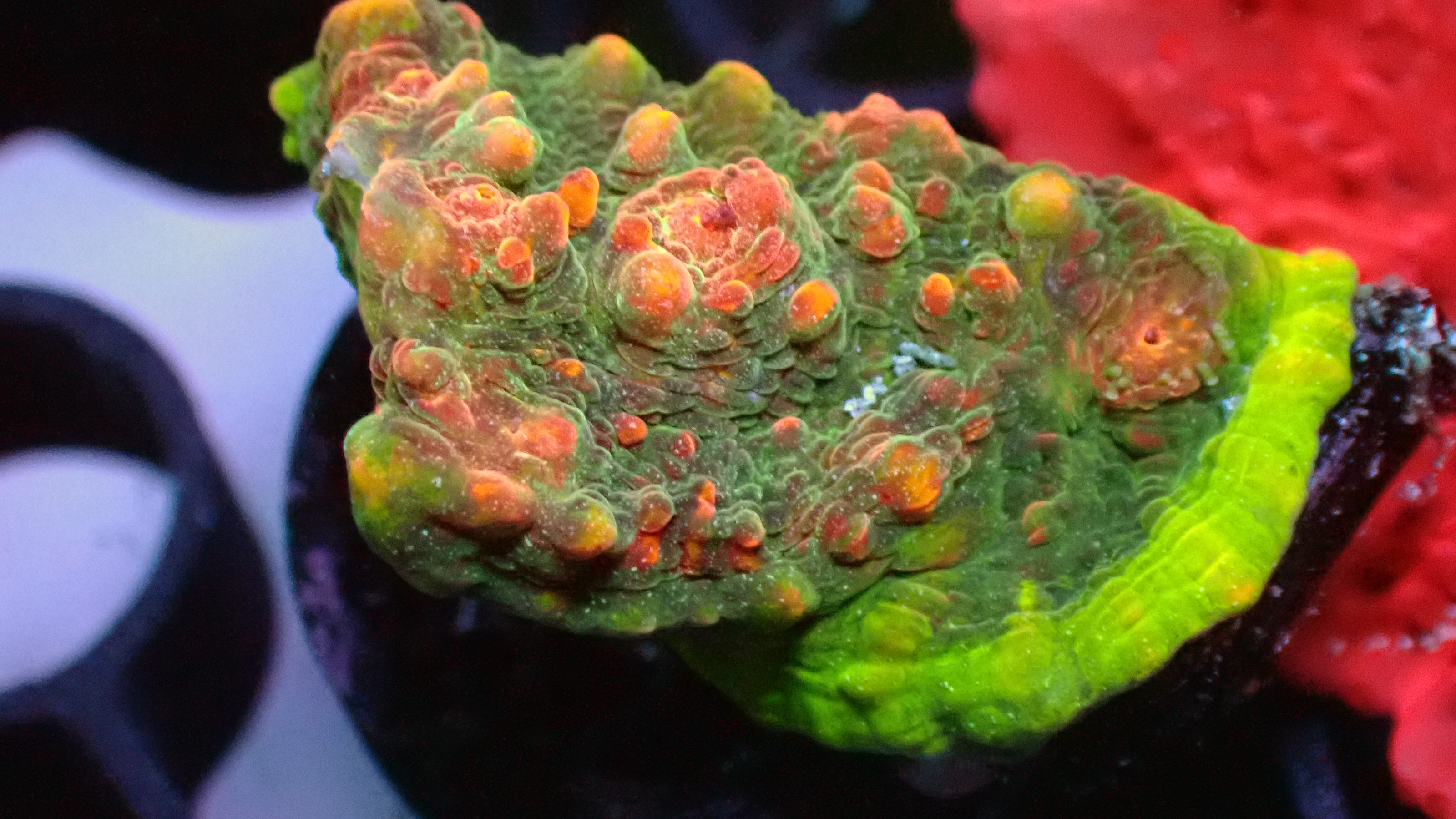
Area 51 chalice
Echinophyllia sp
Similar care · LPS
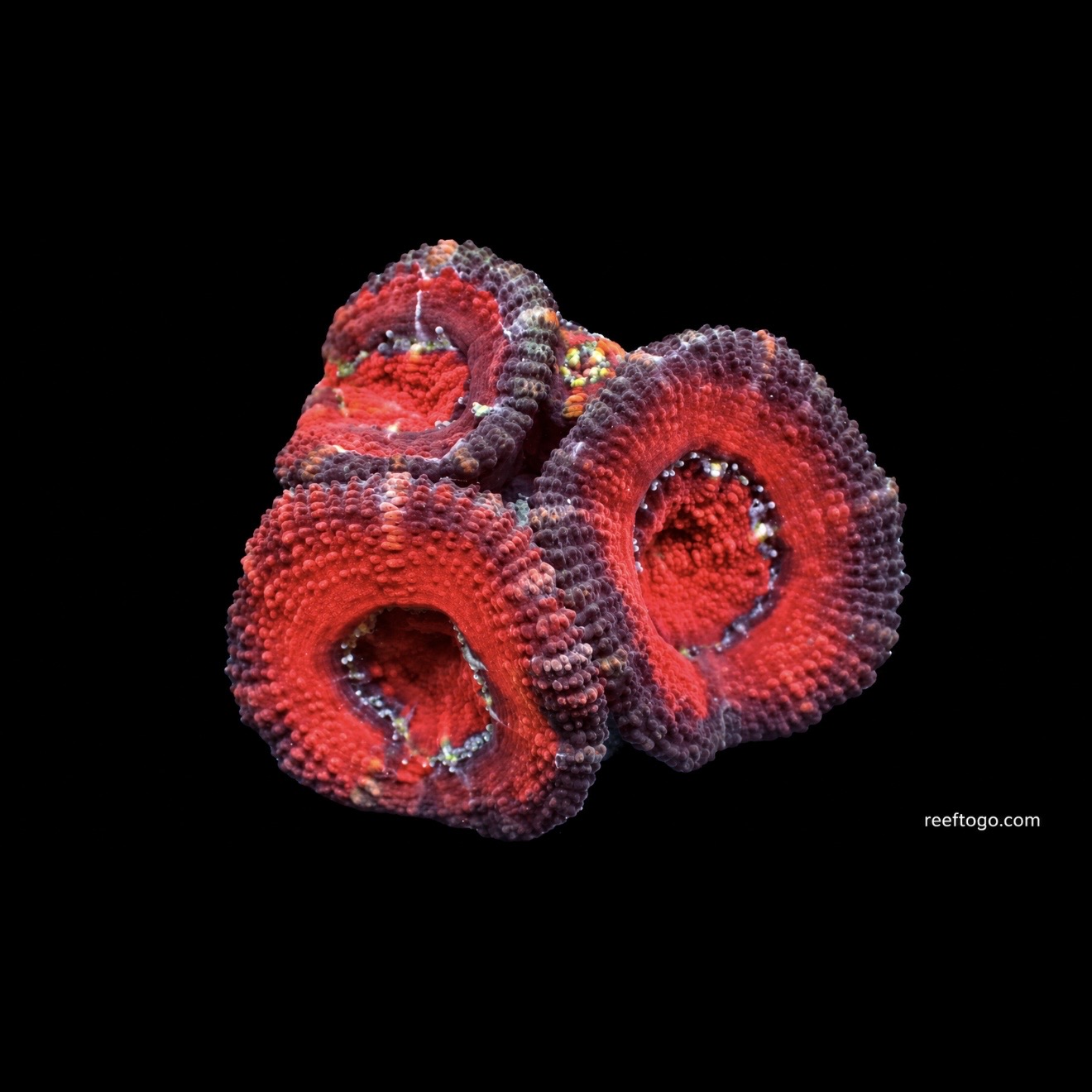
Darth Maul acan
Micromussa lordhowensis
Similar care · LPS
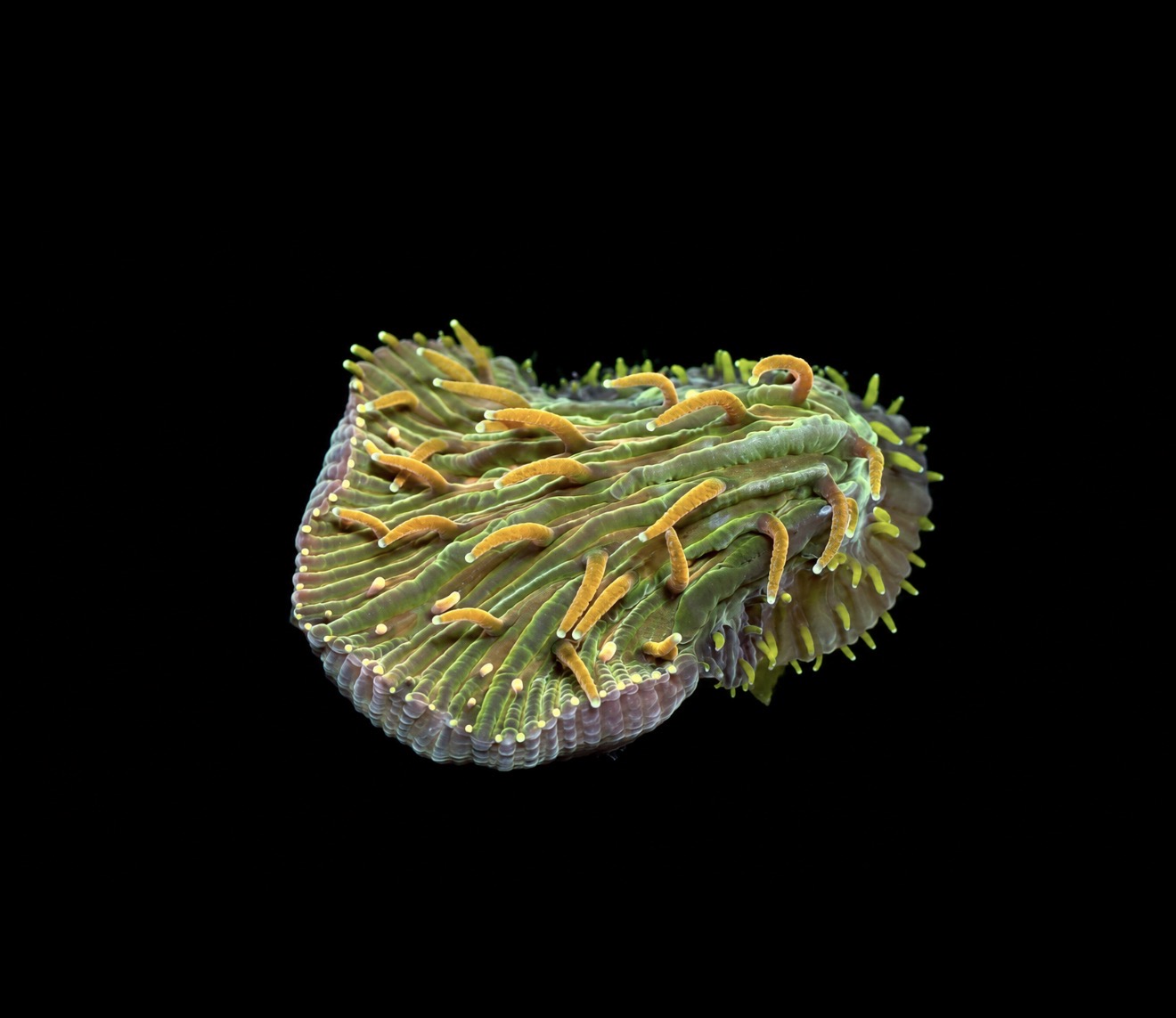
Gold finger Diaseris
Diaseris sp
Similar care · LPS
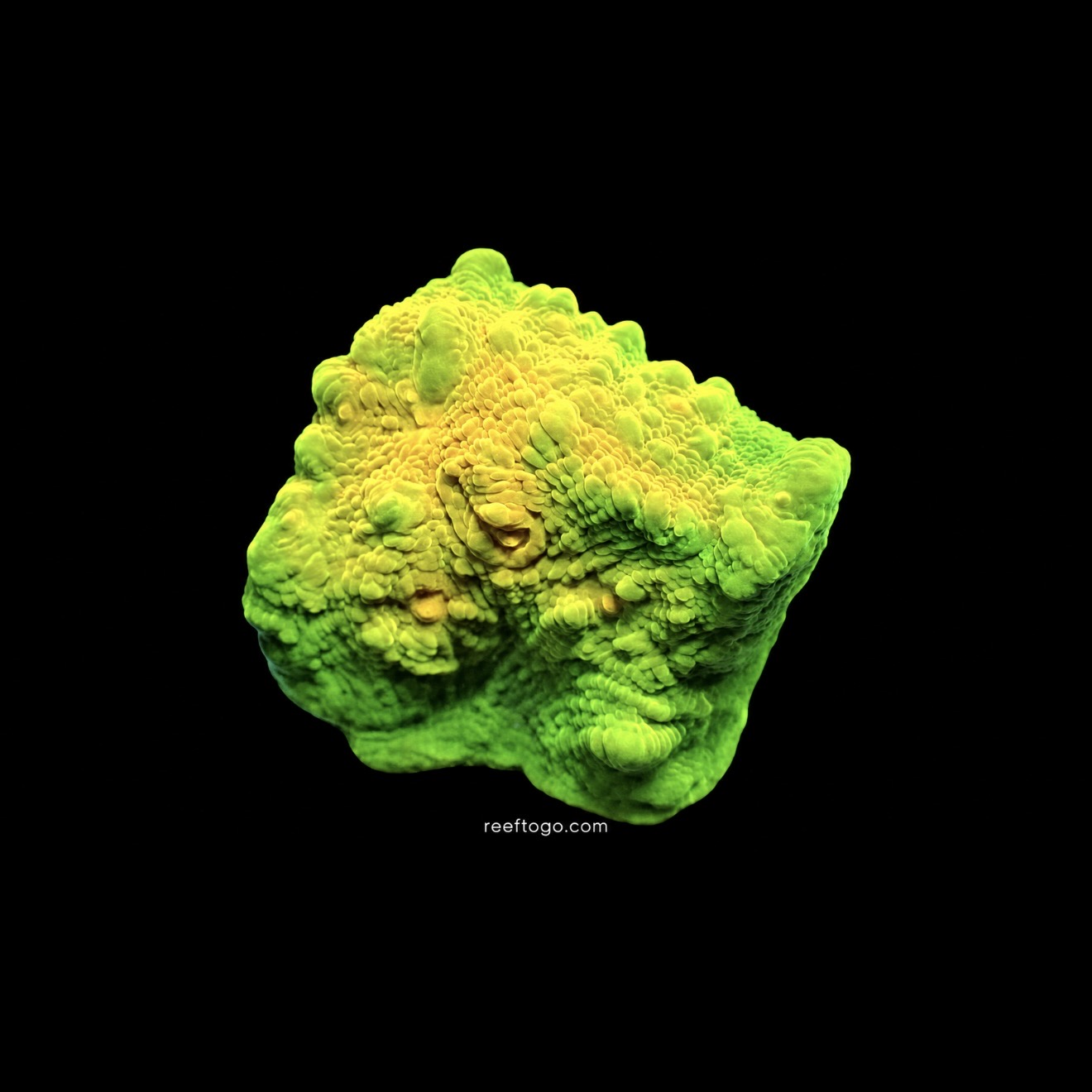
Yellow lambo chalice
Echinophyllia sp
Similar care · LPS

Artichoke Coral
Scolymia cubensis
Similar care · LPS
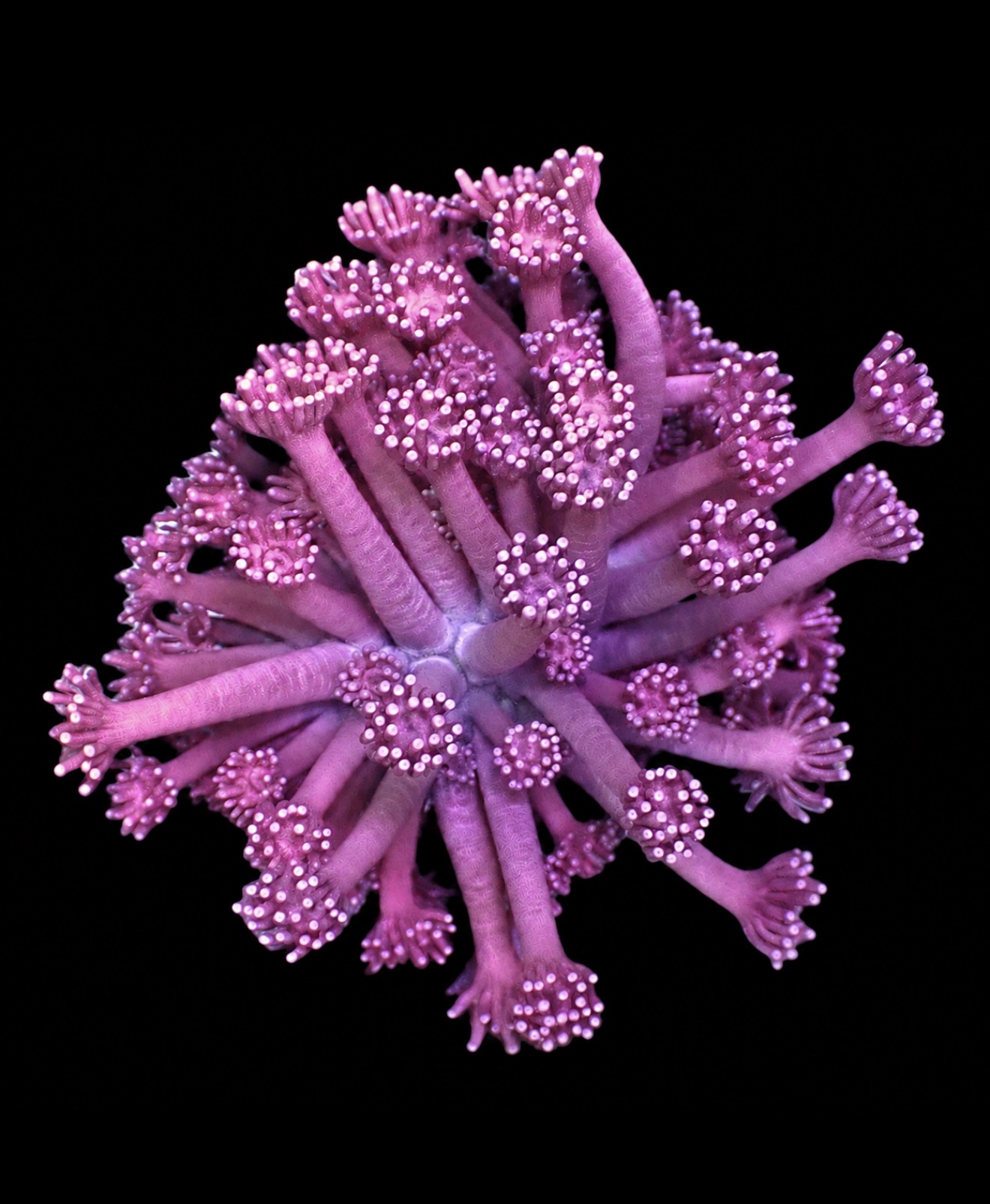
Barney the dinosaur Goni
Goniopora sp.
Similar care · LPS
Bleeding Apple Scolymia
Scolymia australis
Similar care · LPS