
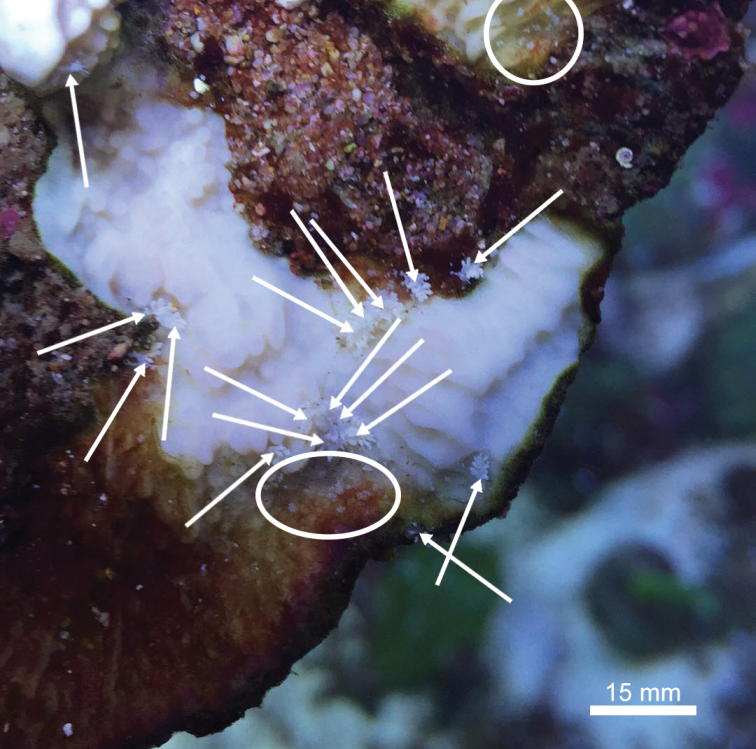
Wang et al. 2020, ZooKeys 909 (CC BY 4.0)
Montipora-eating nudibranchs
Phestilla subodiosa (identified to species in research published around 2020–2021; hobby animals long listed as Phestilla spp.)
Obligate Montipora feeders that hide on colony undersides and reproduce in place, quietly stripping tissue from every Montipora in the system.
Identification
Very small white to cream, frilly aeolid slugs, roughly 1–10 mm depending on source and age, covered in cerata and closely matching Montipora tissue color. They favor the underside of plating Montipora and the shaded base of branching forms. The most reliable field signs are creeping, jagged tissue loss along edges and bases, pale eaten patches between polyps, and tiny spiral egg ribbons — described as white to pink — laid on dead skeleton right beside healthy tissue.
Often confused with
Berghia and zoa-eating nudibranchs look similar at a glance; host is the tell — an aeolid sitting on Montipora and matching its tissue, with tissue loss tracking from the base, points to this pest. Also confused with small feather dusters on plating Montipora undersides and with plain alkalinity-related tissue recession, which lacks egg ribbons and a jagged feeding front.
What it targets
Montipora spp. (plating, encrusting and branching). Research and keeper reports also list Anacropora and occasionally Porites; Acropora, LPS and soft corals are not eaten.
How it spreads
Hitchhikes on Montipora frags, usually as egg ribbons on the plug or dead underside skeleton that survive dips. One missed frag can seed every Montipora in a system through frag trading and shared water.
Control (safest first)
Quarantine and manual removal: pull affected colonies, pick and brush adults and egg ribbons off the underside over a bucket of tank water, and repeat every few days. WetWebMedia's long-standing advice is daily to every-other-day picking and scrubbing, because animals collapse and vanish from view out of water. Repeated coral dips (CoralRx, Revive, Lugol's-type dips) every 4–8 days in quarantine: dips remove adults but leave eggs untouched, so the cycle runs for weeks and many SPS keepers hold treated Montipora in quarantine far longer before returning them. Cut away and discard heavily eaten skeleton and bases where eggs concentrate; one long-term keeper's prevention routine is to toothbrush the underside of every new Montipora and then coat the underside in thin superglue to entomb anything missed. Predator wrasses in the display and quarantine (Halichoeres species) pick off exposed adults and slow spread, but they cannot clear animals hiding under plates or eggs in crevices — support role only. Fallow period: removing all Montipora (and Anacropora) from the display starves the population out. In severe cases experienced keepers have discarded all Montipora and run the tank without hosts for an extended period; note some reports say these nudibranchs can survive surprisingly long without food, so short fallow periods may fail.
Natural predators
- Melanurus wrasse→
- Yellow coris wrasse
- Six-line wrasse→
Field notes
An Ultimate Reef keeper with a mature tank reported having to bag and discard every Montipora after failing to clear the pest, then running fallow for a long stretch and switching to chalice corals for a similar plating look; the same keeper later stayed pest-free for 15 years by toothbrushing and supergluing the underside of every new Montipora frag. A WetWebMedia exchange shows the classic misread: a keeper blamed patchy edge bleaching on an alkalinity swing and noticed a tiny white spiral that looked like a small fan worm, and the adviser replied that he had made the same misattribution in his own tank before finding aeolid nudibranchs eating the tissue between polyps. Coral Ever After's treatment write-up is blunt about established systems: modeling and hobby experience both suggest that once these nudibranchs are established in a mature tank, eradication odds are poor, which is why SPS keepers in the thread put prevention and a dedicated Montipora quarantine ahead of every cure.