
AquariaNR (CC BY 4.0)
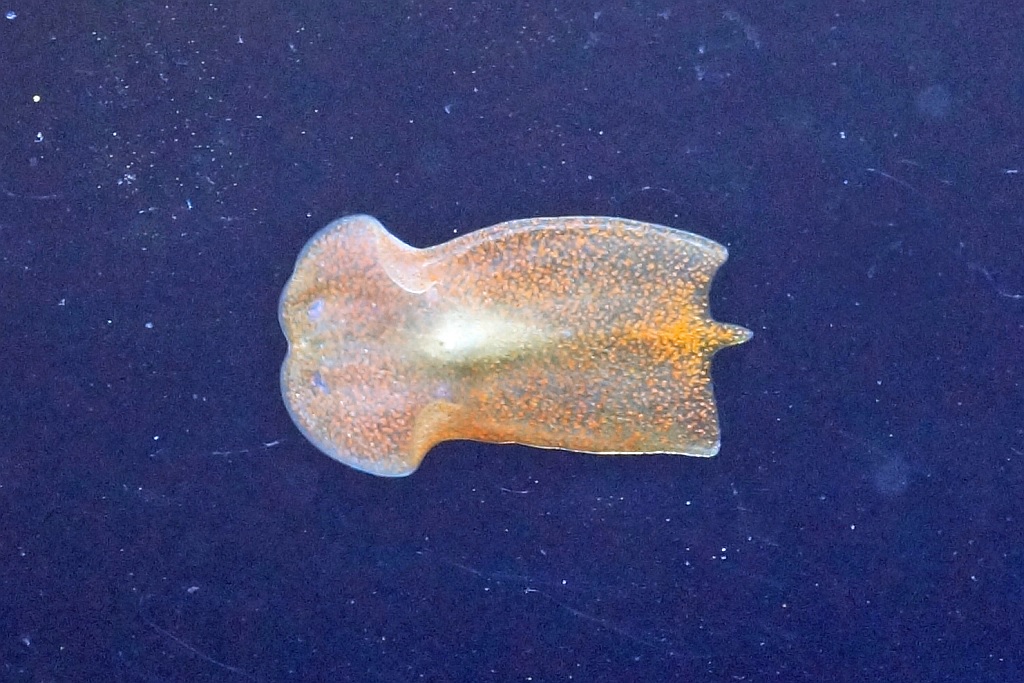
Red planaria flatworms
Convolutriloba retrogemma
Populations explode and blanket corals, blocking light, and a mass die-off releases toxins that can kill fish and corals.
Identification
Tiny flat oval worms about 2-6 mm long, rusty red to reddish-brown or orange-brown, with a rounded head and a three-lobed tail end, often with a lighter or red spot near the tail. They glide over rock, sand, glass and coral surfaces in sunny, well-lit spots, gather in low-flow areas, and can carpet surfaces in reddish patches when numbers explode. They carry symbiotic algae, which explains the sun-seeking behavior.
Often confused with
Harmless clear or white acoel flatworms stay sparse and translucent. Waminoa flatworms are larger, bronze and oval and sit on a single coral. Acropora-eating flatworms are pale, oval and found on Acropora tissue with bite marks and eggs. Red planaria is named by the rust-red color, three-lobed tail and sheer numbers across many surfaces.
What it targets
Coral surfaces, rock, sand and glass. The worms do not eat coral tissue; dense blankets block light to zooxanthellae and stress or smother corals, and they compete for copepods and other micro-prey. Their body toxins are the main danger when many die at once.
How it spreads
Hitchhikes on live rock, coral frags and macroalgae, often unnoticed in rock crevices. Reproduction is fast: sexual egg-laying plus asexual budding from the tail lobes and fission, so a handful of worms can become a plague in a well-lit tank with plenty of micro-prey.
Control (safest first)
Siphon relentlessly with airline or 3/8-inch tubing into a fine mesh or stocking so water can be returned: daily siphoning for a week or more can collapse small outbreaks and is mandatory preparation before any chemical step. A flashlight at night draws worms together for easier siphoning in some tanks. Increase flow and skim well: worms favor low-flow areas, and populations often wax and wane and sometimes crash on their own as food runs short, especially while siphoning keeps numbers down. Predator fish (hit-or-miss): six-line wrasse, yellow coris wrasse, melanurus wrasse, lunare wrasse and Springer damsels are all reported eating red planaria, and individual fish vary from enthusiastic hunters to complete indifference. A wrasse is population control, rarely a full cure. Salifert Flatworm eXit, used exactly as directed: the product itself is described by Salifert as harmless to reef organisms, and the danger is the toxic body juice of the dying worms. Process from the Salifert directions: siphon out as many worms as possible first (flush crevices with a powerhead or baster and siphon those too), remove carbon and turn off UV and ozone while keeping the skimmer on, dose 1 drop per gallon in a high-flow area, add 50 percent more if no visible effect within 45 minutes, siphon dying worms as they let go, then run about 1 pound of fresh high-quality activated carbon per 50 gallons in forced flow, monitor livestock for at least 6 hours, and have at least 25 percent fresh saltwater ready for an emergency water change. Never dose a heavy infestation without the siphon-down first: mass toxin release is the documented way this treatment kills tanks. Dip and quarantine new corals and rock: freshwater dips and coral dips knock worms off incoming pieces, and inspection under bright light catches the rust-red specks before they reach the display. Flag: dips protect new additions only and do not clear an established display population.
Natural predators
- Six-line wrasse→
- Yellow coris wrasse
- Melanurus wrasse→
- Lunare wrasse
- Springer damsel
Field notes
Melev's Reef guidance shared on Reef2Reef sets the preparation bar: siphon out roughly 75-85 percent of the visible infestation before dosing Flatworm eXit, age saltwater for a 25 percent change, and expect worms dangling on web-like threads within about 15 minutes of the dose, ready to siphon. A keeper treating a 180-gallon system reported siphoning three buckets of dead worms during the treatment, ran fresh carbon at the 6-hour mark, and saw both tangs refuse food for over two days after apparently eating floating dead worms, while snails, crabs, shrimp and corals came through fine. A second treatment a week later showed no new worms, with open discussion about whether eggs hatching over following weeks would need more rounds. Biological control disappointed one UltimateReef keeper, who reported wrasses and nudibranchs both failed to dent the worms in a quarantine tank and moved to Flatworm eXit next, while other forums report individual wrasses keeping numbers invisible for years.