Cladiella Soft Coral
Cladiella australis

Photo: andouche, CC BY 4.0, via Wikimedia Commons. Preserved Cladiella australis specimen, MNHN-IK-2000-361.
Gallery
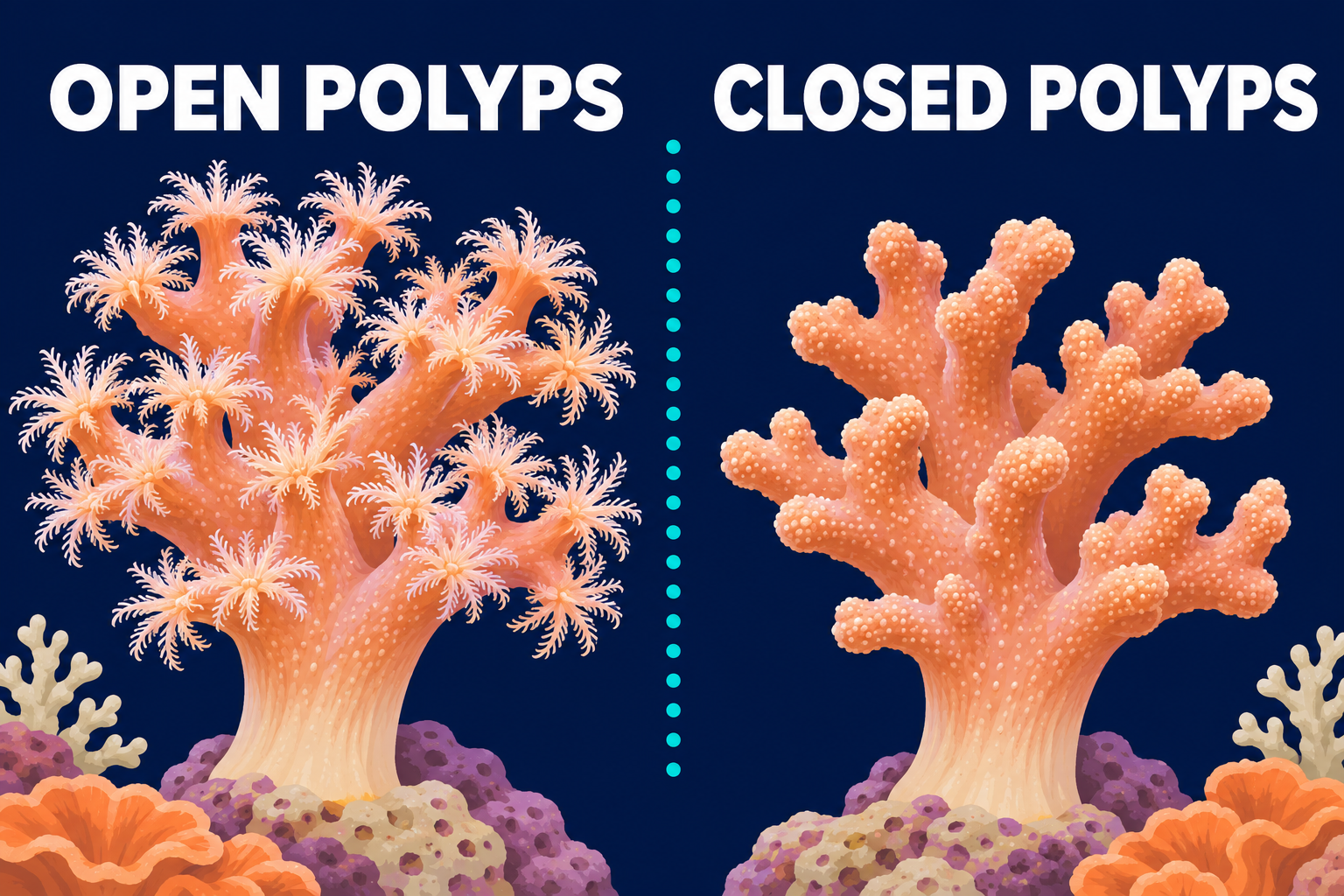
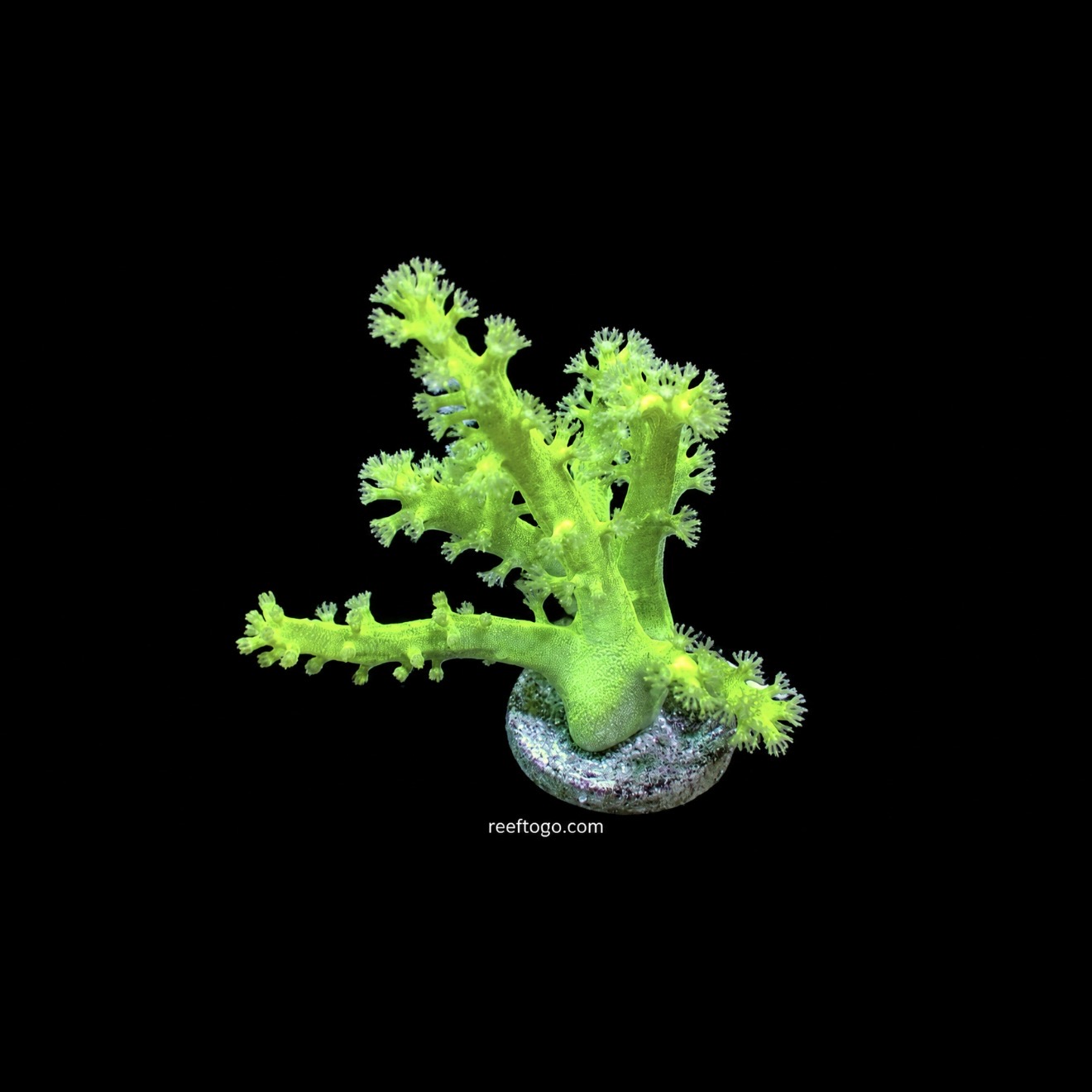
A Cladiella colony can go from smooth little fingers to a fuzzy thicket without growing an inch. The trick is in the polyps. When they reach out, they change the whole silhouette. Give this soft coral a steady spot and watch it put on both looks.
A coral that changes shape

1. Tiny arms, big effect. Each polyp has eight feathery tentacles. A crowd of open polyps turns the colony's rounded lobes into a soft, fuzzy canopy.
2. Soft doesn't mean mineral-free. Cladiella has no massive stony frame. It carries tiny mineral bits in its tissue instead. Those bits help scientists tell look-alike soft corals apart.
Pick a middle shelf
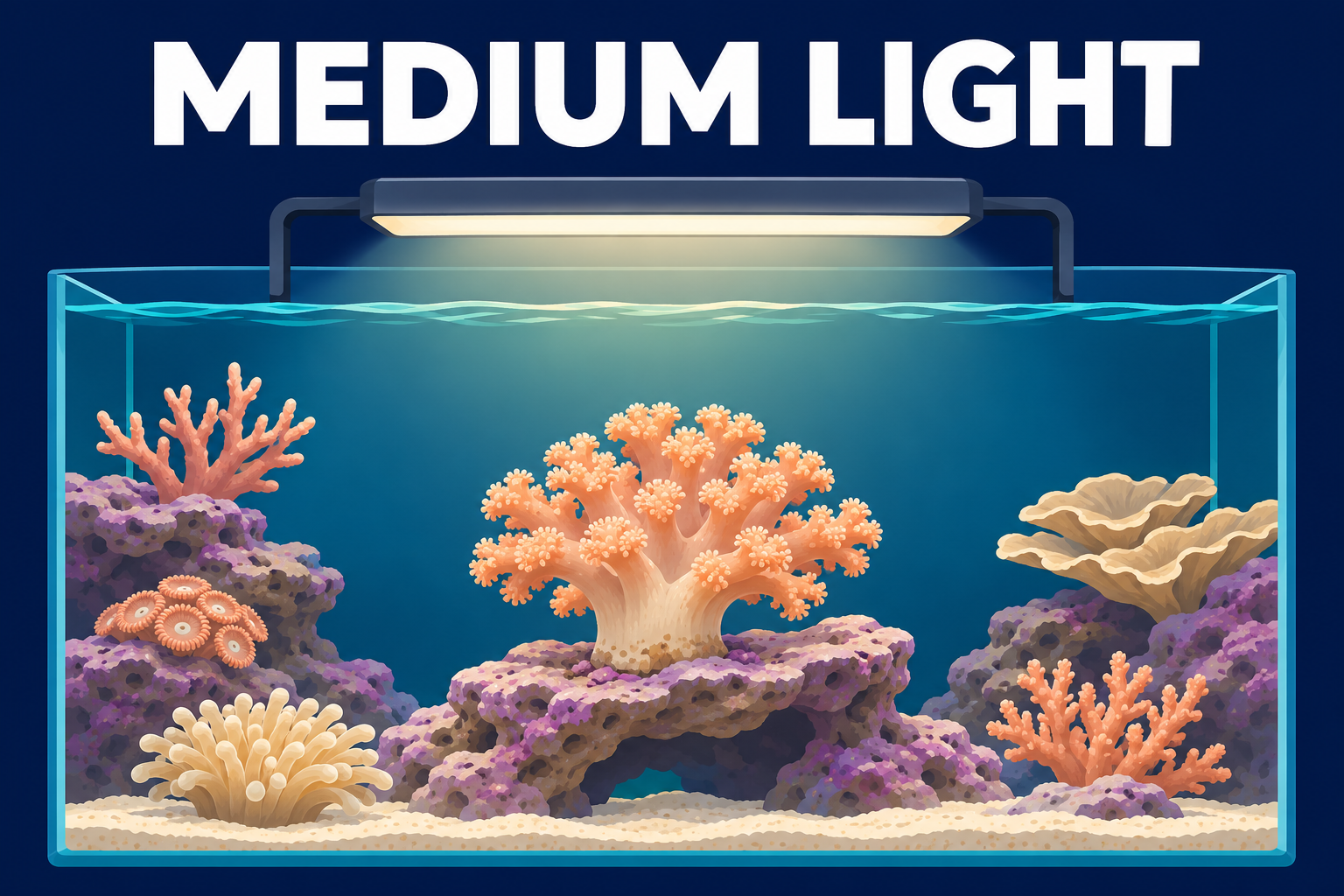
3. Start with medium light. Set the coral on a stable ledge around the middle of the tank. Choose an open spot rather than a dark cave or the brightest perch under the lamp.
4. Make changes slowly. Give the colony time to settle before raising the lights. Change one thing at a time so you can see what helped.
Let the current sweep past
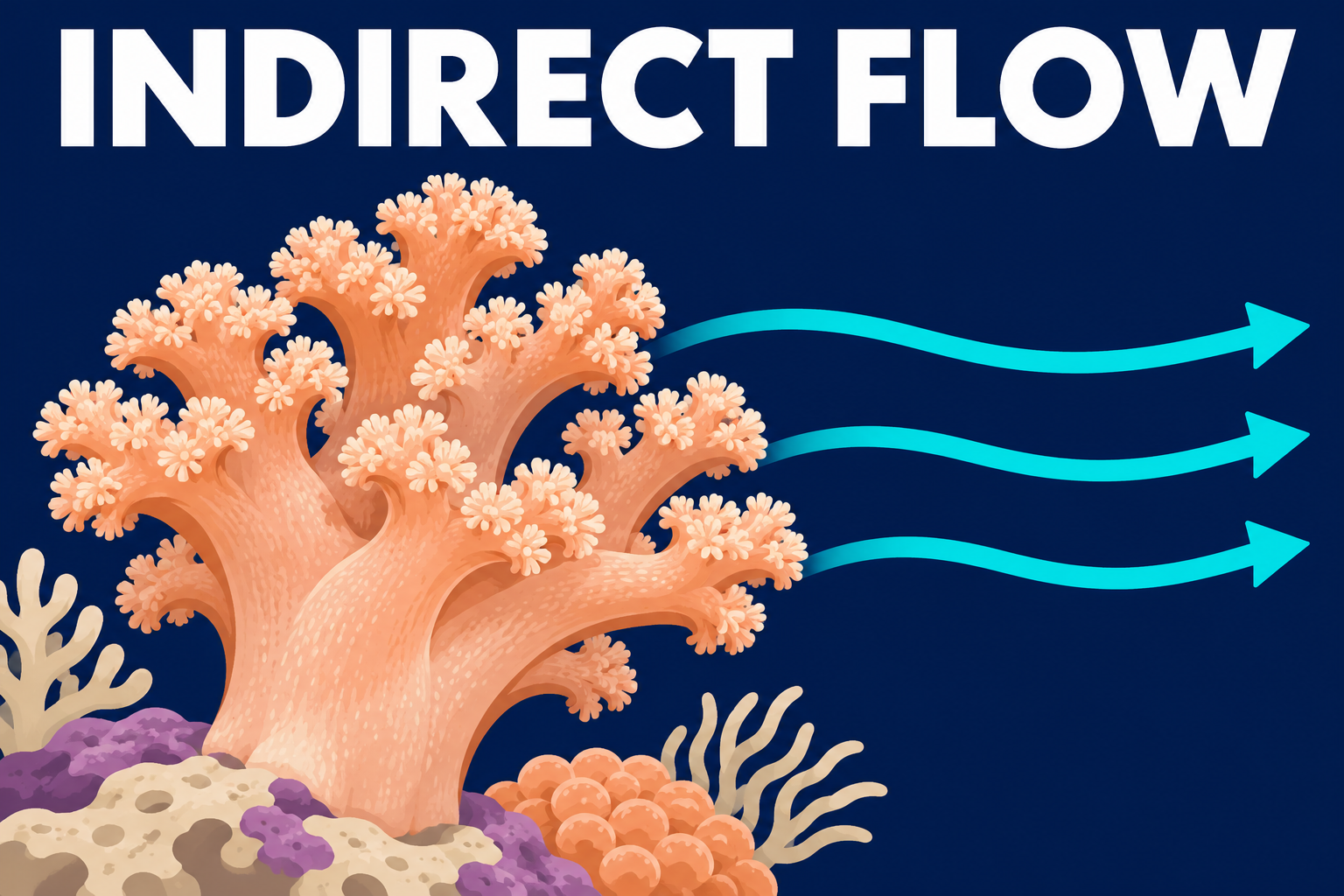
5. Look for a gentle sway. Use medium, indirect flow. The lobes should move a little, not fold over in a pump jet.
6. Keep the folds clean. Look between the lobes for trapped debris. If it keeps collecting, aim the pump past the colony before turning up the power.
Give those branches room

7. Peaceful still needs space. Leave a gap between colonies. A branch can brush its neighbor or shade it as it grows, even if nothing looks crowded today.
8. Watch the long game. Take a photo from the same angle every few weeks. Compare the edges, not just how fluffy the coral looks on one day.
Feed the light partnership
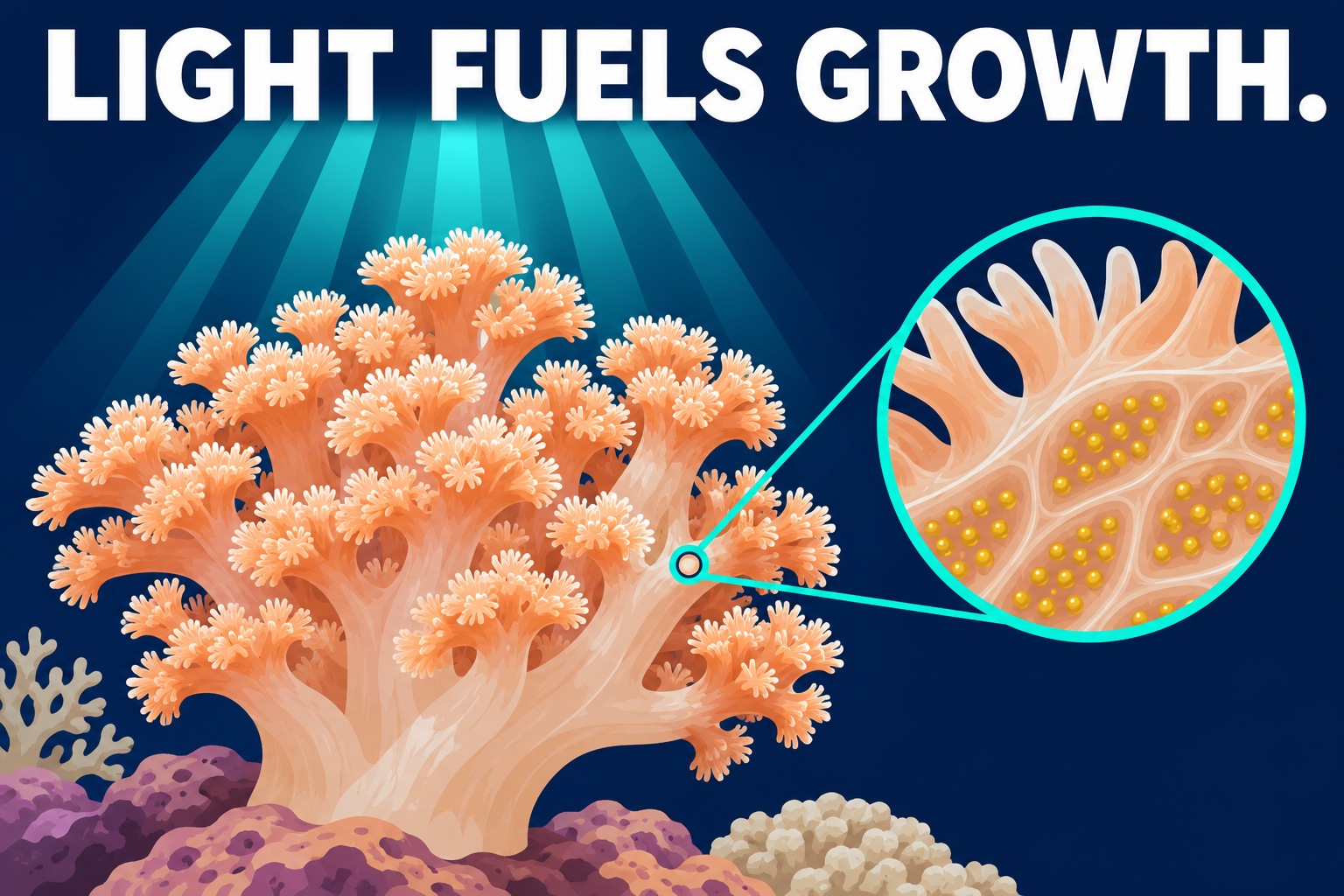
9. Let light do the heavy lifting. Tiny partner algae inside the coral turn light into fuel. You don't need to squirt food at the polyps on a schedule.
10. Keep the water steady. Match temperature and salinity when you make water changes. If the coral stays shut, check those basics, flow, and contact with neighbors before reaching for another additive.
Field notes — what keepers report
11. Some settle in and take off. In general Cladiella records, one keeper saw fast growth beside a neighboring coral that stayed open. Another warned that some low-growing Cladiella forms were touchy around neighboring corals. An open gap is a better starting point than borrowing somebody else's spacing.
12. A rough arrival isn't the whole story. Aquarium handlers report heavy slime during shipping. Give a new arrival time to settle in steady flow. If it stays closed and you see tissue loss, check the base and nearby corals instead of treating it as a normal off day.
Start on a middle shelf, let the water sweep past, and leave room for the branches to fill out. Once you know how your colony looks on a good day, a real change is much easier to spot.
Field Notes
Related species
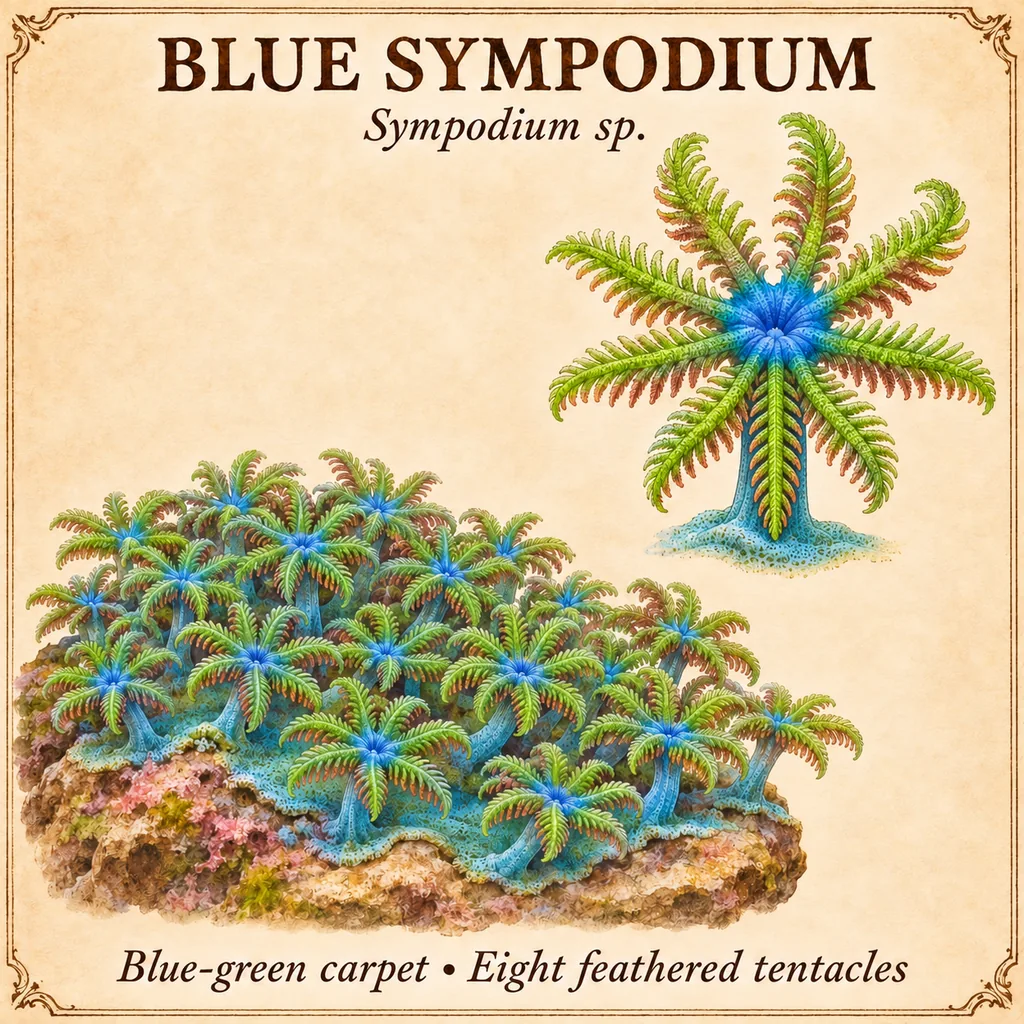
Blue Sympodium
Sympodium caeruleum
Similar care · Soft

Blueberry Haze Zoas
Zoanthus sp.
Similar care · Soft

Blueberry Zoanthids
Similar care · Soft

Burning Willow Zoas
Zoanthus sp.
Similar care · Soft
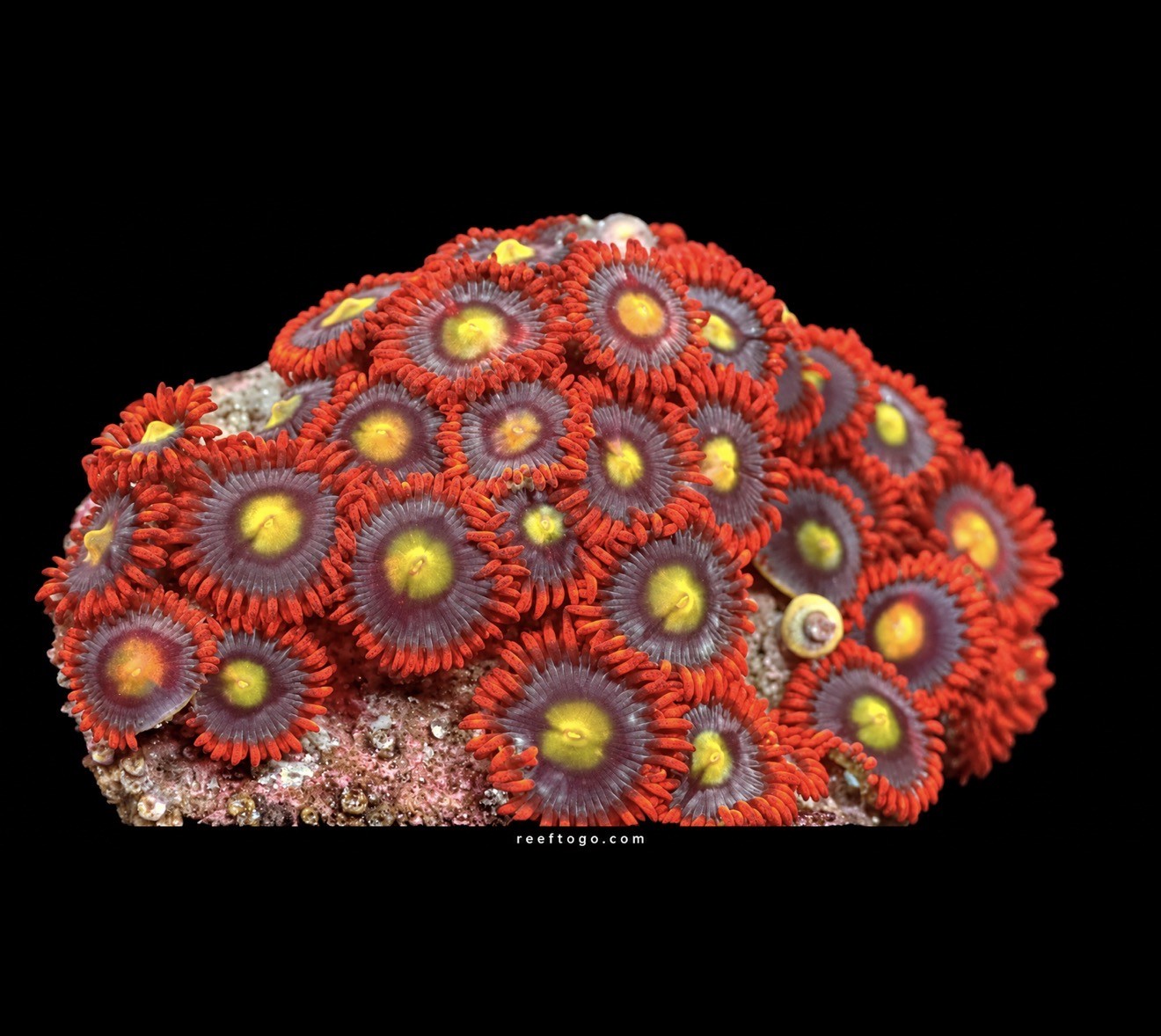
Fire and ice zoanthids
Zoanthus sp
Similar care · Soft
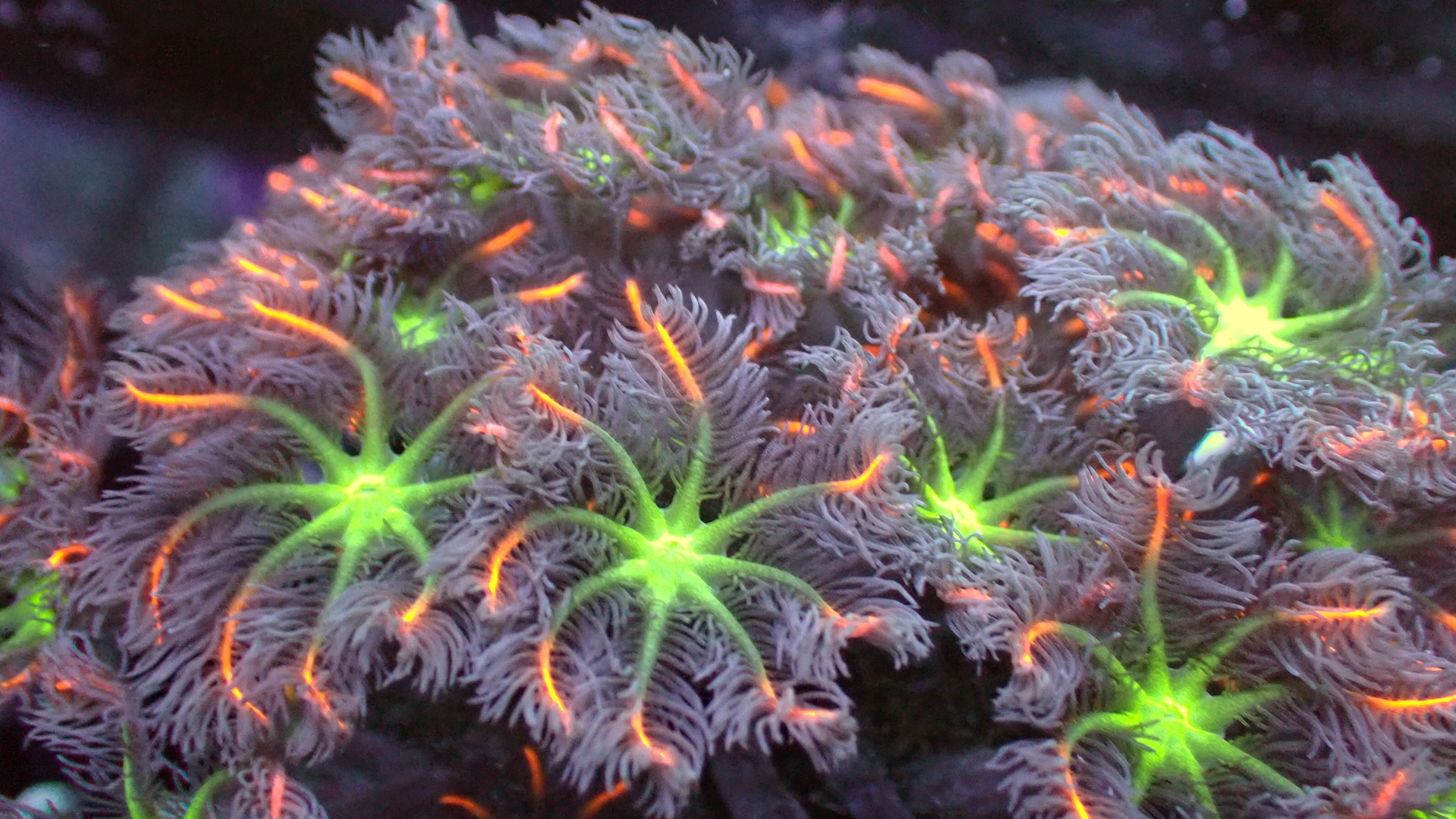
Firework cloves polyps
Clavularia sp.
Similar care · Soft
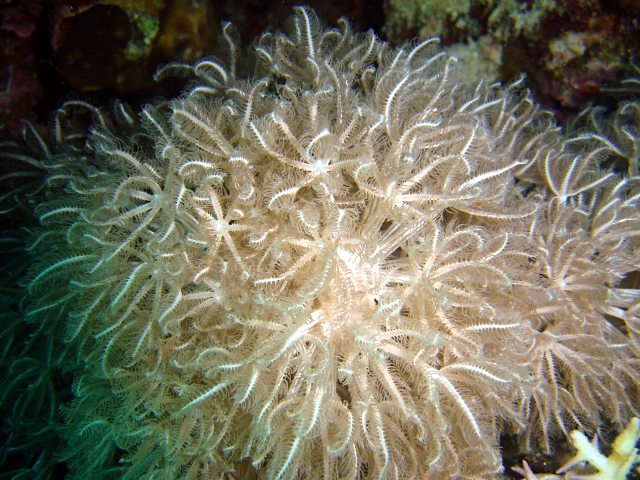
Giant Anthelia
Anthelia glauca
Similar care · Soft
Glow stick leather
Sarcophyton sp
Similar care · Soft