Fire and ice zoanthids
Zoanthus sp
Palytoxin safety
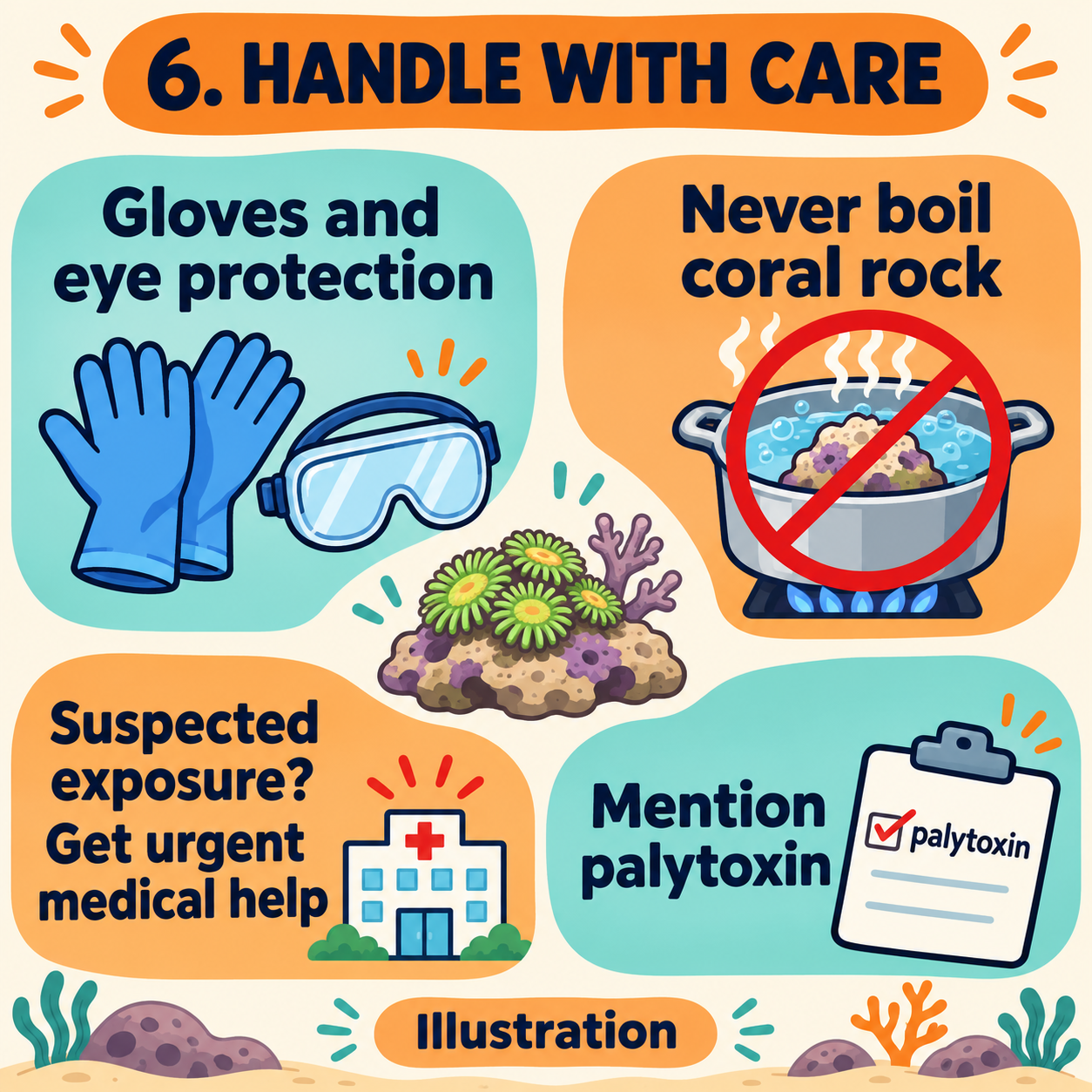
Some zoanthids and palythoas can contain a potent toxin. Wear sturdy waterproof gloves and eye protection, minimize handling, and keep colonies submerged when possible. Never boil, steam, pressure-wash or scrub colonized rock under running water. Keep other people and pets away during handling. If exposure is suspected, seek urgent medical advice and tell the clinician about possible palytoxin exposure.
Sources: CDC: palytoxin exposure · OATA: avoiding palytoxin poisoning
Gallery
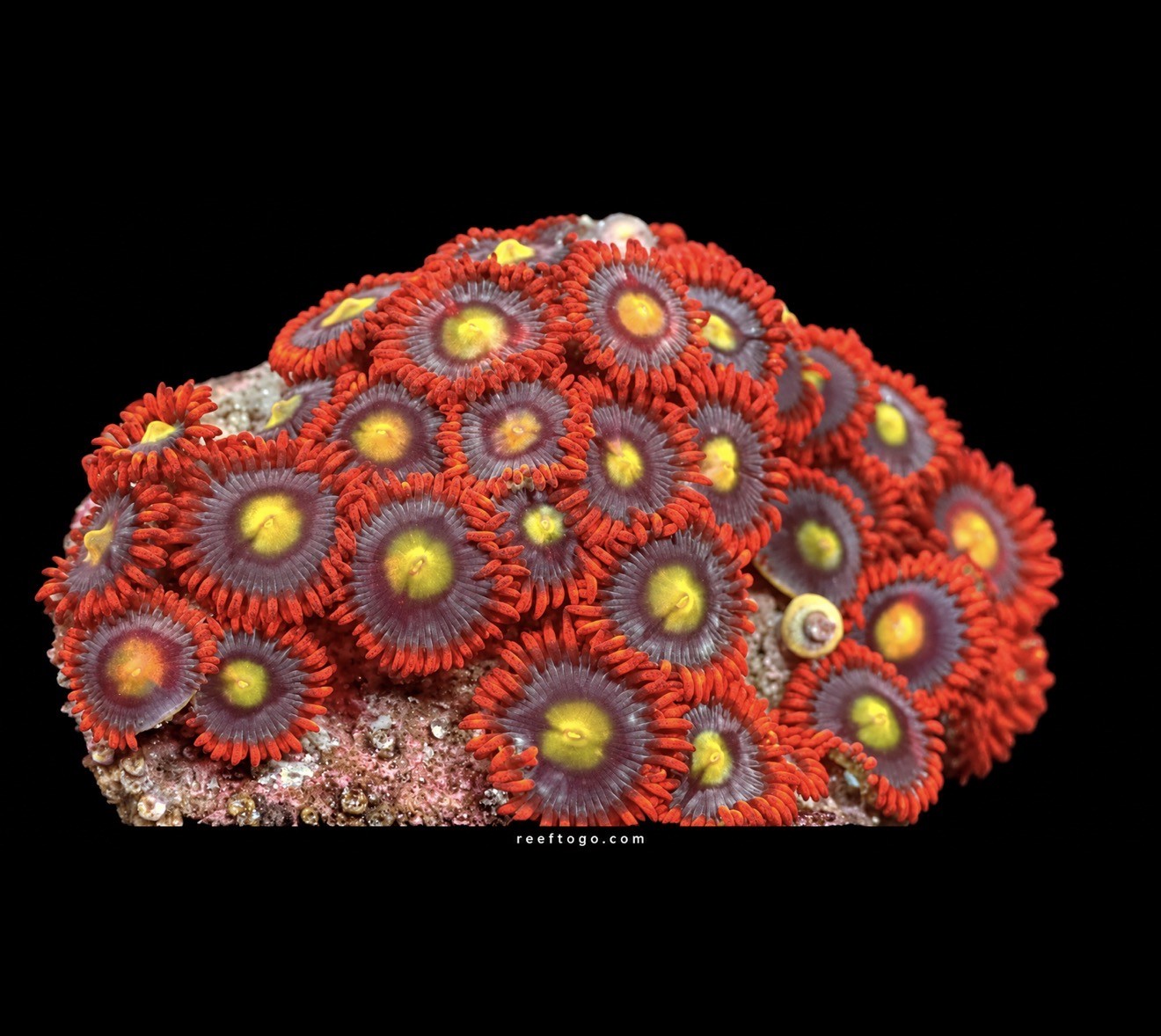
Tiny polyps. Big contrast! Fire and Ice zoas bring blue and red together in a colony of little living buttons. Each button is an animal, with tiny algae inside helping turn light into food. Give the colony a steady spot and watch its garden grow.
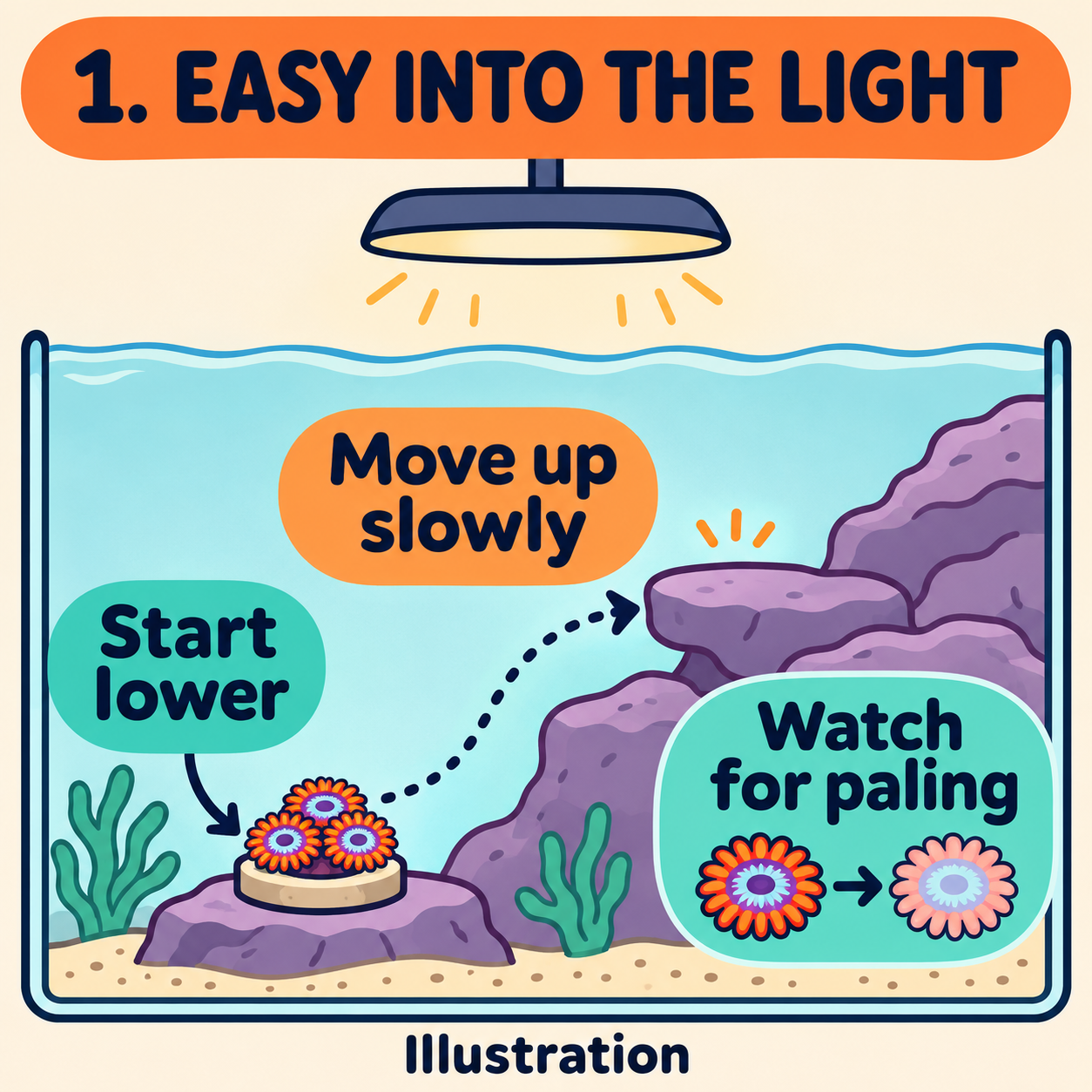
1. Easy into the light
Start your frag on secure lower-to-middle rockwork under medium light. Let it settle before moving it higher. Increase light slowly over several weeks, and move it back to a dimmer spot if it starts paling.
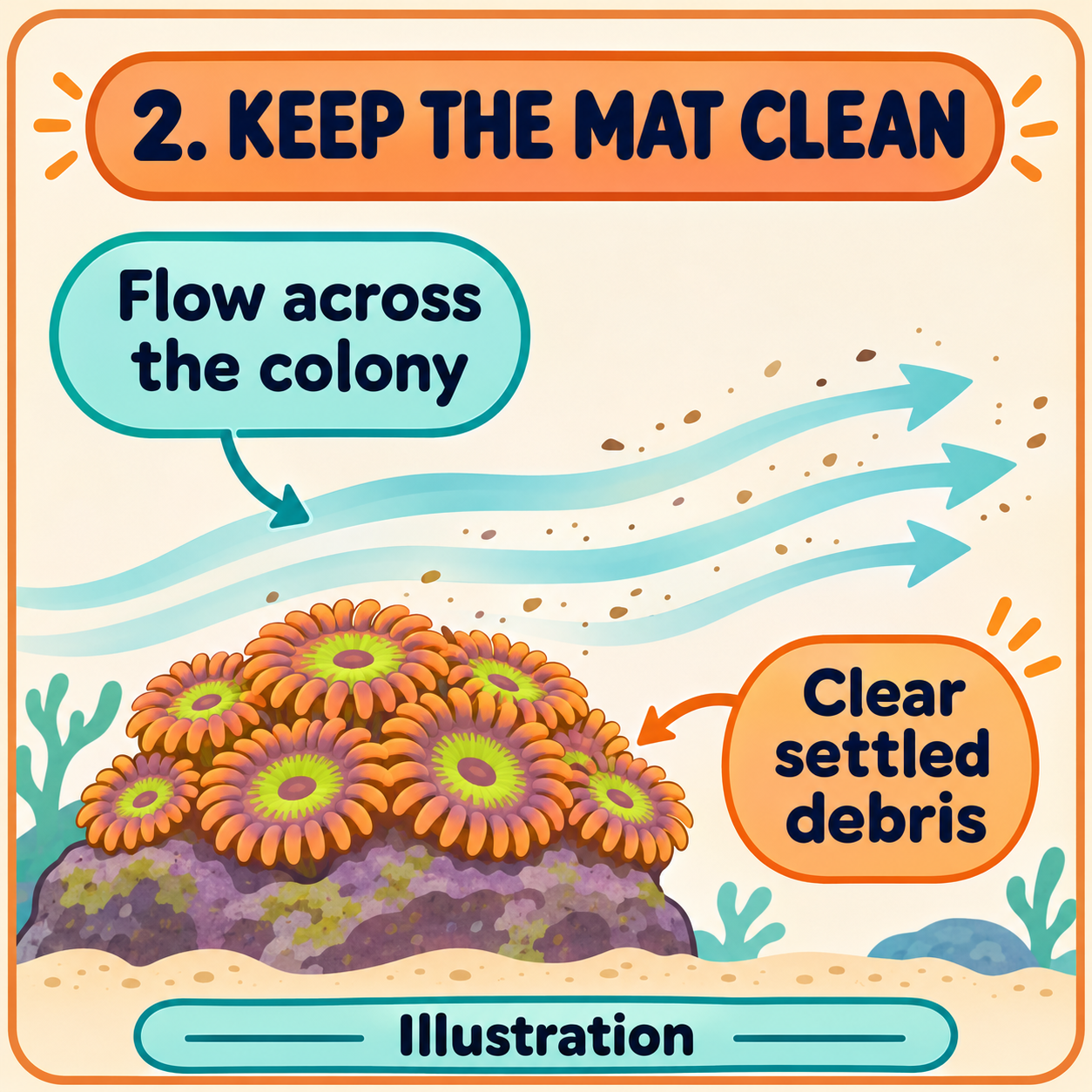
2. Keep the mat clean
Send moderate flow across the colony so waste lifts away from its base. The little tentacles should move without being pinned flat. If grit keeps collecting between the polyps, adjust the pump direction. Keep the frag firmly attached.
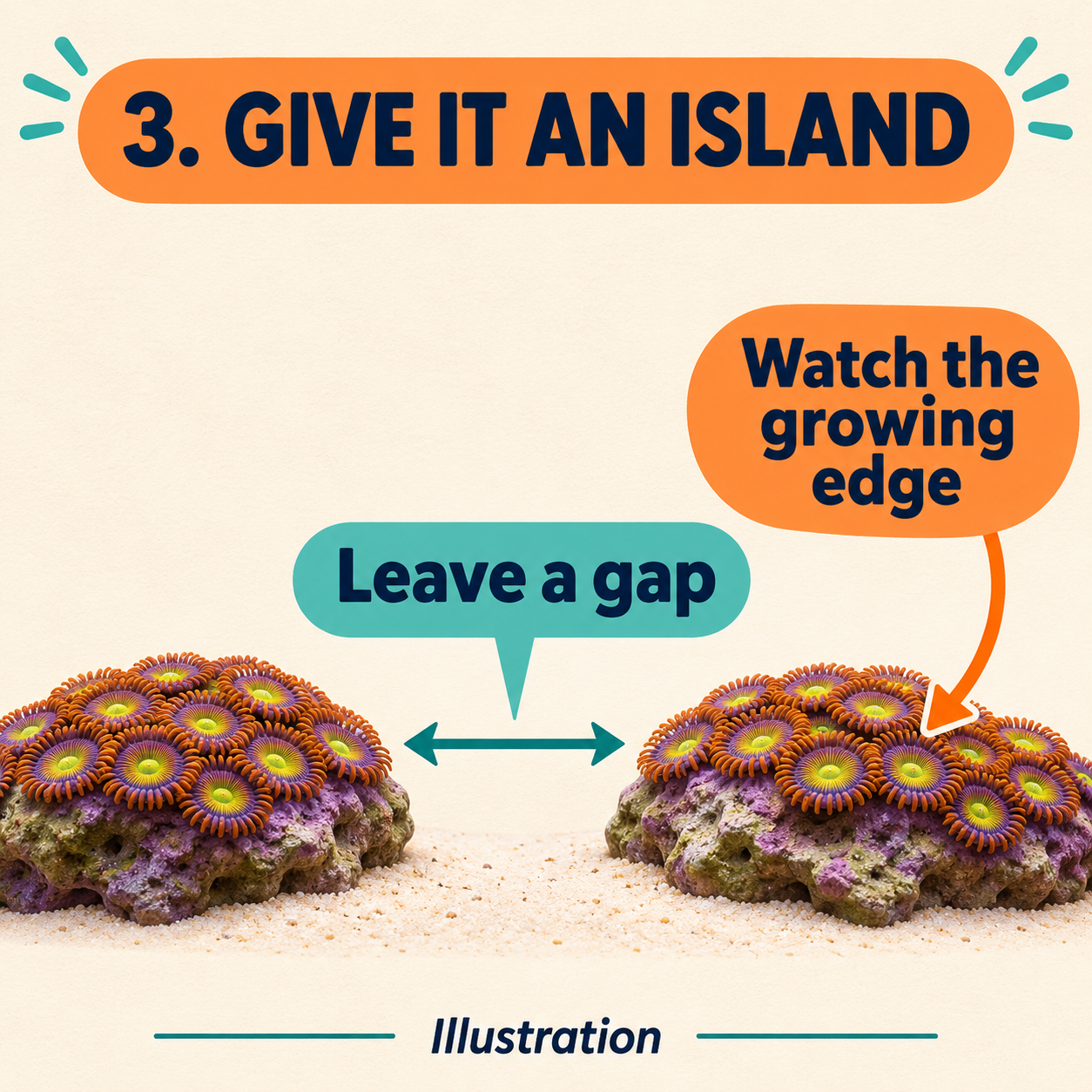
3. Give it an island
A separate rock makes this garden easier to manage. Leave about two inches from neighboring corals to start, then widen the gap as either colony grows. Check the edges regularly. Even peaceful zoas compete for space.

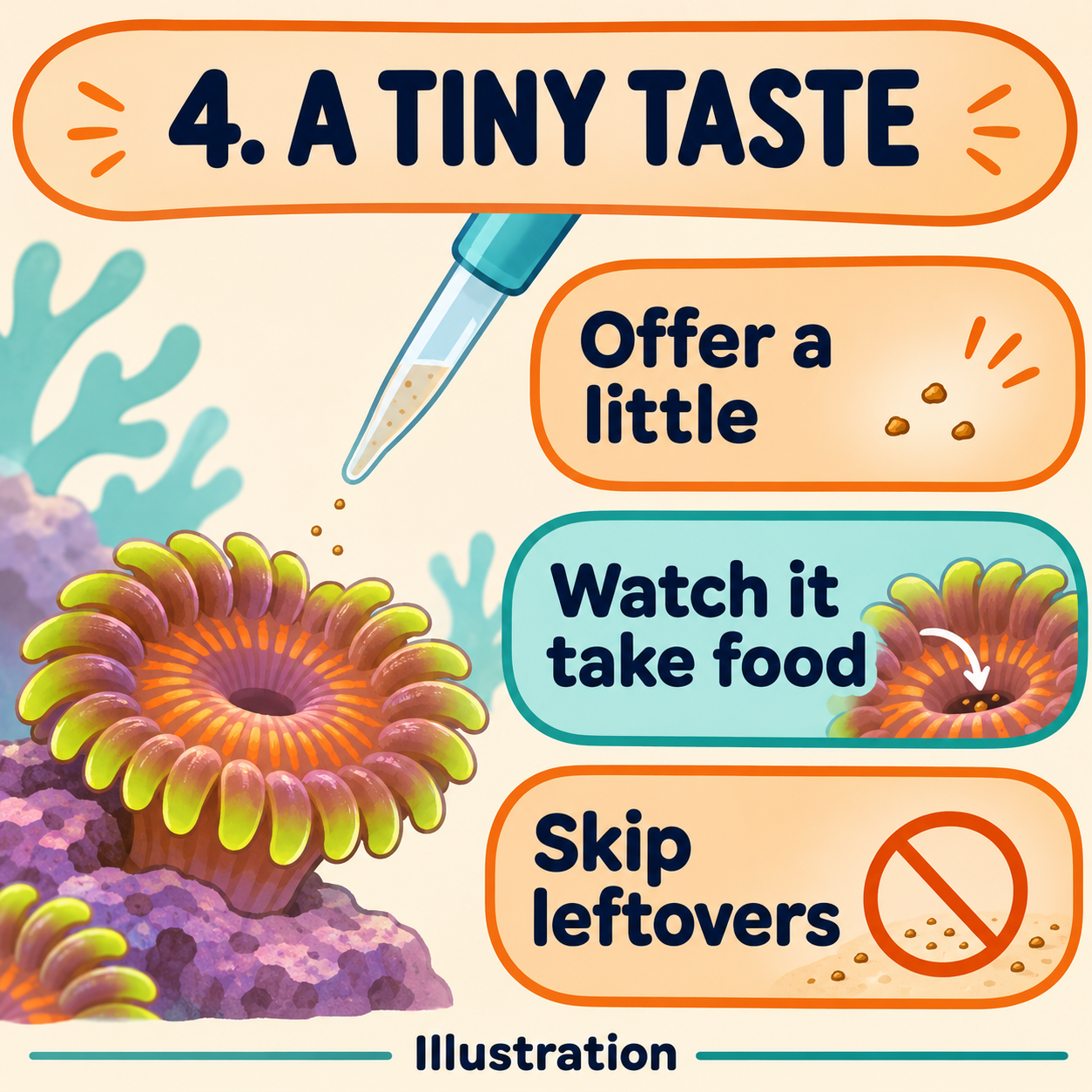
4. A tiny taste
Light supplies much of their food. Try a little fine coral food once a week, mixed with tank water. Gently release it near a few open polyps and watch for food moving toward their mouths. Stop if it washes away or gets shed in slime, and remove leftovers.
Field notes — what keepers report
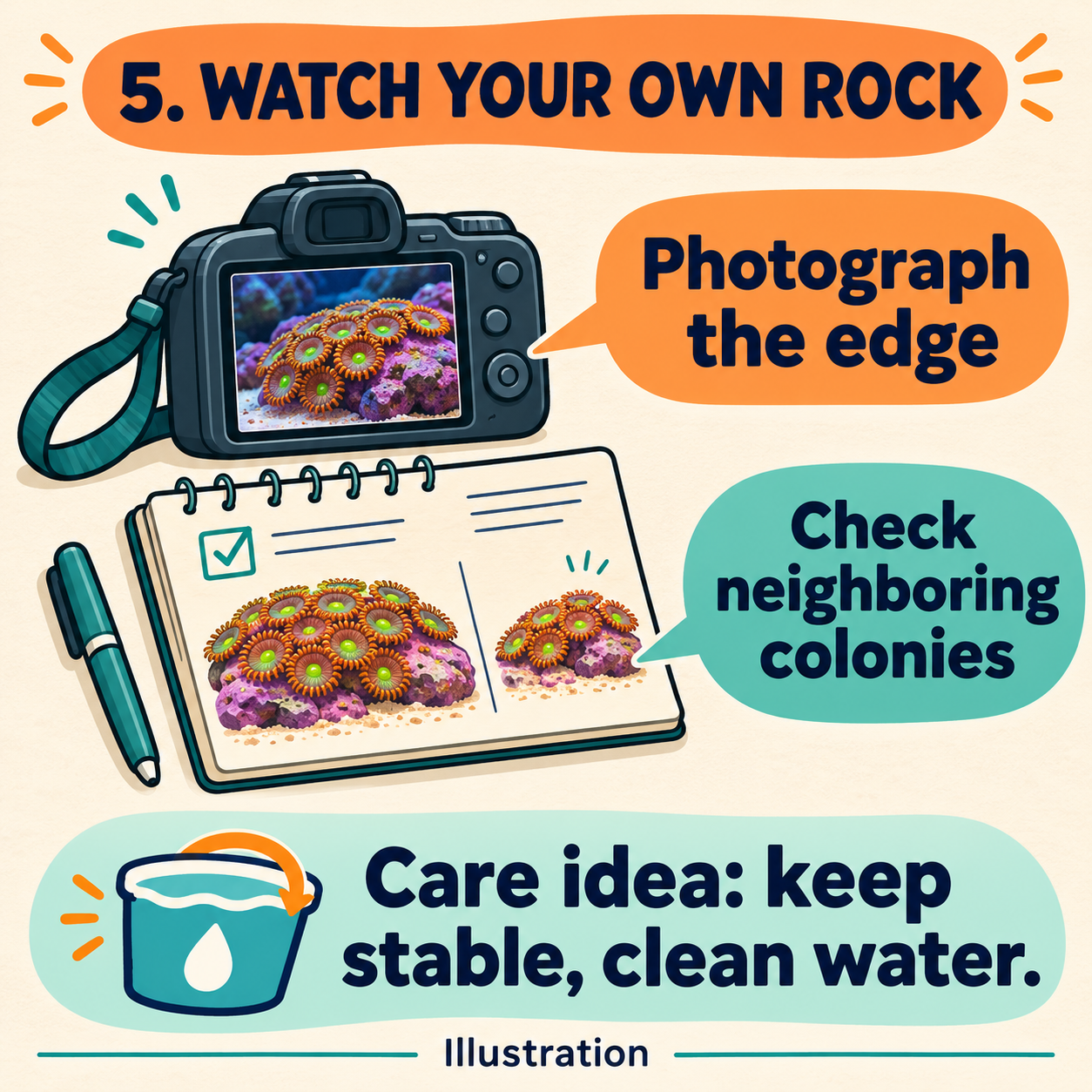
One Fire and Ice keeper saw new polyps spread onto touching rock within a week. Another kept just a handful while Radioactive Dragon Eyes took over their shared garden. Give each colony room and photograph the edges to follow your own growth.
6. Handle with care
Zoanthids can contain palytoxin, a dangerous toxin. Wear gloves and eye protection, keep handling minimal, and keep the coral submerged when moving it. Never boil, steam or pressure-wash coral rock. If you suspect exposure, get urgent medical help and mention palytoxin.
One thing to remember: give Fire and Ice its own growing space. Steady light, a clean mat and a watchful eye make a much better plan than moving it around every day.
Field Notes
Related species

Blueberry Haze Zoas
Zoanthus sp.
Same genus

Burning Willow Zoas
Zoanthus sp.
Same genus

Mandarin zoanthids
Zoanthus sp
Same genus

Pink hippo zoanthids
Zoanthus sp
Same genus

Purple Heart zoas
Zoanthus sp
Same genus

Radioactive dragon eyes
Zoanthus sp
Same genus
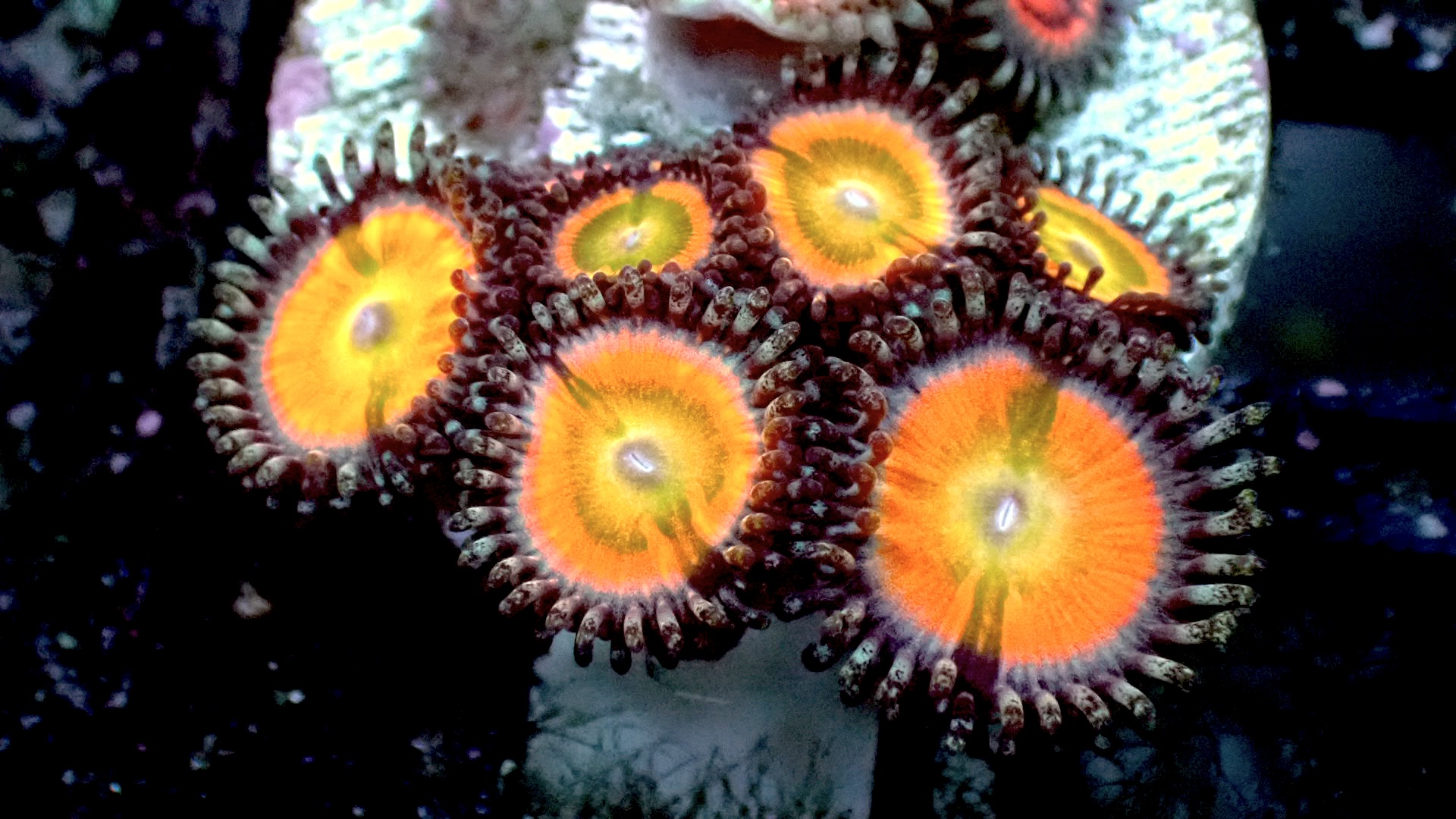
Rainbow infusion zoanthids
Zoanthus sp
Same genus

RTG peaches zoanthids
Zoanthus sp
Same genus