Grape Coral
Euphyllia cristata

Kate Osborne · CC BY 4.0 · source
Photo: Kate Osborne / AIMS LTMP, [Wikimedia Commons](https://commons.wikimedia.org/wiki/File:Euphyllia_cristata,_septa.jpg), [CC BY 4.0](https://creativecommons.org/licenses/by/4.0/).
Care facts
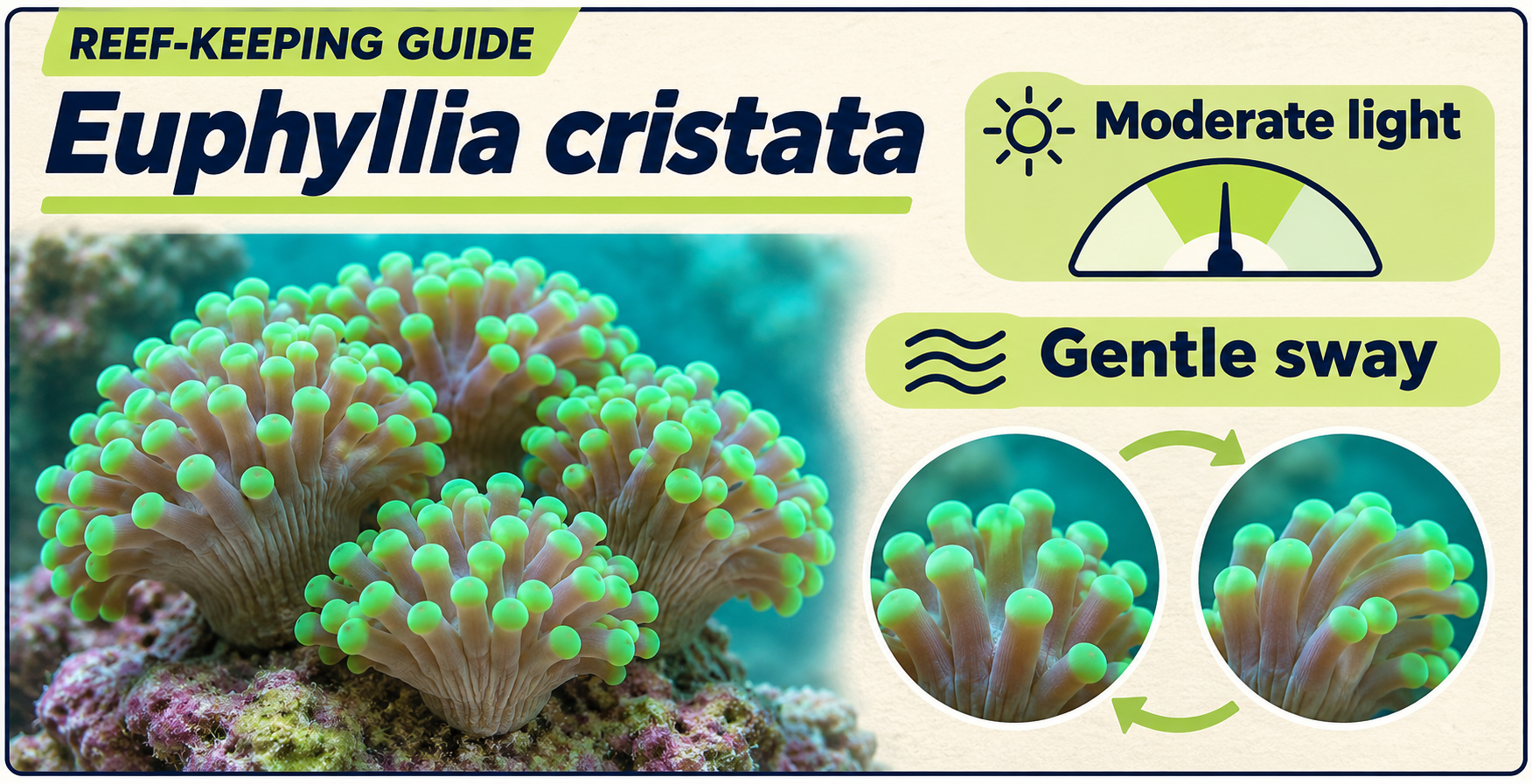
- Care
- Beginner
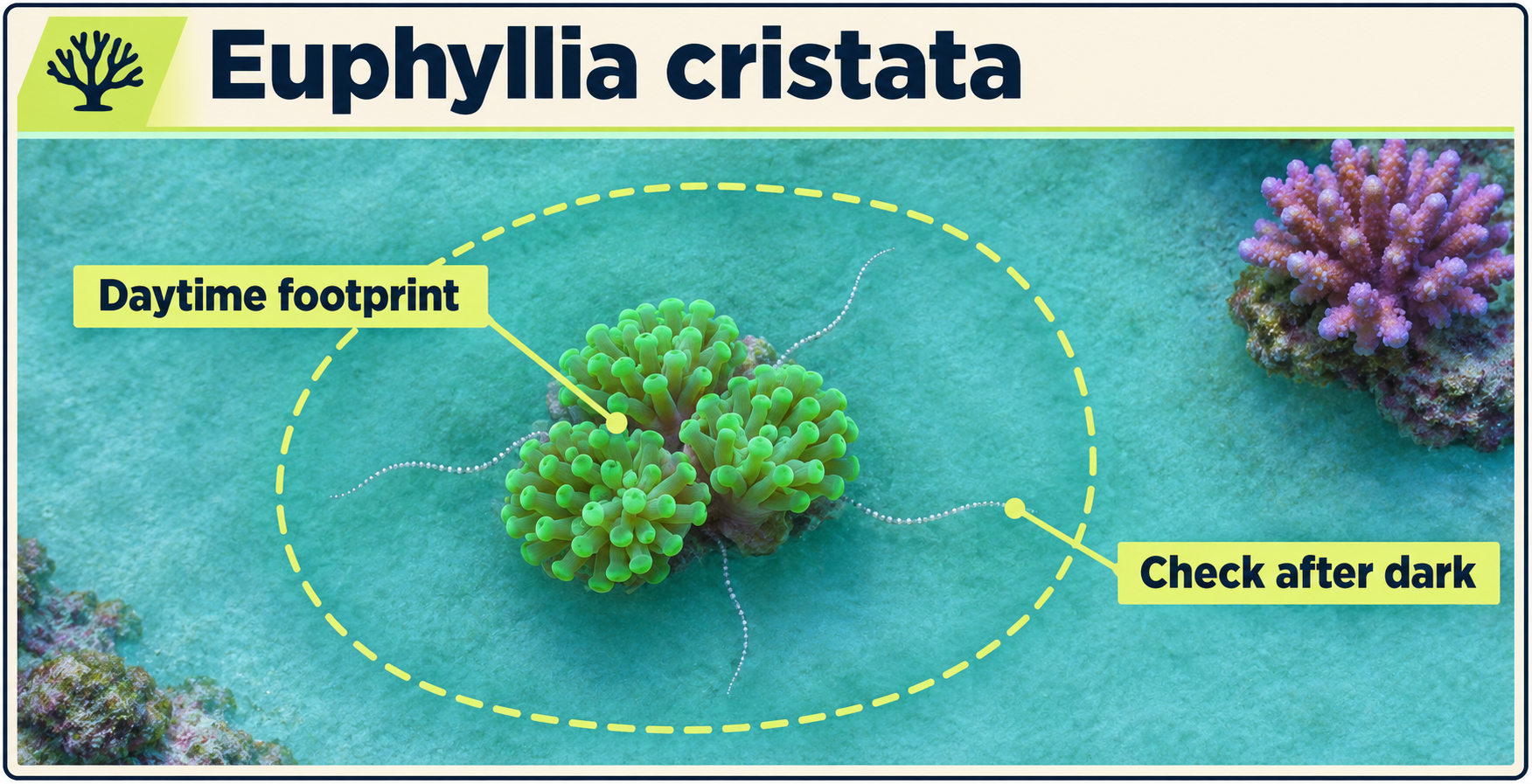
- Light
- Medium
- Flow
- Medium
- Place
- Mid
- Space
- Aggressive
- Growth Rate
- Moderate
Gallery
This bunch of grapes can sting. Each round tip belongs to a short, thick tentacle on Euphyllia cristata. Peek between the tentacles as they draw in. The pale ridges underneath are part of the coral’s skeleton.
History
1. A name from 1971. Chevalier described Euphyllia cristata in 1971. Each head sits in a hard cup. Those sharp ridges inside the cup are called septa.
2. The grapes are tips. Hobbyists call it Grape Coral or Short Polyp Torch. Its plump tentacles end in round knobs. Bubble Coral also goes by grape coral, so use the scientific name when you compare the two.

In the wild
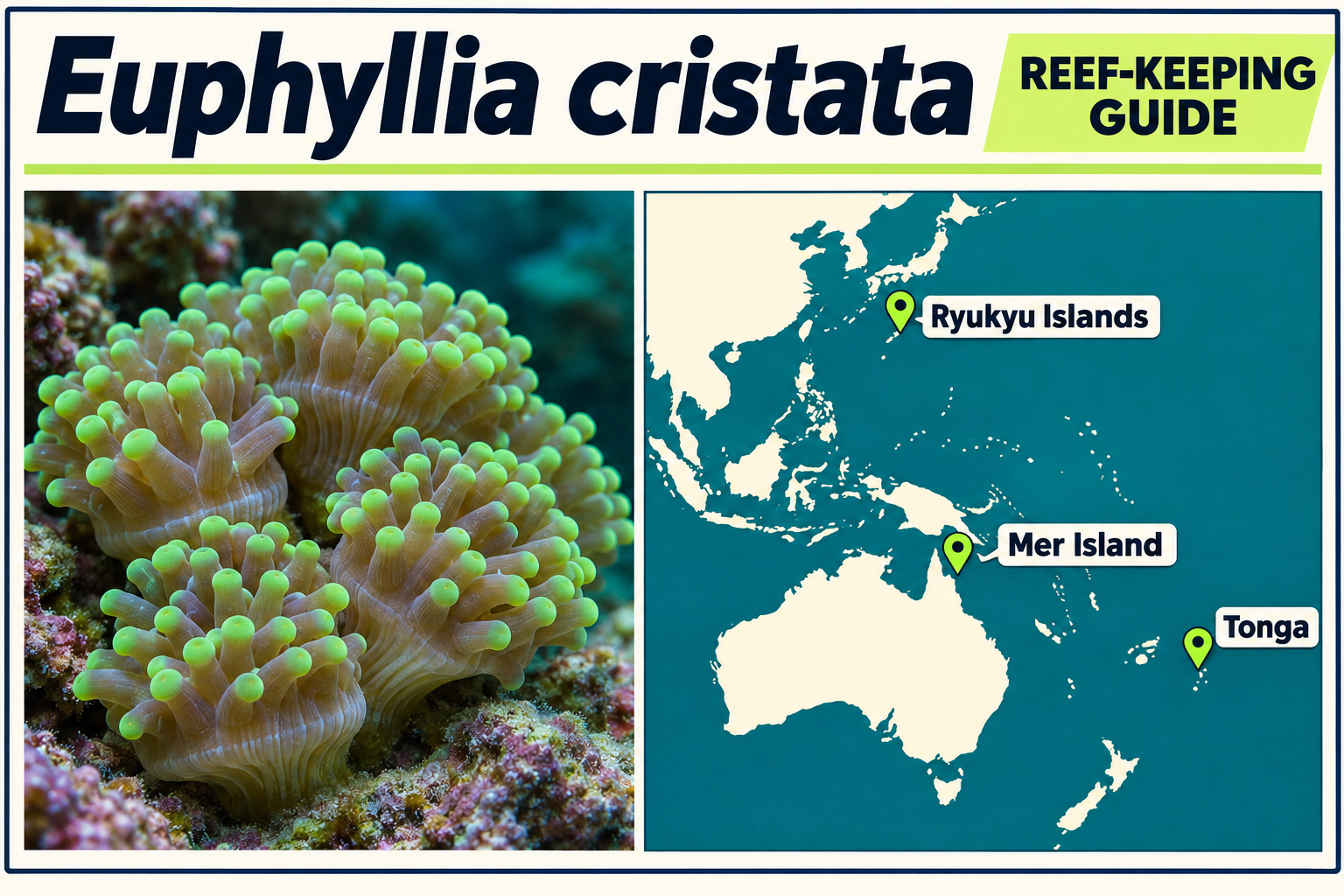
3. Trace it across the Pacific. Grape Coral turns up in the Indo-Pacific, from the Ryukyu Islands south to Australian reefs and east to Tonga. The living coral in the photo was on a reef off Mer Island in the Torres Strait.
4. A bunch of tiny cups. On shallow reefs, separate stony cups branch from the same colony and pack close together. Small colonies and lone polyps occur too. Each living head fans its short tentacles into the water.
Light and flow
5. Start a step lower. Give a new piece softer light while it settles. Ease it toward moderate reef light on mid-level rockwork. Pause if the tissue pales or stays tight after you brighten the spot.
6. Let the tips rock. Aim for medium, indirect flow. The knobs should sway without the flesh getting pinned to one side. Point the pump past the coral so the current changes direction around it.
Placement and space
7. Leave a ring of open water. Set the hard base on stable rock with room around every head. Keep the fleshy skirt clear of sharp edges and nearby corals.
8. Measure after lights-out. Watch with a dim flashlight once the tank is dark. Long sweepers can reach past the daytime patch. Move a neighbor if the tentacles can touch it, and recheck as the colony grows.
Feeding and water
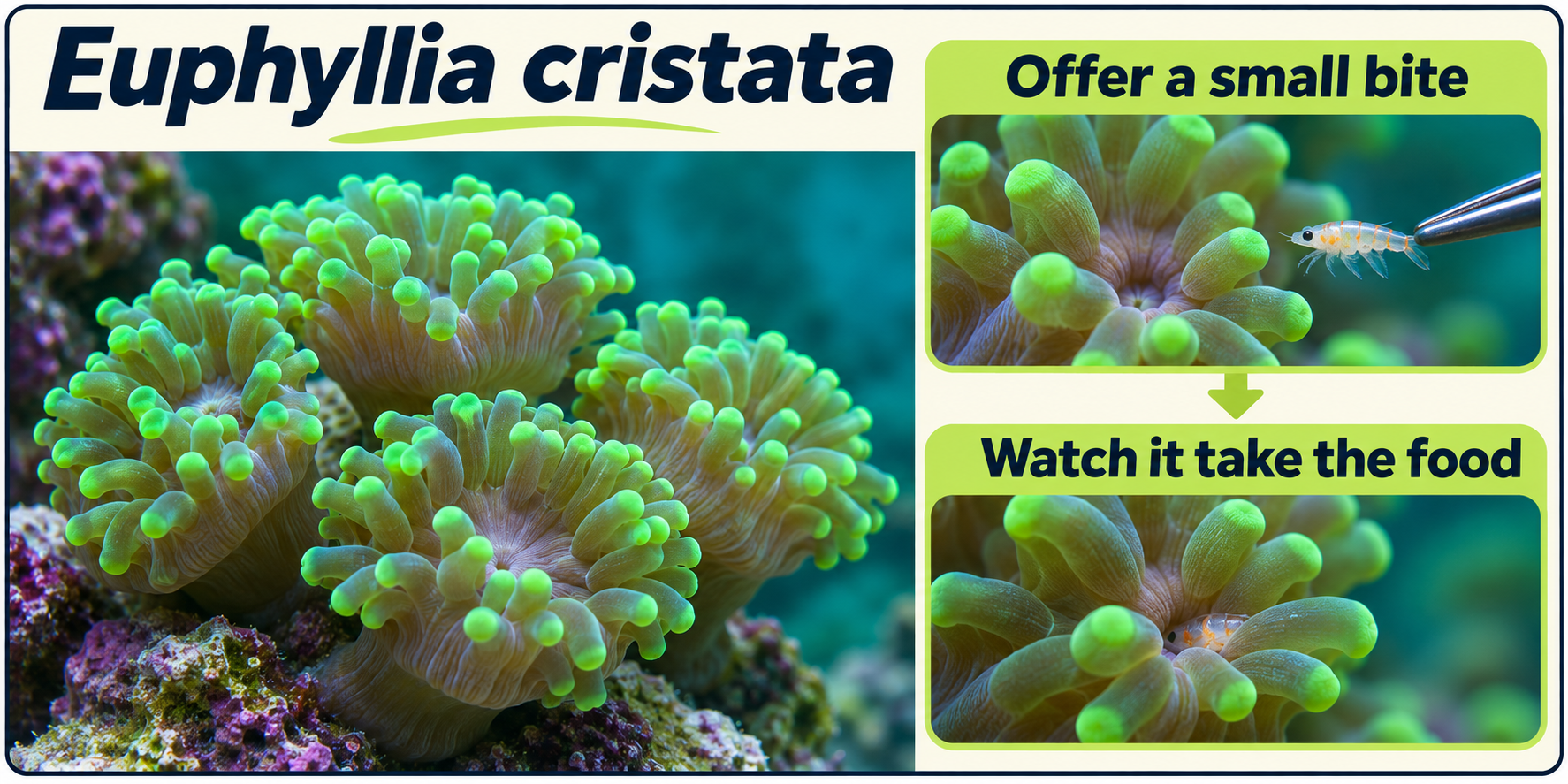
9. Try one bite. Offer a little thawed mysis to an open polyp and let the tentacles carry it in. Start with occasional small meals. Lift away scraps that sit on the tissue.
10. Keep the reef steady. Test alkalinity and calcium, and keep salinity and temperature steady. Fix one issue at a time and avoid sudden swings. Photograph the same head from the same angle to track changes.
Field notes — what keepers report
11. Borrow the observation, not the setting. One keeper’s colonies opened in low to moderate flow under fairly bright light. Another saw their Grape Coral pale while still working out the lighting. Start lower and let your own polyp’s color and extension guide each change.
12. Short tips still need space. One keeper never saw sweepers on their coral. Others who keep and sell this species warn about stings beyond the daytime edge. Leave room and check after dark before you judge how far it reaches.
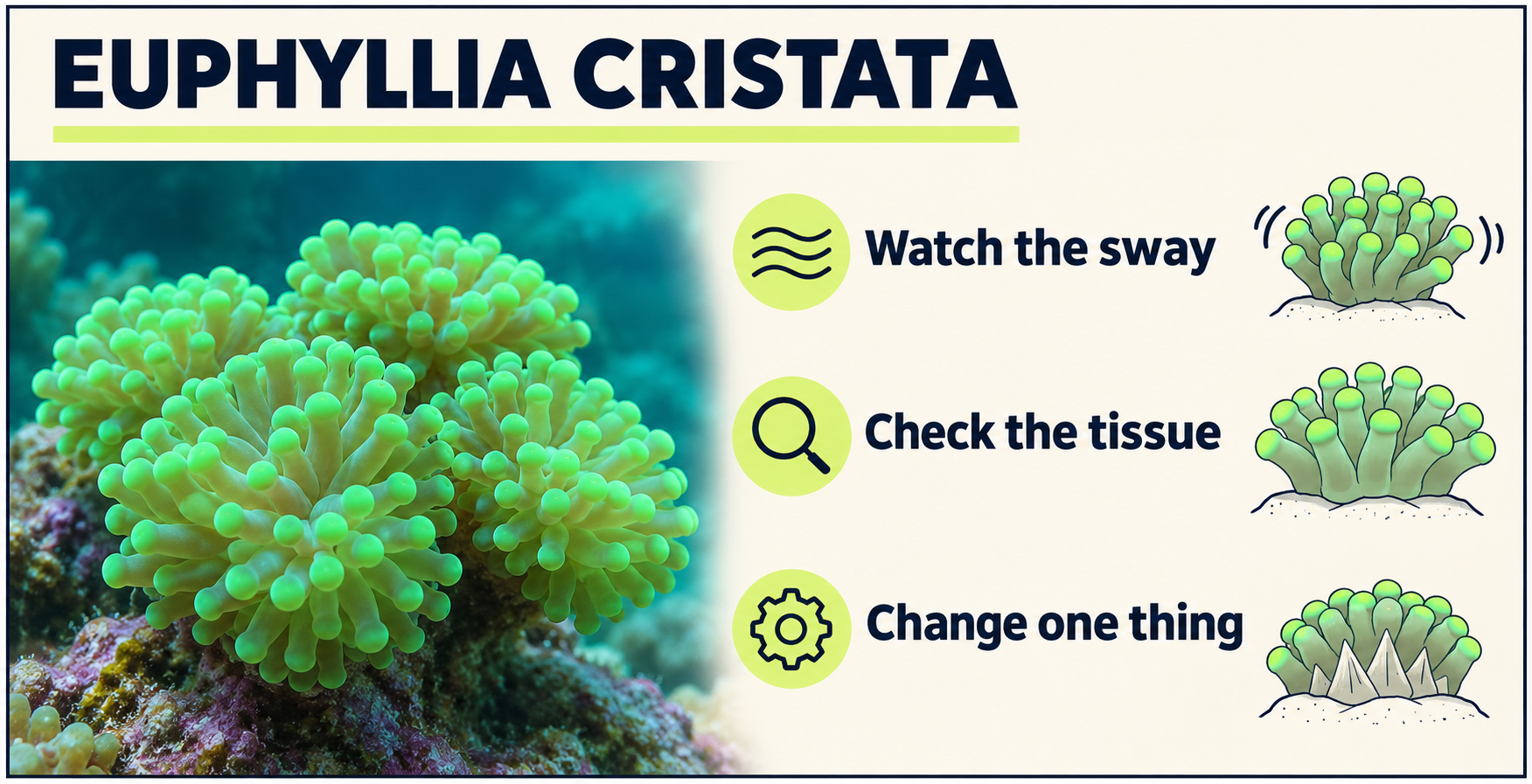
Watch one head from day to night. The daytime sway tells you how the current moves. A quick look after dark tells you how much room this little bunch really needs.
Field Notes
Related species

Hammer Coral
Euphyllia ancora
Same genus
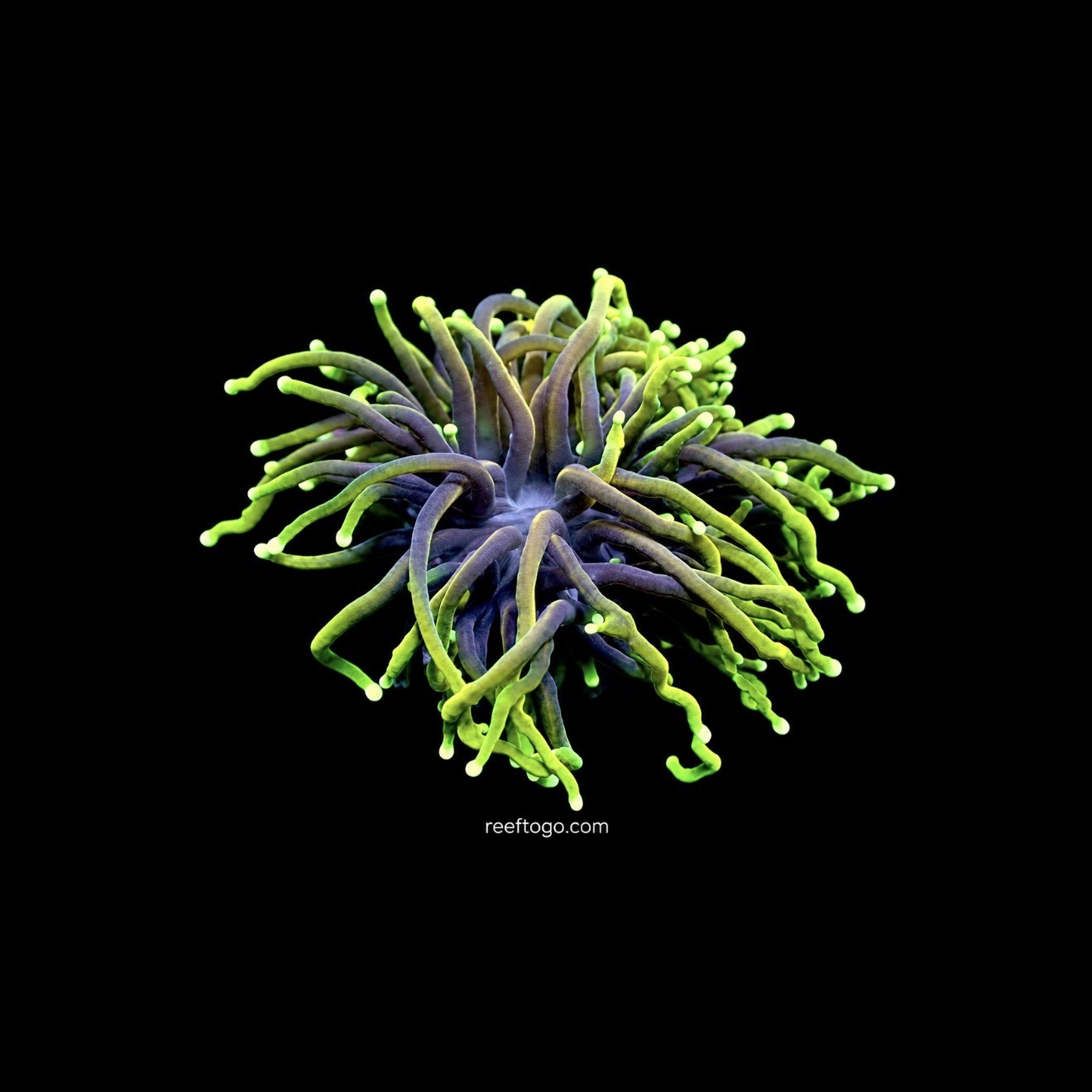
Dragon soul torch
Euphyllia glabrescens
Same genus

Hellfire Torch
Euphyllia glabrescens
Same genus
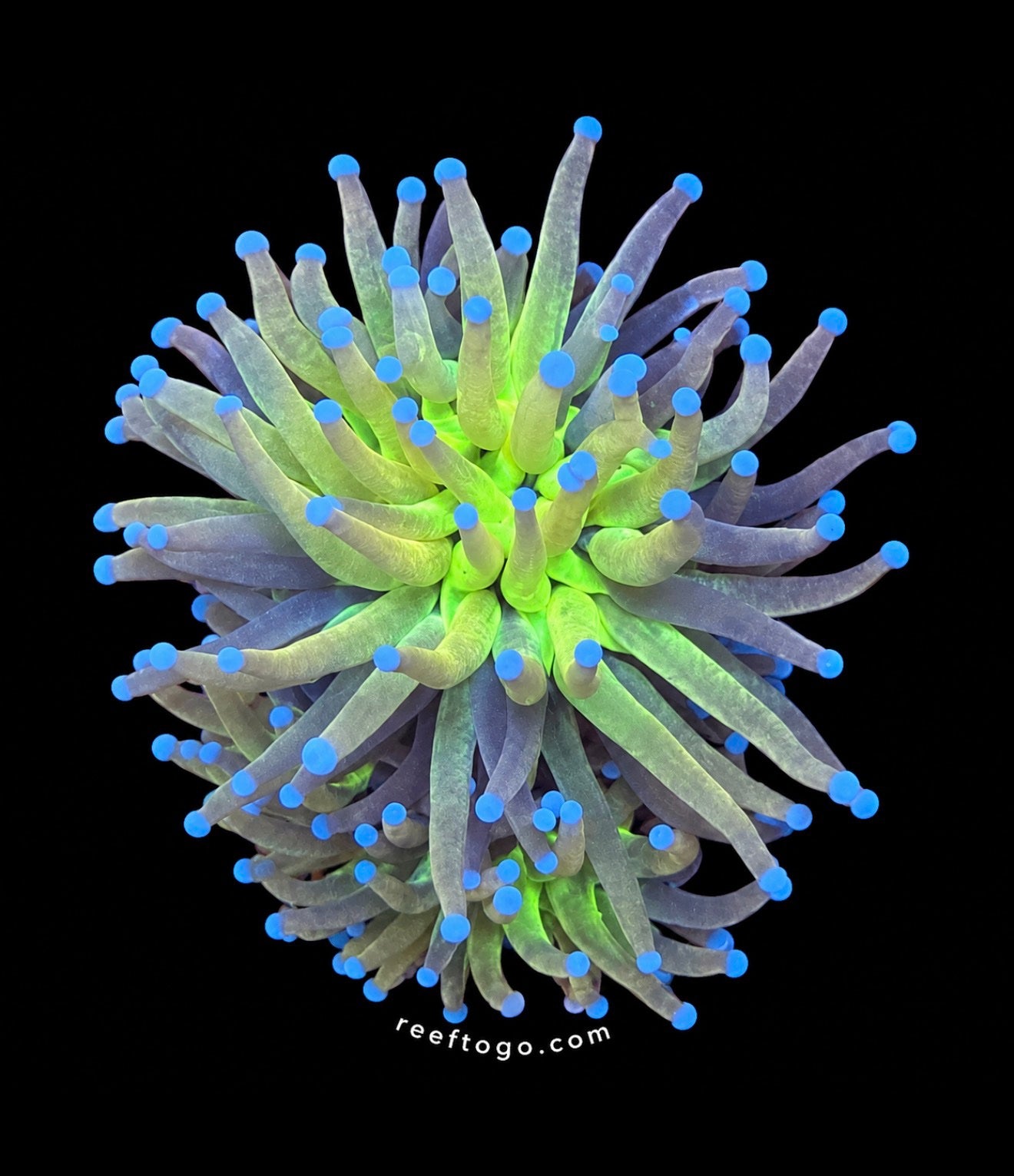
Knicks 2.0 Torch
Euphyllia glabrescens
Same genus

NY Knicks Torch
Euphyllia glabrescens
Same genus

Purple Torch
Euphyllia sp.
Same genus

Scuba Steve frammer
Euphyllia sp
Same genus

Holy grail torch
Euphyllia glabrescens
Same genus