 ▶ Video
Care facts
- Care
- Intermediate
- Light
- Medium
- Flow
- Medium
- Place
- Mid
- Space
- Aggressive
- Growth Rate
- Moderate
Gallery
Videos
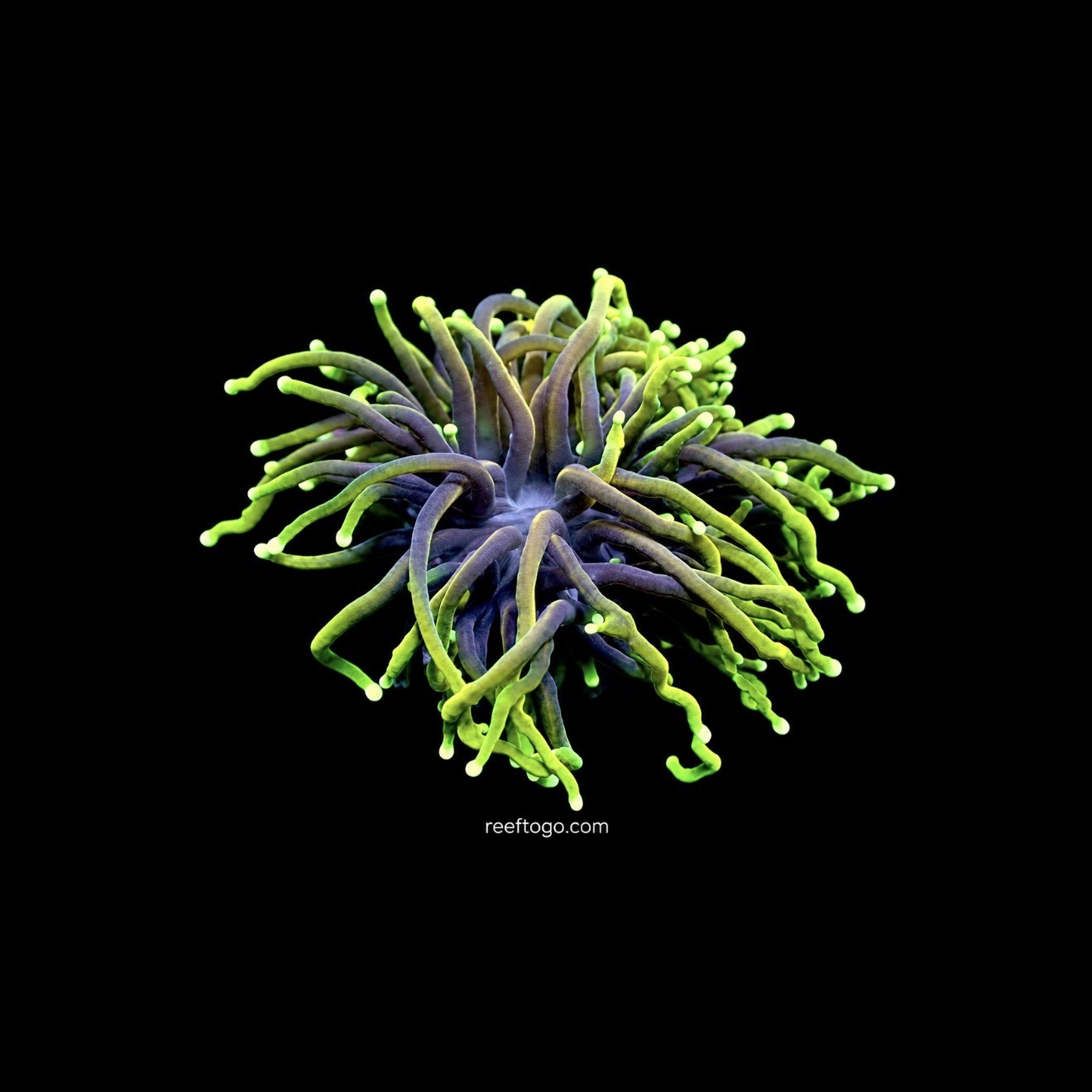
Dragon Soul torch is a named color form of Euphyllia glabrescens, the torch coral. It is kept for rich gold to orange tentacles that glow under blue light, carried on long, flowing heads that move constantly in the current. Each head is a separate polyp on its own branch of skeleton, and a multi-head piece reads as one flowing colony when flow is right.
The entry lists intermediate difficulty, medium light, medium flow, mid placement, aggressive behavior, and moderate growth. Torches want flow that makes the tentacles sway and lift in changing directions. A steady one-way blast pins tentacles to one side and can tear tissue at the head rim, while very low flow lets waste settle between heads.
Place it in the middle of the rockwork with generous clearance. The aggressive rating is real: torch tentacles sting, and the tips can reach farther on a good extension day than they do on an average day. Six inches of clear space from other corals is a sound working rule, with extra care around other LPS that send out sweepers at night. Torches can usually sit near other torches, though watching new pairings for the first weeks is wise.
Alkalinity and magnesium stability drive torch health. Heads that bail from the skeleton or tissue that recedes at the rim often trace back to swings, poor flow at the base, or a bacterial issue after damage. Keep nutrients present and steady. Very clean water leaves torches thin and short, while heavy, dirty water invites algae at the skeleton and stress at the tissue line.
Feeding is optional and light. A head will take small meaty foods or a quality LPS pellet offered occasionally, and many torches grow well on light and fish waste alone. If you feed, keep pieces small and let the head close fully around the food. Blasting food into the colony with pumps running mostly feeds the tank instead.
Growth is moderate, shown by heads splitting into two over time. A settled torch in stable water adds heads through the year. Common pitfalls are crowding a torch against a neighbor that stings back, placing it in laminar flow from a nearby powerhead, and fragging or moving heads often. Handle a torch by the skeleton only, support the weight of the heads in water, and give a new piece a week of quiet before judging its extension.
Field notes — what keepers report
- Keeper reports on gold torches stress how much the color depends on light spectrum. Pieces described as deep gold under blue-heavy light can look pale orange under whiter light, and keepers advise matching expectations to the light in your own tank before judging a new purchase.
- Head loss stories are common in torch threads. Keepers describe a single head receding while the rest of the colony stays open, with causes debated between flow at the base, a sting, and chemistry swings. The shared practice is to check the neighboring heads, review recent changes, and avoid moving the whole colony for one struggling head unless tissue loss is spreading.
- Flow opinions differ in degree rather than direction. Some keepers run strong, random flow and report thick, short tentacles, while others keep gentler flow and report longer, thinner extension. Both groups warn against constant one-direction flow, which keepers link to torn tissue and heads that stay closed on the blasted side.
Field Notes
Related species

Hellfire Torch
Euphyllia glabrescens
Same genus
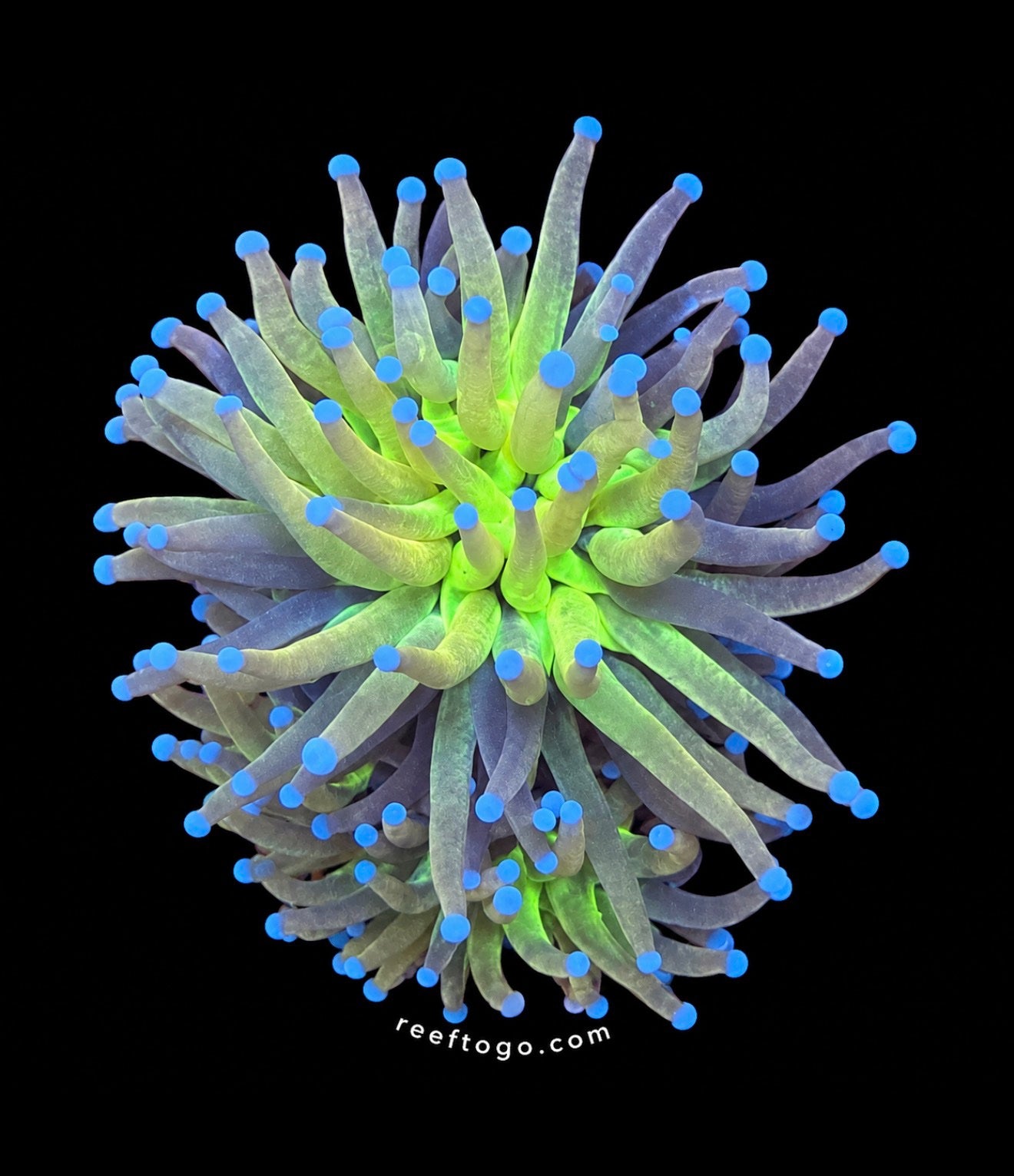
Knicks 2.0 Torch
Euphyllia glabrescens
Same genus

NY Knicks Torch
Euphyllia glabrescens
Same genus

Purple Torch
Euphyllia sp.
Same genus

Grape Coral
Euphyllia cristata
Same genus

Hammer Coral
Euphyllia ancora
Same genus

Holy grail torch
Euphyllia glabrescens
Same genus

Tiger torch
Euphyllia glabrescens
Same genus