Lava Monster Yuma

Gallery
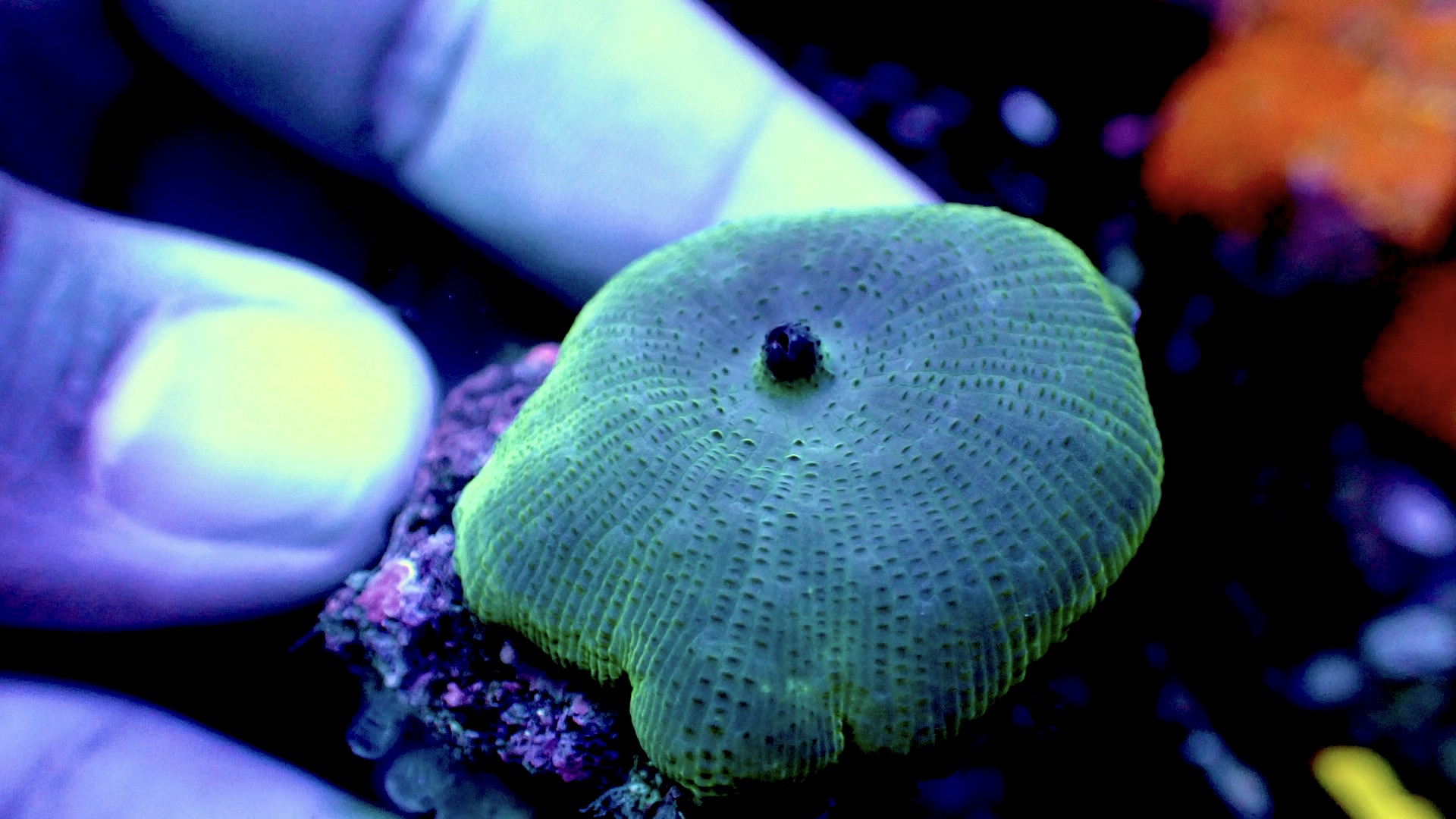
Lava Monster Yuma looks like a piece of lava that grew bubbles instead of cooling off. The Reef To Go trade form pairs an orange disc with green bubbles. Under all that color is a soft mushroom animal that opens like a little umbrella. The hero photo shows a Yuma for comparison, not the Lava Monster trade form.
A disc full of bubbles
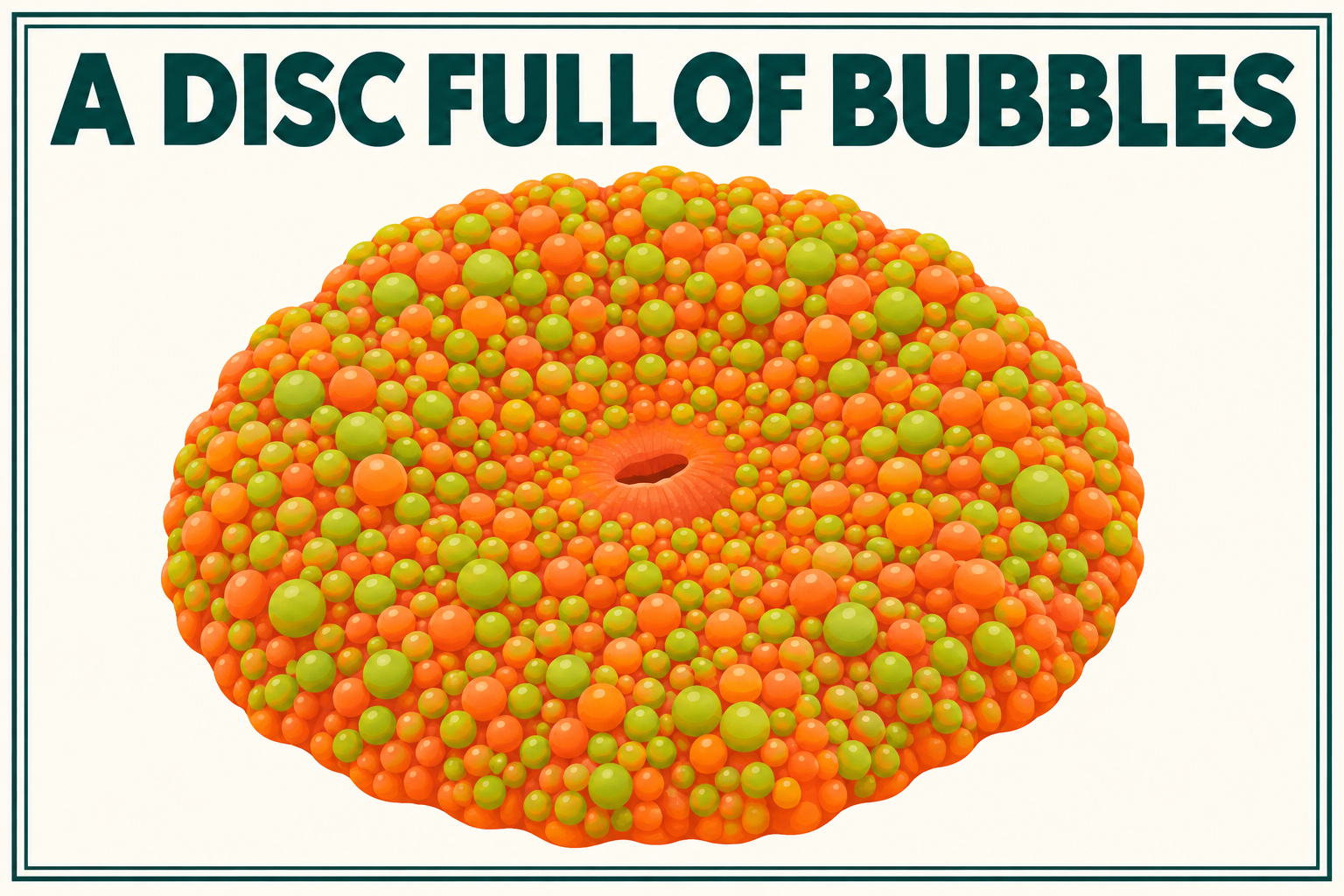
1. Those dots are part of the animal. A Yuma wears soft, swollen bumps across its disc. They do not pop. Look near the middle for its mouth, tucked among the bumps.
2. Keep the foot safe. The disc opens above a soft foot that grips the rock. Move the rock or plug if you must move the mushroom. Do not pry at the foot.
Start low
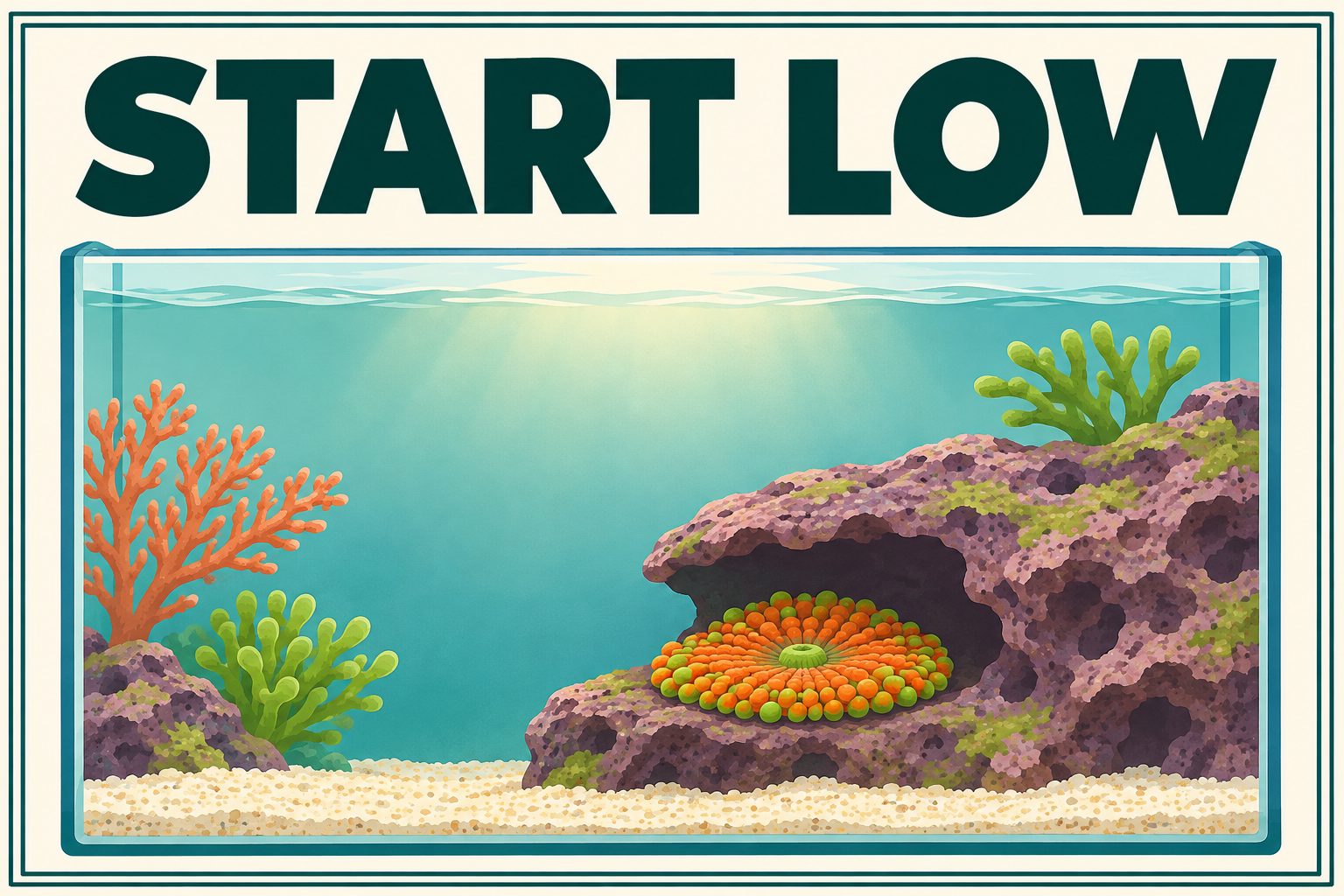
3. Pick a sheltered perch. Start in low light on a stable rock or a plug near the bottom. Keep the disc clear of drifting sand. Give it time to open in the same spot before moving it.
4. Ease into brighter light. Change the light in small steps. If the disc pales or stays pulled in after an increase, return to a gentler spot and check for other changes.
Keep the disc flat
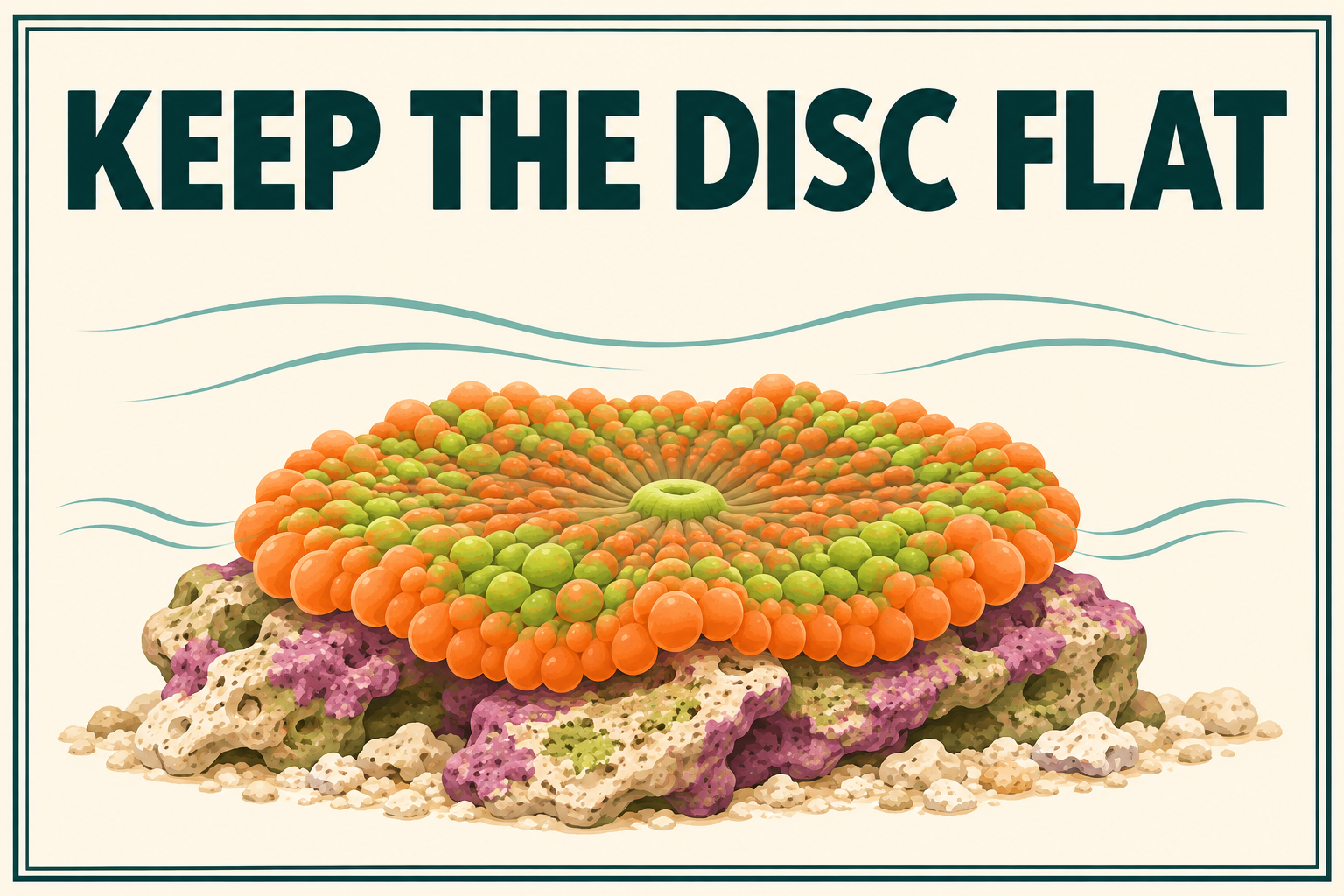
5. Send water past it, not at it. Aim for low, gentle flow. The edge can flutter a little, but it should not fold over or flap hard. Move the pump’s aim before moving a settled mushroom.
6. Keep the surface clear. A sheltered spot still needs enough movement to carry away loose debris. If the foot lets go, protect the mushroom from pump intakes. Give it small pieces of rock to grip in a calm spot.
Offer a tiny bite

7. Feed only what it can take. When the disc is open, offer one tiny piece of meaty reef food near the mouth. Let the mushroom close around the bite on its own.
8. Skip the forced schedule. Feeding is optional. Remove pieces that sit uneaten. Keep temperature and salinity steady instead of trying to fix a closed mushroom with extra food.
Leave an open gap
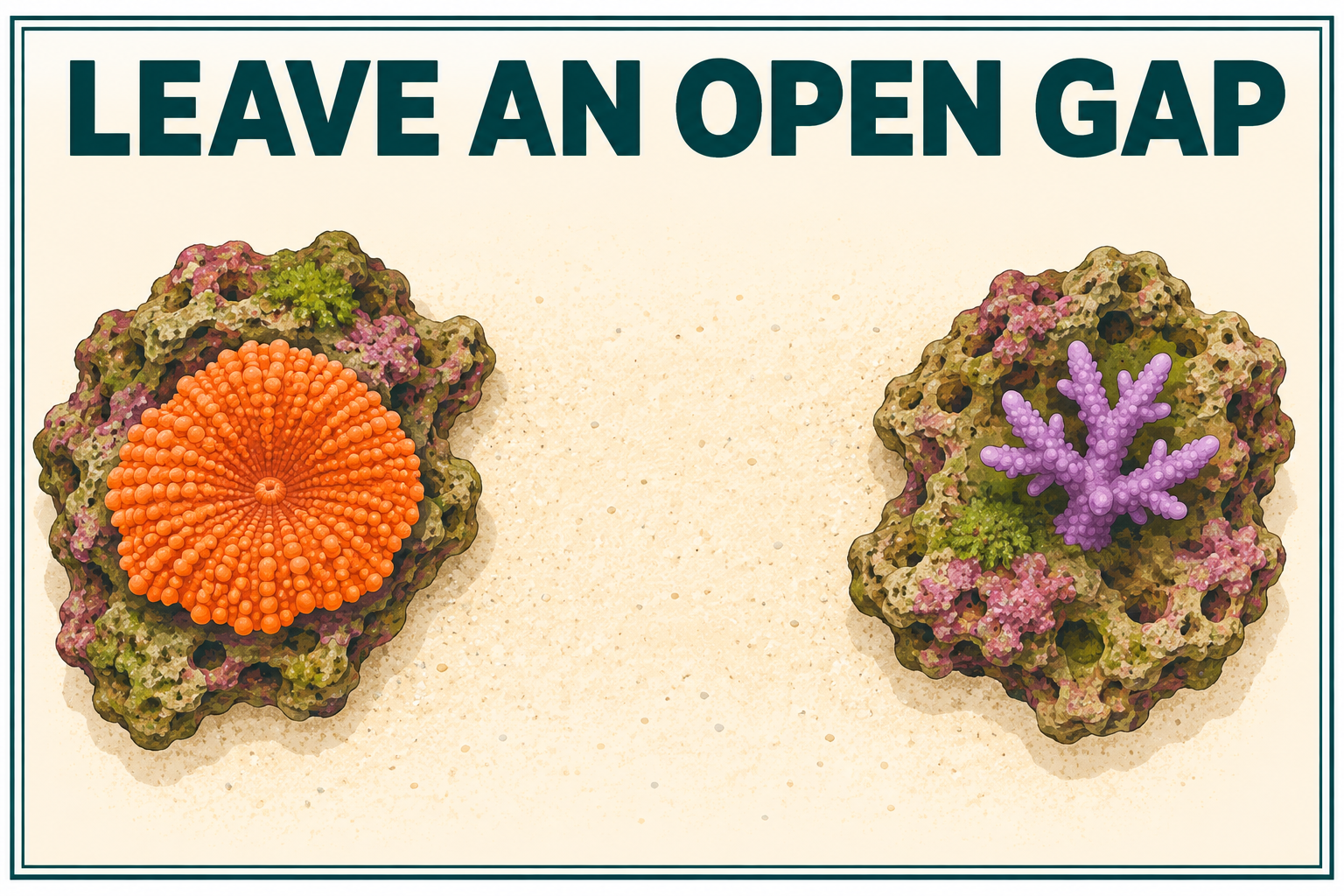
9. Measure with the disc open. Leave space beyond the full edge of the mushroom. Keep it out of reach of neighbors’ stinging tentacles. Check the gap again as either neighbor grows.
10. Track the edge, not the puff. Take pictures from the same angle when the disc is open. A bigger disc one afternoon is not proof of growth. Watch for new tissue or a new mouth over time.
Field notes — what keepers report

11. A shaded corner worked. One keeper had several Yumas do well along the dim, quiet sides of the tank, some for about a year and a half. These were general Yuma reports, not verified Lava Monster stock.
12. Not every Yuma wanted the same spot. Another keeper found that some stayed open under moderate light and a little more flow, while others did better in dimmer, calmer spots. Strong flow did not work for the Yumas that keeper had. Start gently and let your own mushroom set the pace.
Set the rock where you can see the whole disc. Once the mushroom opens and holds its spot, leave it alone long enough to learn what a good day looks like. That makes a real change easier to spot.
Field Notes
Related species

Acid Galaxy Yuma Ricordea
Similar care · Soft
Blue discosoma mushroom
Discosoma sp
Similar care · Soft
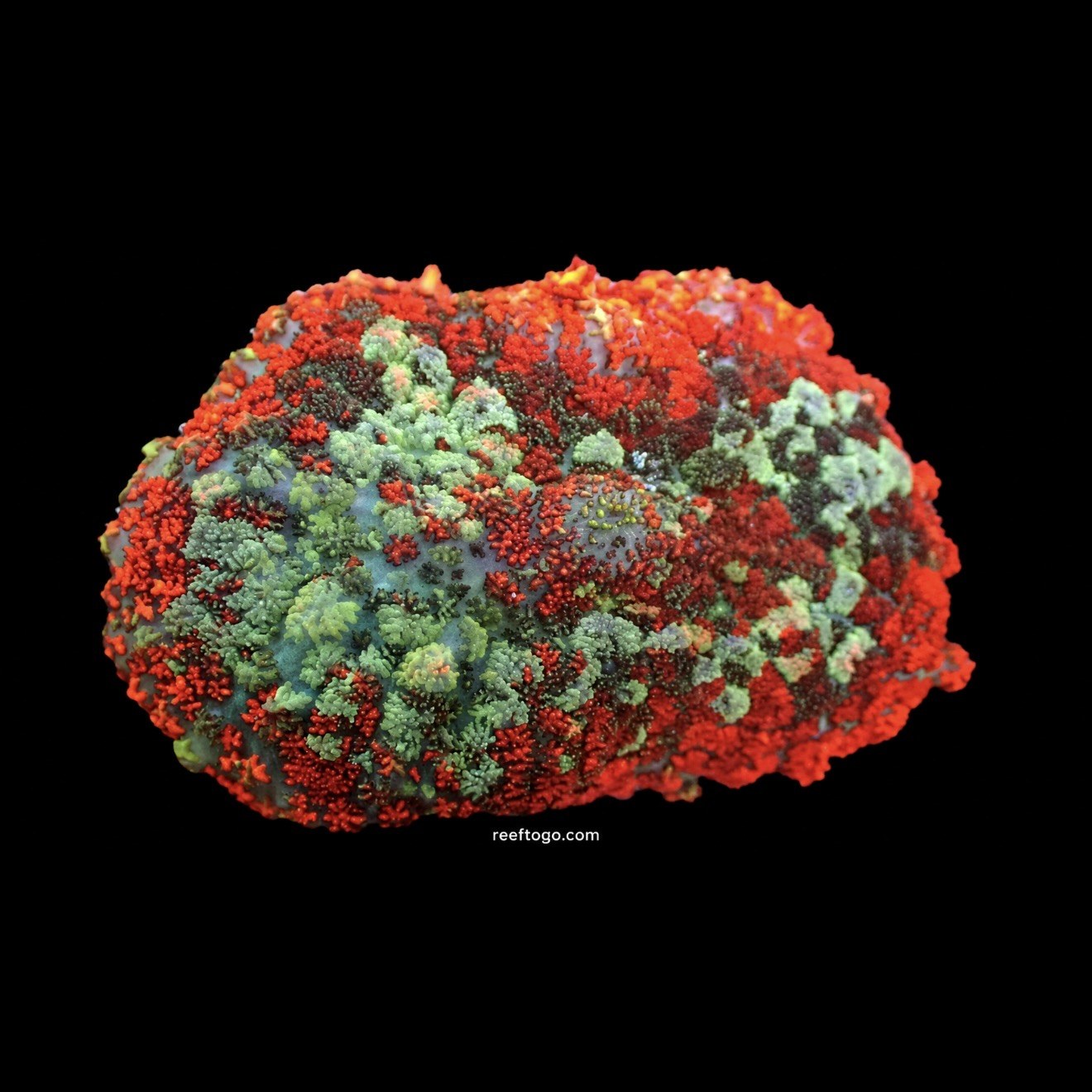
Fire seas mushroom
Rhodactis sp
Similar care · Soft
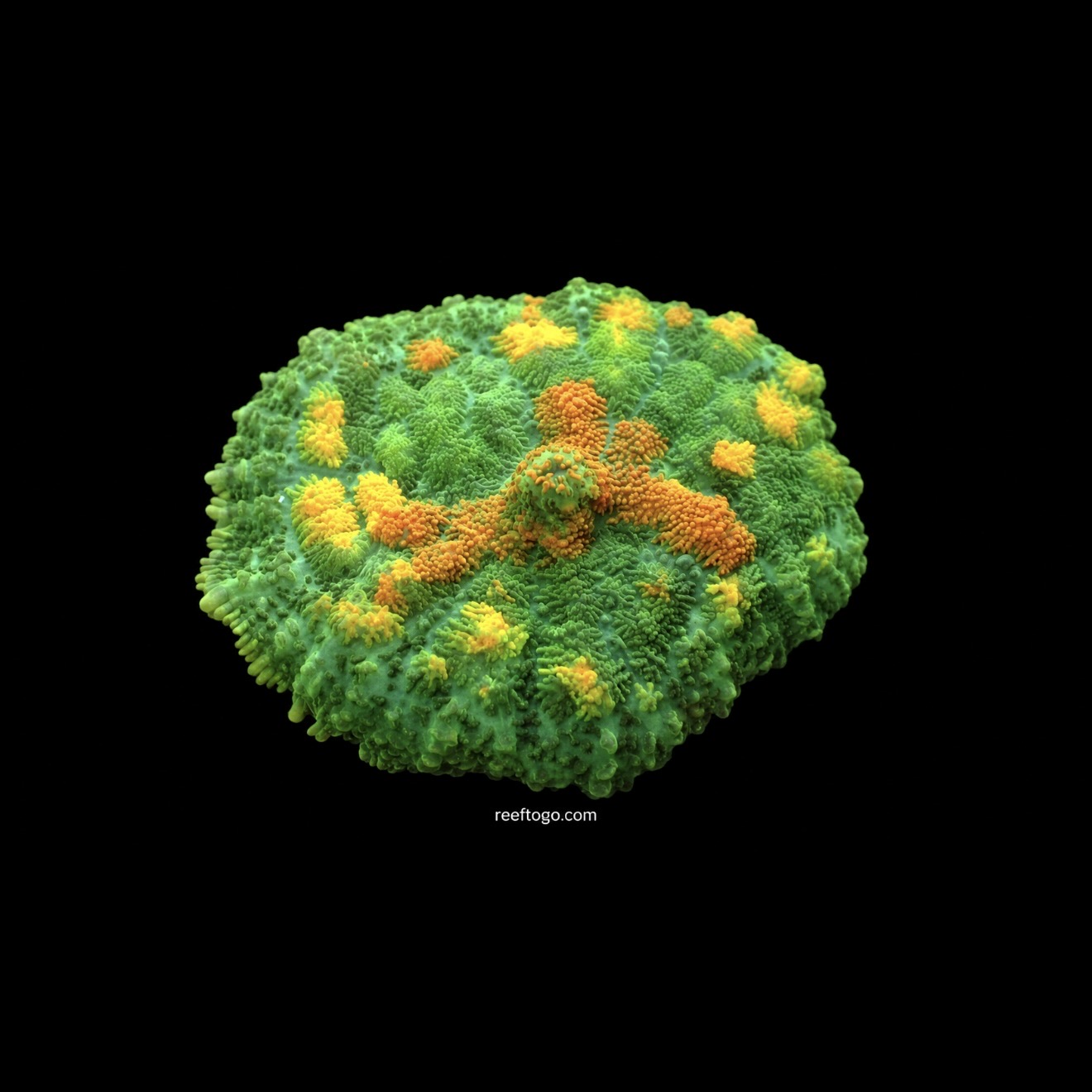
Gold burst mushroom
Rhodactis sp
Similar care · Soft

Mellow Yellow Yuma
Ricordea yuma
Similar care · Soft

Neon green hairy mushroom
Discosoma sp
Similar care · Soft

Red bumpy discosoma mushroom
Discosoma sp
Similar care · Soft
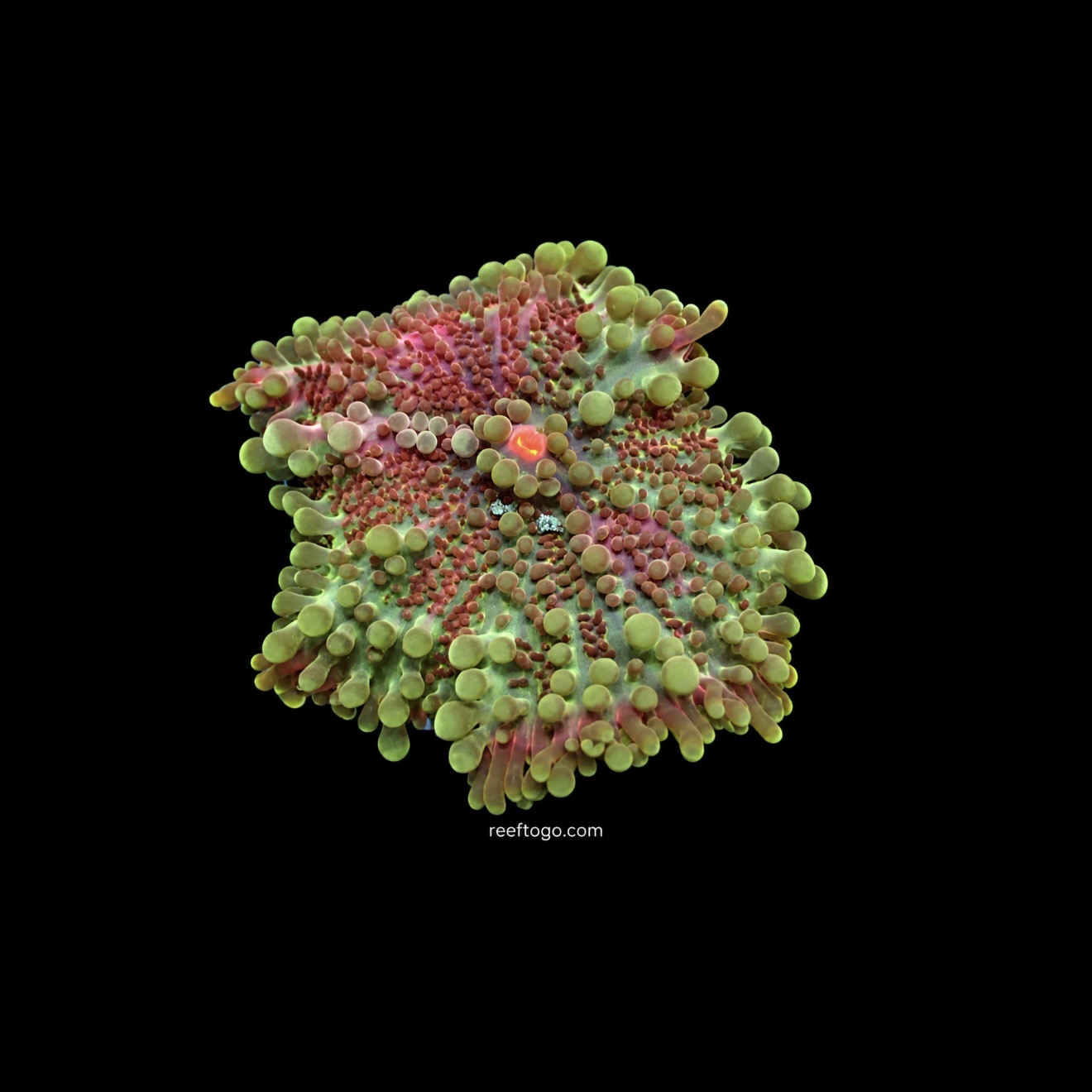
Rose Ricordea Yuma
Ricordea yuma
Similar care · Soft