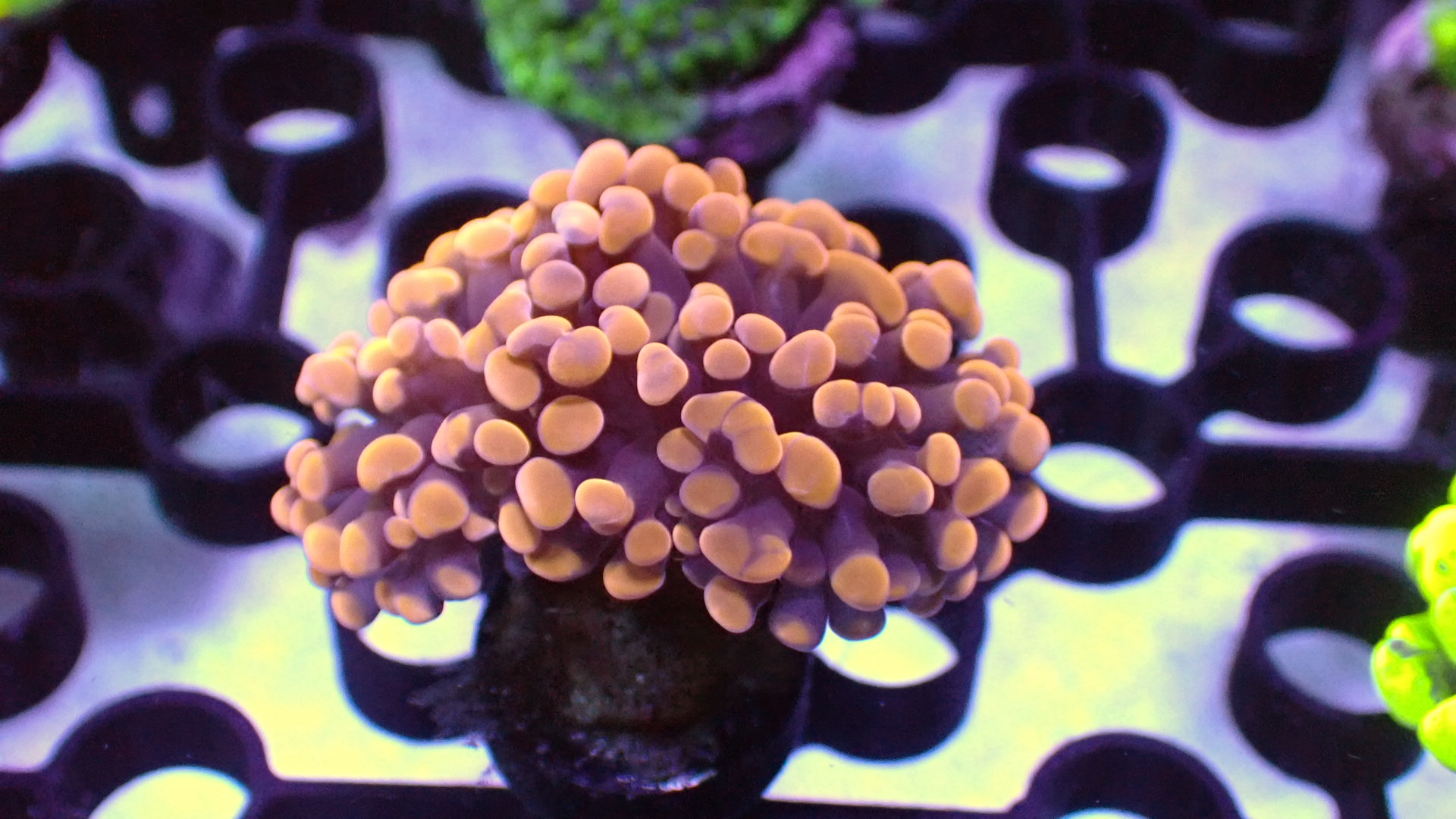
Orange hammers
Care facts
- Care
- Intermediate
- Light
- Medium
- Flow
- Medium
- Place
- Mid
- Space
- Moderate
- Growth Rate
- Moderate
Gallery
A hammer coral looks like a pile of tiny orange hammers in a slow-motion dance. The soft tips move with the current, but the base is hard as rock. Give this hammer steady water, a gentle sway, and room to open.
Meet the hammer
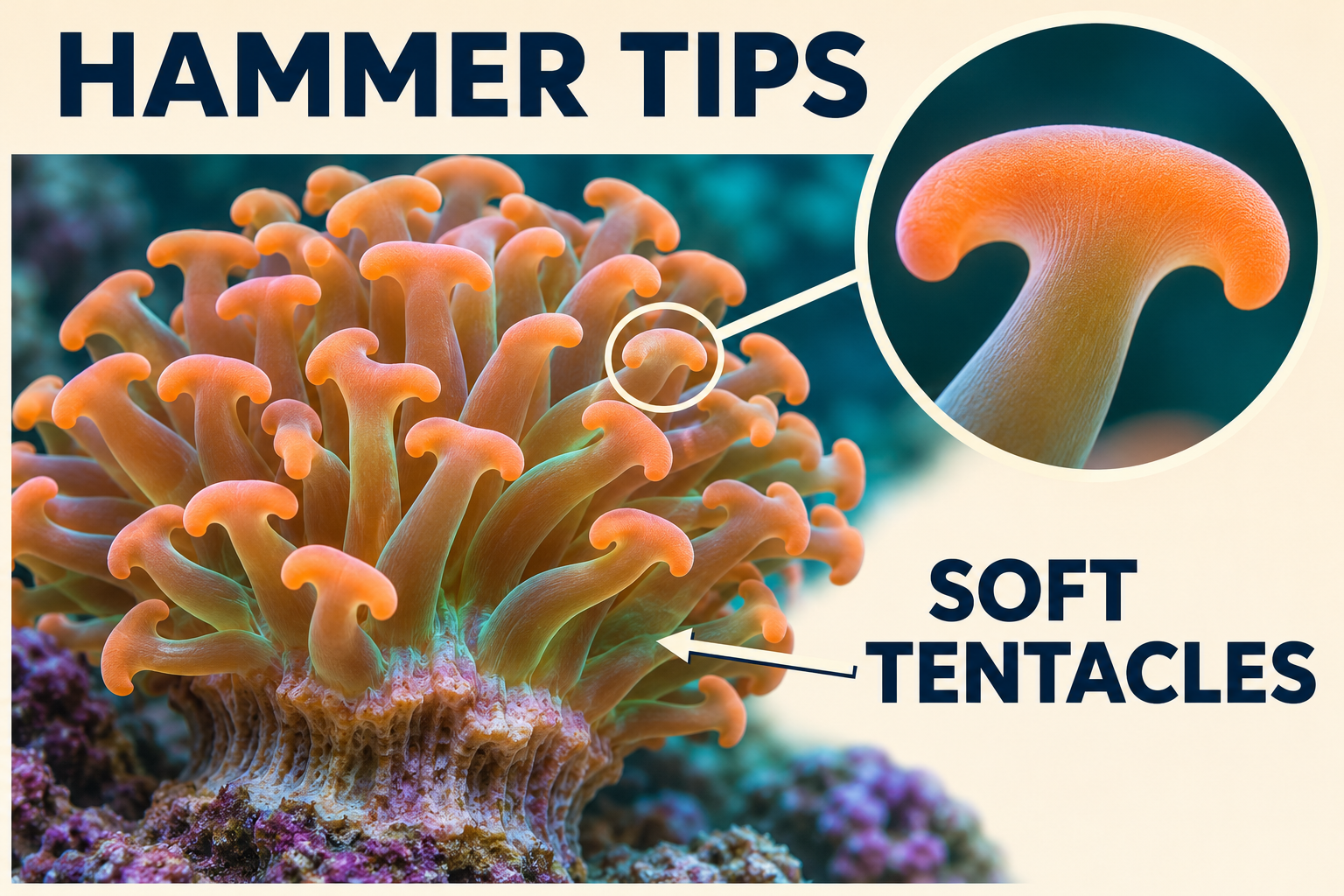
1. The tools are tentacles. The broad tips give hammer corals their name. A hard skeleton holds up the soft, moving polyps.
2. Orange is a color, not a species. The familiar wall and branching hammers belong to Fimbriaphyllia. Older labels group them under Euphyllia. Orange tips alone do not tell you which species you have.
Start with steady light
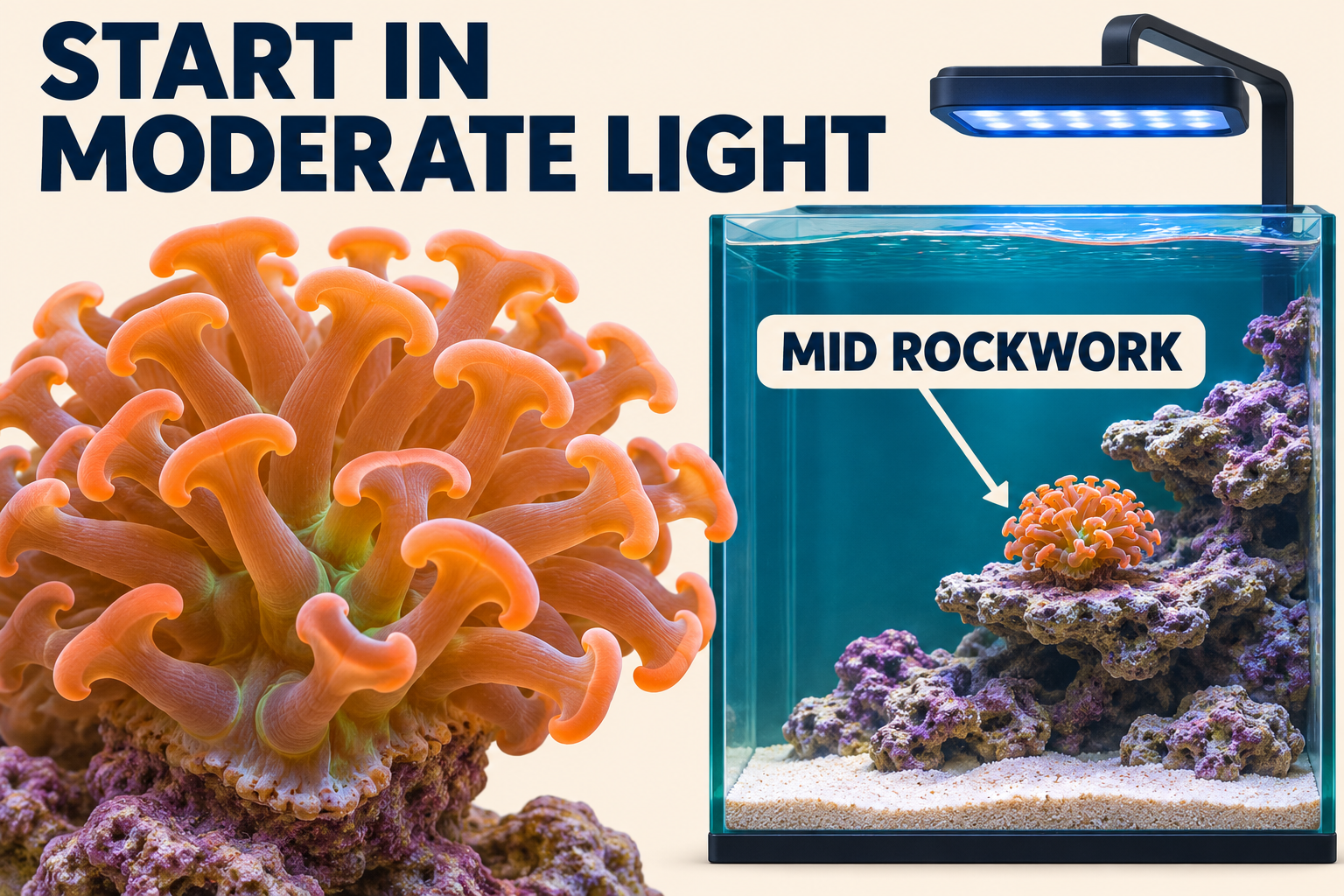
3. Pick a secure middle ledge. Set the coral where it gets moderate light and can open without touching the rock above it. Make sure the plug or base cannot tip.
4. Ease into brighter light. Start away from the brightest spot in the tank. Watch how the coral opens over several days before moving it or turning up the lamp.
Let the tentacles sway

5. Send water past, not at, the coral. Aim the pump across the tank or off the glass. Look for an easy sway instead of tentacles flattened against the skeleton.
6. Check the spot, not the pump dial. Rocks redirect the current. Look from the side and watch through a full pump cycle. If one side takes a hard blast every time, redirect the jet.
Keep the basics steady
7. Test before you tweak. Keep temperature and salinity steady. Track alkalinity and calcium as the coral builds its skeleton. Make small corrections, not big swings.
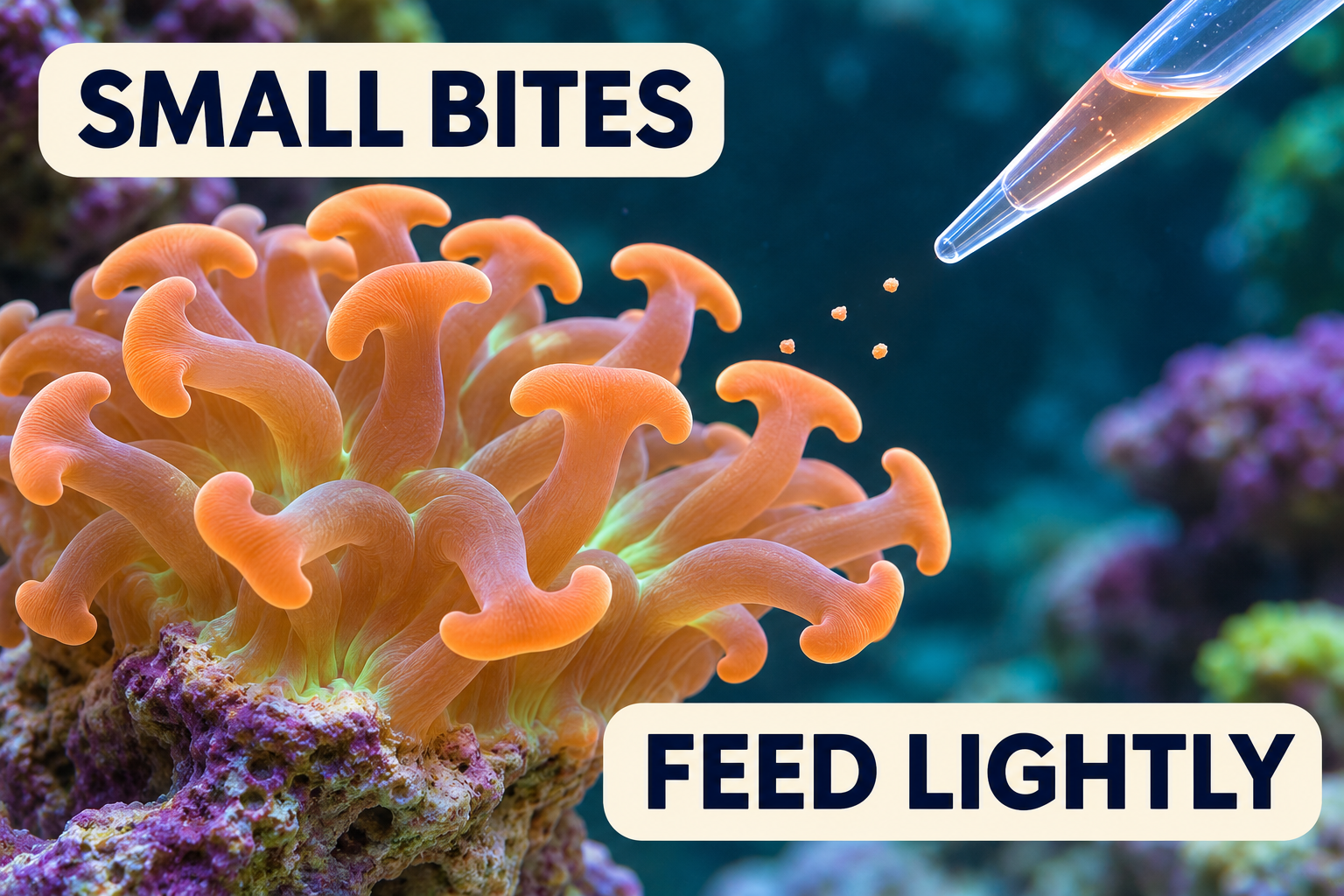
8. Offer a tiny bite. Try a small piece of meaty coral food or a fine pellet when the coral is open. Feed lightly and remove what it does not take. It does not need a fixed feeding calendar.
Give it room after dark
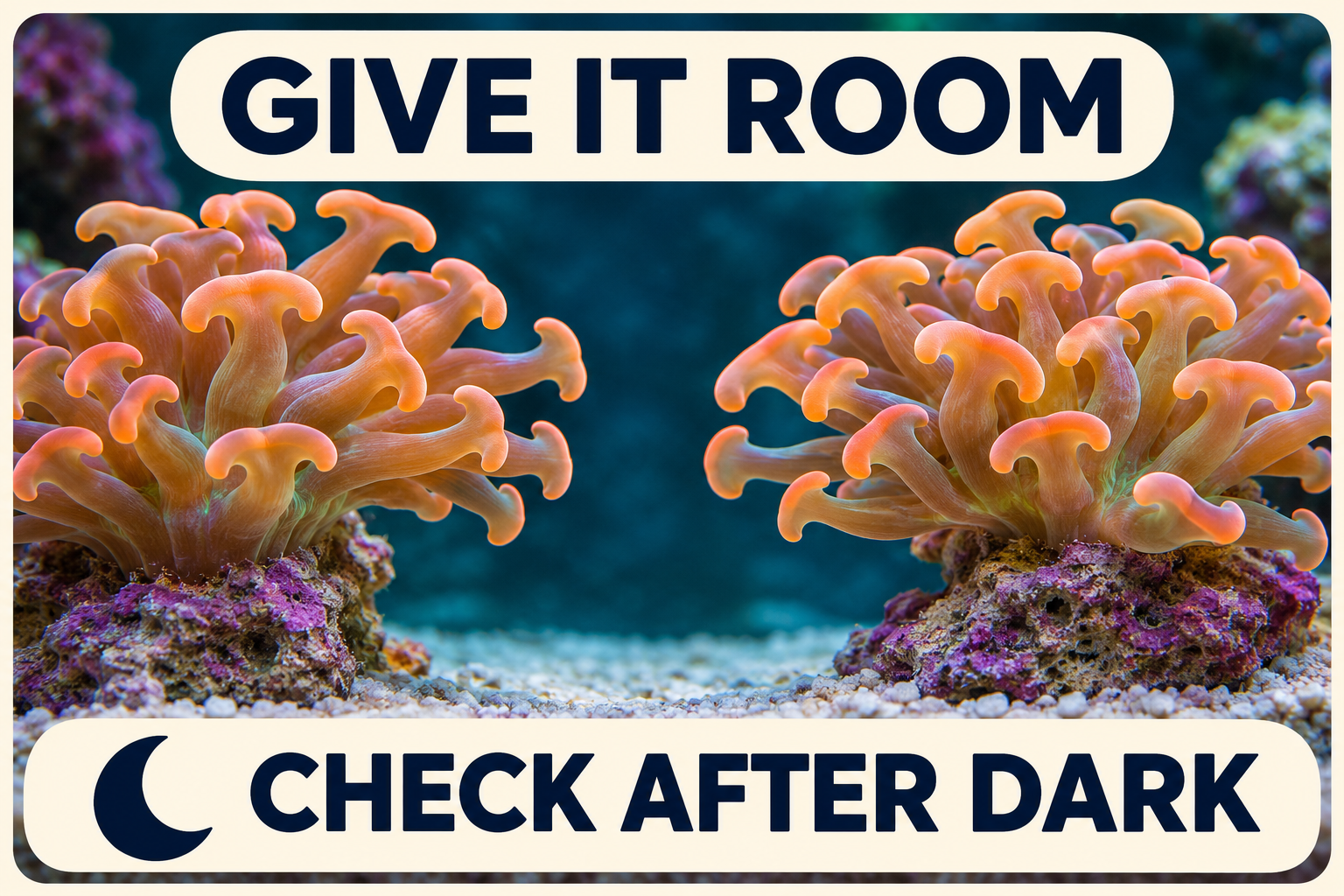
9. Leave more than a daytime gap. Hammer corals can reach out with long sweeper tentacles. Look after lights-out and leave enough space that neither coral can touch the other, even when the flow shifts.
10. Watch the tissue edge. A short spell with the polyps tucked in is different from tissue pulling back and leaving bare skeleton. If that bare patch grows, check for stings, a direct jet, and changes in water chemistry.
Field notes — what keepers report
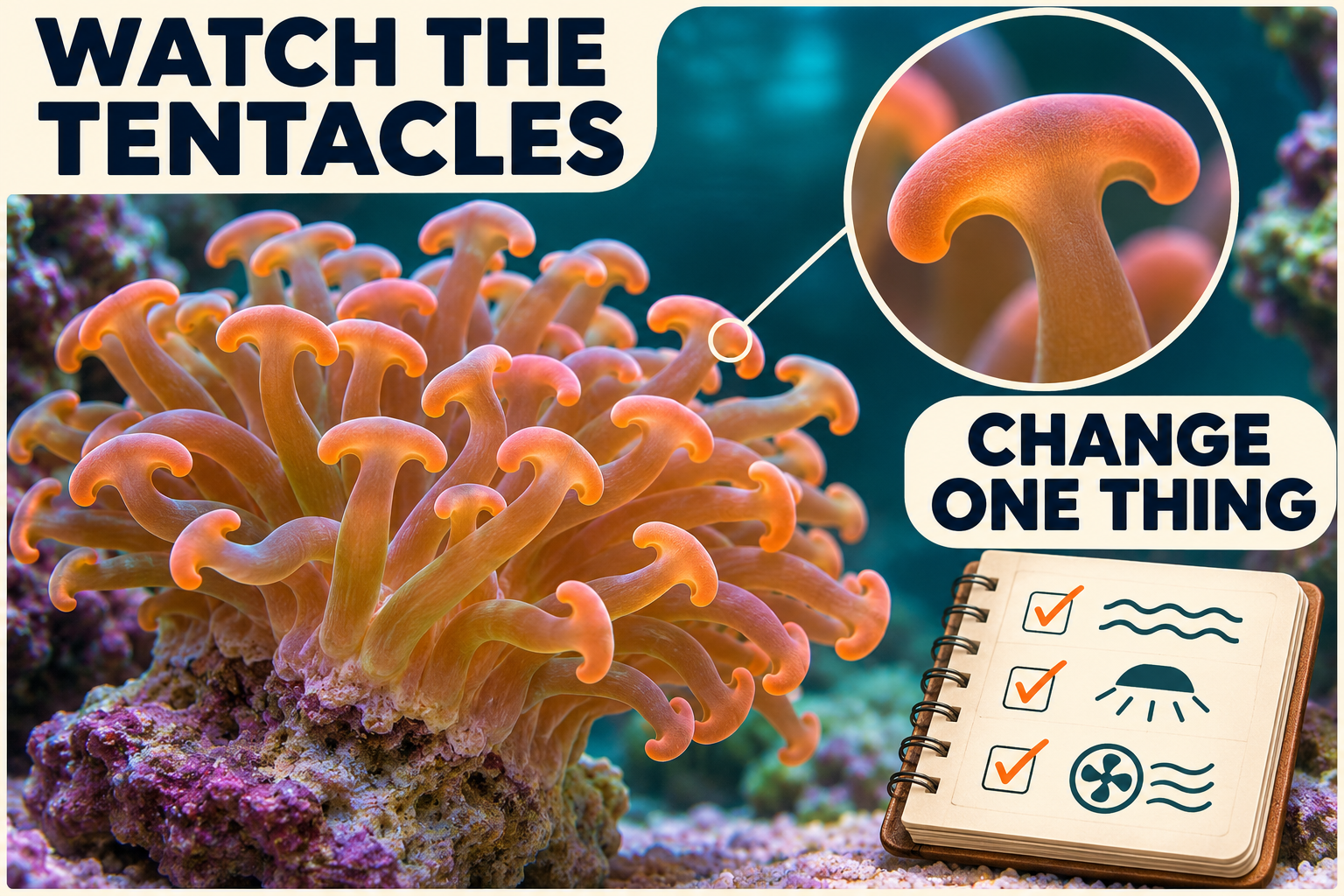
11. Out of the jet, back open. One keeper moved a closed hammer underneath a powerhead where it was not getting hit by the stream. The coral later opened. The report does not separate the change in flow from time to settle.
12. More flow worked in another tank. Another keeper's hammer stayed full in a high-flow tank where the current came from changing directions instead of one hard jet. Both reports are about hammers generally, not this orange stock.
Start with a secure perch, moderate light, and moving tentacles. When something looks off, change one thing at a time. Check again after dark before deciding the coral has enough room.
Field Notes
Related species
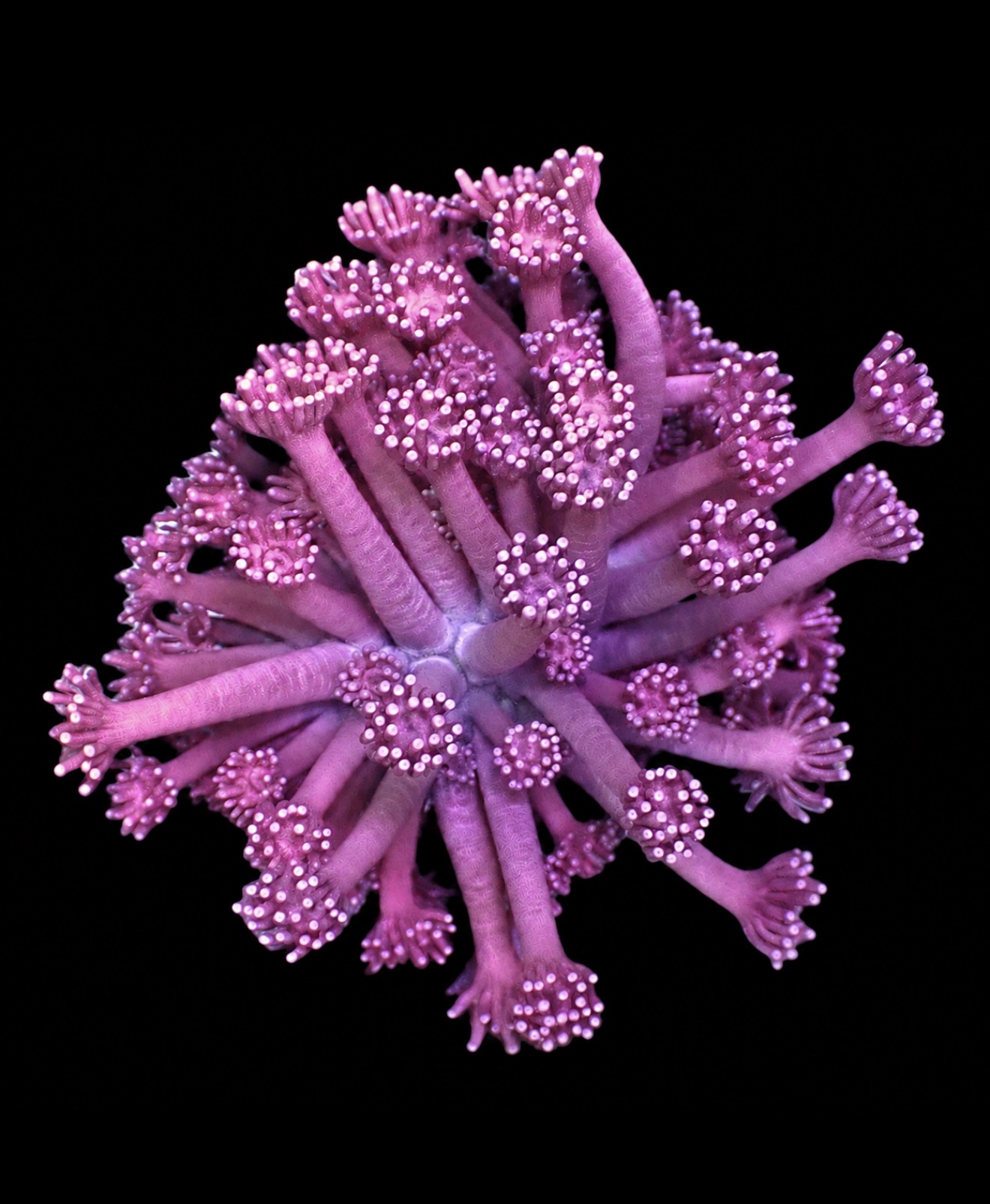
Barney the dinosaur Goni
Goniopora sp.
Similar care · LPS

Blue rim acan lord
Acanthastrea lordhowensis
Similar care · LPS
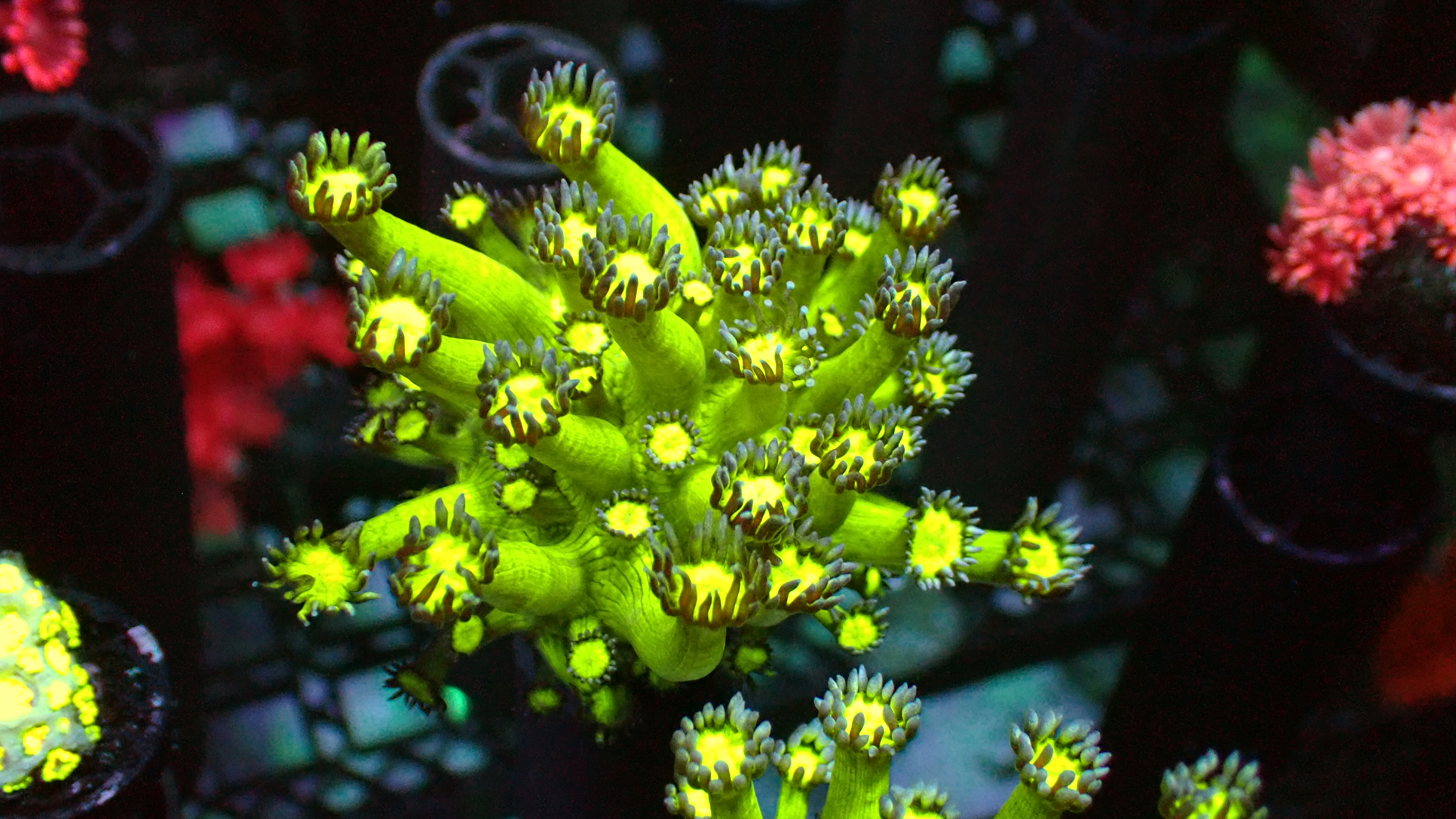
Bootleg glitter Goni
Goniopora sp
Similar care · LPS

Charged Lithium war coral
Acanthastrea sp
Similar care · LPS
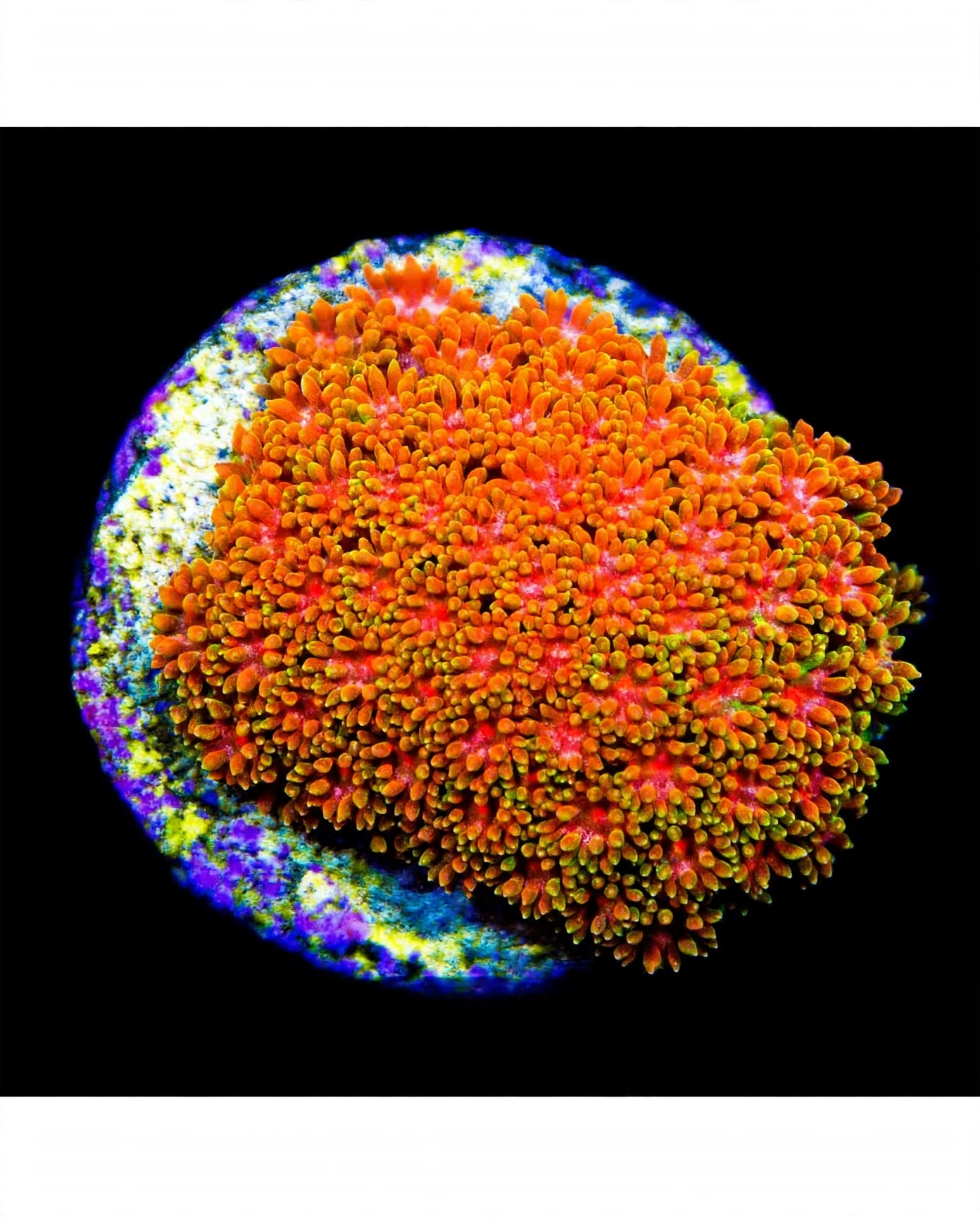
Citrus Orange Short Polyp Goniopora
Similar care · LPS
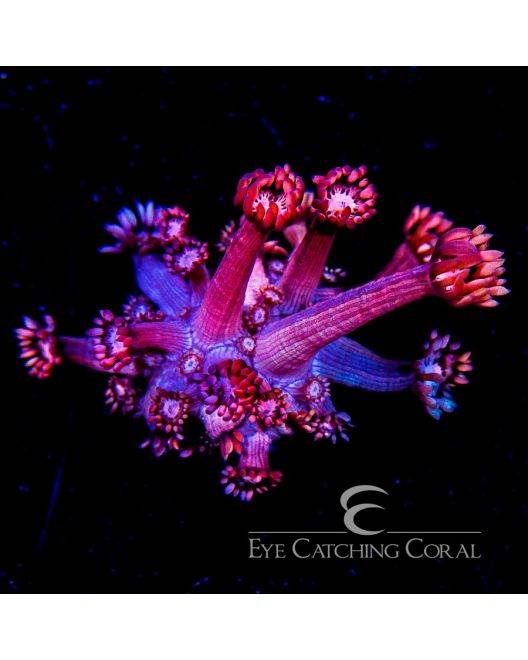
Confetti Grafted Goniopora
Similar care · LPS
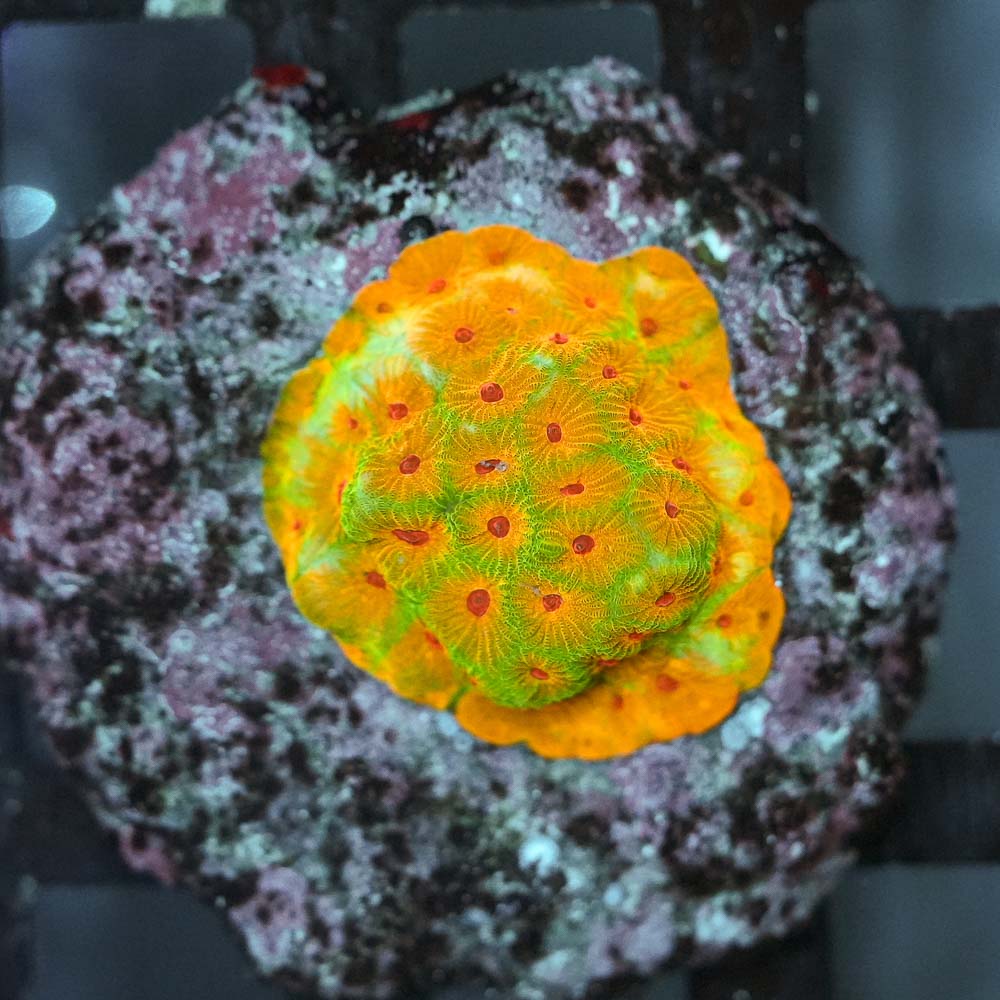
Fascination favia
Favites sp
Similar care · LPS

Fire Fly Goniopora
Similar care · LPS