
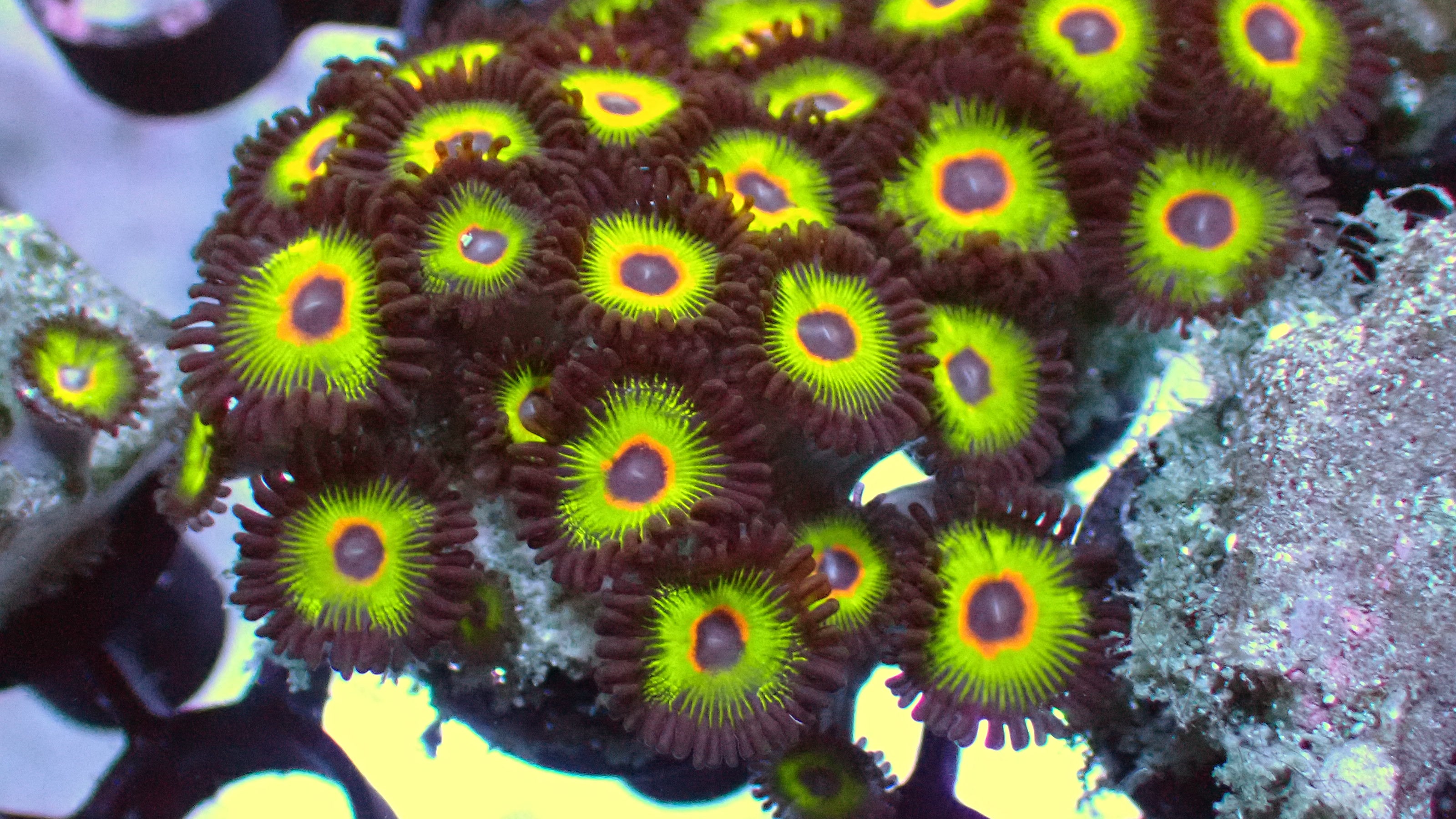
Bob Marley zoas
Zoanthus sp
Bob Marley zoas is a zoanthid morph listed as Zoanthus sp., named for the rasta palette its polyps wear. The colony grows as a mat of connected polyps over rock, each polyp opening as a round disc on a short stalk and closing down to a nub at night or when disturbed. Settled polyps open wide and flat, packed shoulder to shoulder across the mat. The Bob Marley name follows the mix of green, gold, and red tones carried across the faces and lashes of the polyps, a reggae flag of colors that reads clearly under blue-leaning light and makes a mixed mat easy to pick out in a crowded zoanthid garden.

The entry lists beginner care, medium light, medium flow, middle placement, moderate aggression as filed, and moderate growth, with the original notes giving the colony a couple of inches of space. In practice this morph behaves peacefully, and the space figure is about spread rather than sting. Place the frag in the middle of the rockwork on solid rock, with room for the mat to expand. Medium light holds the three colors at full strength. Polyps kept in shade stretch on long stalks and lose the crisp pattern, while a sudden move into very strong light can keep the mat closed for days.
Medium flow should pass across the mat in a broad, changing pattern. Moving water keeps detritus and film from settling between the polyps, the usual starting point for a zoanthid mat closing in patches. A direct jet holds one edge shut, and still corners let waste collect. Gentle movement that stirs the lashes slightly is plenty for this morph.
Feeding is indirect. The polyps take fine particulate food from regular broadcast feeding, and light supplies much of the energy in a fed reef tank. Present, steady nutrients suit the colony well, and very clean, stripped water can shrink polyp size and slow the mat's advance. Heavy target feeding mostly fouls the rock around the colony, so a normal reef routine covers its needs without extra work.
Spacing follows the entry's couple of inches. A growing mat advances over the rock it touches, can crowd the base of a slower neighbor, and will grow over a shaded margin. A stinging coral set against the mat damages polyps on contact, so keep LPS sweepers outside the ring. An island rock the colony can own is a clean way to keep the spread contained, and an advancing edge is easy to trim back while it is still on open rock.
Growth is listed as moderate. New polyps bud around the rim, the mat thickens as polyps fill in behind the edge, and a small frag can cover its plug and spill onto the rock within a season in a stable tank. Polyps closing in one patch, a mat edge receding, or stalks stretching tall usually point first to film or pests on the colony, then to light, then to nutrients that have drifted very low. A dip and a close inspection is the standard first response to a closing mat.
Palytoxin caution: zoanthids can carry palytoxin. Handle the colony with gloves, keep it away from broken skin, wash hands well after contact, and never boil, steam, or pressure-wash zoanthid rock, because heat and spray can carry the toxin. Do any fragging or cleaning outside the display where possible, and keep rinse water away from food preparation areas.
Common pitfalls include skipping the dip on a new frag, burying the mat edge in sand as the colony is placed, and parking it in a dead corner where film builds between polyps. Start on clean rock in the middle of the tank with a couple of inches clear, dip and inspect first, and let wide, flat opening confirm the spot.
Field notes — what keepers report
- Pattern reports track light. Keepers at medium light describe all three colors reading clearly across the mat, while keepers who kept the morph shaded describe washed faces on stretched stalks that patterned up again after a gradual move. Both sides describe the recovery in weeks and advise staged moves.
- Pest reports carry the standing zoanthid warning. Keepers describe uninspected frags closing within weeks from zoanthid-eating nudibranchs or spiders picked up in transit, and other keepers describe clean, steady spread from frags dipped and checked on arrival. Inspection at the door is the practice both sides end up recommending.
- Spread reports divide keepers by intention. Keepers building a zoanthid garden describe the mat filling its rock and blending at the edges with neighboring morphs, while keepers with a planned layout describe isolating the colony early to keep the colors separate. Both sides agree the habit is easy to manage when the edge is watched from the start.
Field Notes
Related species
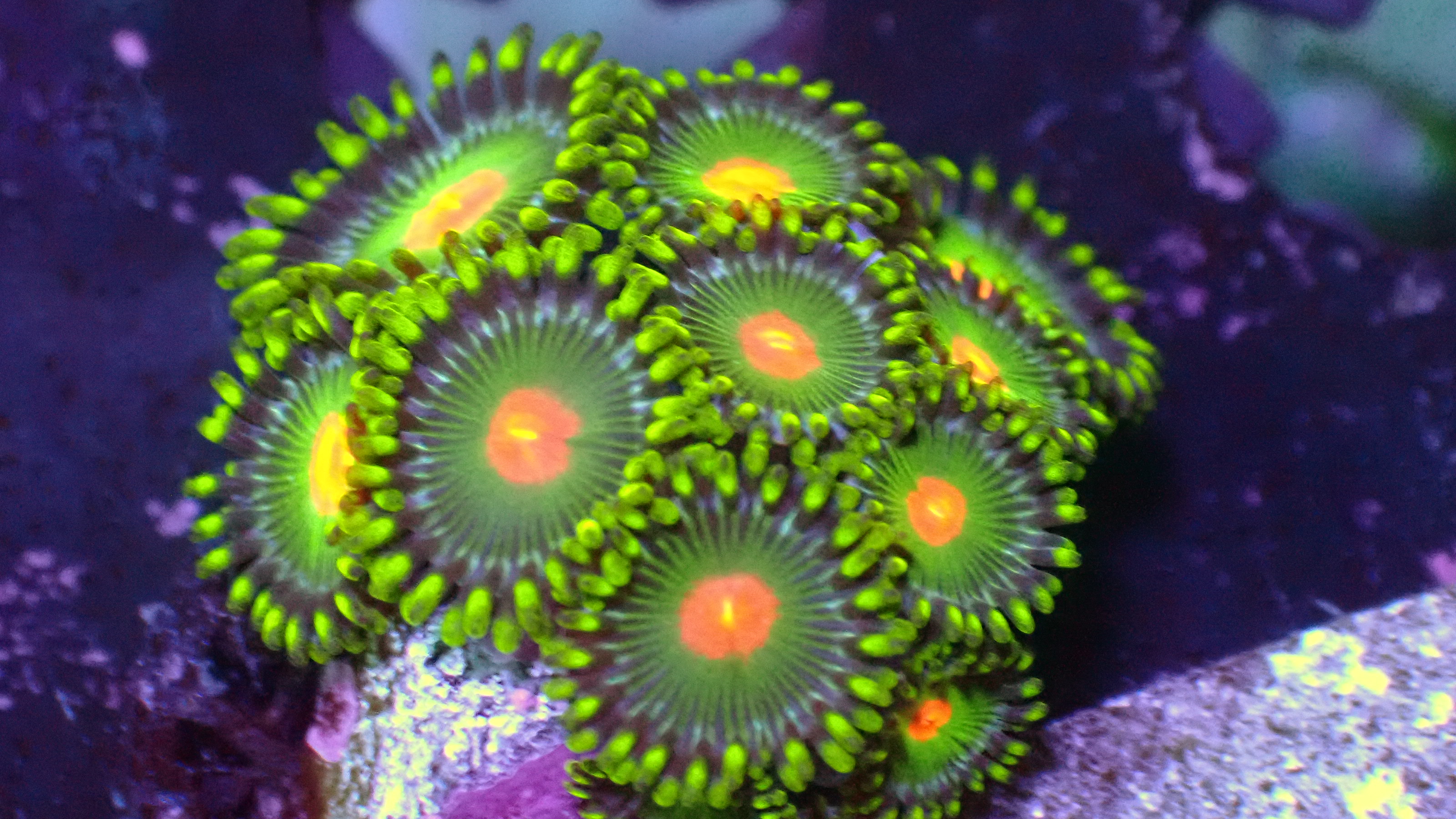
Green Bay zoas
Zoanthus sp
Same genus
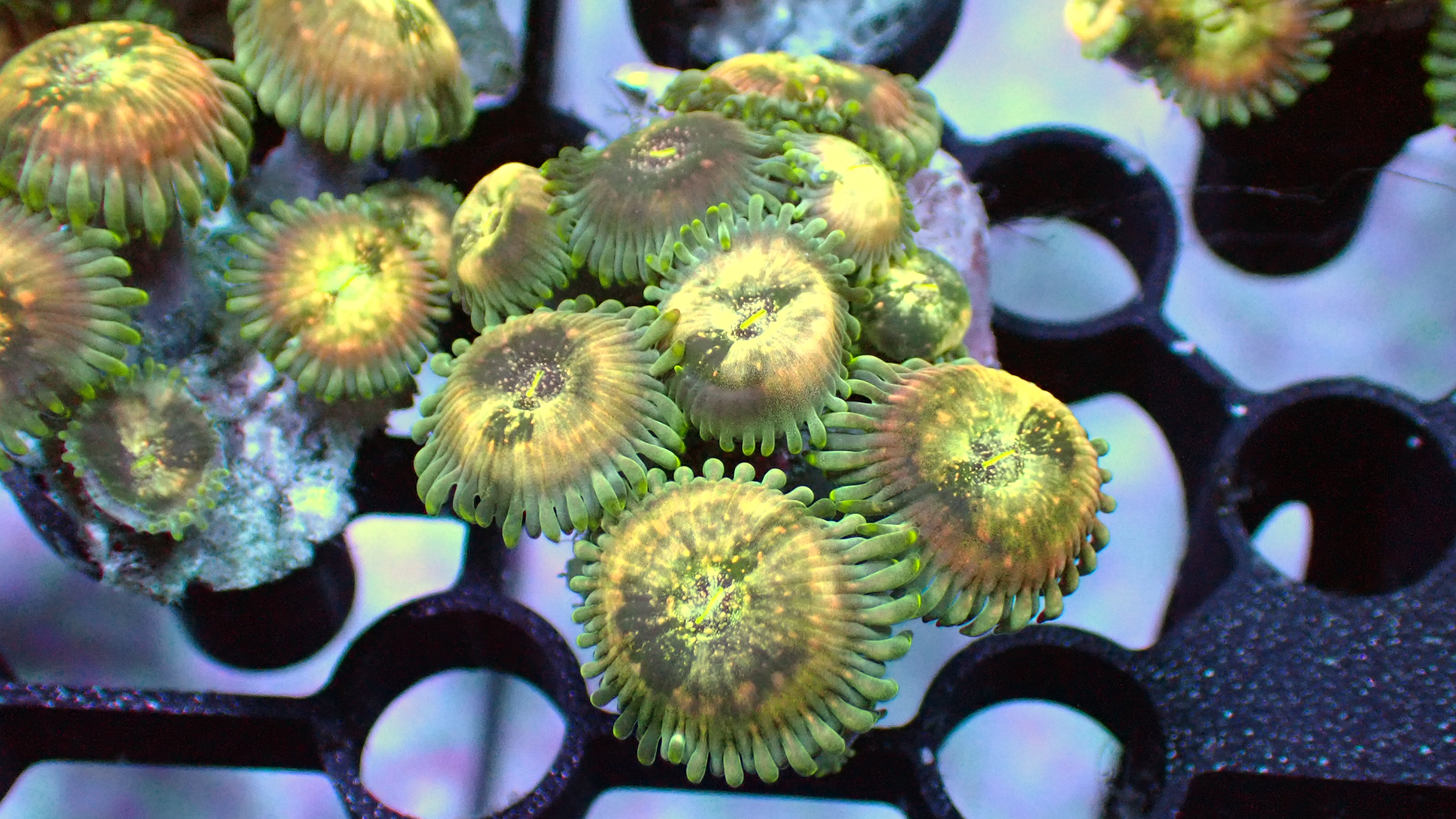
Hawaiian ding dang zoas
Zoanthus sp
Same genus
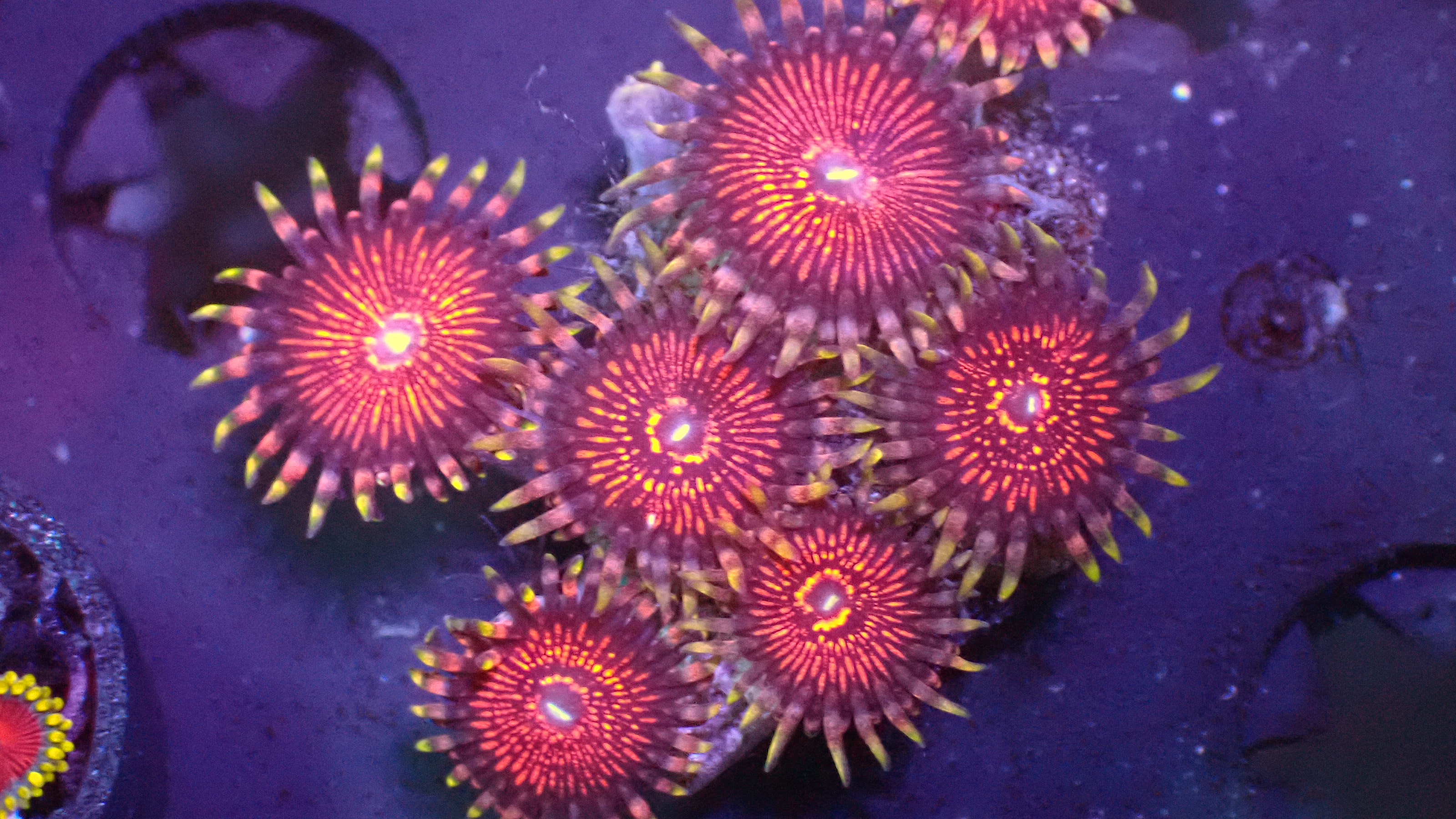
Night crawler zoas
Zoanthus sp
Same genus
Oompa Loompa zoas
Zoanthus sp
Same genus
Peaches zoas
Zoanthus sp
Same genus
Purple People Eater
Zoanthus sp.
Same genus
Red people eater zoas
Zoanthus sp
Same genus

Sakura sunrise zoanthids
Zoanthus sp
Same genus


Love this species? No tank needed.
Reef art from the shop — for the wall, not the tank.


Get notified when Reef To Go has Bob Marley zoas in stock or up for auction. One email when it's in — no spam.