
Purple People Eater
Zoanthus sp.
Also known as: PPE, Purple People Eater Dragon Eye
Care Summary
Purple People Eater is the strain that started the People Eater era in the zoanthid hobby. Named in the early 2000s, it circulated at first as Purple People Eater Dragon Eye before the shorter name took hold. The polyps run large for a Zoanthus — broad, fleshy discs in a deep eggplant purple, ringed by a bright green fringe, with the family's signature green slit mouth at the center of each polyp. Under blue light the purple deepens and the green fringe and mouth fluoresce, and a settled colony reads from across the room.
People Eater types sit at the large end of the zoanthid group that hobbyists trade as Zoanthus and Palythoa types, growing as a connected mat over rock with individual polyps rising well above the mat on short stalks. In the wild, zoanthids colonize reef rock and rubble in shallow, sunlit water, and that habit carries into the tank: give the colony a stable piece of rockwork and it will encrust outward from there, budding new polyps at the edge of the mat.
Care is beginner-friendly with patience built in. Place it low to mid-level in medium light and medium flow — enough current to keep the polyps clean and swaying gently, never a direct blast that keeps them closed. Pure purple color holds best under a blue-leaning spectrum; very low light makes the polyps stretch tall and wash toward brown, while a slow move up the rockwork deepens the purple over a few weeks. Standard reef parameters suit it: 77–79°F, salinity near 35 ppt, alkalinity 8–10 dKH, calcium 400–450 ppm.
Growth is moderate and slower than the small-polyp zoanthids. A new frag may sit at the same polyp count for weeks while it lays down mat, then start budding steadily. It responds to feeding: once or twice a week, offer fine meaty coral food or zooplankton over the open polyps with the pumps paused, and the discs will fold around it. Leave an inch or two of clear rock around the colony — it will claim that space in time, and its sting and overgrowth can crowd slower neighbors.
Handle it with the same care as every zoanthid and palythoa type: the mucus can contain palytoxin. Wear gloves when fragging, keep it away from open cuts, wash hands and tools well after handling, and never boil, steam, or pressure-wash rock that carries zoanthids.
Field notes — what keepers report
- Keepers consistently report that People Eater types grow more slowly than small-polyp zoanthids, and that a frag holding still for the first month or two is normal for this family rather than a sign of failure.
- Color reports track light closely: colonies kept low and shaded stretch and dull toward brown-purple, while colonies moved gradually into stronger, blue-leaning light tighten up and show the deep purple disc with the bright green fringe the strain is named for.
- Zoanthid keepers generally warn that a closed or shrunken colony is not always a lost one — colonies reported as melted down to a remnant of mat have sat that way for weeks and then sprouted normal polyps again, so experienced keepers leave a declining frag in place before giving up on it.
- Feeding reports are mixed in a useful way: some keepers credit weekly target feeding for noticeably faster budding, while others grow full colonies on light alone and warn that heavy feeding fouls the water around a low-flow zoa garden faster than the colony can use the food.
Note on the photo: no openly licensed photo of this named strain itself is available, so the entry photo shows a Zoanthus sp. colony with the same large-polyp, dark-disc, green-fringed People Eater look.
Care
Field Notes
Field Notes
Related species
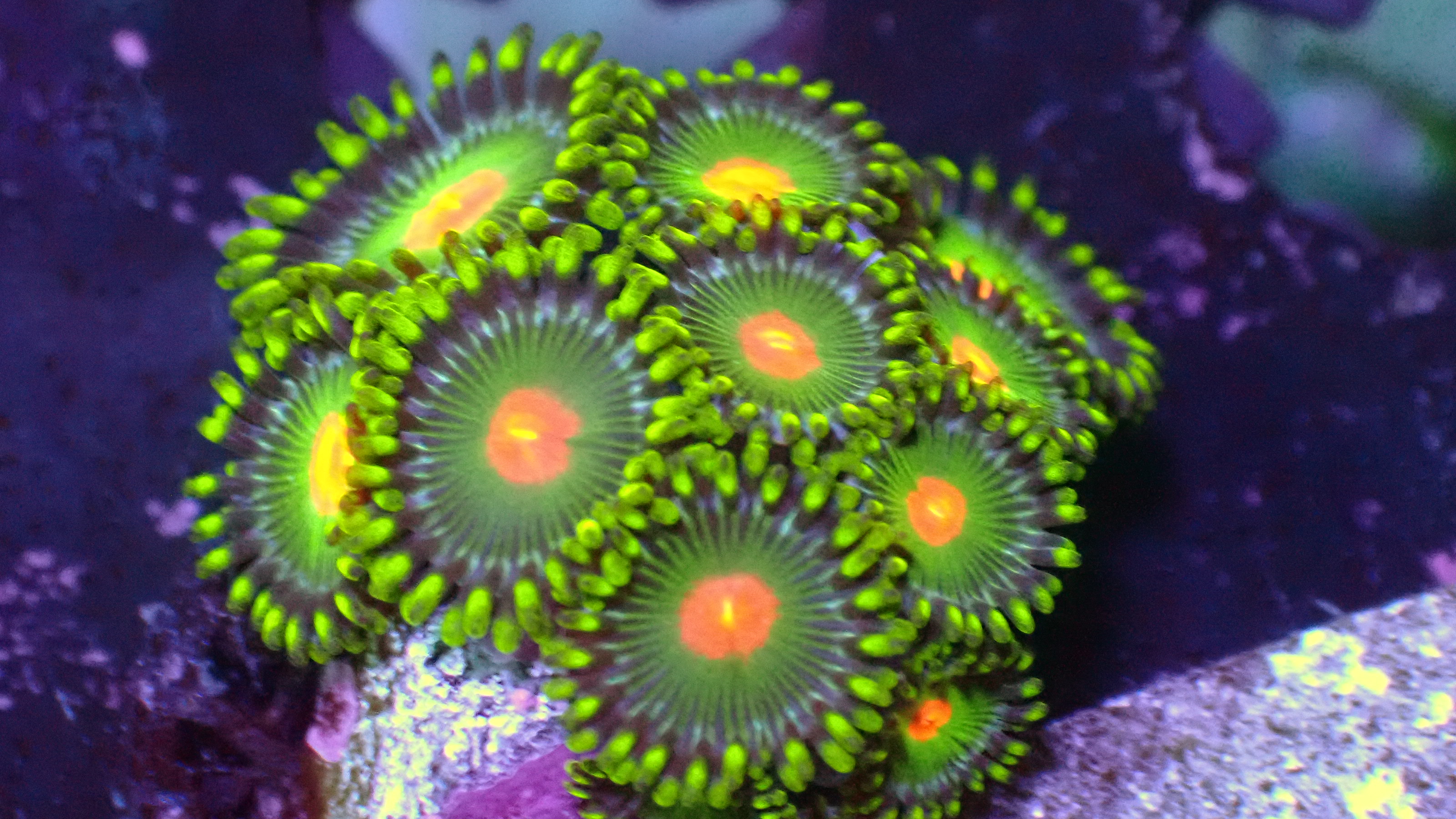
Green Bay zoas
Zoanthus sp
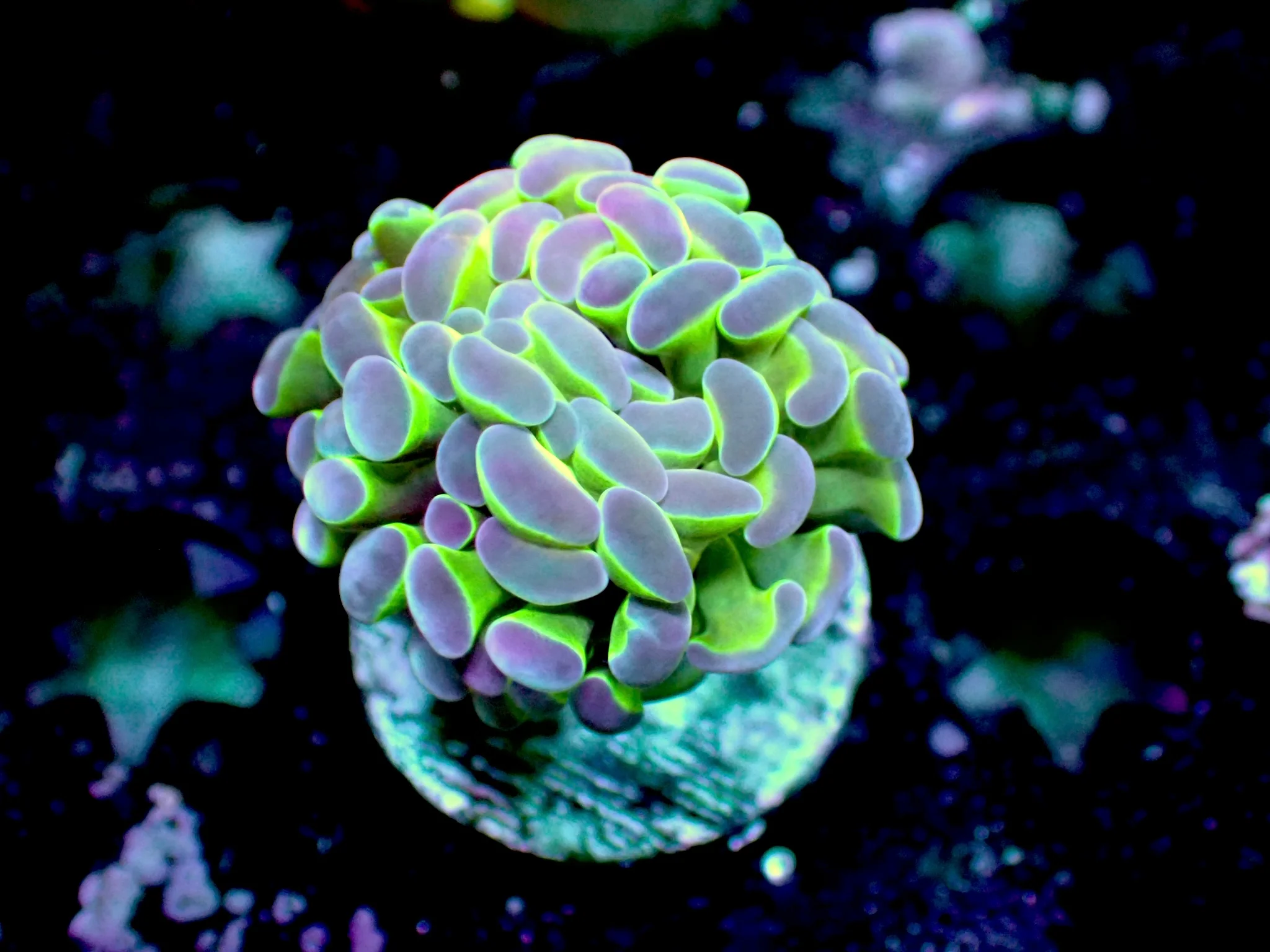
Hologram hammer
Fimbriaphyllia paraancora
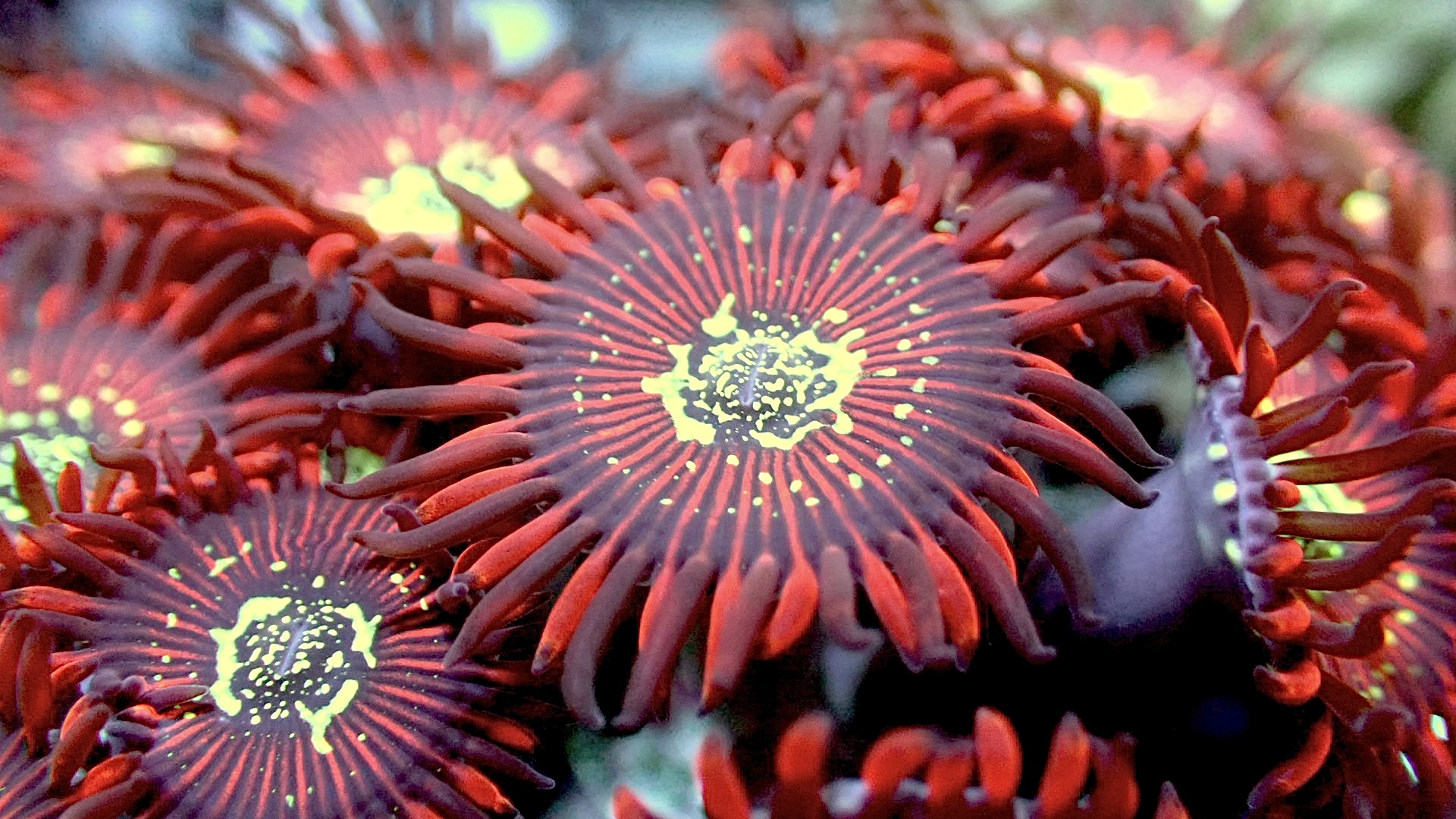
Magician zoanthids
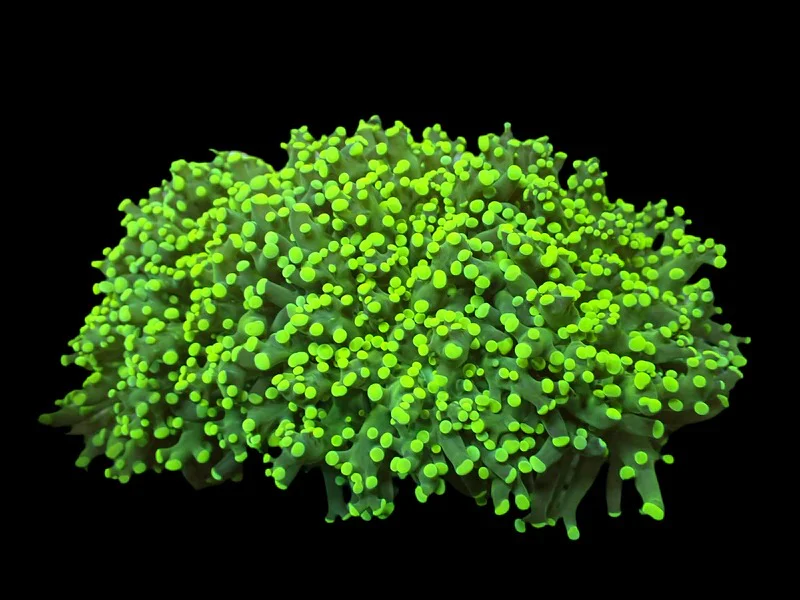
Frogspawn
Fimbriaphyllia divisa
Green star polyps
Pachyclavularia violacea
Lemon lime favia
Favites sp
Orange oxide zoanthids
Rainbow infusion zoanthids
Zoanthus sp