
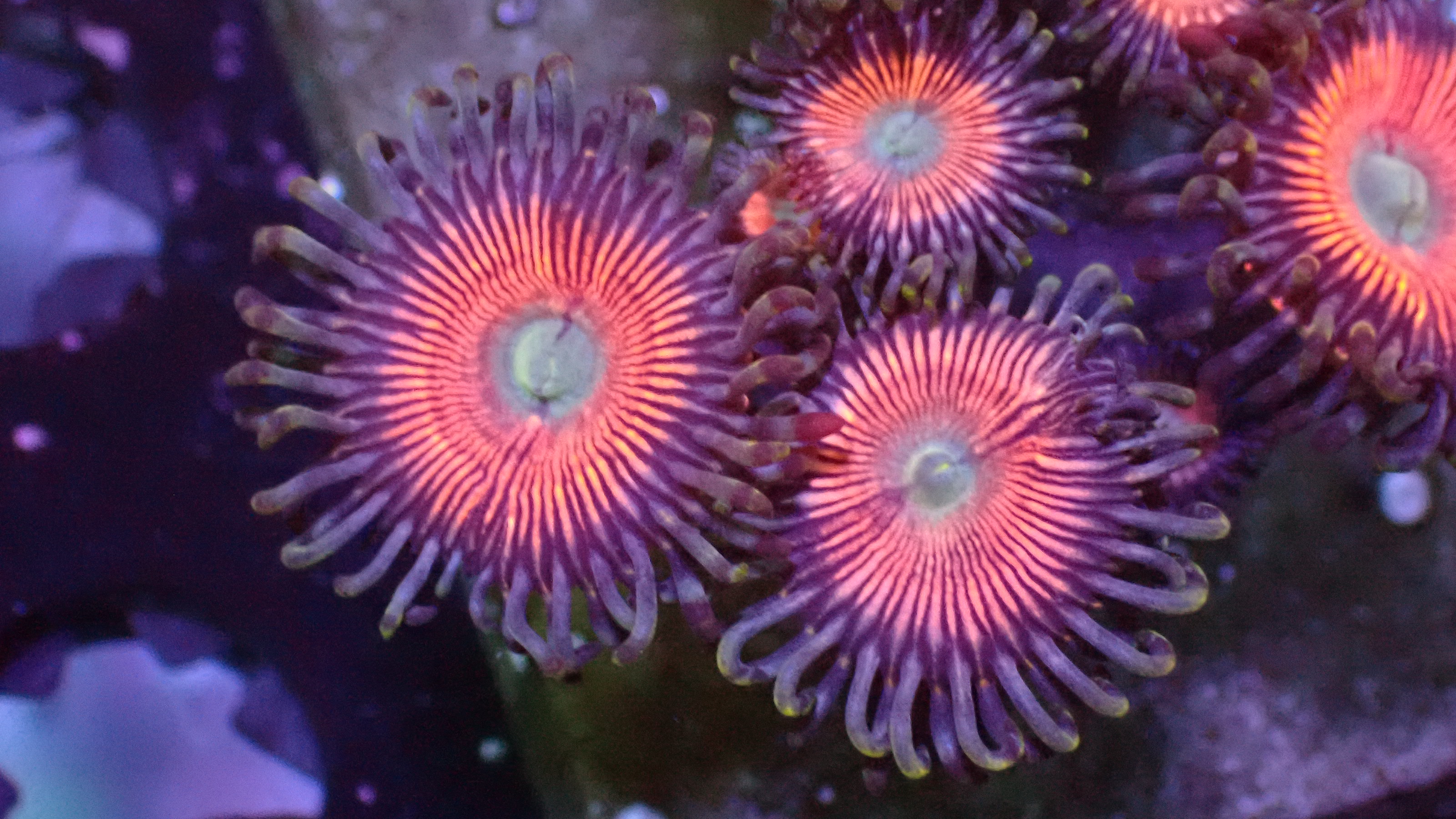
Peaches zoas
Zoanthus sp
Peaches zoas is a zoanthid morph listed as Zoanthus sp., kept under a trade name rather than a species name. The colony grows as a mat of connected polyps spreading over rock or a frag plug, each polyp opening as a round disc on a short stalk and closing down to a nub at night or when disturbed. Settled polyps open wide and flat through the day, packed close across the mat. The peaches name follows the soft peach and warm pastel tones carried across the polyp faces, a gentle color that stands apart from the neon end of the zoanthid range.

The entry lists beginner care, medium light, medium flow, middle placement, and moderate growth, with the original notes giving the colony a couple inches of space. Place the frag in the middle of the rockwork on solid rock, with room for the mat to run in every direction. Medium light holds the pattern at full strength. Medium light holds the soft peach tones full and warm rather than washed out. Polyps kept in deep shade stretch on long stalks and lose definition, while a sudden move into very strong light can keep the mat closed for days, so step any move up in stages.
Medium flow should pass across the mat in a broad, changing pattern. Moving water keeps detritus and film from settling between the polyps, and a mat that traps film is a mat that starts closing in patches. A direct jet holds one edge shut day after day. Gentle movement that stirs the lashes slightly, without pressing polyps flat, is the pattern this morph settles under best.
Feeding is indirect and simple. Zoanthids draw much of their energy from light, and the polyps also take fine particulate food from regular broadcast feeding in a fed reef tank. Present, steady nutrients suit this morph well. Very clean, stripped water can shrink polyp size and slow the mat, while heavy target feeding mostly fouls the rock around the colony. A normal reef feeding routine covers its needs.
Spacing follows the entry's couple inches, judged against spread rather than sting. Zoanthids carry no sweeper reach worth planning around, and a growing mat advances over the rock it touches, crowds the base of a slower neighbor, and can grow over a shaded margin. A stinging coral set against the mat damages polyps on contact. Give the colony a rock face or an island it can own, keep stinging corals outside the ring, and trim an advancing edge back while it is still on open rock.
Growth is listed as moderate. New polyps bud around the rim of the mat, the edge creeps outward, and a small frag can cover its plug and spill onto the rock over a season in a stable tank. Polyps closing in one patch, stalks stretching tall and thin, or a mat edge receding usually point first to film or pests on the colony, then to light, then to nutrients that have drifted very low. A dip and a close inspection for zoanthid-eating nudibranchs or spiders is the standard first response to a closing mat.
Palytoxin caution: zoanthids can carry palytoxin. Handle the colony with gloves, keep it away from broken skin, wash hands well after contact, and never boil, steam, or pressure-wash zoanthid rock, because heat and spray can carry the toxin. Do any fragging or cleaning outside the display where possible, and keep rinse water away from food preparation areas.
Common pitfalls include skipping the dip and inspection on a new frag, burying the mat edge in sand during placement, and parking the colony in a dead corner where film builds between polyps. Start on clean rock in the middle of the tank, dip and inspect first, and let wide, flat opening through a full day confirm the spot.
Field notes — what keepers report
- Opening reports track placement closely. Keepers describe mats that opened fully within a day or two in medium light and moving water, and other keepers describe colonies that stayed shut for a week after a move before opening with no single change credited. Both sides advise patience before a second move.
- Pest reports carry the main warning for this group. Keepers describe uninspected frags closing within weeks from zoanthid-eating nudibranchs or spiders carried in with the frag, and other keepers describe clean, steady spread from frags that were dipped and checked on arrival. Inspection at the door is the practice both kinds of report end up recommending.
- Growth reports split by tank feeding. Keepers in fed tanks describe a mat that spreads steadily and fills its rock, while keepers in very clean systems describe polyps holding on at a slower pace with smaller discs. Both sides describe the morph as forgiving of ordinary swings once the mat has settled and started budding at the rim.
Field Notes
Related species
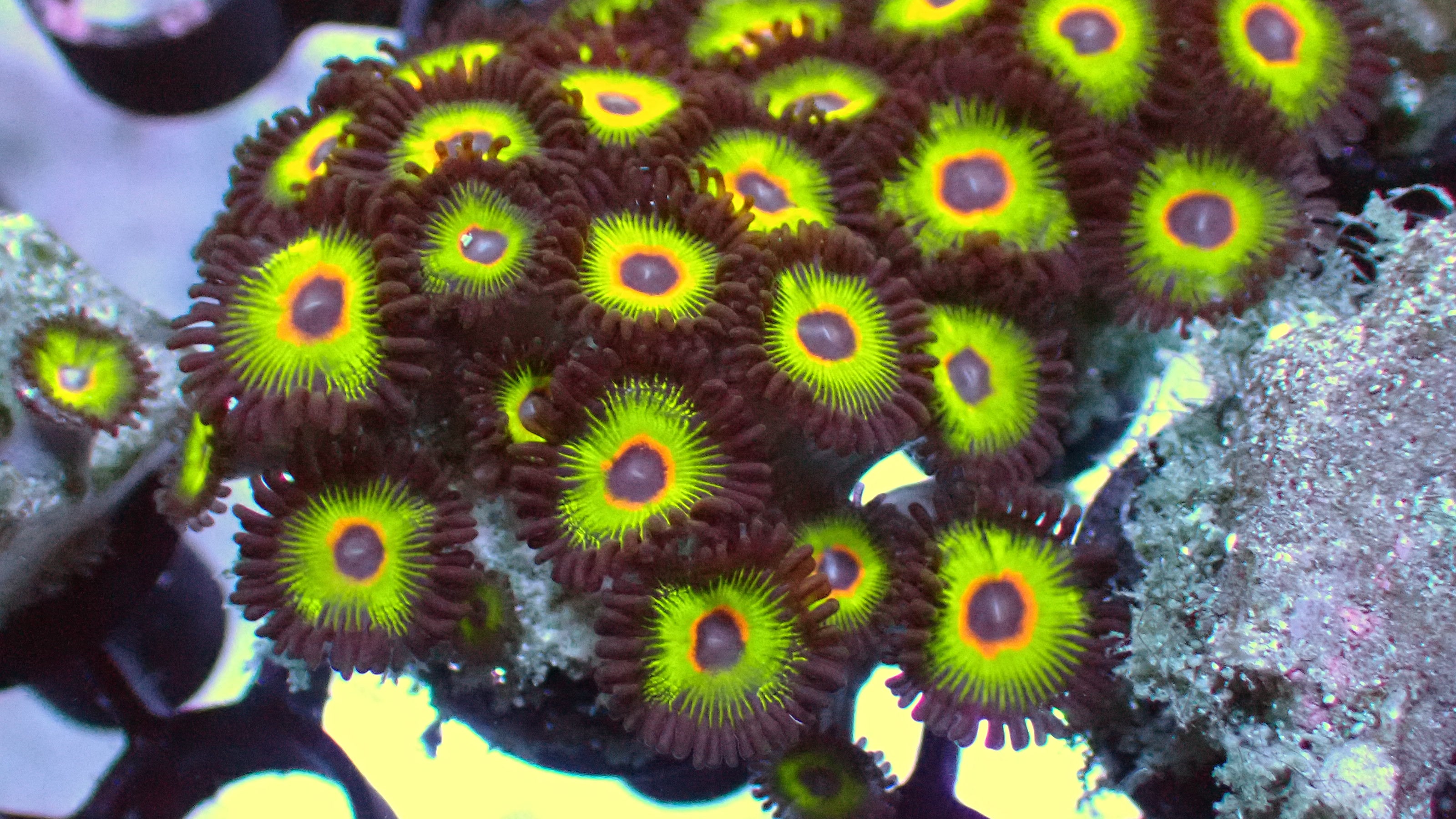
Bob Marley zoas
Zoanthus sp
Same genus
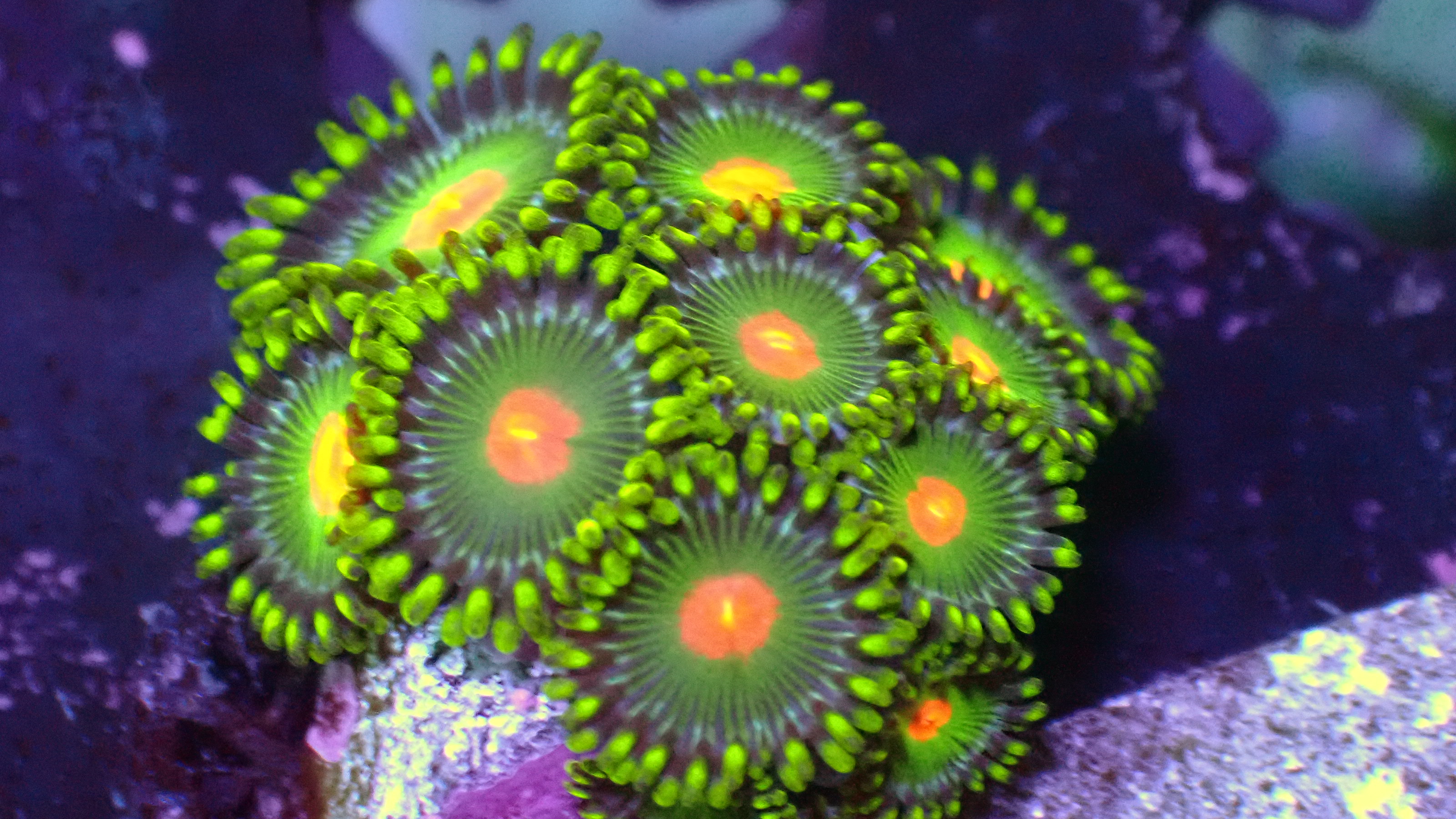
Green Bay zoas
Zoanthus sp
Same genus
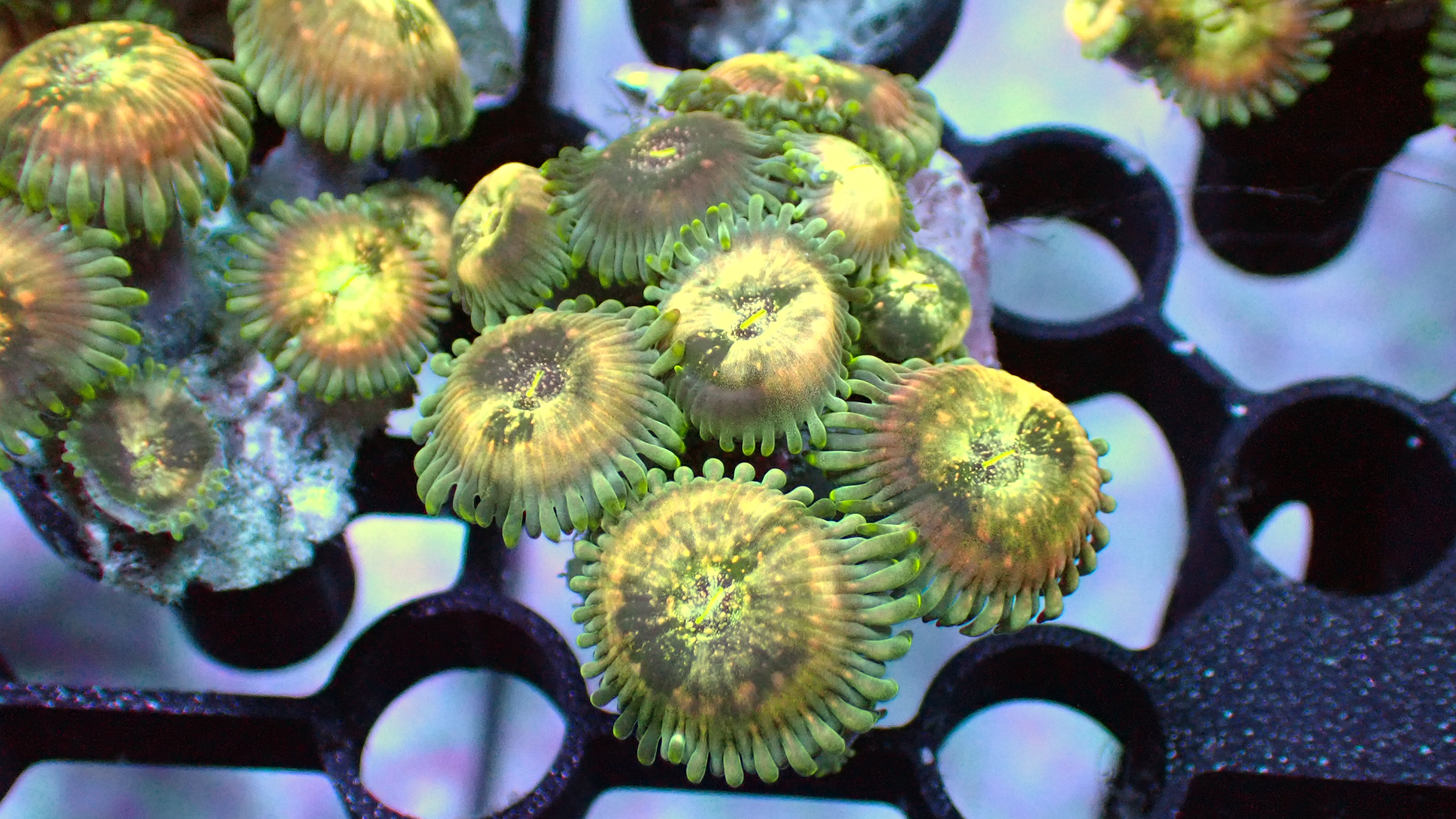
Hawaiian ding dang zoas
Zoanthus sp
Same genus
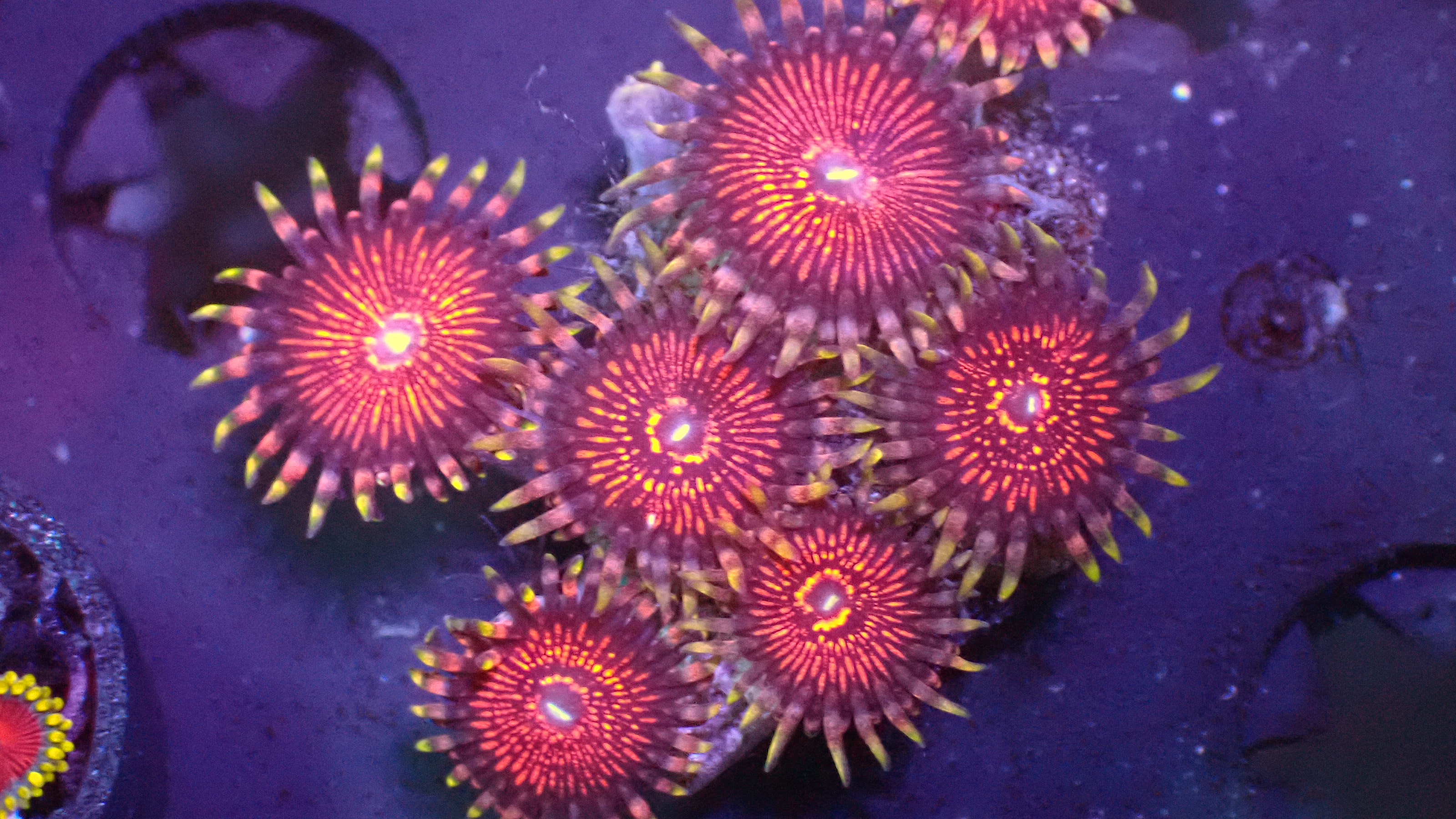
Night crawler zoas
Zoanthus sp
Same genus
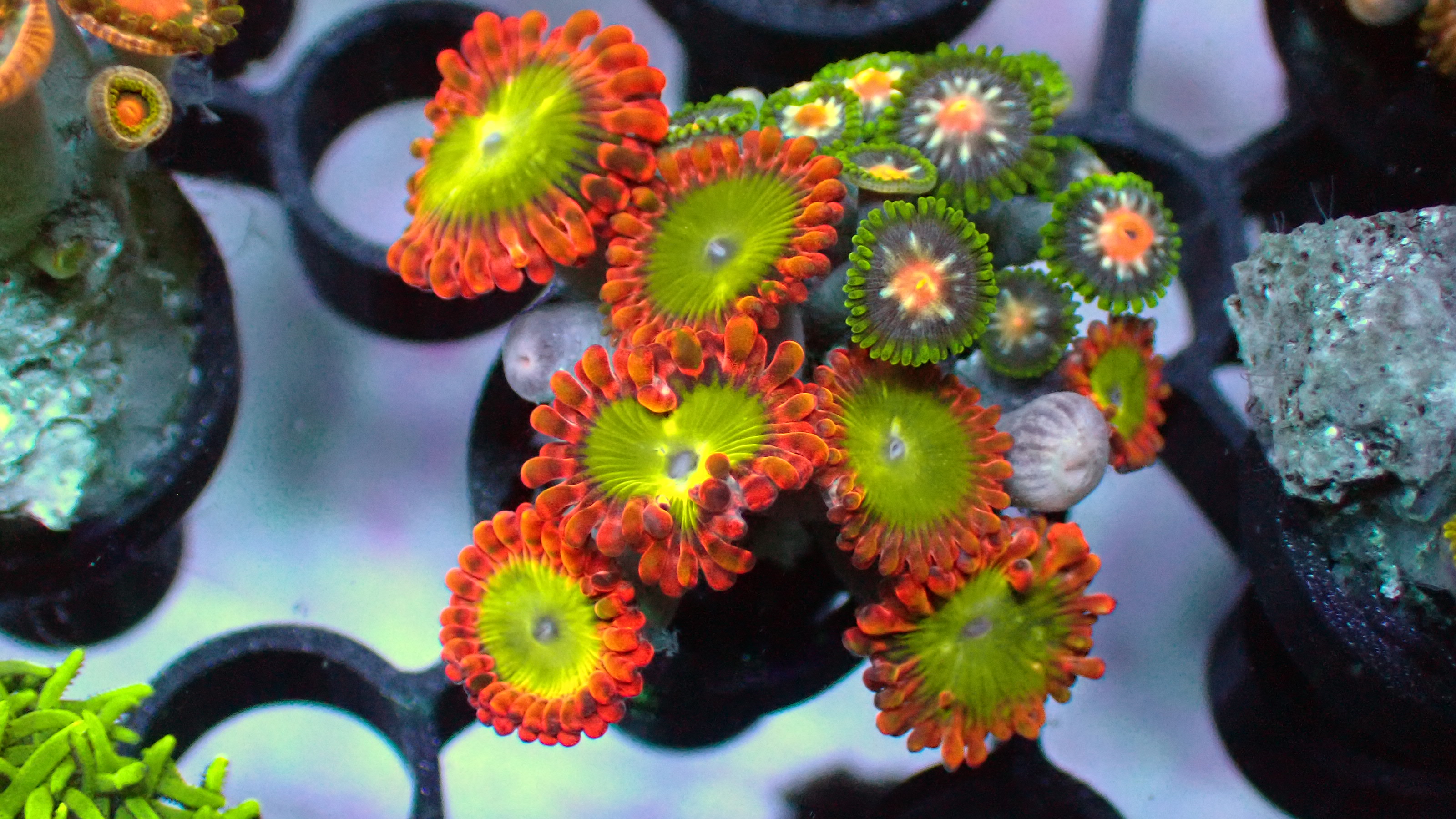
Oompa Loompa zoas
Zoanthus sp
Same genus
Purple People Eater
Zoanthus sp.
Same genus
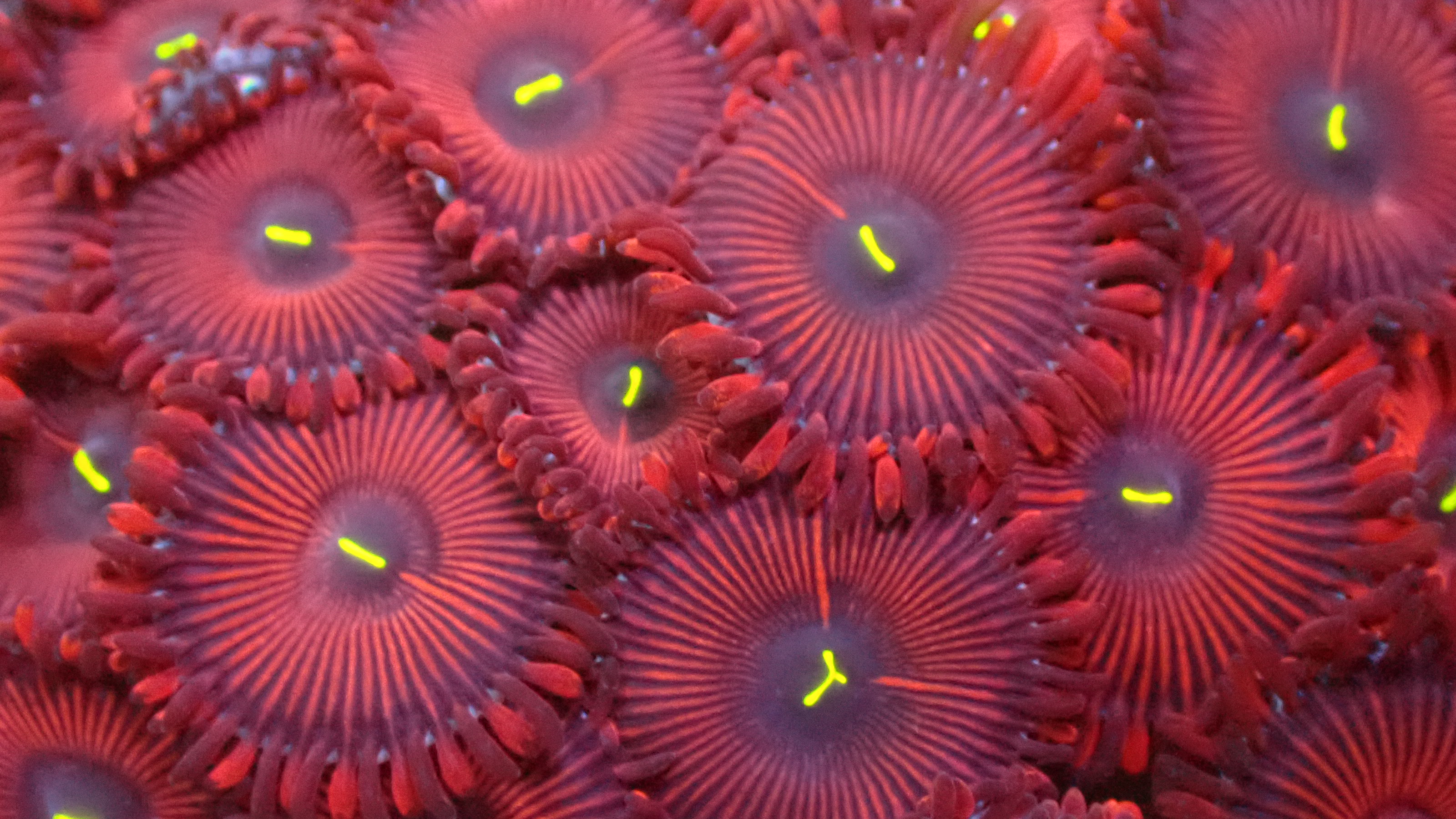
Red people eater zoas
Zoanthus sp
Same genus

Sakura sunrise zoanthids
Zoanthus sp
Same genus


Love this species? No tank needed.
Reef art from the shop — for the wall, not the tank.


Get notified when Reef To Go has Peaches zoas in stock or up for auction. One email when it's in — no spam.