Captain America cyphastrea
Cyphastrea sp
Care facts
- Care
- Beginner
- Light
- Low to medium
- Flow
- Medium
- Place
- Bottom
- Space
- Peaceful
- Growth Rate
- Moderate
Gallery
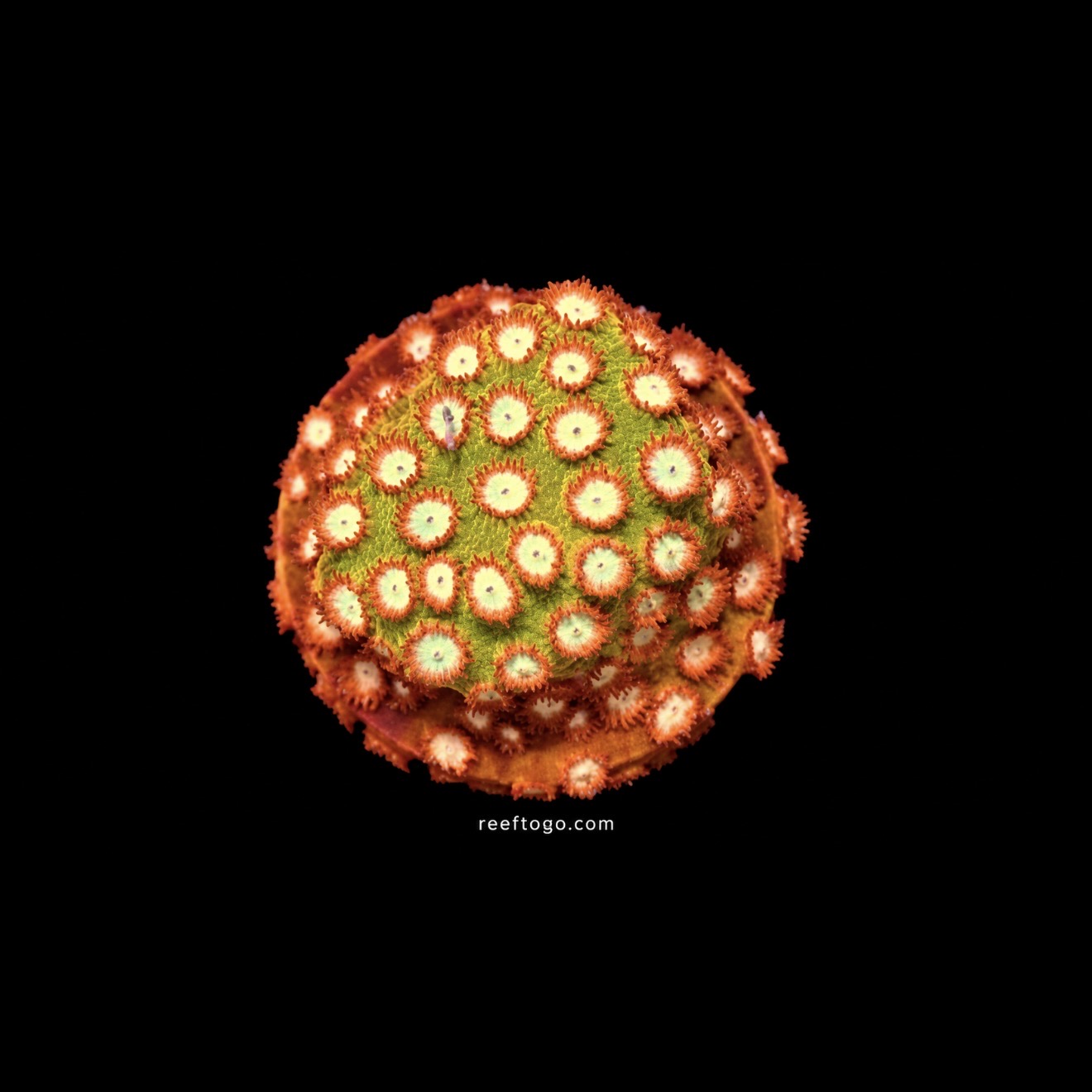
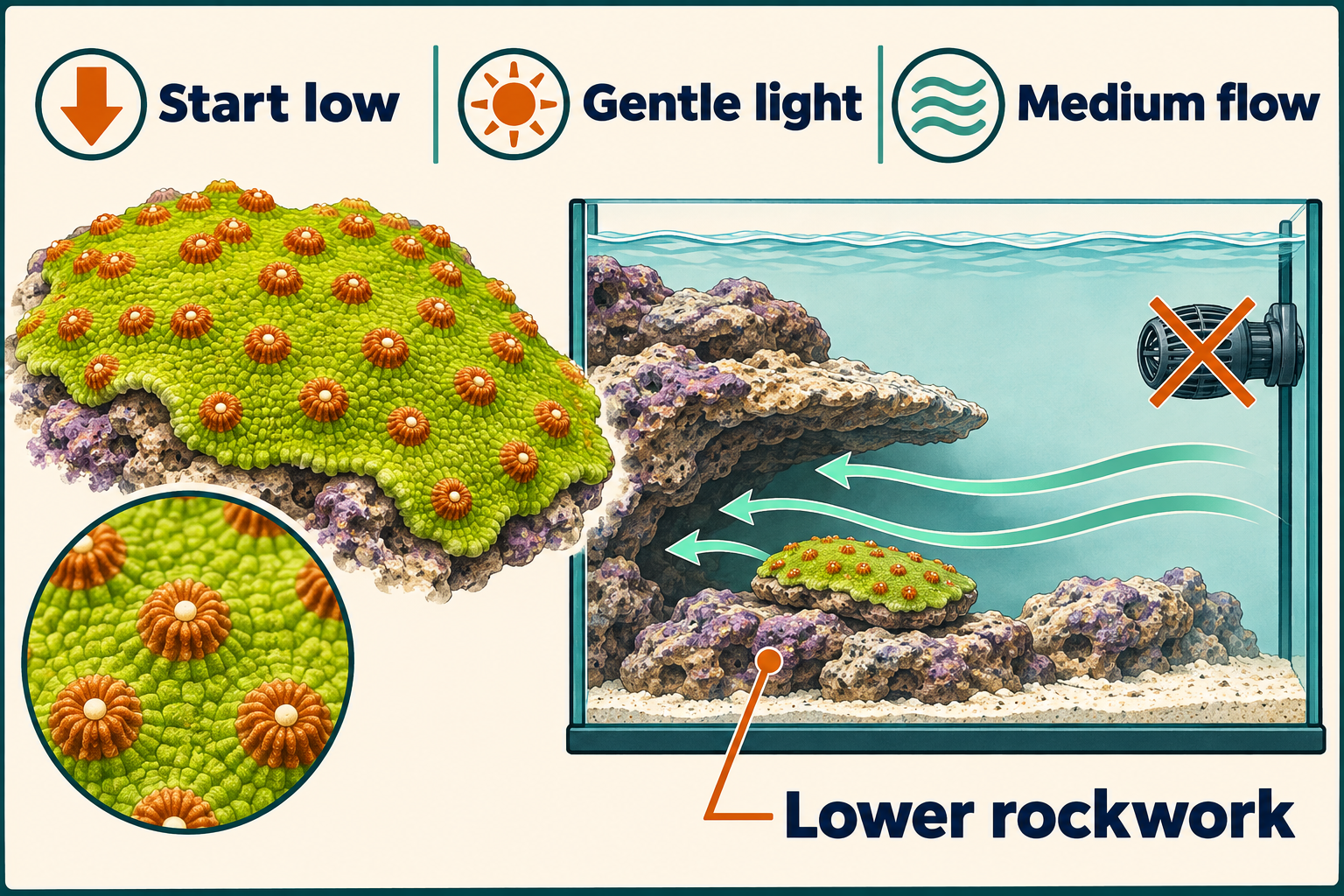
From across the tank, Captain America is a green patch. Lean in and the rock lights up with red-orange buttons and pale centers. Those buttons are tiny animals living together on one hard skeleton. Start this frag low and watch its outer edge. That is where the colony gets bigger.
History of the coral
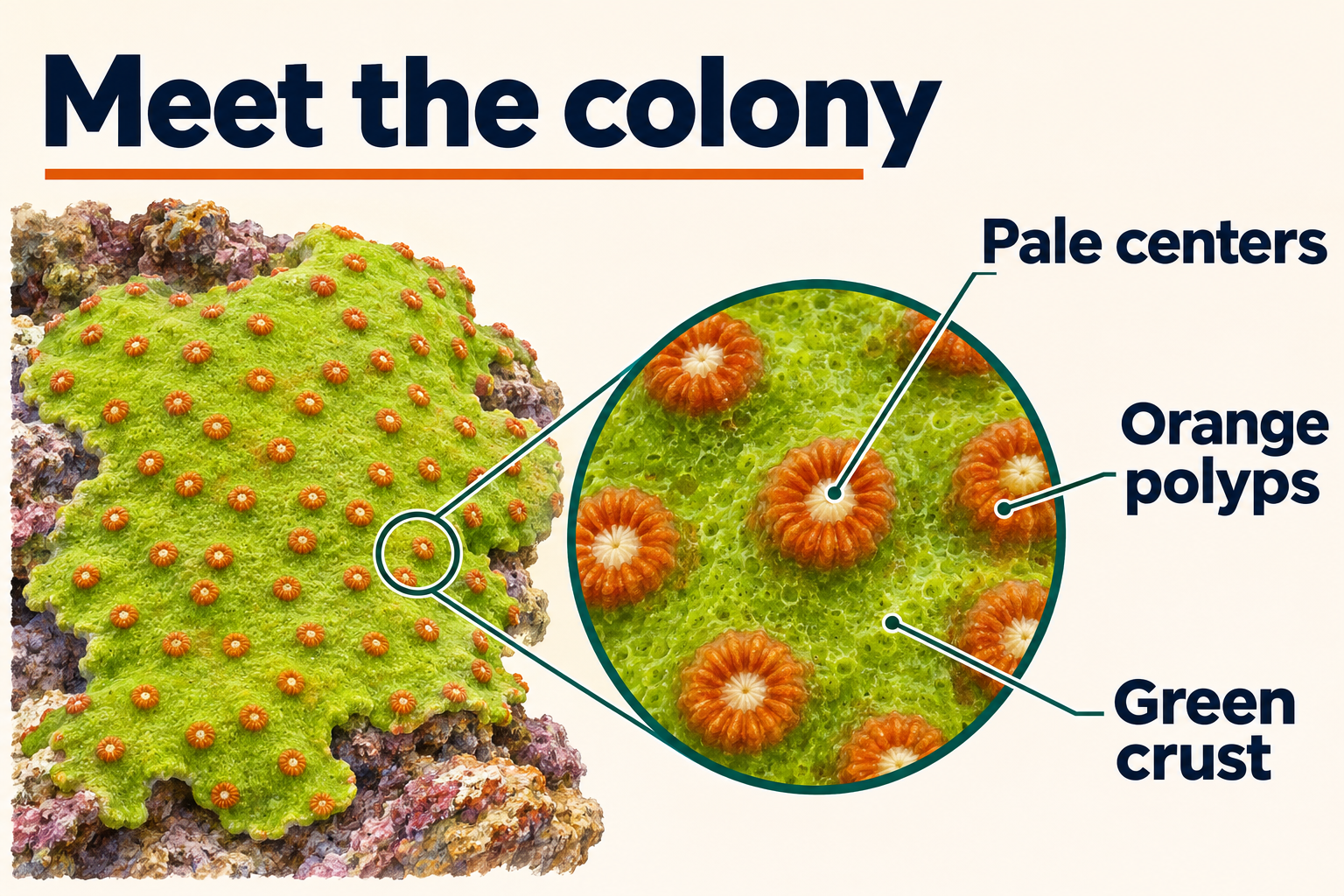
1. A name from 1848. The name Cyphastrea goes back to 1848. It names a group of reef-building corals with tiny skeletal cups for their polyps. The cups outlast the soft tissue.
2. A name from the frag rack. Captain America is the aquarium name for this green and red-orange line. Cyphastrea sp. puts it in the right genus without assigning a species. Purple, green or red alone will not settle that ID.
How they live in the wild
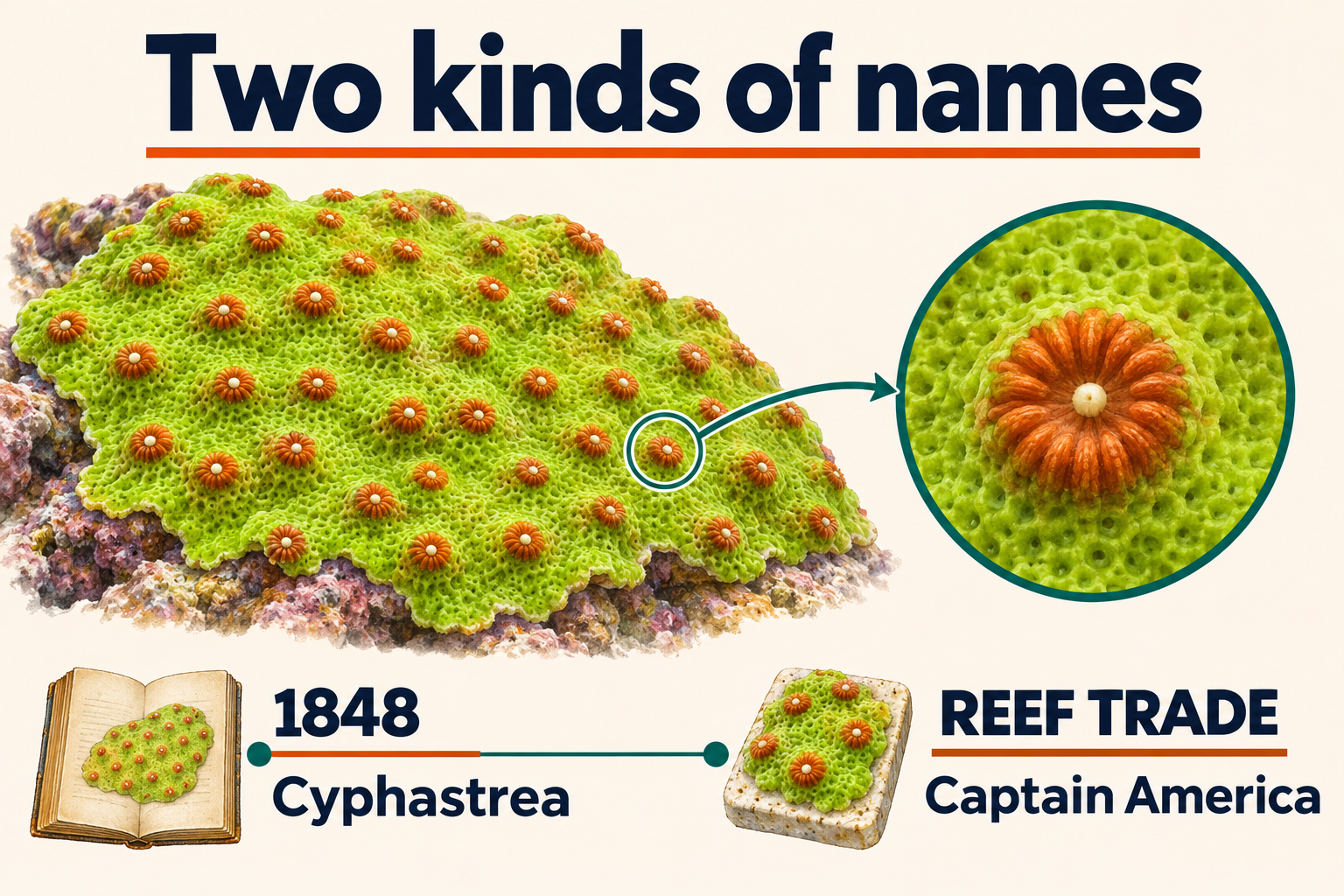
3. Across two oceans. Wild Cyphastrea live across the Indo-Pacific. Different species turn up from the Red Sea to the Pacific. Captain America is an aquacultured line with no recorded wild collection site.
4. Tiny cups, big colonies. In the wild, some Cyphastrea spread in thin sheets. Others build rounded mounds. The little cups stay separate even as the coral joins up across the rock.
Meet the colony
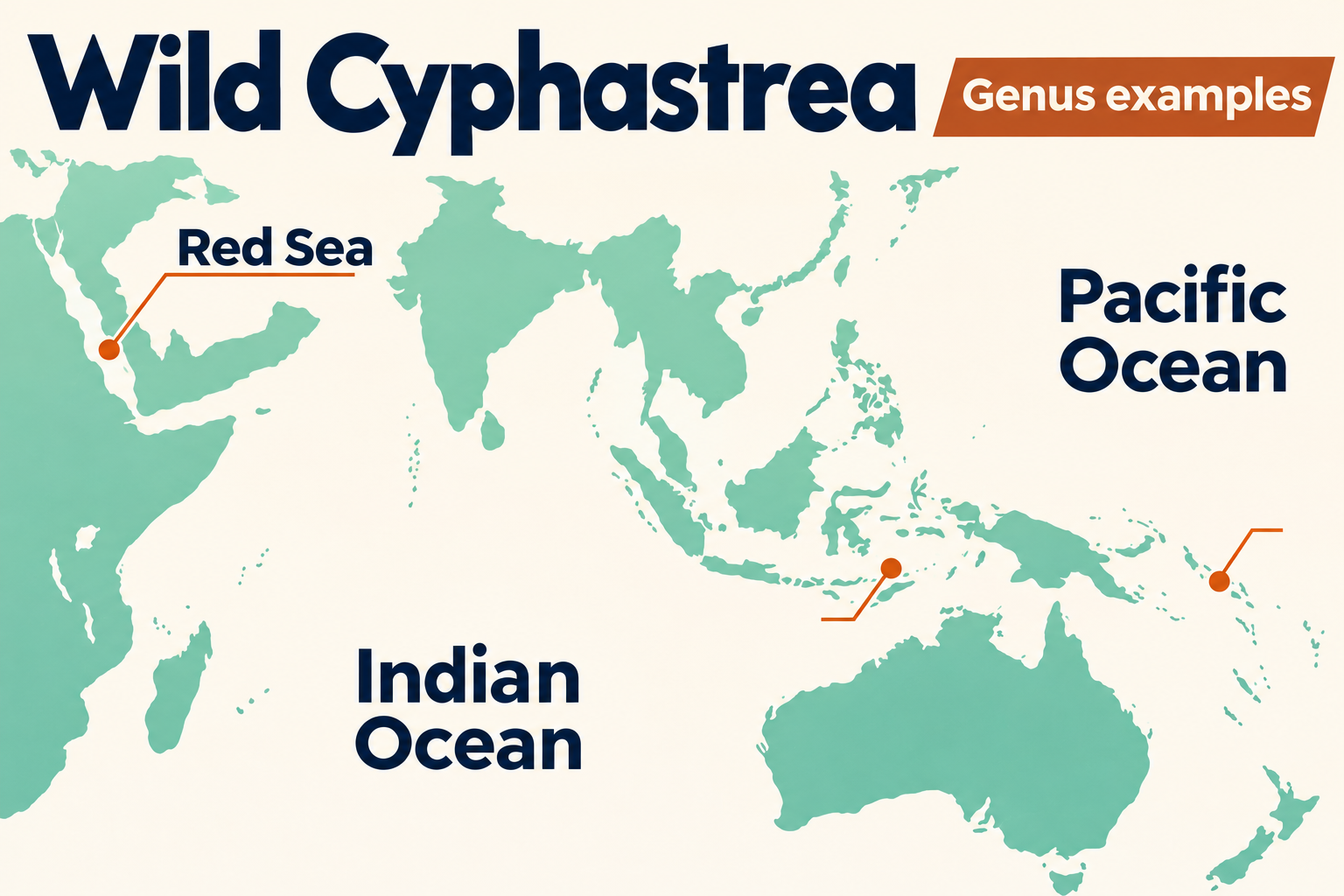
5. Spot the buttons. Look for red-orange polyps with pale centers against the green tissue. Check it under a whiter light setting before comparing photos. Blue-heavy reef lights can change the way those colors read.
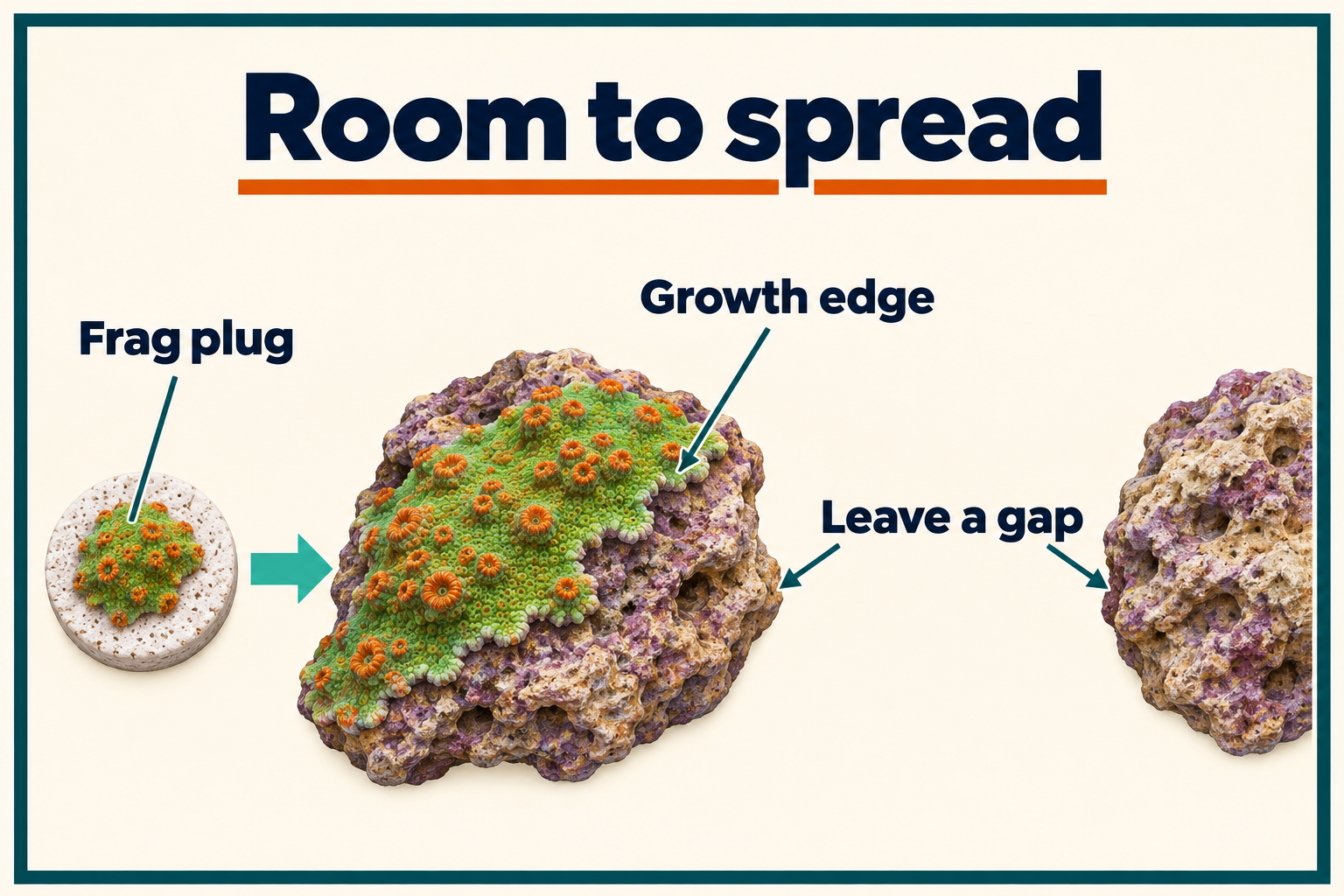
6. Follow the rim. A settled frag spreads across the plug and onto the rock. Look for a narrow band of living tissue and new little cups just behind it. Compare photos taken in the same light a few weeks apart.
Light, flow and placement
7. Give it a low seat. Start on lower rockwork in gentle light. Give the frag time to settle before moving it toward brighter light. A low ledge with open water around it beats a dark pocket that traps dirt.
8. Sweep the surface. Aim for medium, indirect flow that carries loose debris off the colony. Point the pump past the rock so water moves across the polyps without pinning them down. Check the lower edge, where debris can collect.
Feeding, growth and space
9. Let light do the daily work. A settled colony does not need a target-feeding schedule. Keep temperature and salinity steady, and test alkalinity as the reef grows. Small, steady adjustments beat a big correction.
10. Start with room. Leave about two inches from neighbors to start. Give long-stinging neighbors more space. Use a separate rock if you want to contain the spread, and check the gap as the colony grows.
Field notes
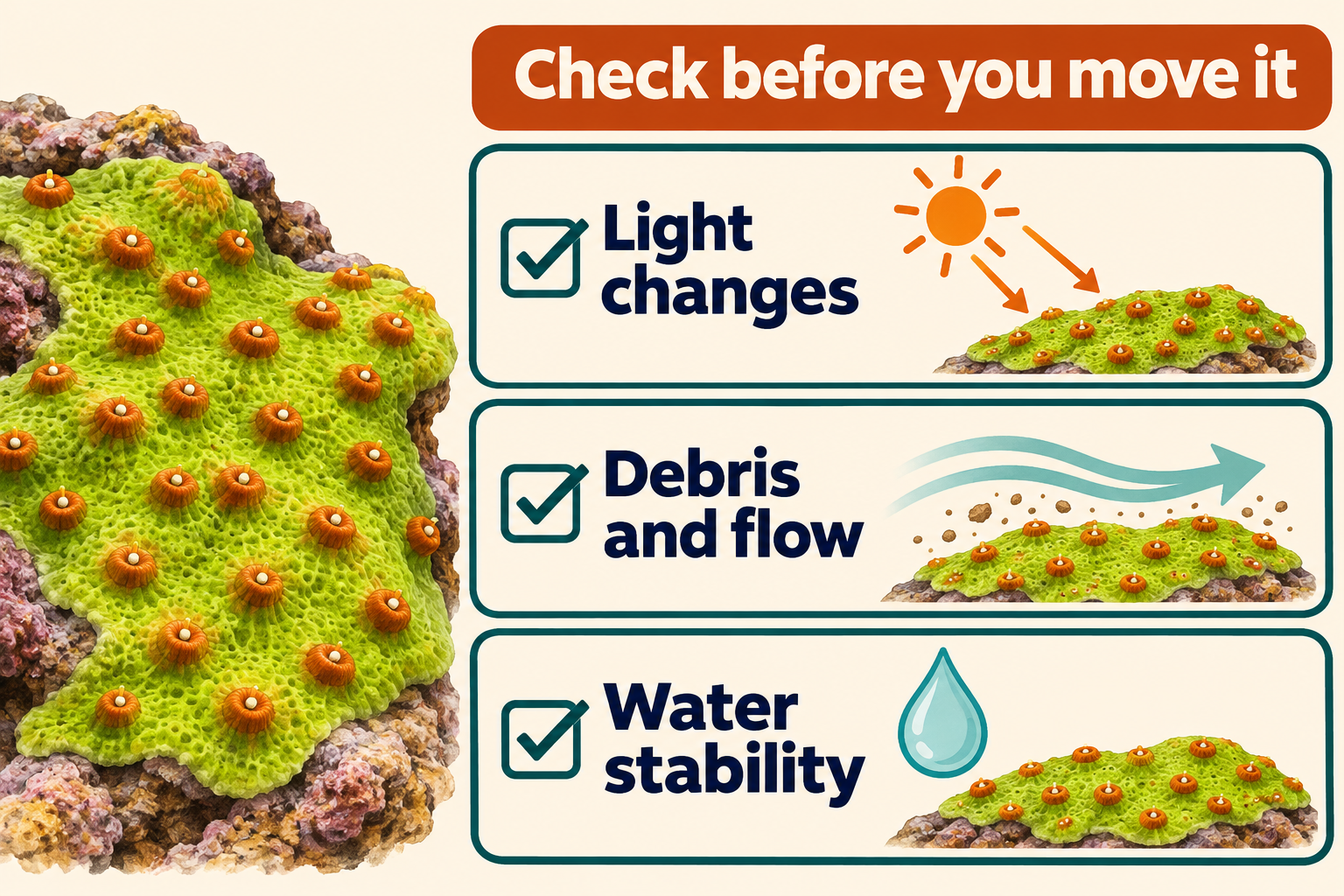
11. Closed polyps are a clue. Check for debris, direct pump flow and a nearby sting. Then check the recent tank log. A coral that stays closed is asking for a closer look, not an automatic move.
12. Read the pale patch. Check recent light changes and water stability if color fades. Look closely for exposed skeleton or tissue lifting at the rim. A pale growing edge still has tissue over it. Bare skeleton does not.
Give Captain America a low perch, a clean current and a little elbow room. Take a photo once it settles. The next time you see a new ring of buttons outside the old outline, you will know the frag has made that rock its own.
Field Notes
Related species

Bling bling cyphastrea
Cyphastrea sp
Same genus
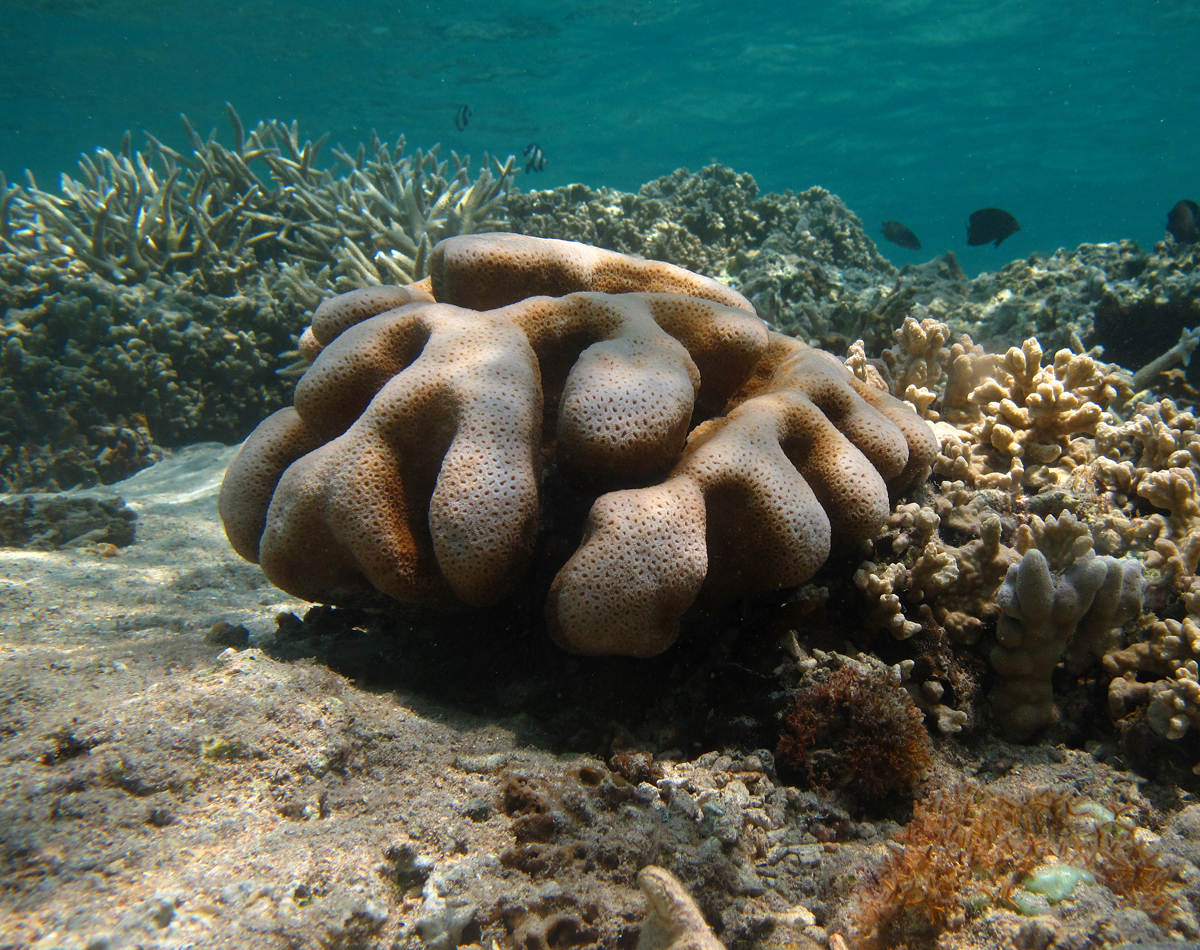
Cyphastrea Coral
Cyphastrea serailia
Same genus
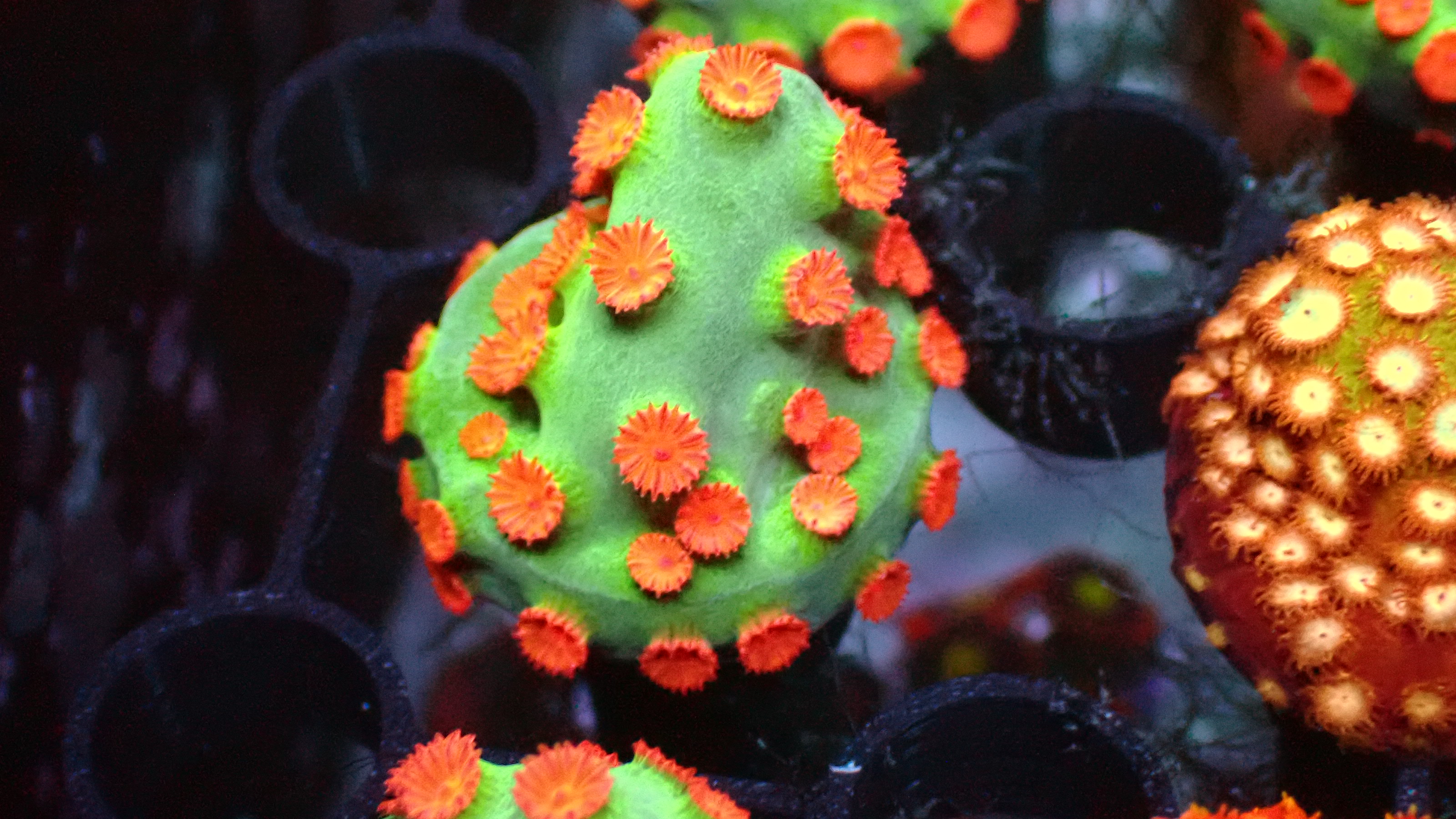
Meteor shower cyphastrea
Cyphastrea sp
Same genus

Digitata Montipora
Montipora digitata
Similar care · SPS
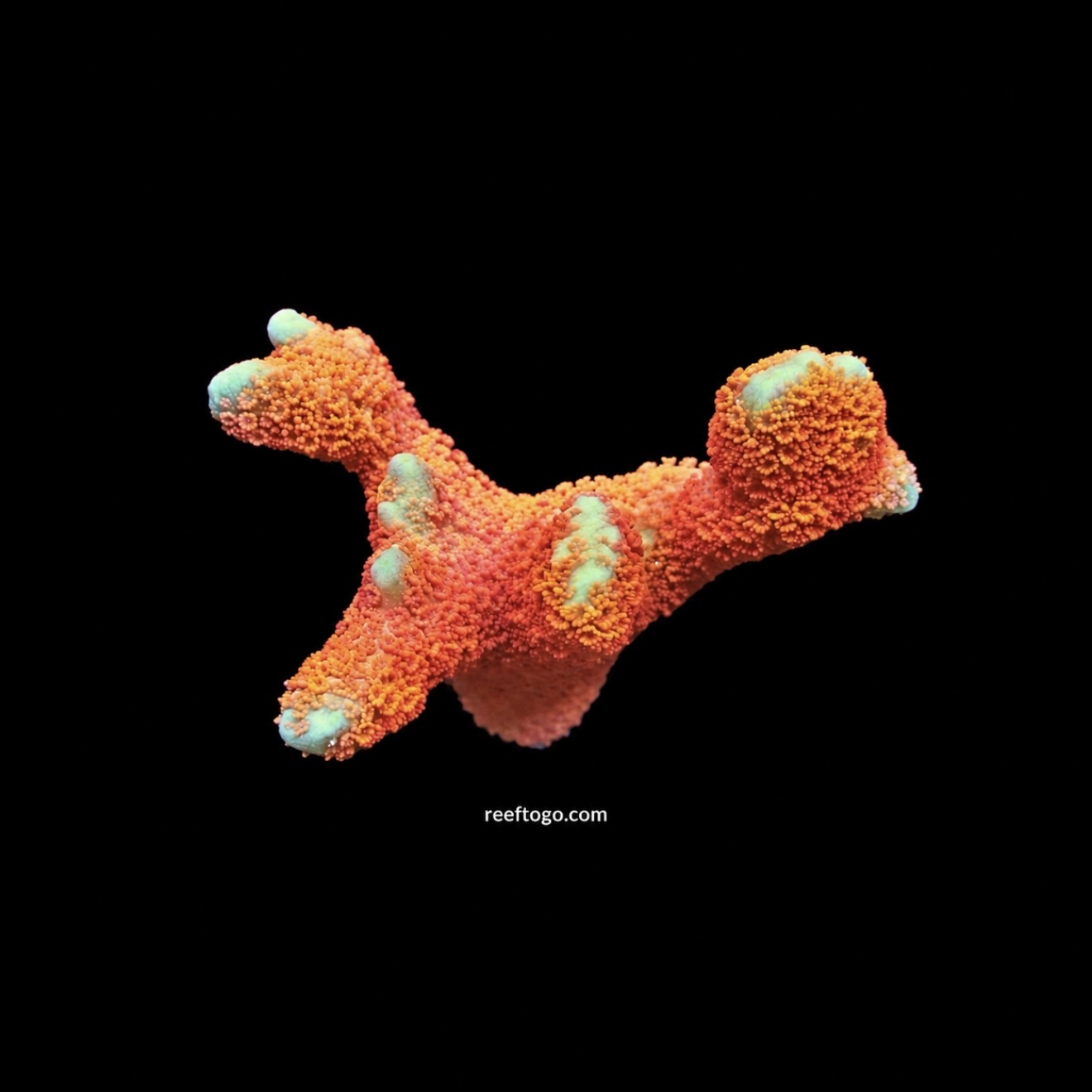
Forest fire digitata
Montipora digitata
Similar care · SPS

Finger Porites
Porites cylindrica
Similar care · SPS
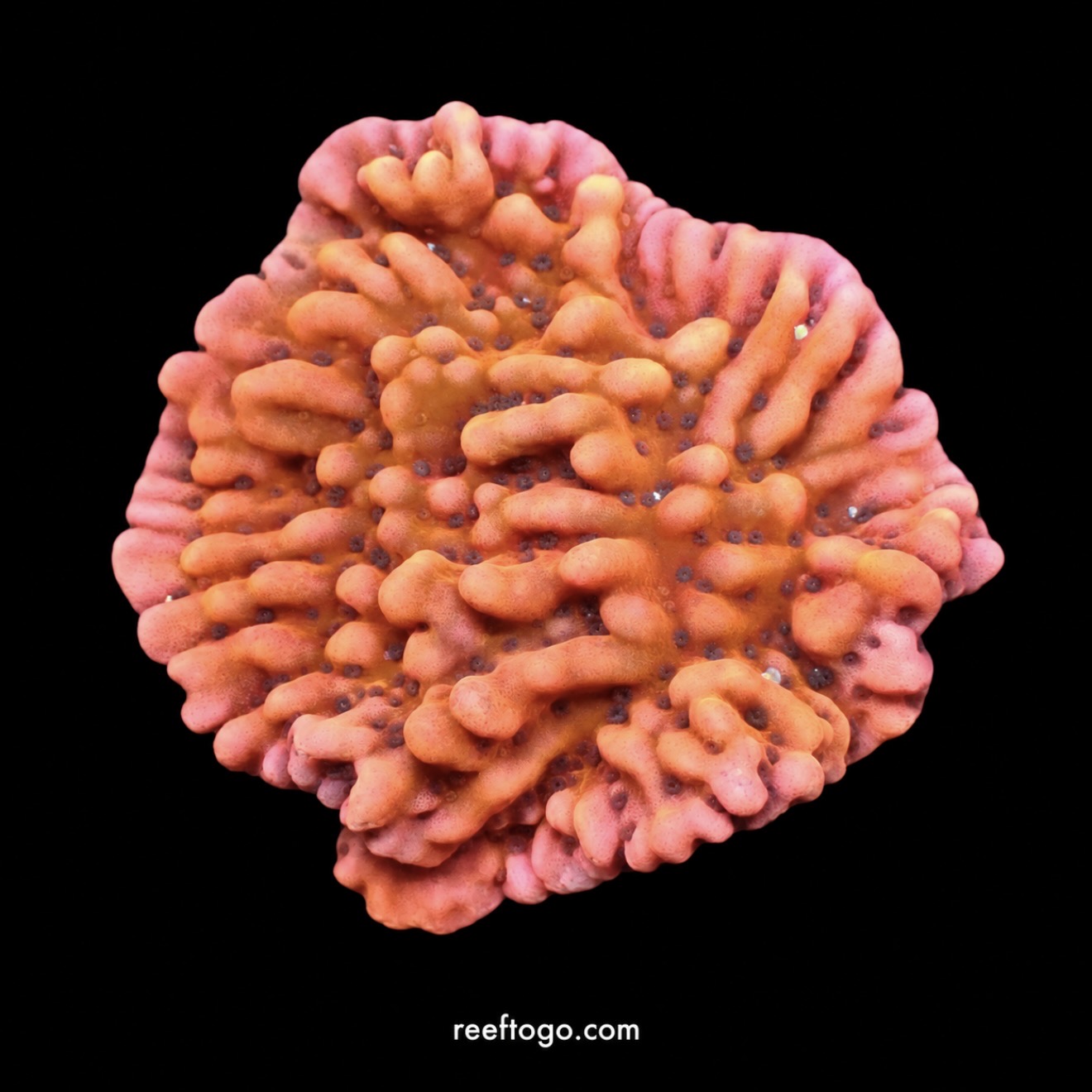
Flaming phoenix montipora
Similar care · SPS

Green poccillopora
Pocillopora sp
Similar care · SPS