Gallery
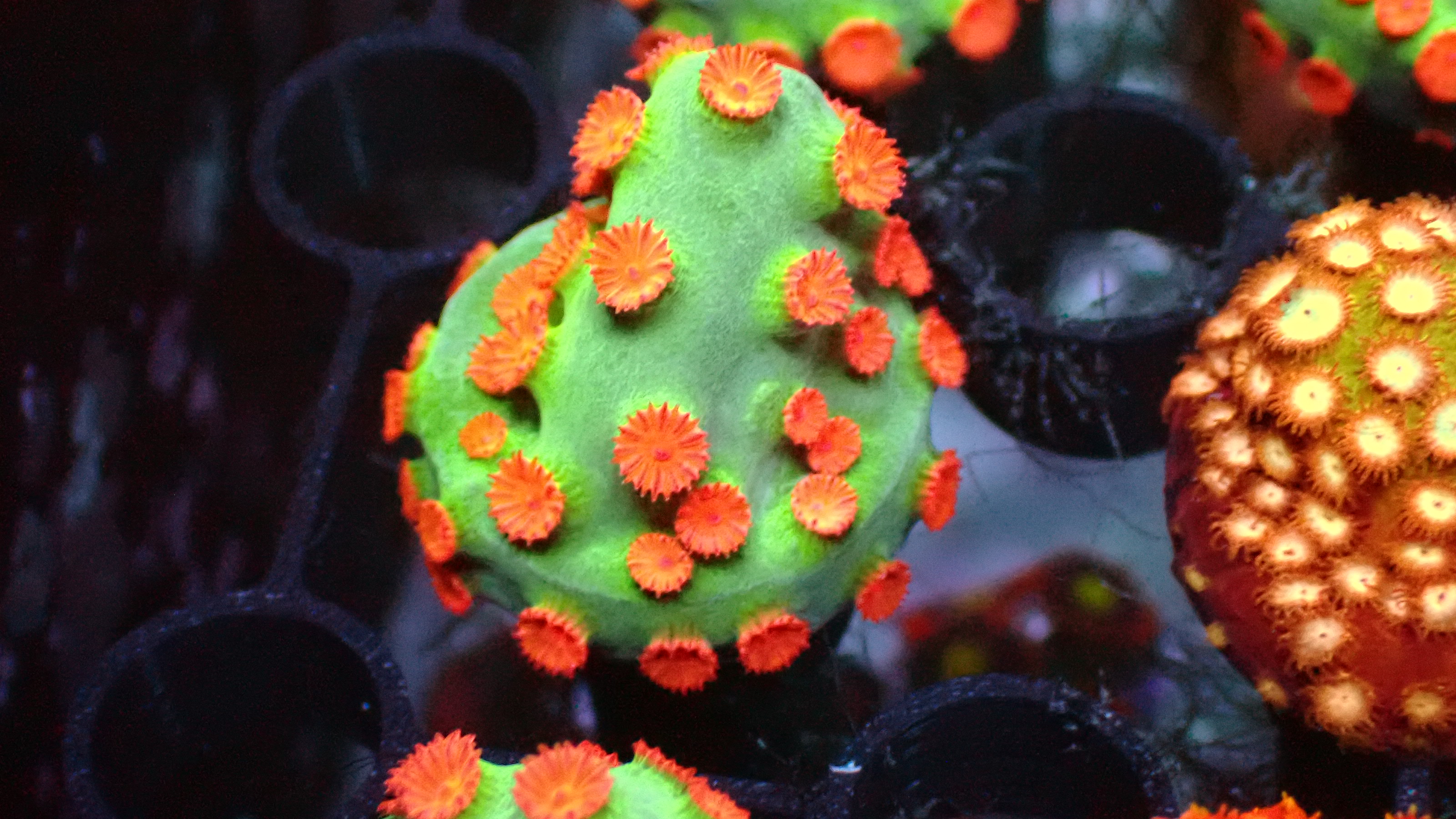
Meteor shower cyphastrea is a named encrusting coral, listed as Cyphastrea sp. Cyphastrea grows a thick encrusting base over rock, studded with raised corallites that hold small, bright polyps. The meteor shower pattern pairs a blue to teal base with contrasting bright polyps scattered across the surface, so a settled colony reads as points of color spread over a darker field. Polyps stay small and close to the skeleton, and the colony expands at the edge rather than building height.

The entry lists beginner care, low light, medium flow, bottom placement, peaceful behavior, and moderate growth. Place it low on stable rockwork where it can encrust outward. Low light protects the base color. Strong light can wash the base pale and keep polyps tight, so raise a settled piece slowly and only in small steps if the edge stalls and the colony looks hungry for more. Shaded low spots often hold the richest contrast.
Medium flow should cross the surface without blasting it. Steady movement clears sand and detritus off the encrusting base, which matters at a bottom placement where waste settles. Flow aimed straight at the face can keep polyps retracted on that side. A broad, indirect pattern gives even polyp extension across the whole colony and keeps the edge clean for growth.
This coral is peaceful and has no meaningful sweeper reach. Spacing is about future encrusting growth and about protection from stronger neighbors. Leave room for the base to advance over surrounding rock, and keep it clear of LPS sweepers, torches, and other aggressive corals that can sting the edge back. A colony placed against a slower neighbor will eventually meet it, so a planned border of bare rock helps.
Feeding is light and indirect. The small polyps may take fine particulate food from regular broadcast feeding, and the colony gets most of its energy from light. Small offerings of fine coral food in low flow can support the edge, while large meaty pieces are wasted on polyps this size and only foul the rock around the base.
Growth is moderate and mostly outward. The edge advances over rock and plugs, new corallites form behind the margin, and the field of polyps widens over months in a stable tank. Stable alkalinity, calcium, and magnesium support the skeleton. An edge that pulls back, polyps that stay pinched across the whole colony, or pale patches spreading through the base usually point to light, flow, or a sting from a neighbor.
Common pitfalls include placing the frag under bright light in pursuit of stronger color, burying the growing edge under sand at a low placement, and mounting it where falling frags or stinging neighbors reach it. Secure the base, start low and shaded, and let the advancing edge guide small adjustments.
Field notes — what keepers report
- Color reports split by light level. Keepers in low, shaded placements describe deep base color with bright, contrasting polyps, while keepers who placed the coral higher describe a paler base that recovered after a move back down. Reports treat slow light changes as important, because color recovery gets described in weeks rather than days.
- Growth reports vary with placement. Some keepers describe a steady encrusting edge that covers a plug and moves onto rock within months, while others describe a long pause before the edge starts to advance. Both sides link faster encrusting to a clean, stable base with detritus kept off the margin.
- Polyp extension reports track flow and cleanliness. Keepers describe polyps opening evenly under broad, indirect flow and staying closed on a side facing a direct jet or covered in settled waste. A gentle puff to clear the surface is the fix most often described before any move is considered.


Field Notes
Related species

Bling bling cyphastrea
Cyphastrea sp
Same genus
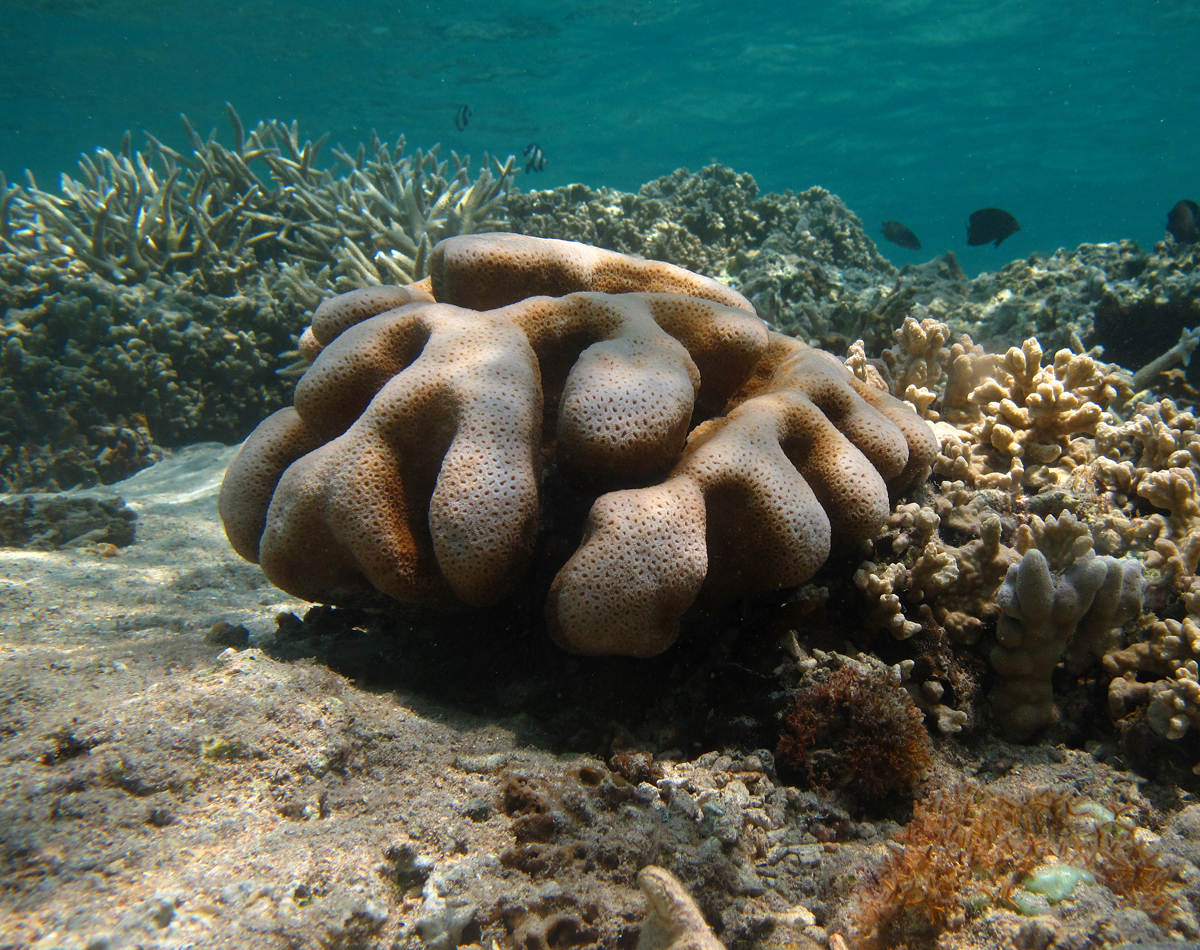
Cyphastrea Coral
Cyphastrea serailia
Same genus
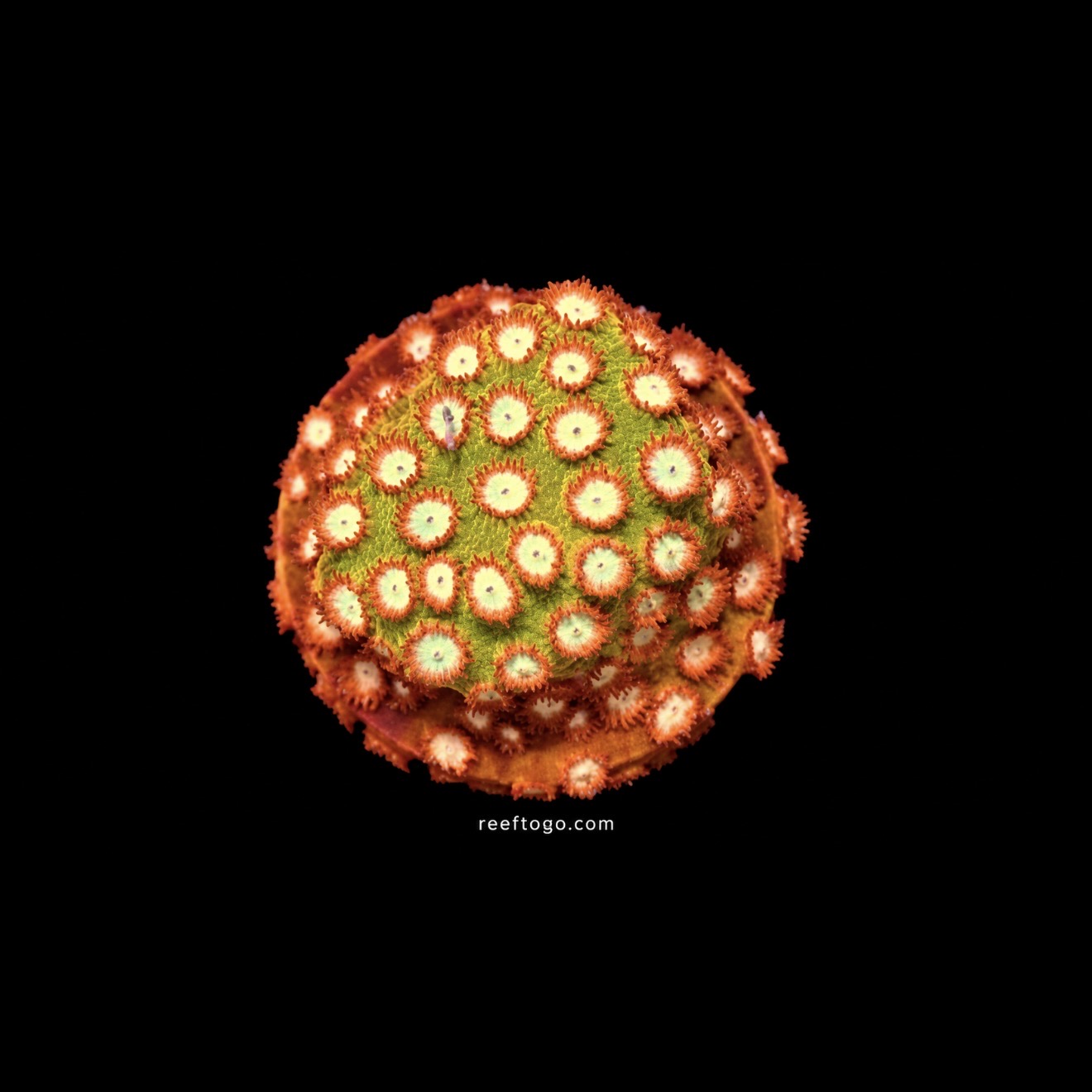
Captain America cyphastrea
Cyphastrea sp
Same genus

Blue mouth Duncan
Duncanopsammia axifuga
Similar care · LPS
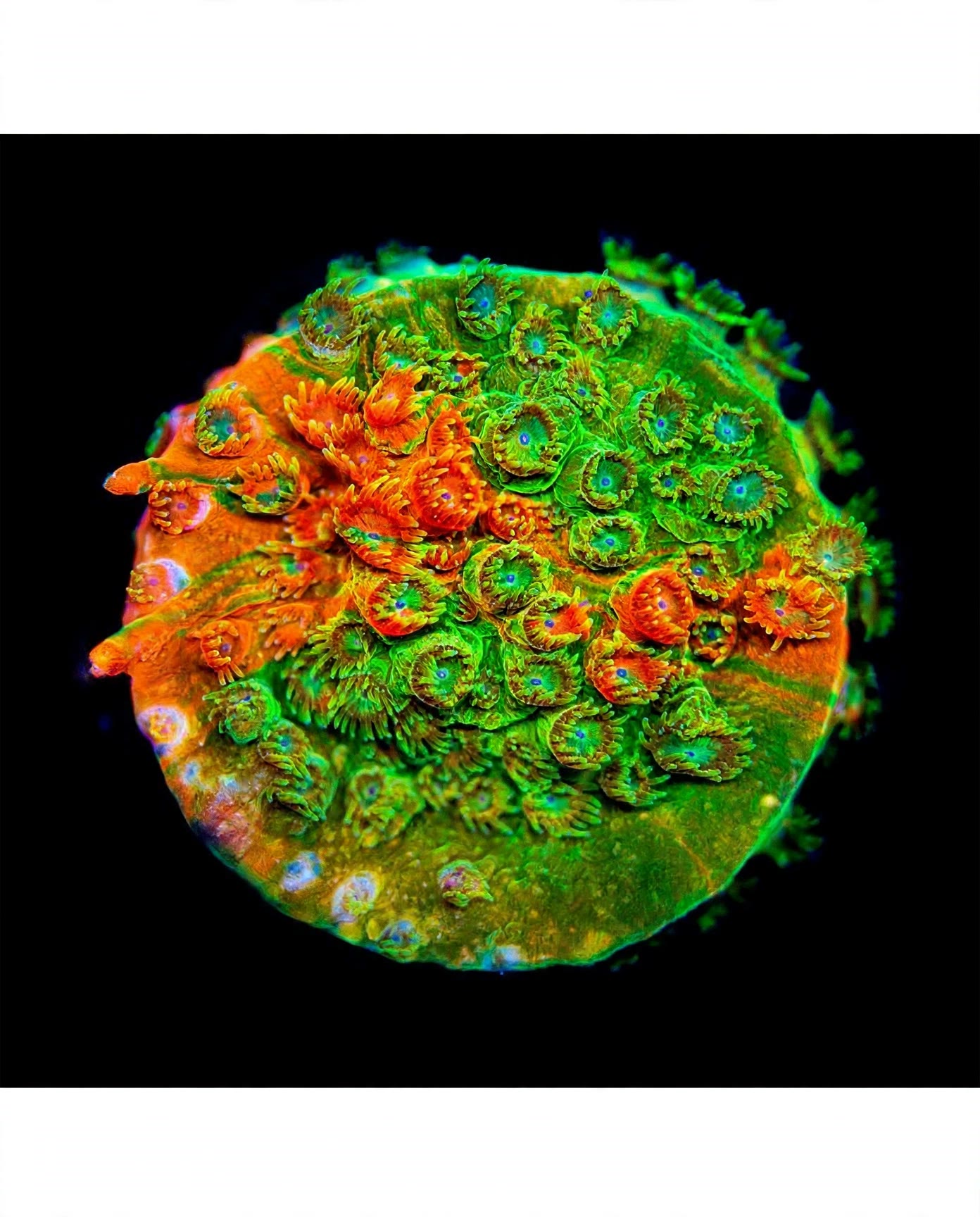
Circuit Breaker Cyphastrea
Similar care · LPS
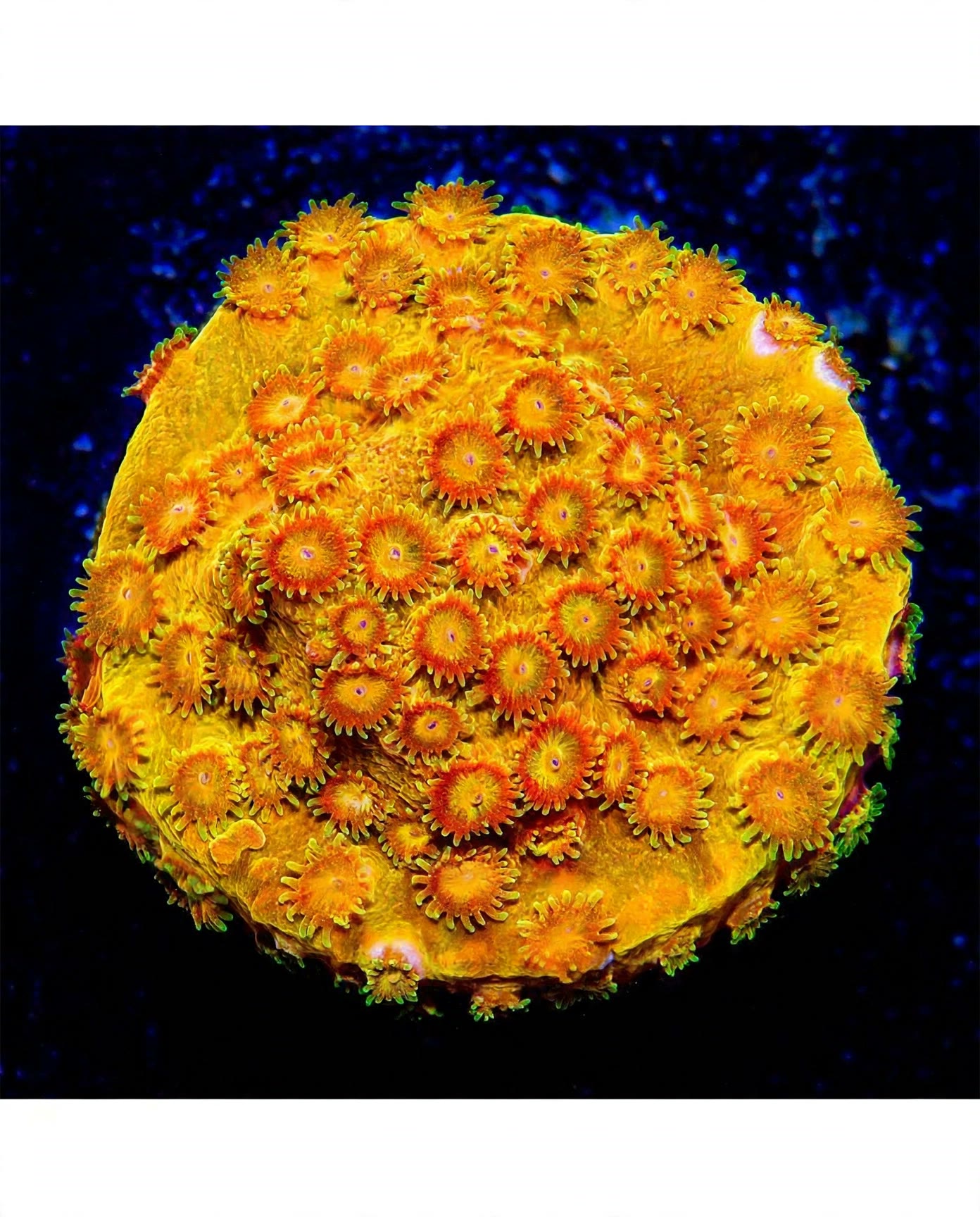
Citrus Burst Cyphastrea
Similar care · LPS
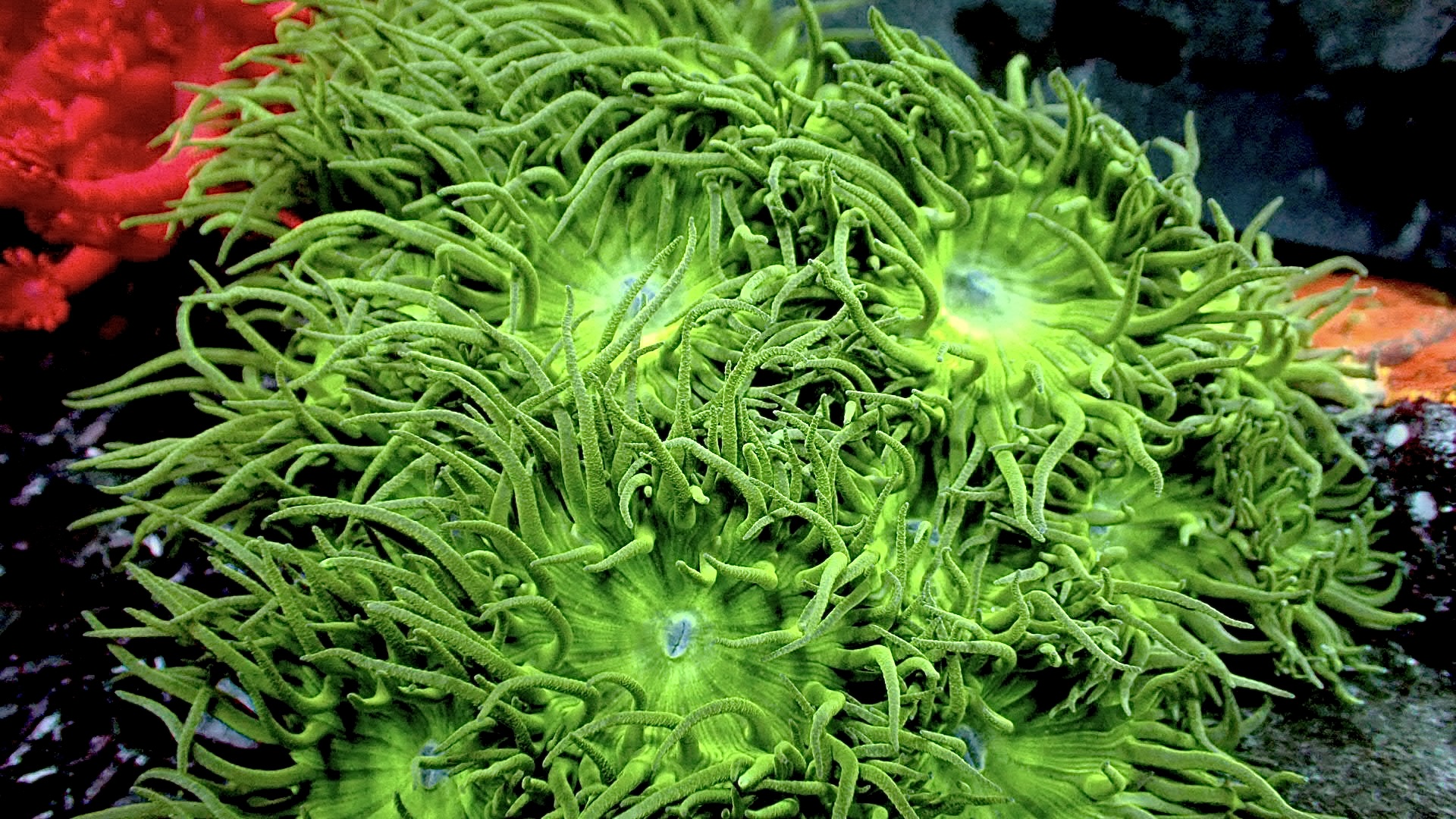
Duncan coral
Duncanopsammia axifuga
Similar care · LPS
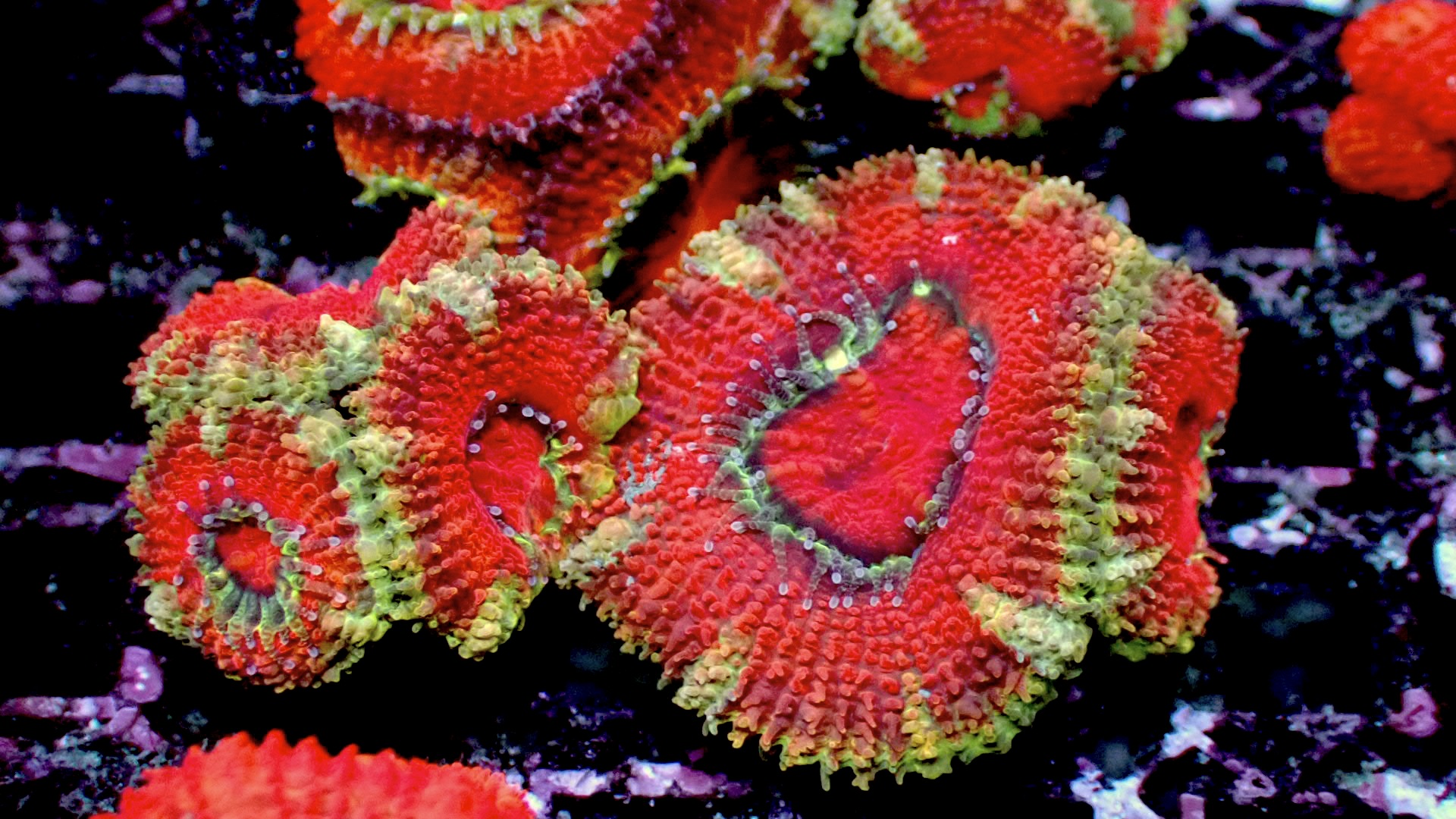
Gold Coast acans
Micromussa lordhowensis
Similar care · LPS