Glow worm goniastrea
Care facts
- Care
- Intermediate
- Light
- Medium
- Flow
- Medium
- Place
- Not recorded
- Space
- Not recorded
Gallery
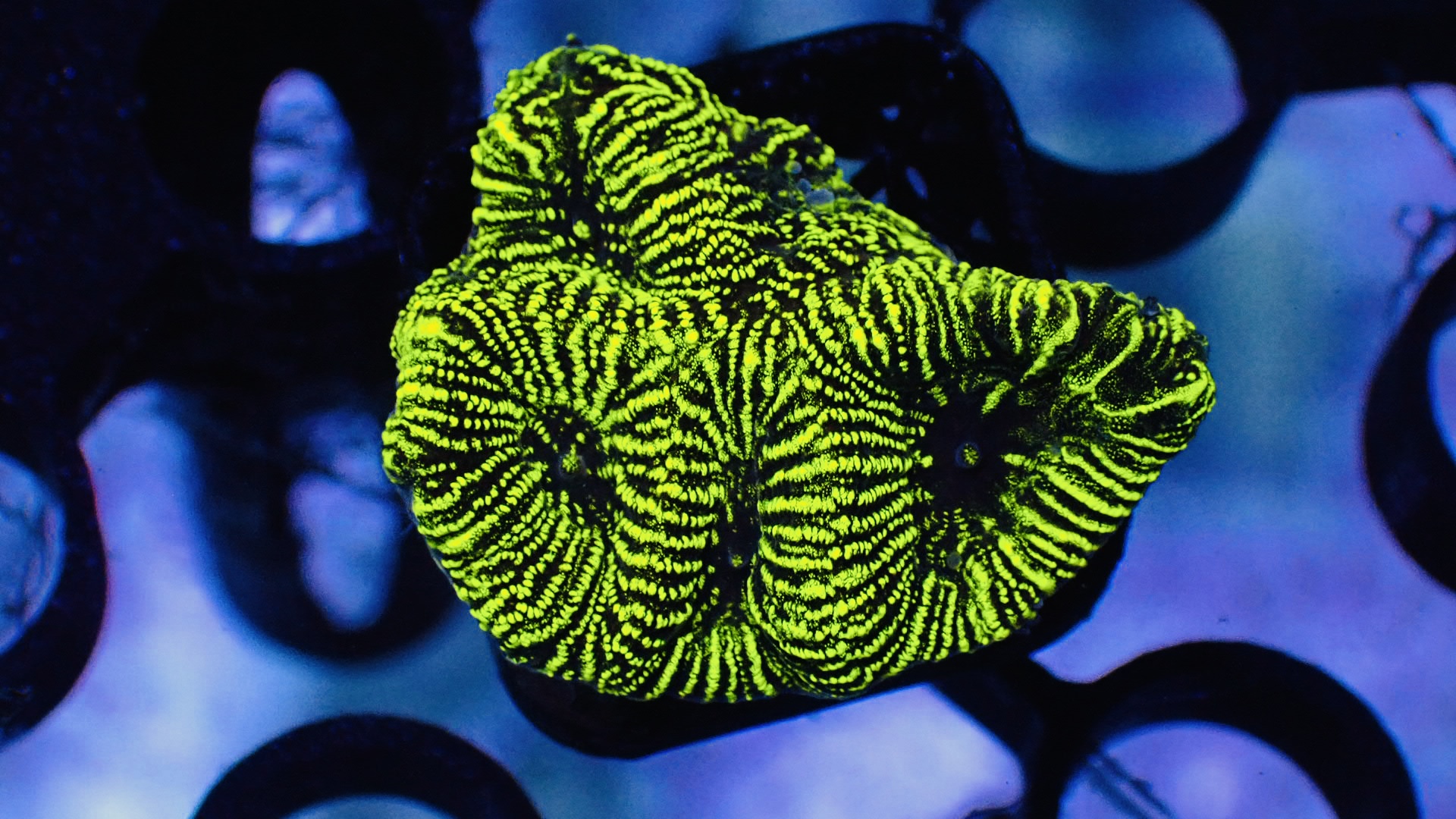
Glow Worm is a named Goniastrea, a favia-family brain coral, grown for the contrast between its glowing green corallite centers and the darker valleys between them. The colony grows as an encrusting dome of packed, angular corallites sharing walls, and at feeding time each mouth opens inside its bright green center. The pattern reads like a cluster of small green worms curled in the dark, which is the look the name trades on.
Care basics
Care sits in the middle of the LPS range. Medium light and medium flow on the lower rockwork or a solid spot on the sand bed both work; acclimate upward slowly, because brain corals bleach at the high spots first when light jumps. Keep alkalinity steady in the 8–10 dKH range and calcium in the usual 400–450 ppm band. Goniastrea tolerate a wider nutrient range than many stony corals, and slightly richer water often keeps the tissue thick and the green centers bright.
Aggression and feeding
Aggression is moderate and mostly nocturnal. The colony extends short sweeper tentacles at night and can sting a neighbor it can touch, so leave a few inches of clearance and check the spacing as the dome expands — an encrusting brain gains ground quietly. It feeds willingly: target each section with small meaty foods or LPS pellets after lights-out once or twice a week and the mouths will take them. Regular feeding is the most reliable way keepers speed up encrusting growth in this family.
Growth and fragging
Growth is encrusting and steady once the edge seals to the rock. Fragging involves cutting through shared corallite walls with a saw; the cut faces heal over when the frag is kept in moderate flow. The most common losses with this coral come from being shaded out or stung by a faster neighbor, not from the coral itself being delicate.
Field notes — what keepers report
- Feeding response is the trait keepers mention most: Goniastrea mouths open wide at night, and keepers describe colonies visibly thickening within weeks of starting twice-weekly target feeds. Keepers who never feed describe slower but still steady encrusting, so feeding reads as a growth lever rather than a survival need.
- Naming confusion shows up in keeper threads. Many corals sold as Goniastrea were moved by taxonomists into other genera, and keepers comparing notes treat the trade name as a look — green-centered, shared-wall brain — rather than a firm species ID. Care advice stays consistent across the look-alikes.
- Color reports split on nutrients. Keepers in low-nutrient systems describe the green centers fading toward pastel, while keepers running measurable nitrate describe deeper color; both camps keep the coral successfully, which makes color a water-style signal more than a health warning.
Field Notes
Related species
Elegance coral
Catalaphyllia jardinei
Similar care · LPS
Barney the dinosaur Goni
Goniopora sp.
Similar care · LPS

Blue rim acan lord
Acanthastrea lordhowensis
Similar care · LPS
Bootleg glitter Goni
Goniopora sp
Similar care · LPS
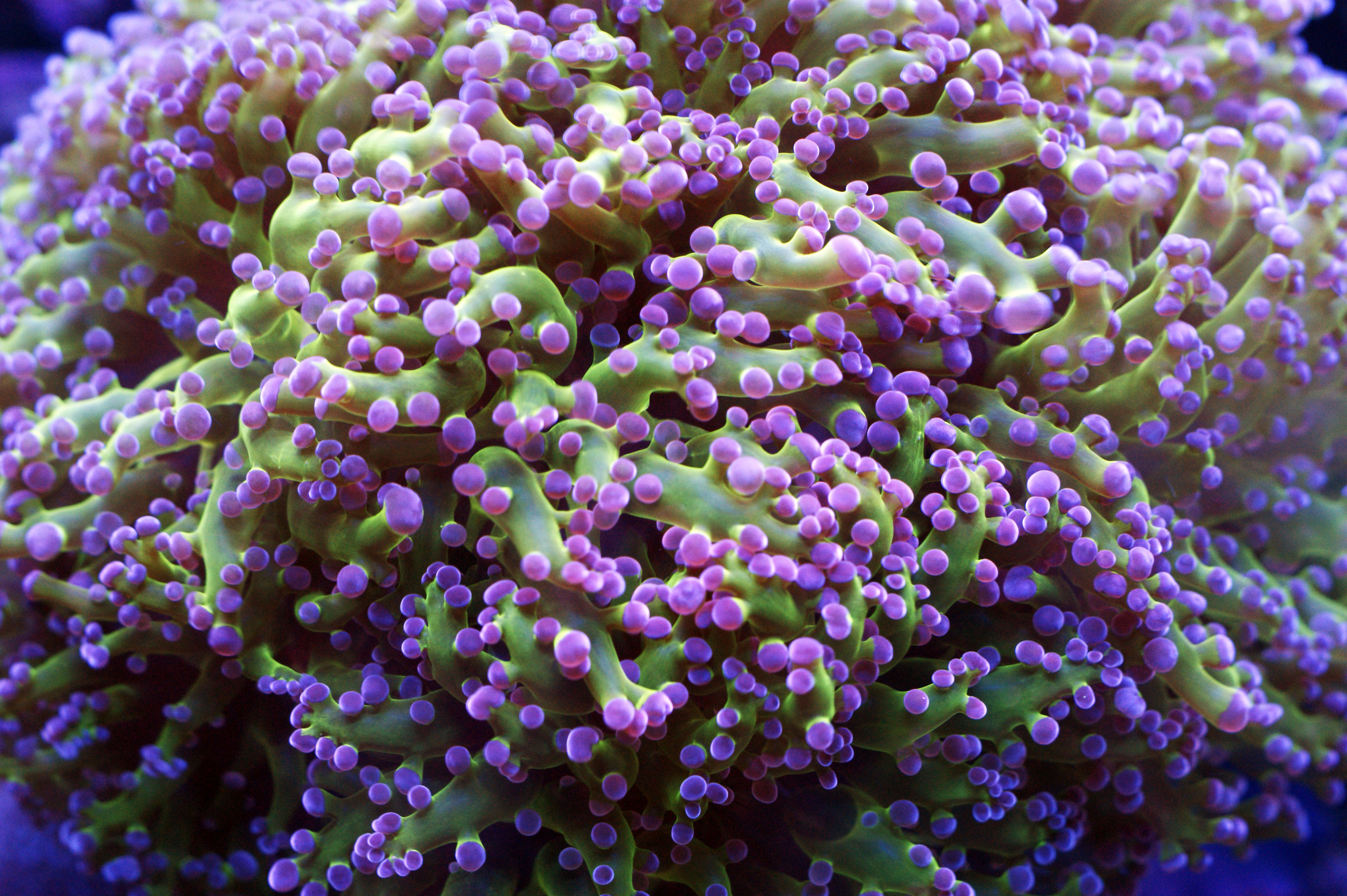
Branching Frogspawn
Fimbriaphyllia paradivisa
Similar care · LPS

Charged Lithium war coral
Acanthastrea sp
Similar care · LPS
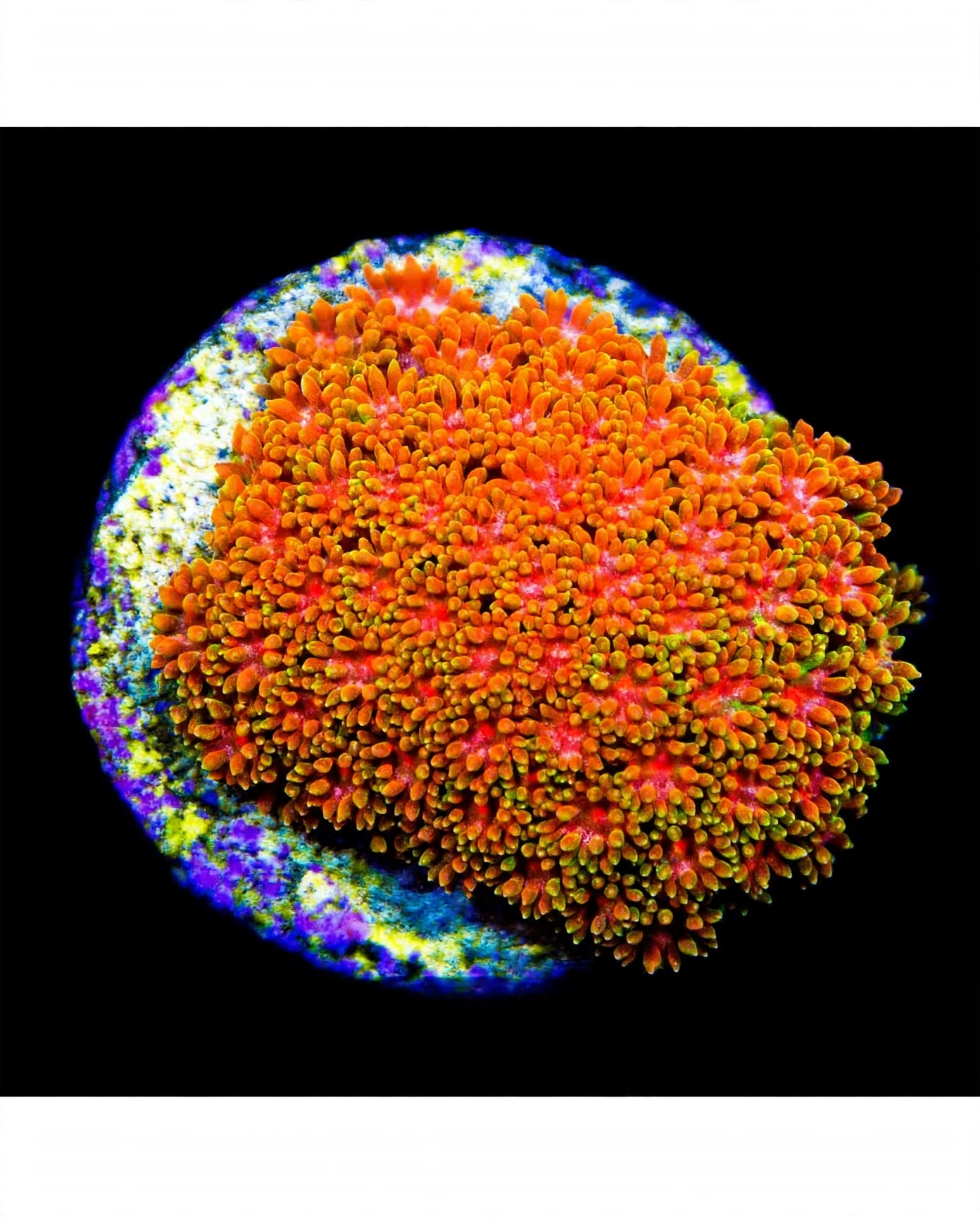
Citrus Orange Short Polyp Goniopora
Similar care · LPS
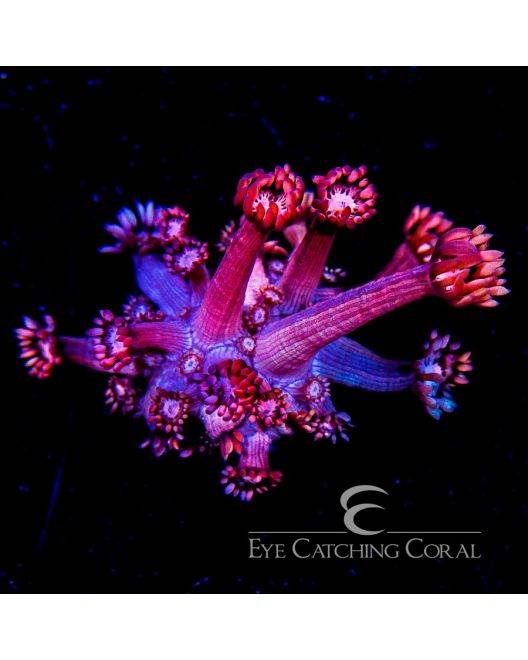
Confetti Grafted Goniopora
Similar care · LPS