Branching Frogspawn
Fimbriaphyllia paradivisa
Also known as: Euphyllia paradivisa
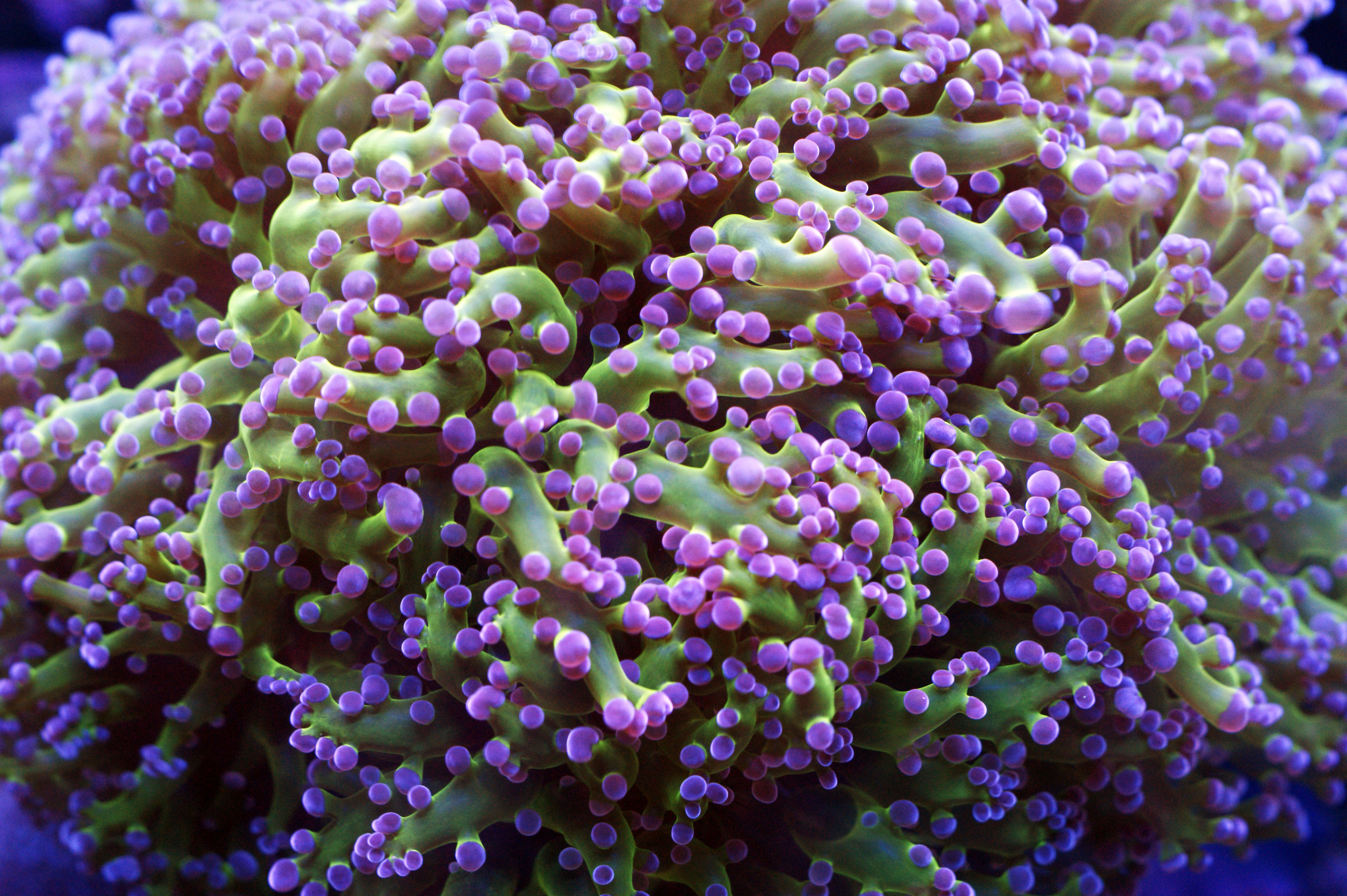
Gdiggers · CC BY-SA 3.0 · source
Care facts
- Care
- Intermediate
- Light
- Medium
- Flow
- Medium
- Place
- Mid
- Space
- Aggressive
- Growth Rate
- Moderate
Gallery
Branching frogspawn looks like a bundle of tiny grapes on a windy day. Each bunch sprouts from a living head on its own hard stalk. Give those heads room to sway and you'll see why this coral turns a quiet corner of a reef tank into a show. The current header photo shows wall frogspawn. This guide and its diagrams cover branching frogspawn.
History of the coral
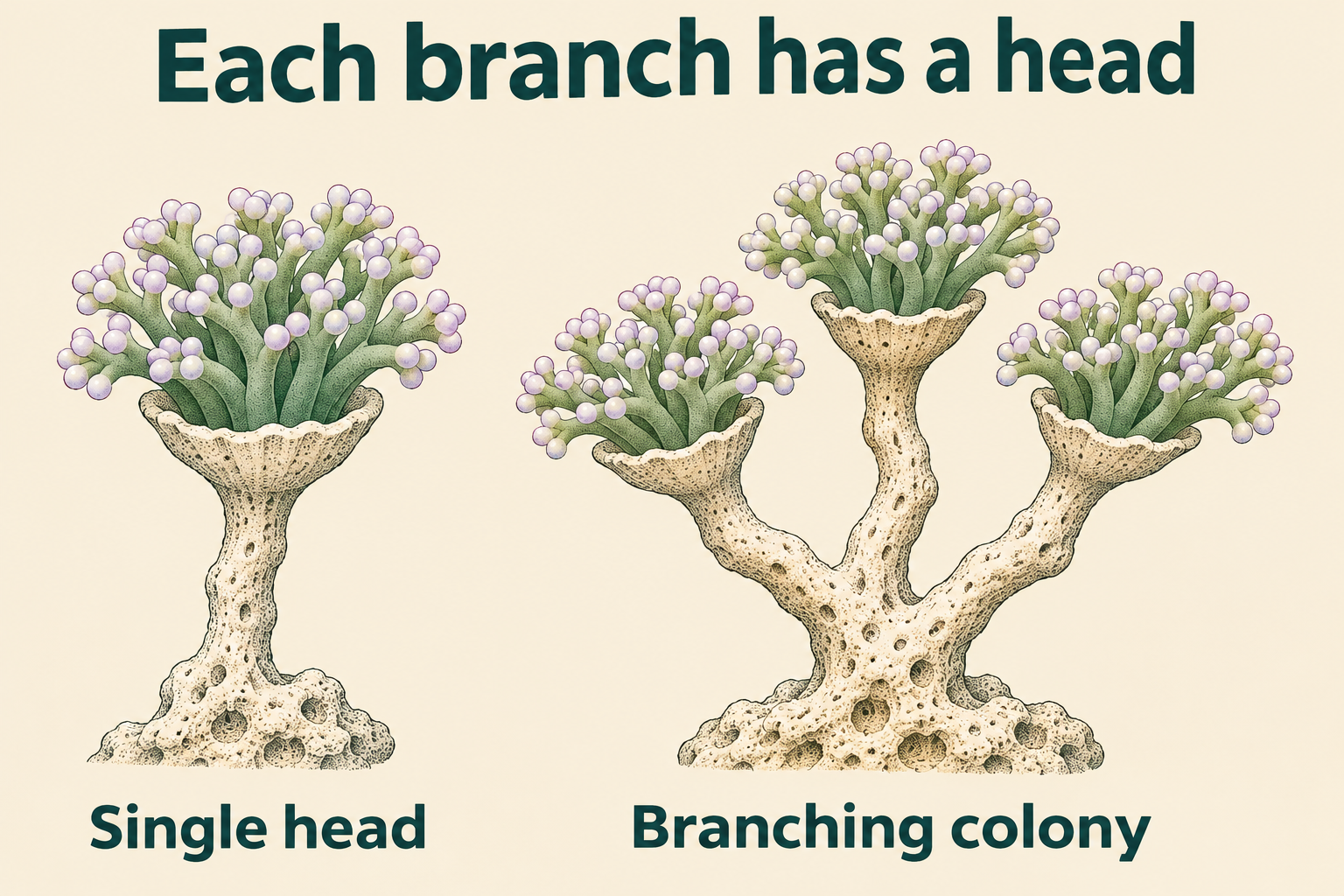
1. A coral with frog eggs for tips. The round tips on the soft tentacles look like little clusters of eggs. Look below the green and purple show. Separate cups on hard branches are the key feature of this frogspawn.
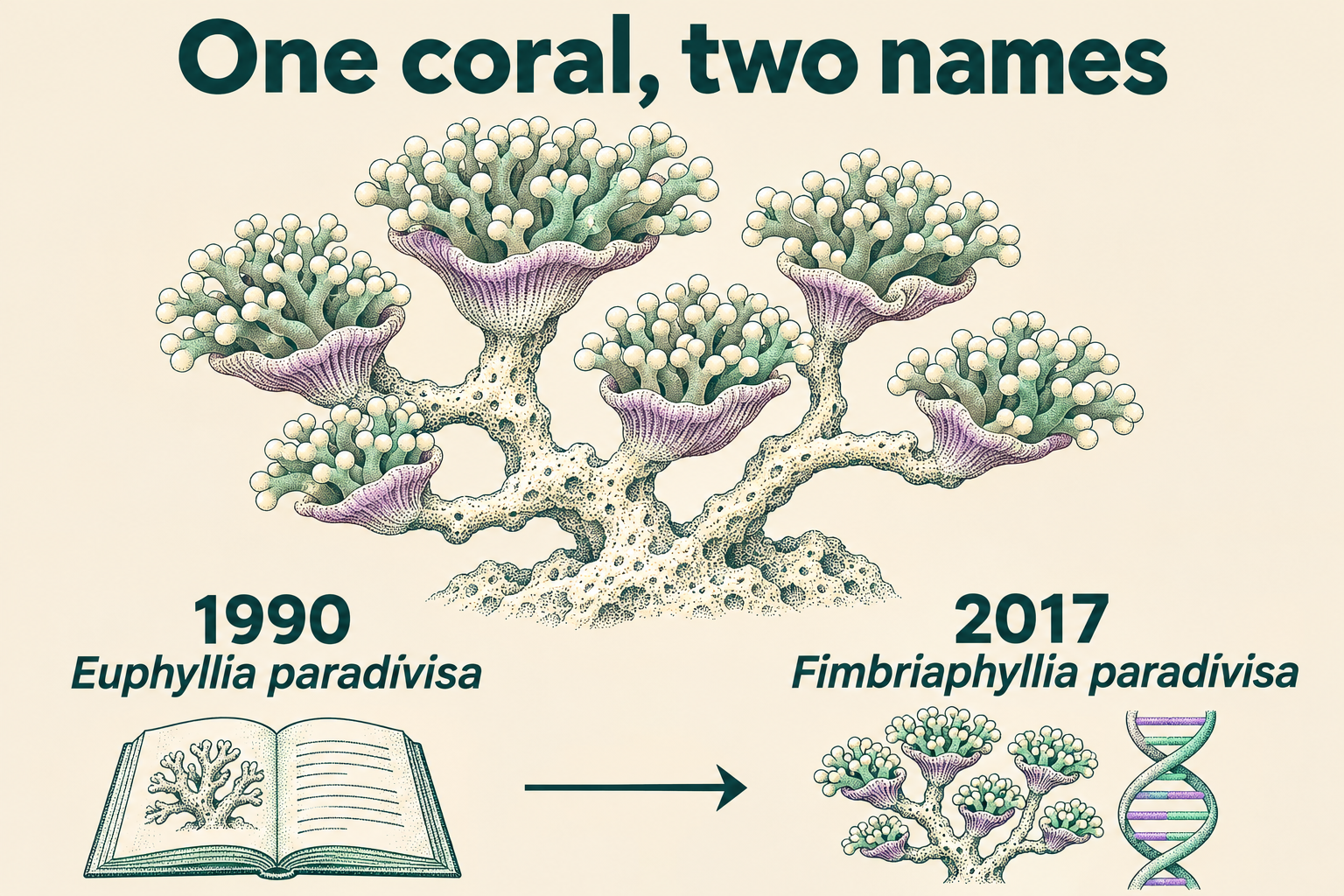
2. Same coral, new name. Jack Veron described it in 1990 from a specimen from the Philippines. He named it Euphyllia paradivisa. A DNA study in 2017 brought back the genus Fimbriaphyllia. The current name is Fimbriaphyllia paradivisa. Its separate cups are easy to tell from the long valleys a typical wall frogspawn (Fimbriaphyllia divisa) grows.
How they live in the wild
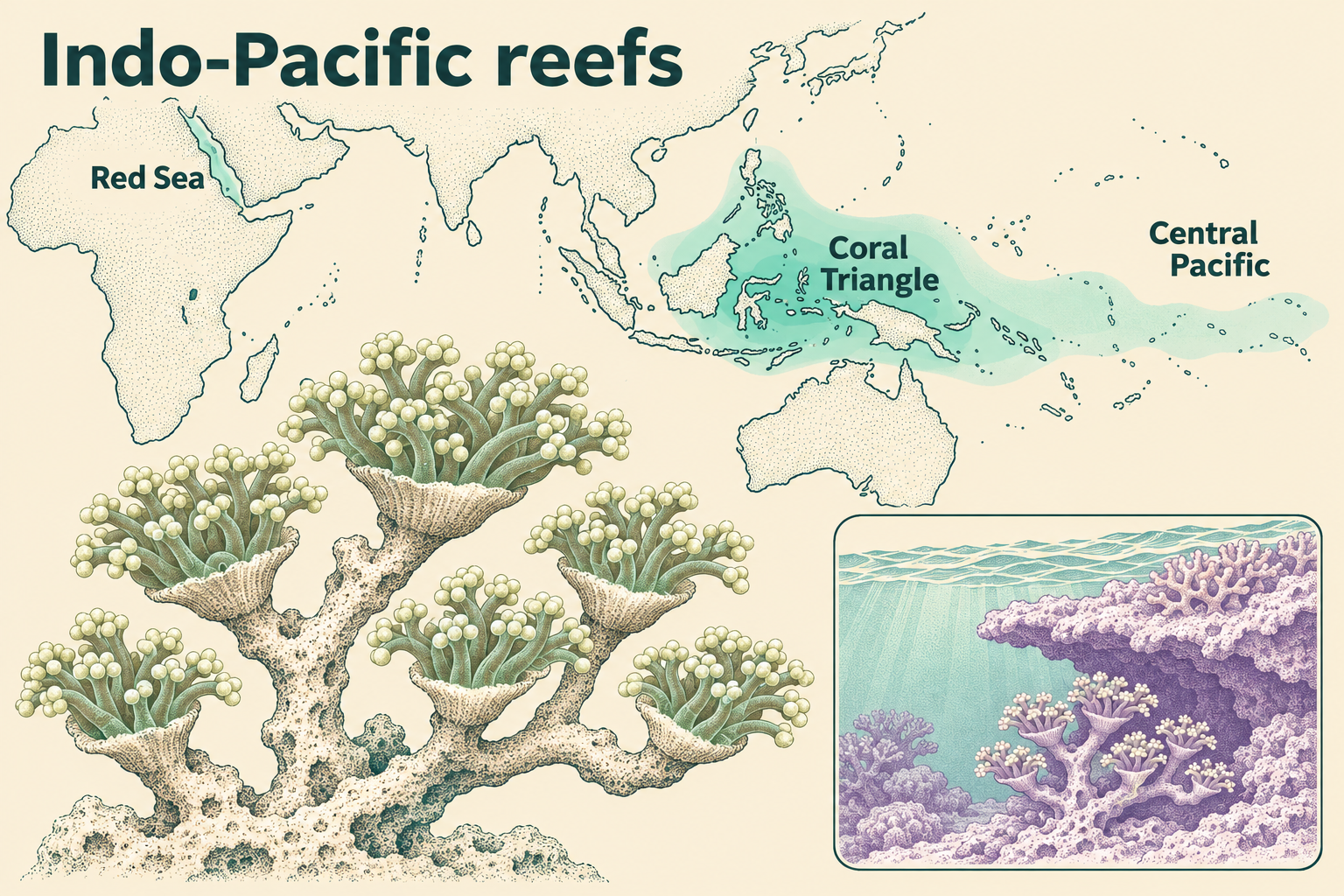
3. At home out of the blast. Branching frogspawn ranges from the Red Sea to the central Pacific, with many records in the Coral Triangle. It lives in places sheltered from waves. It grows in cloudy bays in Japan and on deep reefs in the Gulf of Aqaba.
4. There's life in the dim. On those deep Red Sea reefs, colonies grow roughly 36 to 72 meters down. Light is faint there, and algae inside the coral still make food from it. This coral is listed as threatened under the U.S. Endangered Species Act. Leave wild colonies on the reef.
Light and placement
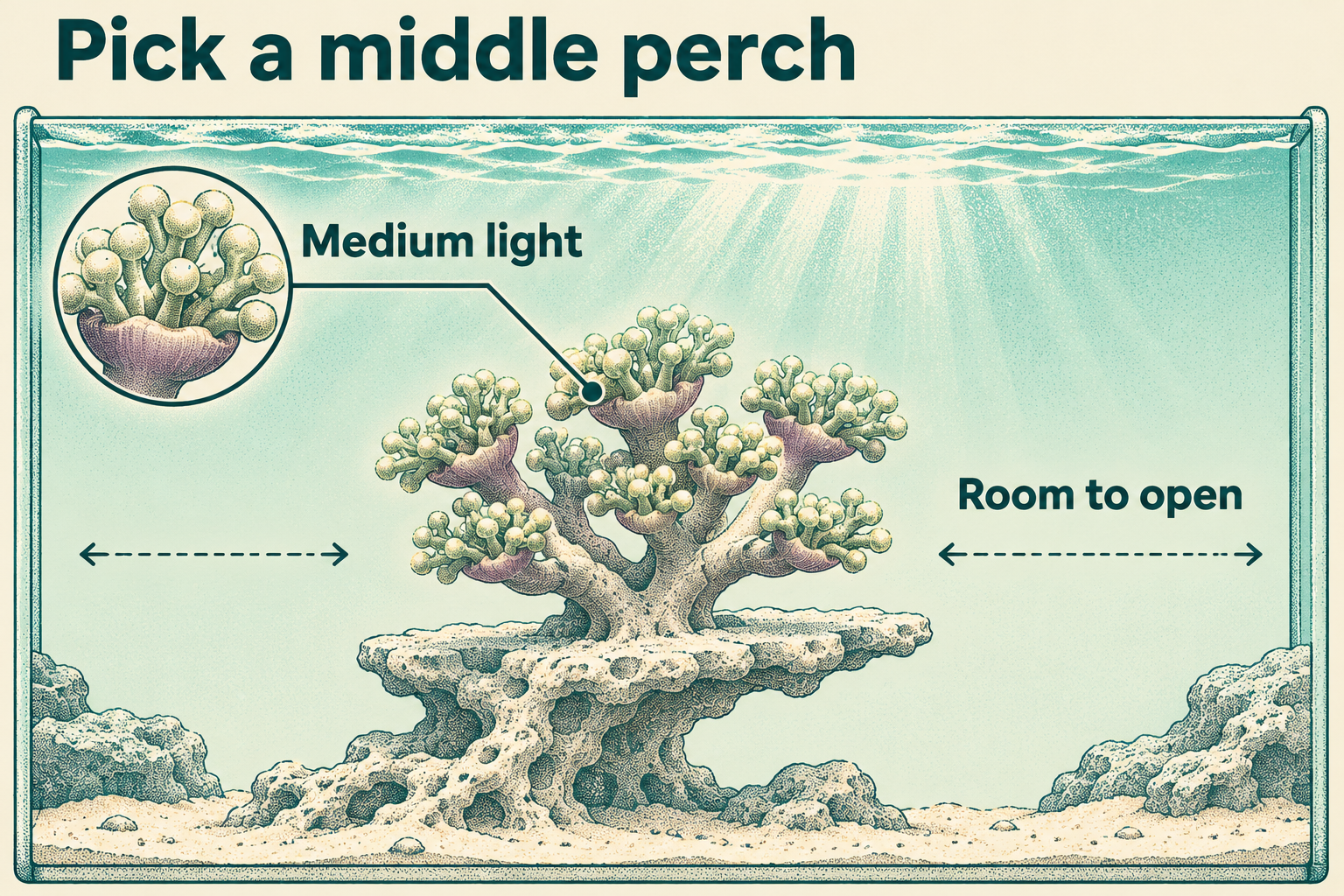
5. Start low, settle in the middle. Give a new piece gentle light at first. Ease it toward medium light on a secure mid-level ledge. Keep the fleshy heads clear of rock edges.
6. Leave a real gap. Give every head open water around it, including on the side the current carries its tentacles. It can sting nearby corals. Watch the reach after lights-out and move neighbors if tentacles can touch them.
Flow and feeding
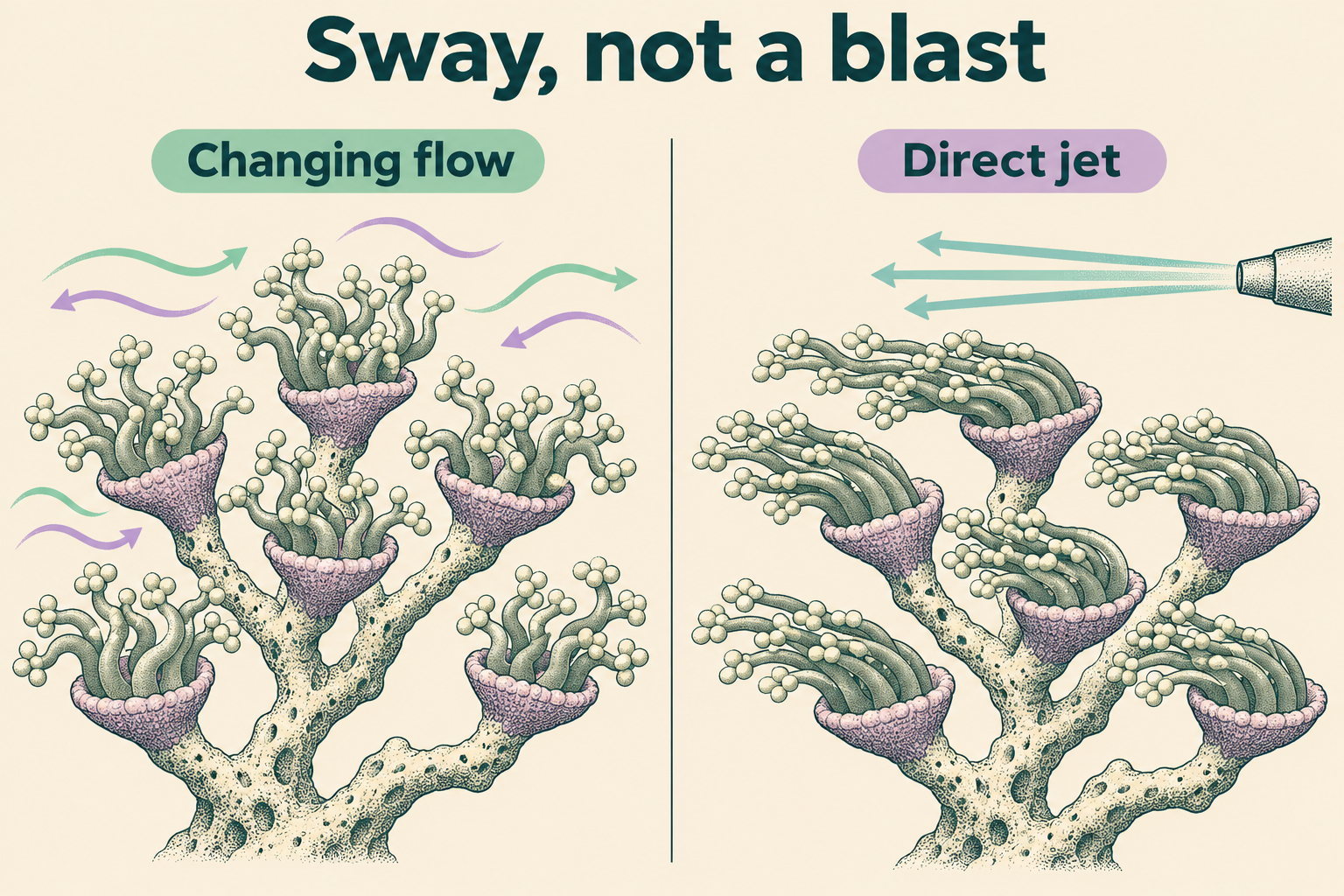
7. Let the tips dance. Run medium, changing flow past the colony. Look for tentacles that sway and fill out. If the heads lean hard in one direction, angle the pump away. If waste sits between the branches, change the flow path.
8. Feed the head, not the tank. Light feeds the algae inside the coral. For a snack, float a few tiny meaty bits to an open head. Watch the tentacles pass food toward the mouth. Remove leftovers before they settle.
Growth and fragging
9. One head becomes two. A growing head can widen and split into two mouths as the skeleton branches. Give new heads time to separate and grow. Count heads from below when the tentacles hide the gaps.
10. An intact head makes the frag. In permitted aquaculture, a frag can be a single established head on its own hard stalk. The branching shape gives growers space between heads so the fleshy rims can stay intact. Newly split heads still share tissue and need time to separate.
Field notes
11. A closed head is a clue. One head pulling in for a bit tells you to look closer. Check the flow, recent light changes, and any nearby stings. Keep salinity, temperature and alkalinity steady instead of chasing a single reading.
12. Check the rim, not just the tips. Look for tissue pulling back, newly exposed skeleton, or a spreading brown film. Compare with a photo in the same light. If tissue loss is spreading, isolate the affected piece in matched tank water and get help identifying the cause.
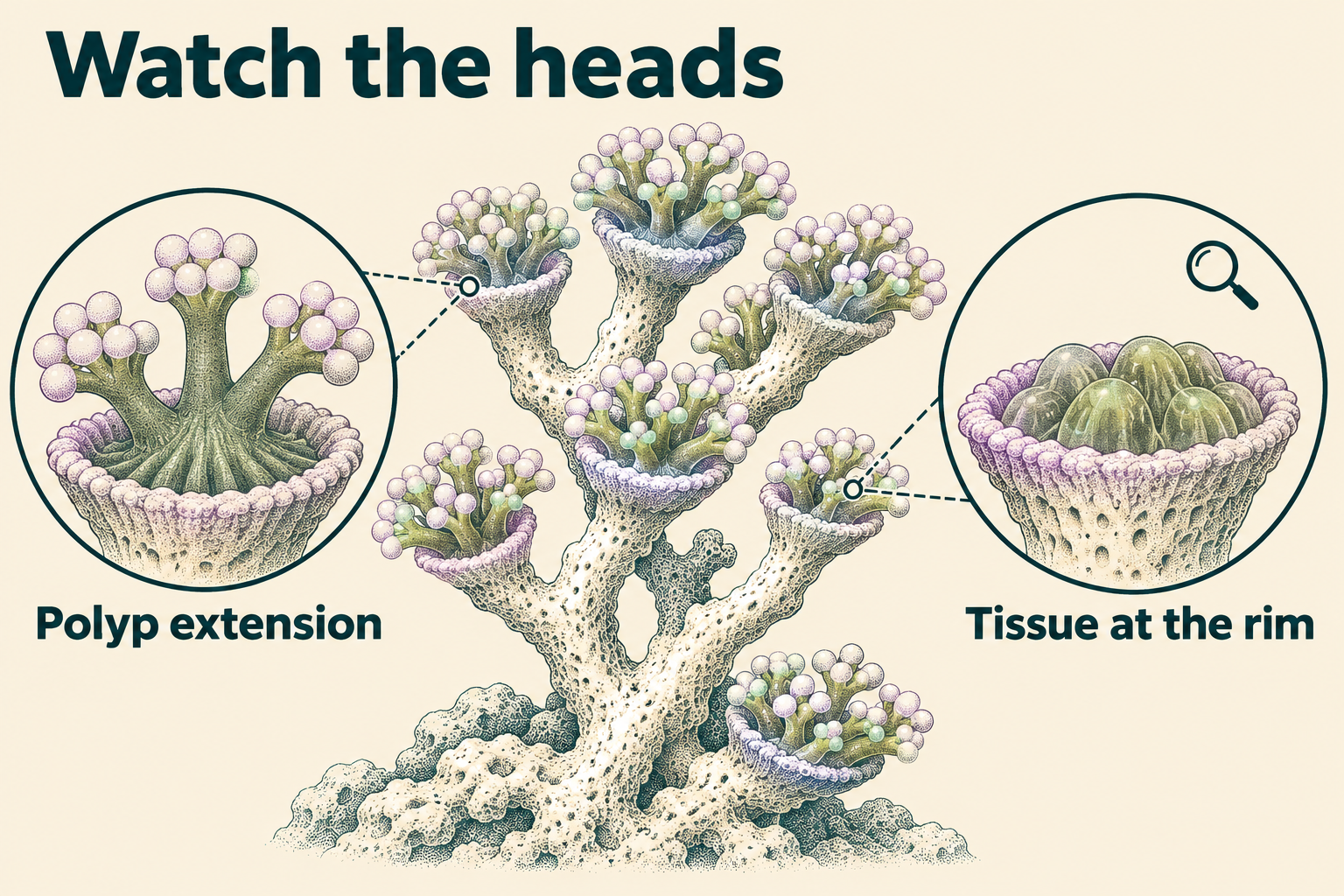
Watch the heads sway from the side of the tank. That's where the separate branches really show. A steady tank and an open patch of water give them room to grow into a whole crown.
Field Notes
Related species
Pink Hammers
Fimbriaphyllia paraancora
Same genus
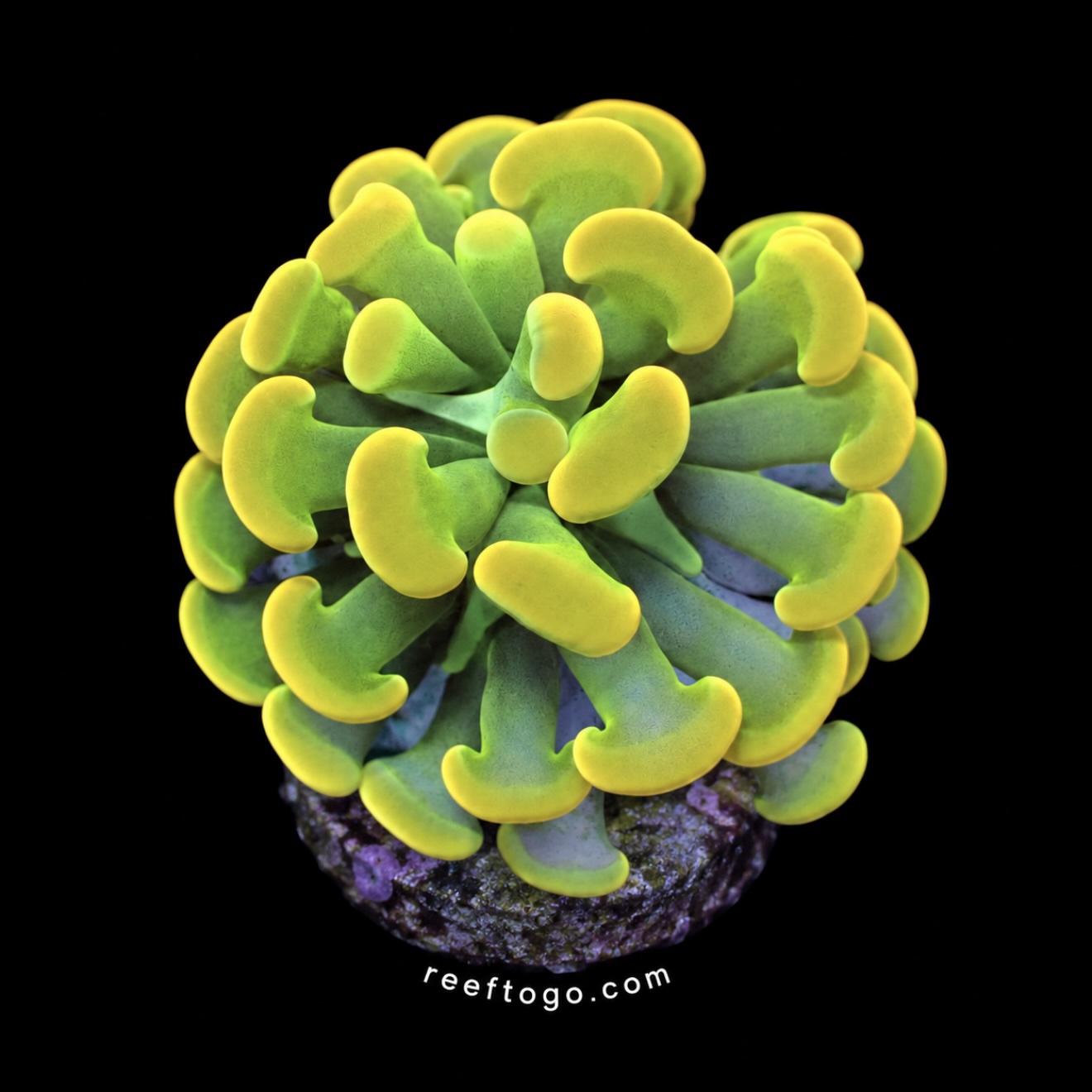
Willy Wonka Hammer
Fimbriaphyllia paraancora
Same genus
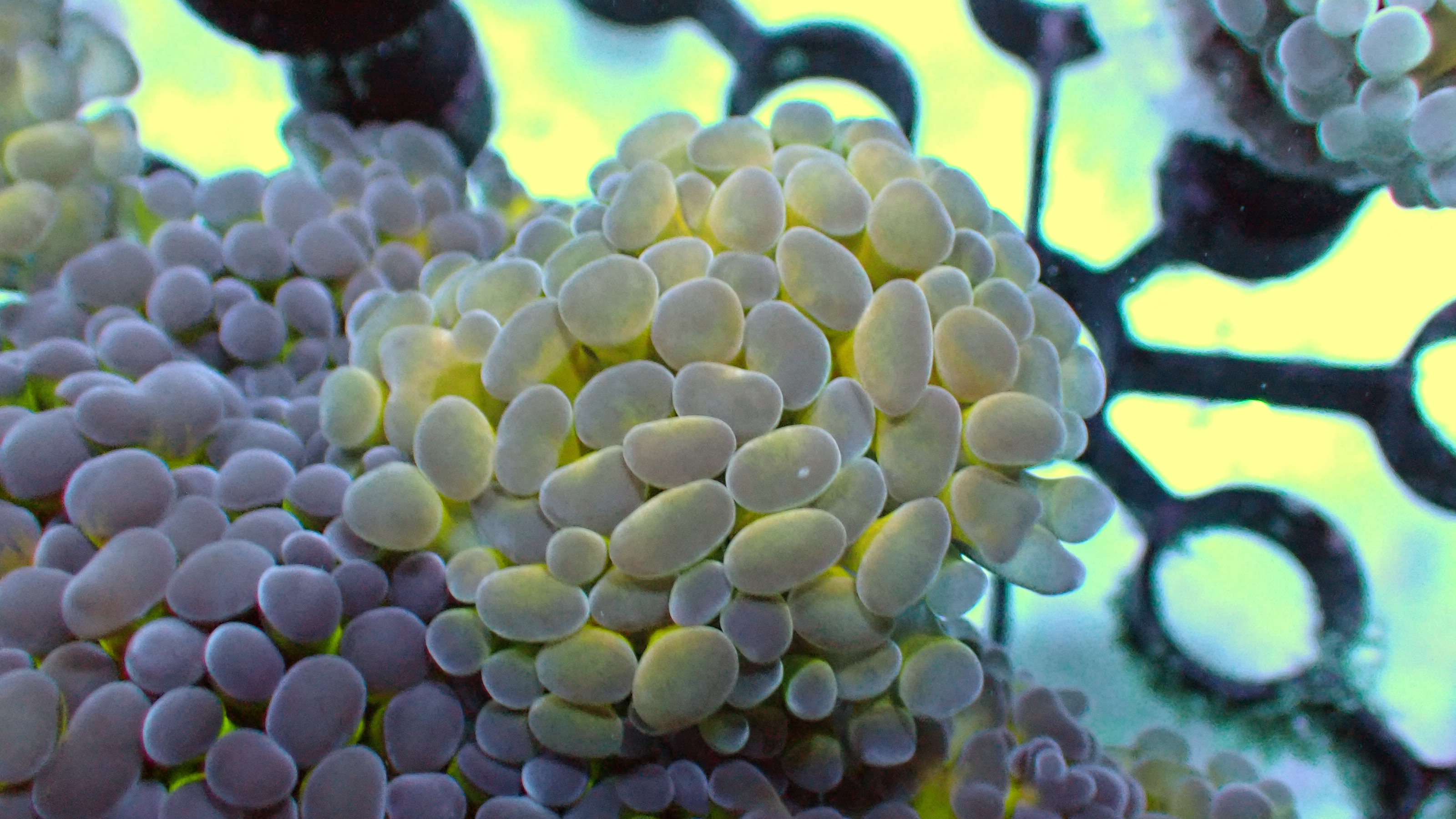
Cloud chaser hammer
Fimbriaphyllia paraancora
Same genus
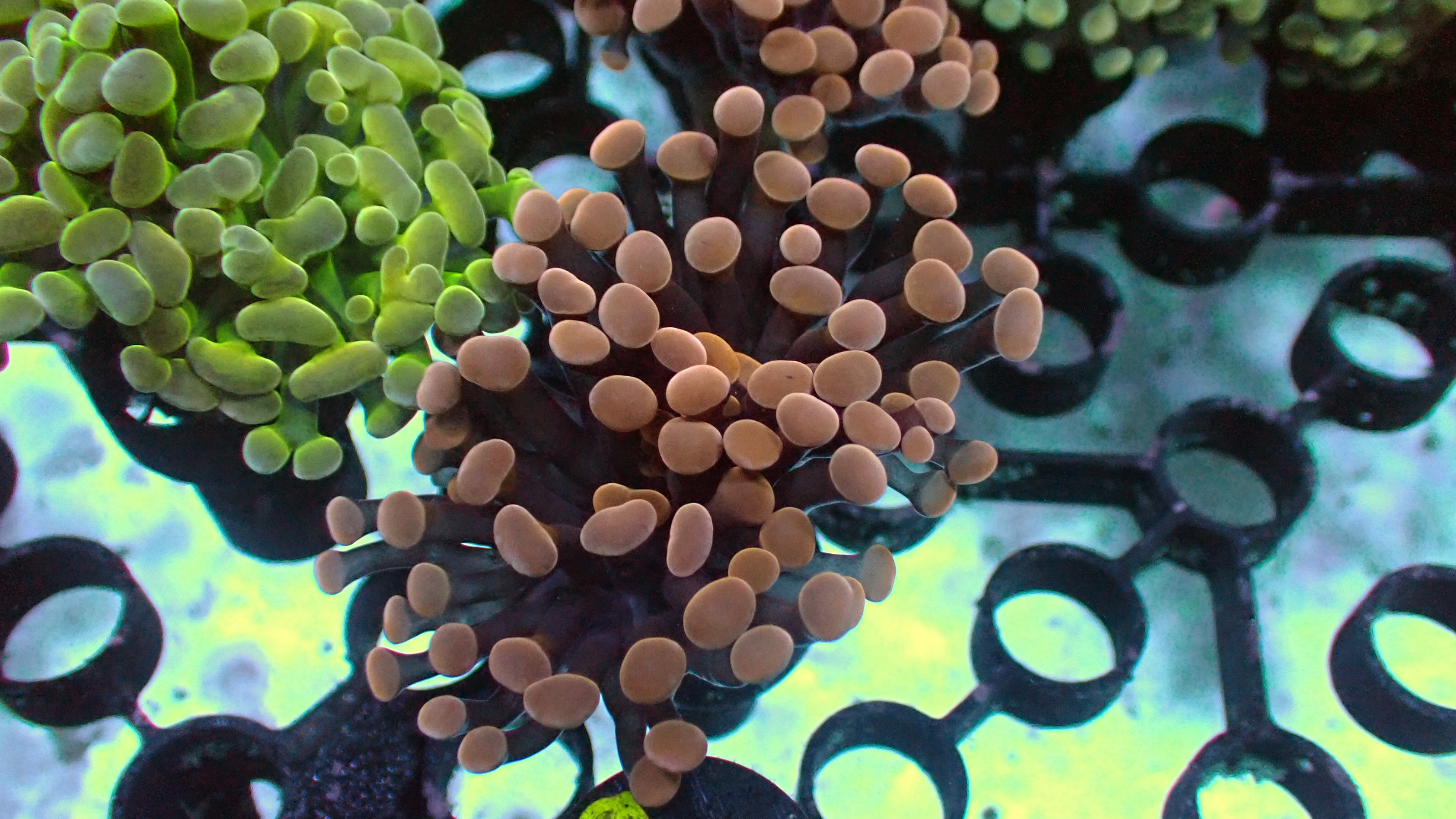
Rose gold hammer
Fimbriaphyllia paraancora
Same genus
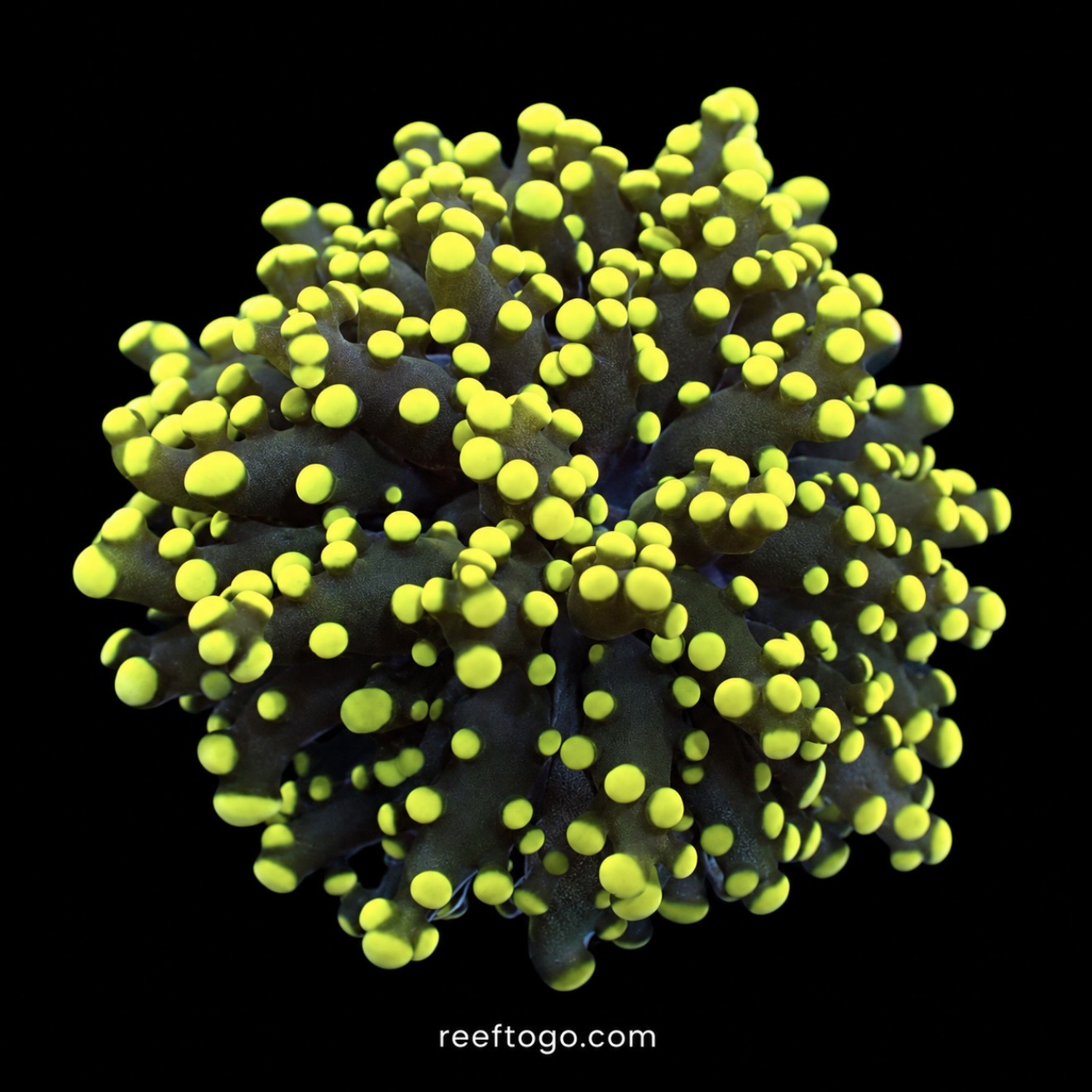
Yellow Octospawn
Fimbriaphyllia yaeyamaensis
Same genus
Hologram hammer
Fimbriaphyllia paraancora
Same genus

Candygram hammer
Fimbriaphyllia paraancora
Same genus
Frogspawn
Fimbriaphyllia divisa
Same genus