Gold torch
Euphyllia glabrescens
Care facts
- Care
- Intermediate
- Light
- Medium
- Flow
- Moderate
- Place
- Middle
- Space
- Aggressive
- Growth Rate
- Moderate
Gallery
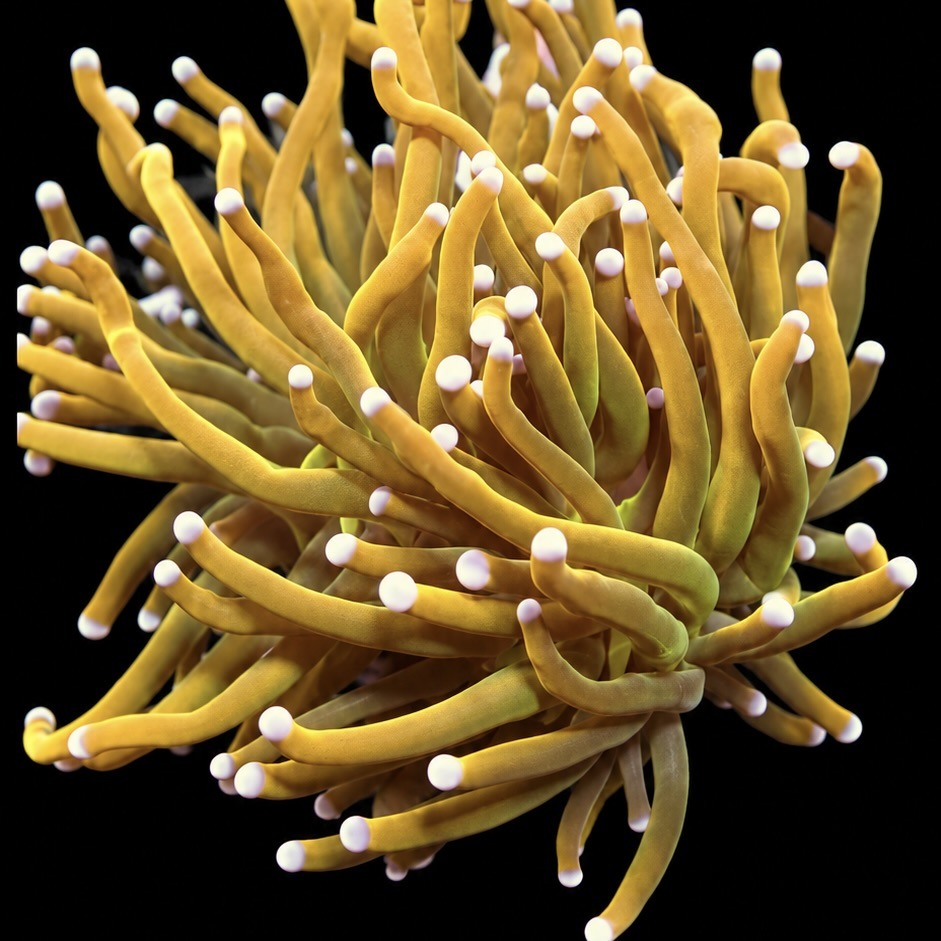
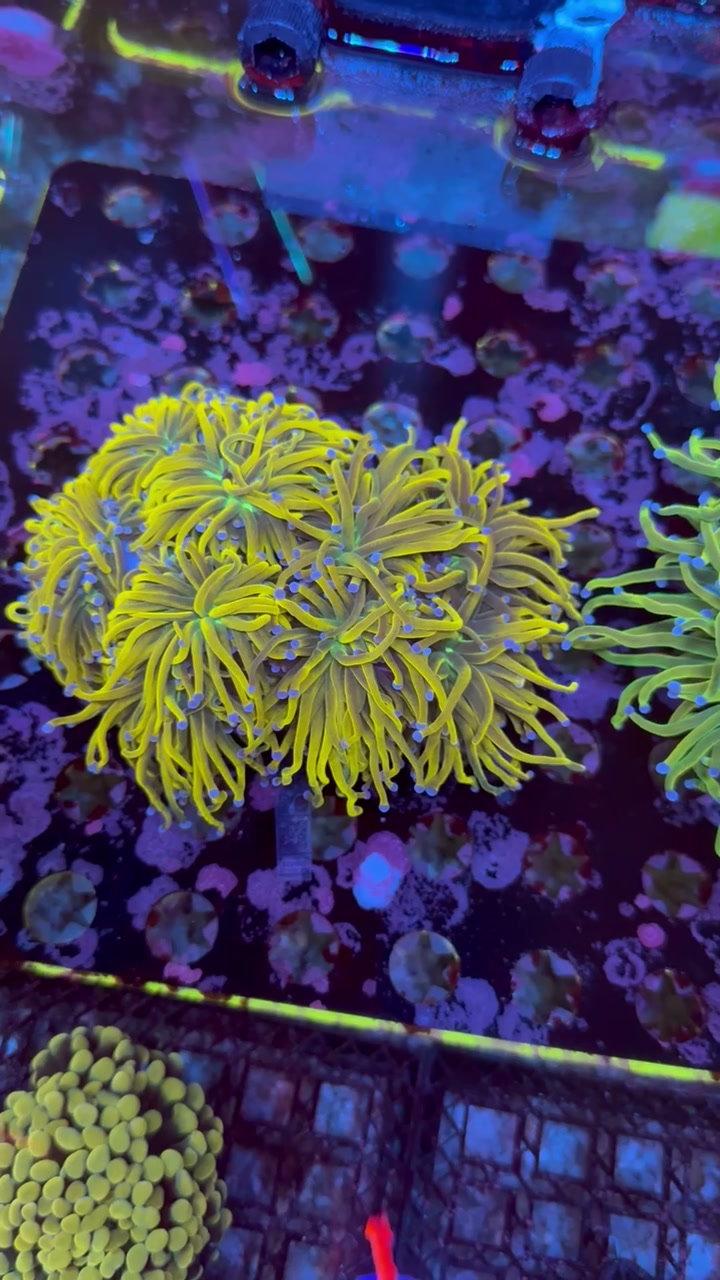
A Gold Torch looks like a bundle of little flames with round white tips. When the current turns, the whole head sways. Watch that motion and you’ll learn more about its spot than a pump dial can tell you.

History
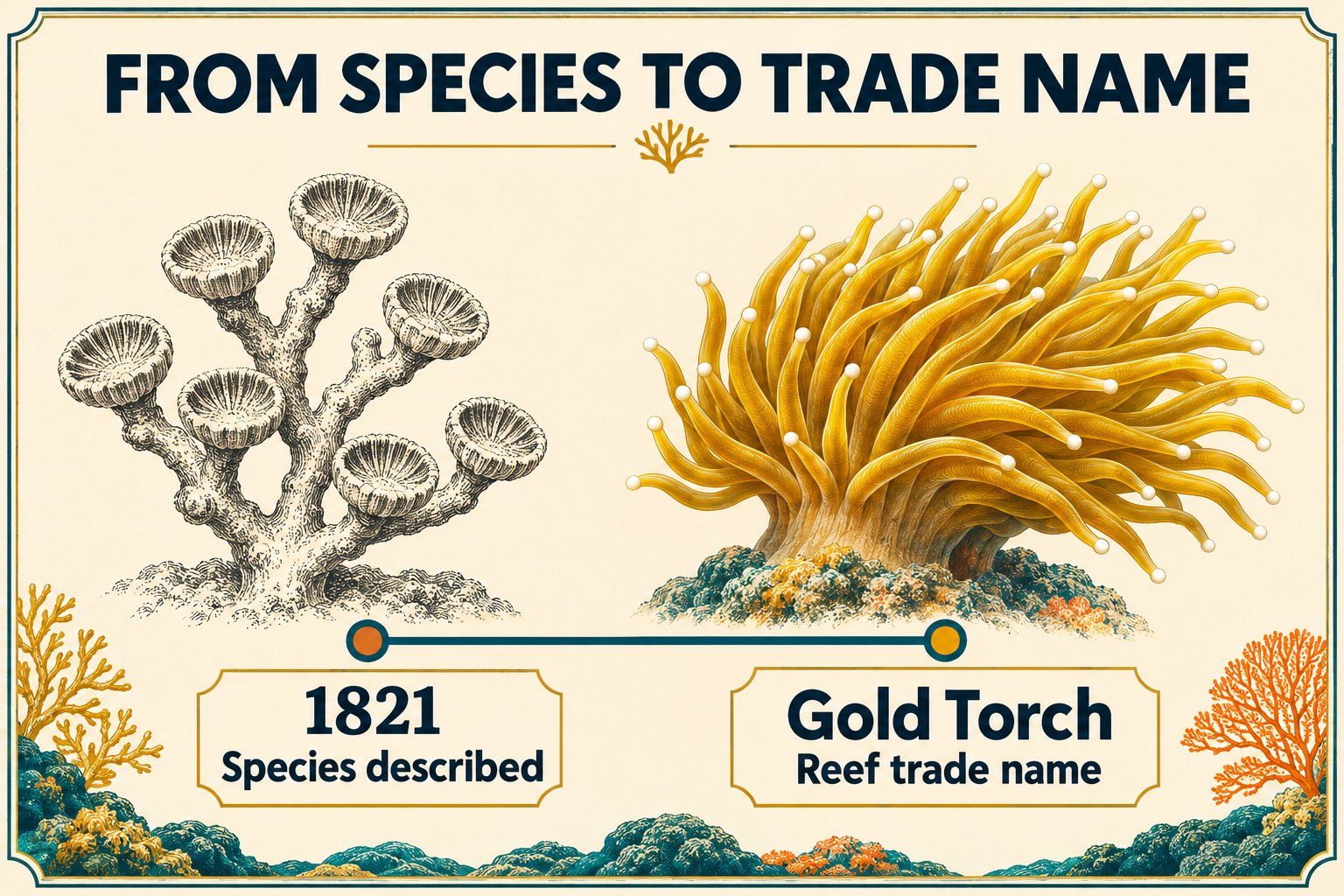
1. A name from the Marshall Islands. Chamisso and Eysenhardt described the torch species in 1821. The original material came from the Ratak island chain. Today it goes by Euphyllia glabrescens.
2. Gold with white tips. Gold Torch is the aquarium name for this gold-bodied, white-tipped line. Each long tentacle ends in one rounded tip. Keep the stock name with your frags.
In the wild
3. From lagoons to slopes. The species lives across the Indo-Pacific. It grows in sheltered lagoons and on reef slopes. Survey crews on the Great Barrier Reef found colonies from 5 to 23 meters down.
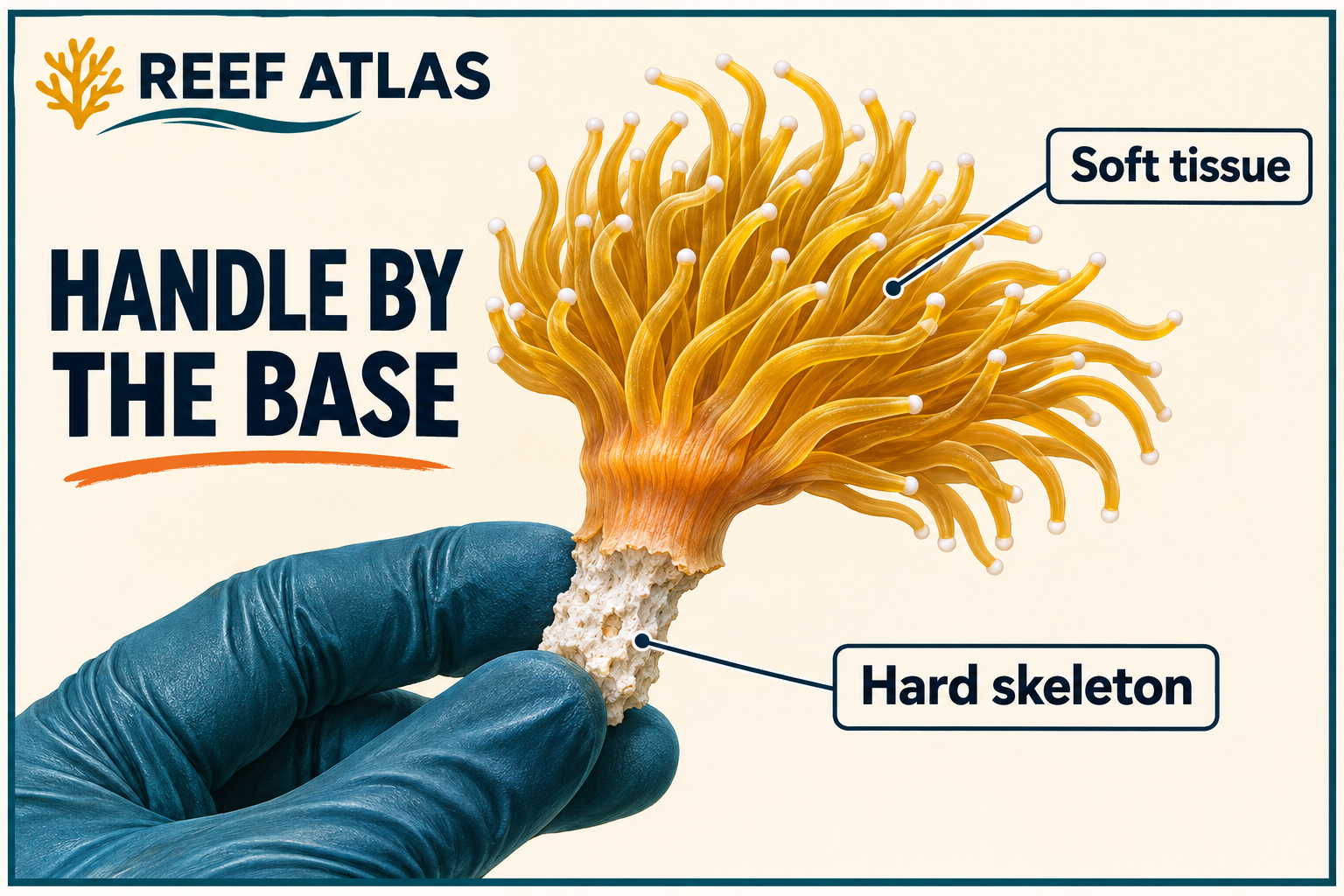
4. A window for sunlight. Tiny algae live inside the coral and use light to make food. Light fades with depth, and currents vary from site to site. Each soft head sits on its own hard cup.

Light and flow
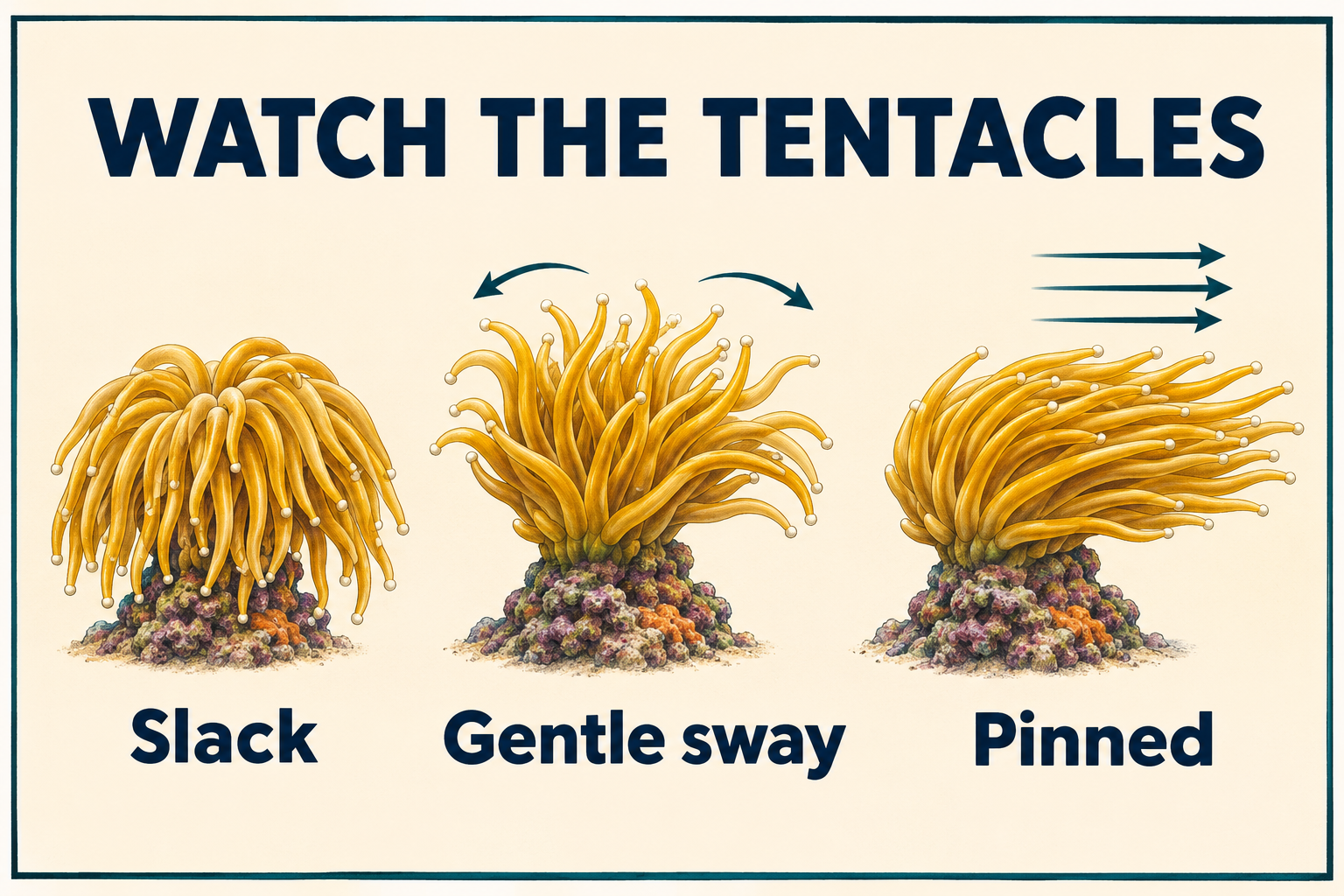
5. Keep the tentacles dancing. Start with moderate, indirect flow. Let the arms bend and rebound. If they lie flat in one direction, turn the pump away. If they hang slack and debris settles, give the spot more circulation.
6. Ease into the light. Start a new frag in gentler light and bring it up to moderate light gradually. Watch for new paling. Check salinity, temperature and nearby stings if it pulls in; retraction alone doesn’t tell you what’s wrong.
Placement and space
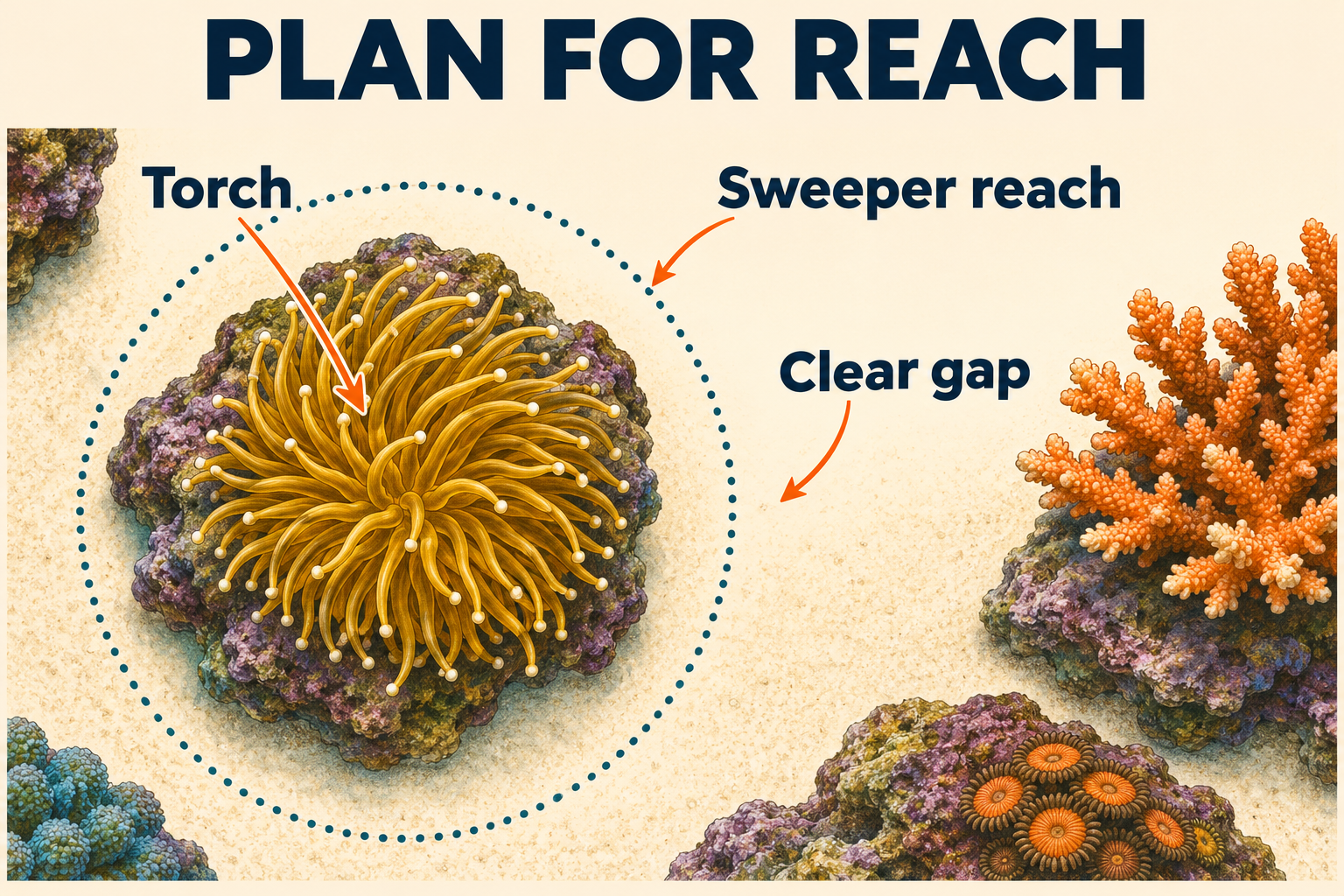
7. Give it a middle perch. Secure the frag on open mid-level rockwork. Leave about six inches of open space from the fully expanded coral as a starting gap. Check its reach after dark and widen the gap if needed.
8. Watch where the current carries it. Long sweepers can sting a neighbor downstream. Leave extra room on that side. Keep other corals out of reach as new heads fill in.
Water, feeding and handling
9. Give the skeleton a steady supply. Keep temperature and salinity stable. Test alkalinity and calcium often enough to spot a trend. Offer an occasional tiny bite of meaty food if the coral takes it, and remove leftovers.
10. Lift it by the base. Hold the plug or the bare skeleton when you move it. Keep the soft tissue clear of sharp rock. If tissue starts peeling or receding, check for damage and separate the affected frag from other torches.
Field notes — what keepers report
11. One torch wanted less. A keeper saw a receding torch improve after moving it into gentler flow. Another watched a different torch open better when the flow increased.
12. Change one thing at a time. Compare how the tentacles move before and after a small change. Check at the same time the next day. A pump percentage tells you very little about water movement around one head.

Give this torch a steady reef and room to sway. Watch it in daylight, then peek in after dark. The two views tell you how well the spot works and how far the coral reaches.
Photo: Tin Huynh / ReefToGo.
Field Notes
Related species
Torch Coral
Euphyllia glabrescens
Same genus
Dragon soul torch
Euphyllia glabrescens
Same genus

Hellfire Torch
Euphyllia glabrescens
Same genus

Holy grail torch
Euphyllia glabrescens
Same genus
Knicks 2.0 Torch
Euphyllia glabrescens
Same genus

NY Knicks Torch
Euphyllia glabrescens
Same genus

Purple Torch
Euphyllia sp.
Same genus

Tiger torch
Euphyllia glabrescens
Same genus