Goniopora Coral
Goniopora lobata

Care facts
- Care
- Expert
- Light
- Medium
- Flow
- Low-Medium
- Place
- Bottom
- Space
- Semi-Aggressive
- Origin
- Indo-Pacific
- Growth Rate
- Slow
Gallery
Videos
The Flowerpot Coral earns its common name honestly. From a rounded, ball-like skeleton rises a bouquet of long polyps, each one tipped with a daisy of tentacles around a small central mouth — twenty-four tentacles to a polyp on Goniopora, a reliable way to separate it from its twelve-tentacled cousin Alveopora. On Goniopora lobata the polyps extend far from the skeleton, up to a foot on a settled colony, and drift as one slow-moving flower head in the current.

Colonies grow on Indo-Pacific reef slopes and sheltered lagoonal edges, rooted where plankton-rich water moves steadily past. That diet is the whole story of this coral in captivity. Goniopora carried a grim reputation for decades: colonies would open beautifully for months, then starve in plain sight in clean, bright, heavily skimmed tanks. The keepers who succeed long-term feed them like the plankton hunters they are, and modern success rates track that change. This entry rates the coral Expert, and the rating is about persistence rather than delicate handling.
Set the colony low in the tank, on the bottom or low rockwork, in medium light and low-to-medium flow arriving from shifting directions — the polyps should sway and stir, never stream sideways or stay pinned shut. Hold parameters in the reef-standard band: 77–79°F, salinity near 35 ppt, alkalinity 8–10 dKH, calcium 400–450 ppm, and keep nutrients present rather than stripped; a flowerpot held at zero nutrients is a flowerpot on a diet. Give the colony clearance in every direction, because those long polyps pack a sting — semi-aggressive on this entry — and they reach farther as the colony grows.
Feeding is scheduled work, several times a week: fine planktonic foods — rotifers, phytoplankton, powdered coral blends — delivered gently over the extended polyps with the pumps paused. Many long-term keepers also credit steady trace-element availability, particularly iron and manganese, for sustained polyp extension, and dose accordingly. Growth is slow: the skeleton thickens under the tissue and new polyps bud at the margins across months. A lobata that eats, extends fully each day, and holds its tissue tight to the skeleton is succeeding; one that shortens its polyps week over week is asking for food, and it is asking early.
Field notes — what keepers report
- The heartbreak pattern dominates the threads: a goniopora looks wonderful for months, declines over a few weeks, and dies with water tests showing nothing wrong. One keeper's avatar-famous colony died a month short of two years, and replies treat the two-year mark as a common ceiling for wild-collected pieces. Older forum exchanges are blunter, calling the commonly imported G. stokesi close to unkeepable beyond the first year in the era before aquacultured stock was common.
- Feeding is where keepers split, and both camps have receipts. Keepers of the aquacultured ORA red goniopora include some who never target feed at all — one grew his out of a 90-gallon tank and produced more than ninety frags — and others who credit feeding entirely. A third group blames ultra-clean water: a keeper reports a thriving goniopora dying within a month of a serious skimmer upgrade, and video creators in the community argue the corals starve slowly in heavily filtered tanks while looking fine for months.
- Source matters more than technique in many reports. Keepers describe repeated failure with wild colonies, then success with a frag that had already lived in home aquariums for years, and the aquacultured red strain is the one attached to the long success stories — eight years and many frags in one keeper's case.
- Trace elements have a following. Keepers chasing a goniopora that only opens at night, or one sliding downhill after months of thriving, report turnarounds they attribute to manganese and iron dosing confirmed by ICP testing, and pass the tip along as near-magic. Sudden group declines — several colonies closing and bleaching from the top while others in the same tank thrive — are reported just as often, with no cause found.

Field Notes
Related species
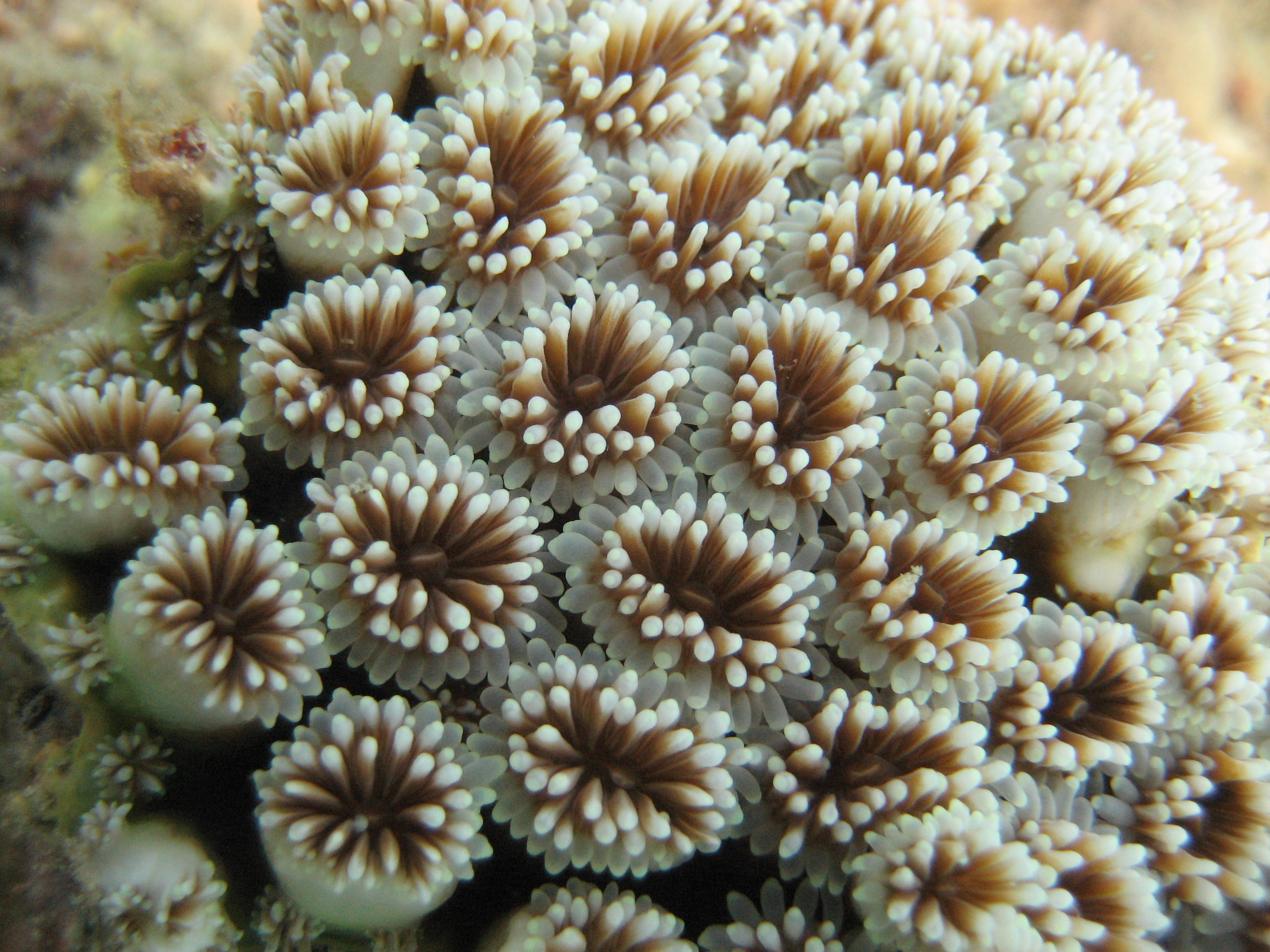
Flowerpot Goniopora
Goniopora stokesi
Same genus
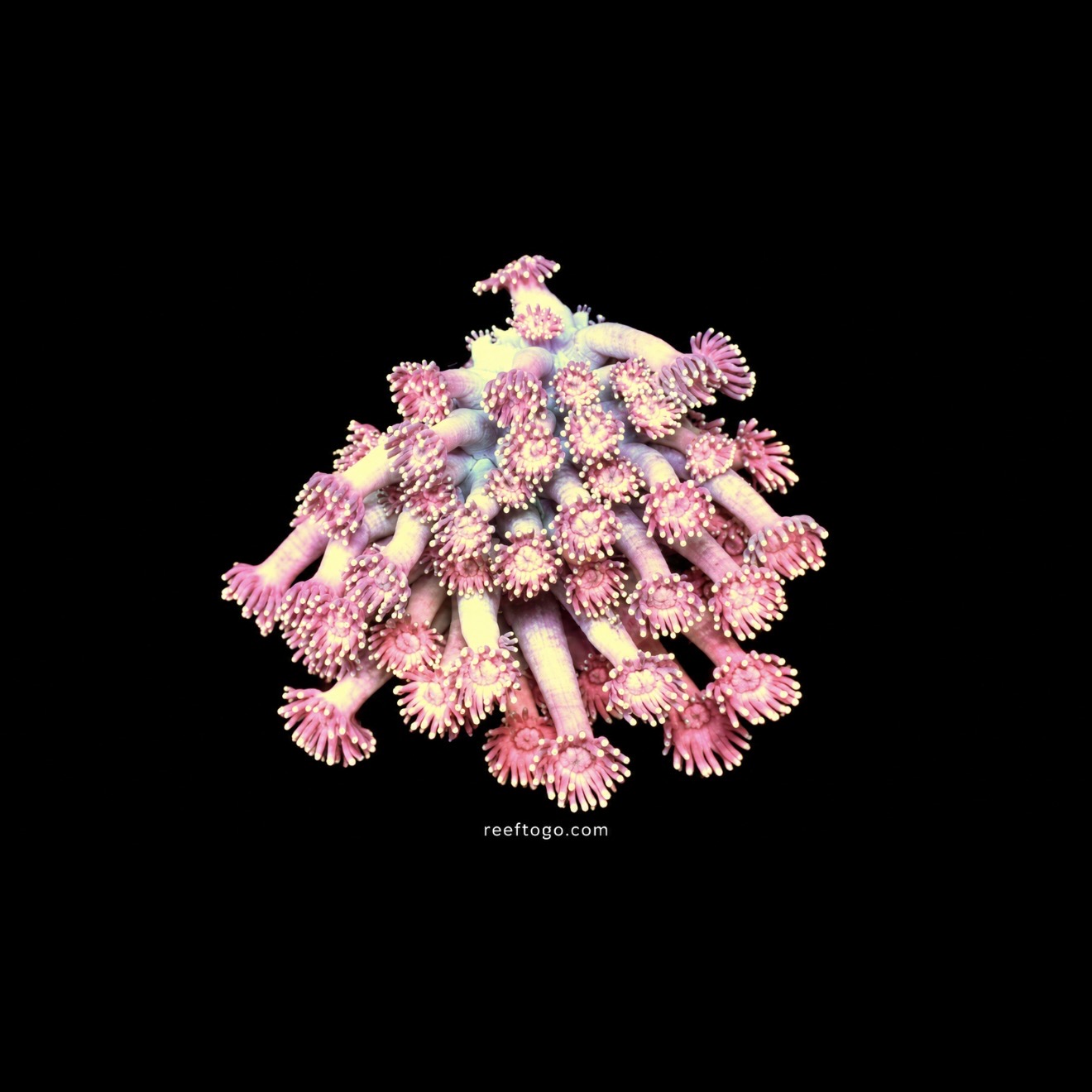
Pink goniopora
Goniopora sp.
Same genus

Pink Lemonade Goniopora
Goniopora sp.
Same genus
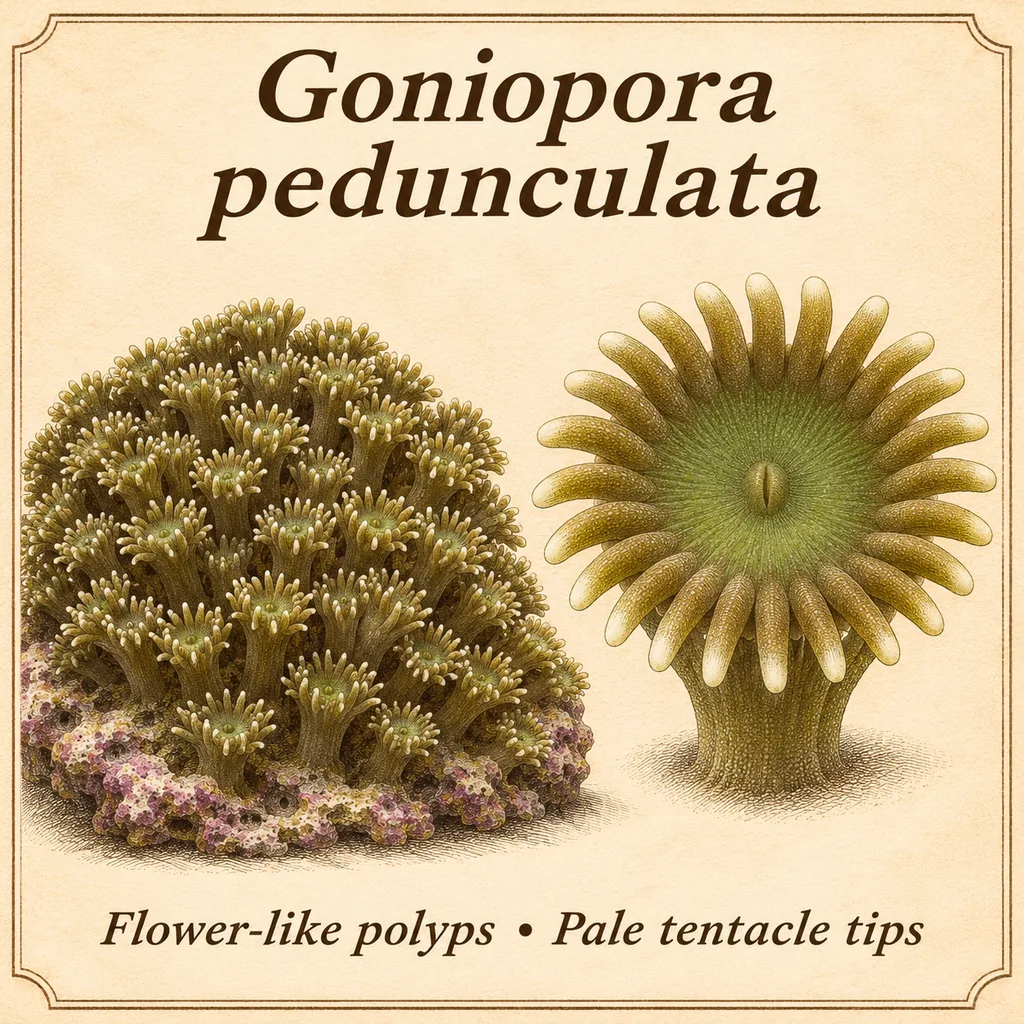
Goniopora pedunculata
Goniopora pedunculata
Same genus
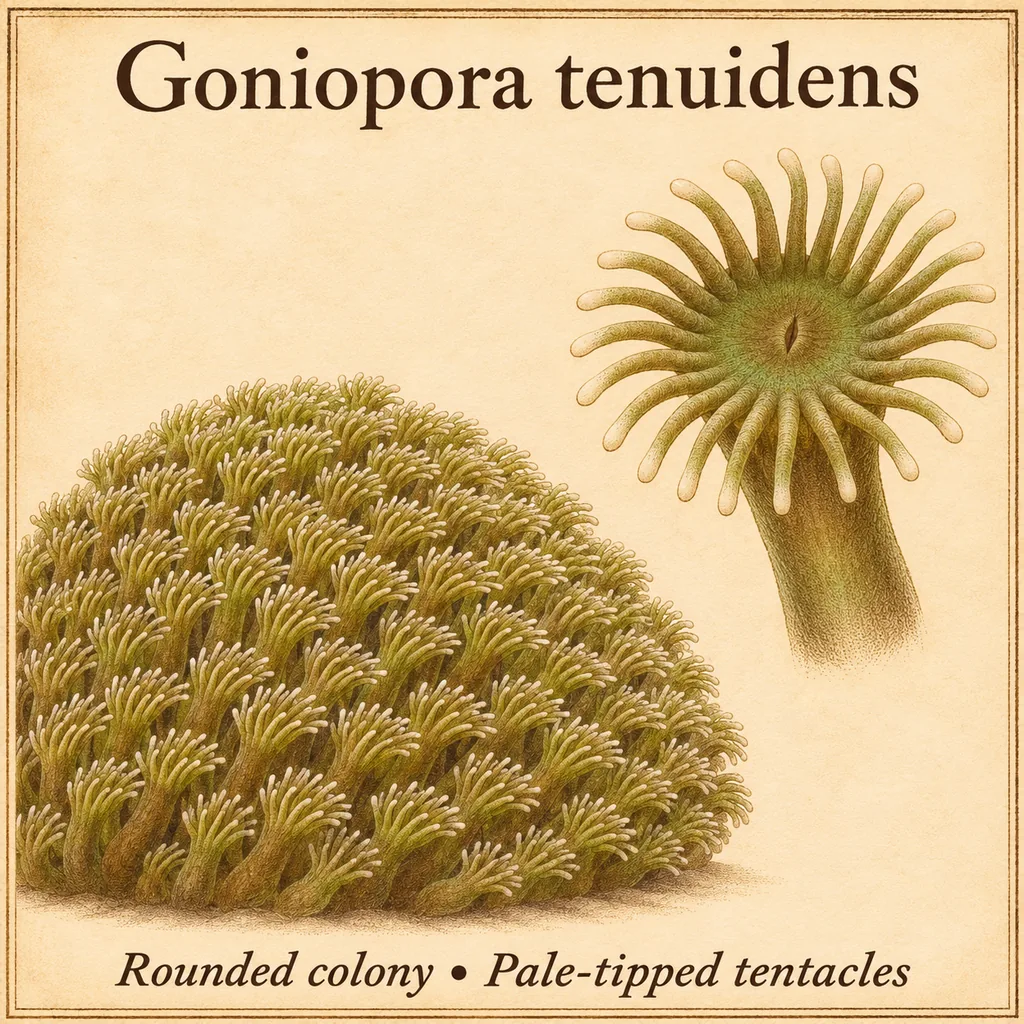
Goniopora tenuidens
Goniopora tenuidens
Same genus
Amazeballs Goniopora
Goniopora sp.
Same genus
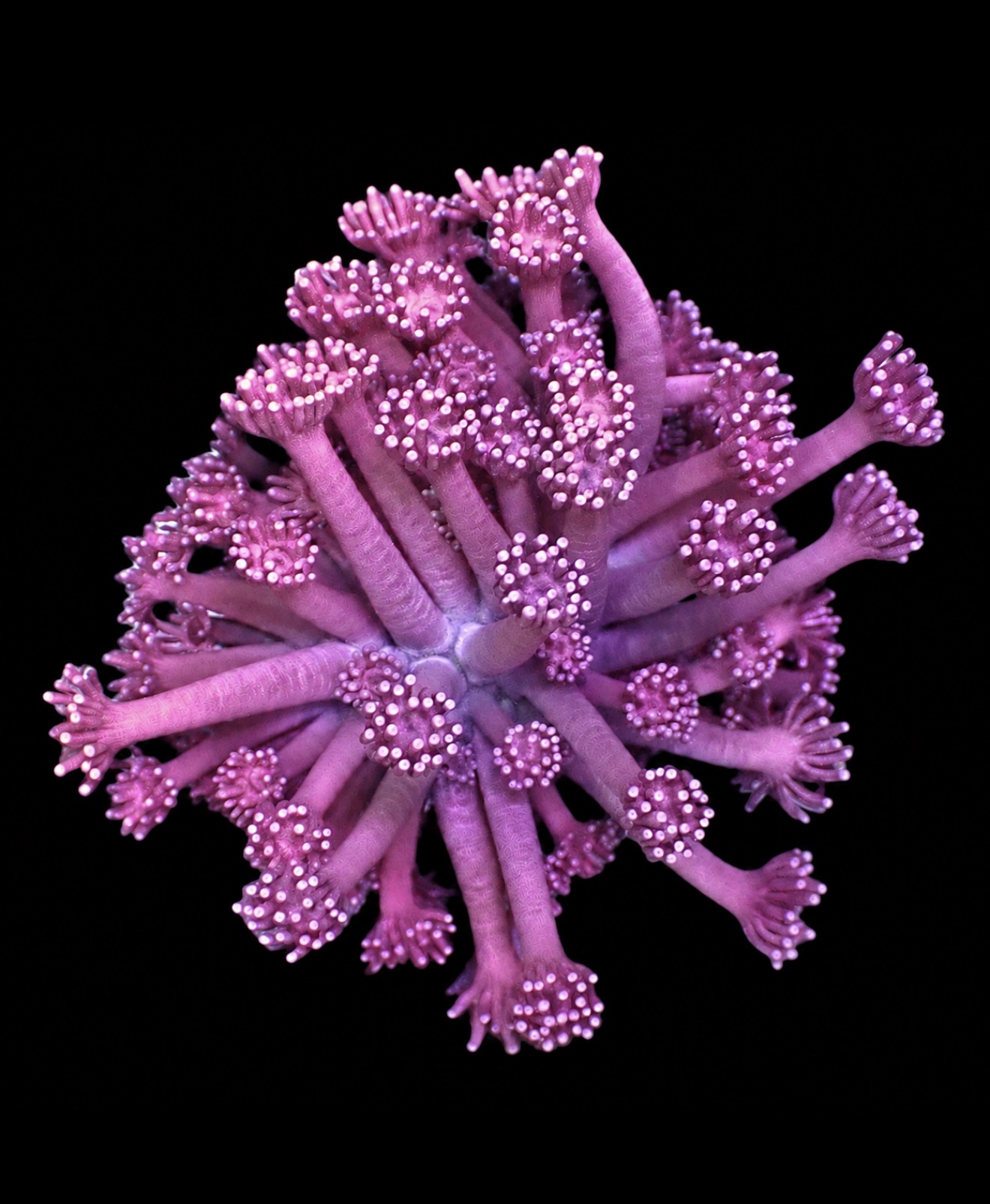
Barney the dinosaur Goni
Goniopora sp.
Same genus
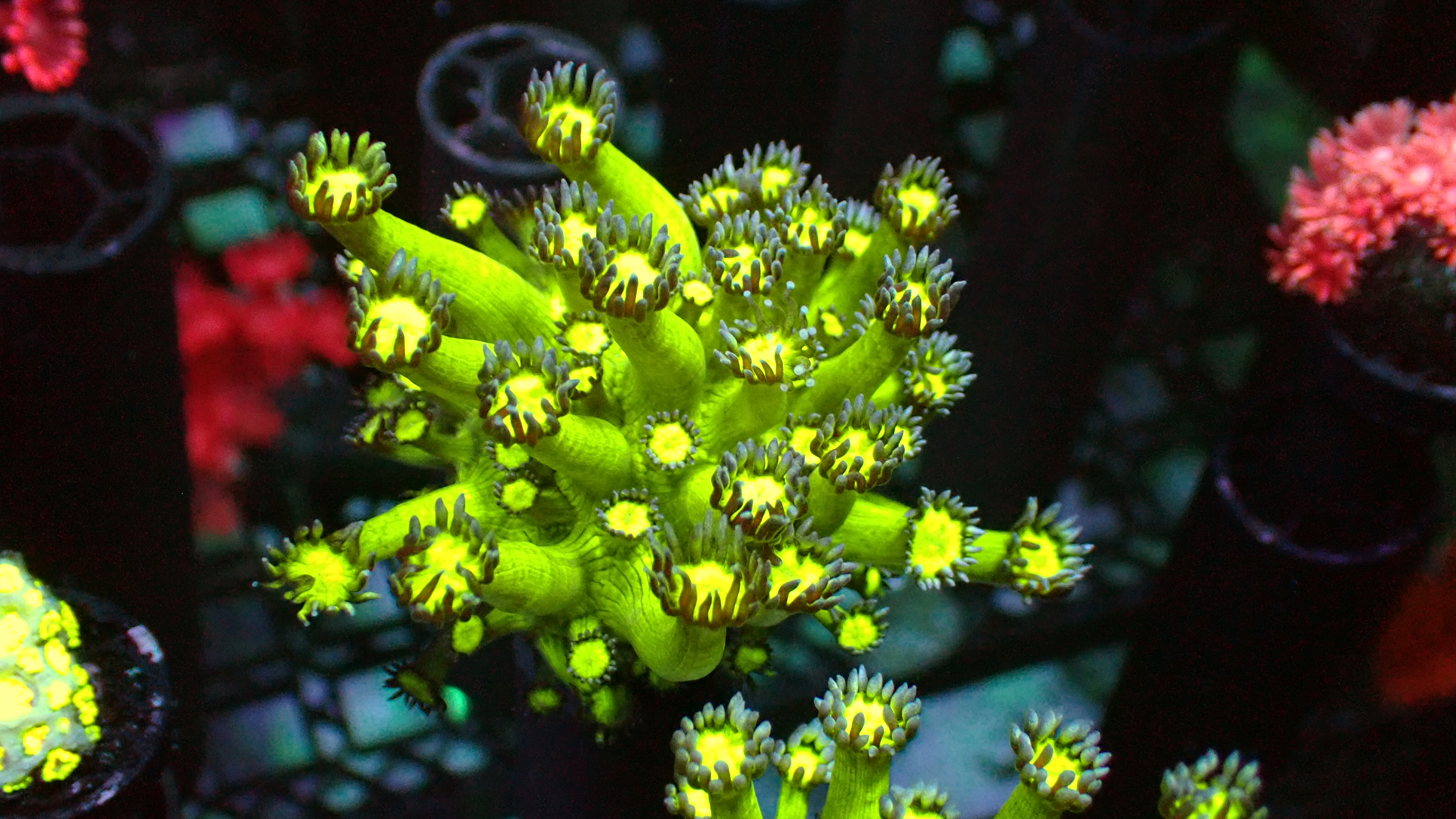
Bootleg glitter Goni
Goniopora sp
Same genus