Pink goniopora
Goniopora sp.
Care facts
- Care
- Expert
- Light
- Medium
- Flow
- Low-Medium
- Place
- Bottom
- Space
- Semi-Aggressive
- Growth Rate
- Slow
Gallery
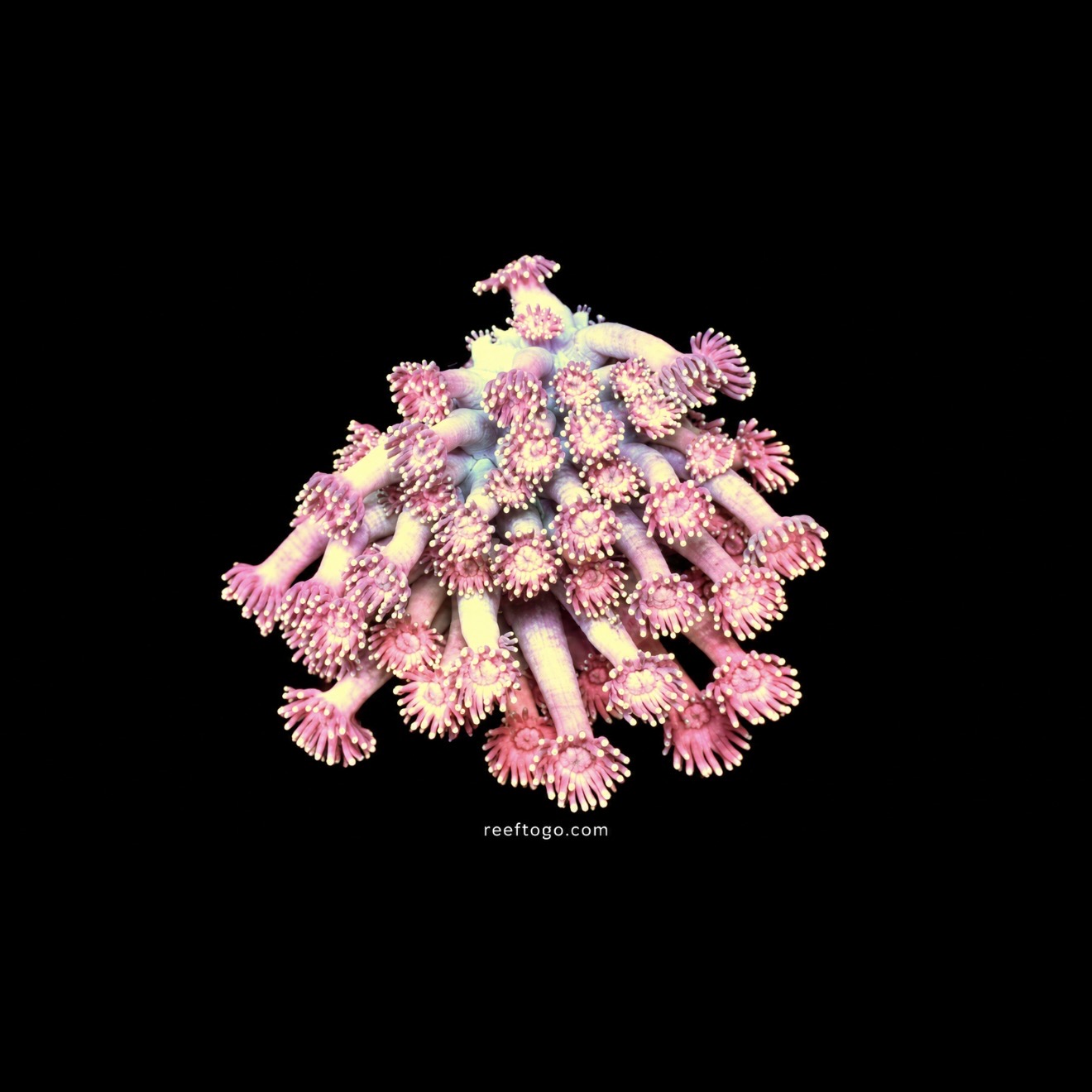
A bunch of pink flowers just opened on a rock. Look closer: each bloom is a coral animal. Pink Goniopora is a flowerpot coral with long polyps that wave together in the current. Give it a calm start in a mature reef and watch the whole patch come alive.

History of the coral
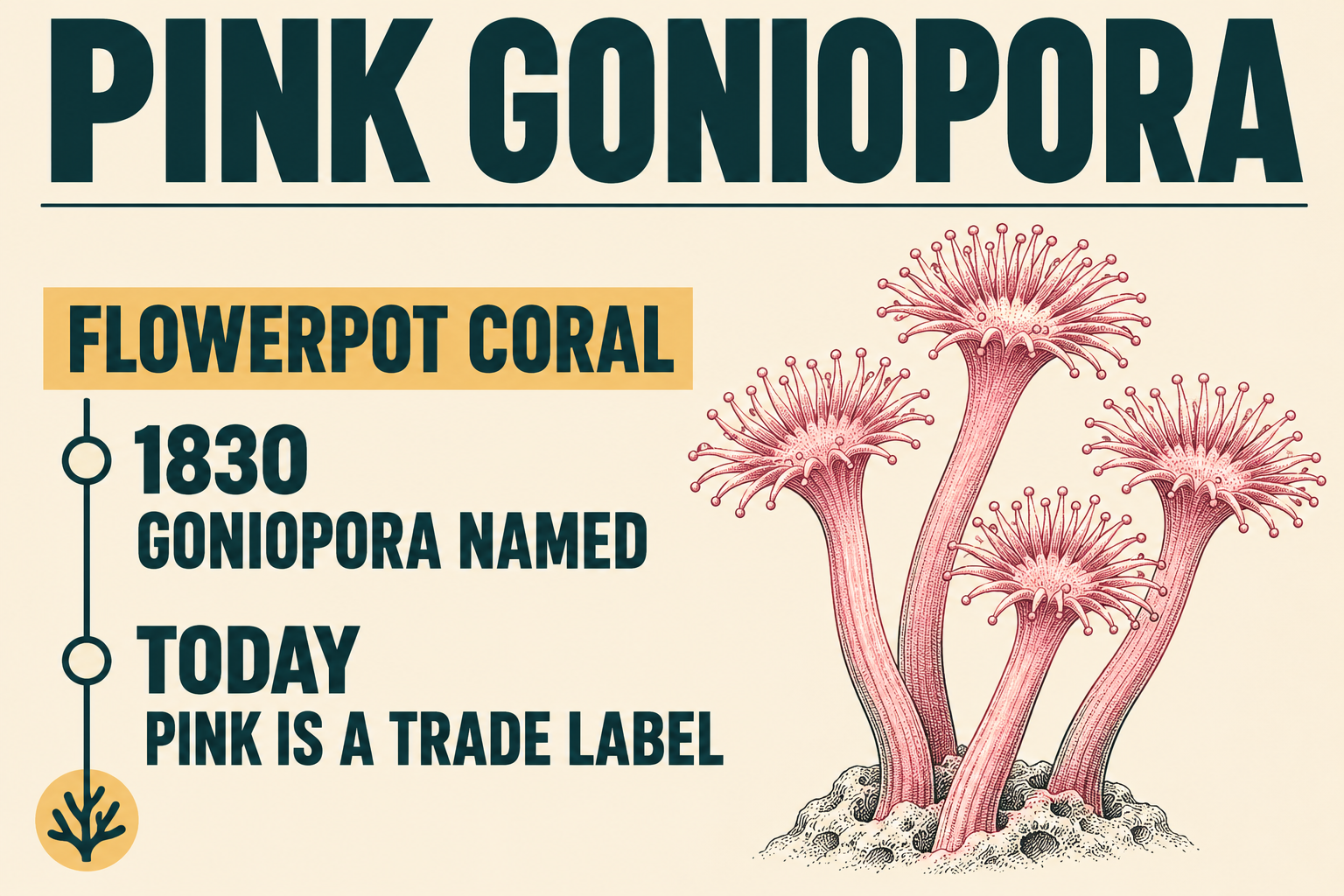
1. An old name for a flowerpot. A naturalist named the genus Goniopora in 1830. Reef keepers call these corals flowerpots because each long polyp opens into a little crown.
2. Pink is the trade label. This Reef To Go stock is Goniopora sp. Its bubblegum color helps you pick it out on the rack. Color alone does not identify a species.
How they live in the wild
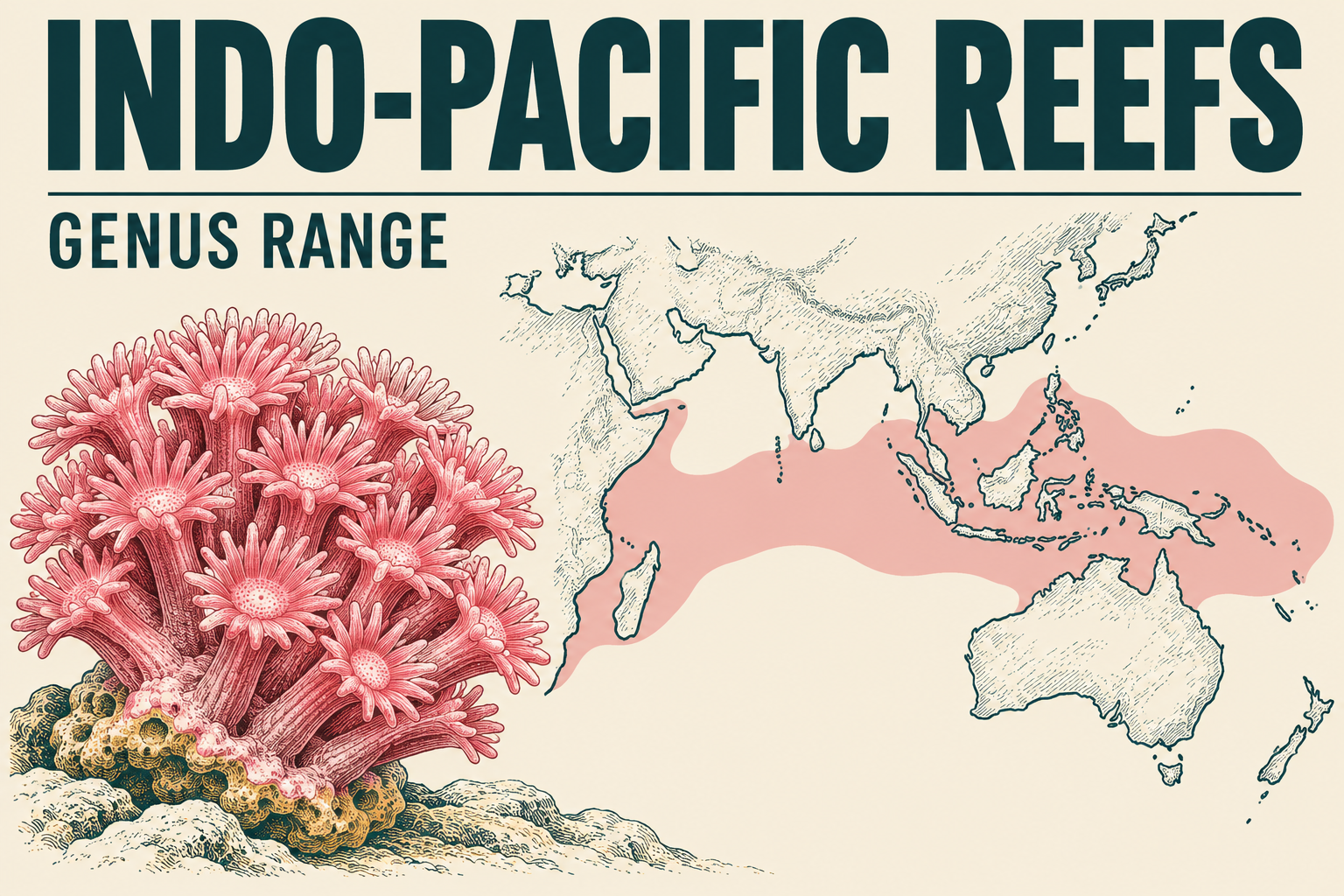
3. A whole ocean of flowerpots. Wild Goniopora live across the Indo-Pacific. Different species turn up in different reef settings, from sheltered water to reef slopes. This pink stock has no recorded collection site.
4. Light and lunch. Tiny algae live inside the coral and turn light into fuel. The polyps catch small food particles from the passing water, too.
Light, flow and placement
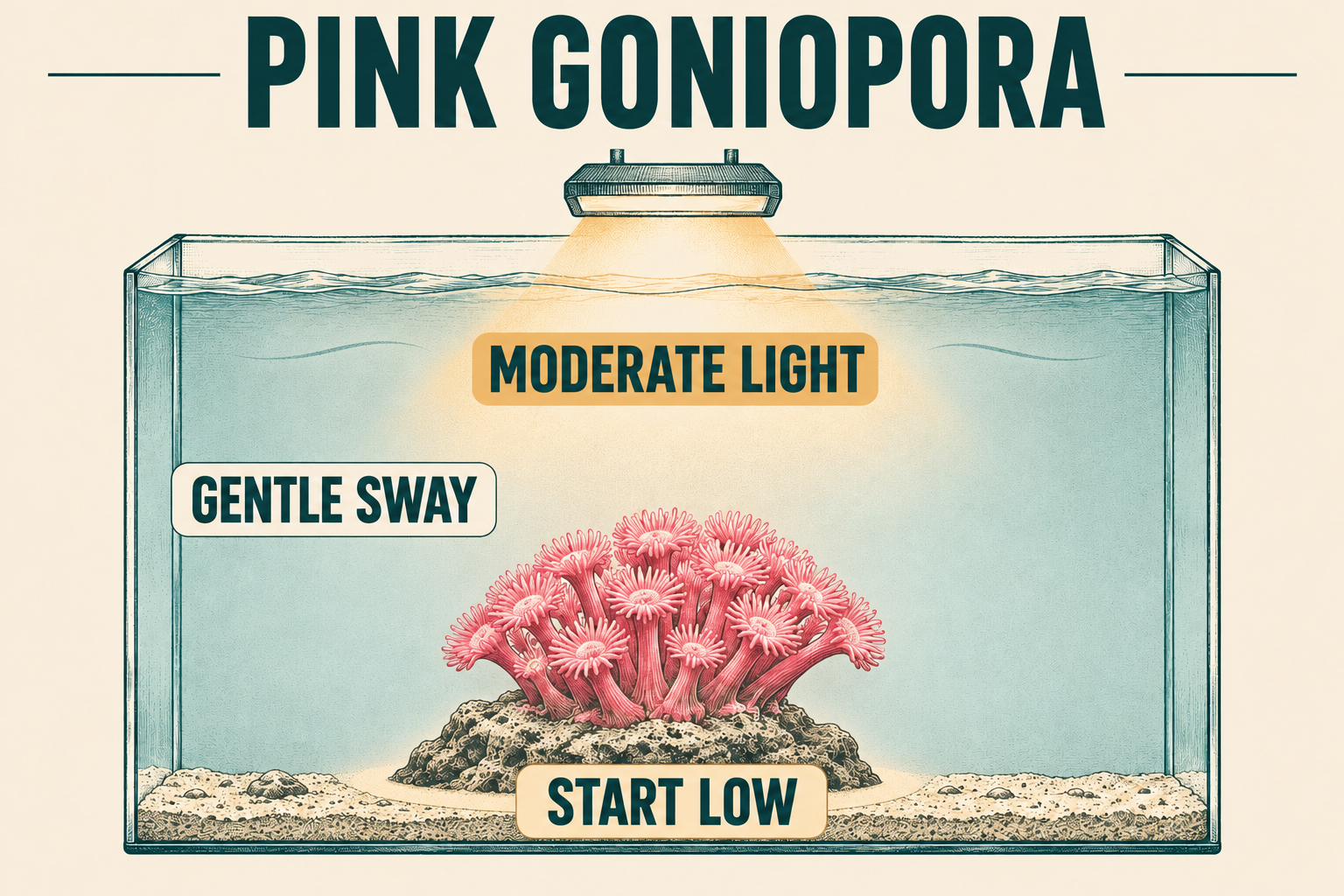
5. Start on the bottom. Give the frag a stable perch low in the tank. Start under moderate light and adjust slowly. Keep sand from piling onto the tissue.
6. Look for an easy sway. Use gentle to moderate, indirect flow. If the polyps get pinned to one side, redirect the pump. Leave space for the full canopy so it cannot brush the next coral.
Keep the water steady
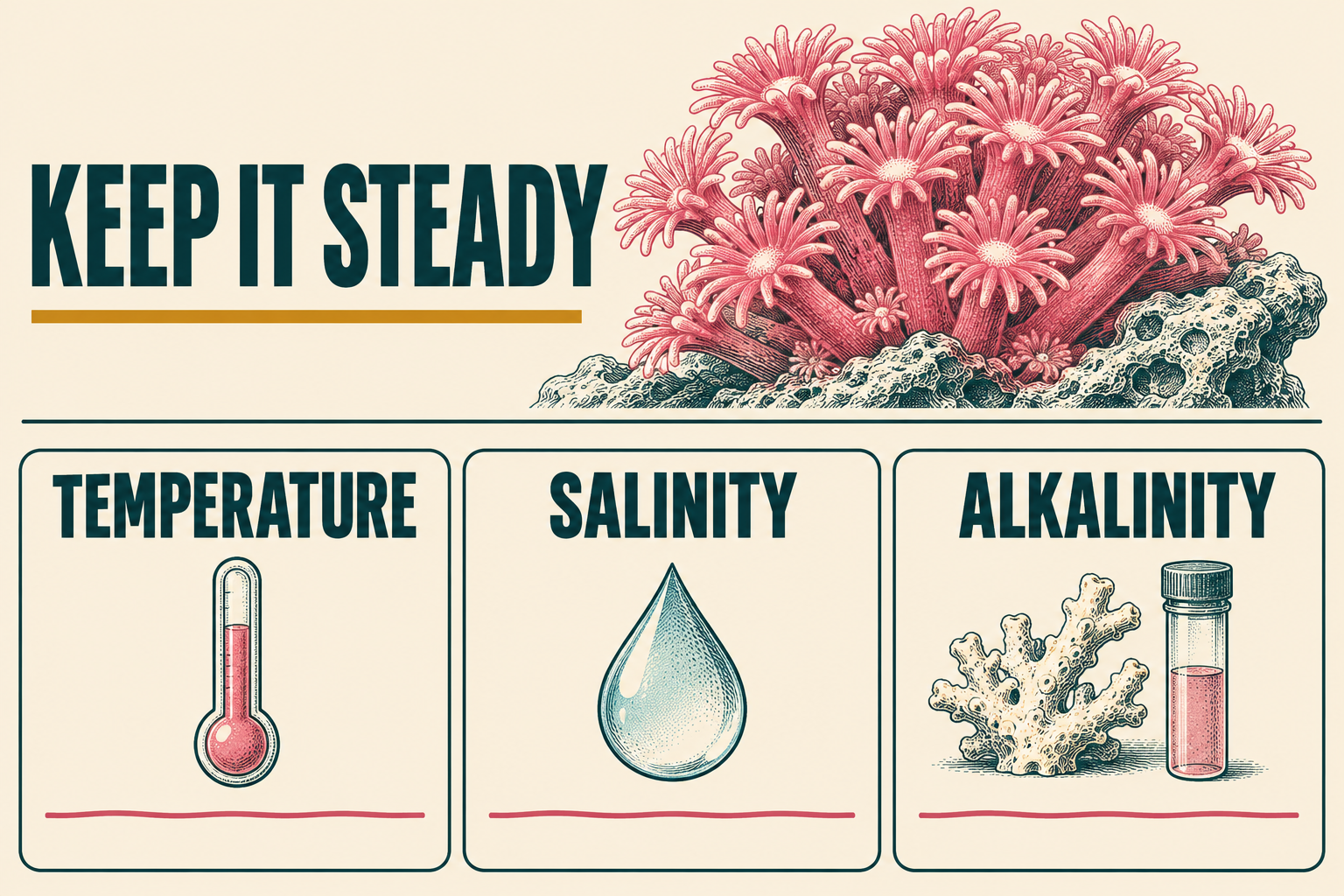
7. Steady beats perfect. Put this expert-level coral in a mature reef. Track temperature, salinity and alkalinity. Fix a drift gradually instead of chasing the latest test with a big dose.
8. Watch the base. Keep the skeleton’s edge clear of settled debris. Compare the same spot in photos taken under the same light. Look for slow, steady changes over weeks.
Feeding
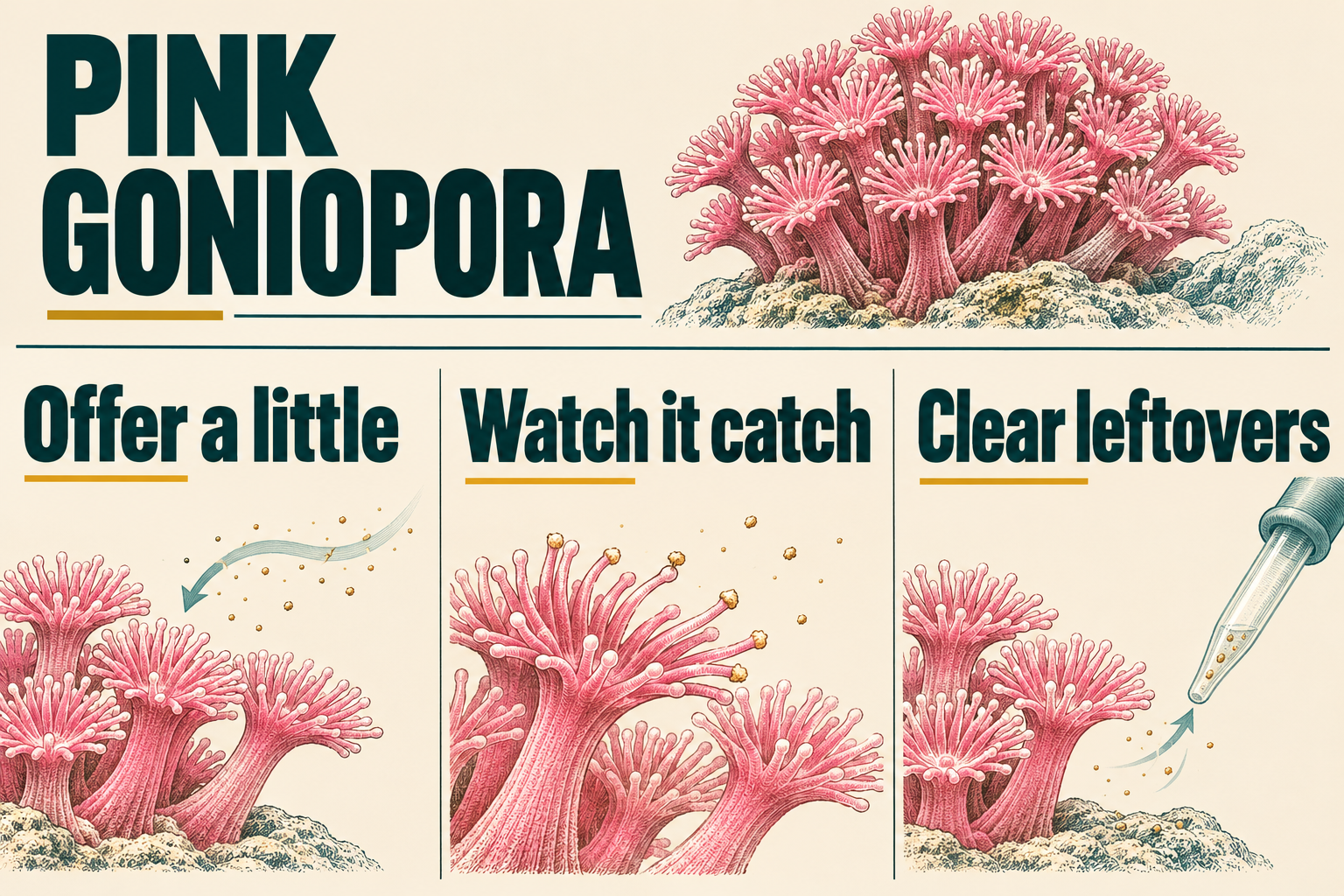
9. Start with a tiny serving. Offer fine coral food when the polyps are open. Let a little drift past the crowns. Watch the tentacles catch particles before offering more.
10. Keep the water clean. Remove food that settles. Check nitrate and phosphate trends before increasing portions. A cloud of food is no help if most of it ends up on the sand.
Field notes
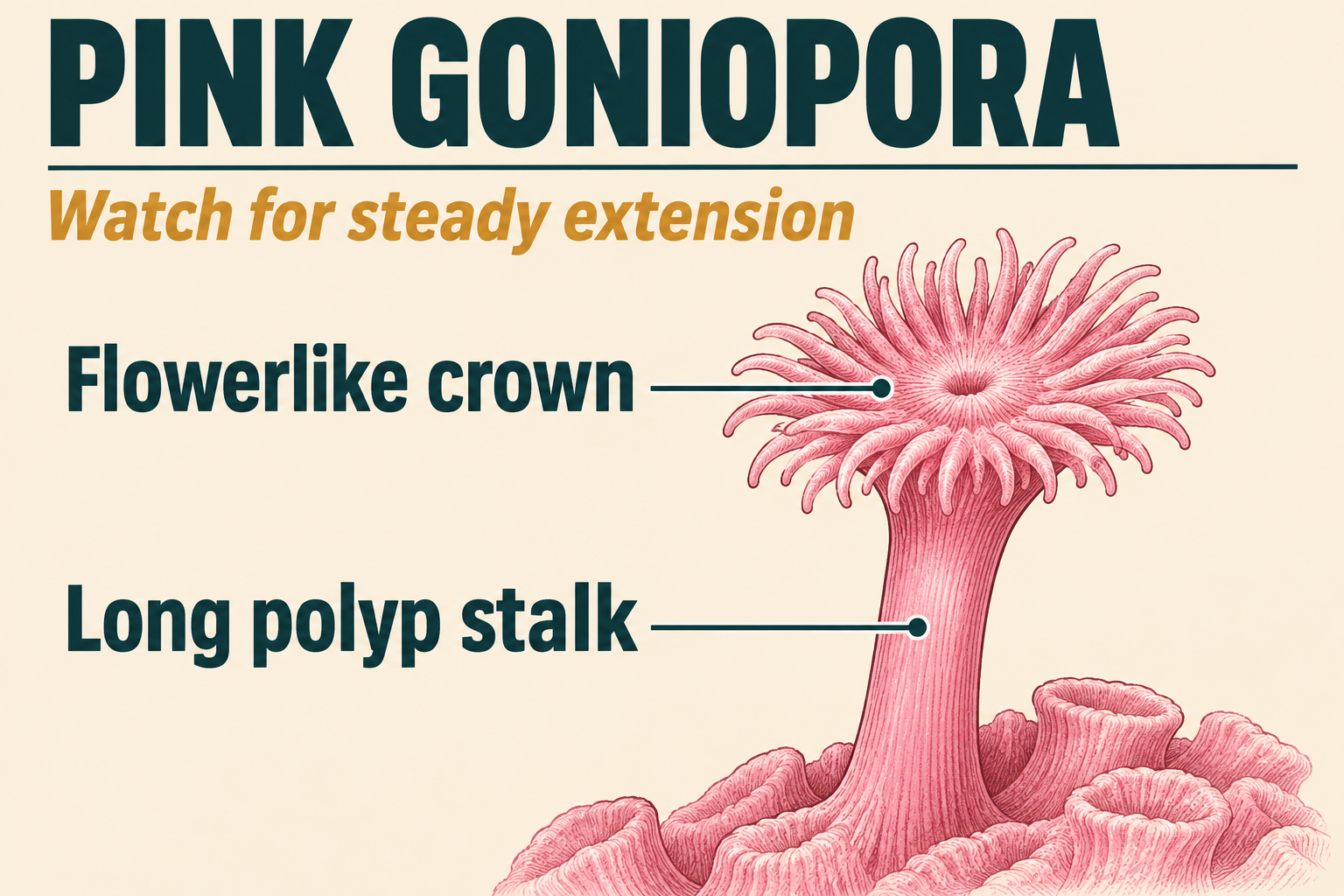
11. Count the spokes. A typical Goniopora polyp has 24 tentacles. The similar Alveopora usually has 12. Count from a clear close-up to help tell the genera apart.
12. Read the trend. A short retreat after a fish brushes past is one thing. Staying closed day after day or losing tissue at the base is a warning. Check for a direct jet, a nearby sting or a swing in water chemistry before moving it.
Let this flowerpot set the pace. Give it a steady spot, watch how it opens day after day, and wait for that pink canopy to fill in.
Hero photo: Tin Huynh / ReefToGo.
Field Notes
Related species
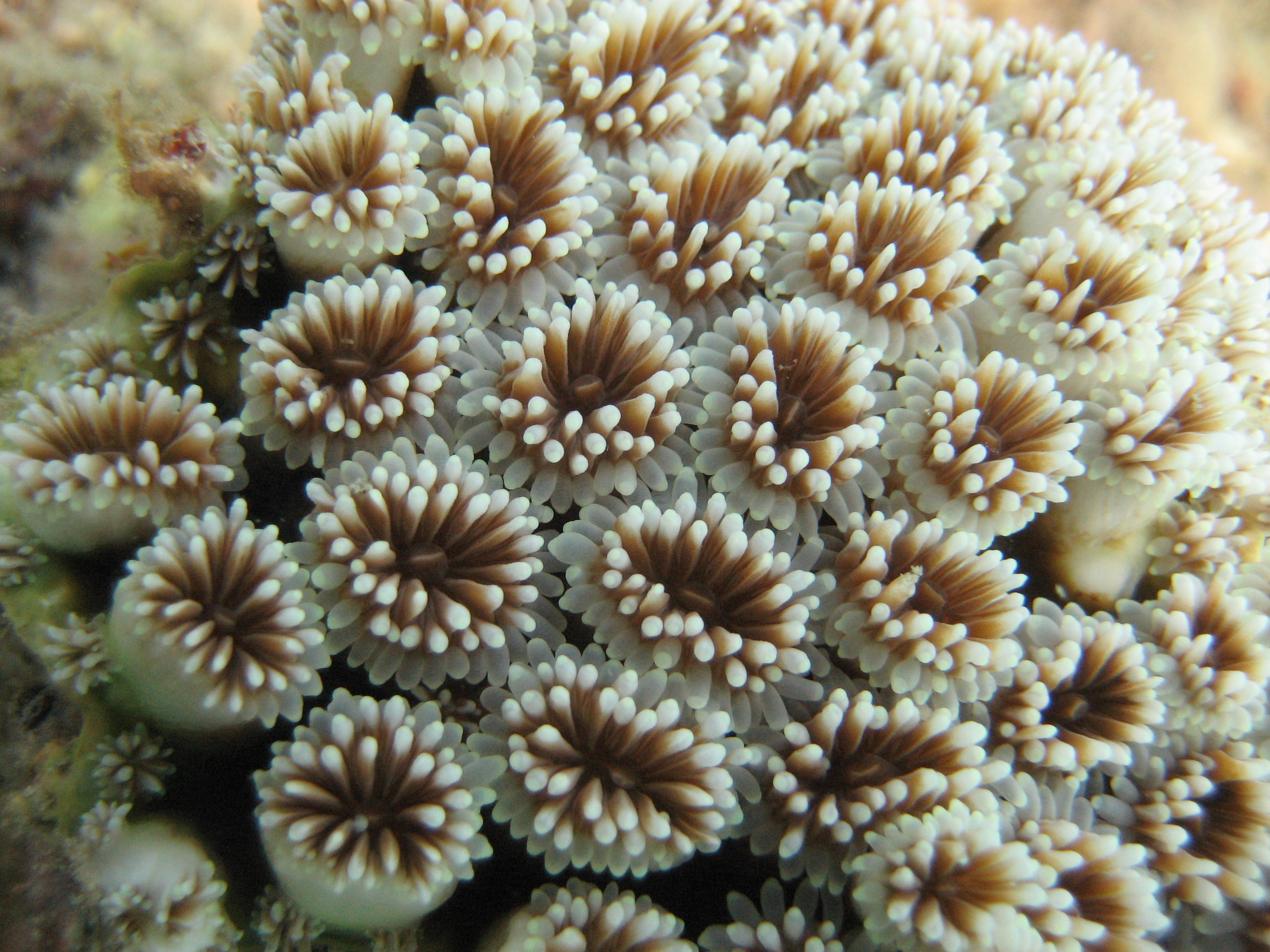
Flowerpot Goniopora
Goniopora stokesi
Same genus

Goniopora Coral
Goniopora lobata
Same genus

Pink Lemonade Goniopora
Goniopora sp.
Same genus
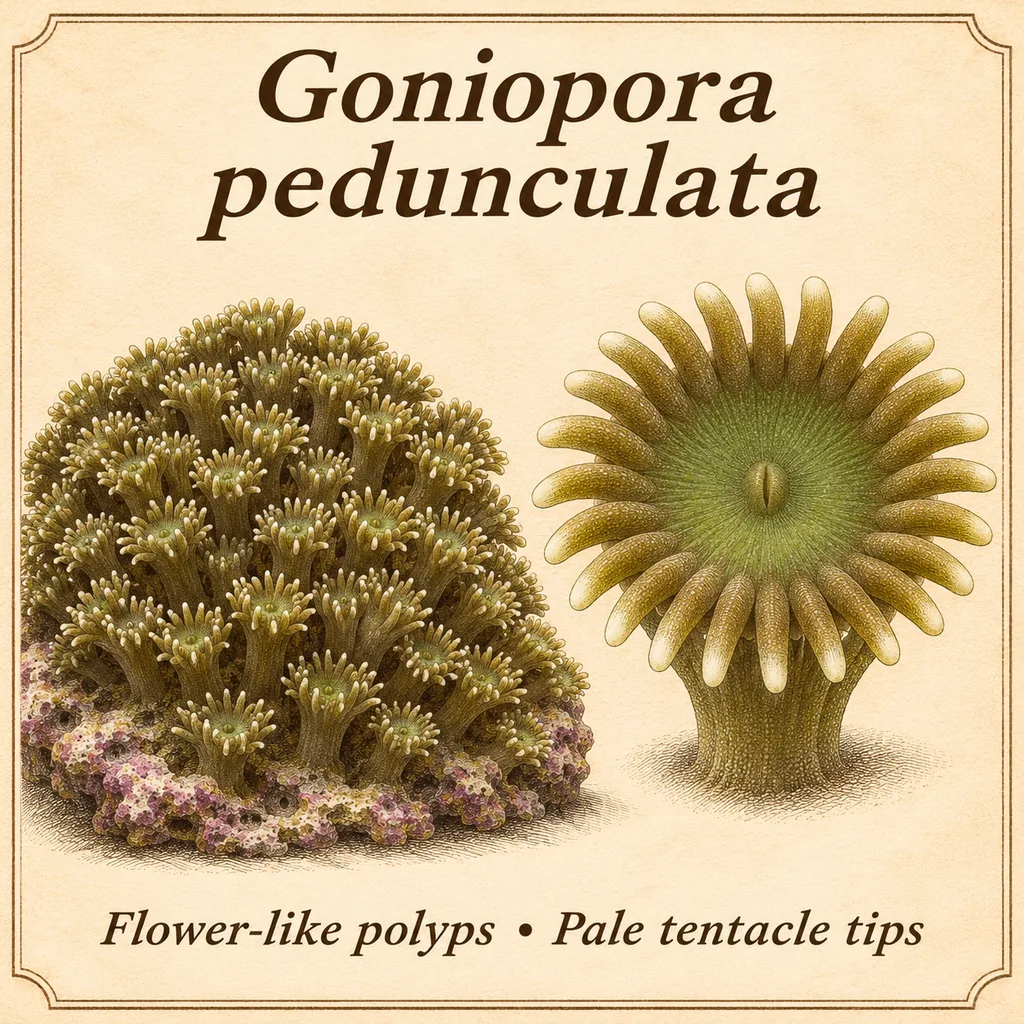
Goniopora pedunculata
Goniopora pedunculata
Same genus
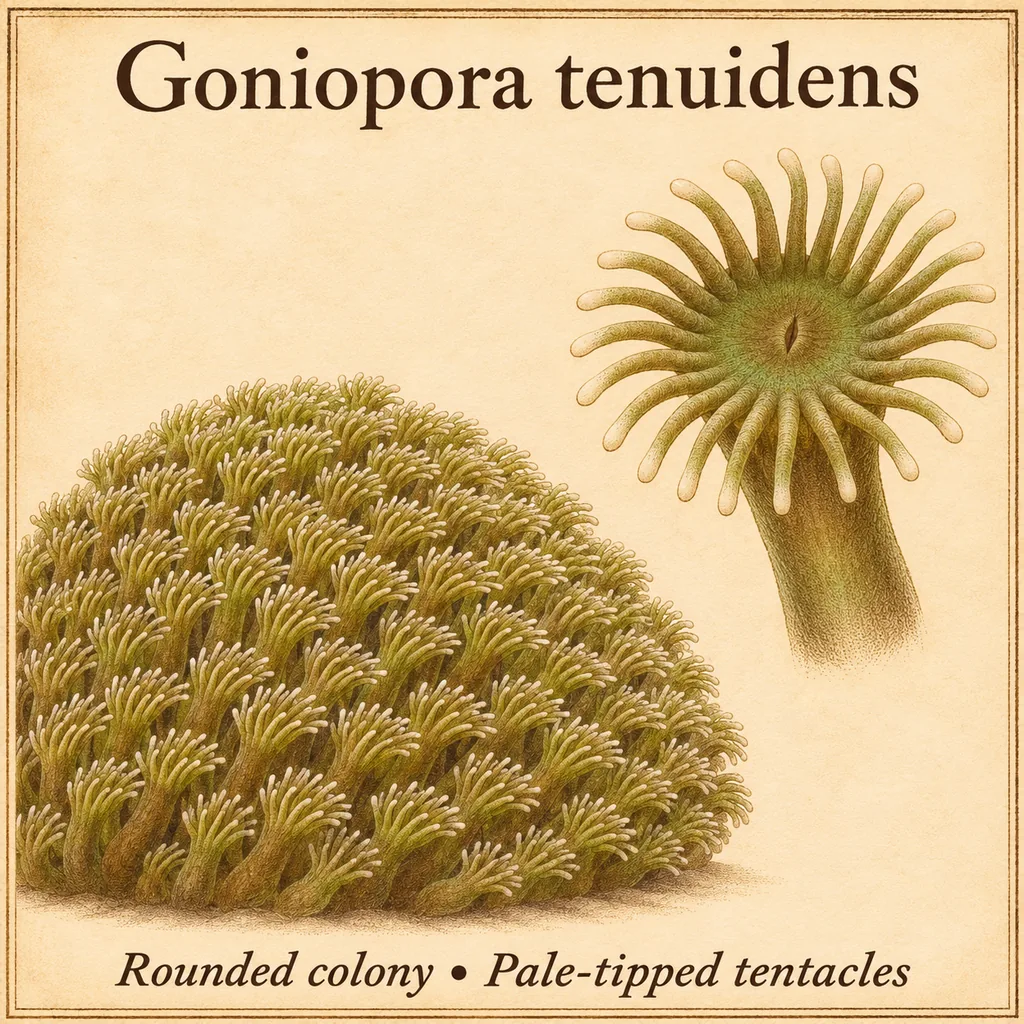
Goniopora tenuidens
Goniopora tenuidens
Same genus
Amazeballs Goniopora
Goniopora sp.
Same genus
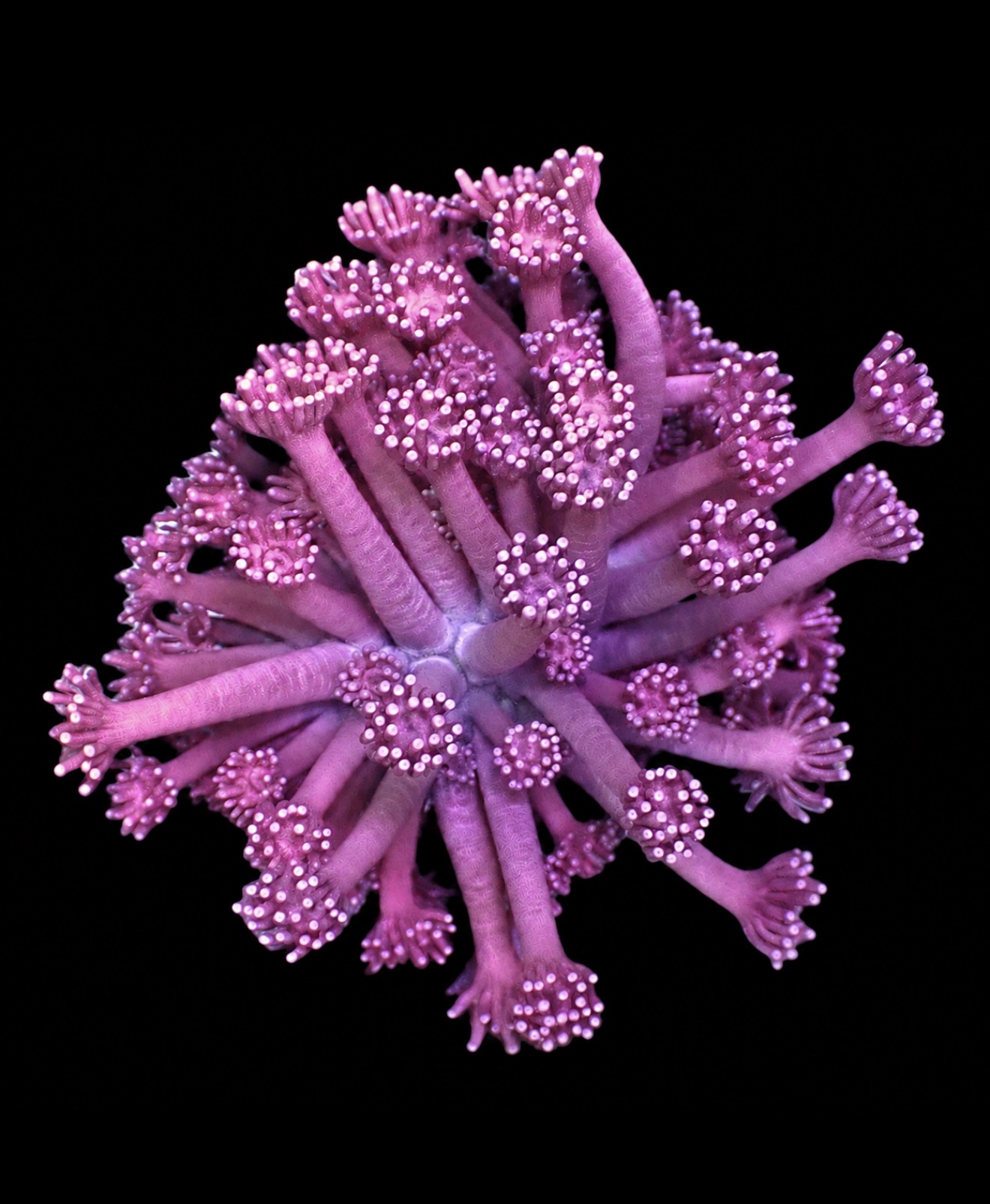
Barney the dinosaur Goni
Goniopora sp.
Same genus
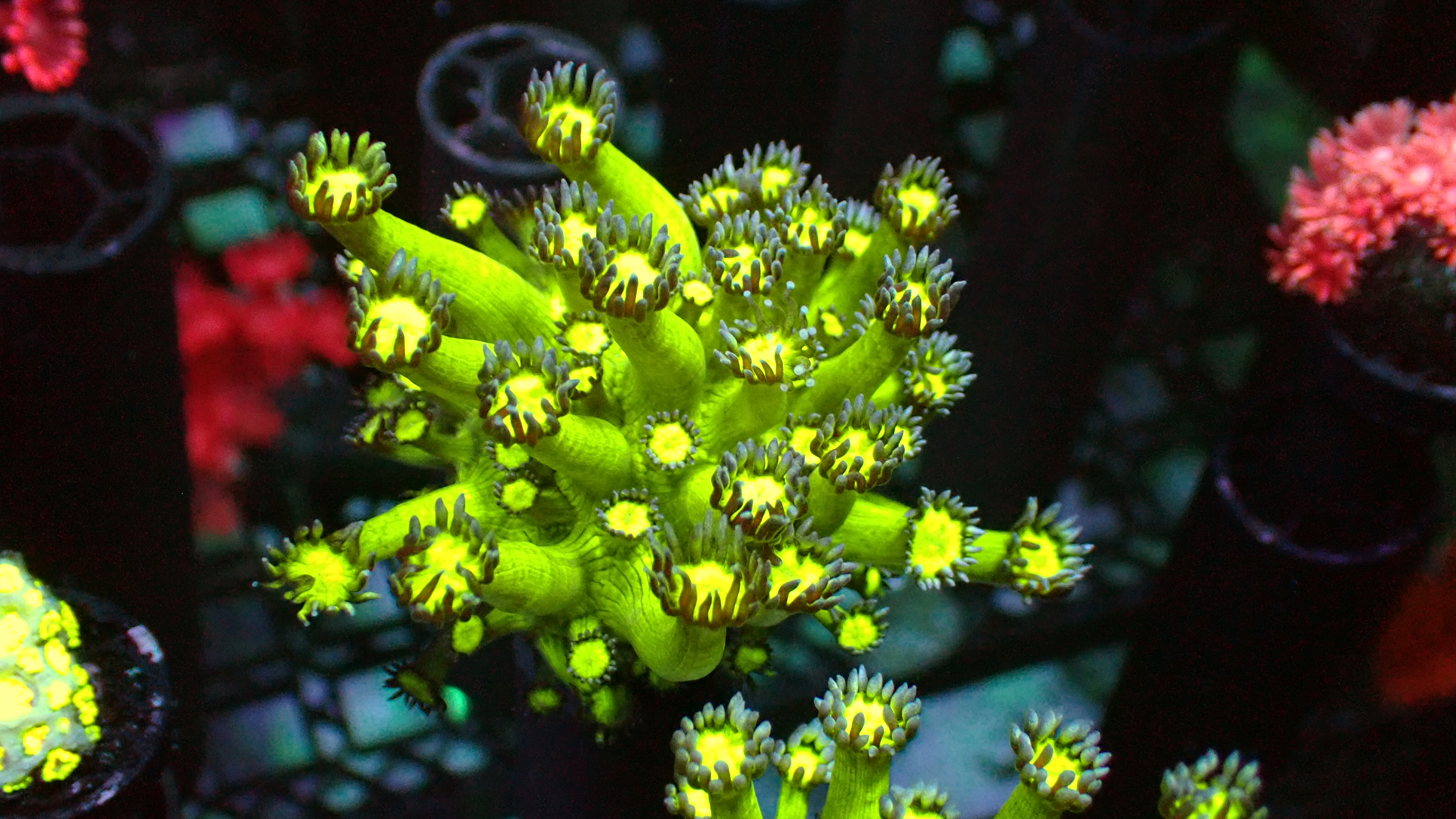
Bootleg glitter Goni
Goniopora sp
Same genus