 ▶ Video
Gallery
Videos
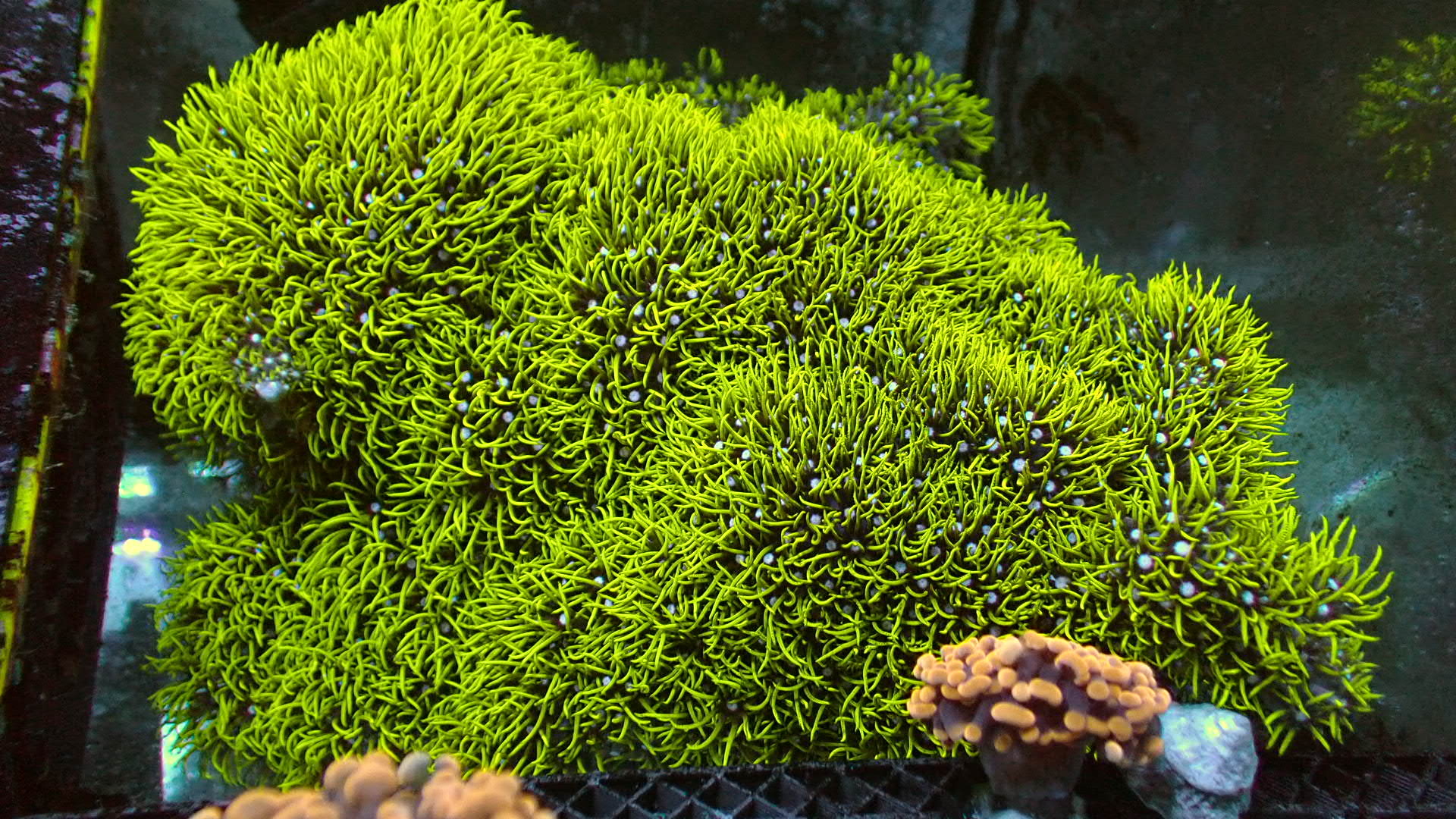
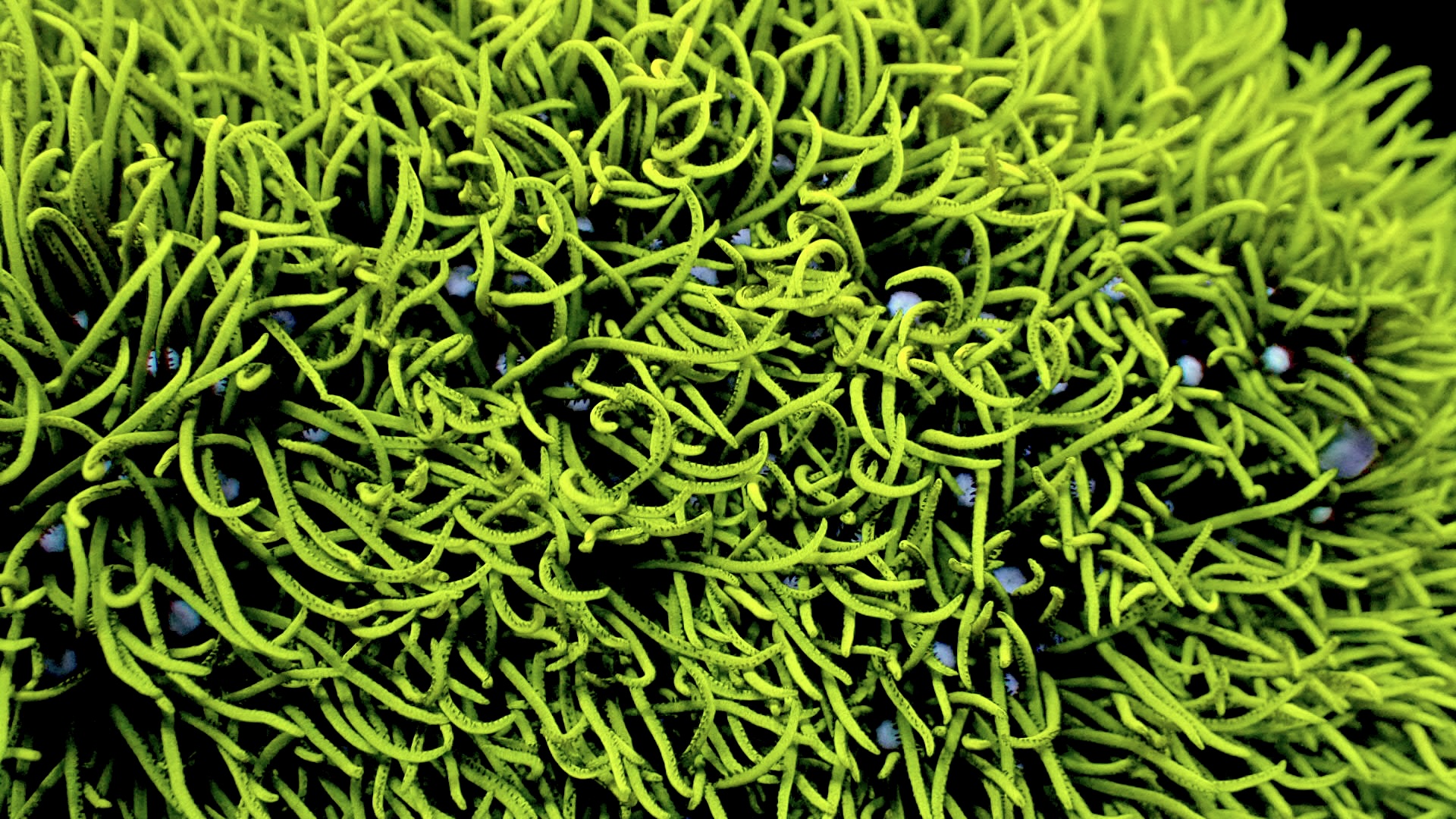
Green star polyps are a classic encrusting soft coral, listed here as Pachyclavularia violacea. The colony grows as a purple to tan mat with bright green polyps that open from small bumps across the surface. Each polyp has eight feathery tentacles that wave in the current when the colony is settled. Closed polyps leave the mat visible, and that mat is the surest way to tell this coral from other green encrusting types.

The entry lists beginner care, medium light, medium flow, bottom placement, peaceful behavior, and fast growth. That combination matches how most tanks run it. Place it low on rockwork or on an isolated rock on the sand bed. Medium light keeps the green bright. Very low light dulls the color and slows opening, while very strong light can keep polyps short through the middle of the day.
Flow should move the polyps without pinning them flat. Medium, shifting flow clears detritus off the mat and helps the colony open fully. Dead spots collect film on the mat, and a film-covered mat often stays closed for days. A gentle brush or a puff from a turkey baster during maintenance clears it without tearing tissue.
This coral spreads by extending its mat over nearby rock, sand, and glass. Fast growth is the main management job. An island rock surrounded by sand gives the keeper a natural border that is easy to trim back. Placed on the main rock structure, the mat can climb and cover space planned for other corals. The peaceful rating describes its sting, which is minimal. Its risk comes from overgrowth, because it can grow over the base of slower neighbors and shade them.
Feeding is optional. The polyps may take fine particulate food from the water column, and the colony gets most of its energy from light. Broadcast feeding a mixed reef is enough. Heavy target feeding tends to foul the mat and invite algae rather than speed growth in a meaningful way.
Common pitfalls start with placement. New keepers often glue a frag to prime rock and then spend months peeling mat back. Start on an island. Another pitfall is panic when the colony closes after a water change, a move, or an algae scrub. Closed periods of a day or two are common after disturbance. Check for film, pests, or a nearby stinging coral if closure stretches longer and the mat starts to thin or flake.
Fragging is simple once the mat is thick. Peel or cut a section of mat with polyps and glue it to a plug or rock, keeping the cut edge clean. Let new frags settle low with moderate flow until polyps open daily.
Field notes — what keepers report
- Keepers widely agree on the island rule. Reports from keepers who placed green star polyps on main rockwork describe steady trimming work, while keepers who isolated the colony describe it as a low-effort, high-movement coral for the bottom of the tank. Both sides describe growth as fast once the mat takes hold.
- Opening behavior gets mixed reports after changes. Some keepers describe colonies reopening within hours of a move, while others describe several closed days with no lasting harm once flow cleared detritus off the mat. The shared check is the mat itself: firm and purple reads as waiting, while thinning or peeling reads as a placement or water problem.
- Color reports vary with light. Keepers under blue-heavy light describe a vivid neon green, while keepers under whiter light describe a softer, more yellow-green tone on the same type of colony. Most report the difference as presentation rather than health, as long as polyps open fully and the mat keeps spreading.

Field Notes
Related species
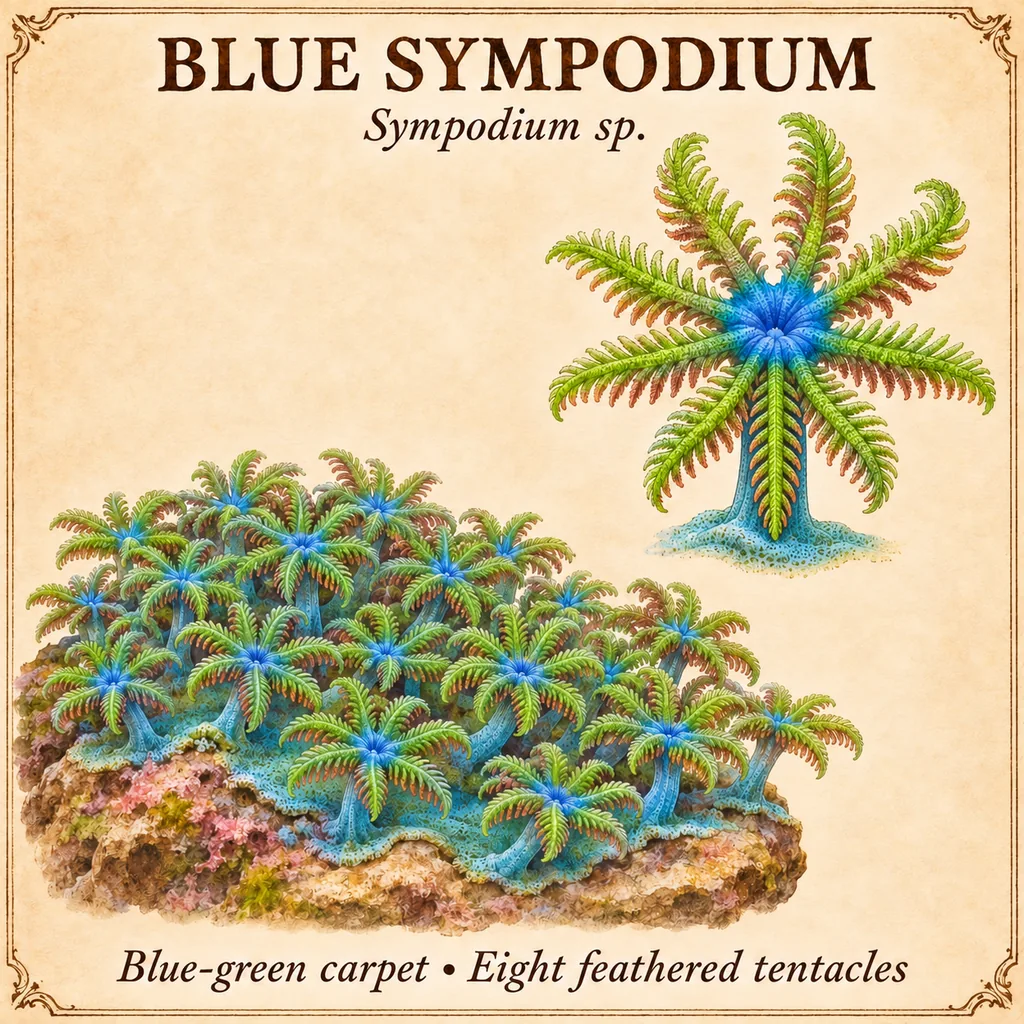
Blue Sympodium
Sympodium caeruleum
Similar care · Soft

Blueberry Haze Zoas
Zoanthus sp.
Similar care · Soft

Blueberry Zoanthids
Similar care · Soft

Burning Willow Zoas
Zoanthus sp.
Similar care · Soft

Cladiella Soft Coral
Cladiella australis
Similar care · Soft
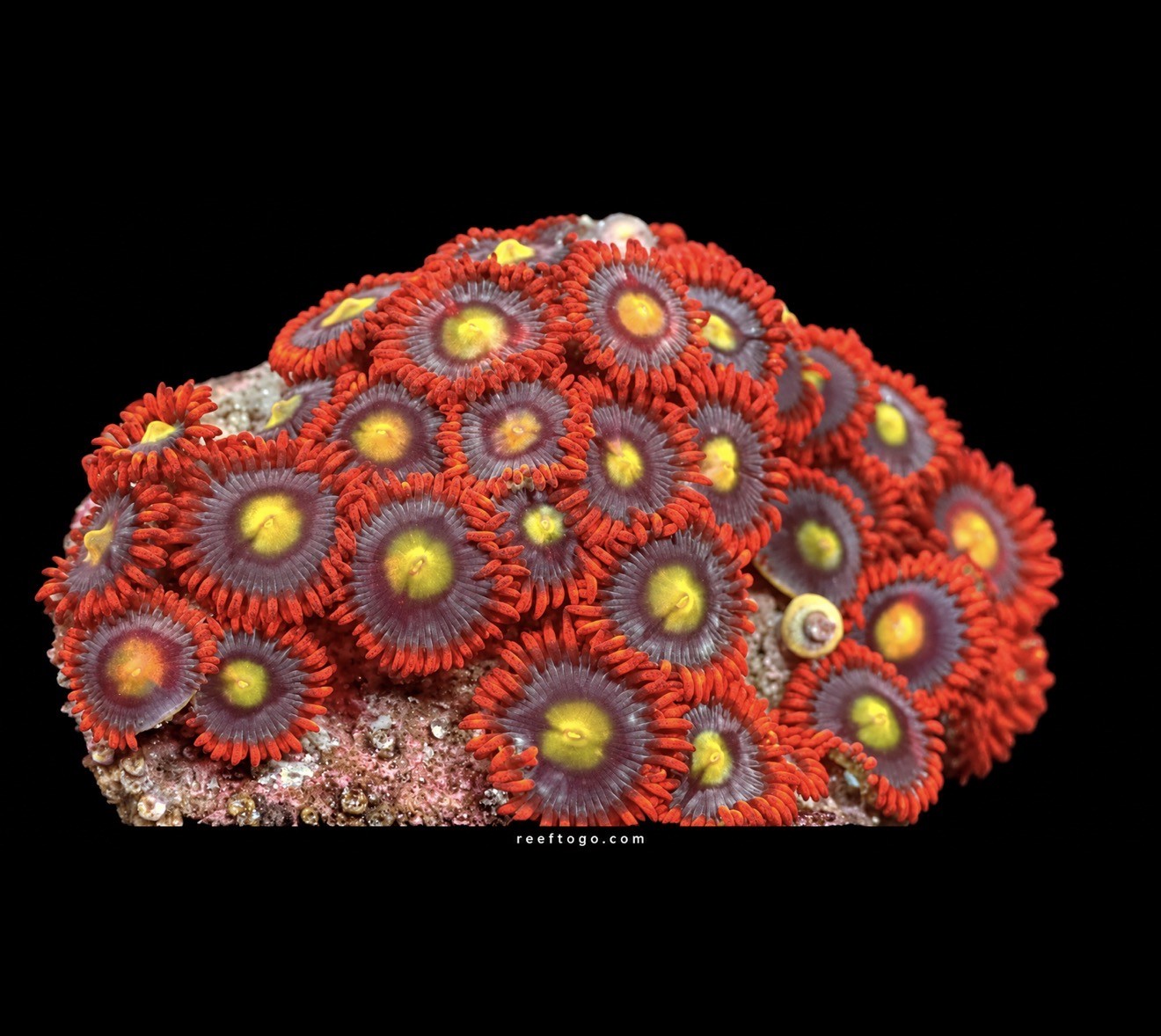
Fire and ice zoanthids
Zoanthus sp
Similar care · Soft
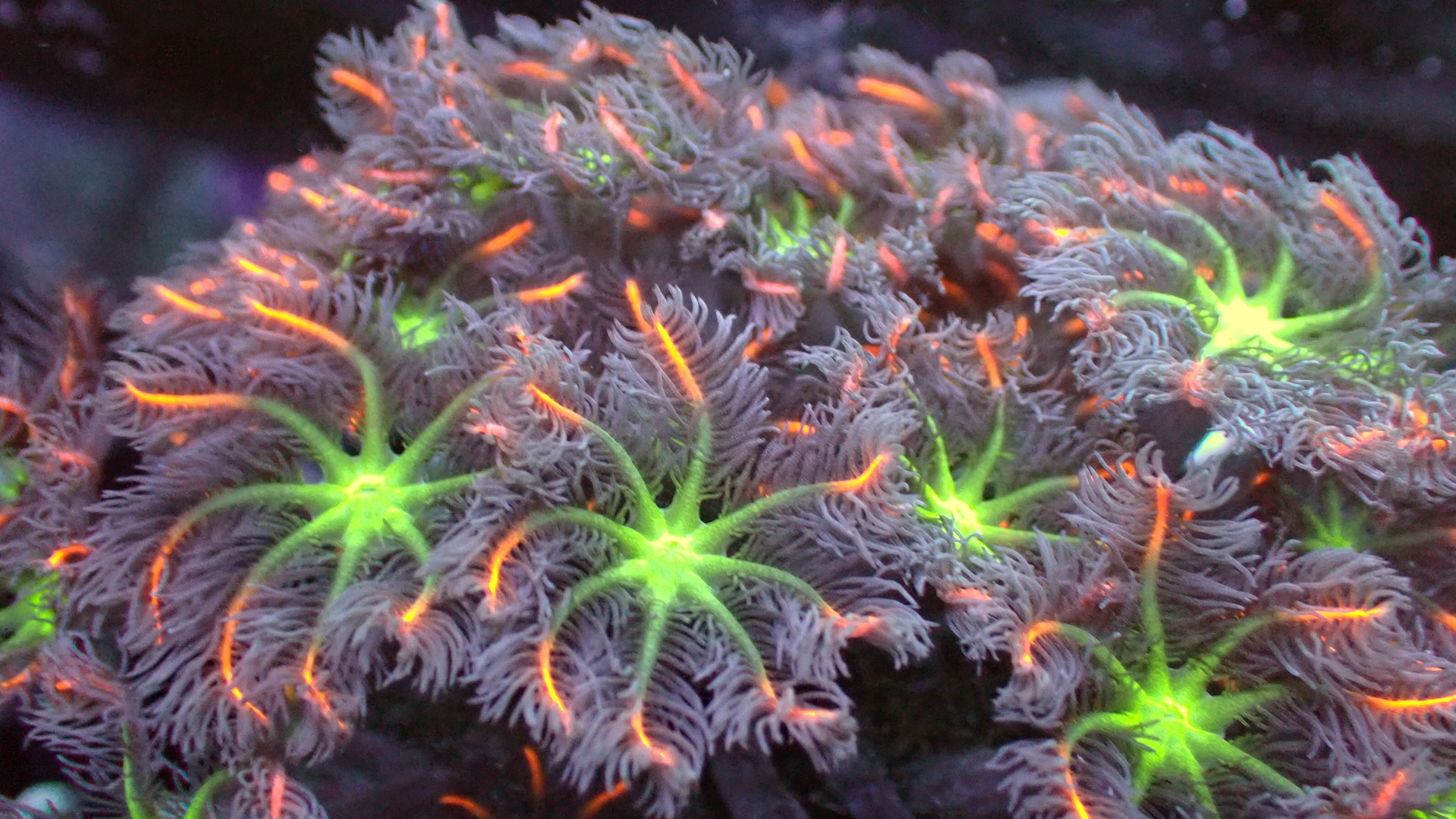
Firework cloves polyps
Clavularia sp.
Similar care · Soft
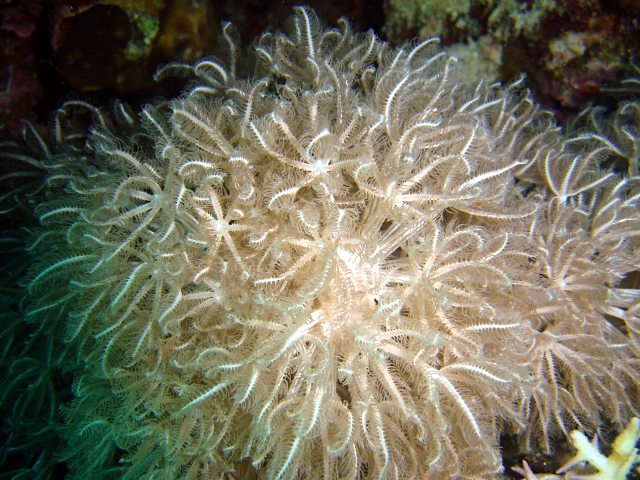
Giant Anthelia
Anthelia glauca
Similar care · Soft