Horn Coral
Hydnophora exesa

Care facts
- Care
- Intermediate
- Light
- Medium-High
- Flow
- Medium-High
- Place
- Mid
- Space
- Aggressive
- Origin
- Indo-Pacific
- Growth Rate
- Moderate
Gallery
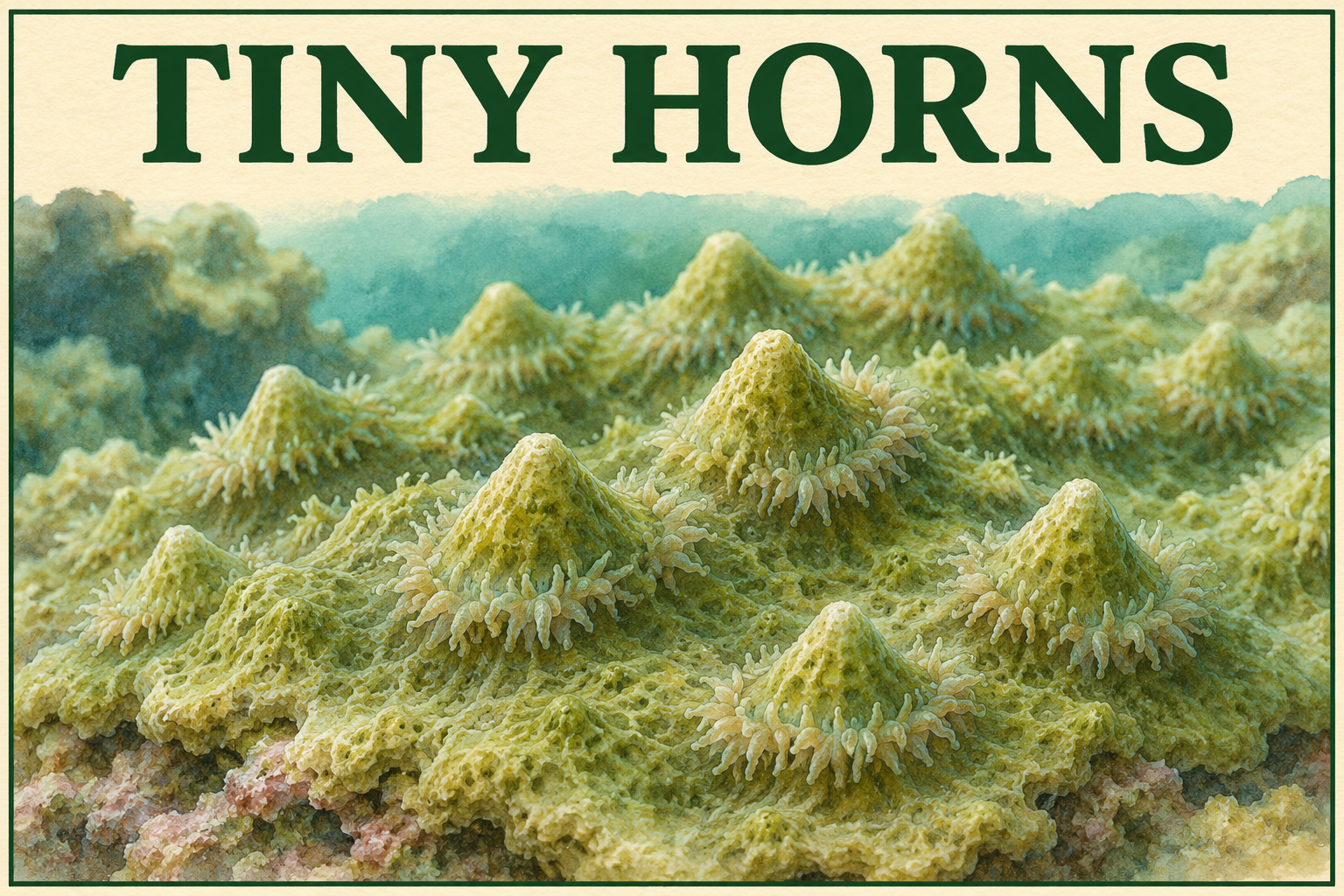
Horn Coral wears a field of tiny stone horns. Look between the peaks and you'll see a shaggy coat of tentacles. It's a great coral to watch up close and a bad one to crowd.
The horns are stone
1. Meet the hydnophores. Those little cones are parts of the hard skeleton, not tentacles or mouths. The soft tentacles stick out between them.
2. One coral, several shapes. Horn Coral can spread as a crust, build a lumpy mound, or put up short branches. More than one of those shapes can show up on the same colony.
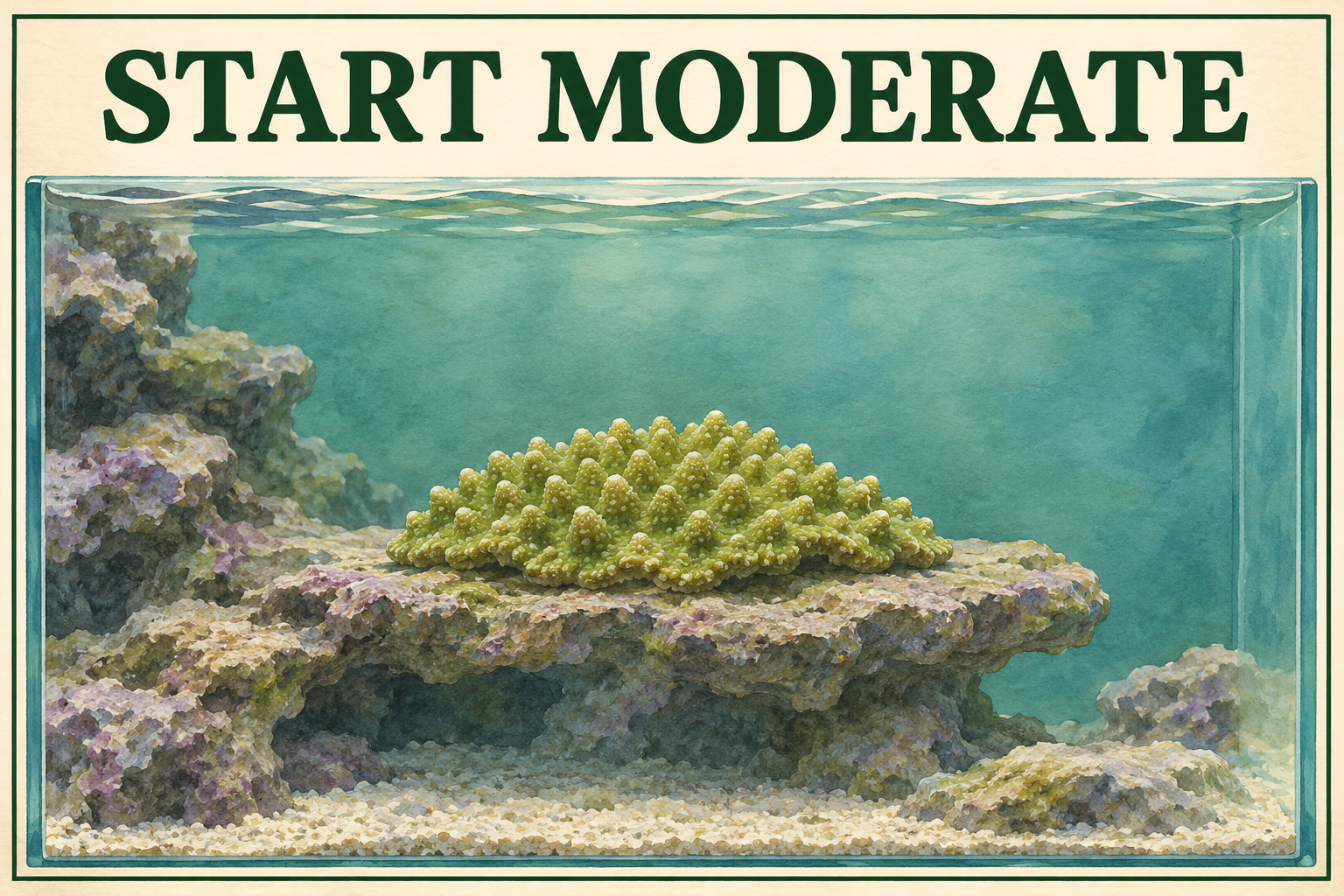
Start with moderate light
3. Skip the brightest shelf. Start a new frag in moderate light. Give it time to settle before turning up the lamp or moving it higher.
4. Check for fading. Take a photo when you place the frag. If its tissue pales, check the light, water and recent changes before you adjust anything.
Move water past it
5. Go broad, not sharp. Send a moving current past the coral so debris doesn't pile up between the horns. Point a narrow pump jet away from the flesh.
6. Find a firm perch. Start on a stable middle ledge with room for water to move around it. Give the base room to spread across the rock.

Keep a gap
7. The horns aren't the weapon. Horn Coral can injure other corals nearby. Leave a wide buffer, even when the colonies don't touch in daylight.
8. Watch the edges. Look after lights-out and check the gap again as the colony spreads. Use a separate rock if that makes it easier to keep neighbors out of reach.

Keep the water steady
9. Test before you tweak. Keep temperature and salinity steady. Check alkalinity and calcium and correct drifts in small steps.
10. A little food goes a long way. Offer a small piece of meaty coral food when the tentacles are out. Remove what it doesn't catch instead of letting it collect between the horns.

Field notes — what keepers report
11. Different spots, different results. A coral farm favors bright light and strong indirect movement for its trade Hydnophora. A keeper reported a coral improving after a move to partial shade and lower flow. Neither setup is a universal setting for Horn Coral.
12. The gap shrinks as it grows. One keeper watched a Hydnophora spread across much of one side of a big tank over eight years. Another saw a Hydnophora damage a nearby toadstool. These are general Hydnophora tank reports, not verified species IDs.
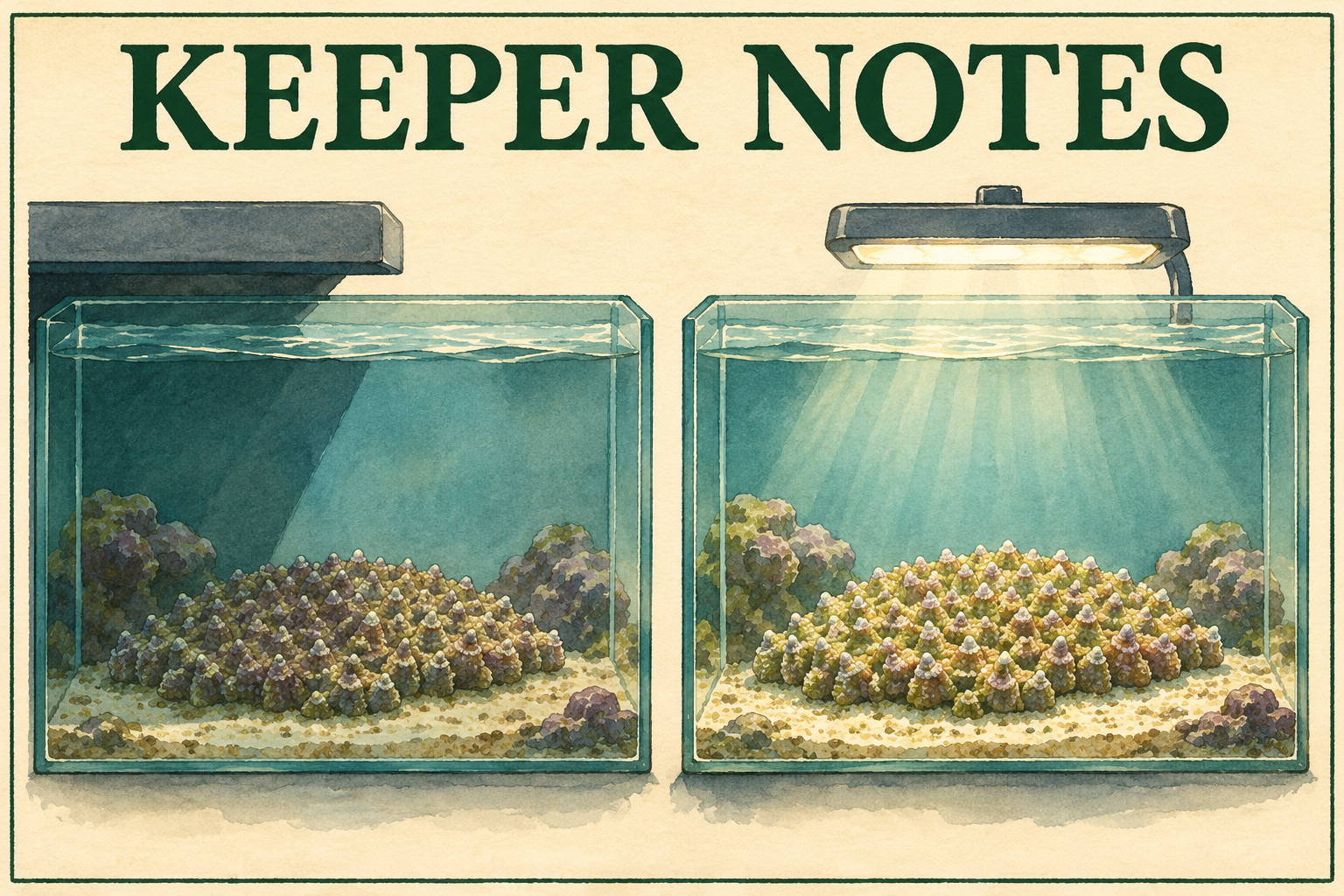
Start with a firm rock, steady water, and more room than your frag seems to need. Then watch the shaggy tentacles and the new stone horns as the colony grows.
Field Notes
Related species

Maze Hydnophora
Hydnophora rigida
Same genus

Ridge Coral
Merulina ampliata
Similar care · SPS

Aquaman Montipora
Similar care · SPS
Cookies & Cream Cauliflower Coral
Similar care · SPS

Finger Porites
Porites cylindrica
Similar care · SPS
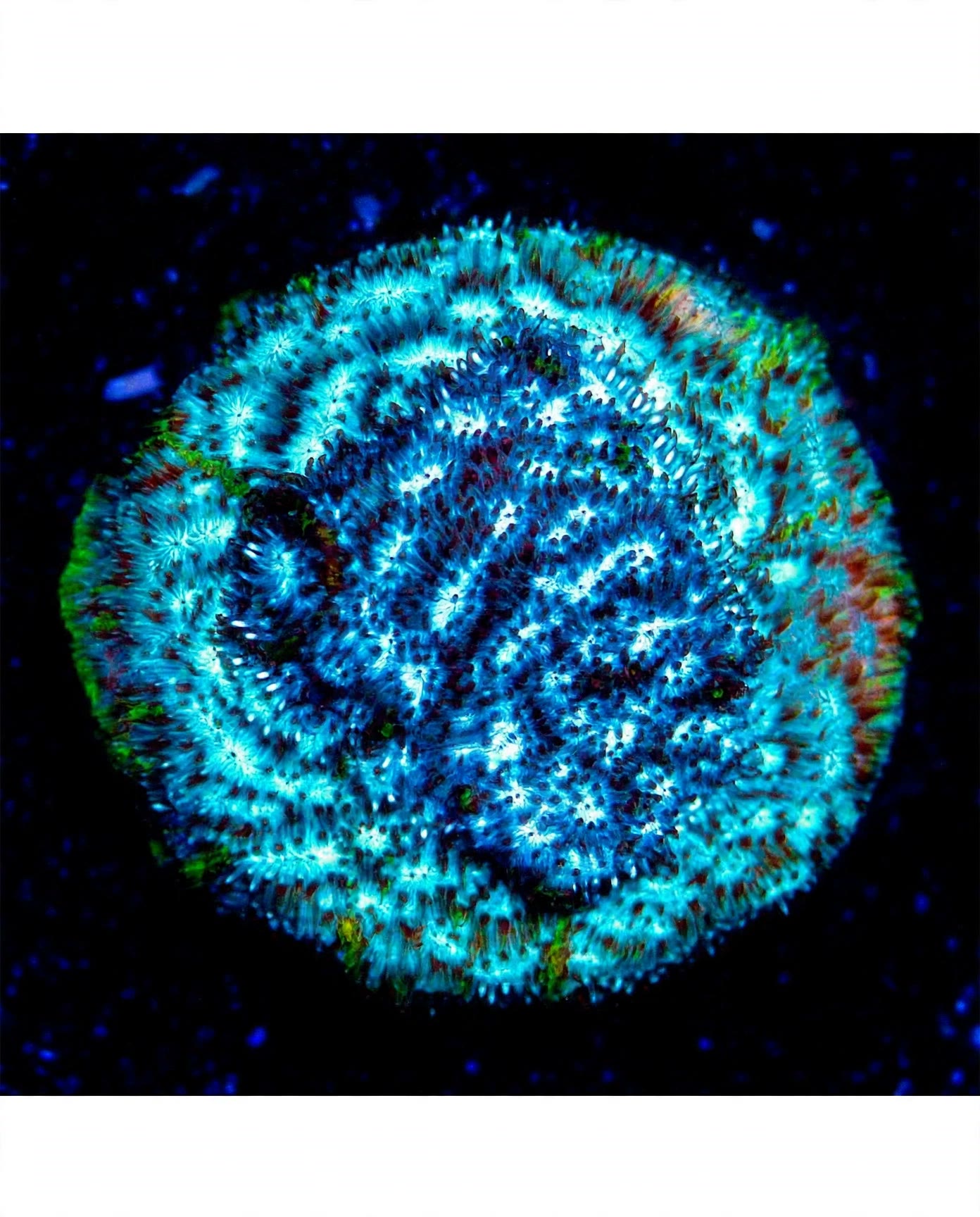
Frankenstein Leptoseris
Similar care · SPS

Golden Charm Psammocora
Similar care · SPS

Green slimer acropora
Acropora yongei
Similar care · SPS