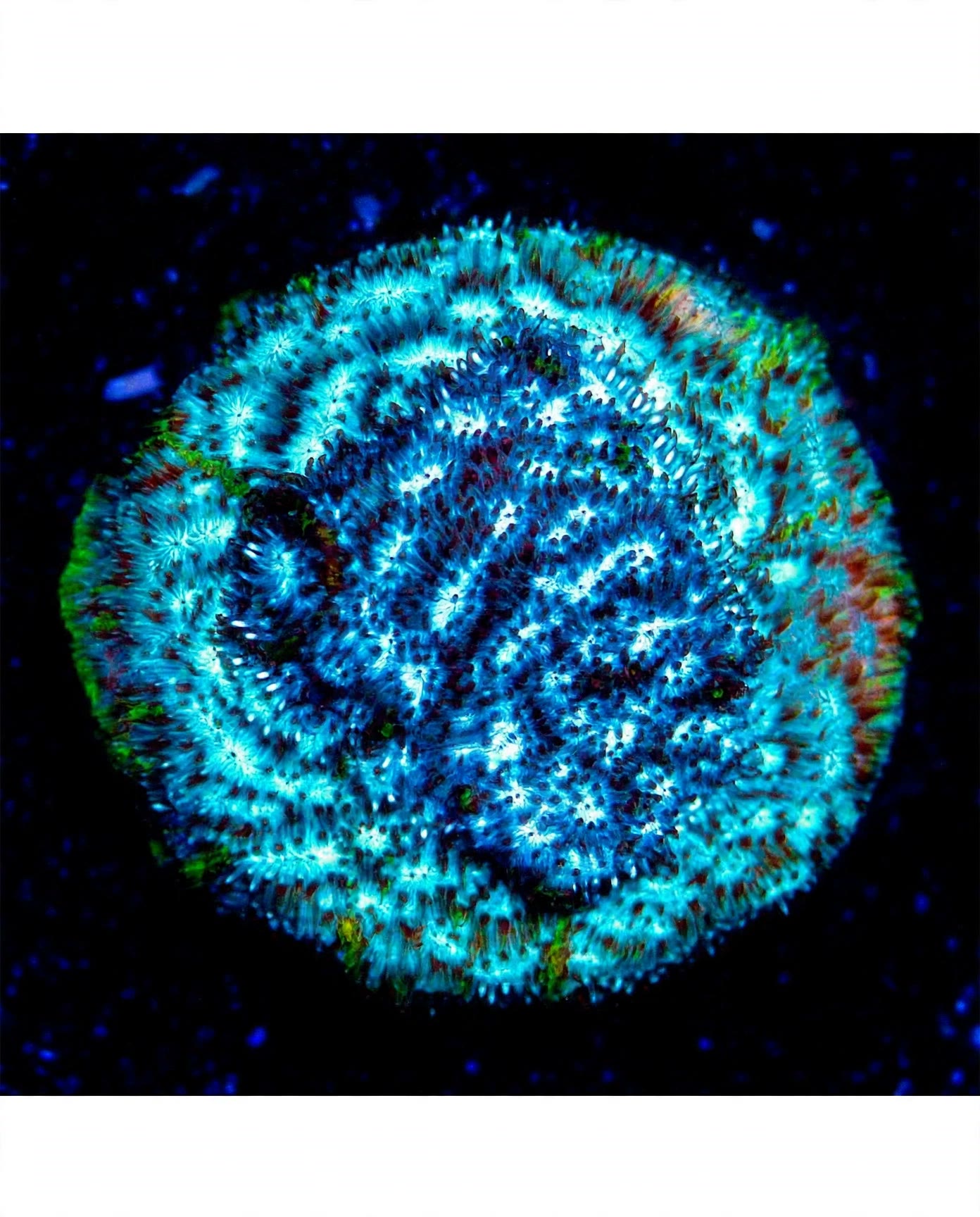
Maze Hydnophora
Hydnophora rigida

NPS photo - Bryan Harry · Public domain · source
Photo: NPS photo - Bryan Harry, public domain in the United States, via Wikimedia Commons.
Care facts
- Care
- Intermediate
- Light
- Medium-High
- Flow
- Medium-High
- Place
- Mid
- Space
- Aggressive
- Origin
- Indo-Pacific
- Growth Rate
- Moderate
Gallery
Maze Hydnophora builds a maze out of stone. Look along a branch and tiny peaks turn into ridges. The soft tentacles between them look fuzzy when they open. Set this coral where you can see those details without putting another frag in its reach.
1. A maze made of stone
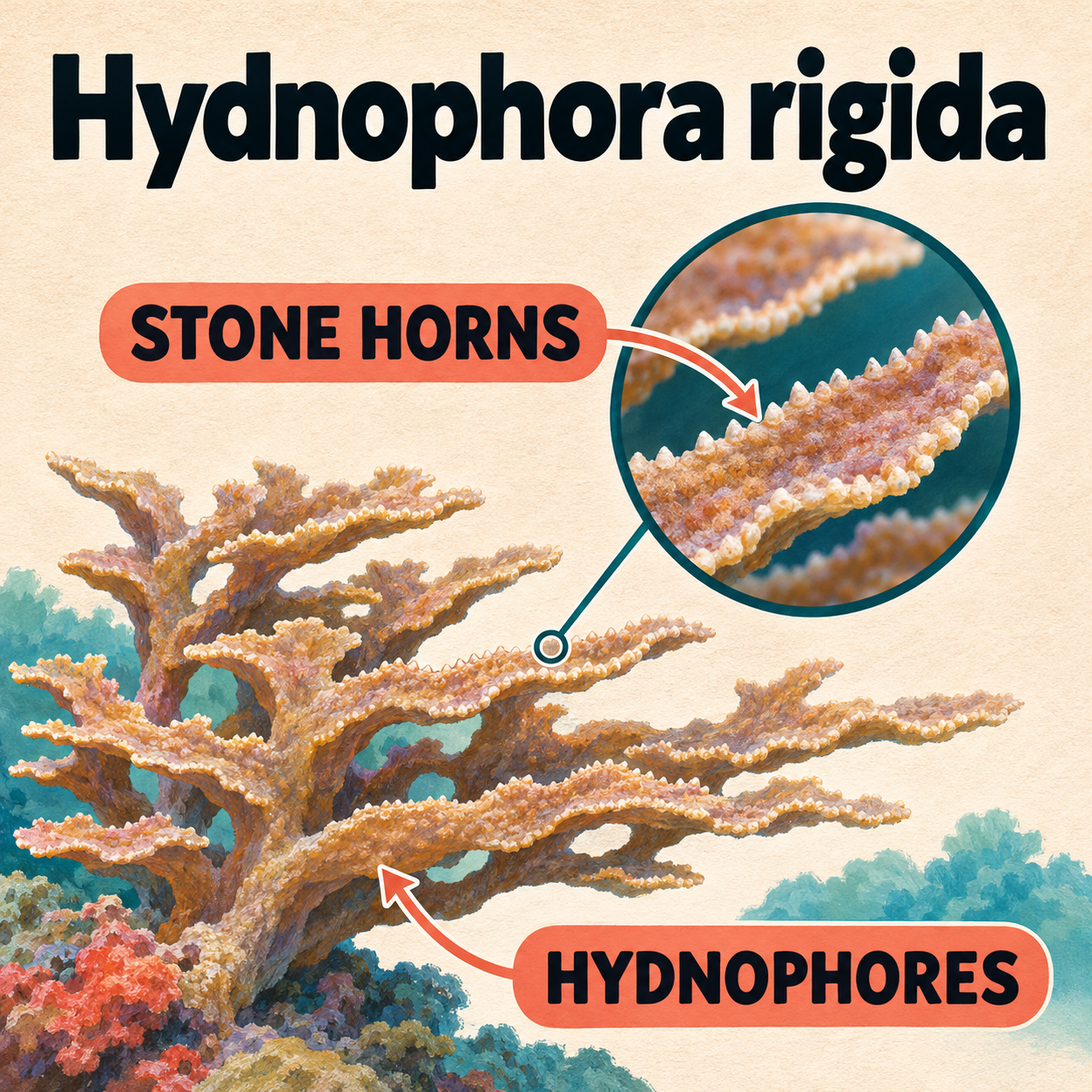
1. Those bumps are solid skeleton. Each little mound is a hydnophore. It forms where the walls around neighboring polyps meet. Look for soft tentacles between the peaks, not a mouth at the top of each peak.
2. Follow the ridges. Maze Hydnophora builds narrow branches with flattened sides. Its little peaks often join into lines down those sides. In the wild, look for this form on shallow Indo-Pacific reefs, including lagoons and sheltered slopes.
2. Find its light
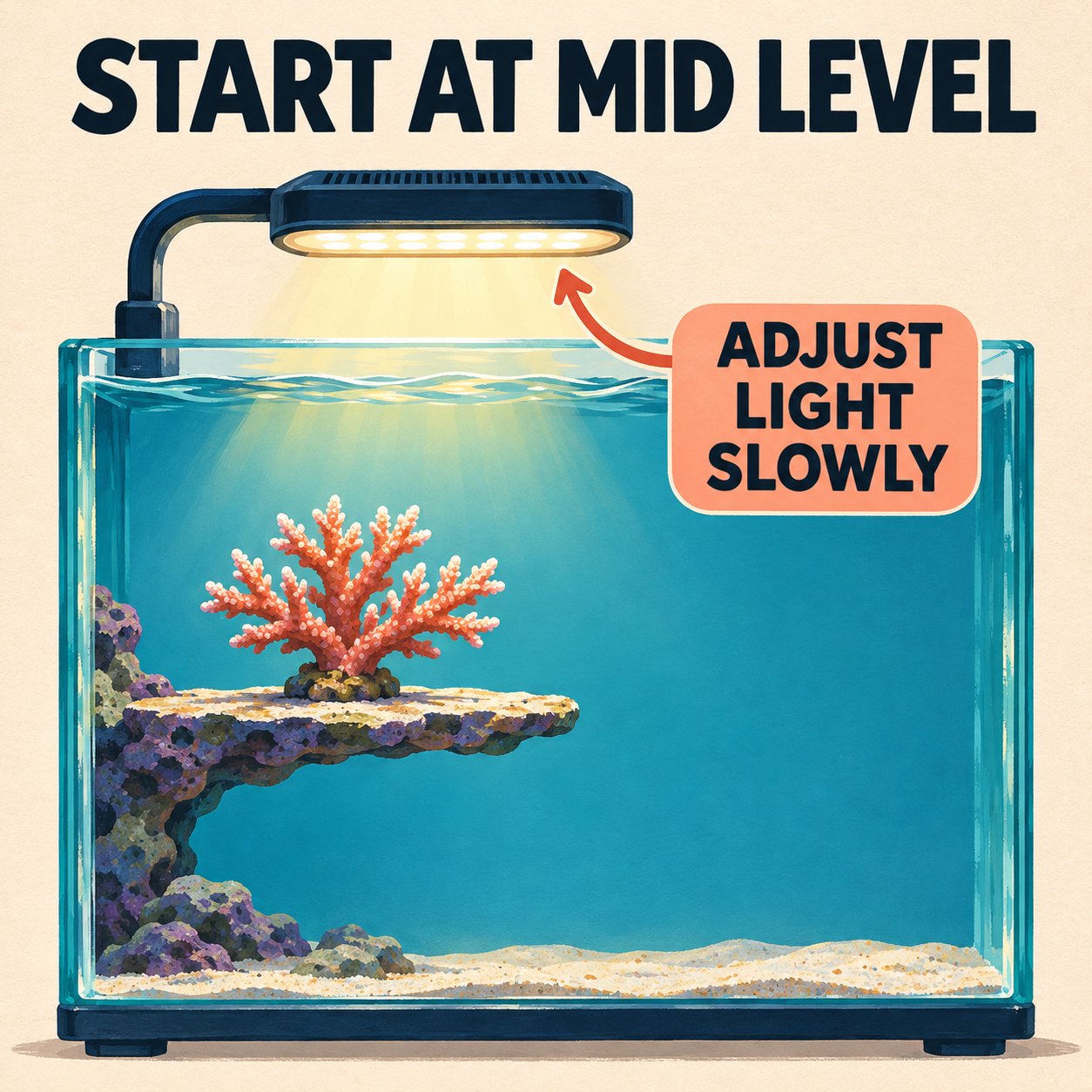
3. Start in the middle. Pick a steady piece of mid-level rockwork with room above and on all sides. Aim for medium to high light once the frag is settled. Skip the brightest shelf on day one.
4. Make changes slowly. Raise the light in small steps. Check the coral under the same lights each time. If it grows paler after a jump in brightness, back off and check your water before changing anything else.
3. Give the branches moving water
5. Send flow around it. Aim for medium to strong, changing current that passes through the branches. Point pumps past the colony, not straight into it. The goal is moving water without a constant blast.
6. Watch the little pockets. Check between branches for trapped debris. If it keeps settling in the same spot, change the angle of the flow a little and check again. Look again as the colony fills out.

4. Keep the neighbors back
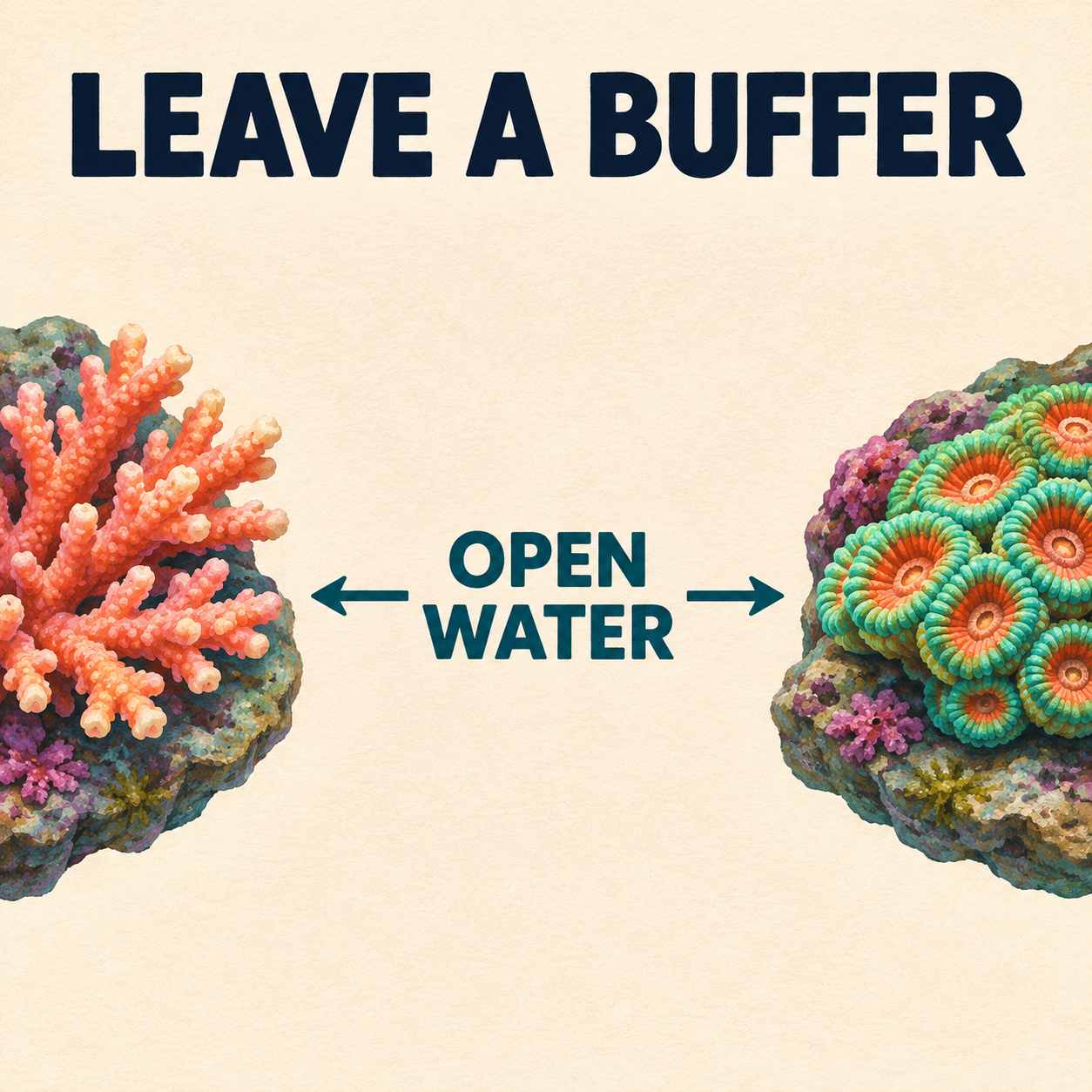
7. Leave an open gap. Give this coral a spot of its own, well away from the next colony. Its digestive threads can damage coral tissue they touch, even when the hard skeletons are still apart. Don't tuck a favorite frag directly downstream.
8. Measure from the living edge. The plug stays put while the branches grow. Check the open gap after lights-out and again as both colonies expand. If threads reach a neighbor or you spot fresh bare skeleton facing the Maze, move the neighbor out of reach.
5. Keep the reef steady
9. Test before you dose. This coral builds a hard skeleton. Track alkalinity and calcium to see what the tank uses. Keep salinity and temperature steady, and fix a trend instead of chasing one odd reading.
10. Food is an extra. Light feeds the algae living in its tissue, and the polyps can catch small food in the water. If you offer a little fine reef food, start small. Don't let food pile up in the branches.

Field notes — what keepers report
11. Two tanks, two light spots. One Hydnophora keeper found their colony liked bright light. Another grew a named Hydnophora near the bottom of the tank. These are genus-level accounts, not light measurements for Maze Hydnophora.
12. Watch for wandering threads. One keeper saw their Hydnophora put out threads and leave damaged tissue on a nearby Pocillopora. A different keeper reported good color at mid-height in strong, intermittent flow. Those are separate genus-level observations, not reasons to try close placement.

Give the Maze good light, moving water, and a patch of reef all its own. Then watch the ridges lengthen and see what the coral does once the lights go down.
Field Notes
Related species

Horn Coral
Hydnophora exesa
Same genus

Ridge Coral
Merulina ampliata
Similar care · SPS

Aquaman Montipora
Similar care · SPS
Cookies & Cream Cauliflower Coral
Similar care · SPS

Finger Porites
Porites cylindrica
Similar care · SPS
Frankenstein Leptoseris
Similar care · SPS

Golden Charm Psammocora
Similar care · SPS

Green slimer acropora
Acropora yongei
Similar care · SPS