Lunar eclipse zoanthids
Gallery
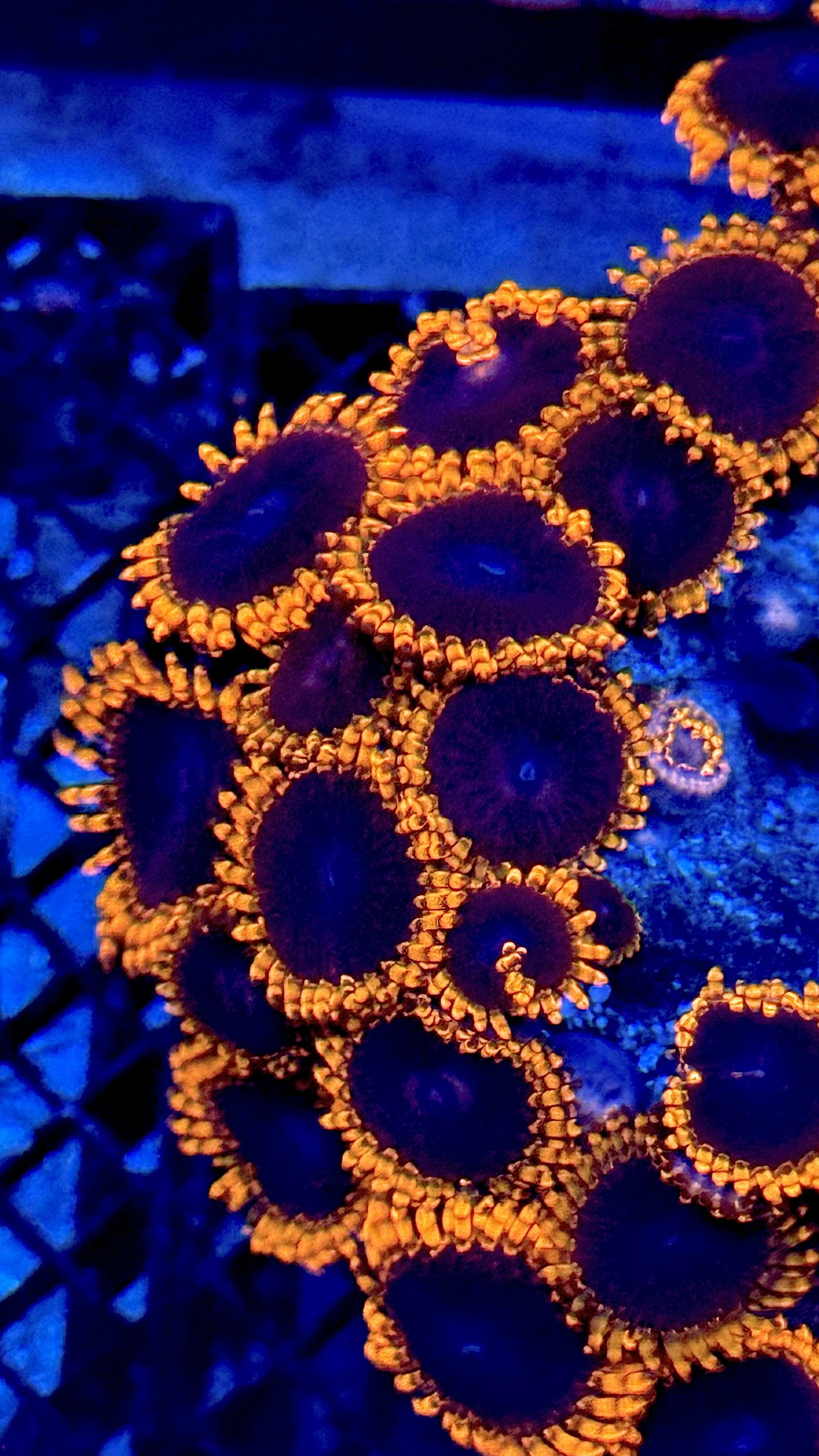
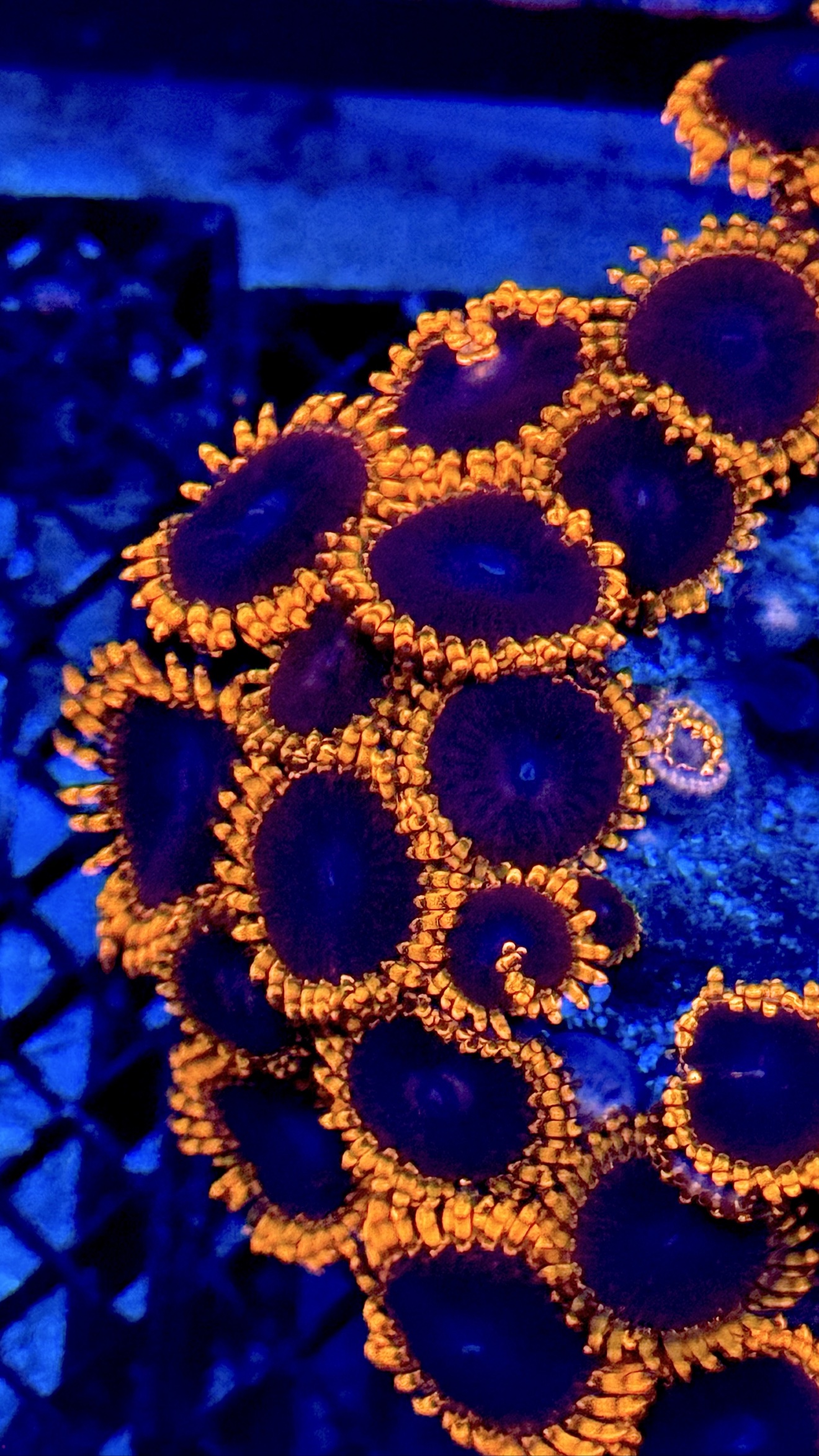
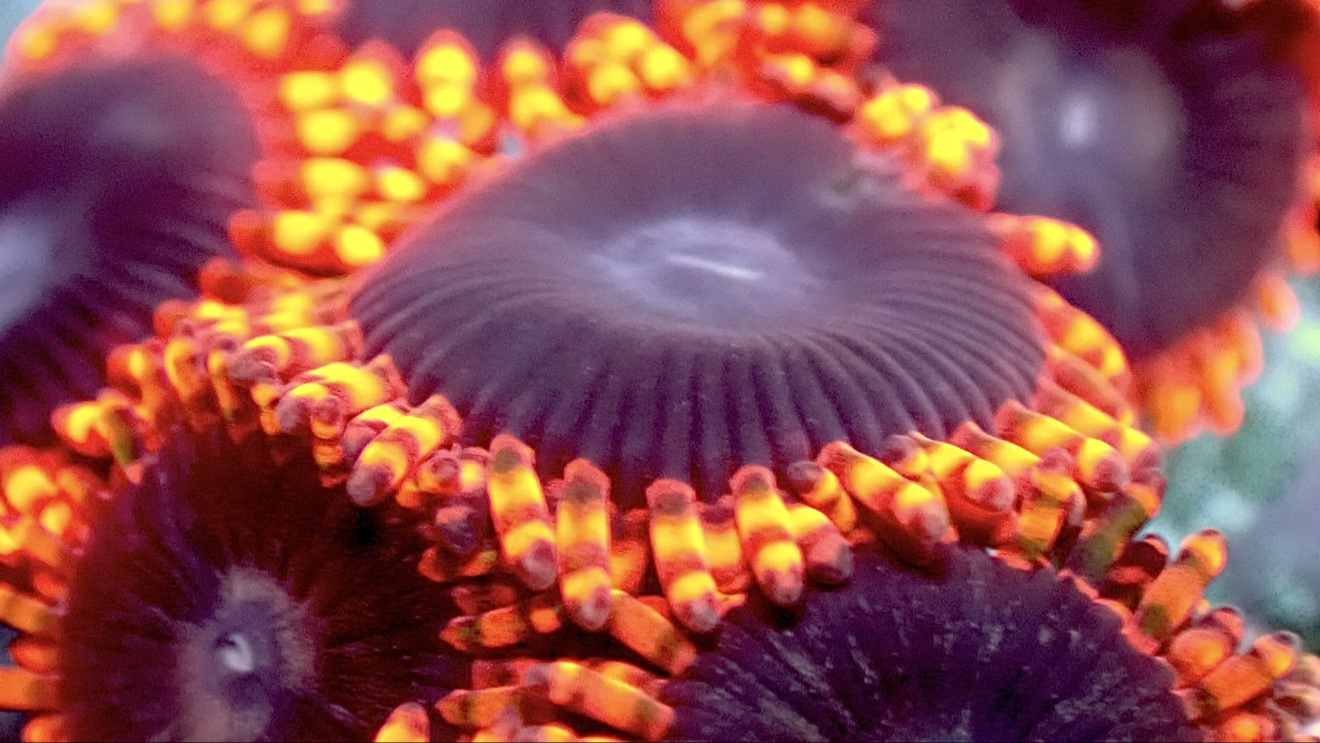
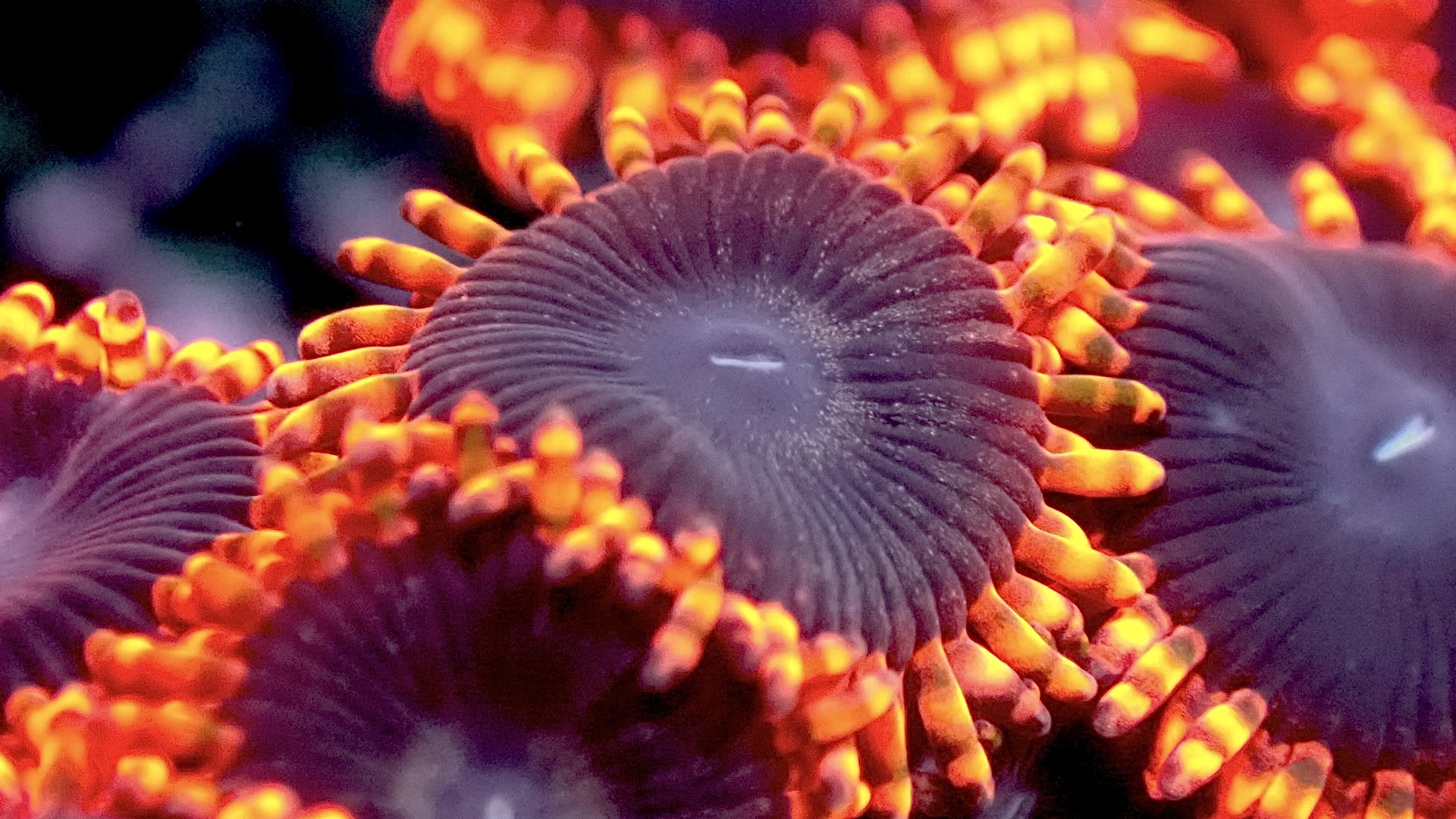
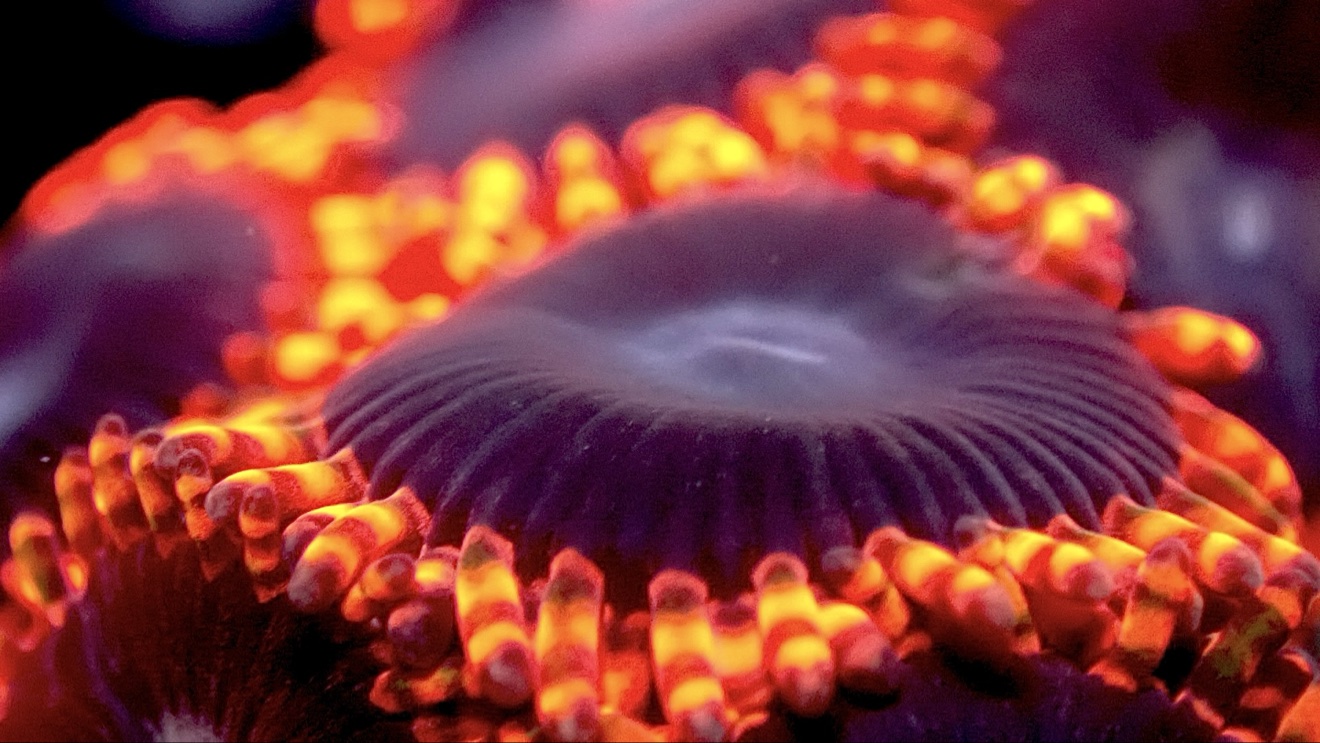
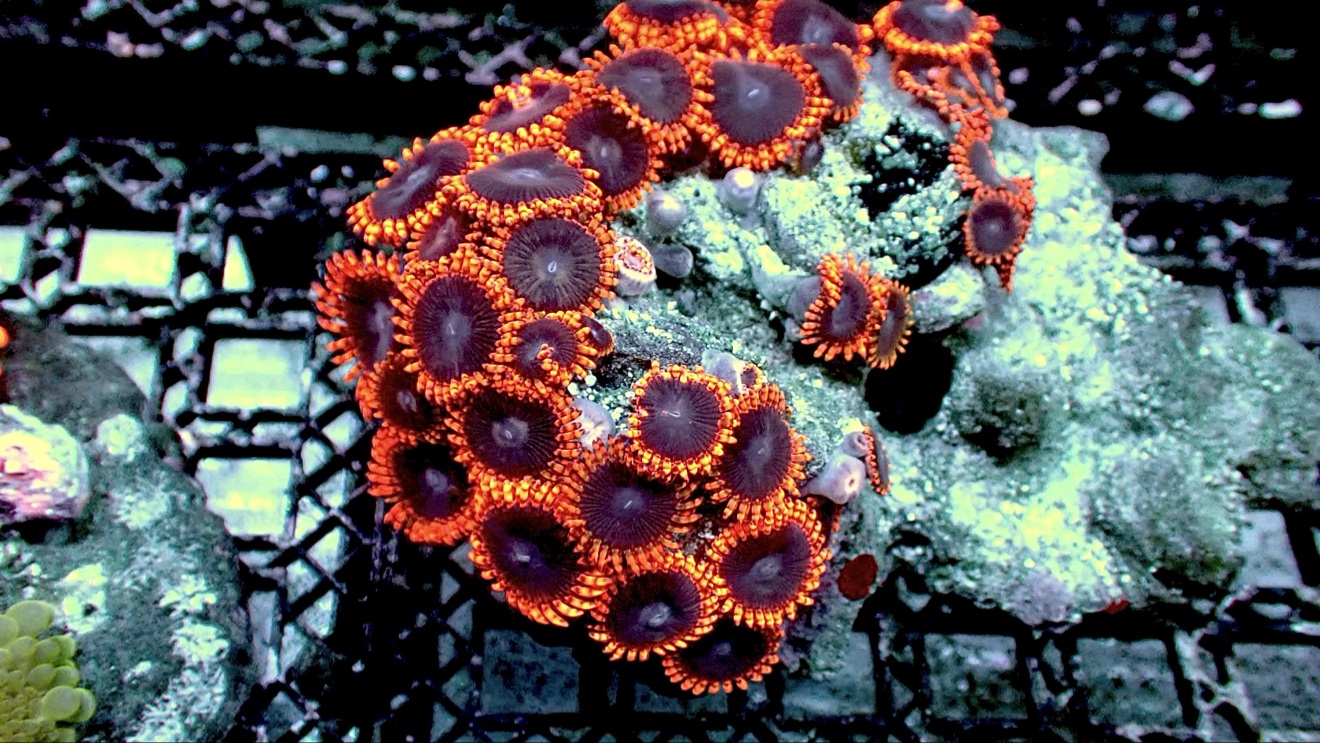
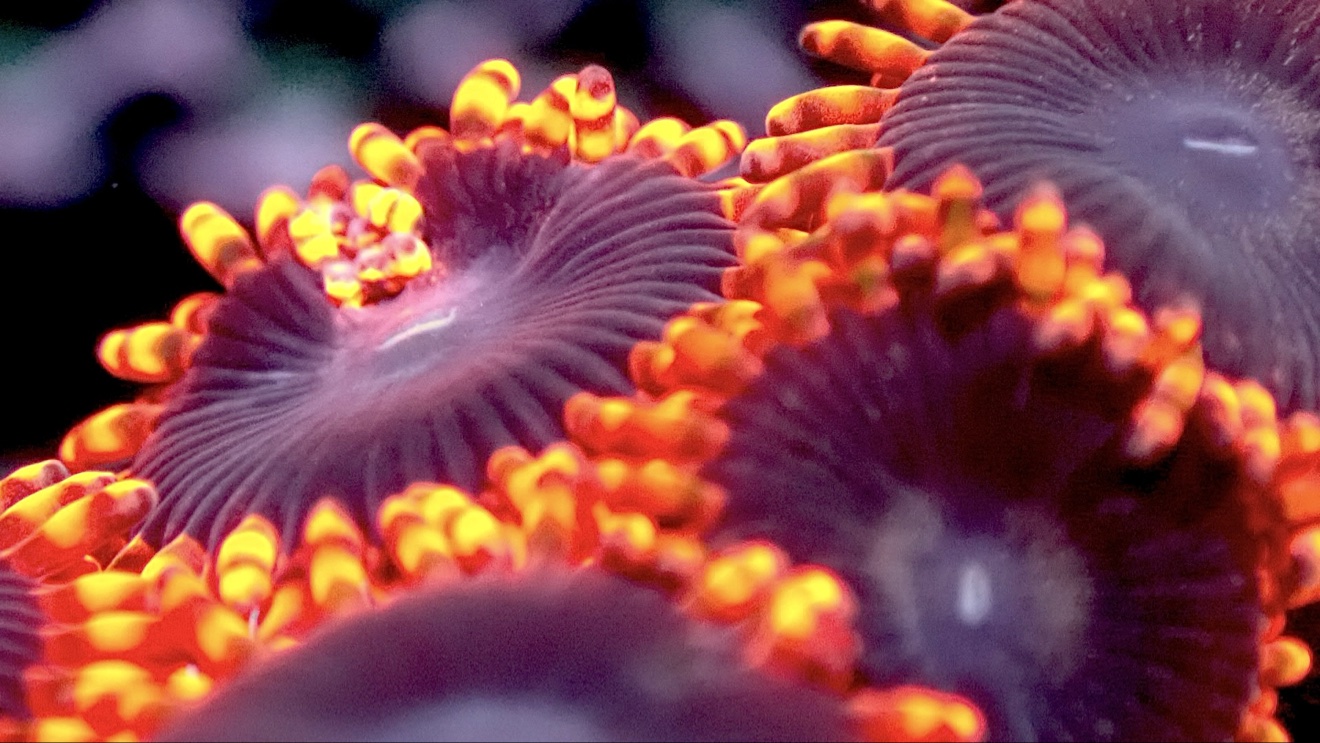
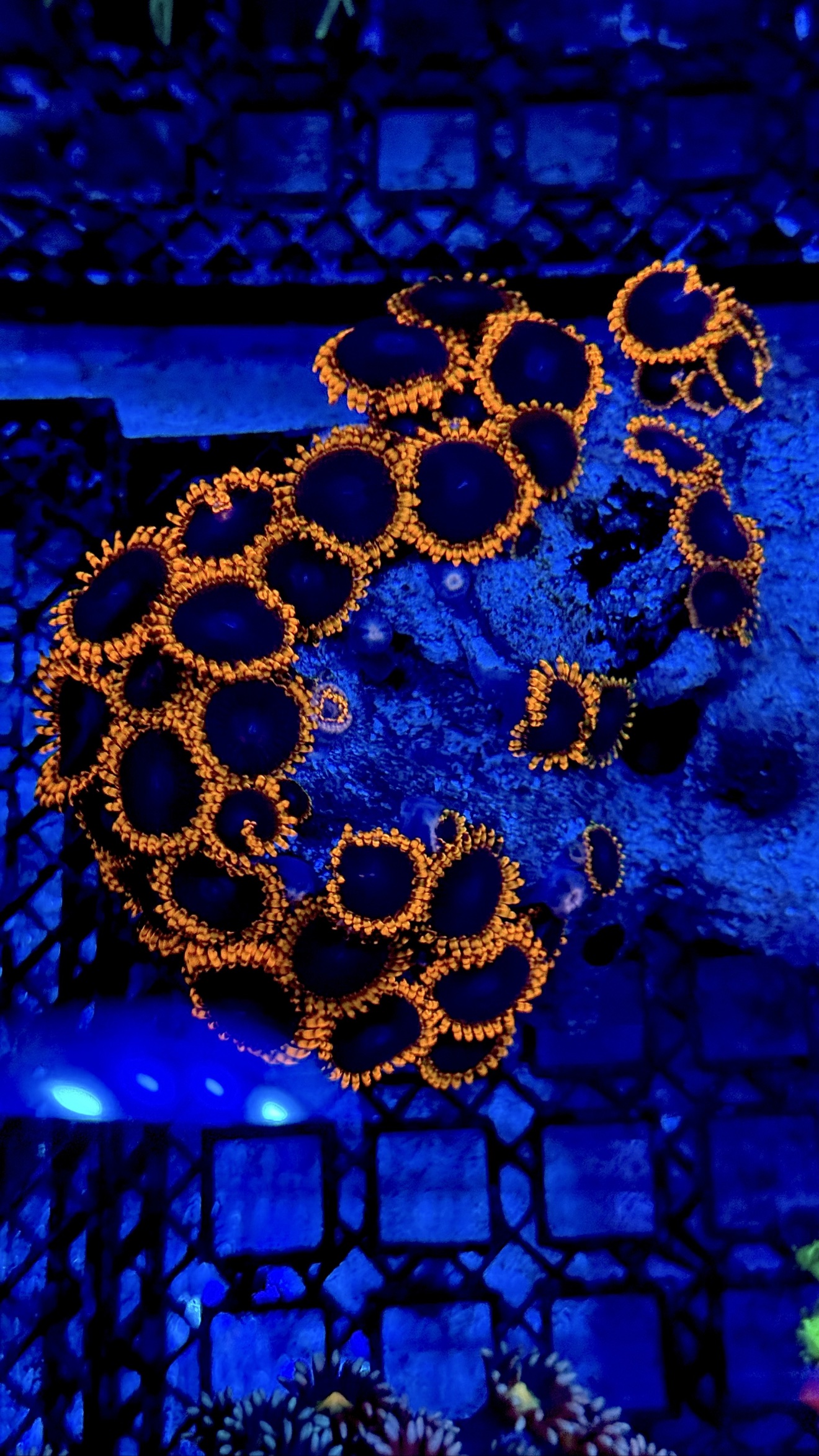
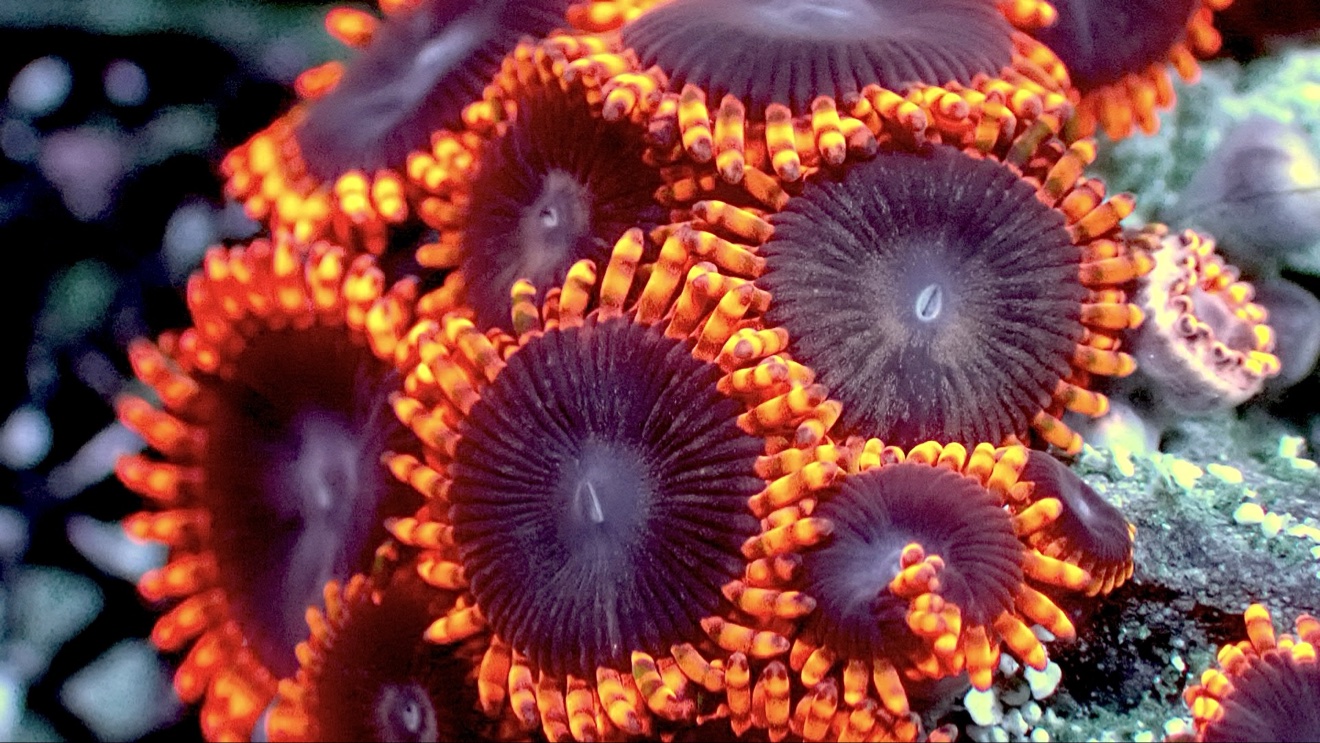
Lunar eclipse zoanthids are a dark, high-contrast zoanthid, listed as Zoanthus sp. The polyps grow in a connected mat, each with a short stalk, a dark disc, and a contrasting ring or center that gives the eclipse look the name describes. Under blue light the contrast sharpens and the colony reads as a field of dark faces with bright edges. A settled colony opens through the day and spreads by budding new polyps along the mat margin.
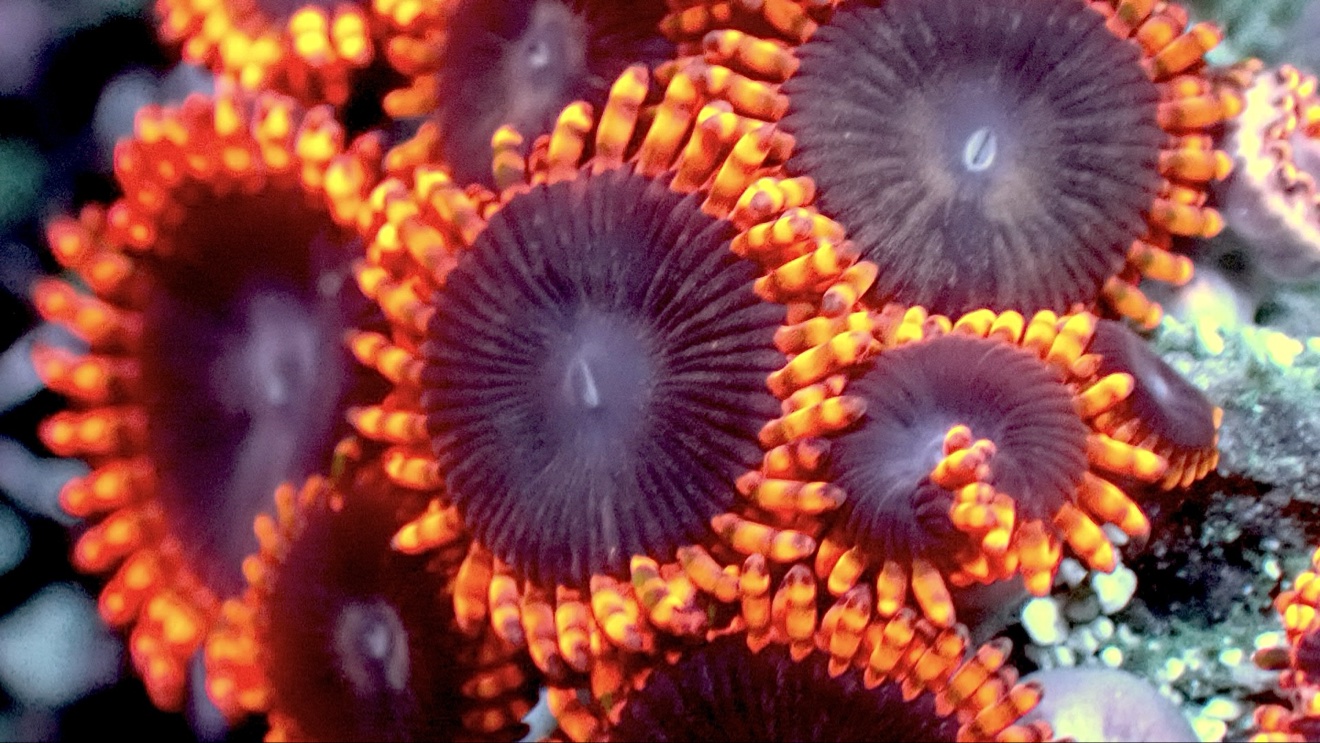
The entry lists beginner care, medium light, medium flow, middle placement, peaceful behavior, and slow growth. Place it in the middle zone of the rockwork where light is moderate and even. Start a new frag a step lower than its final spot and move it up over a week or two while watching polyp height. Polyps that stretch tall and thin usually want more light, while polyps that stay pinched or fade at the center often sit in more light than they prefer.
Medium flow suits the mat well. Moving water clears detritus from between the stalks and helps discourage film and algae that can close clusters of polyps. Flow should cross the colony rather than strike it from one side all day. Even opening across the whole mat is a good sign that flow and light are balanced for that spot.
This zoanthid is peaceful in sting and vulnerable to stronger neighbors. Keep LPS sweepers and aggressive corals well clear, because direct contact damages the polyps and the mat recovers slowly. Spacing is also about spread. Even a slow-growing colony will claim the rock it sits on over time, so choose a rock or ledge whose boundaries suit a permanent mat, or keep it on an island that can be trimmed and fragged with ease.
Feeding is indirect. Regular broadcast feeding for the tank supplies fine particles and nutrients the polyps can use. Direct heavy feeding adds little and can foul the mat. Stable, present nutrients tend to suit zoanthids better than a drive toward spotless water, which keepers link to shrinking polyps across many zoanthid types.
Growth is listed as slow for this entry, and that pace should set expectations. New polyps appear at the edge in small runs when the colony is settled, then pause. Judging the colony by daily change leads to needless moves. A mat that opens fully, holds its contrast, and adds polyps over months is doing well. Clusters staying closed, a thinning mat, or film building between polyps call for inspection for pests such as zoanthid-eating nudibranchs and spiders, plus a check for nipping fish and algae growth.
Safety comes first in handling. Some zoanthids can carry palytoxin. Wear gloves and eye protection when fragging or scrubbing rock, wash hands and tools afterward, and keep waste away from cuts. Never boil, steam, or pressure-wash zoanthid rock, because heating or aerosolizing the tissue creates a serious exposure risk. Dispose of frag trimmings and rinse water with care.
Common pitfalls are skipping inspection before the frag enters the display, placing it where algae grows through the mat unchecked, and moving it repeatedly while chasing stronger contrast. Settle it, keep the mat clean, and let slow growth run its course.
Field notes — what keepers report
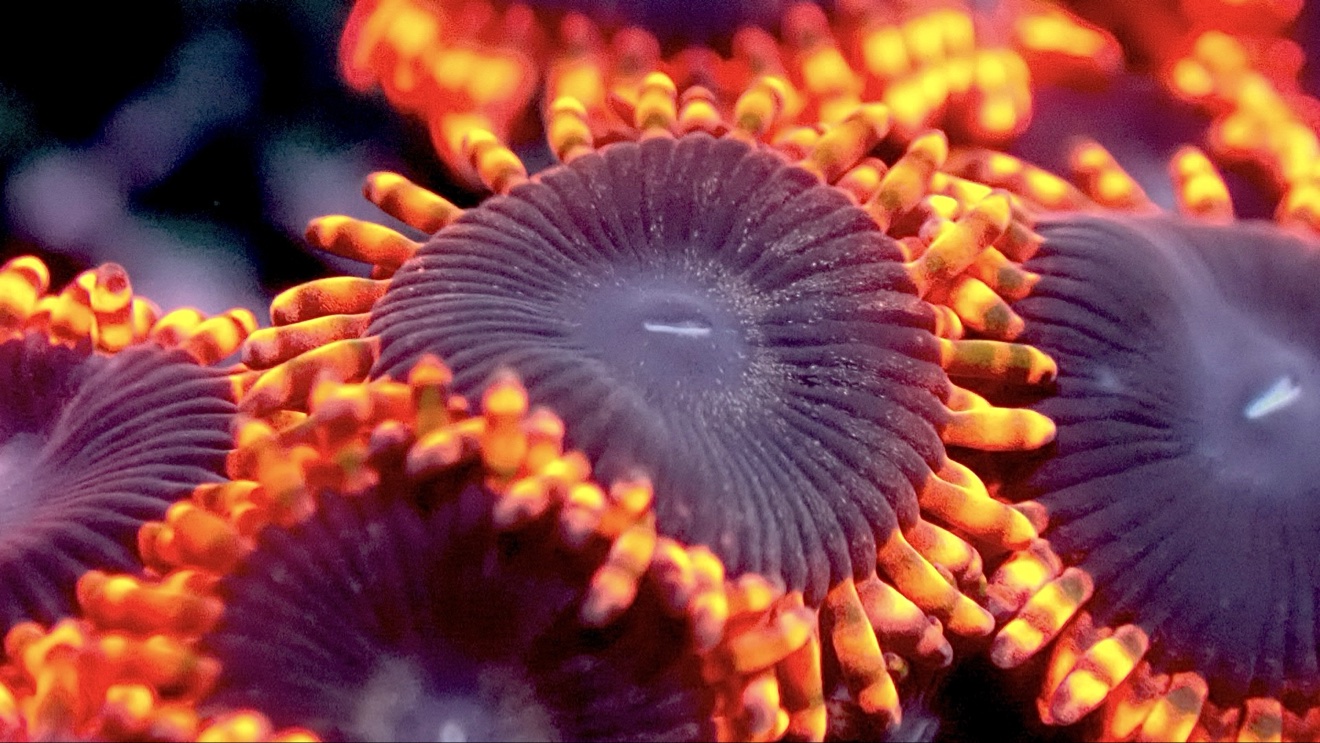
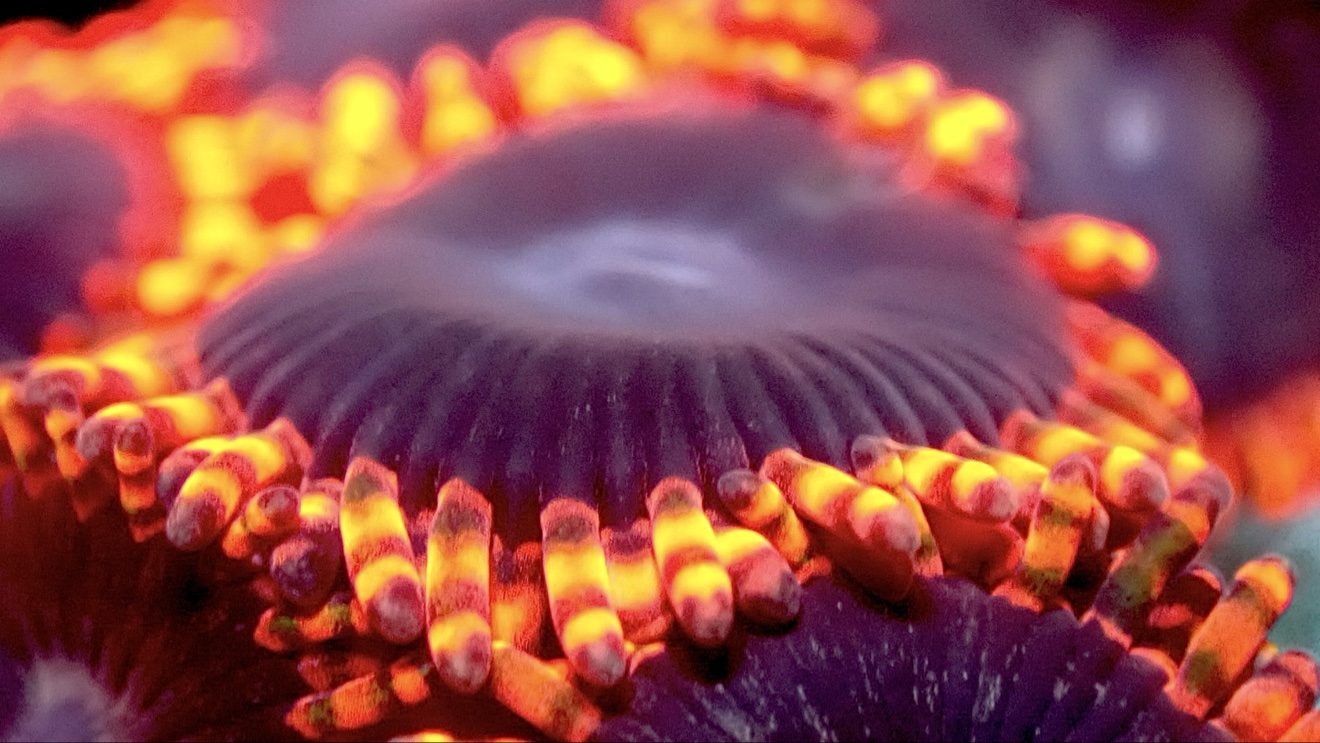
- Contrast reports vary with lighting. Keepers under blue-heavy light describe a sharp dark-and-bright pattern, while keepers under whiter light describe a flatter, less dramatic face on the same type of colony. Keepers treat the difference mainly as presentation when polyps open fully and the mat stays thick.
- Growth reports for this type lean slow. Some keepers describe steady edge budding in a settled spot, while others describe long pauses with no new polyps despite full daily opening. Both sides describe patience and stable placement as the norm, with frequent moves linked to longer closed periods.
- Pest vigilance is a recurring theme. Keepers describe closed clusters that traced back to nudibranchs or eggs hidden under the mat edge, found only on close inspection after a dip. Other keepers report no pest issues at all from inspected, dipped frags. The shared practice is inspection before display placement rather than treatment after spread.
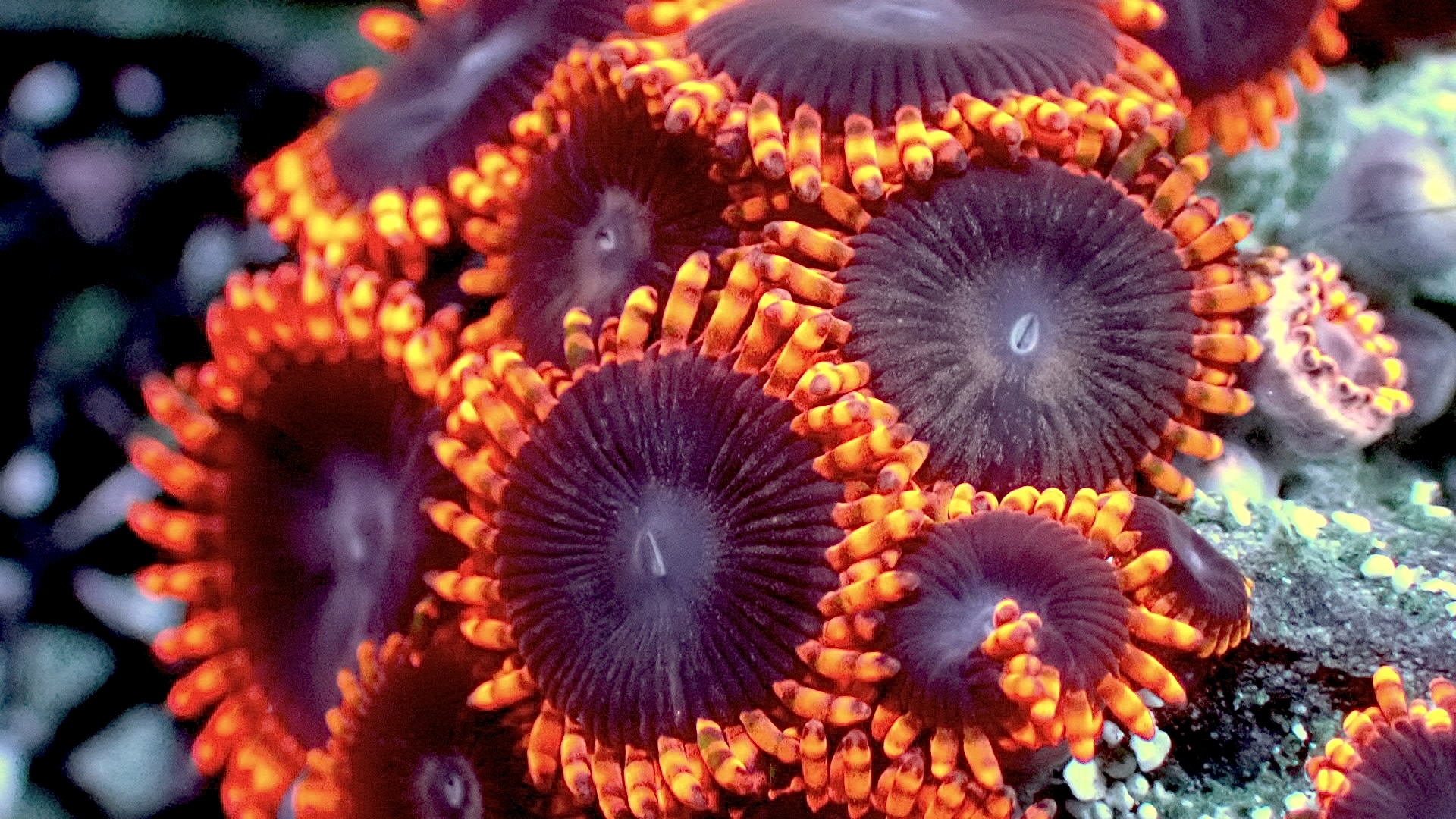
Field Notes
Related species
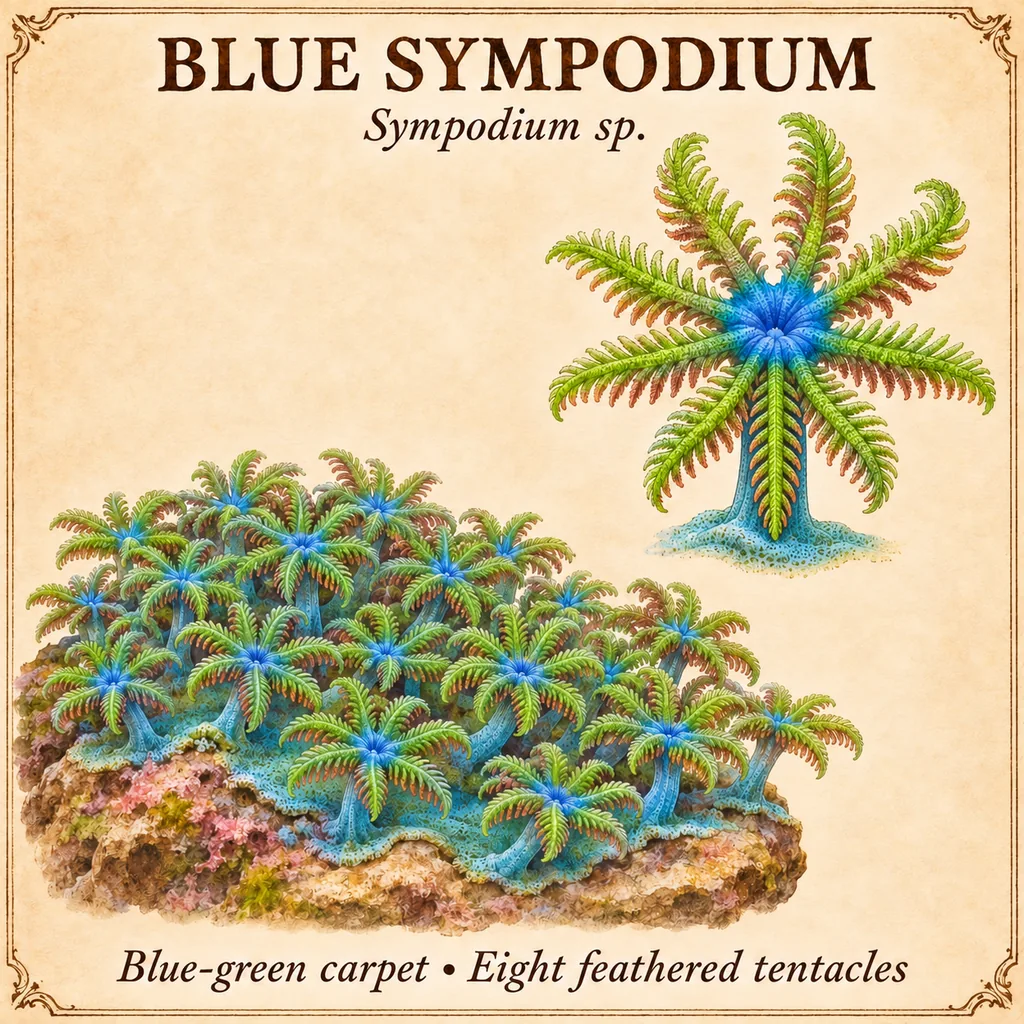
Blue Sympodium
Sympodium caeruleum
Similar care · Soft

Blueberry Haze Zoas
Zoanthus sp.
Similar care · Soft

Blueberry Zoanthids
Similar care · Soft

Burning Willow Zoas
Zoanthus sp.
Similar care · Soft

Cladiella Soft Coral
Cladiella australis
Similar care · Soft
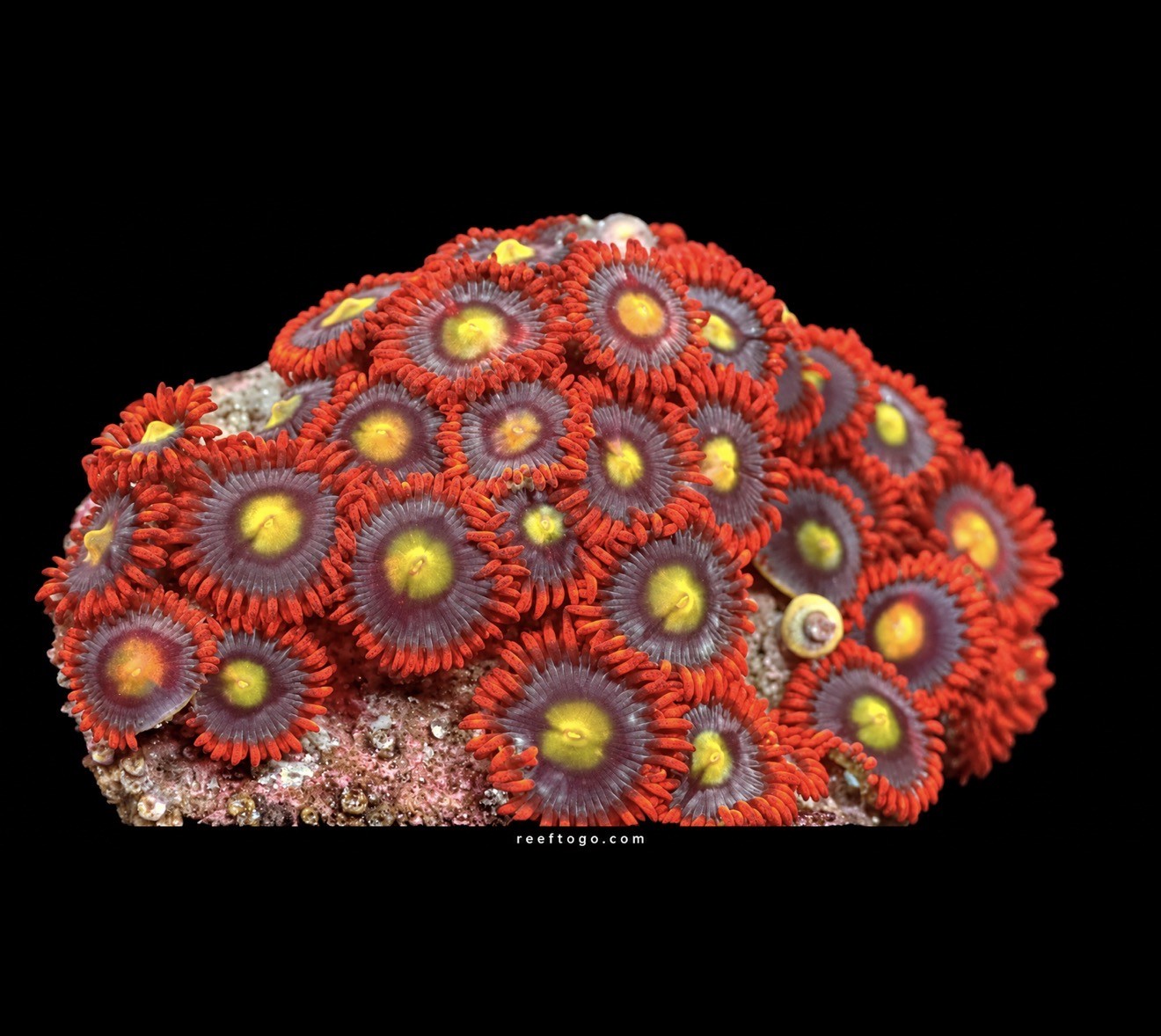
Fire and ice zoanthids
Zoanthus sp
Similar care · Soft
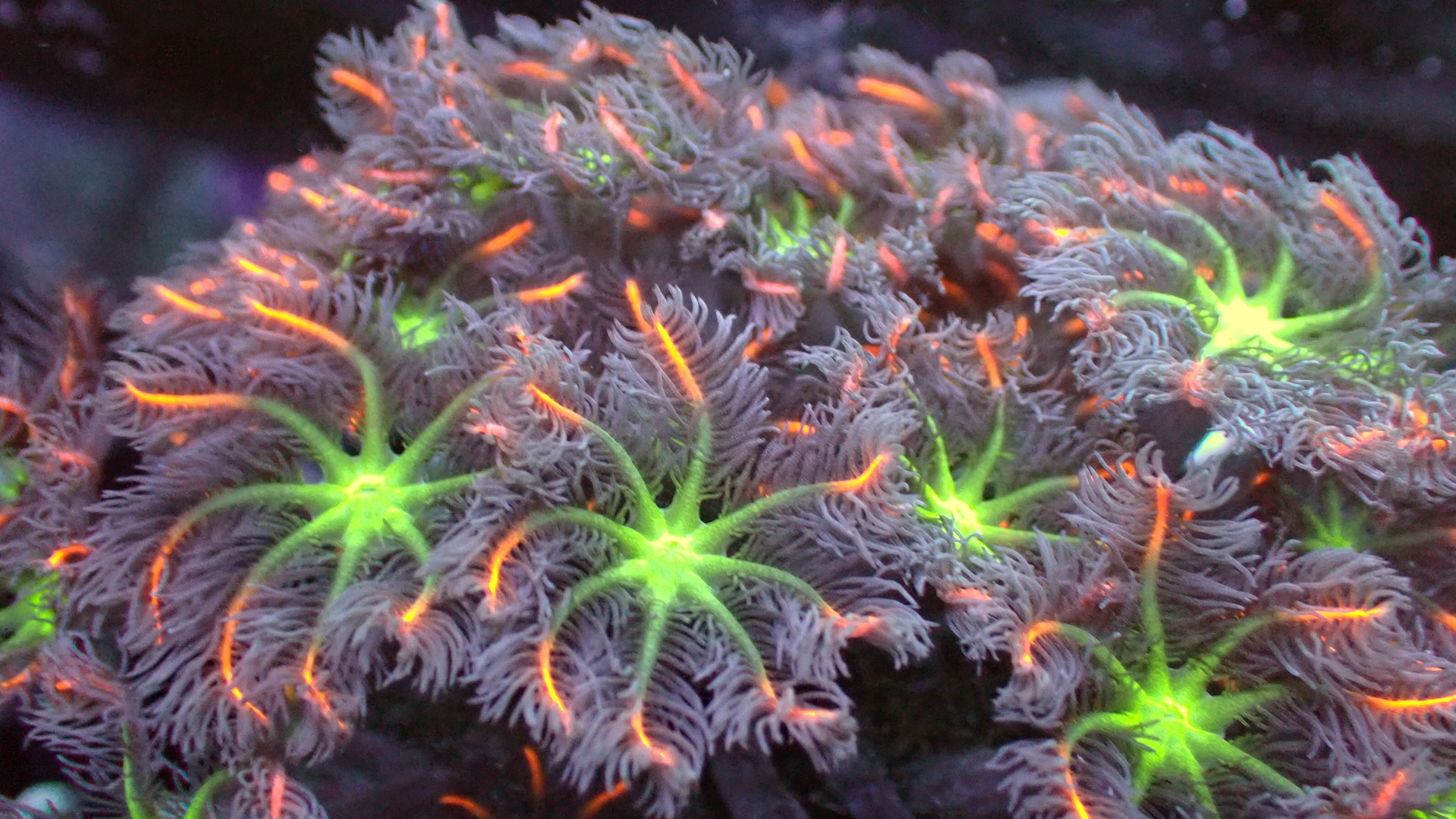
Firework cloves polyps
Clavularia sp.
Similar care · Soft
Giant Anthelia
Anthelia glauca
Similar care · Soft