Mohawk Zoas

Gallery
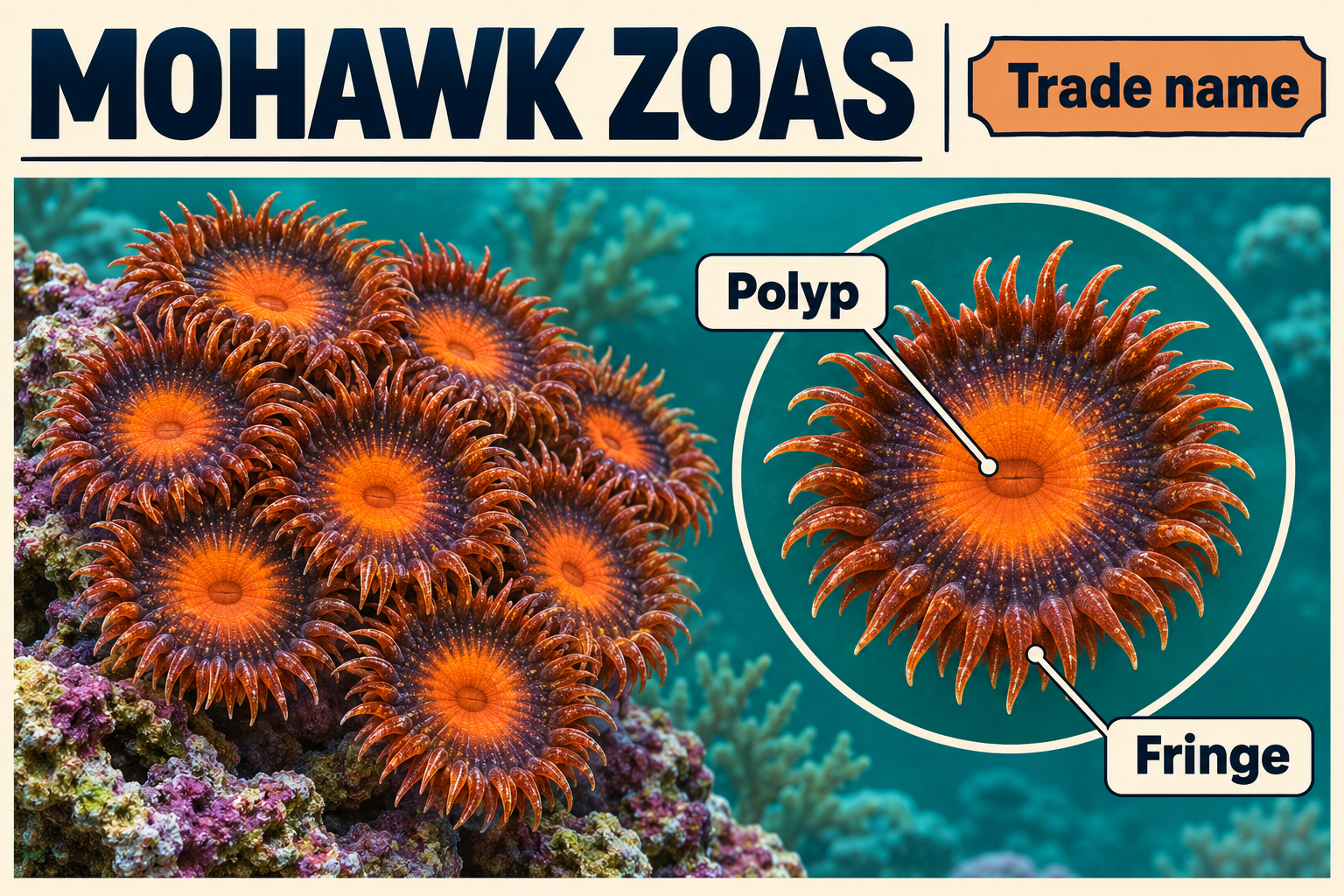
Under blue reef lights, a patch of Mohawk Zoas looks like a pile of tiny embers. Each glowing button is an animal, with a mouth in the middle and a ring of tentacles around the edge. Give this fast-spreading colony its own rock and you can watch the patch fill in without giving it the whole reef.
History of the coral
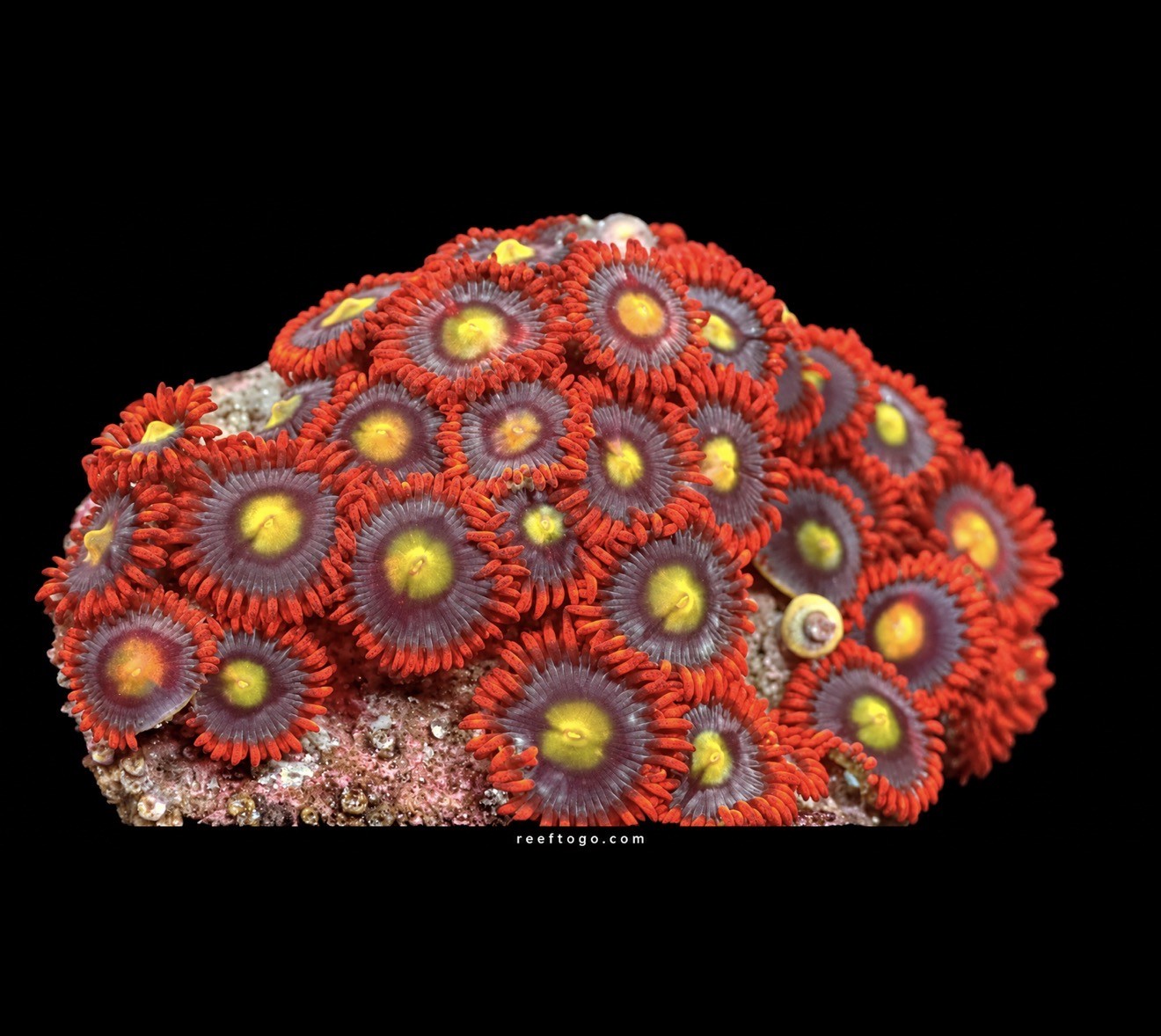
1. Look for the fringe. The Reef To Go line has gold-orange centers and a reddish, spiky rim. Blue light brings out that ember glow. The fringe is the ring around the button, not a spike growing from the mouth.
2. A trade name is a nickname. Mohawk tells you which look to shop for. It is not a scientific name or a promise that every frag with that name came from the same colony.
How they live in the wild
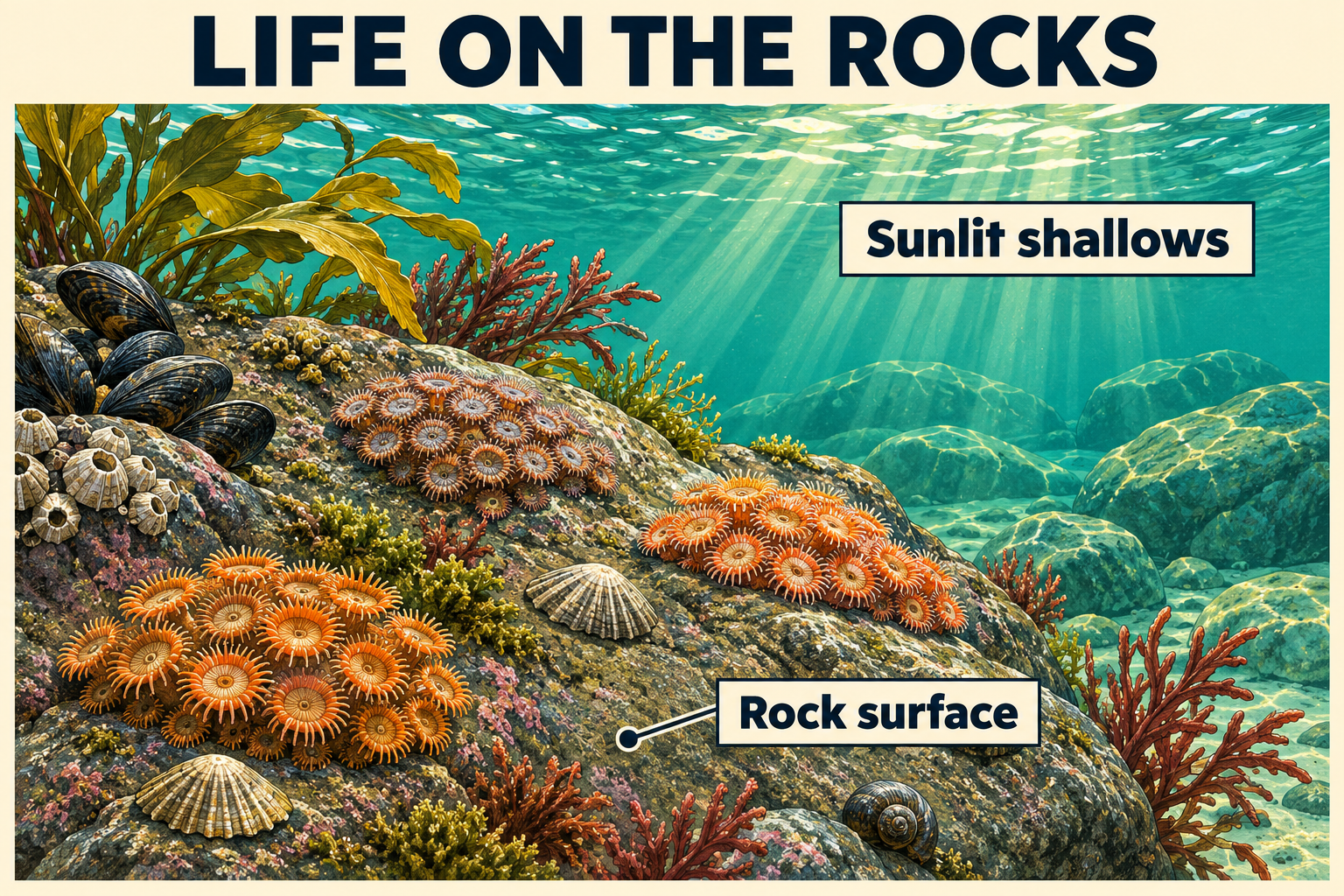
3. Tiny animals, shared real estate. Many reef zoanthids grow in patches on hard surfaces in the shallows. As a colony adds new polyps at its edges, the living mat covers more rock.
4. Sunlight helps feed the patch. Many shallow-water zoanthids host microscopic algae inside their tissues. Those algae use light to make sugars that help fuel the colony. The polyps can also catch food from passing water.
Light and flow
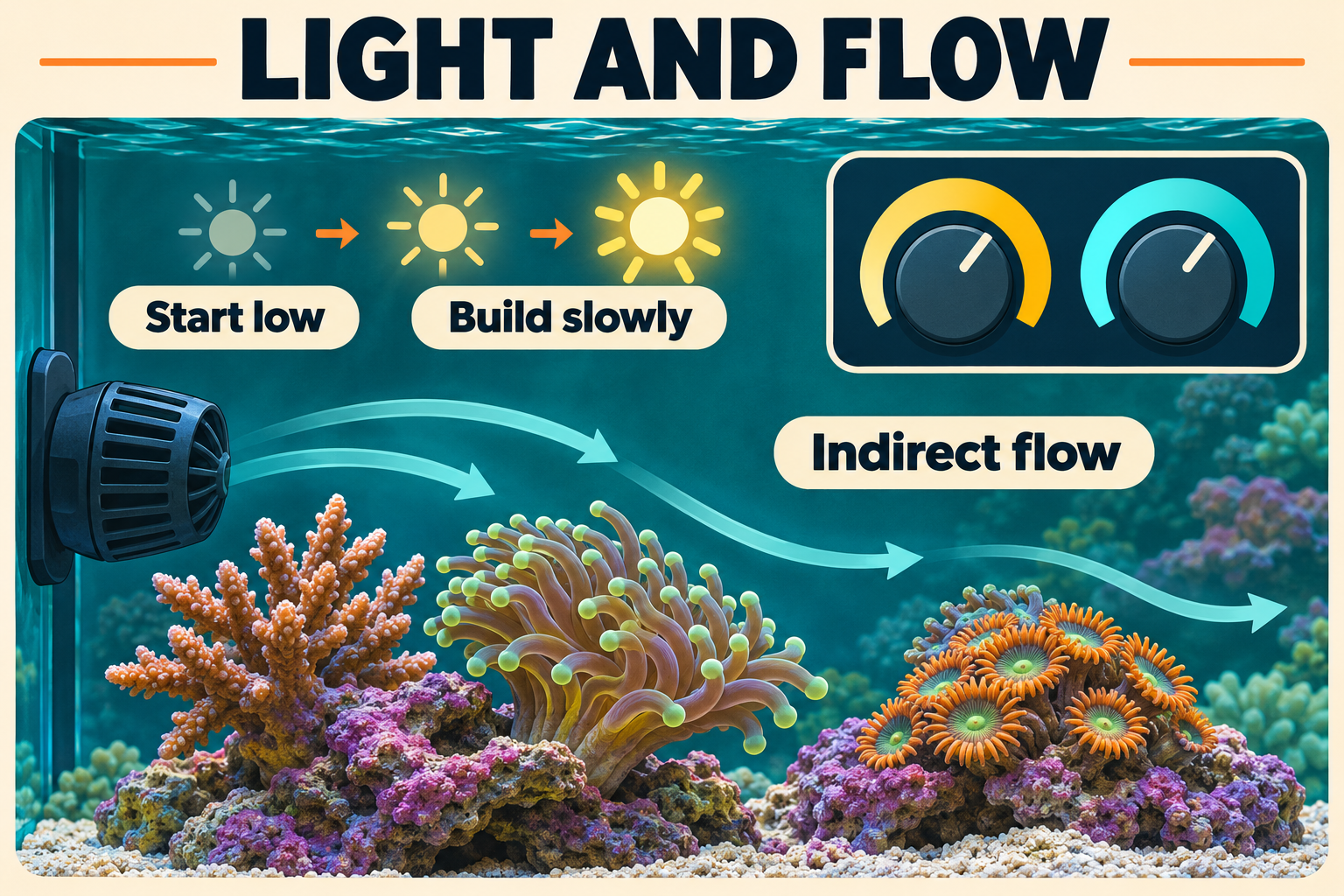
5. Start low, then build. Give a new frag gentler light at first, then work toward moderate light as the polyps settle and open. Avoid a sudden move into the brightest part of the tank.
6. Make the skirts flutter. Use moderate, indirect flow to keep debris from collecting between the buttons. Aim the pump past the colony, not right at it. If the polyps keep closing, check flow and other causes instead of assuming they need more light.
Placement and growth
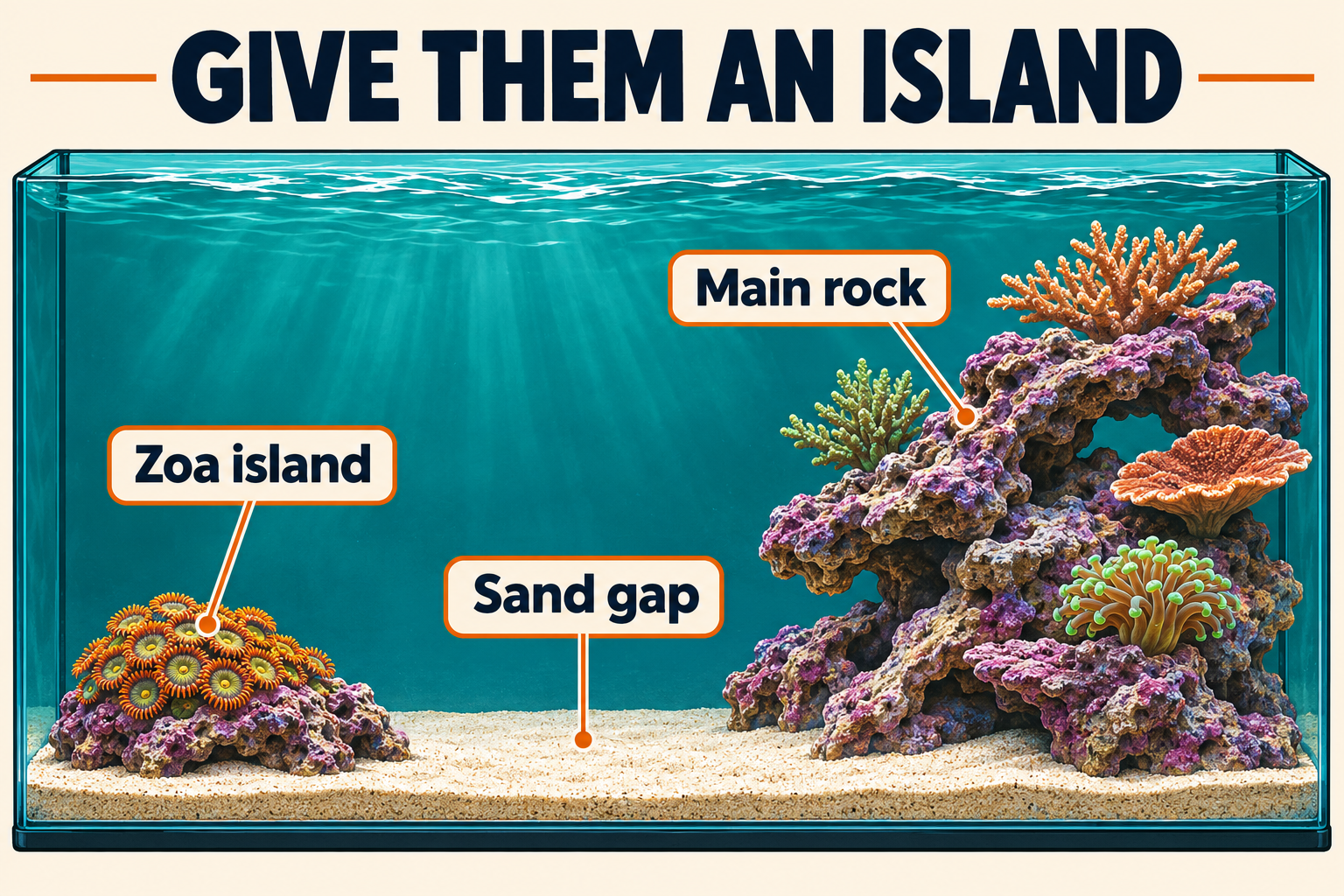
7. Give the colony an island. Set the frag on a small, stable rock low in the tank, where sand will not bury it. Leave a gap between its rock and the main structure. Keep the gap clear of loose rubble that can become a bridge.
8. Watch the edge, not the inches. The newest buttons often show up around the edge of the mat. Leave room for that edge to grow without crowding the next coral. Check the gap again as the patch gets wider.
Feeding and steady water
9. Skip the feeding schedule. Start with steady light and normal reef care. If you already feed fine coral food, offer a small amount and see whether the polyps catch it. Do not add more food just to chase faster growth.
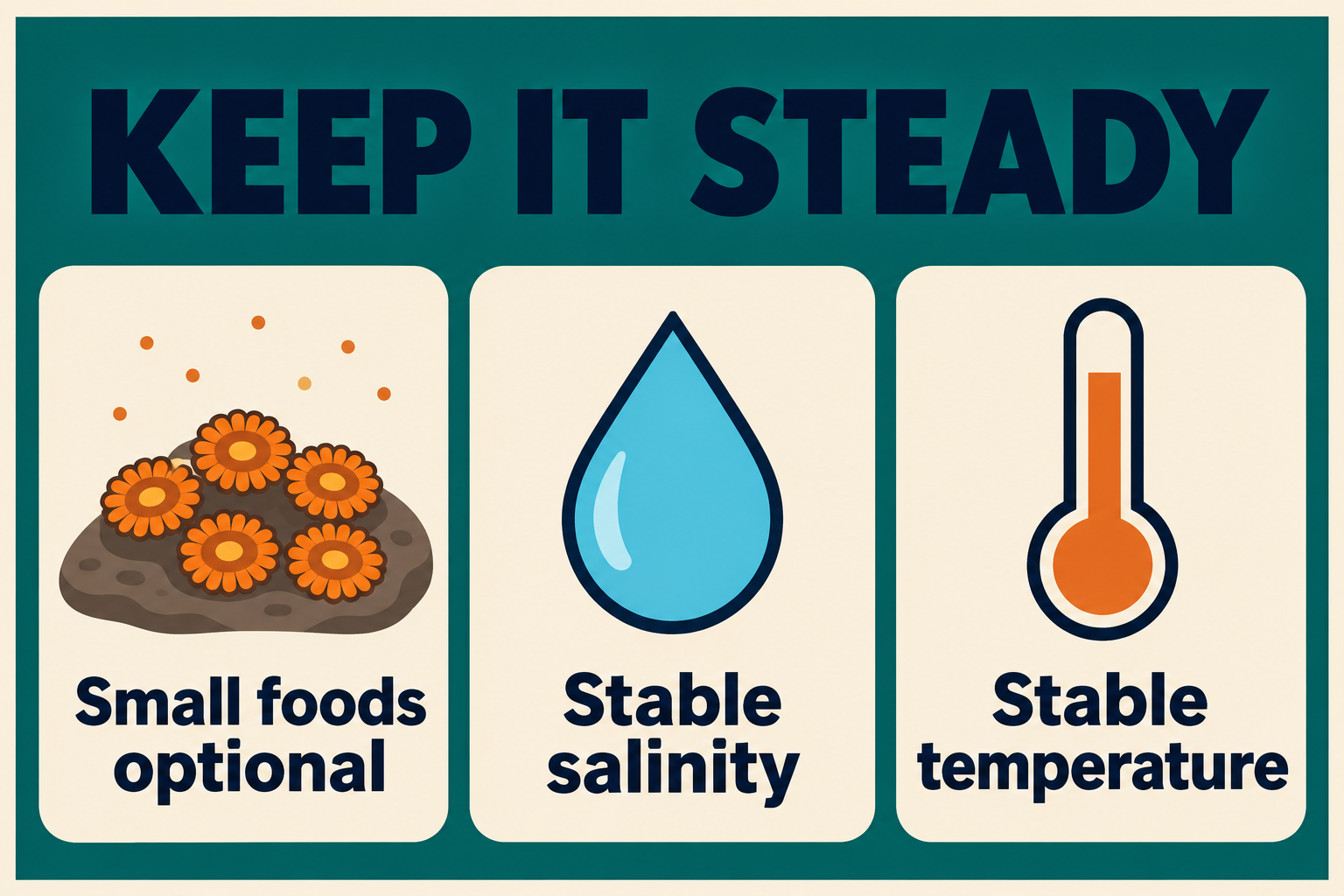
10. Keep the basics steady. Track temperature and salinity, especially after a water change or a top-off problem. Compare photos taken under the same light. New buttons around the edge tell you more about growth than a change in color under a new lamp.
Field notes
11. Check a closed patch. Look for trapped debris, a new light setting, a pump pointed at the frag, or a neighbor touching it. Inspect the plug and mat for pests without scraping or crushing the polyps. Fix the problem you find rather than changing everything at once.
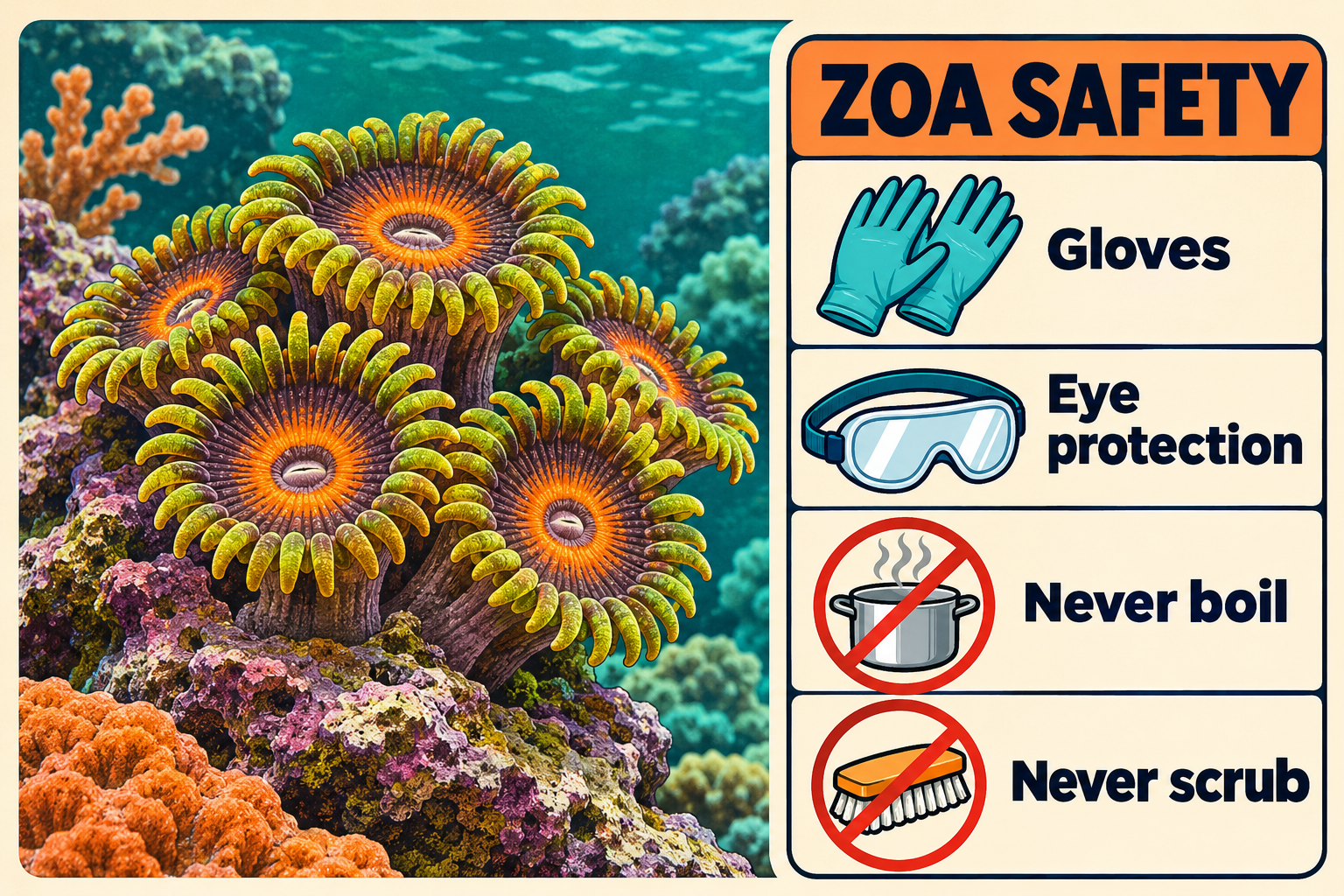
12. Treat every zoa as a handling risk. Some zoanthids carry palytoxin. Wear gloves and eye protection when handling them. Never boil, steam or scrub zoa-covered rock, and never start a siphon by mouth. For suspected exposure, call Poison Control in the U.S. at 1-800-222-1222. Call 911 for trouble breathing.
Start with one small island and a little room to grow. The fun is seeing a few bright buttons turn into a whole patch of embers while the rest of the rock stays yours to plan.
Field Notes
Related species
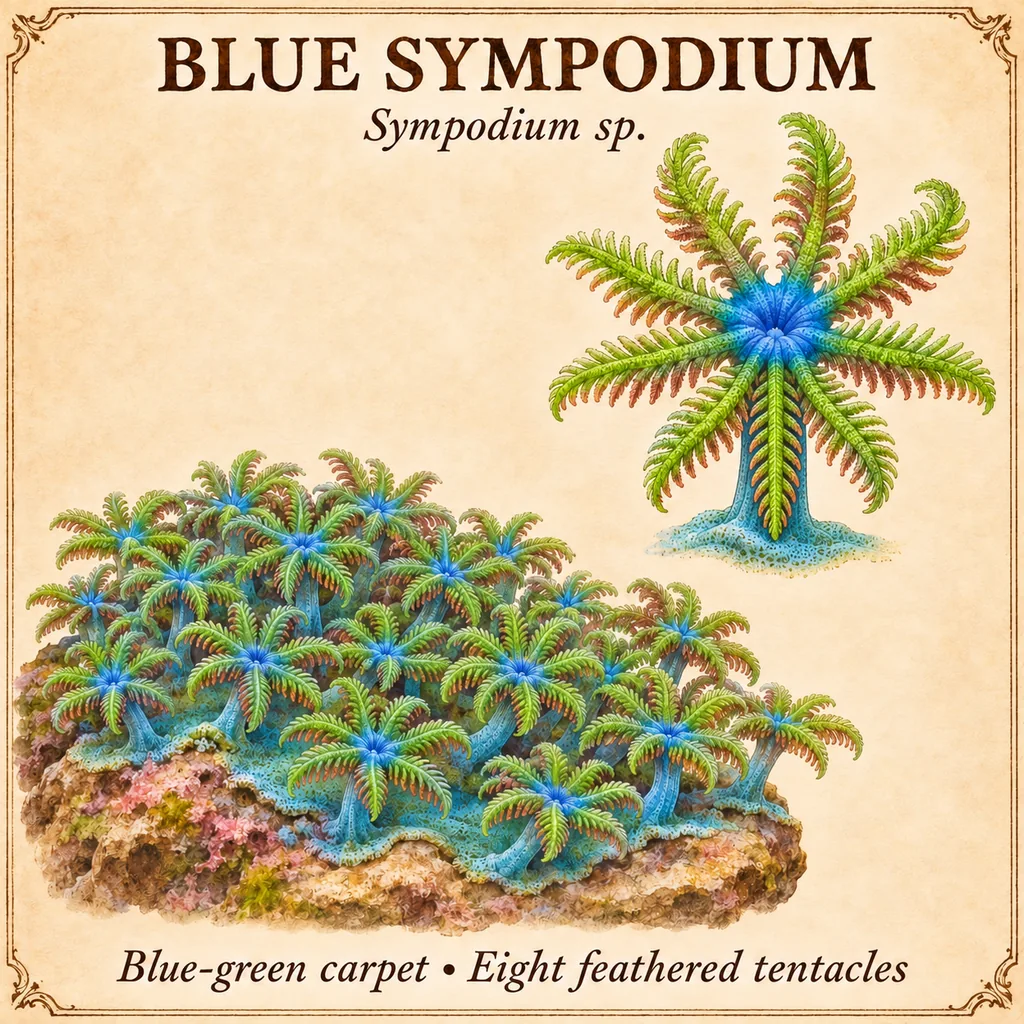
Blue Sympodium
Sympodium caeruleum
Similar care · Soft

Blueberry Haze Zoas
Zoanthus sp.
Similar care · Soft

Blueberry Zoanthids
Similar care · Soft

Burning Willow Zoas
Zoanthus sp.
Similar care · Soft

Cladiella Soft Coral
Cladiella australis
Similar care · Soft
Fire and ice zoanthids
Zoanthus sp
Similar care · Soft
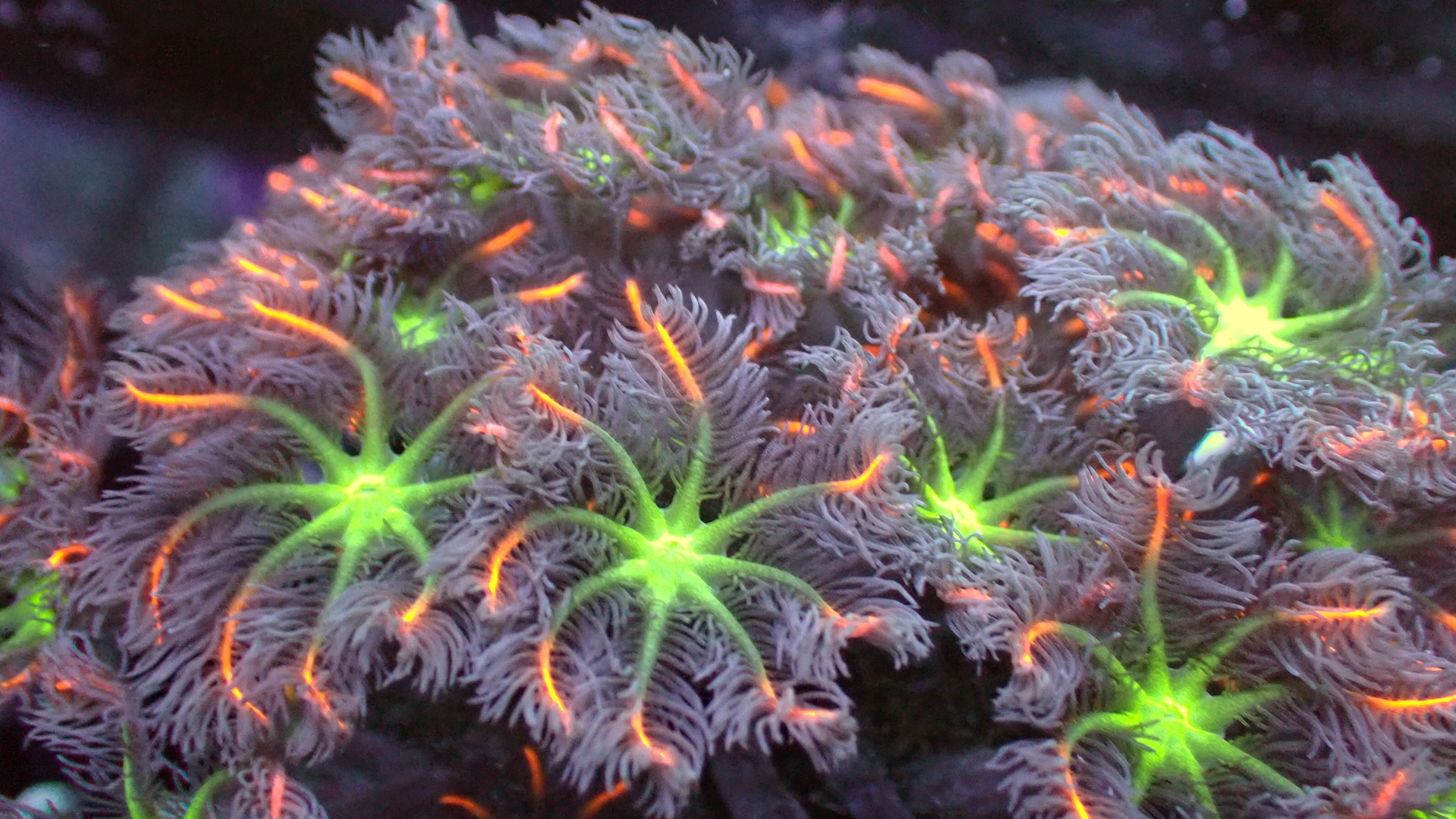
Firework cloves polyps
Clavularia sp.
Similar care · Soft
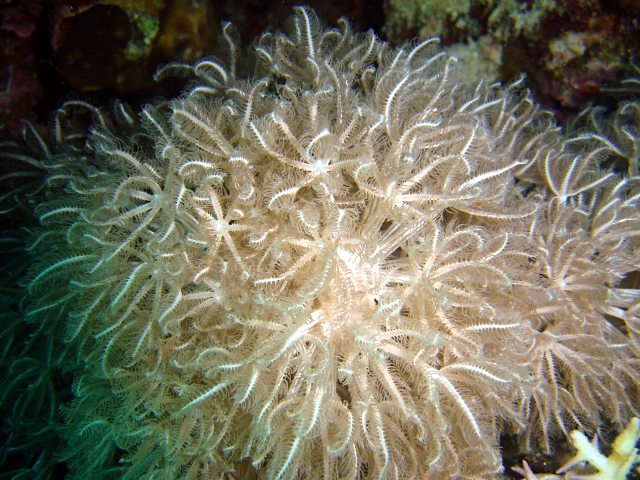
Giant Anthelia
Anthelia glauca
Similar care · Soft