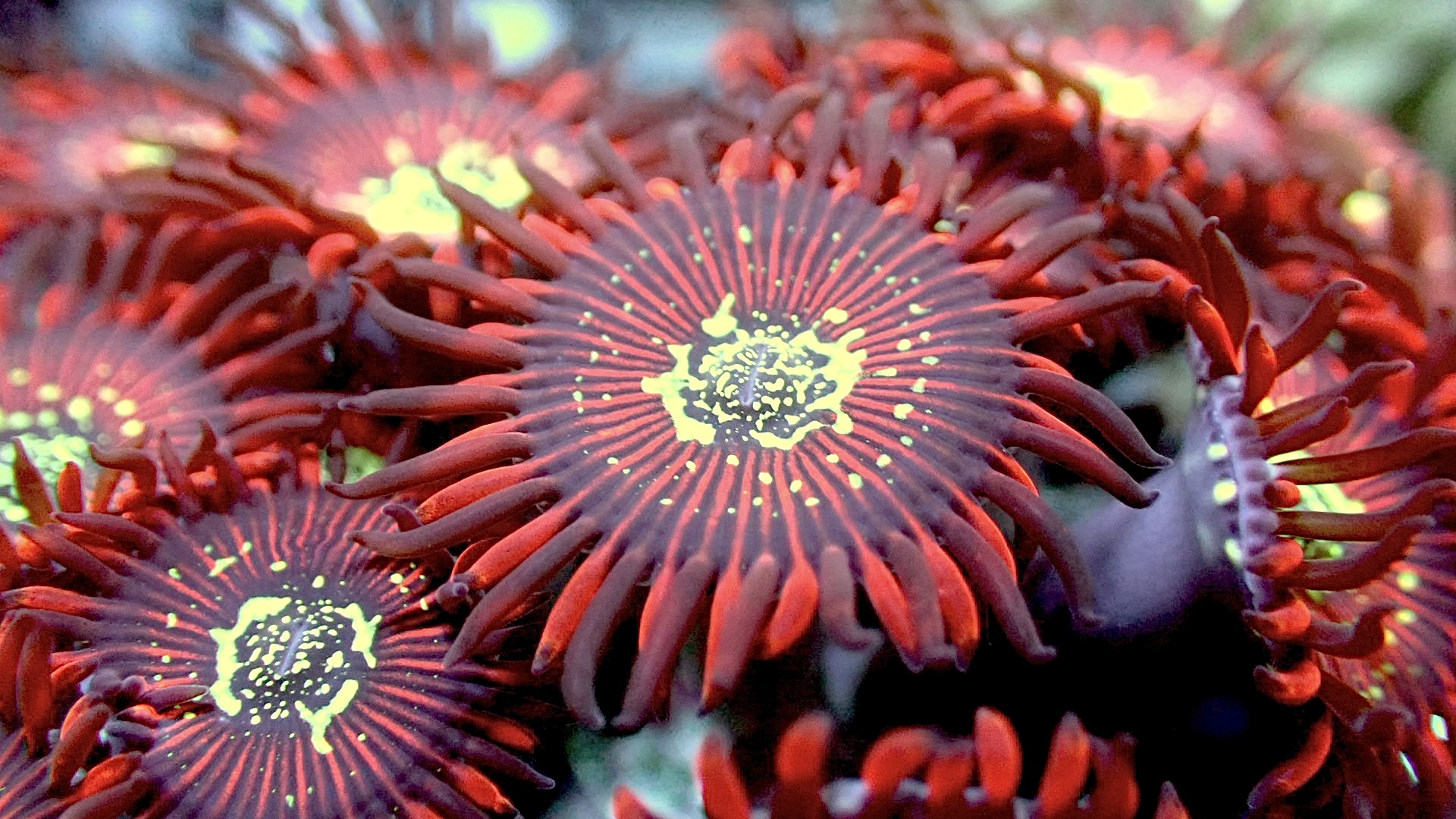
Purple Death
Palythoa sp.
Also known as: Purple Death Paly
Care Summary
Purple Death is one of the original named "Death" palys, a small group of large Palythoa morphs that defined the high-end paly trade in the 2000s alongside its green sibling, Nuclear Green. The strain name is credited to the keeper Creetin in the ZoaID era, and the coral has stayed in circulation ever since — a deep, solid purple that reads almost electric under blue light, with none of the patterning that makes most named palys hard to identify. A dark purple oral disc, a pale slit mouth, and a plain purple skirt are the whole ID: if the disc carries rings, speckles, or a contrasting face, it is a different morph wearing the name.
The polyps are true paly size, noticeably larger than a Zoanthus polyp, and they sit on a reduced, thin mat rather than a thick coenenchyme, so colonies hug the rock closely. Individual polyps can approach half an inch across when well fed. Color is not perfectly fixed: keepers have long noted that the hue and intensity of the disc shift with lighting and tank conditions, deepening in lower light and brightening under stronger blue, while the morph itself stays recognizably the same coral.
In the aquarium Purple Death is a forgiving soft coral. It adapts across a wide lighting range and does best in medium light with medium flow — enough current to keep the skirts moving and detritus from settling between polyps, without pinning them shut. Standard reef parameters suit it: 77–79°F, salinity near 35 ppt (about 1.025–1.026), alkalinity 8–10 dKH, calcium 400–450 ppm. It is photosynthetic, but it is also one of the most willing feeders among the zoanthids, and growth responds visibly to food (see field notes).
Give a colony room. Fed colonies bud steadily and the mat will claim whatever rock it touches, so many keepers grow Purple Death on its own island rock where its spread is easy to admire and easy to contain. It sits peacefully beside other Death-group palys — keepers have even reported mixed, hybrid-looking polyps appearing where two Death morphs grow into each other.
Safety deserves its own paragraph with this strain. The Death palys are the group keepers most often single out for palytoxin caution, and Purple Death slimes when stressed or fragged. Handle and frag it only with gloves and eye protection, keep it away from open cuts, wash thoroughly afterwards, and never boil, steam, or pressure-wash rock that carries it — heat can aerosolize the toxin. Treated with that respect, it is a routine aquarium coral; treated casually at fragging time, it is one of the few zoanthids that can genuinely hurt someone.
Field notes — what keepers report
- Feeding response is the most consistent report: Purple Death visibly grabs meaty foods — small mysis pieces and even flake that lands on the disc — and closes over them like other large palys. One keeper tracking a young frag counted roughly ten new polyps in the first three months, and noted the early growth showed up as polyp size first, with polyps swelling from about a quarter inch to nearly half an inch before budding sped up.
- On light and flow, keeper reports line up with the old Reef2Reef spotlight summary of the strain: very adaptive, happiest in medium light and medium flow, defined as current that waves the skirt without making polyps close. Vendor care sheets disagree at the edges — a few list it as medium-to-high light and fast-growing — so the entry rates light Low–Medium and lets placement start low.
- Color reports conflict in an interesting way: the Death-paly catalogue notes the group's disc hue and intensity vary noticeably with light and water conditions between tanks, yet the morphs stay stable enough that keepers rarely confuse Purple Death with anything else. Both halves of that are worth knowing — expect the purple to shift in your tank, and expect it to stay unmistakably Purple Death.
- Spread: vendor descriptions warn the coral can spread rapidly and advise leaving extra room around it, and paly keepers generally report that large palys overgrow shared rockwork when fed well. The island-rock advice in the care text above comes from that pattern, not from any aggression — its sting is unremarkable; the risk is simply being out-grown.
- Toxicity is the note keepers repeat most: in palytoxin discussions, experienced zoanthid keepers name Purple Death and Nuclear Green specifically as the palys they would not handle casually, while also noting that an undisturbed colony in the tank is harmless — the danger window is fragging, scrubbing, and handling out of water.
Care
Field Notes
Field Notes
Related species
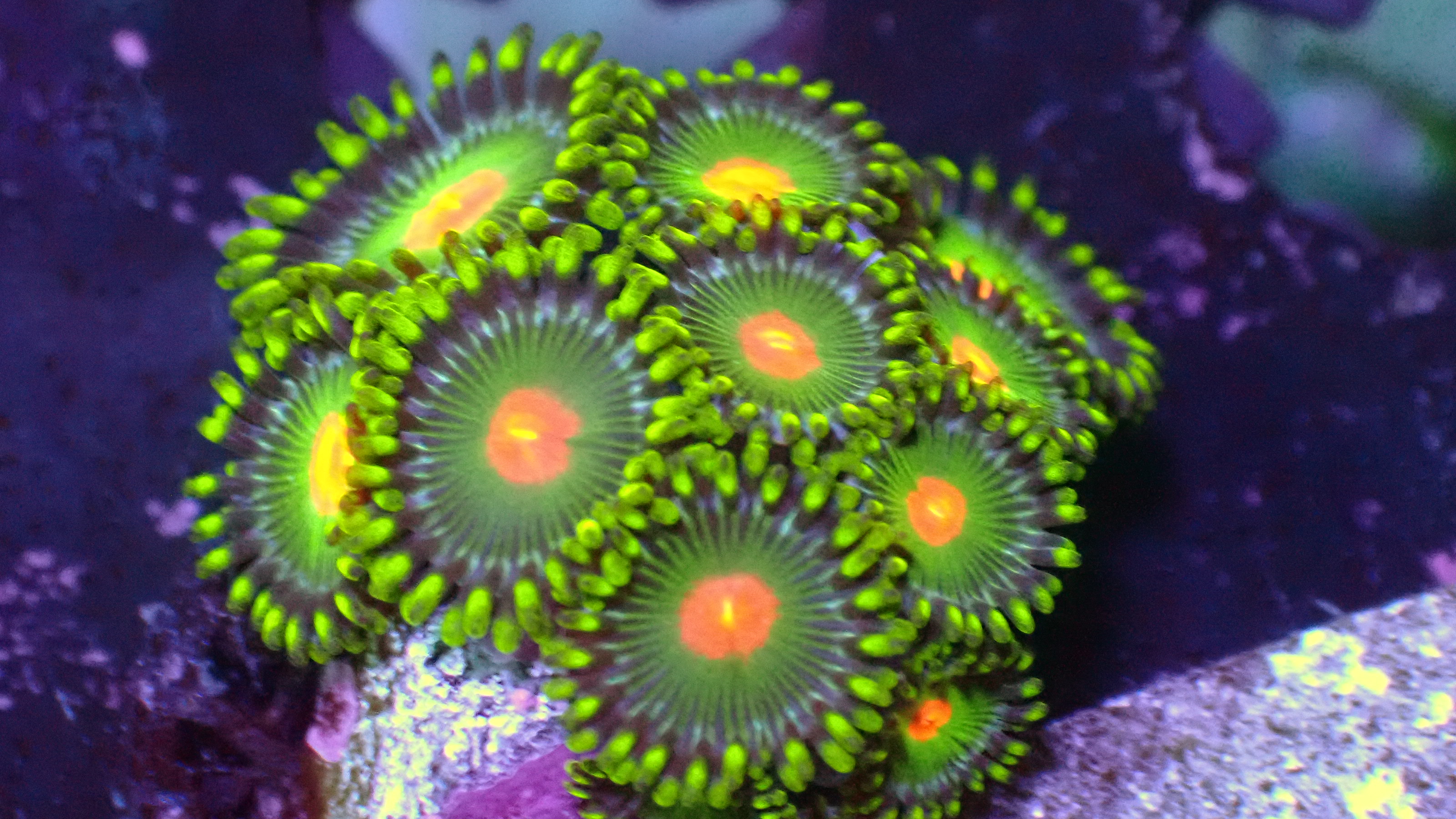
Green Bay zoas
Zoanthus sp
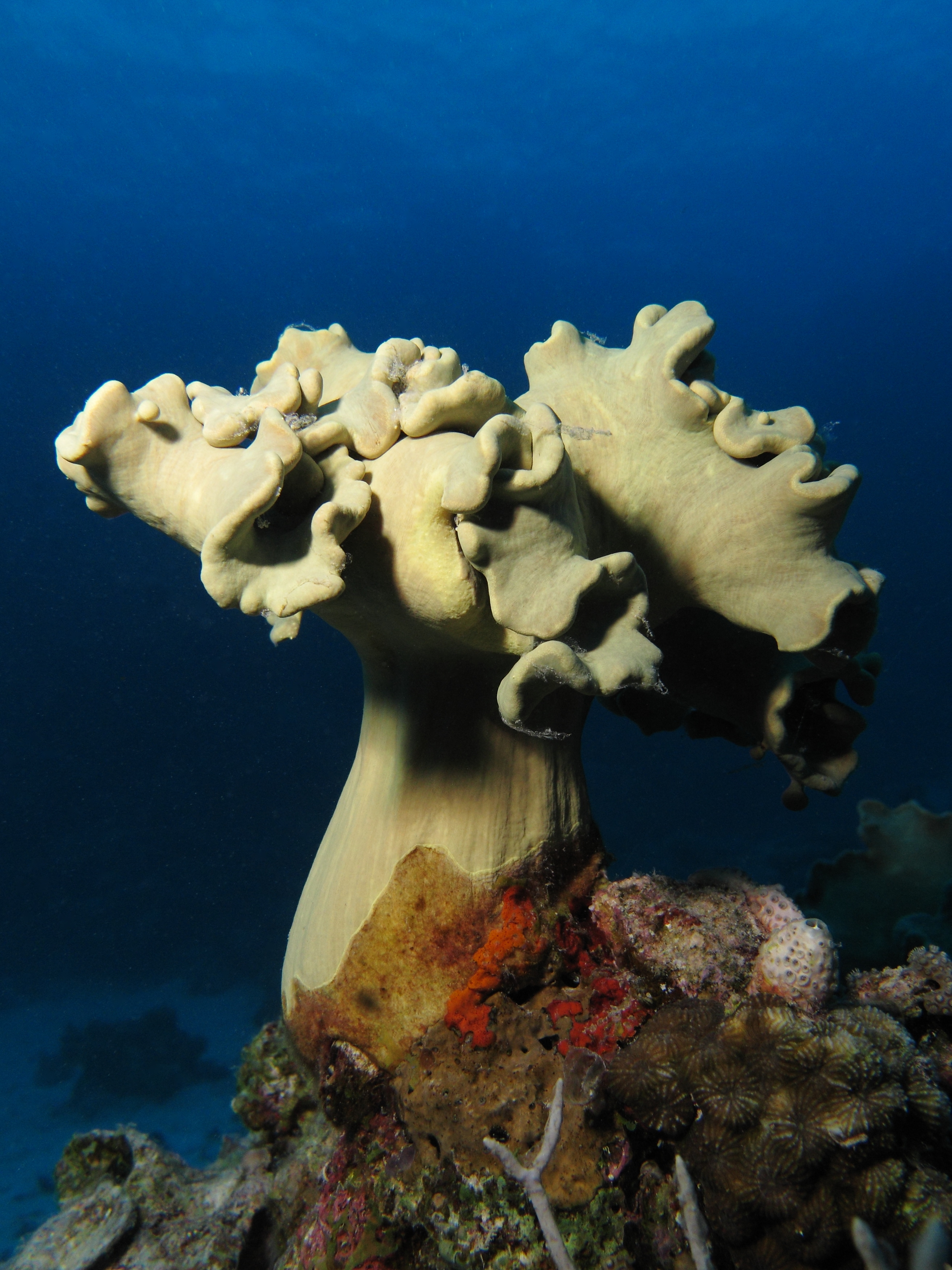
Leather Toadstool
Sarcophyton glaucum
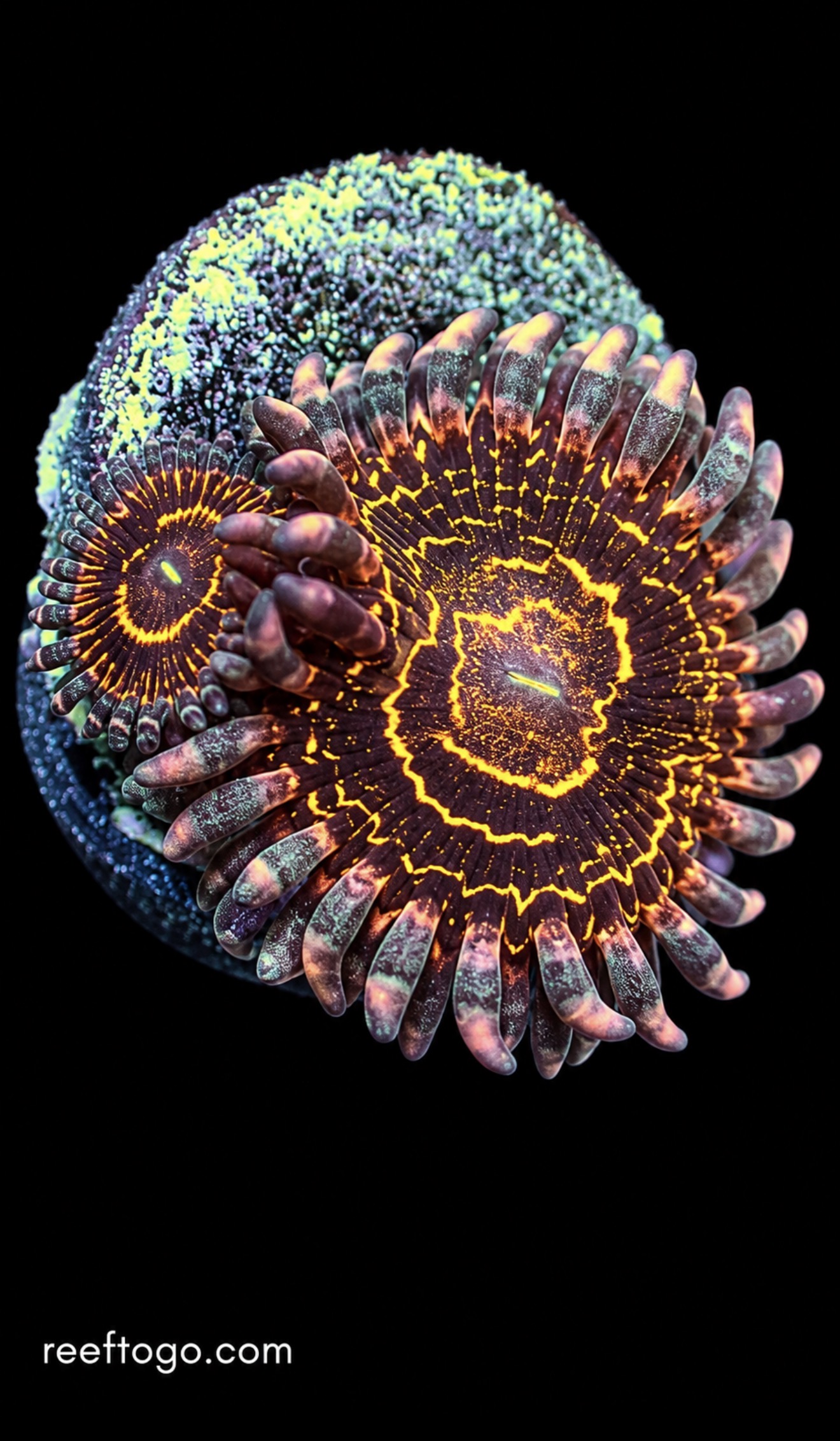
Stratospheres zoas
Zoanthus sp

Sun Zoanthids
Palythoa grandis

Zoanthus Dragon Eye
Zoanthus sp.
Hologram hammer
Fimbriaphyllia paraancora
Kryptonite candy cane
Caulastrea sp