Zoanthus Dragon Eye
Zoanthus sp.

Kazvorpal · CC BY-SA 3.0 · source
Photo: Kazvorpal, CC BY-SA 3.0, via Wikimedia Commons. Aquarium Dragon Eye reference; cropped on Commons.
Care facts
- Care
- Beginner
- Light
- Medium
- Flow
- Medium
- Place
- Low
- Space
- Semi-Aggressive
- Origin
- Indo-Pacific
- Growth Rate
- Fast
Palytoxin safety
Some zoanthids and palythoas can contain a potent toxin. Wear sturdy waterproof gloves and eye protection, minimize handling, and keep colonies submerged when possible. Never boil, steam, pressure-wash or scrub colonized rock under running water. Keep other people and pets away during handling. If exposure is suspected, seek urgent medical advice and tell the clinician about possible palytoxin exposure.
Sources: CDC: palytoxin exposure · OATA: avoiding palytoxin poisoning
Gallery
A Dragon Eye colony looks like a patch of tiny buttons. Each button is a whole animal, with its own mouth and a fringe of tentacles. Watch the edge of the patch: that's where the new buttons pop up. Enjoy them with your eyes. Wear gloves and eye protection when handling zoas.
History
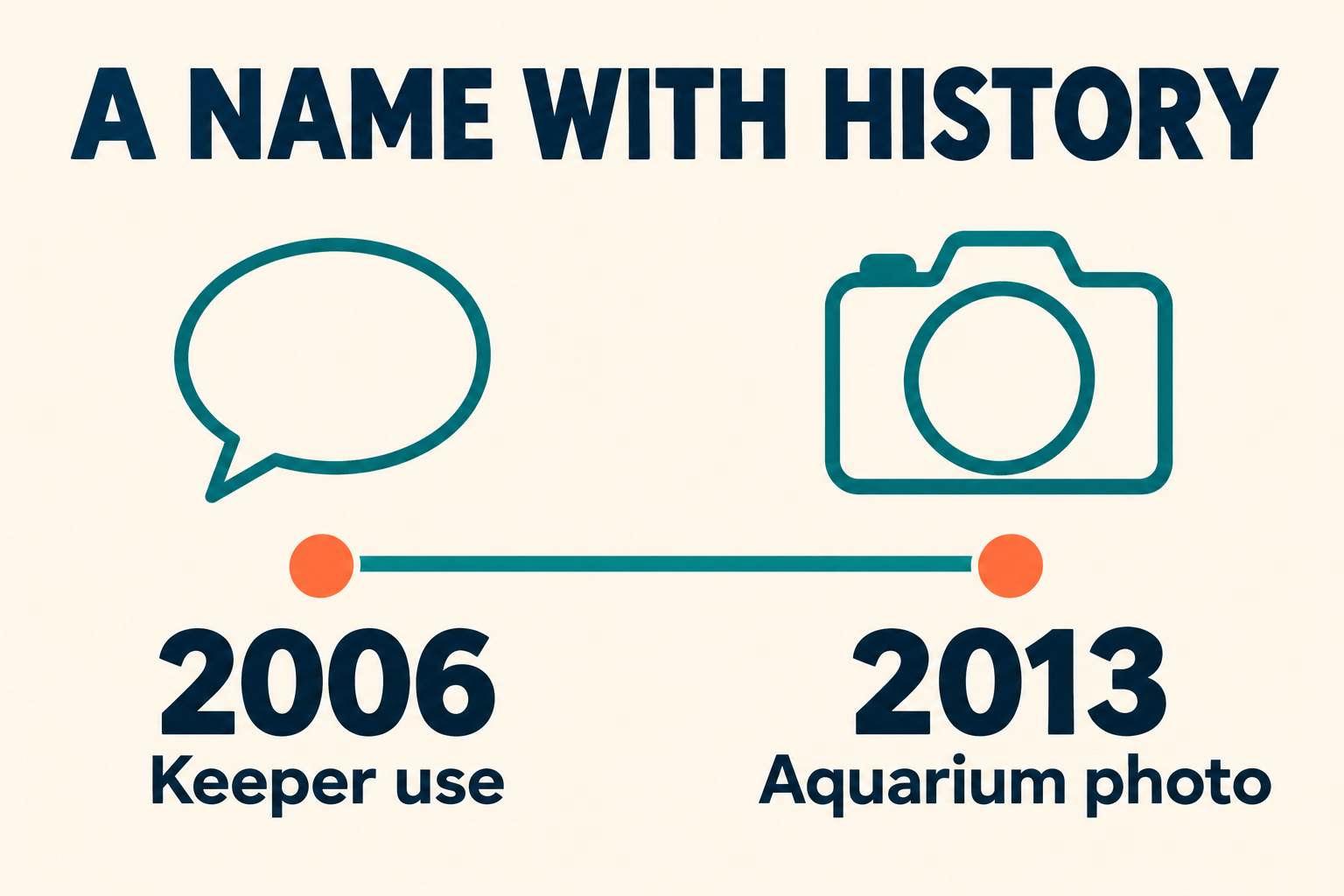
1. A name reefers passed around. Dragon Eye started as a hobby nickname for a polyp's eye-like face. Reef keepers were using it by 2006. By 2013, Dragon Eye was on record in a home aquarium photo.
2. Read the whole name. In the trade, plain Dragon Eye often means an orange face, a blue ring and a yellow skirt. Radioactive Dragon Eyes is the bright green trade entry. Keep the names separate when you swap frags. Dragon Eye is a color name in Zoanthus, with no recorded collection site or verified founder.
In the wild
3. Rock is home. Wild Zoanthus grow in patches on tropical reef rock. Look for relatives on Indo-Pacific reef flats and shallow slopes, from tide-washed rock to water several meters deep. Dragon Eye is an aquarium name. These wild sites show where relatives live.
4. Sun and moving water. Some colonies sit in bright sun. Others grow in shade or deeper down. On a reef flat, water moves over the mats as waves and tides come and go. In your tank, give the polyps a gentle sideways wash and time to settle.

Light, flow and food
5. Start at the low end. Set a new frag low on rockwork. Roughly 75 to 150 PAR is a practical band for zoas. Start near the low end and raise the light gradually. Keep temperature and salinity steady and keep nitrate and phosphate detectable.
6. Let the skirts flicker. Aim for medium, indirect flow. The skirts should move without folding over, and grit should not pile up between polyps. Light does most of the work. A tiny pinch of fine coral food is optional.

Give the mat room
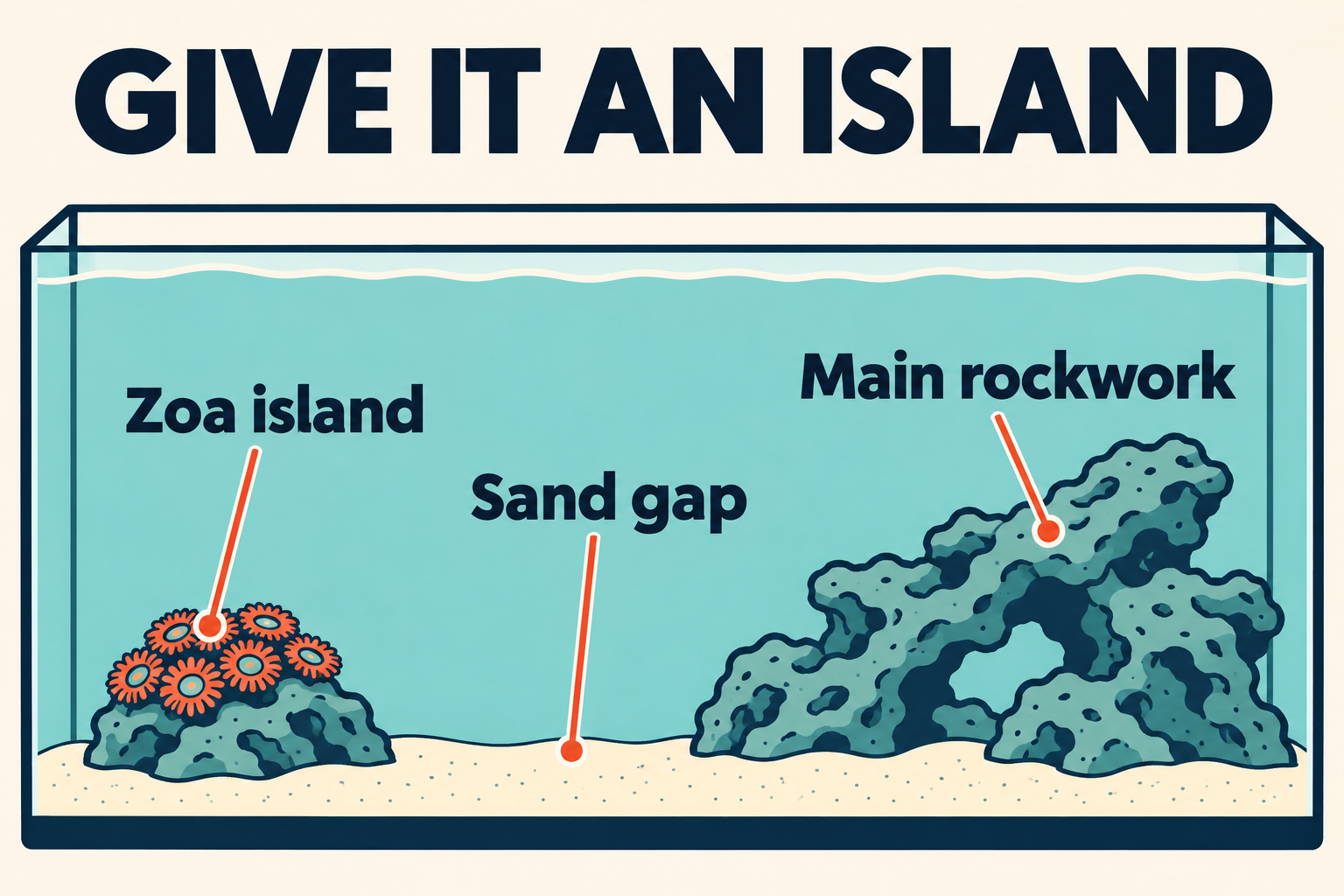
7. Build a little island. Put the frag on a small rock with sand all around it. Keep the plug and mat up off the grains. New polyps bud at the edge and spread onto rock they can reach.
8. Check the edge. Leave clear space around the island and look for rock chips bridging the gap. The mat can crowd slow neighbors. Inspect new arrivals away from the display, and check the undersides and plug for zoa-eating nudibranchs or egg ribbons.
Palytoxin safety
9. Keep it wet. Some zoanthids carry palytoxin. Color and trade names cannot tell you which. Wear gloves and splash goggles, keep children and pets away while you work, and keep the colony submerged during transfers.
10. Never heat or spray it. Never boil, steam or pressure-wash zoa rock. Do not scrub it under running water. Suspect exposure? Get urgent medical advice and say you were handling zoanthids. In the US, call Poison Control at 1-800-222-1222. Call 911 for trouble breathing.

Field notes — what keepers report
11. Same label, different readings. In one tank, a keeper thought the orange and green polyps might be stages of the same zoa. Another keeper had seen green Radioactive Dragon Eyes sold alongside other zoas and read the orange polyps as a second type. Keep the frag's original label and use the same light when you compare photos.
12. Watch what a setback looks like. One keeper's Dragon Eye colony closed after the tank overheated. A few polyps started peeking out again once things settled. Reports that clearly track the plain Dragon Eye morph over time are thin. A weekly snapshot tells you more about your colony than somebody else's polyp count.
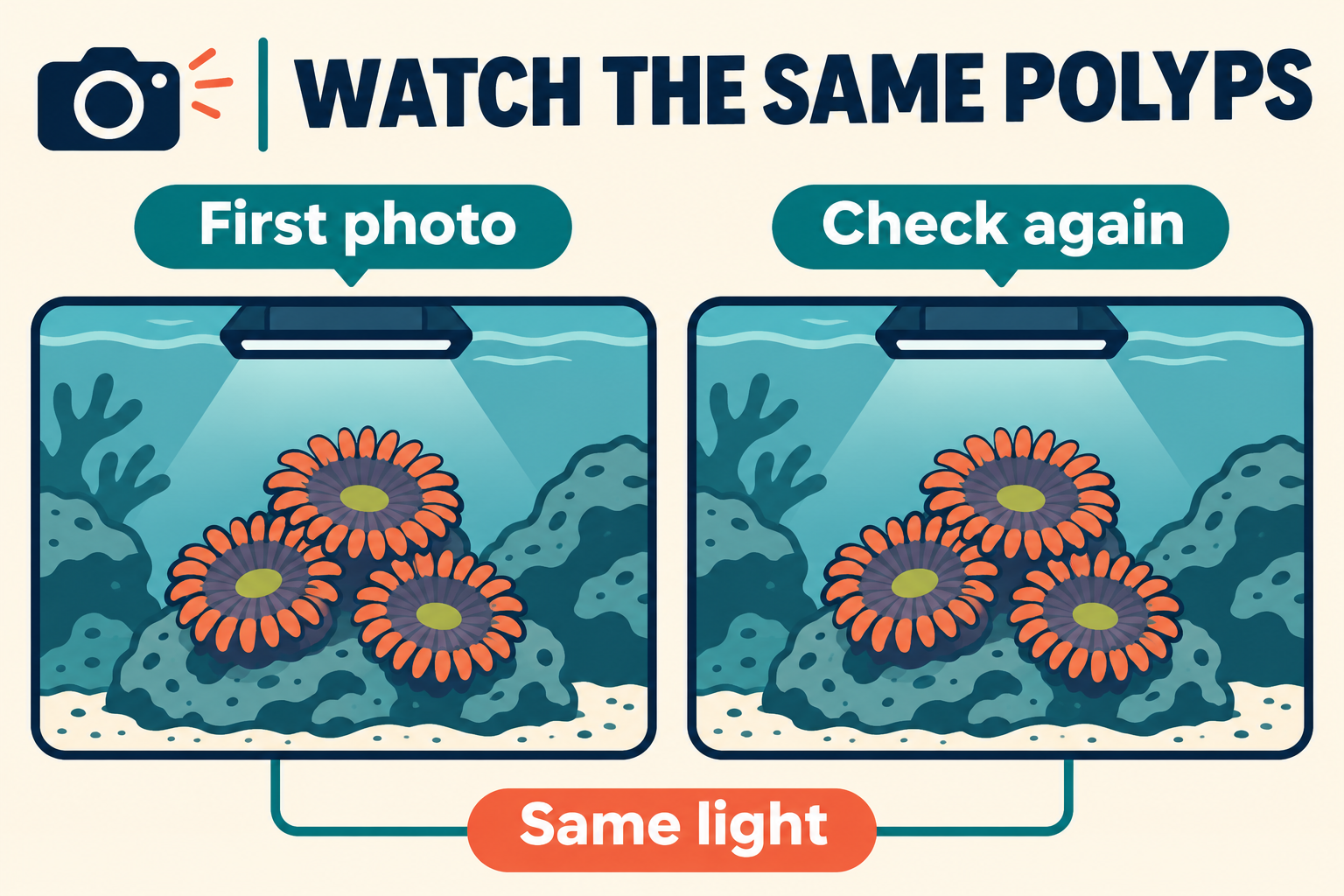
Start low, give the mat its own rock, and take a photo once the polyps settle. The next time you look, count the little faces at the edge. That's your reef growing.
Field Notes
Related species

Zoanthus Polyps
Zoanthus sociatus
Same genus
Aphrodite
Zoanthus sp.
Same genus
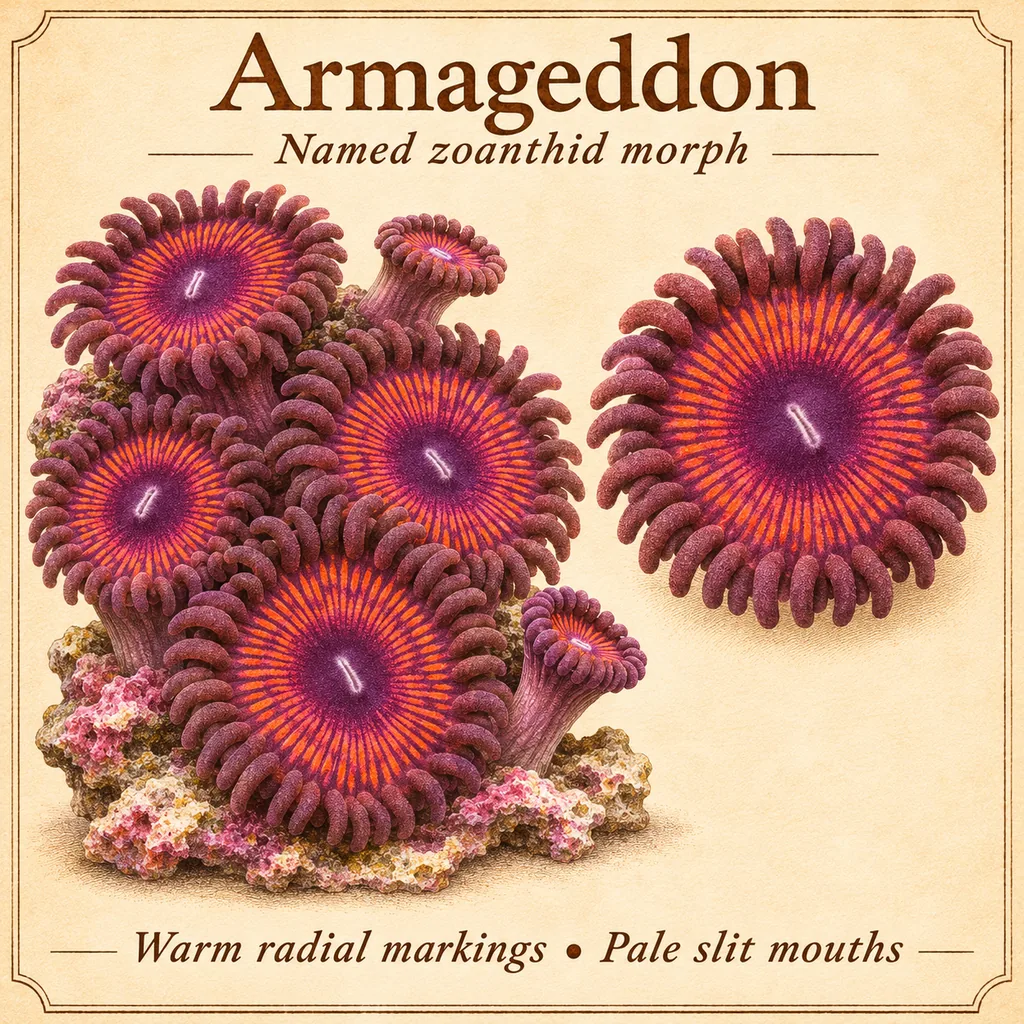
Armageddon
Zoanthus sp.
Same genus
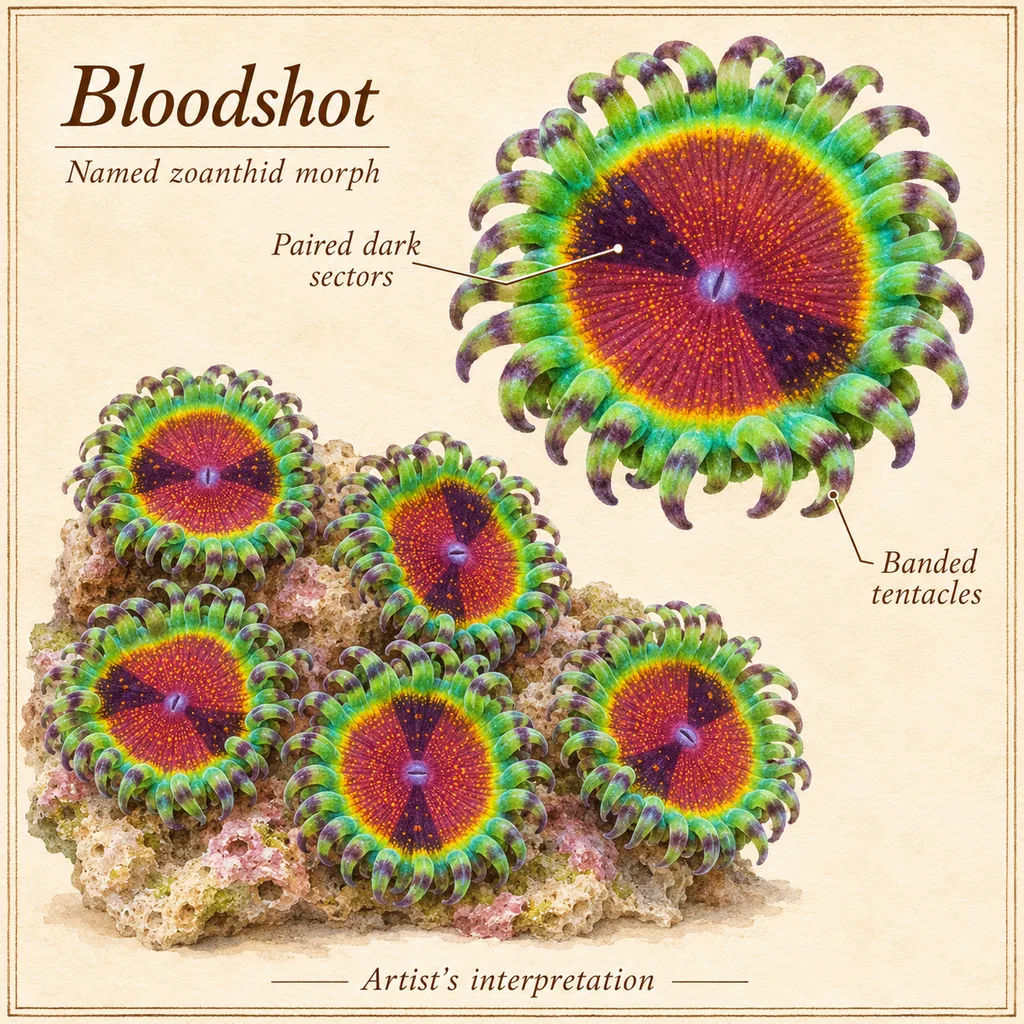
Bloodshot
Zoanthus sp.
Same genus
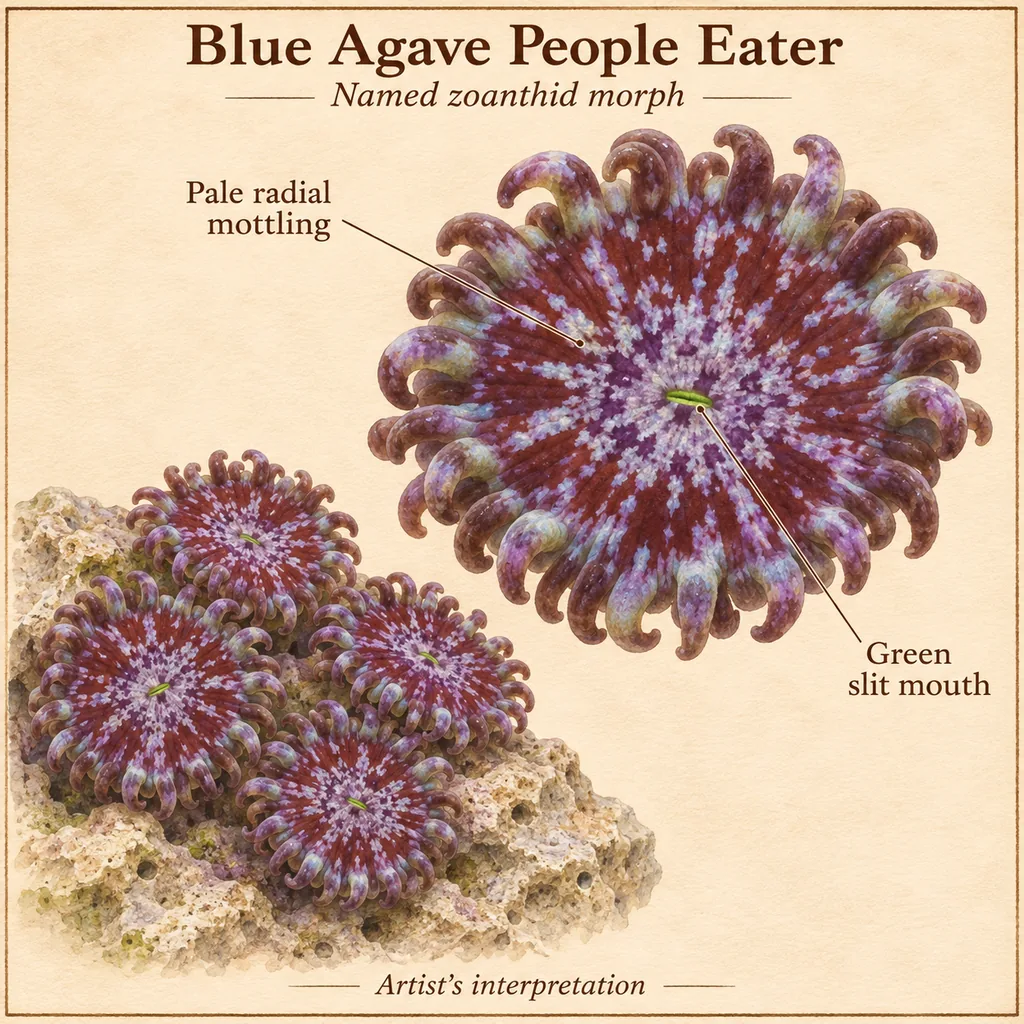
Blue Agave People Eater
Zoanthus gigantus
Same genus
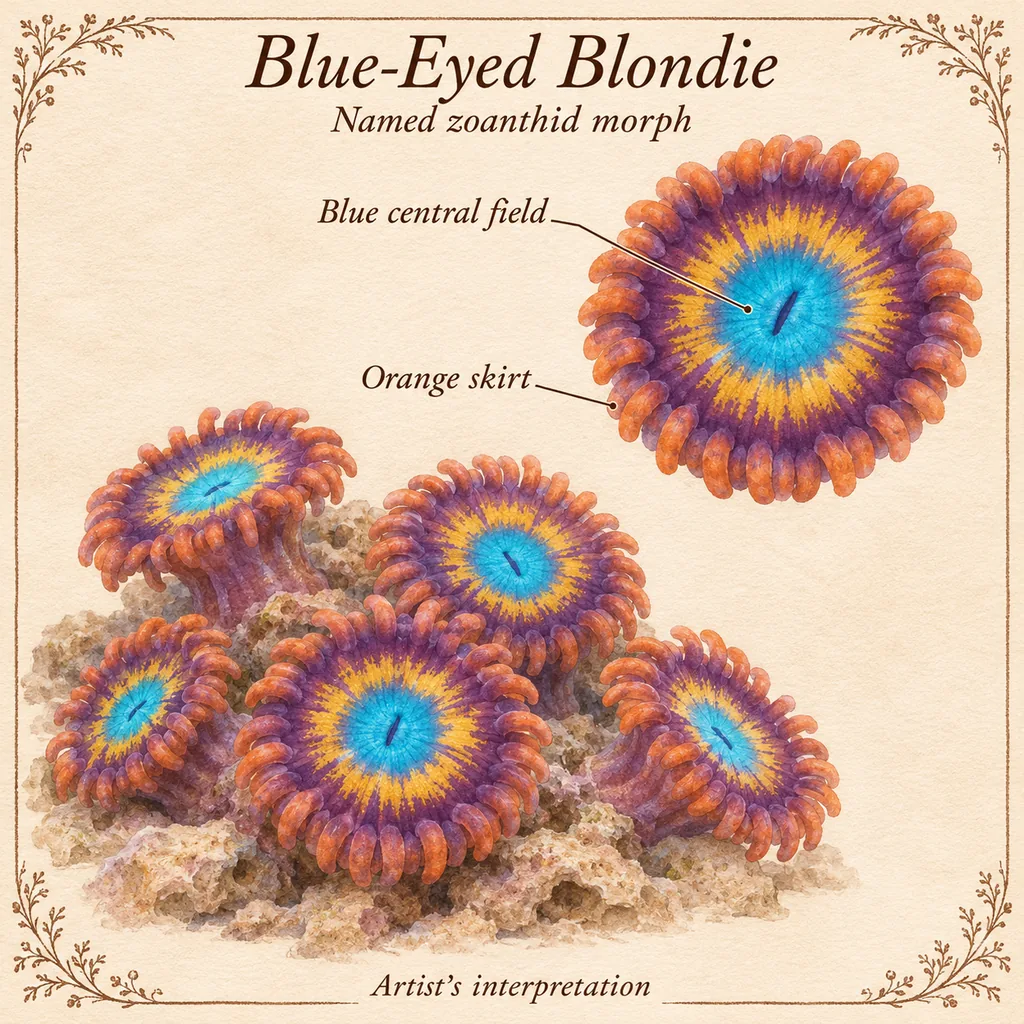
Blue-Eyed Blondie
Zoanthus sp.
Same genus

Candy Apple Red
Zoanthus sp.
Same genus
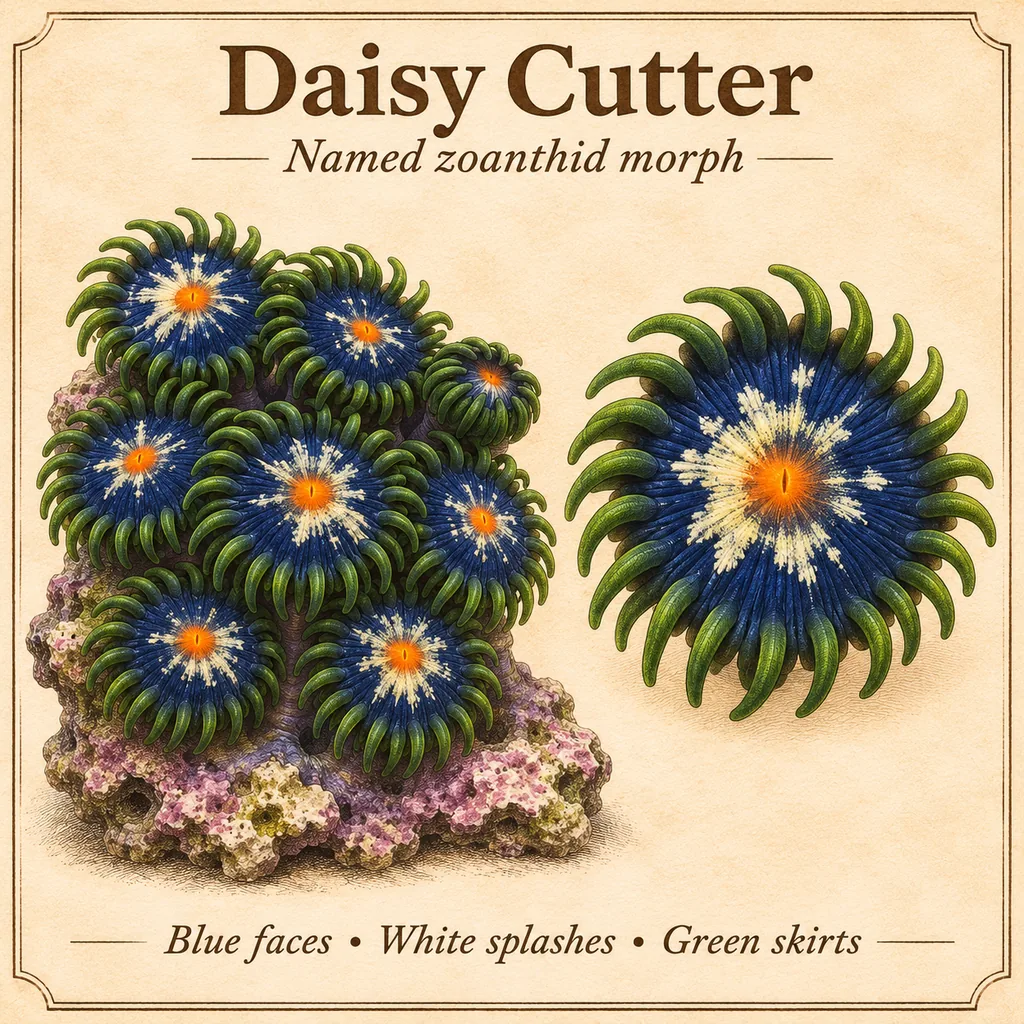
Daisy Cutter
Zoanthus sp.
Same genus