Purple Kenya tree
Gallery
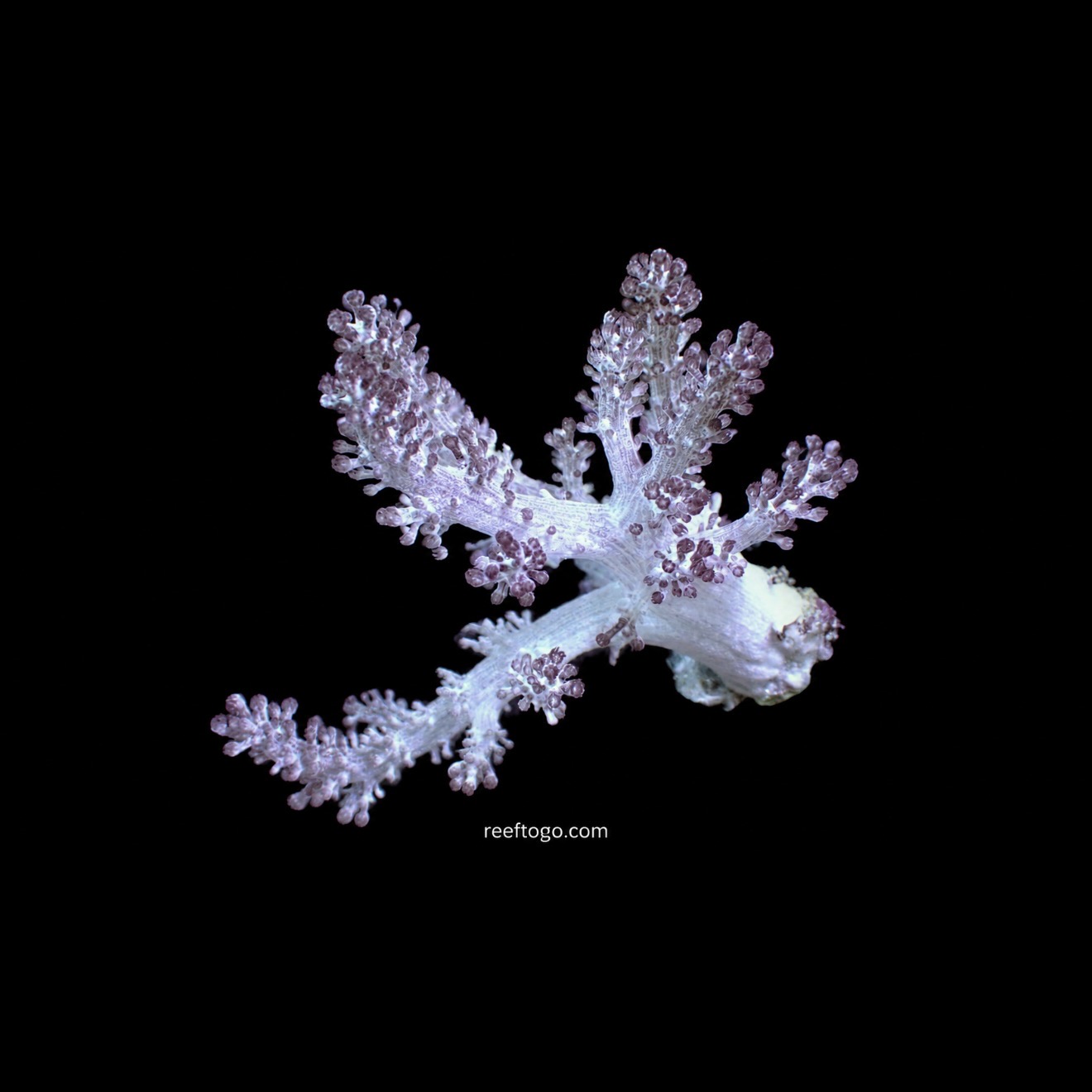
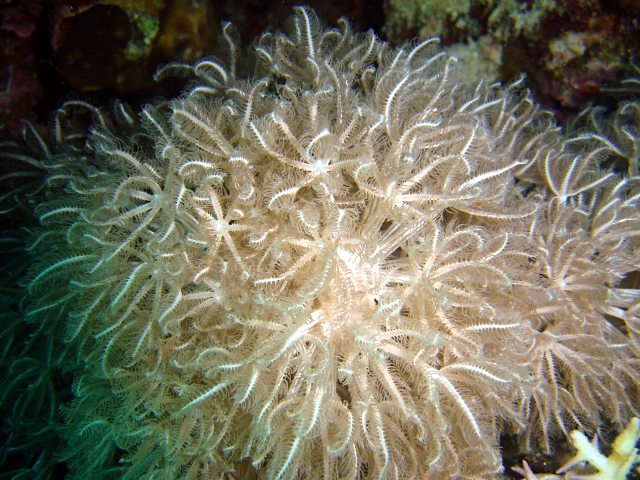
Purple Kenya tree is a soft coral that branches into a relaxed, tree-like silhouette, with a central trunk dividing into tapered branches covered in small polyps. The polyps open when the coral is settled and the branches stand full and upright in the current, giving the colony the soft, swaying outline of a small tree. The purple name follows the muted purple tone carried through the trunk and branches, a color that deepens under blue-leaning light.
The entry lists medium light and medium, indirect flow, with placement in the middle rockwork. Care is easy, aggression is peaceful, and growth is moderate by the house standard applied to blank fields on this entry. Place the frag in the middle of the rockwork with its base secured to rock. Medium light holds the purple tone and keeps branches compact. A colony in deep shade may stretch thin and lean toward light, while very strong light can keep polyps closed through the middle of the day.
Medium flow should arrive indirectly. The branches want to sway gently, and movement through the colony carries waste away from the branch junctions, where detritus collects in soft corals. A direct jet flattens one side and can keep those polyps closed. Still water lets film algae settle on the branches, a common reason a soft coral stays shut. Broad movement around the colony, rather than aimed at it, is the pattern to aim for.
Feeding is indirect. The small polyps take fine particulate food from regular broadcast feeding, and light supplies much of the energy. Kenya tree corals do well in tanks with present, steady nutrients, and very clean water can slow growth and shrink the colony. Regular reef feeding in a fed tank covers its needs without any target routine.
This coral is listed as peaceful in effect, with no sting worth planning around. Spacing is about spread. A settled Kenya tree drops small branches that land nearby and attach, starting daughter colonies around the mother. Leave room for that habit, keep the colony off a rock face shared with slow, prized growers, and remove dropped branches from spots where they are not wanted before they attach firmly.
Growth is moderate and can speed up in a nutrient-rich, stable tank. The trunk thickens, branches divide, and new polyps fill the branch tips. Soft corals shed a surface layer from time to time, and a colony may stay closed for a few days around a shed and then reopen fully. Branches that stay limp and closed for many days, tissue that sloughs in patches, or steady shrinking call for a check of flow, film algae on the branches, and nutrient levels.
Common pitfalls include mounting the frag loosely so the trunk topples before its base attaches, parking it in a dead corner where film builds up, and panicking at a normal shed and moving the coral mid-process. Secure the base, keep indirect movement over the branches, and let a shed finish undisturbed.
Field notes — what keepers report
- Hardiness reports are strongly positive. Keepers describe Kenya tree as a coral that tolerates moves, swings, and beginner mistakes that set back fussier pieces, and many rank it among the easiest soft corals to settle. Reports still note that a colony smothered in film algae stays closed until the branches are clean.
- Spread reports divide keepers by intention. Keepers who want fast cover describe dropped branches rooting around the tank as free colonies, while keepers with a planned layout describe regular removal of volunteers from rockwork. Both sides agree the habit is easy to manage when branches are lifted early.
- Shedding reports reassure. Keepers describe a closed, waxy-looking phase lasting days, followed by full reopening with cleaner, brighter branches. Keepers who did not know the pattern describe worrying through the first shed. Gentle flow during the shed is the shared practice.
Field Notes
Related species
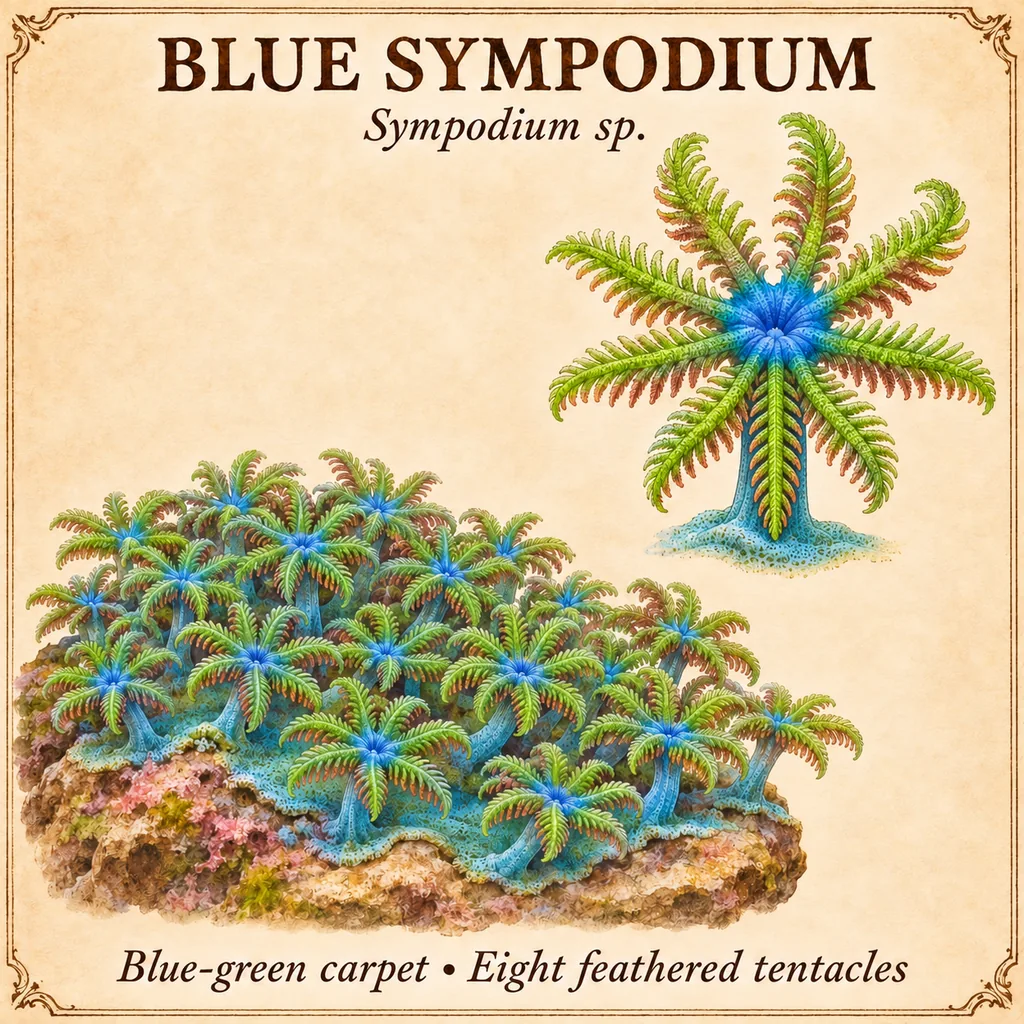
Blue Sympodium
Sympodium caeruleum
Similar care · Soft

Blueberry Haze Zoas
Zoanthus sp.
Similar care · Soft

Blueberry Zoanthids
Similar care · Soft

Burning Willow Zoas
Zoanthus sp.
Similar care · Soft

Cladiella Soft Coral
Cladiella australis
Similar care · Soft
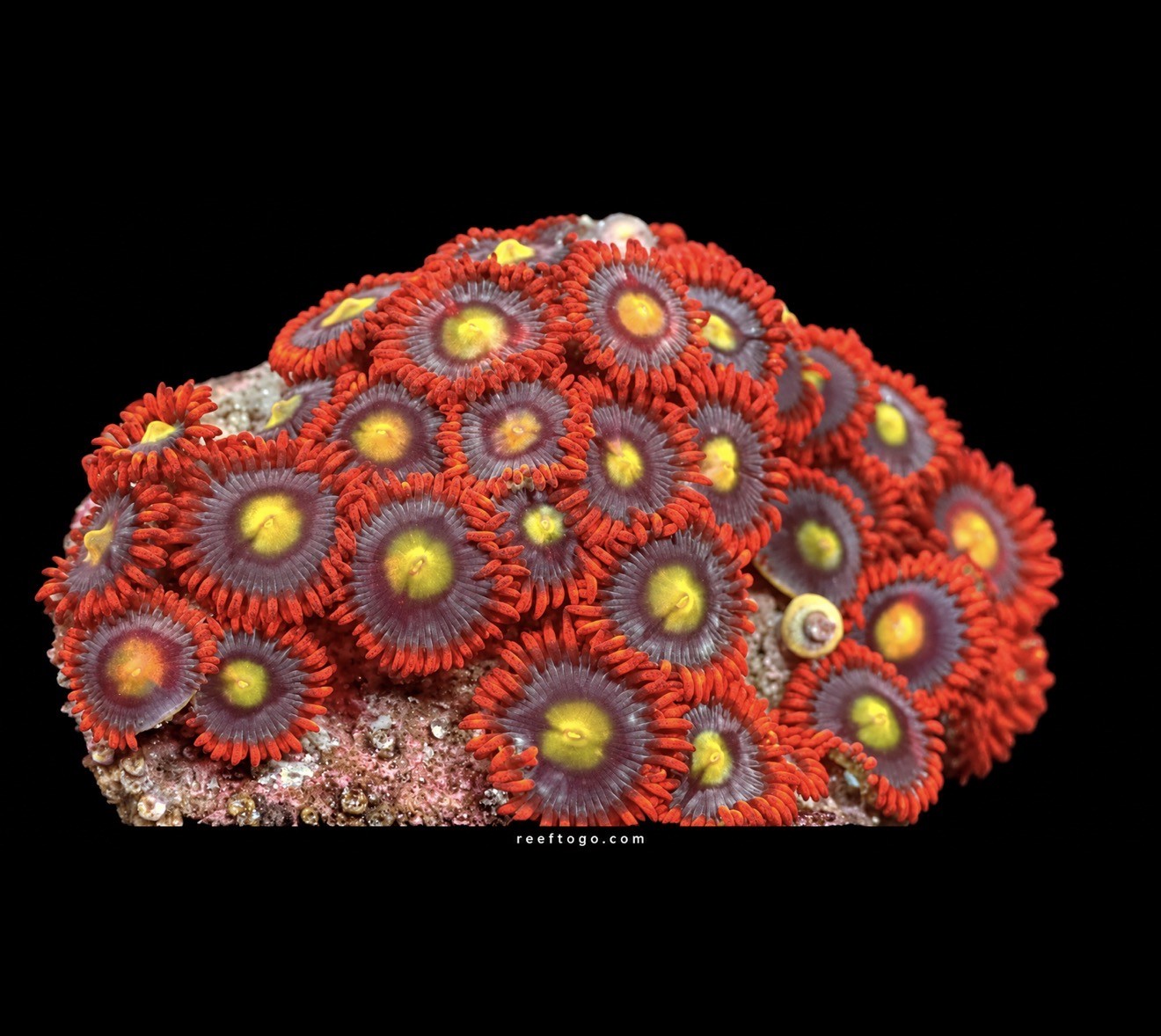
Fire and ice zoanthids
Zoanthus sp
Similar care · Soft
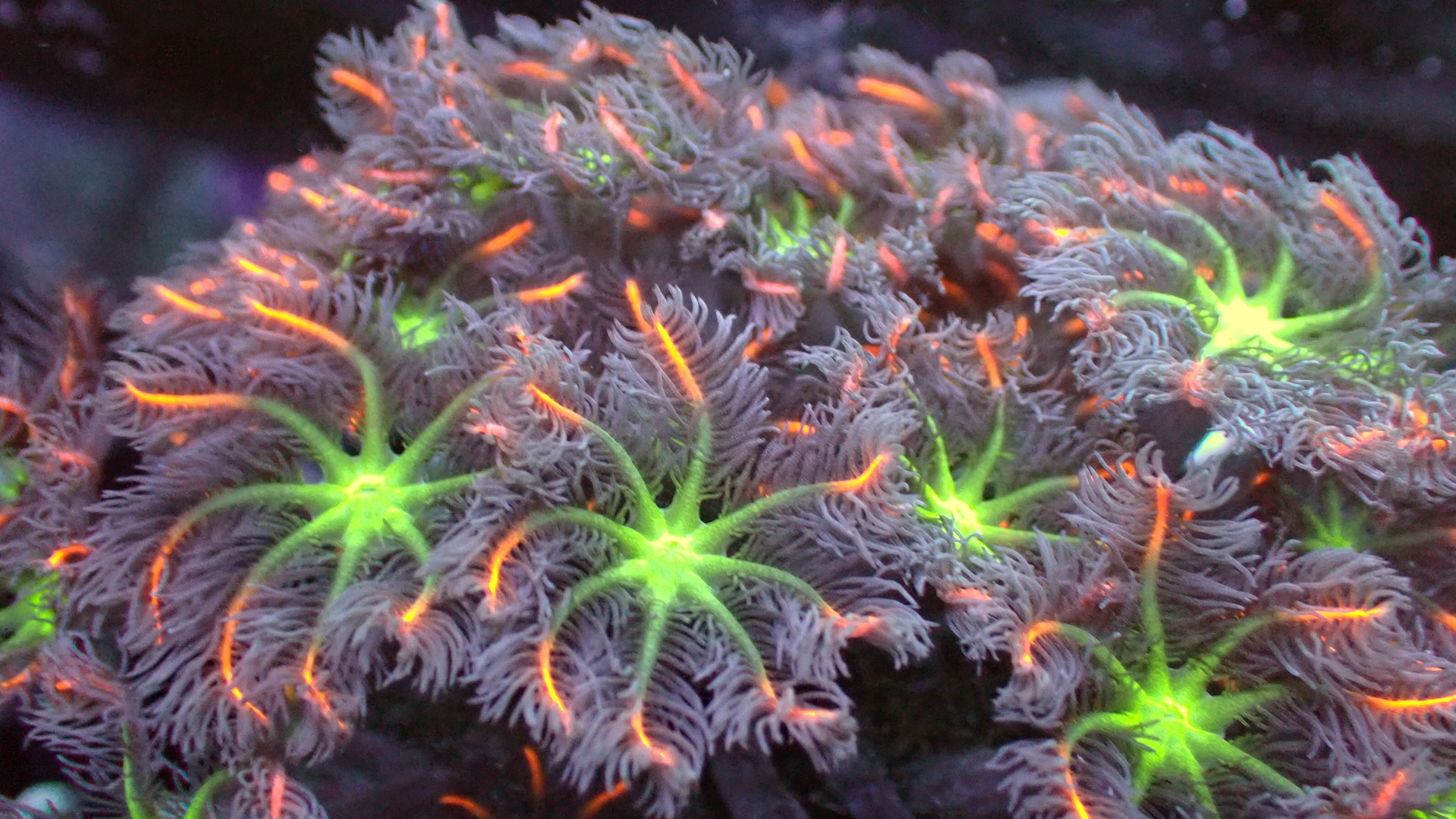
Firework cloves polyps
Clavularia sp.
Similar care · Soft
Giant Anthelia
Anthelia glauca
Similar care · Soft