Purple Kenya tree
Gallery
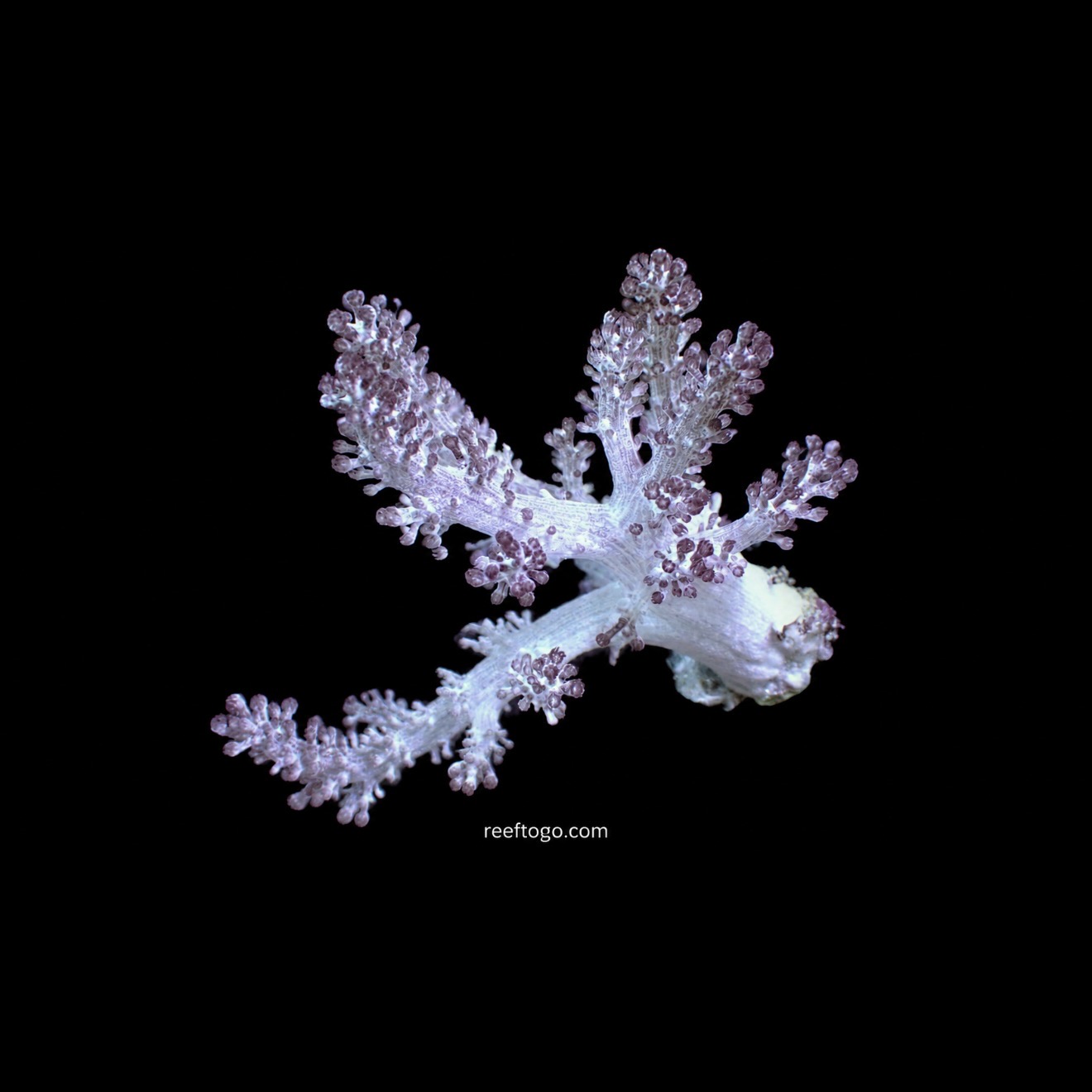
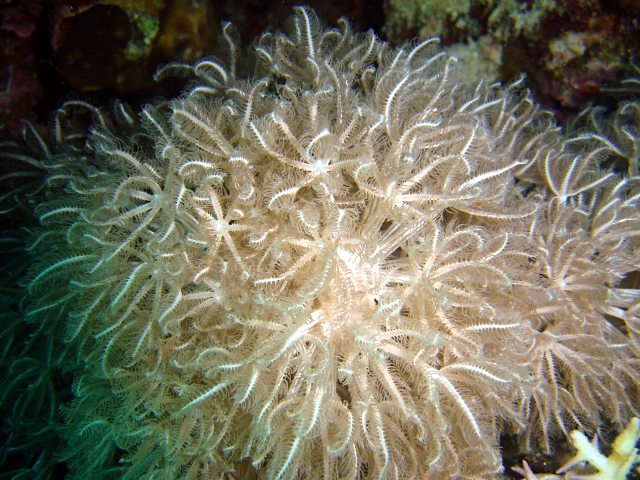
Purple Kenya tree is an easygoing soft coral grown for the relaxed, tree-like shape it builds as it matures. A thick central stalk rises from the base and forks into soft branches, each branch lined with small polyps that extend when the colony is content. In gentle current the whole tree leans and recovers slowly, a calm motion that suits a mixed reef. The purple tone across the stalk and branches gives this form its name and separates it from the tan and pink Kenya tree forms more often seen.
This entry lists medium light, medium indirect movement, and middle rockwork placement, with the remaining care fields set to the house standard: easy care, peaceful aggression, and moderate growth. Set the frag mid-rockwork on solid rock, with the base wedged or glued so the stalk stands upright. Medium light keeps the color even and the branching compact. Low light produces a taller, thinner tree reaching upward, and abrupt strong light can close the polyps for days.
Flow should move the branches without bending the tree flat. Indirect, medium movement keeps detritus from settling into the forks and brings food across the polyps. Soft corals that sit in still water collect a film that keeps them closed, while a colony in a washing-machine current spends its energy holding shape. A spot where the branches nod gently through the day is the right read.
Feeding runs through the tank routine. The polyps capture fine suspended food, and the coral draws nutrients from the water, thriving in the present, steady nutrient levels typical of a fed reef. Ultra-clean water is the common thread in reports of shrinking soft corals, and this coral is no exception. No spot feeding is needed, and heavy target feeding mostly fouls the base.
Aggression is peaceful. The tree does not send sweepers and does not sting its neighbors. Its influence is shade and spread. A mature tree casts real shade over corals beneath its branches, and dropped branchlets root where they land. Plant it where its shade falls on rock or sand rather than on a light-hungry frag, and keep space around the base for daughter colonies to be lifted out if they are not wanted there.
Growth is moderate, thickening the stalk and adding forks through the season in a stable tank. Like other leathery soft corals, this one sheds its outer layer periodically and may close for several days while it does, emerging clean. Extended closure beyond a shed window, branches that blacken at the tips, or a base that detaches repeatedly point to flow, film, or a placement the colony dislikes.
Common pitfalls include leaving the frag unsecured until the stalk gains weight and topples, placing it under a future shade-maker that will starve it of light, and reading a normal shed as dying and intervening daily. Fix the base, give it medium light and indirect movement, and judge the tree over weeks.
Field notes — what keepers report
- Placement reports favor the middle of the tank. Keepers describe compact, well-colored trees at mid-height under medium light, and leggier, paler growth from colonies left low in shade. Both sides describe the shape answering slowly, over a season rather than a week.
- Temperament reports are uniformly calm. Keepers describe the tree living alongside other soft corals and LPS without incident, with disagreements limited to shade as the canopy widened. Moving the shaded coral, rather than the established tree, is the practice most often described.
- Recovery reports lean forgiving. Keepers describe colonies reopening after tank moves and rough handling within days, and frags cut from a mother tree attaching readily in rubble. Reports agree the base hold is the main early job: a tree kept upright attaches and grows, and a tree left rolling does neither.
Field Notes
Related species
Blue Sympodium
Sympodium caeruleum
Similar care · Soft

Blueberry Haze Zoas
Zoanthus sp.
Similar care · Soft

Blueberry Zoanthids
Similar care · Soft

Burning Willow Zoas
Zoanthus sp.
Similar care · Soft

Cladiella Soft Coral
Cladiella australis
Similar care · Soft
Fire and ice zoanthids
Zoanthus sp
Similar care · Soft
Firework cloves polyps
Clavularia sp.
Similar care · Soft
Giant Anthelia
Anthelia glauca
Similar care · Soft