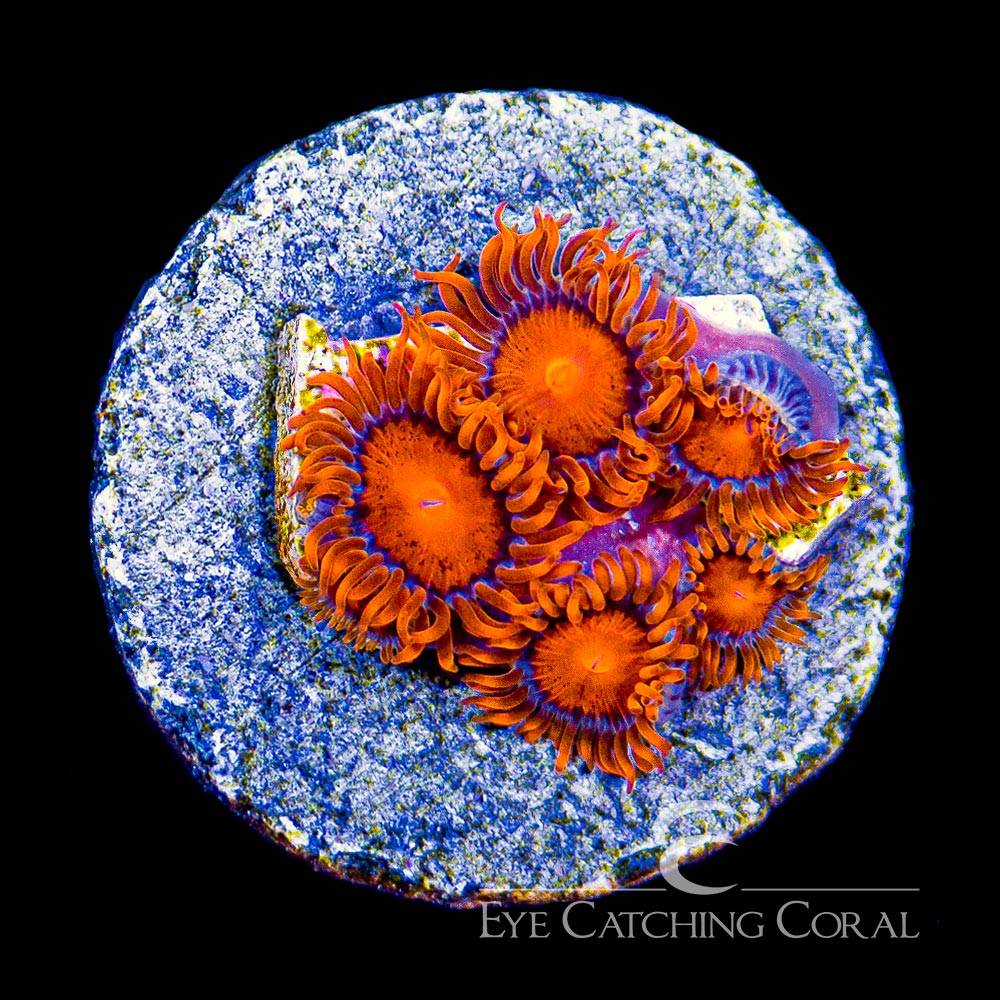
Rainbow incinerator zoas
Zoanthus sp.
Palytoxin safety
Some zoanthids and palythoas can contain a potent toxin. Wear sturdy waterproof gloves and eye protection, minimize handling, and keep colonies submerged when possible. Never boil, steam, pressure-wash or scrub colonized rock under running water. Keep other people and pets away during handling. If exposure is suspected, seek urgent medical advice and tell the clinician about possible palytoxin exposure.
Sources: CDC: palytoxin exposure · OATA: avoiding palytoxin poisoning
Gallery
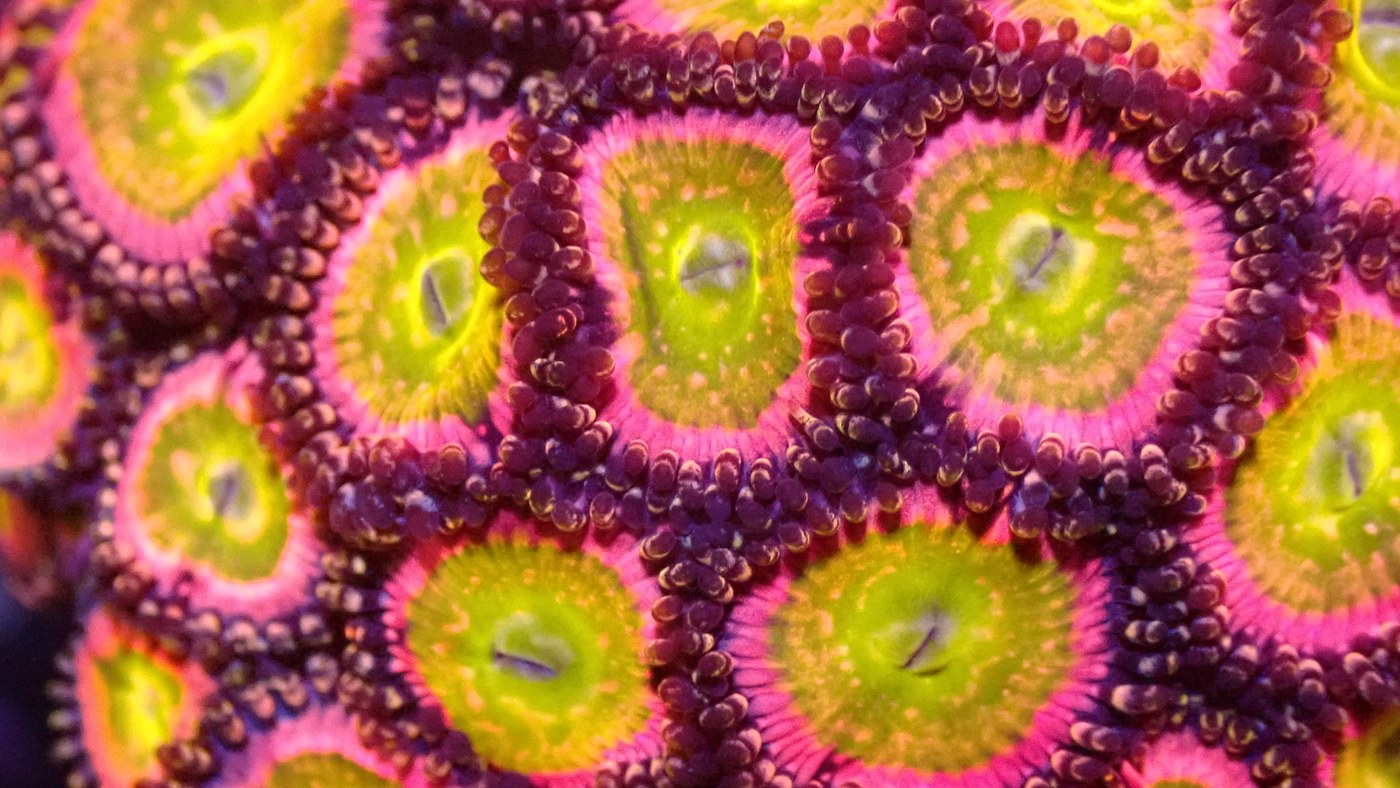
Rainbow Incinerator looks like a patch of tiny fireworks. Every button is a living polyp, with a mouth in the middle and a fringe of tentacles. The colony spreads by adding new buttons at the edge. Look close through the glass. If you handle the rock, use gloves and splash goggles.

History
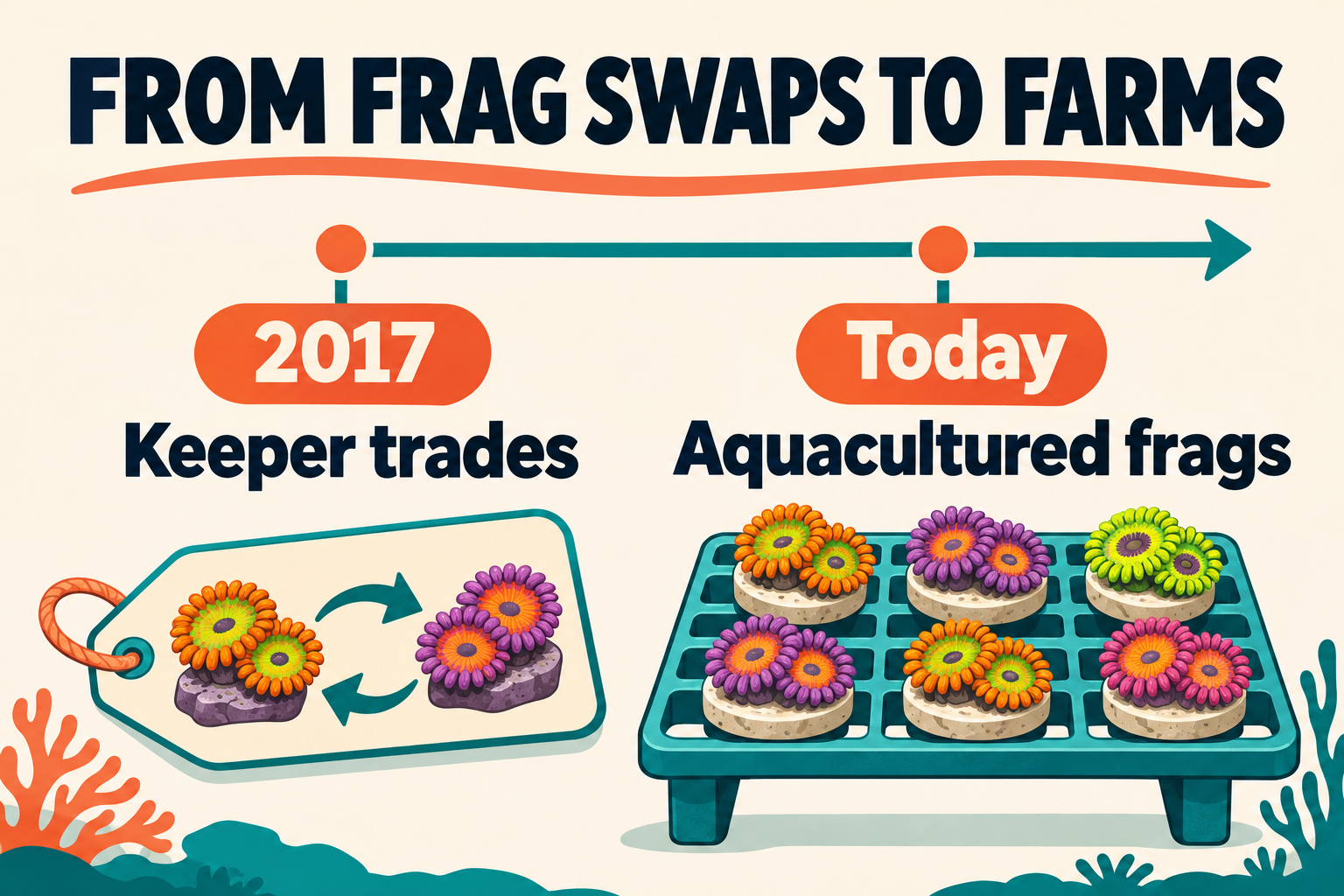
1. A name made for reef tanks. Rainbow Incinerator is a hobby name for a colorful zoa. Keepers were offering frags under that name by 2017. Aquaculture farms grow and sell frags today. The name doesn't trace back to a documented wild collection for this Reef To Go line.
2. Read the rings. Look for a bright face framed by a darker fringe. The Reef To Go line shows hot pink and neon green against purple skirts under blue reef lights. Other colonies sold under the name show warmer orange or yellow bands. Compare the same frag under the same light before you judge a color change.
In the wild
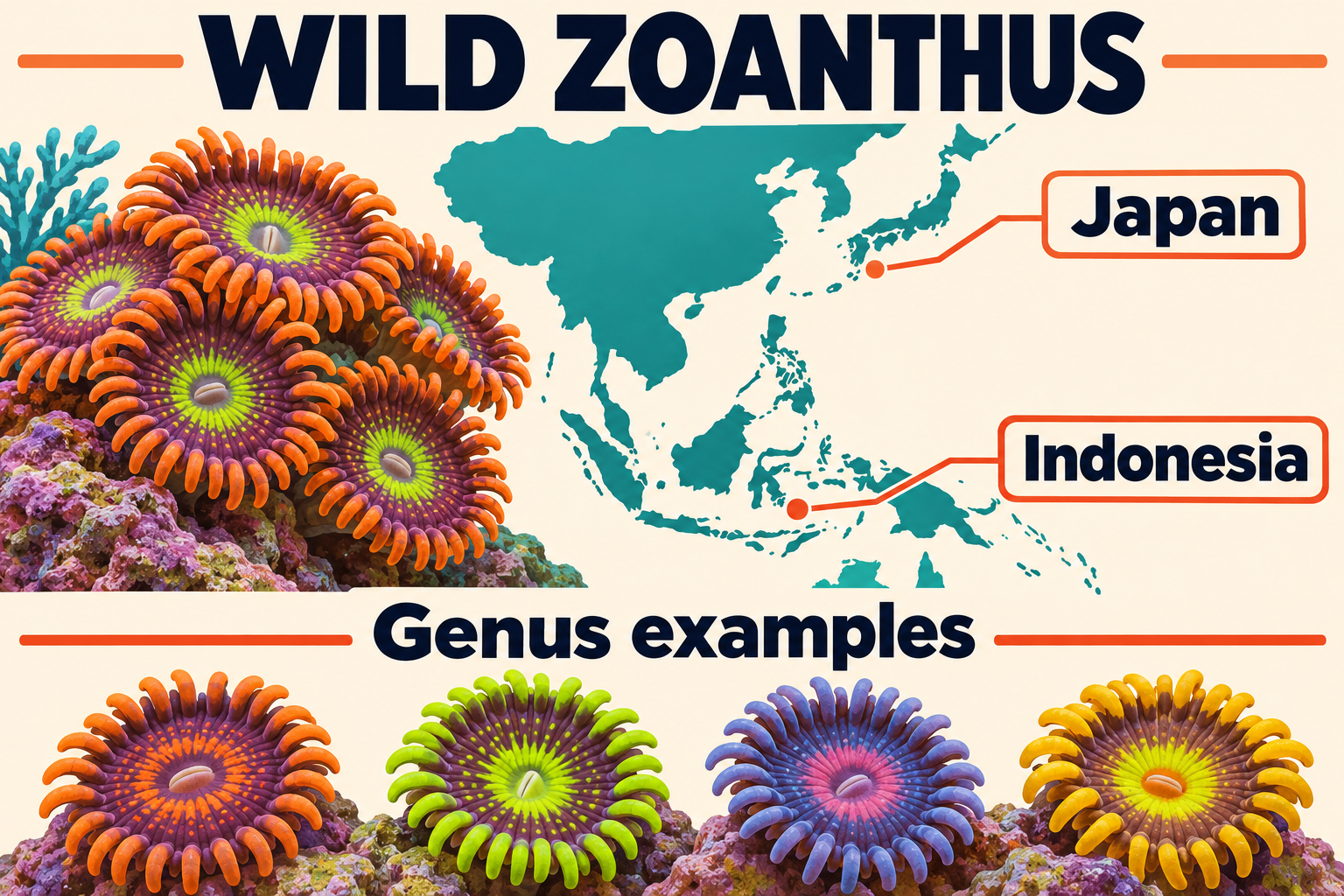
3. The wild cousins. Wild Zoanthus grow in patches on hard surfaces like reef rock. Relatives live on Indo-Pacific reef flats and in shallow water several meters down. Rainbow Incinerator is an aquarium color form with no recorded wild range of its own.
4. Sun, shade and moving water. A reef flat gets bright sun, shade in cracks, and moving water as waves and tides pass. Other colonies live farther down the slope in dimmer light. In the tank, start with a gentle cross-current across the polyps.
Light, flow and food
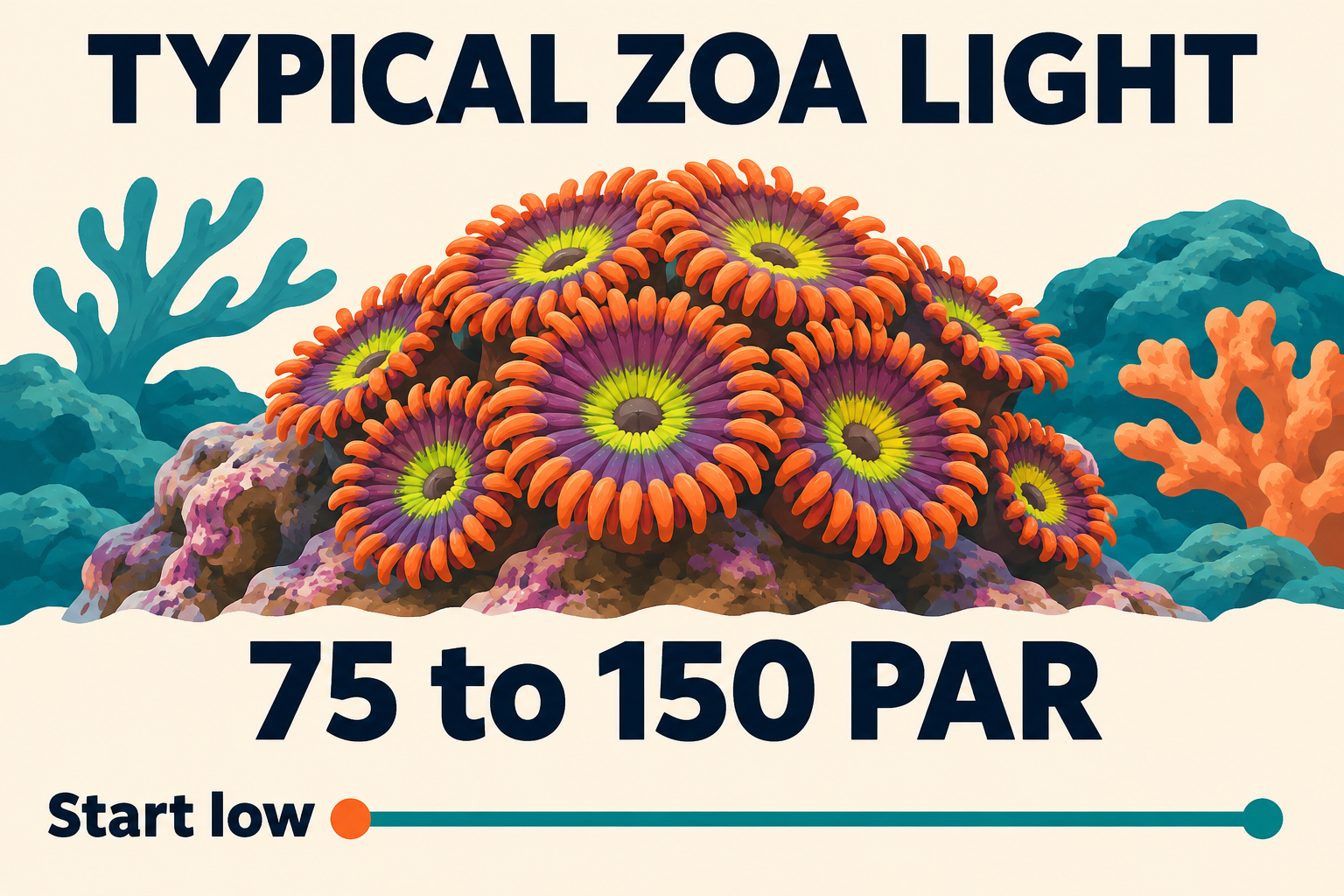
5. Settle in low. Start low on the rockwork and work toward the middle only as the frag settles. Use about 75 to 150 PAR as a general zoa band, starting near the low end. Raise the light gradually. Keep salinity and temperature steady and leave some nitrate and phosphate in the water.
6. Make the skirts flutter. Aim for moderate, indirect flow. Move enough water to carry away grit without pushing the polyps flat. Tiny algae inside the polyps turn light into food. Offer a little fine coral food if the polyps take it, and skip leftovers.
Give the mat room
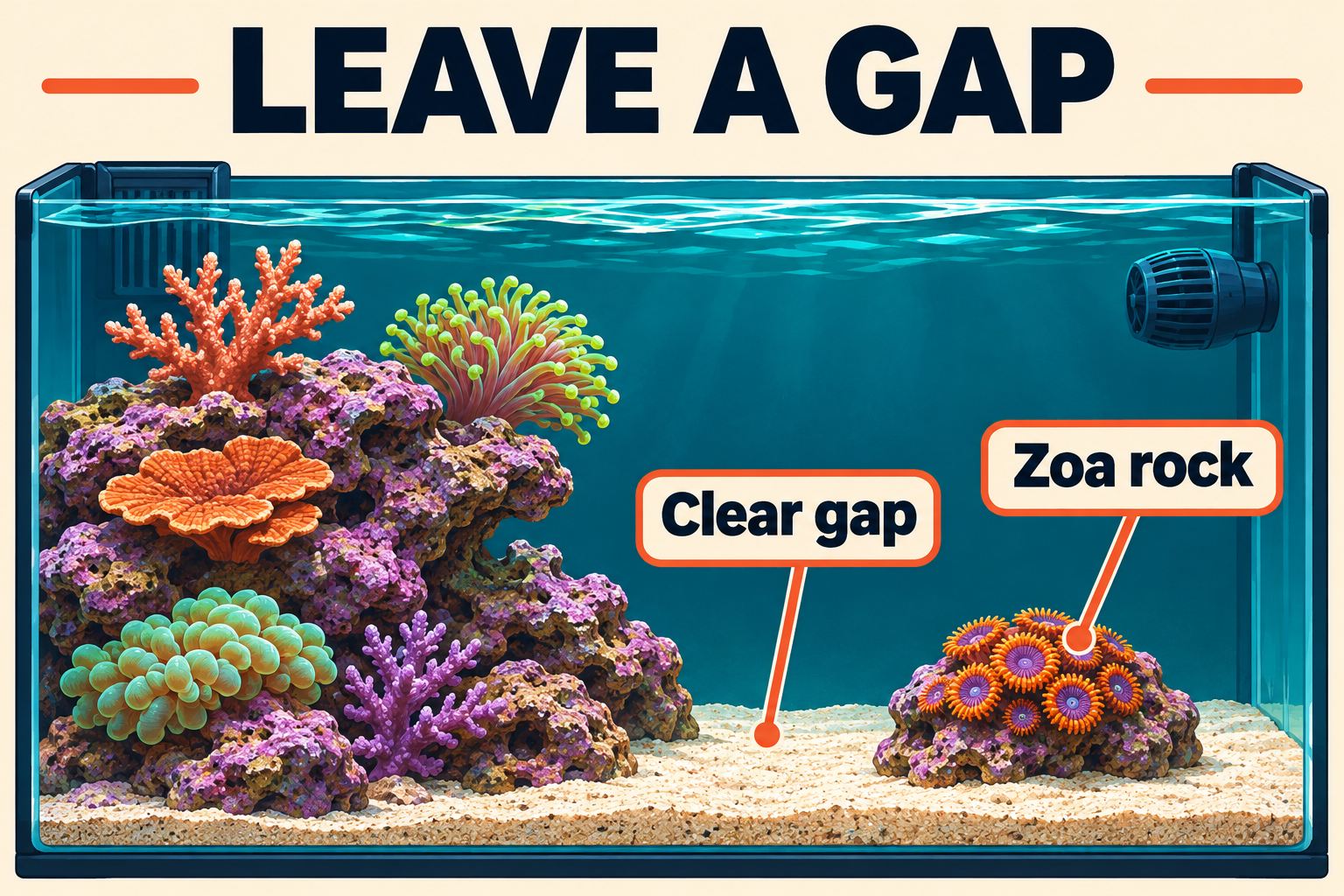
7. Leave a gap. Set the frag on its own rock if you want to keep the colony contained. Start with about two inches of open space from neighbors. Check as the mat grows. A gap today can disappear when new polyps reach the next rock.
8. Check a closed patch. Check temperature, salinity, and any changes in light or flow first. Look closely at the plug and under the skirts for pests such as zoa-eating nudibranchs and their egg ribbons. Inspect new frags away from the display.
Palytoxin safety
9. Gloves and goggles. Some zoanthids carry palytoxin. The trade name and colors can't tell you which. Wear gloves and splash goggles, keep the colony submerged during transfers, and keep kids and pets away while you work.
10. Skip the heat and spray. Never boil, steam or pressure-wash zoa rock. Don't scrub it under running water. If you suspect exposure, seek urgent medical advice and mention zoanthids. In the US, call Poison Control at 1-800-222-1222. Call 911 for trouble breathing.

Field notes — what keepers report
11. Your tank sets the pace. One keeper counted six polyps growing to about 23 in two months. In another tank, a keeper found this morph could share a grow-out with similarly sized zoas. Another reefer expected faster neighbors to win on their crowded plug. Give your only frag its own space.
12. Color can drift. One keeper watched the same colony shift from pink and pale green to salmon with darker skirts, then back toward pastel over several months. That's one tank, not a recipe. Take photos from the same angle under the same light and track new polyps alongside color.
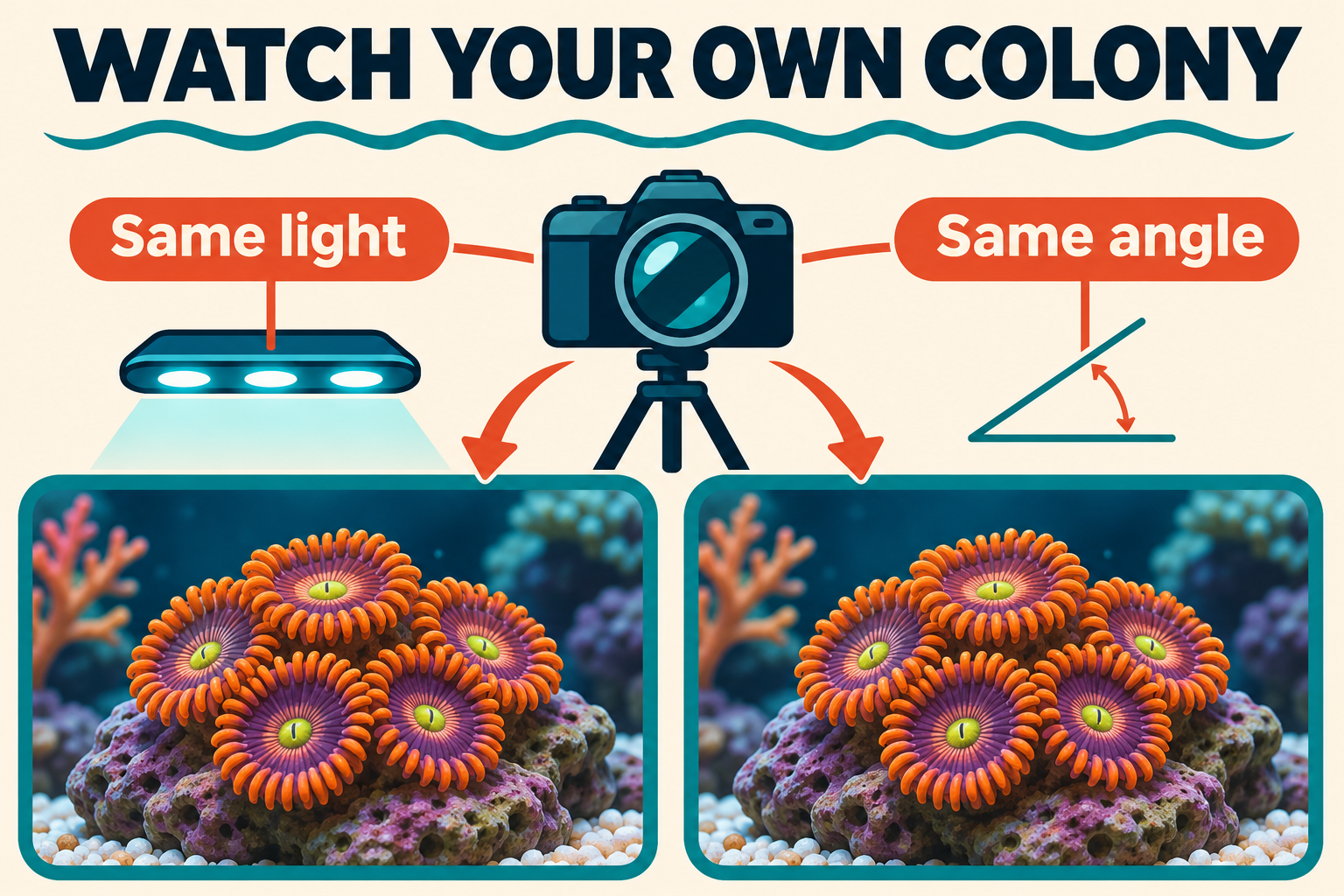
Give your frag a rock it can keep, then let it settle. Pick one spot at the edge and take a photo. The next little button beats any countdown.
Photo: Tin Huynh / ReefToGo photo, Rainbow incinerator zoas.
Field Notes
Related species
King Midas zoas
Zoanthus sp.
Same genus

Mystique zoas
Zoanthus sp.
Same genus
Alien Eye zoas
Zoanthus sp
Same genus
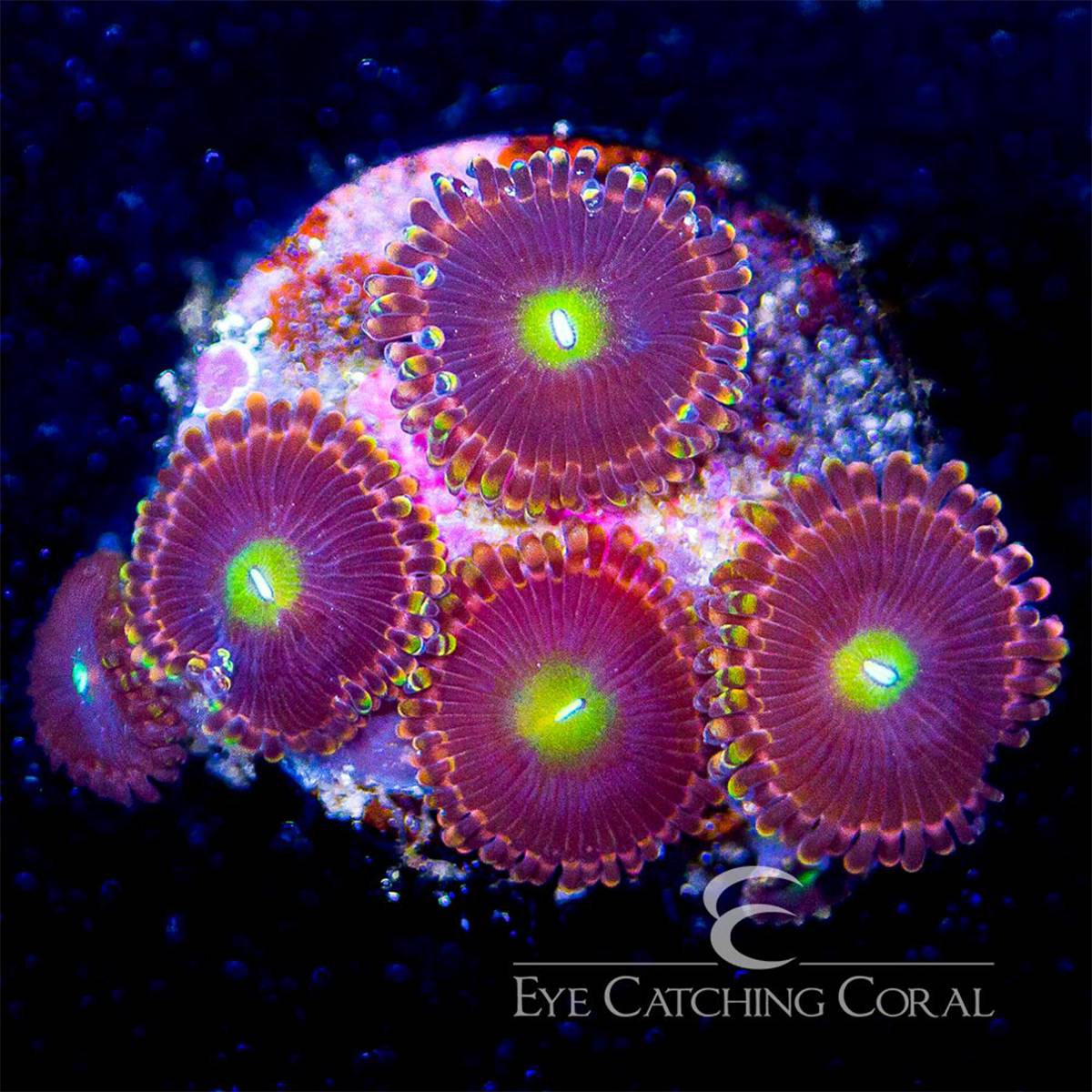
Antimatter zoas
Zoanthus sp
Same genus
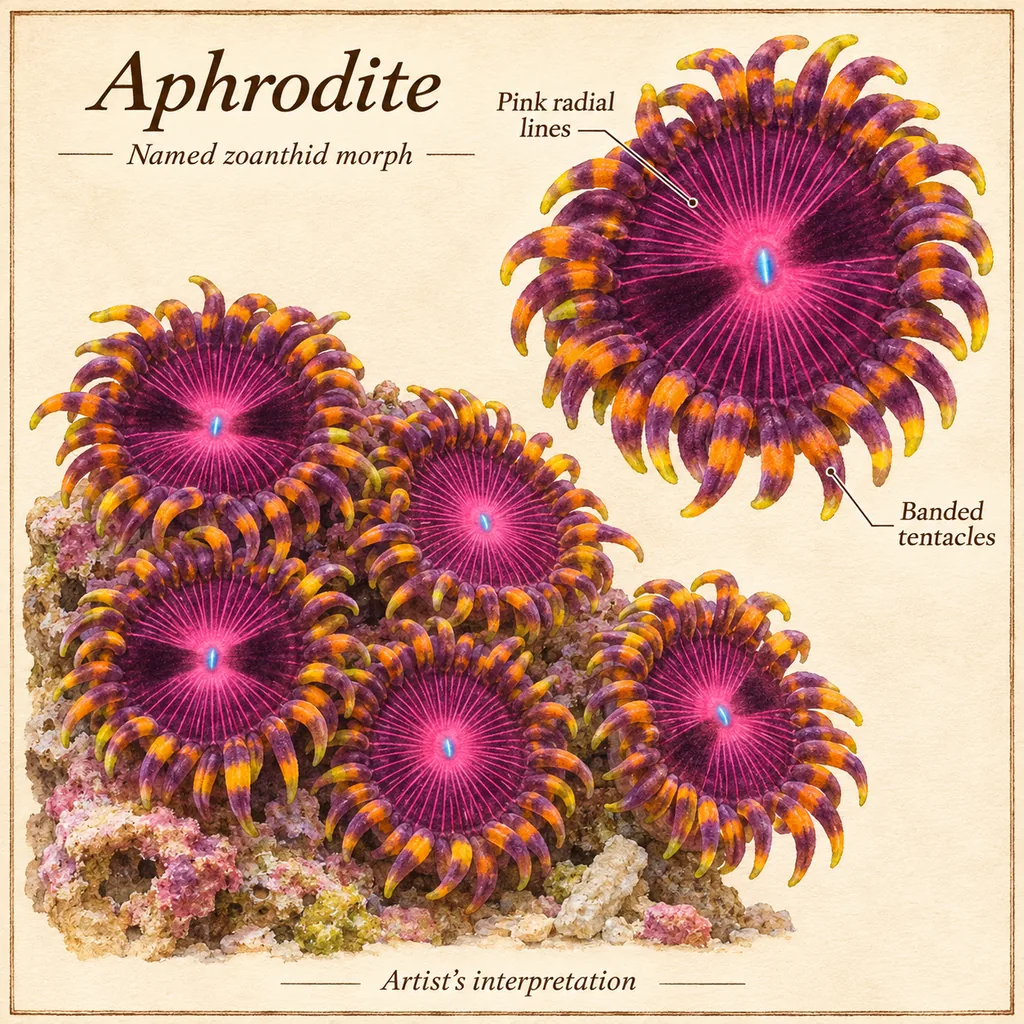
Aphrodite
Zoanthus sp.
Same genus
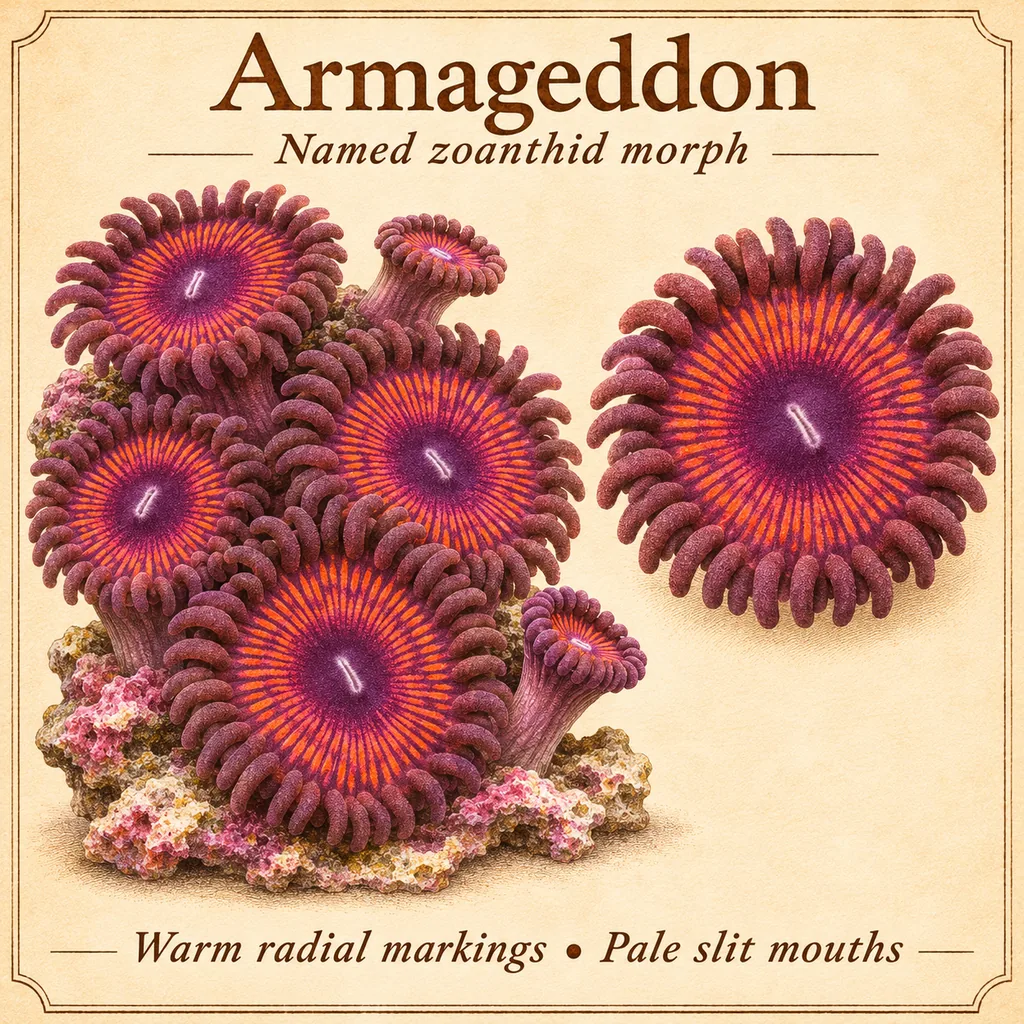
Armageddon
Zoanthus sp.
Same genus
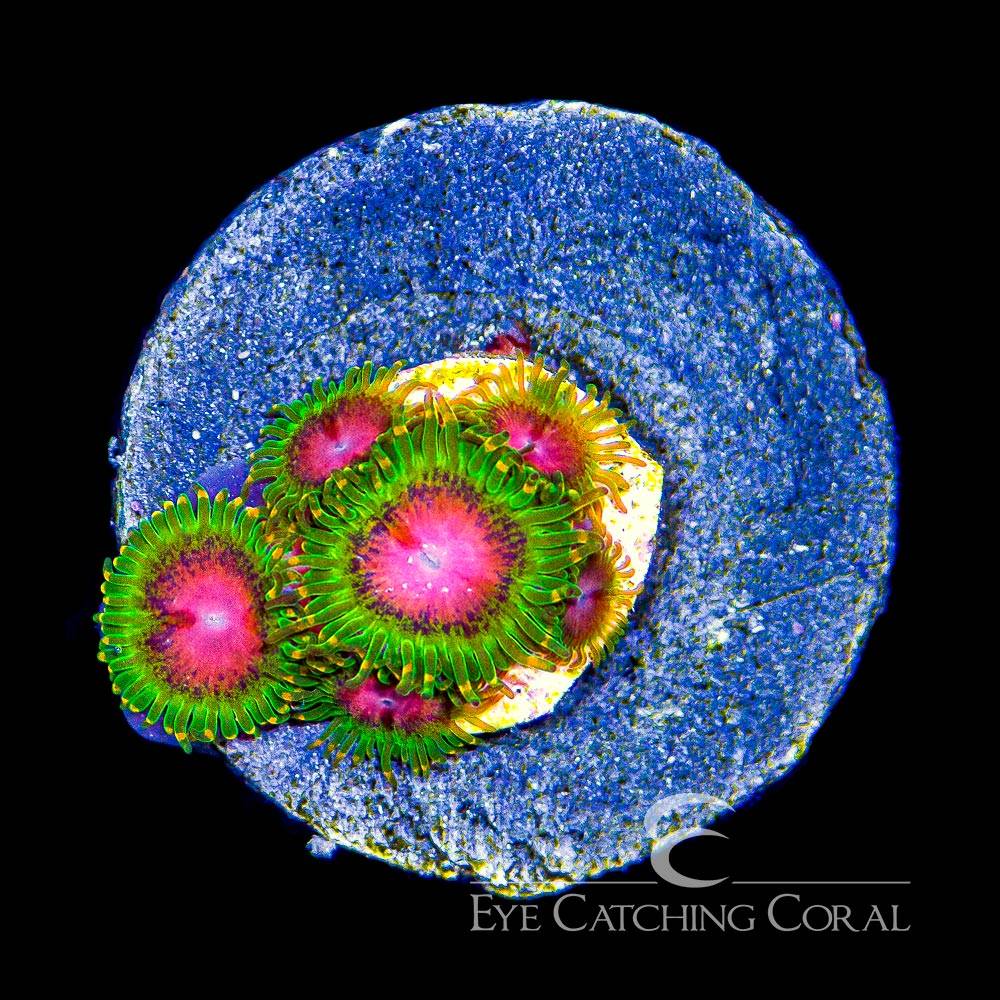
Awesome Blossom zoas
Zoanthus sp
Same genus
Bam Bam zoas
Zoanthus sp
Same genus