
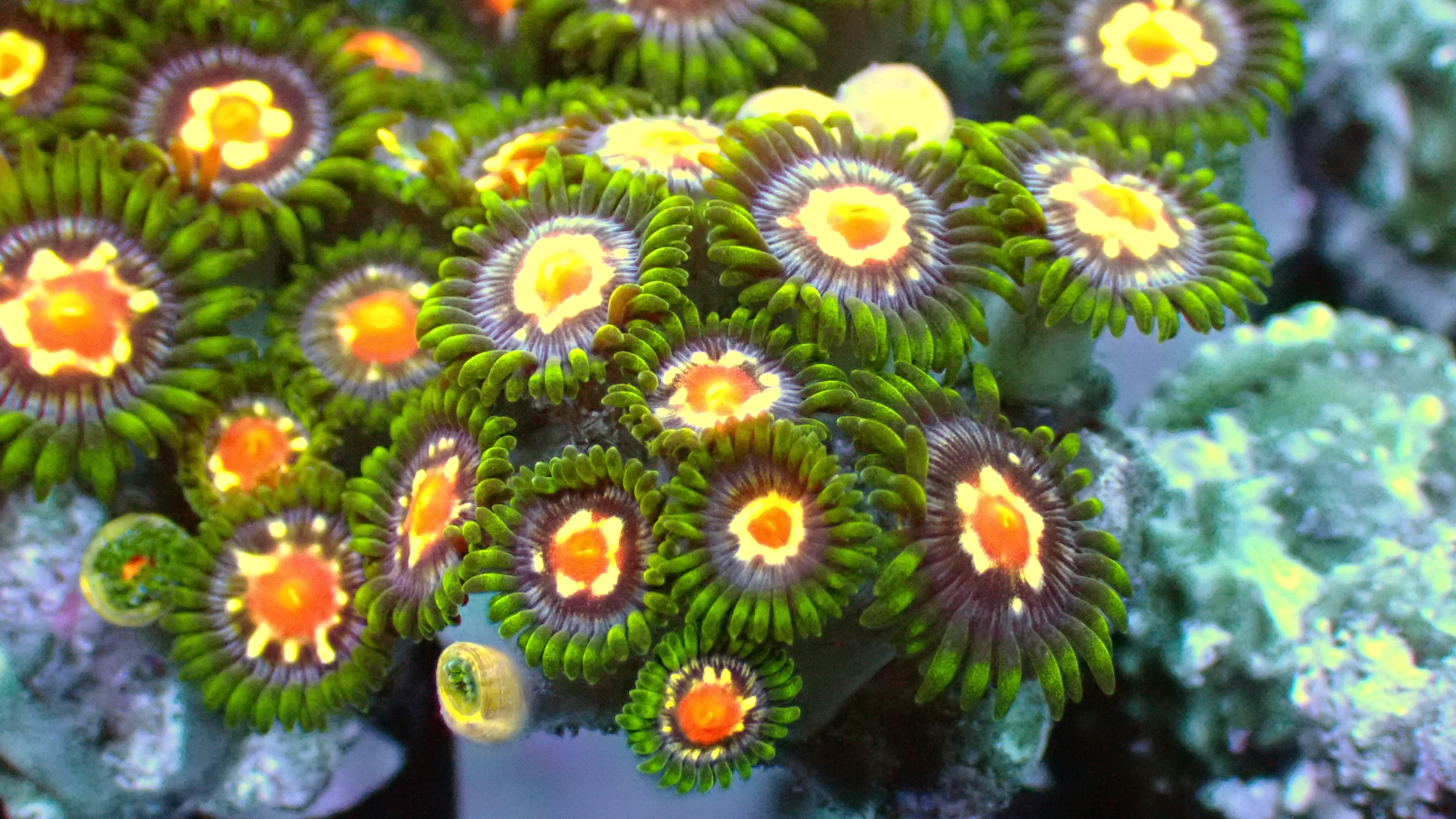
Stargazer zoas
Zoanthus sp
What it is
Stargazer zoas are a named color morph of Zoanthus, the sea-mat zoanthids. Each polyp is small, roughly a quarter to a half inch across, and the polyps join at the base through a shared sheet of living tissue called coenenchyme. A settled colony reads as one continuous mat, with new polyps budding along the edges wherever the mat finds bare rock, rubble, or a frag plug to grip.

The animal is a colonial anemone relative with no skeleton. It photosynthesizes through zooxanthellae in its tissue, absorbs dissolved organics from the water, and catches fine particles with its tentacles. Zoanthus species come from shallow tropical reefs across the Indo-Pacific, and many live in the intertidal zone, where colonies endure full sun, rain, and air exposure at low tide. That hard shoreline life is a big part of why this genus handles home aquariums so well.
The name on the label
Stargazer is a trade name for a color pattern, and the pattern earns it. Each polyp carries a long skirt of bright green tentacles around a dark purple-brown oral disc. Fine radial striping crosses the disc, and a glowing yellow-white ring breaks into points around a saturated orange center, so an open colony looks like a field of small stars. Retail descriptions of the morph agree on the same three marks: green tentacles, a pale blue-white disc pattern, and the orange center.

No scientific name comes with the morph. Zoanthus species cannot be separated reliably by color, named morphs shift appearance from tank to tank, and different sellers occasionally attach the same name to similar animals. Buy the pattern in front of you, from a photo of the actual colony line, and expect the scientific label to stay at Zoanthus sp.
Color and light
The green skirt fluoresces hard under blue light, and the yellow-white star pattern glows against the dark disc. Under a whiter daylight spectrum the orange center carries more of the show and the disc striping shows in finer detail. Keepers running heavy blue get the neon version; keepers running balanced light get the higher-contrast version.

Moderate light suits this morph, roughly 50 to 150 PAR, with the middle of that band a safe home. Start a new frag low or in a dimmer corner and walk it up over a couple of weeks, because a sudden jump in intensity can shrink polyps or bleach them. Polyps telegraph their light level clearly. Starved of light, they stretch upward on longer stalks and lose color; a stretch past about half an inch is a request for more. In stronger light they sit short and tight against the mat and color up brighter.
Flow, placement, and neighbors
Moderate, indirect flow is the target. Moving water sweeps detritus off the mat and delivers food to the tentacles. A direct blast keeps polyps closed, and dead-still water lets film algae and sediment settle between polyps, which irritates the colony into closing as well. Random flow from a wavemaker handles both problems at once.

Bottom to middle placement on its own rock is the standard home, and an island rock separated from the main structure is better still. The entry's care fields rate aggression as moderate, and growth drives that rating more than sting does. Zoanthids carry a weak sting and lose most direct stinging contests, yet a happy colony buds outward steadily and will encrust over slower neighbors, shading and crowding them out. On an island, the spread stays easy to enjoy and easy to trim with a blade at the mat edge. Leave about two inches of room around the colony as a working margin.
Feeding
Photosynthesis covers the baseline, and this morph grows on light alone in a fed reef. Fine particulate foods speed it up. A dusting of powdered coral food or a phytoplankton blend two or three times a week, broadcast or settled gently over the colony with the pumps paused for ten to fifteen minutes, supports faster budding and stronger color.

Nutrients in the water matter as much as food in a baster. Zoanthids consistently struggle in ultra-clean, zero-nutrient systems, and this morph follows the genus pattern. Keep nitrate detectable, somewhere in the 1 to 20 ppm band that zoa keepers report success across, and phosphate low but present rather than zero. Colonies in fish-fed tanks with measurable nutrients almost always outgrow colonies in stripped water.
Handling and pitfalls
Treat every zoanthid as a possible palytoxin carrier. The toxin is documented most strongly in Palythoa, and some Zoanthus can carry it as well; no visual test separates a carrying strain from a clean one. Wear gloves and eye protection when handling, fragging, or scrubbing rock with colonies on it, keep hands with open cuts out of the tank, and wash up afterward. Never boil, steam, or pressure-wash zoanthid rock — heat and spray can aerosolize the toxin, and that route has put keepers in the hospital. Work on colonies underwater or in a tub of tank water whenever possible.

The classic colony killers are pests and drift rather than difficulty. Dip and inspect new frags: zoa-eating nudibranchs are small, take on the color of the polyps they eat, and hide at the colony base; sundial snails lodge between stalks behind small spiral shells; zoa pox shows as pale pimples on the stalks before polyps close and recede. Parameter swings are the other repeat offender, especially fast salinity changes and rapid nutrient drops. A colony closed for more than two days deserves a pest inspection under magnification and a parameter check before any other move.
Field notes — what keepers report
Growth reports split by system more than by morph. In nutrient-present tanks with moderate light, keepers describe a handful of polyps turning into a covered rock face within a season. In ultra-low-nutrient tanks, the same starting frag can sit unchanged for months, and keepers who raise nutrients usually report the colony starting to bud within weeks of the change.
Light tolerance draws divided reports. Some keepers run this morph high in the rockwork under strong light with tight, bright polyps. Others report shrinking and closing after a fast move upward and better results holding it in the lower half. The two camps agree on the method even where they disagree on the endpoint: acclimate in small steps and let polyp posture judge each step.
Feeding reports divide too. One camp swears target feeding doubles the budding rate and deepens the orange center. Another camp runs light-only colonies and reports identical growth, crediting fish feeding and waterborne nutrients instead. Both camps report trouble at the extremes — colonies fading in stripped water and colonies overrun by algae in neglected water.
Closed-polyp scares are the most common keeper story with this genus, and the reported causes rank consistently: a pest at the base, a salinity or alkalinity swing, a recent light change, then simple new-tank sulking that resolves inside a week. Lugol's iodine dips get frequent credit for perking up stressed colonies. Melting colonies trace back to the same list in most reports, usually with the cause found at the base of the polyps rather than in the water.
Field Notes
Related species
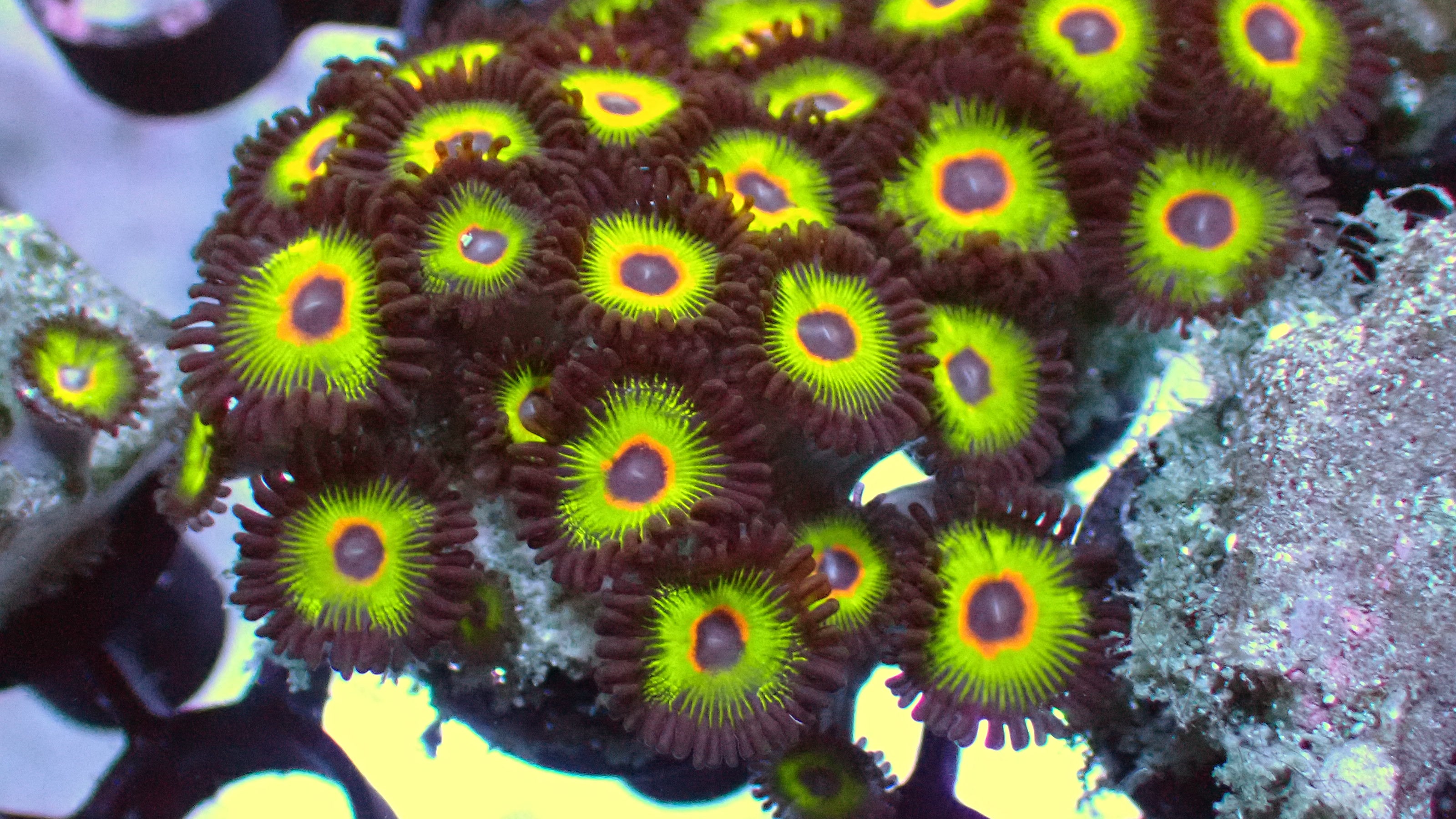
Bob Marley zoas
Zoanthus sp
Same genus
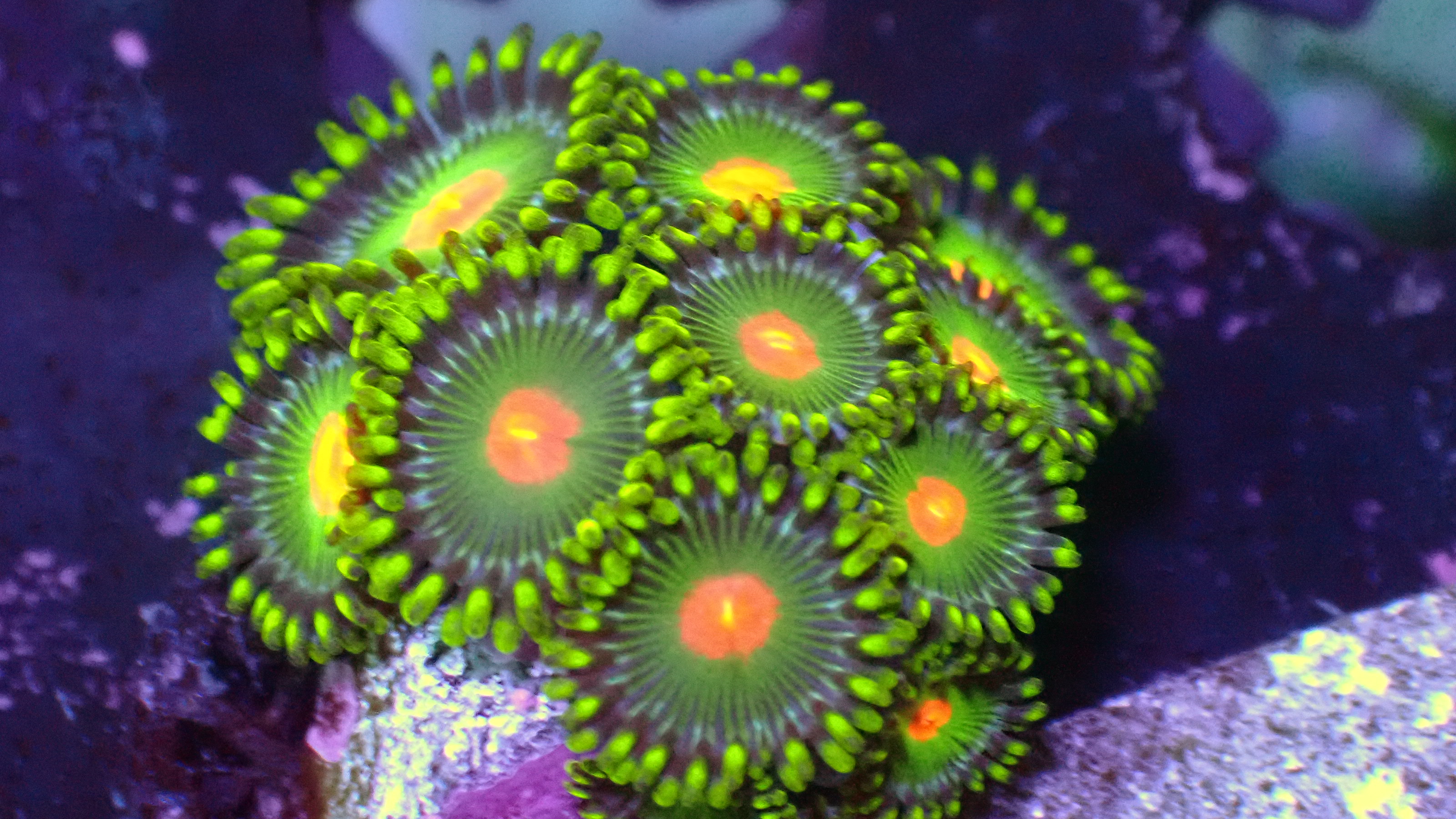
Green Bay zoas
Zoanthus sp
Same genus
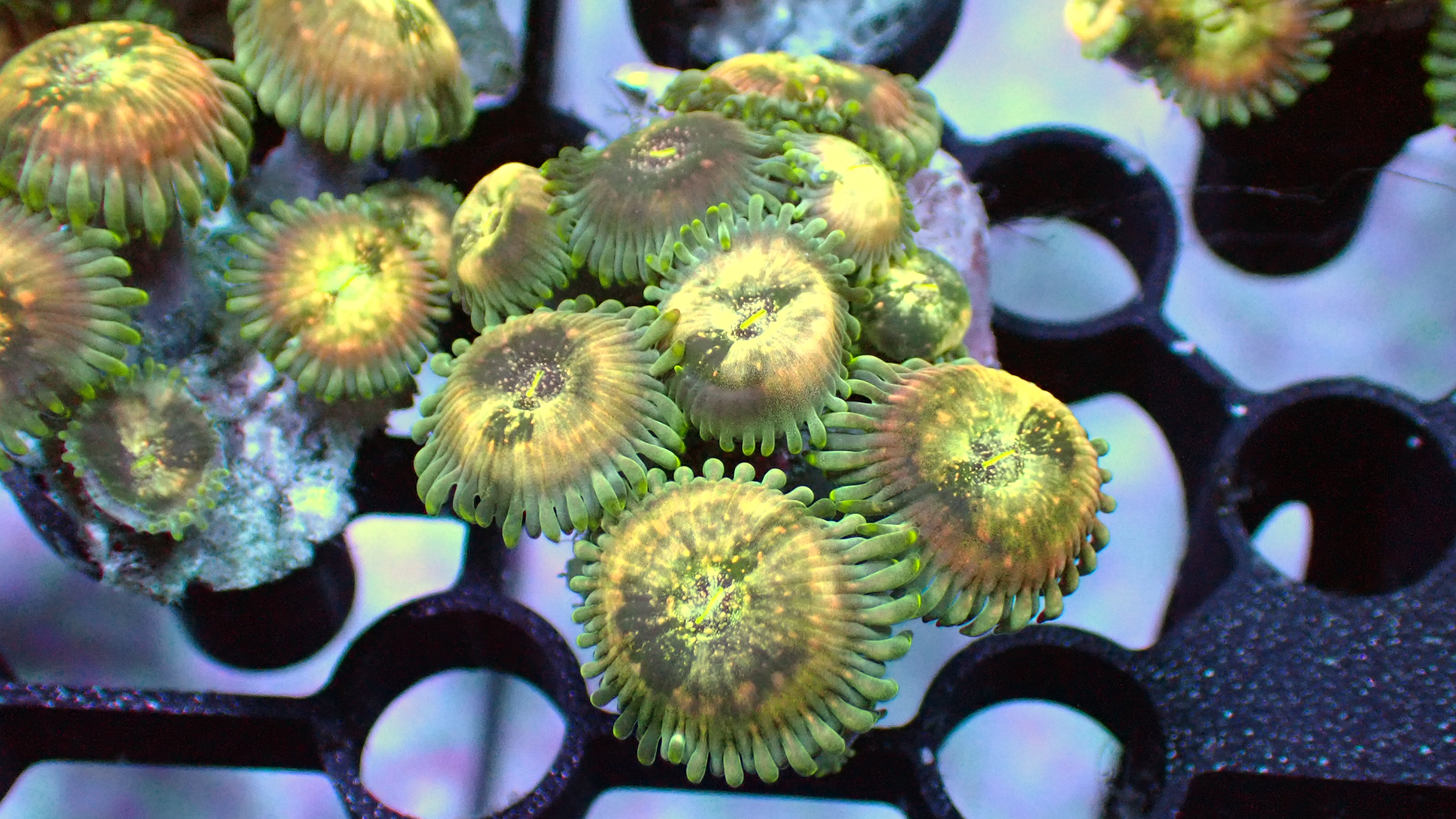
Hawaiian ding dang zoas
Zoanthus sp
Same genus
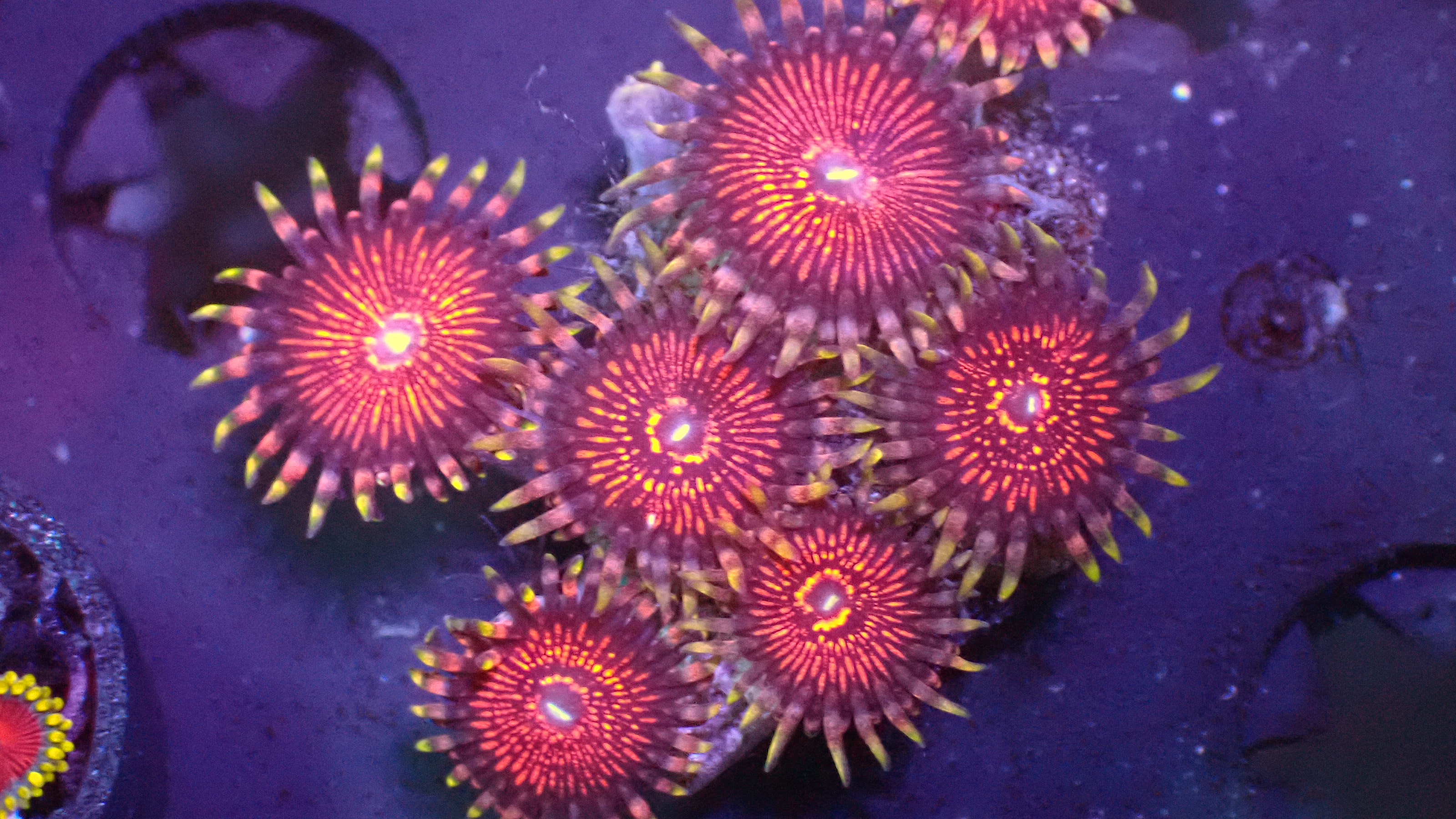
Night crawler zoas
Zoanthus sp
Same genus
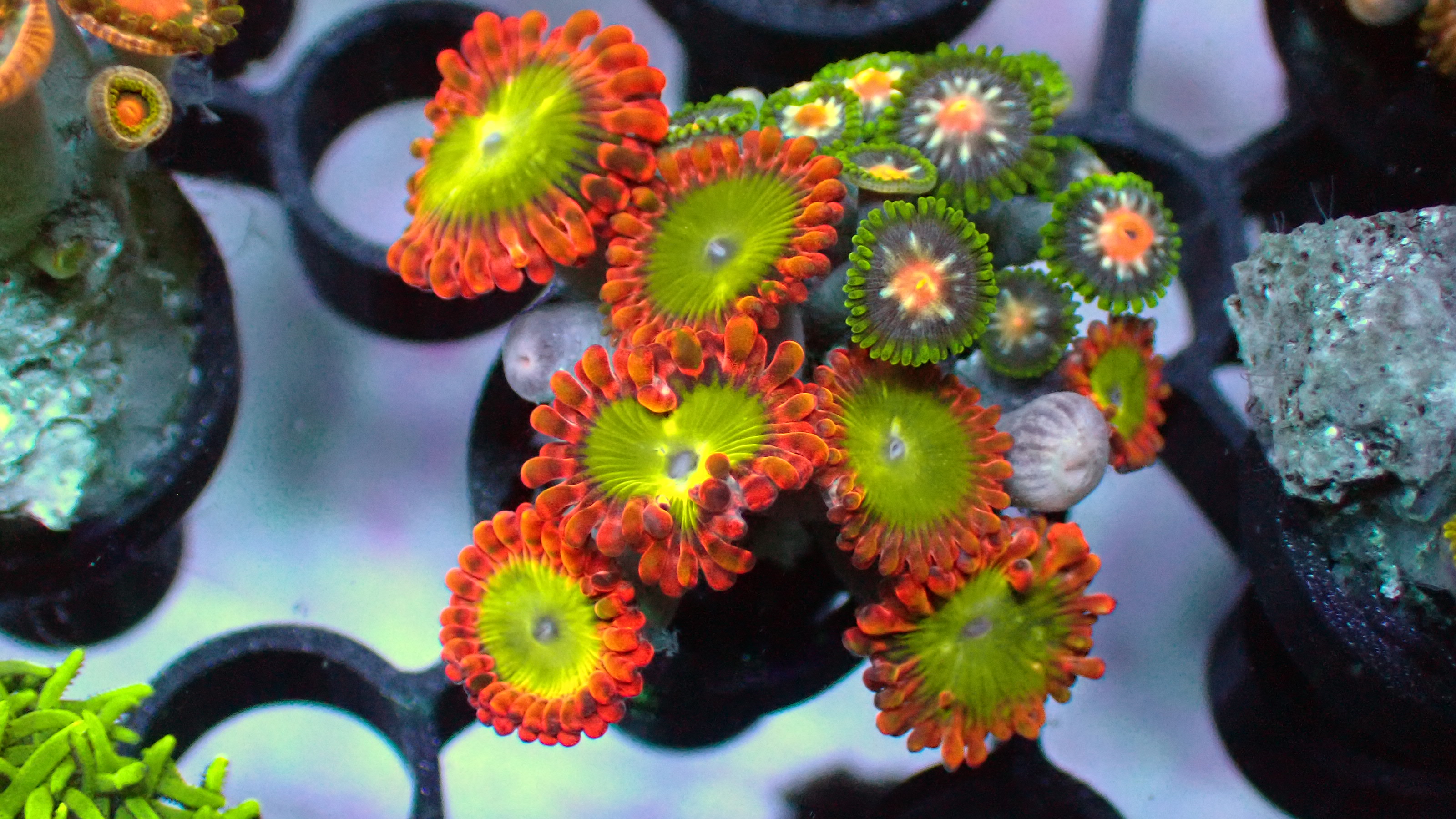
Oompa Loompa zoas
Zoanthus sp
Same genus
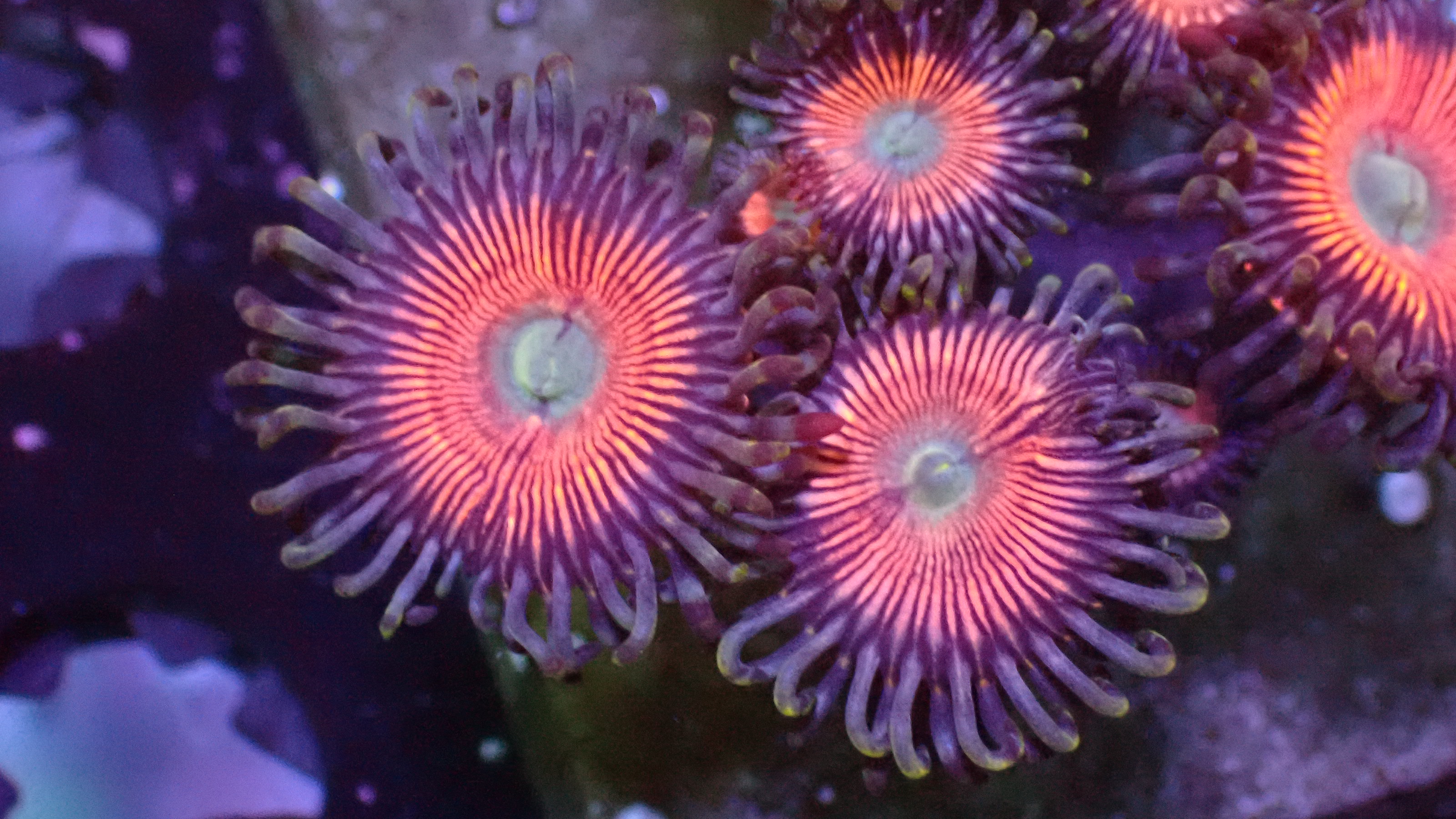
Peaches zoas
Zoanthus sp
Same genus
Purple People Eater
Zoanthus sp.
Same genus
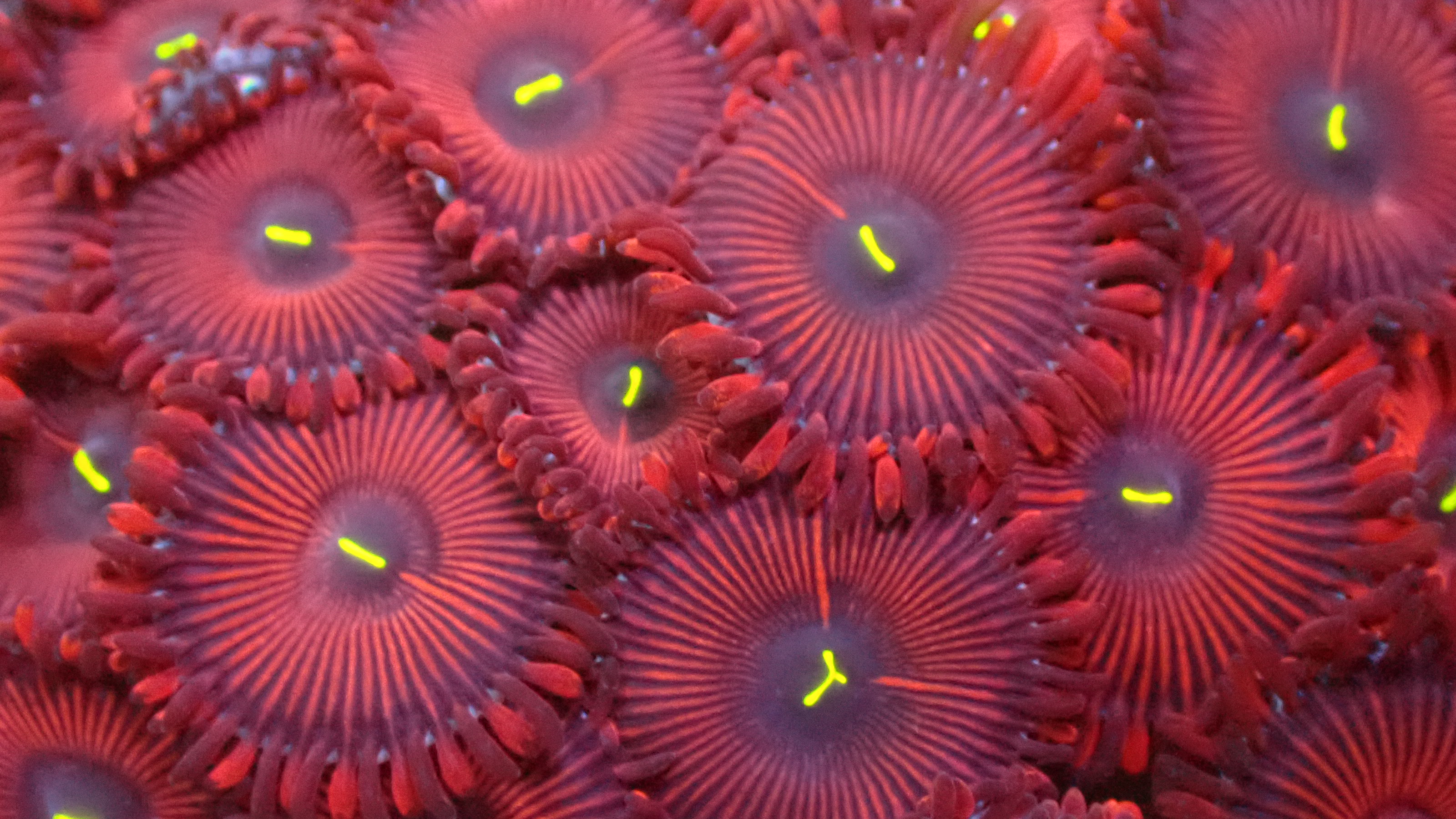
Red people eater zoas
Zoanthus sp
Same genus
In the shop now

Similar picks from the shop


Love this species? No tank needed.
Reef art from the shop — for the wall, not the tank.


Get notified when Reef To Go has Stargazer zoas in stock or up for auction. One email when it's in — no spam.