Zoanthus Polyps
Zoanthus sociatus

Inktomi · CC BY-SA 4.0 · source
Palytoxin safety
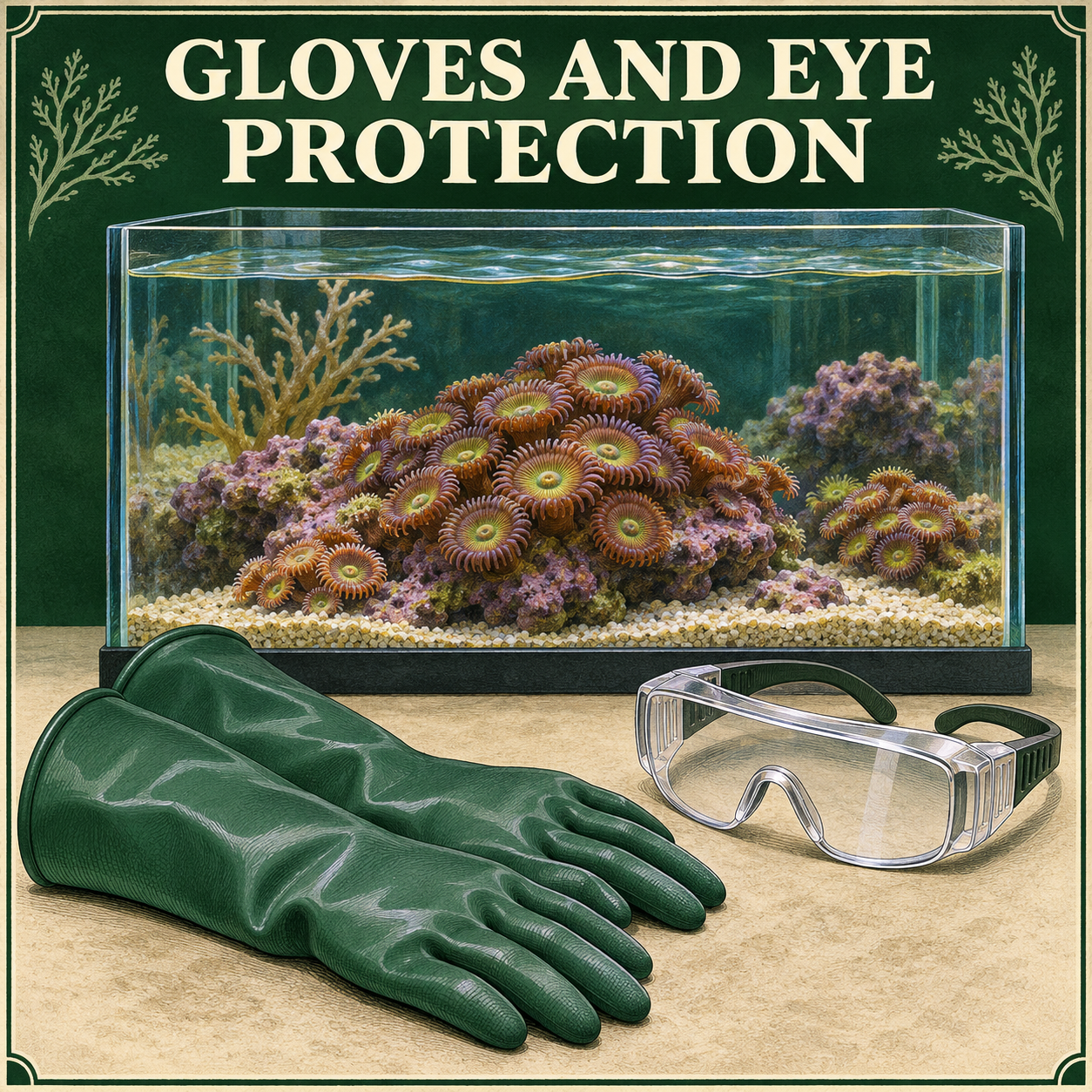
Some zoanthids and palythoas can contain a potent toxin. Wear sturdy waterproof gloves and eye protection, minimize handling, and keep colonies submerged when possible. Never boil, steam, pressure-wash or scrub colonized rock under running water. Keep other people and pets away during handling. If exposure is suspected, seek urgent medical advice and tell the clinician about possible palytoxin exposure.
Sources: CDC: palytoxin exposure · OATA: avoiding palytoxin poisoning
Gallery
A patch of buttons is taking over the rock! Each button is a tiny animal, and together they make a living mat. Zoanthus sociatus grows on shallow western Atlantic reefs. Enjoy the show, but never handle zoanthids with bare hands.
A colony of buttons
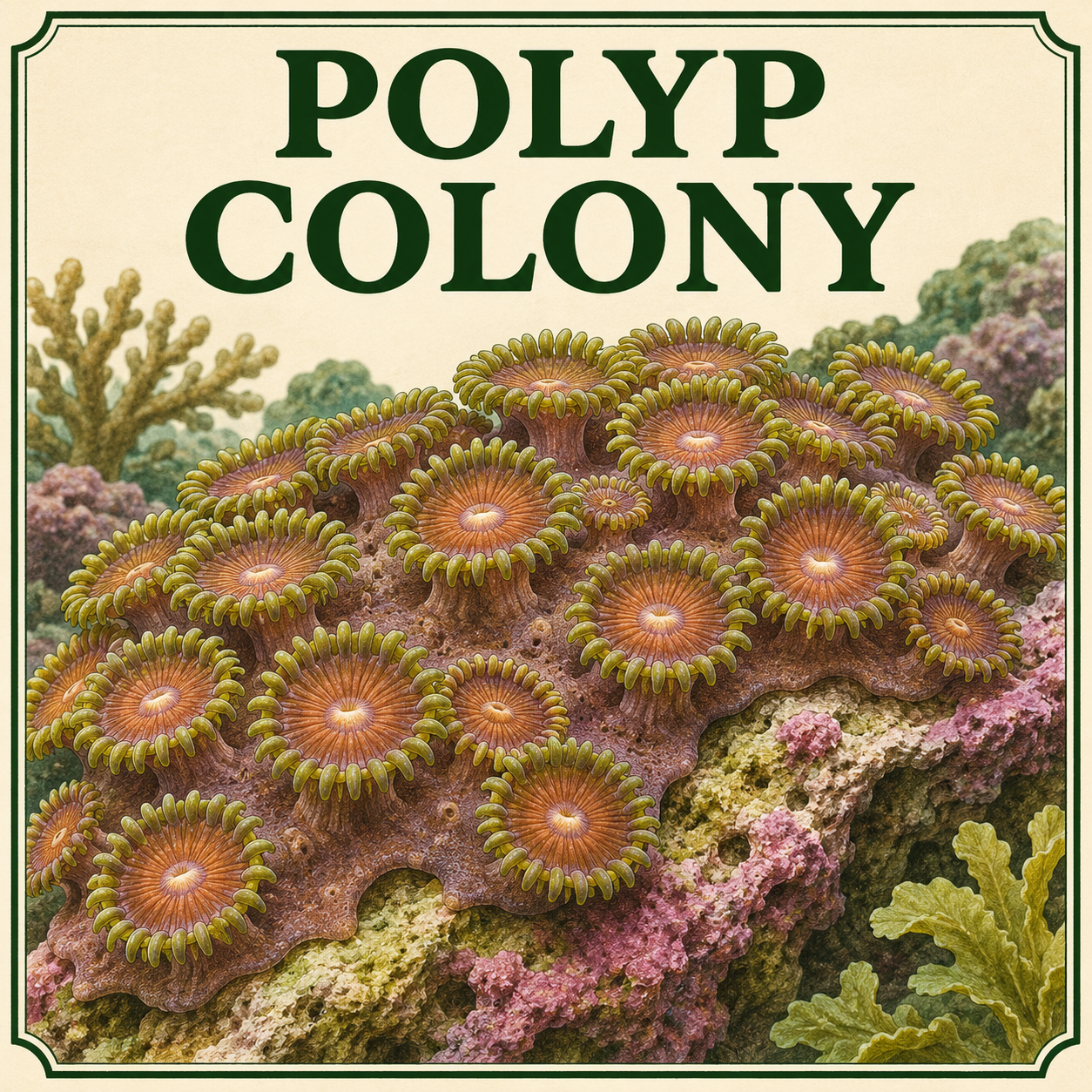
1. One button, one polyp. A ring of tentacles surrounds each little mouth. Watch the buttons fold shut, then open again like tiny umbrellas.
2. A carpet that grows. The polyps share a mat that spreads across hard surfaces. Look along the edge for new buttons instead of judging growth by how wide the old ones open.
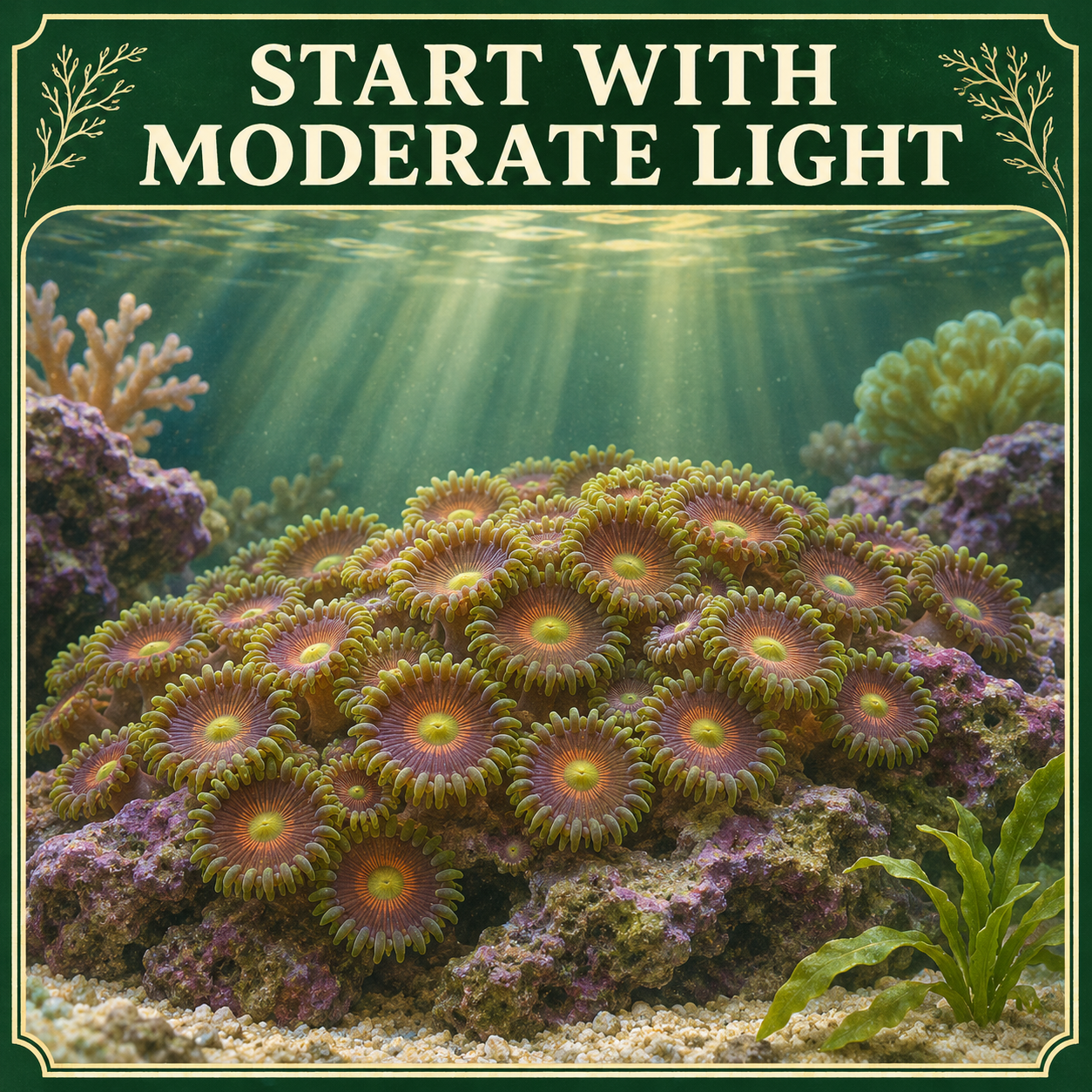
Start with moderate light
3. Light feeds the partnership. Tiny algae live inside the polyps. They use light to make sugars that help feed the animals.
4. Turn up the light slowly. Start with moderate light and give new polyps time to settle. If they react badly after a change, check light and other tank conditions before making another adjustment.
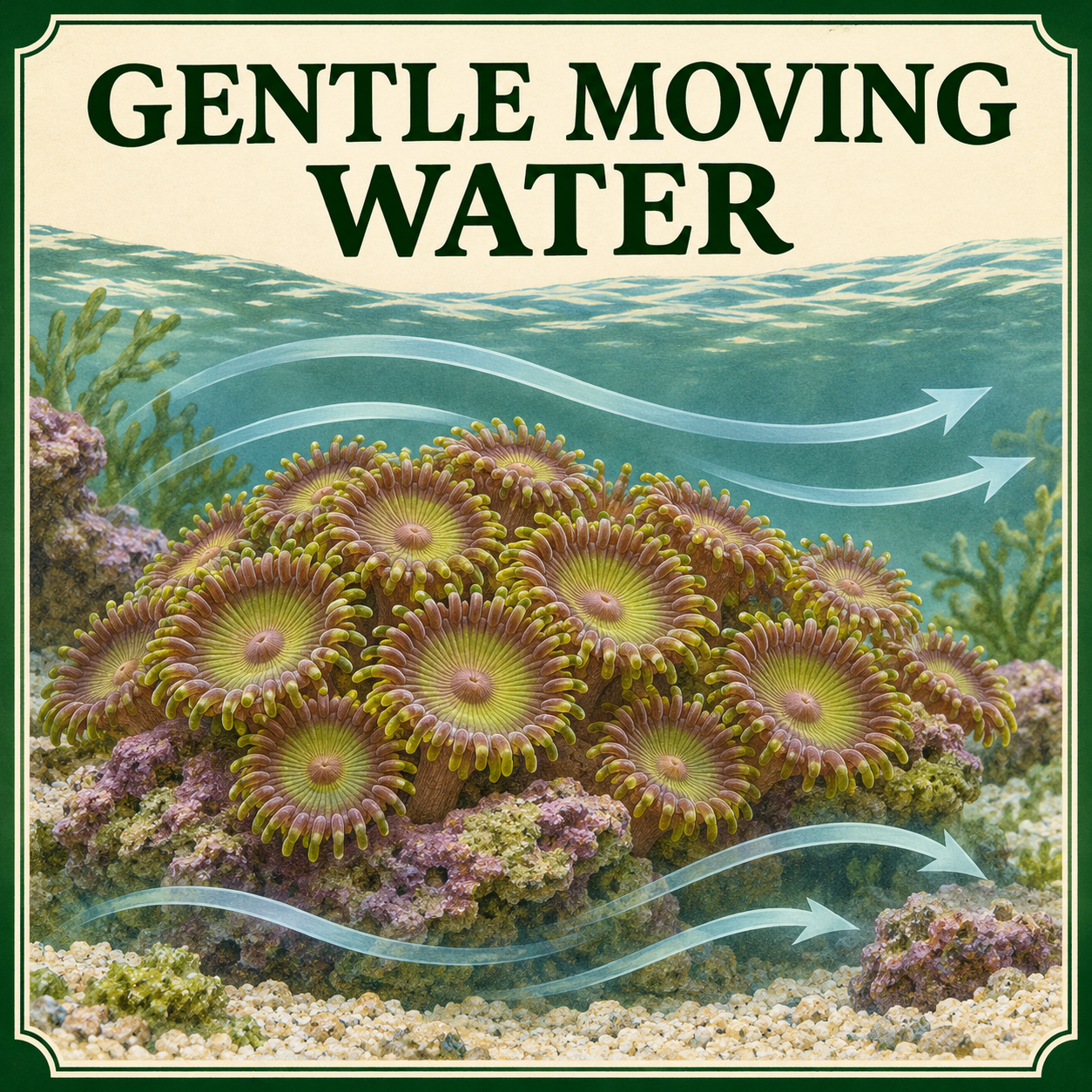
Keep water moving
5. Sweep, don't blast. Give the mat moderate, indirect flow. Aim for movement across its surface, not a pump jet aimed straight at the polyps.
6. Check between the buttons. If debris keeps settling there, adjust the direction of the flow. Check the mat during your usual tank inspection, even when the polyps look fine from across the room.
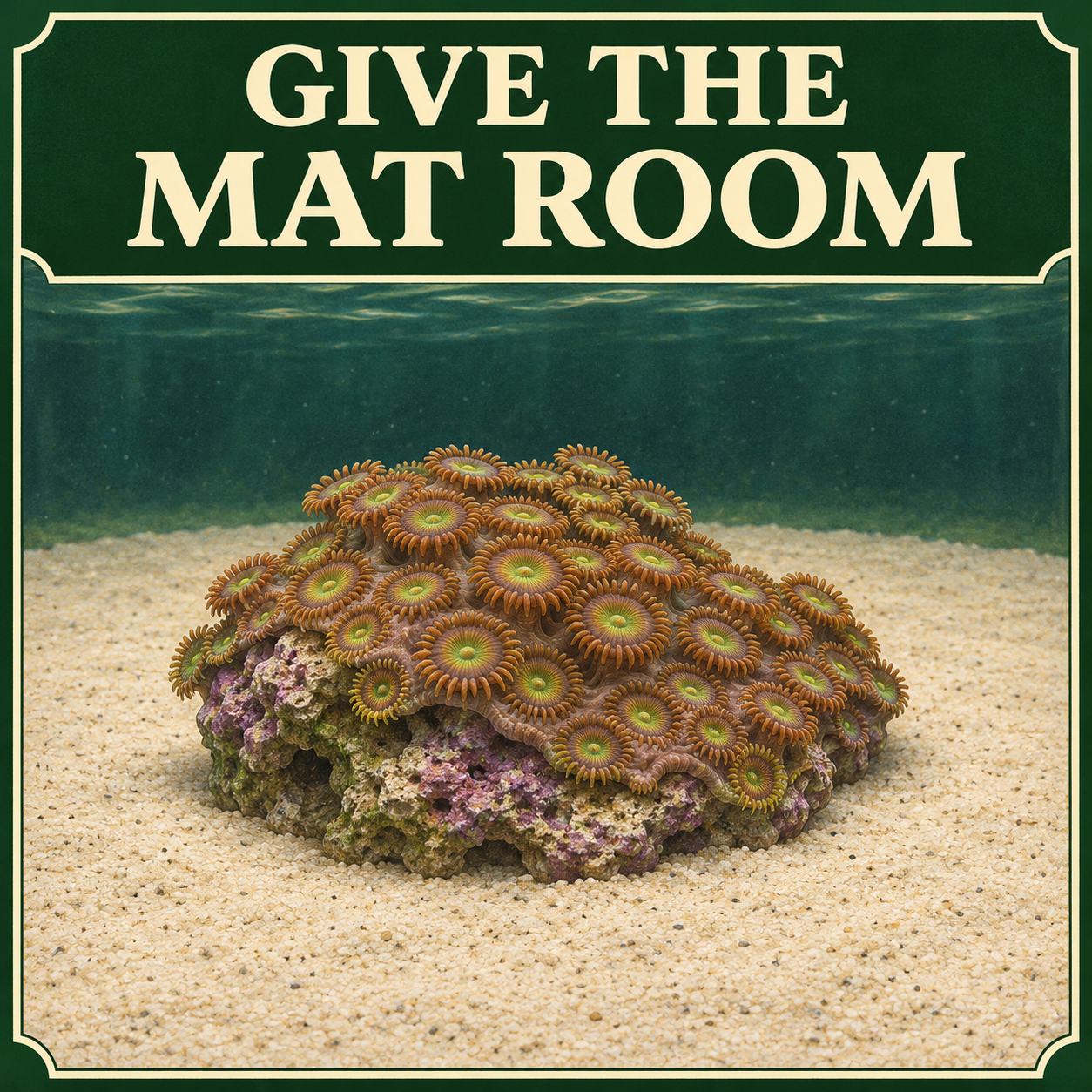
Give the mat its own space
7. Pick a low rock island. Start on a stable rock low in the tank, with suitable light and flow. Leave open space between that rock and the main rockwork.
8. Watch the edges. Check for new growth reaching toward nearby rocks or corals. Leave enough room to inspect the colony without brushing against it.
Protect hands and eyes
9. Gloves and goggles first. Zoanthids can contain palytoxin. Wear waterproof aquarium gloves and splash goggles when working near them. Keep coral mucus and splashes away from your eyes and any cuts. Never handle the polyps bare-handed or heat rock that carries them.
10. Get help right away. If you suspect exposure, stop and call Poison Control or your local poison center. Say you were working with aquarium zoanthids. Call emergency services immediately for trouble breathing or collapse.
Field notes — what keepers report
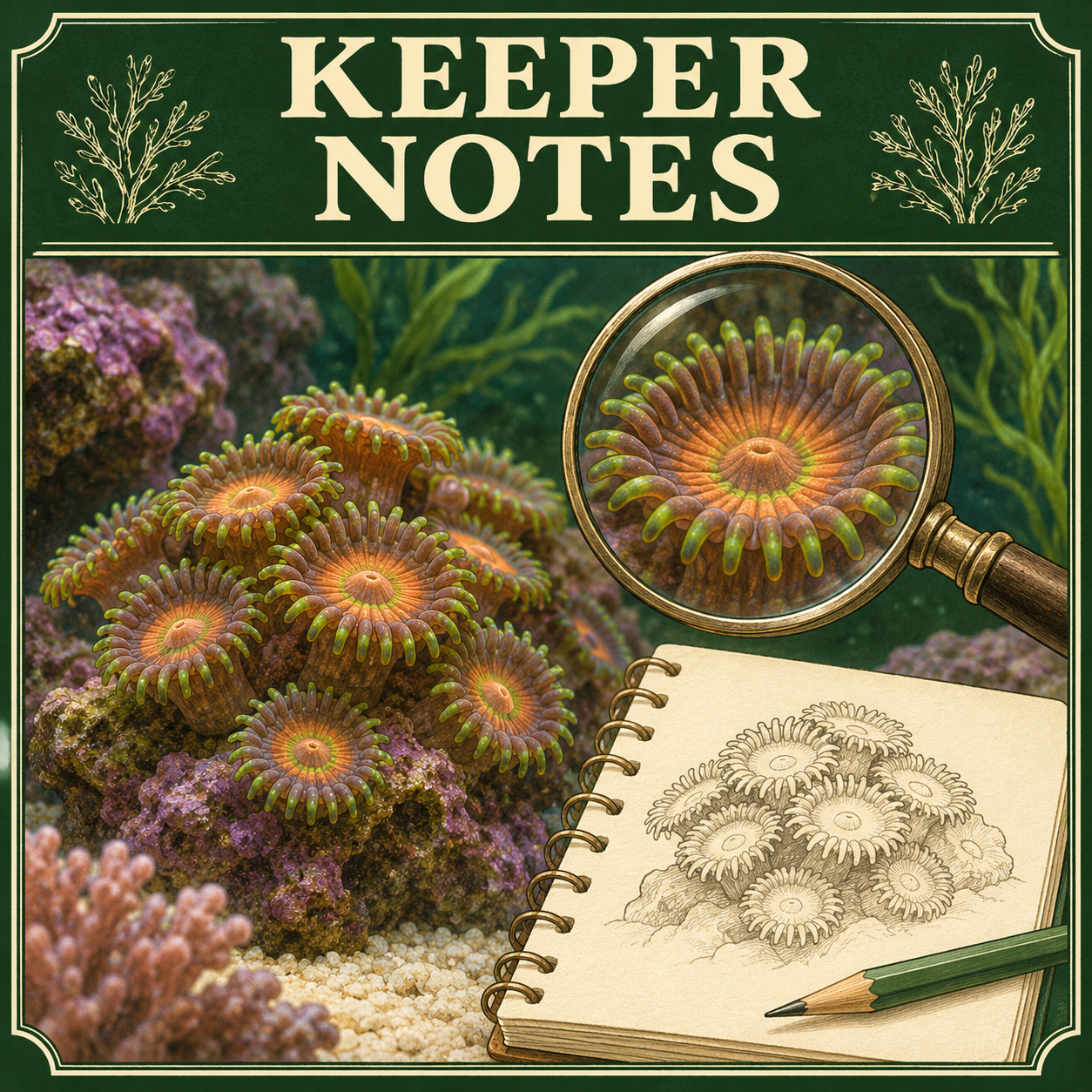
11. Some open quickly. One zoa keeper saw some new colonies open right away. Another had four types in the same tank and saw only one fully open by the second morning.
12. Others take their time. The first keeper saw other colonies stay closed until they were moved. These were general zoanthid observations, not confirmed reports for Zoanthus sociatus. Check the tank before treating closed polyps as a light or flow problem.
Enjoy the buttons as they fill out their own patch of reef. Keep the light and flow steady, watch the mat's edge, and make safe handling part of every tank check.
Field Notes
Related species

Zoanthus Dragon Eye
Zoanthus sp.
Same genus
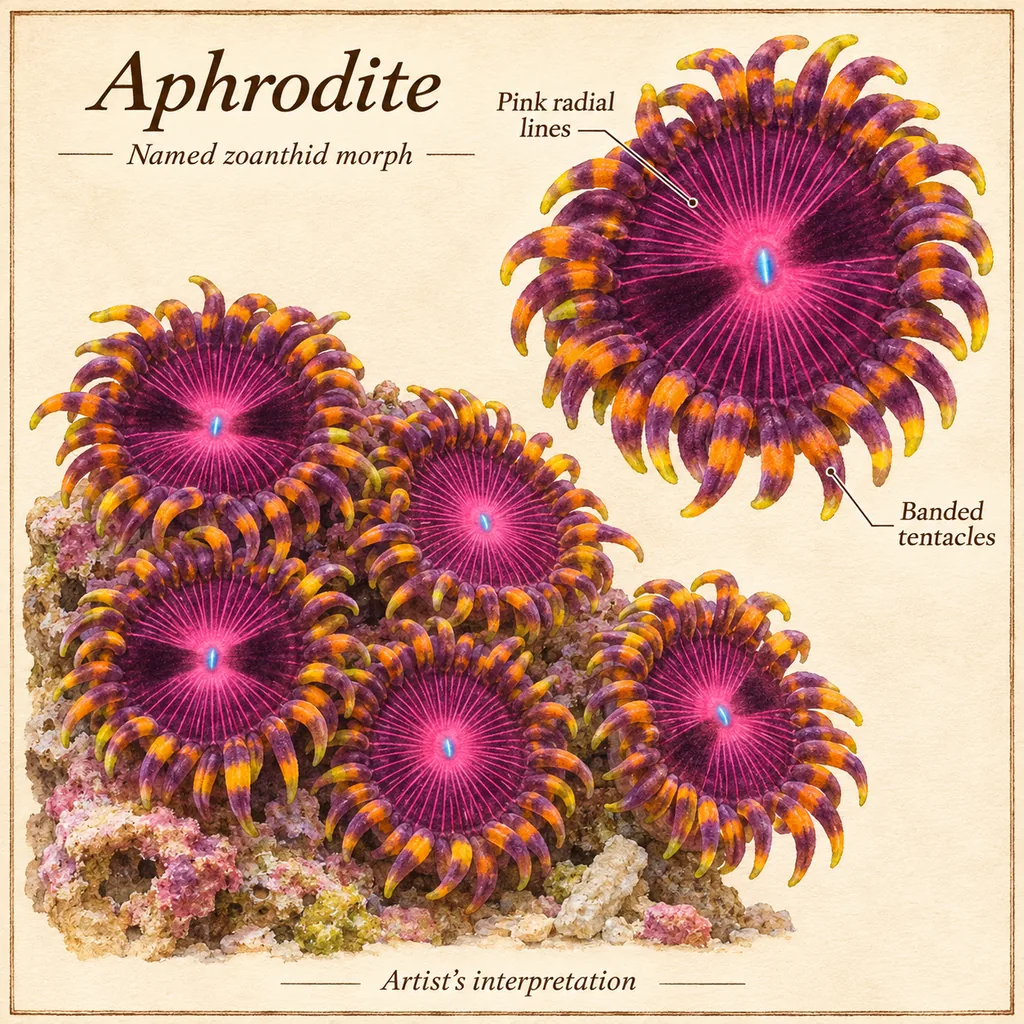
Aphrodite
Zoanthus sp.
Same genus
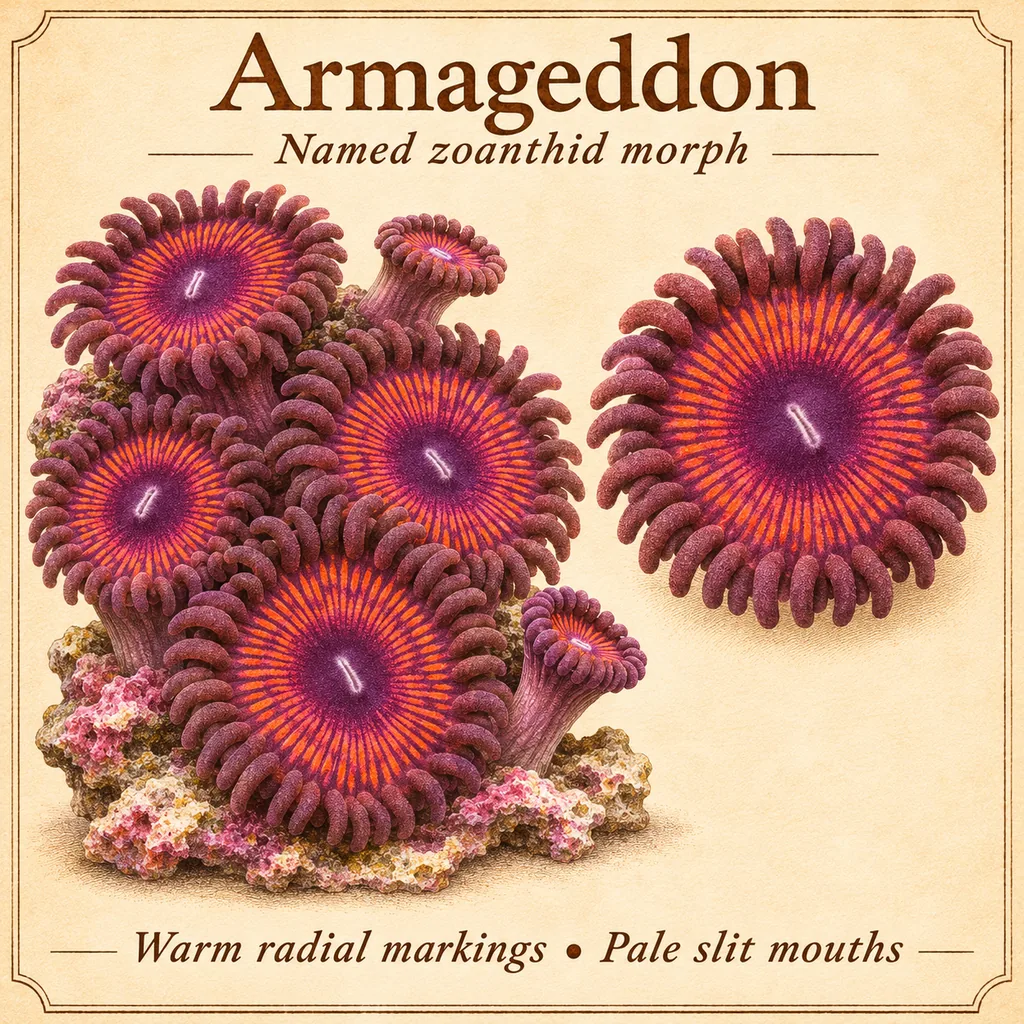
Armageddon
Zoanthus sp.
Same genus
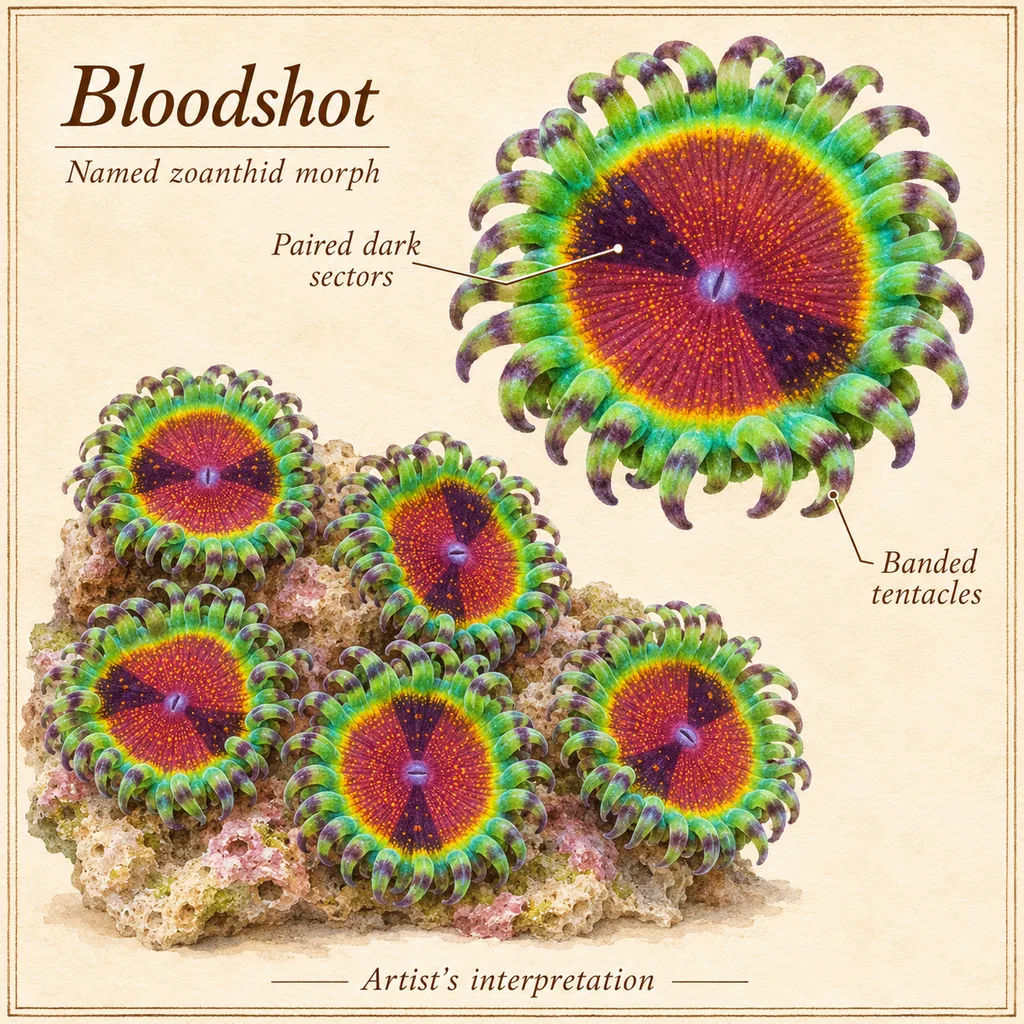
Bloodshot
Zoanthus sp.
Same genus
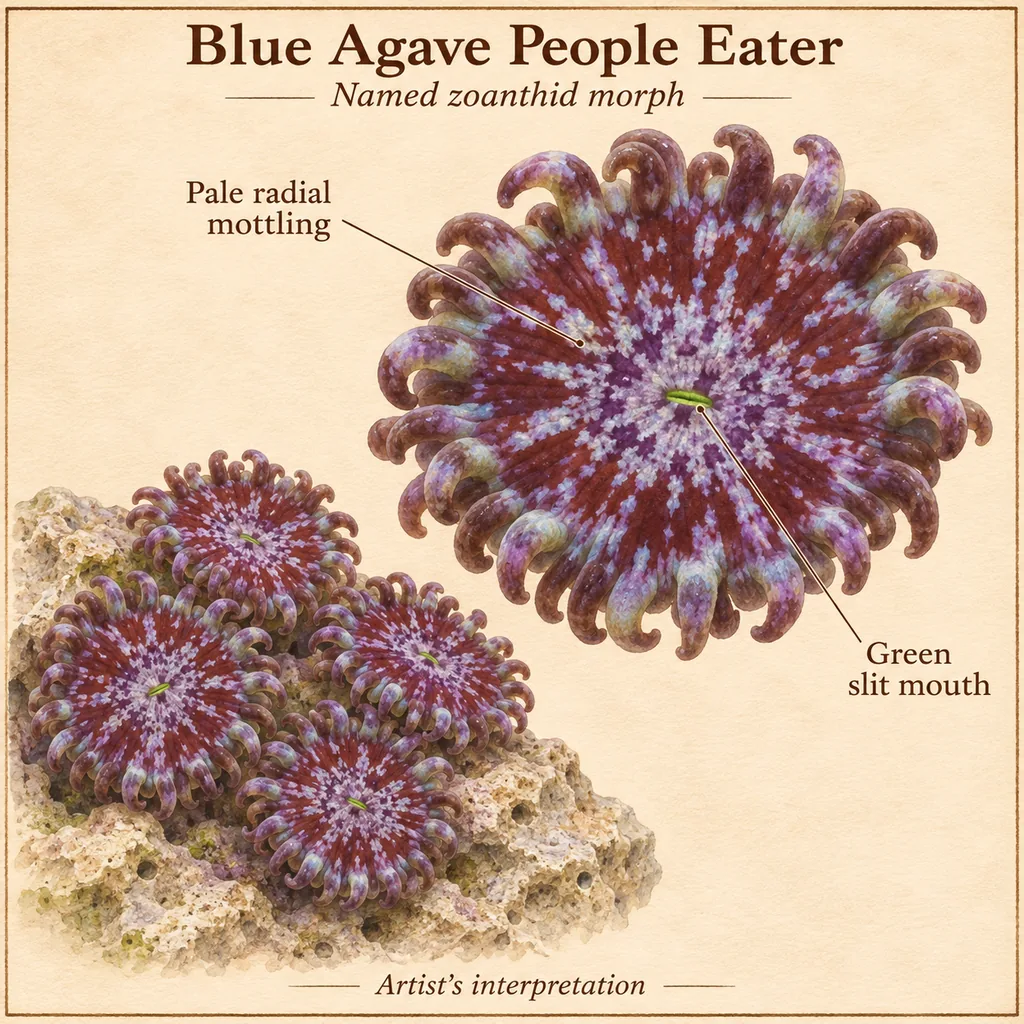
Blue Agave People Eater
Zoanthus gigantus
Same genus
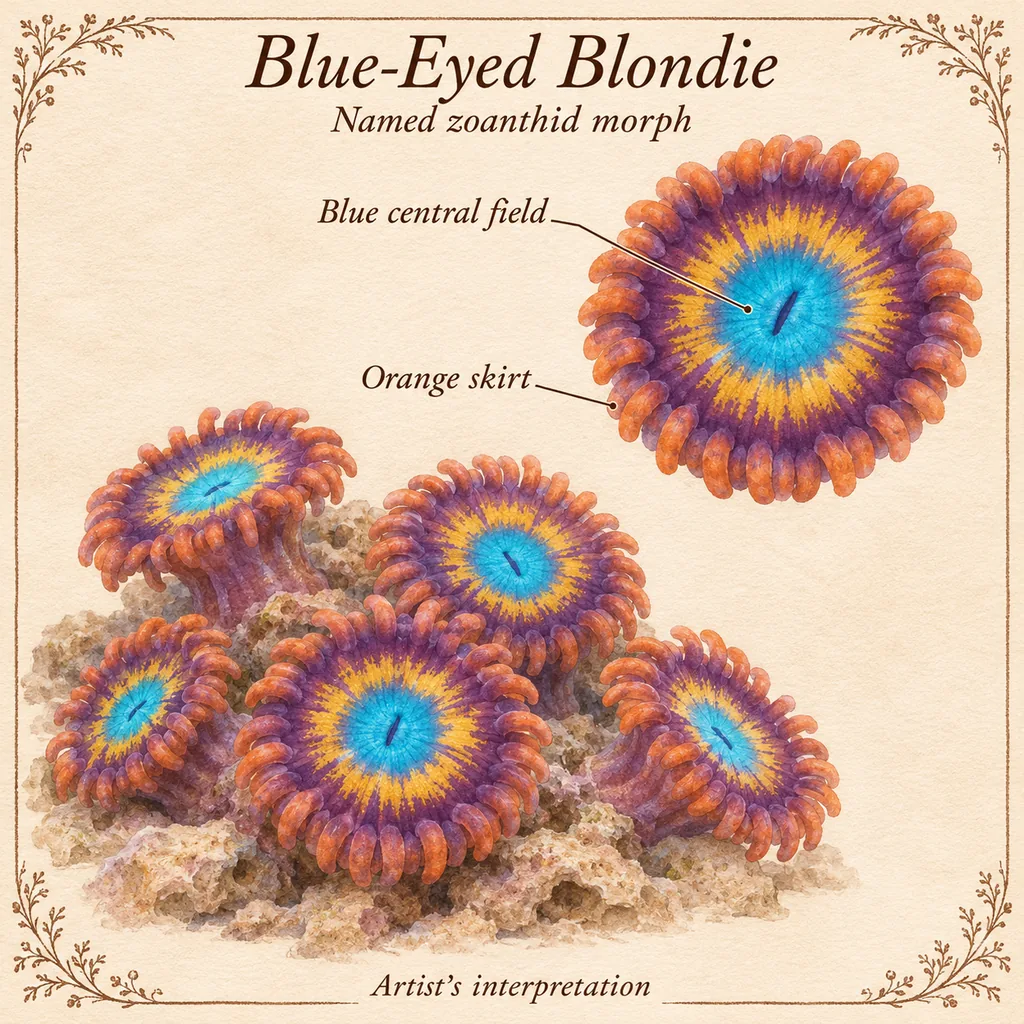
Blue-Eyed Blondie
Zoanthus sp.
Same genus

Candy Apple Red
Zoanthus sp.
Same genus
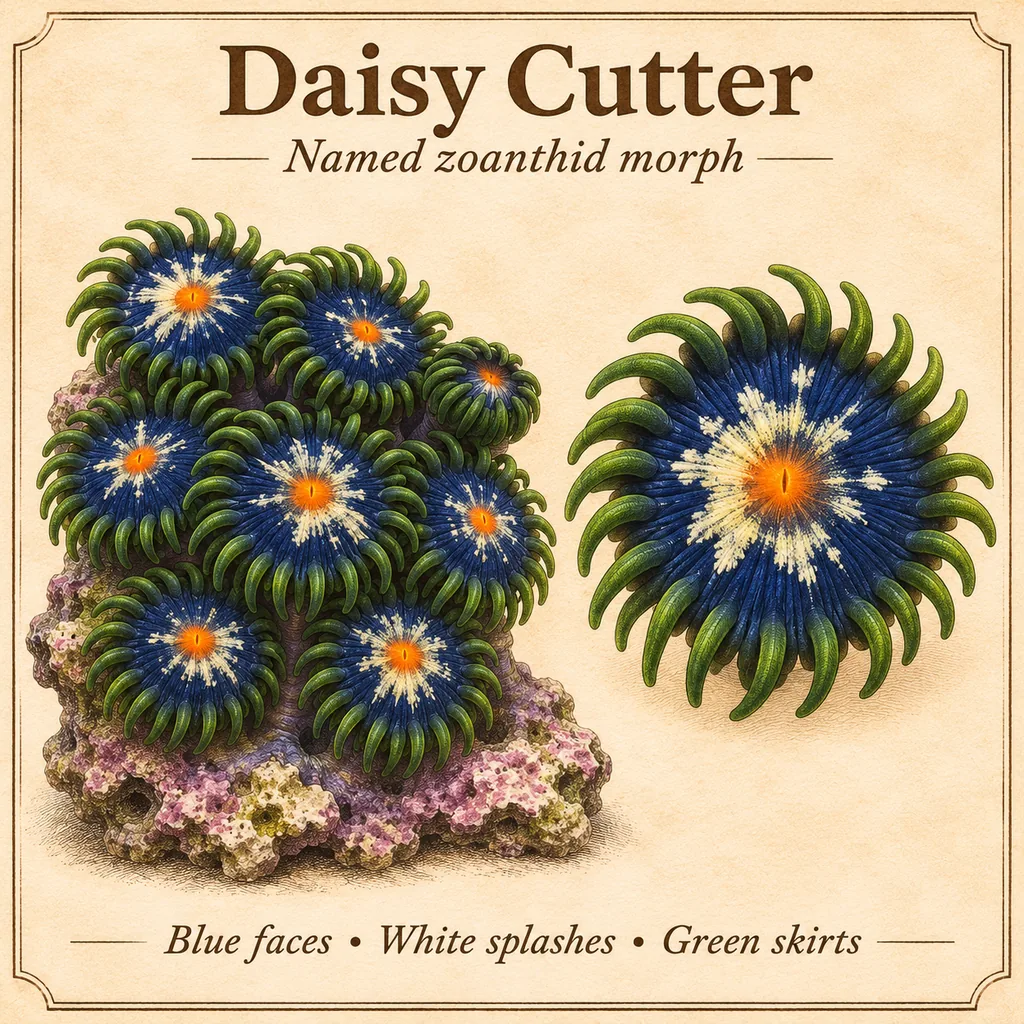
Daisy Cutter
Zoanthus sp.
Same genus