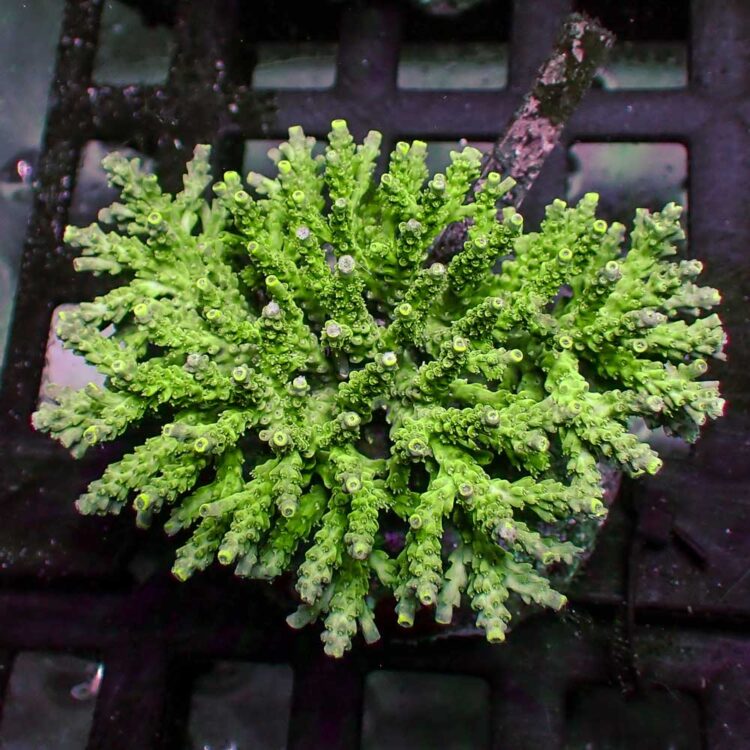
Gallery
Acropora convexa is a staghorn-type Acropora species found on Indo-Pacific reefs, where it grows in the bright, turbulent water of upper reef slopes. Colonies develop thick, upright branches with clustered axial corallites, and the species name reflects the convex profile of its branch tips and corallite arrangement. In photographs and in person, identification rests on branch form, corallite shape, and growth pattern together, since Acropora species can look close to one another.
The entry rates care as advanced, with high light and high flow. This is a coral for a mature, stable SPS system. Give it a high position on the rockwork where light is strong and flow is strong, random, and never aimed at one spot in a constant jet. Acropora convexa comes from surge zones, so water movement should keep the branches clean and carry food across the whole colony without stripping tissue.
Stability is the core of Acropora care. Hold alkalinity steady in the usual SPS range, keep calcium and magnesium consistent, and avoid rapid swings in nutrients or temperature. Corals in this genus react to alkalinity swings with tip burn or tissue loss from the base, and recovery is slow. Introduce new frags with a careful dip and inspection, since Acropora pests are a standing risk for the whole genus and one infested frag can spread through a collection.
Feeding is secondary to light and flow. A healthy colony takes fine particulate and broadcast coral food, though strong lighting and good water quality drive growth. Color in Acropora responds to the balance of light and nutrients: very low nutrients with very high light can pale a colony, while excess nutrients can brown it. Small, single changes with weeks of observation work better than chasing color with several adjustments at once.
Growth in a settled system is upright and branching, thickening at the base as the colony establishes. Leave generous space around the frag. Acropora branches shade whatever grows beneath them and compete for flow and light, and neighboring SPS placed too close end in stinging contact as both colonies expand. Common pitfalls are adding this species to a young tank, underestimating how much random flow a thick-branched Acropora needs at colony size, and reacting to a pale week with big parameter changes. Patience and steadiness are the husbandry skills this species tests.
Field notes — what keepers report
- Acropora keepers consistently rank stability ahead of any target number. Reports describe colonies holding color through a range of alkalinity values, then reacting badly to a fast swing, and the shared practice is small dosing adjustments with frequent testing during any change. New keepers are usually advised to prove stability on hardier SPS before adding advanced Acropora species.
- Flow reports for thick-branched species lean strong. Keepers describe polyps extending and bases encrusting once flow was increased and randomized, while colonies in weak or one-directional flow are reported to thin at the shaded inner branches over time. Keepers disagree on how much of that thinning is flow and how much is self-shading as colonies grow, and both factors get attention in mature tanks.
- Pest vigilance is a constant theme. Keepers report that regular dipping, close inspection of new frags, and quick isolation of a suspicious piece prevented wider losses, while others describe learning the same lesson after a pest had already spread. The consensus practice is to treat every new Acropora as a risk until it has been observed clean for a good stretch.
Field Notes
Related species
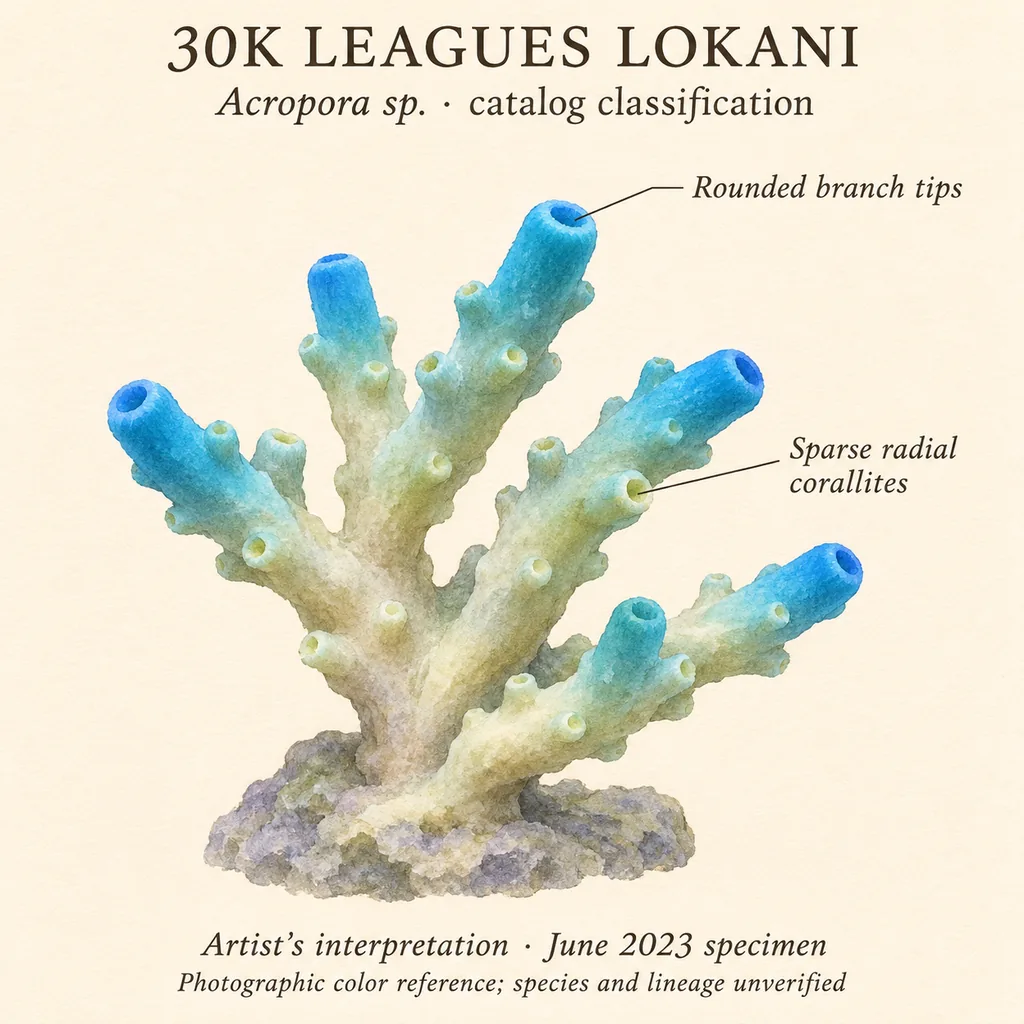
30K Leagues Lokani
Acropora sp.
Same genus
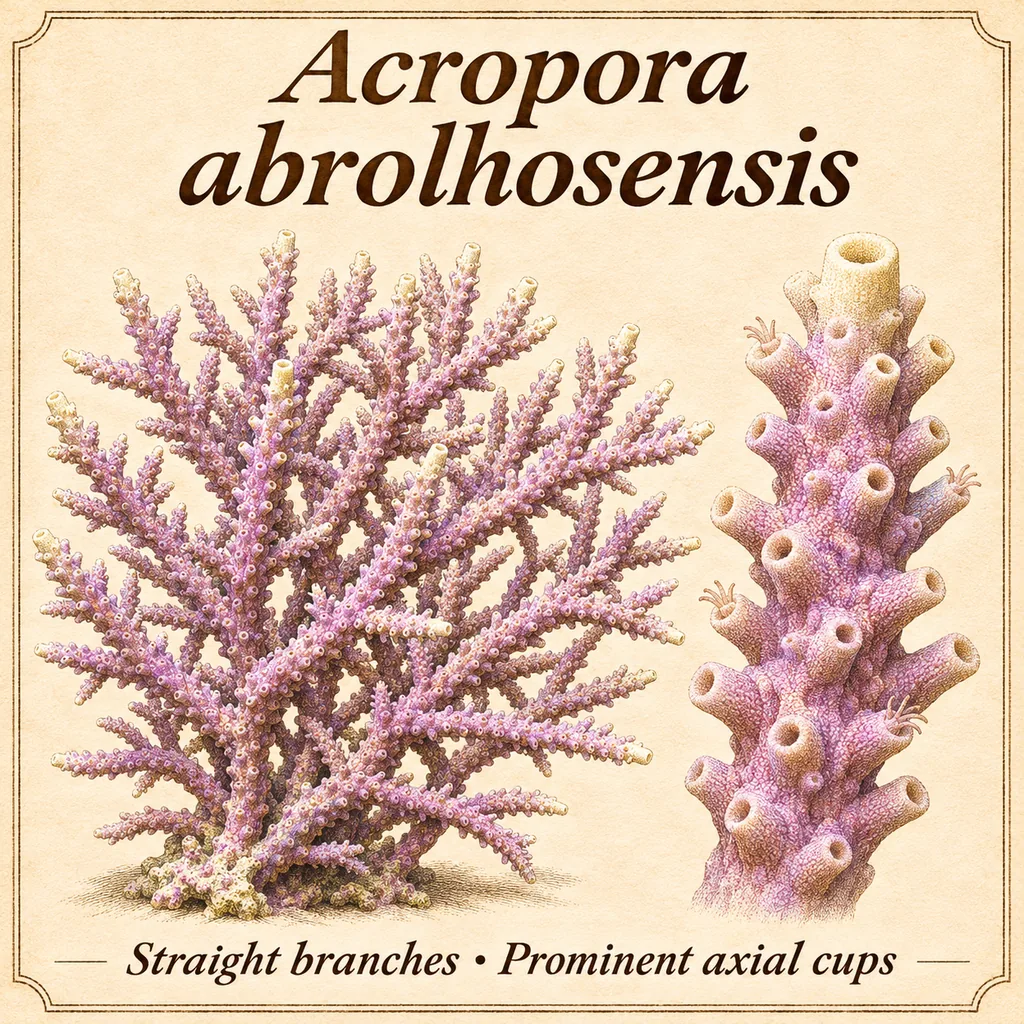
Acropora abrolhosensis
Acropora abrolhosensis
Same genus
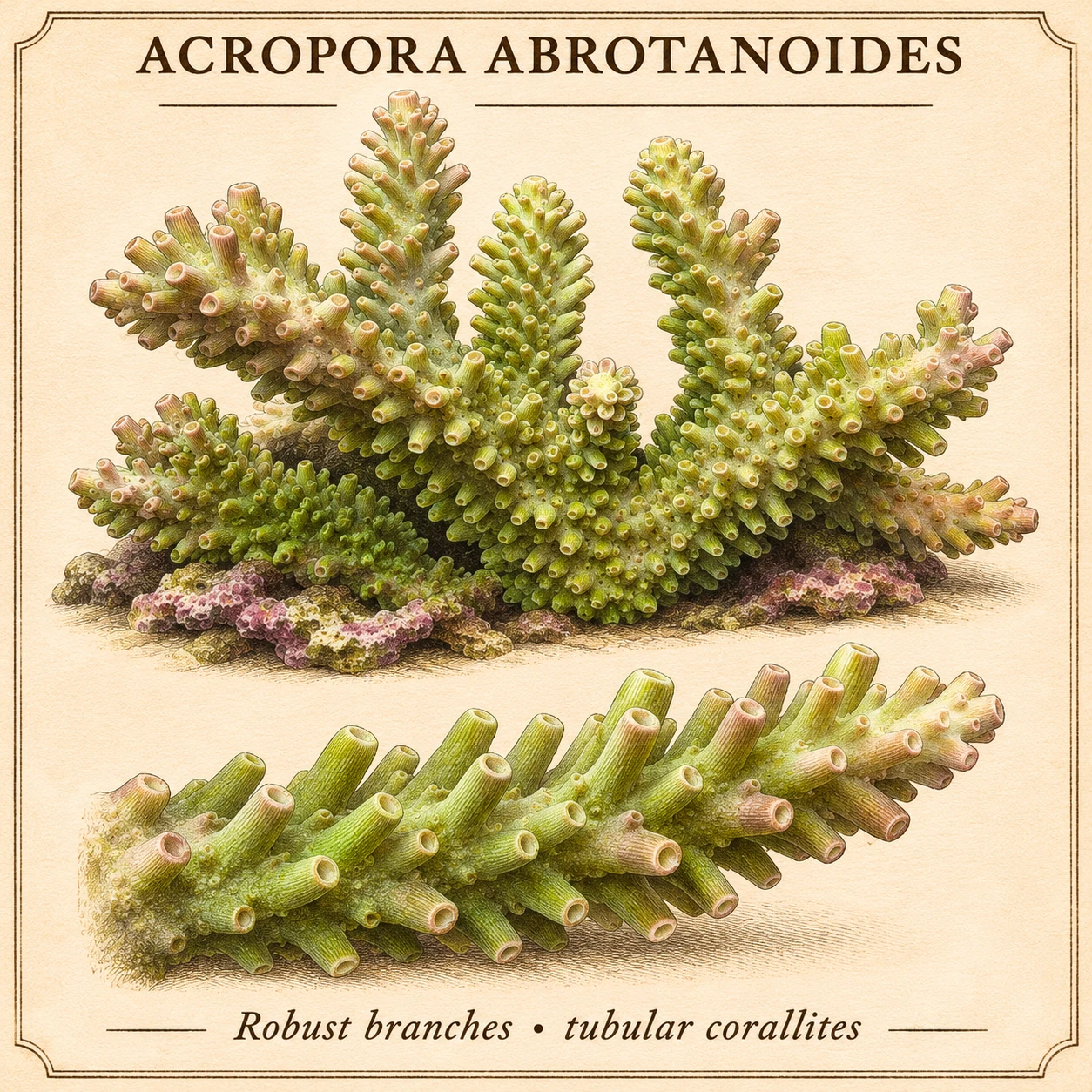
Acropora abrotanoides
Acropora abrotanoides
Same genus
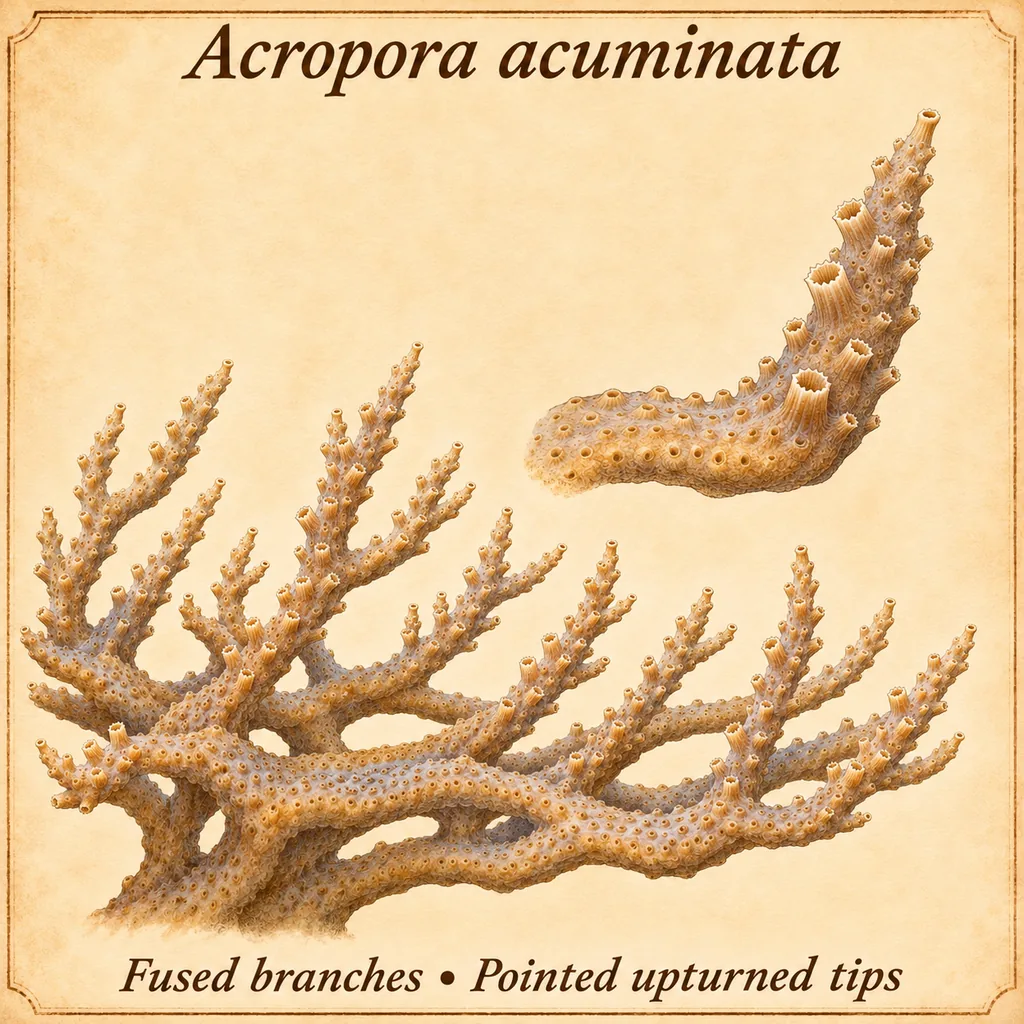
Acropora acuminata
Acropora acuminata
Same genus
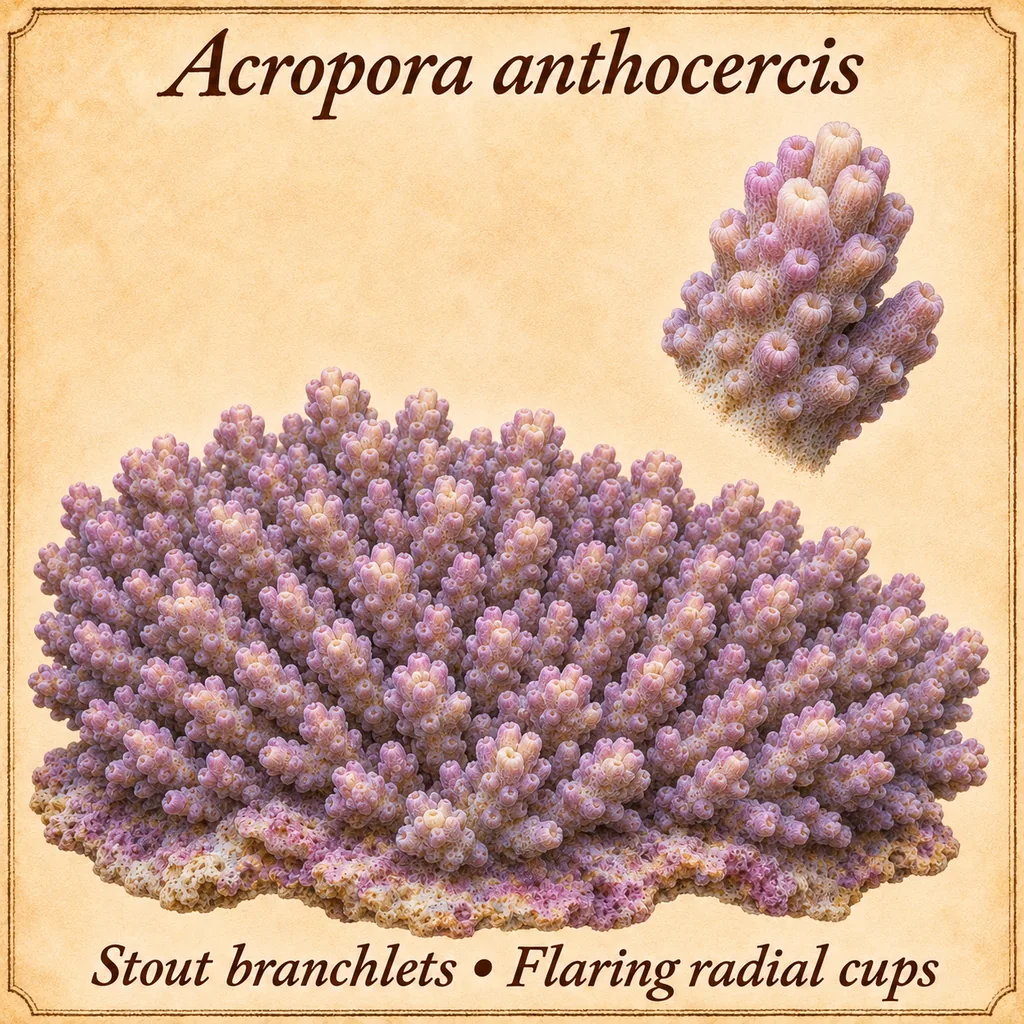
Acropora anthocercis
Acropora anthocercis
Same genus
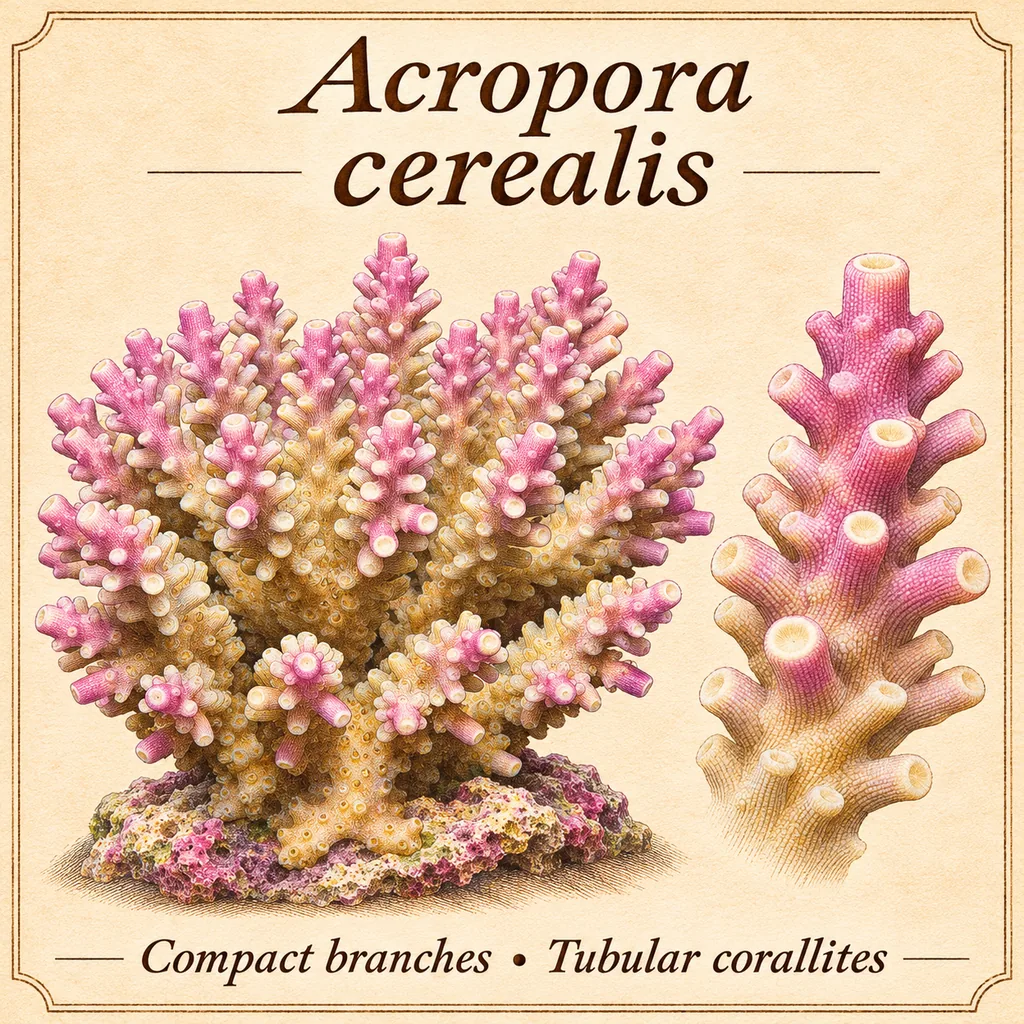
Acropora cerealis
Acropora cerealis
Same genus
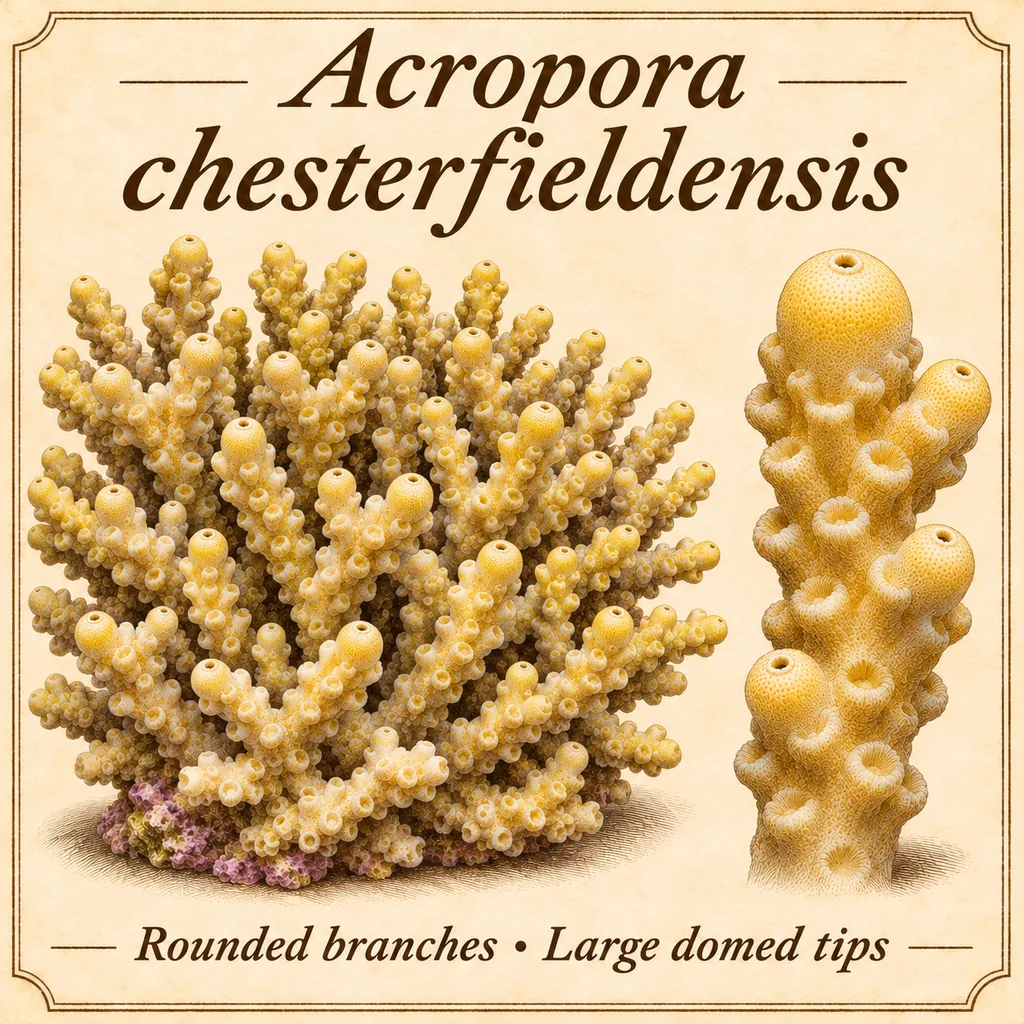
Acropora chesterfieldensis
Acropora chesterfieldensis
Same genus
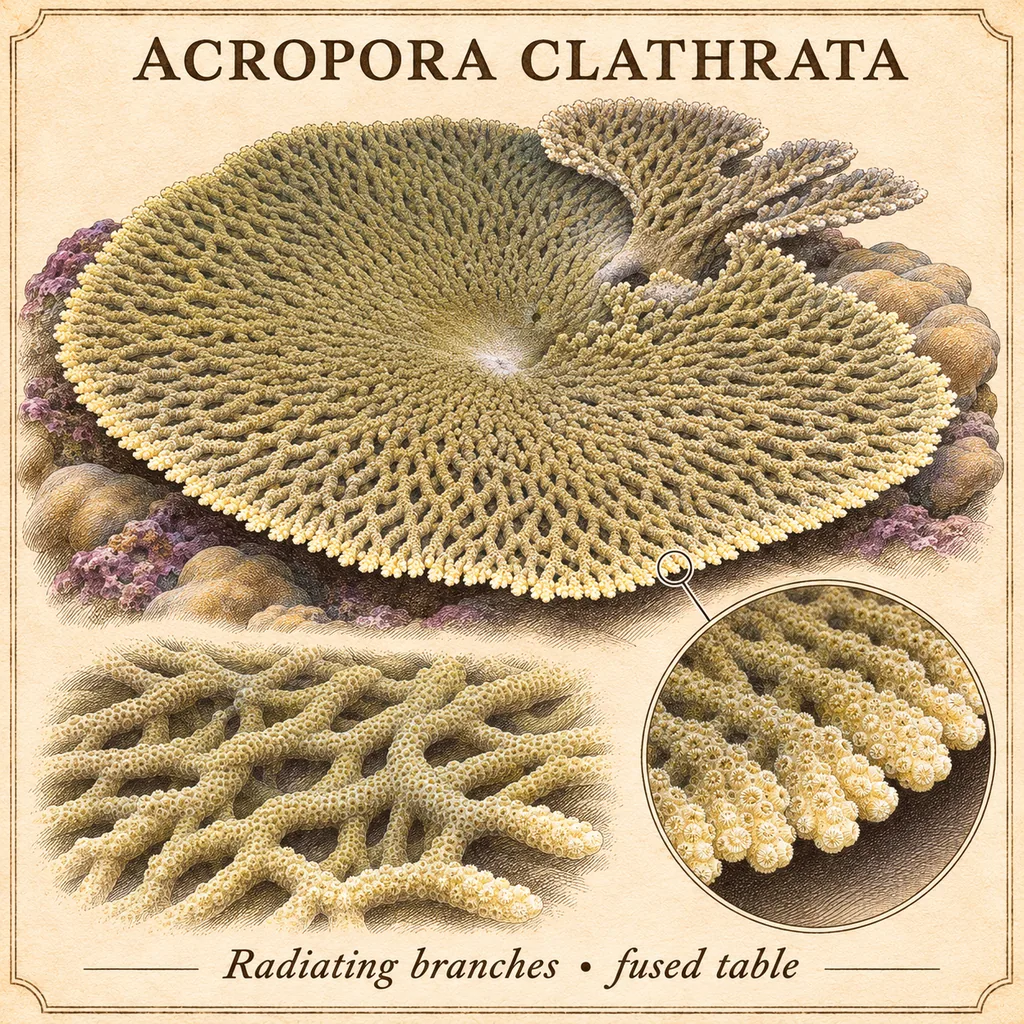
Acropora clathrata
Acropora clathrata
Same genus