Granulosa Acropora
Acropora granulosa

Gallery
Meet a coral with a grainy skin and a big personality. Granulosa Acropora builds flat plates and bushy branches, and it wears big round tips like knuckles on every branch. It comes from deep, clear reef slopes, and it wants bright light, strong flow, and water that never swings. Get those three right, and this advanced SPS turns into a showpiece. Get them wrong, and it sulks fast.
Meet the Granulosa
Flat plates first. In the wild it often grows as a flat, semi-circular plate less than 1 meter across. Some colonies stay bushy and small, usually less than 30 cm across. Both shapes are normal for this species.
Look at the tips. Short branchlets rise from the plate. Each one ends in a big, smooth, round axial corallite. Some are bulbous. One can top 1.5 cm long and 6 mm wide. It can make up more than half of its branchlet.
Feel the grain. The skeleton between the polyps has a granular, grainy texture. That grain gives the coral its name. The small radial corallites are pocket shaped and sit low on the branchlets.
Spot the colors. Wild colonies are usually uniform cream, gray, or pale blue. Pale blue can photograph purple. Tank grown morphs add purple, blue, green, and cream, often with bright rims on the tips.
Old name, old coral. It was first described in 1860 as Madrepora granulosa, from Reunion Island.
Do not mix it up. Acropora caroliniana looks close. It is larger, with more tapered axial corallites. Check the tips before you trust a shop label.
Wild Home
Deep, not shallow. This coral is seldom seen in shallow water. It prefers 15 to 40 meters down on lower reef slopes. It likes clear water and slopes sheltered from strong waves.
Wide range, small colonies. It lives across the Indo-Pacific, from the northern and southwest Indian Ocean and the Red Sea, to Australia, the East China Sea, Japan, and the central and western Pacific. It is widespread, but its colonies stay small and well spread out. It does not form dense stands.
A coral at risk. It is listed as Vulnerable, with a falling population. It is listed on CITES Appendix II. Bleaching, warming water, human pressure, crown of thorns starfish, and disease all hit it in the wild. Buy captive grown frags when you can.
Light
Bright light, with a slow start. Aim for 200 to 350 PAR at the colony. That is bright, not blinding. Acclimate a new frag slowly to strong light. A sudden jump can bleach it.
Deep water means respect. It lives deeper than many Acropora. It tolerates a little less light than shallow water species. Do not blast a new frag at full power on day one.
Watch the color. Strong light can push bluish cream stems. Lower light can push fluorescent golden green stems in some morphs. Color shifts with light, spectrum, nutrients, flow, and age. Let the coral tell you what it likes.
Flow and Placement
Strong flow, from all sides. Give it strong, random, turbulent flow. Aim for 20 to 40 times turnover, aimed across the colony, not straight at it. Good flow keeps detritus off the plate and feeds the polyps.
Middle to upper rockwork. Put it in the middle to upper rockwork, after acclimation. That is the Mid-Top spot. It is bright enough, and it leaves room below for the plate to spread.
Give it room. A plate grows outward and shades everything below it. Leave open space around it. Do not tuck it under an overhang or crowd it with neighbors.
Steady Water
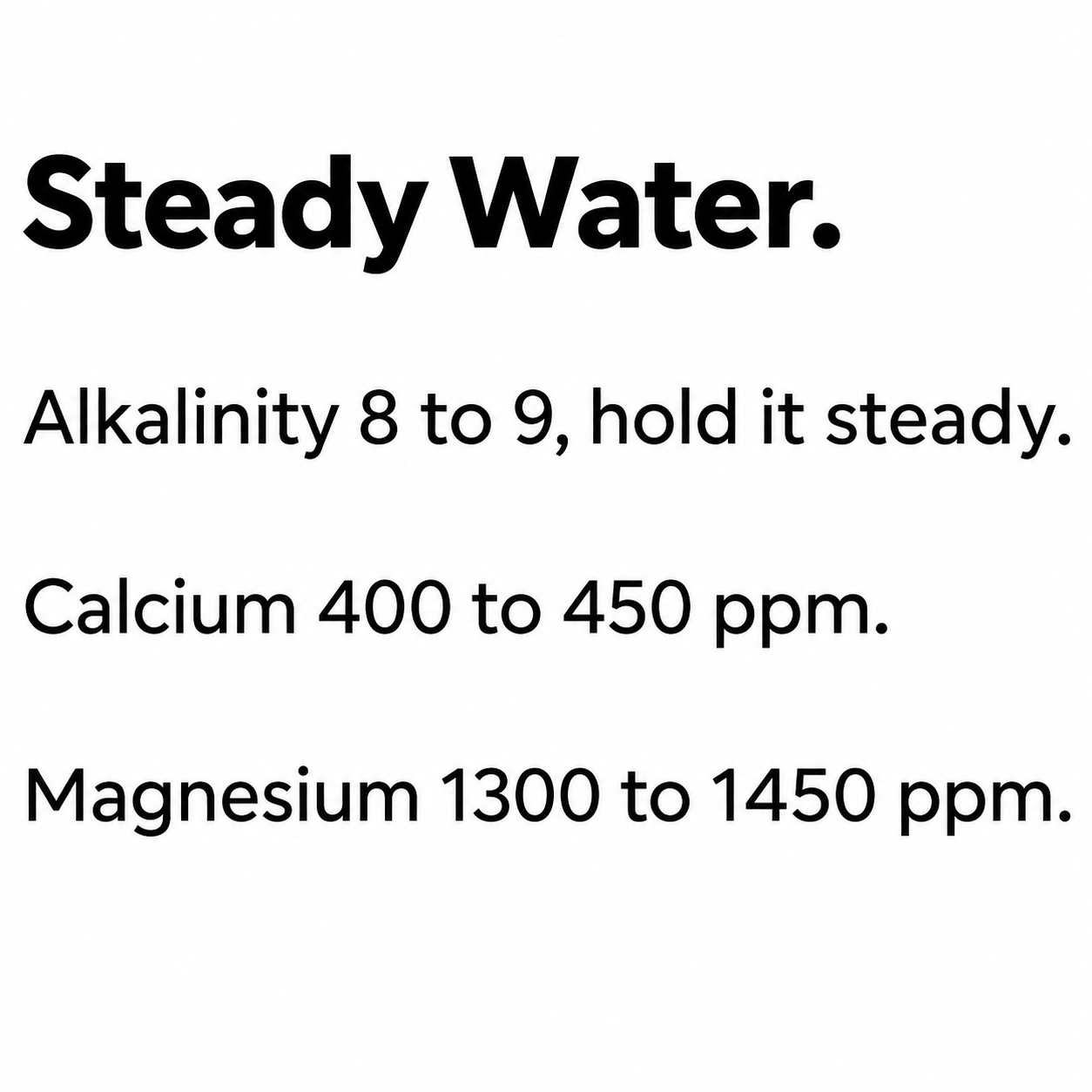
Steady wins. This is an advanced coral because it hates swings. Hold alkalinity at 8 to 9 dKH, and hold it within 0.3 dKH day to day. Test often. Dose to hold steady, not to chase a magic number.
The big three. Keep calcium at 400 to 450 ppm. Keep magnesium at 1300 to 1450 ppm. Alkalinity, calcium, and magnesium work as a team. If one swings, the others follow.
The rest of the mix. Keep the tank at 76 to 80 F. Keep pH at 8.1 to 8.4. Keep salinity at 1.025 to 1.026. Keep nitrate at 1 to 10 ppm and phosphate at 0.03 to 0.10 ppm. Low nutrients, not zero nutrients. A mature, stable tank is a must. Do not put this coral in a new tank.
Food
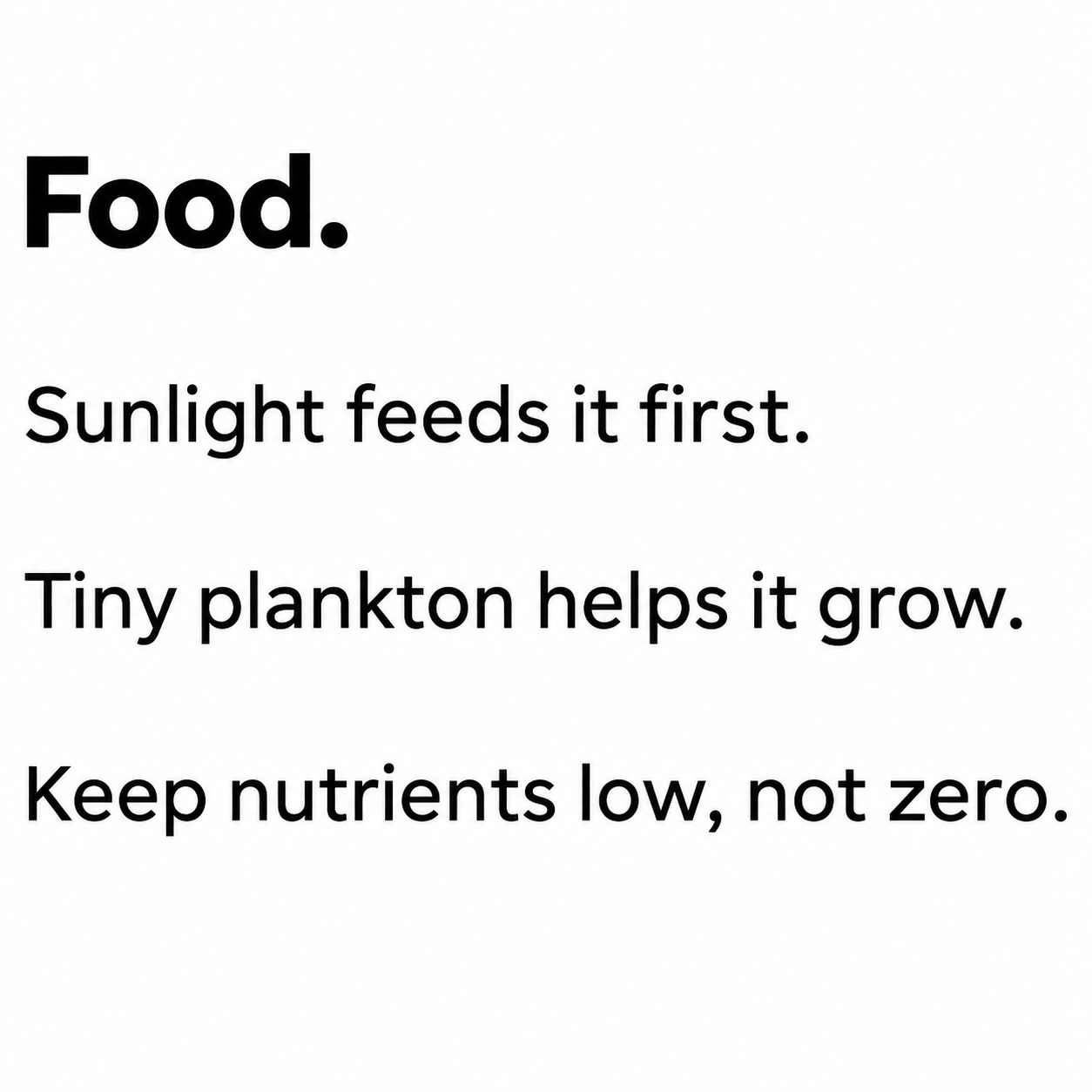
Sunlight feeds it first. It hosts zooxanthellae, tiny algae that live in its tissue and make food from light. Good light is its main meal.
Tiny snacks help. It also catches tiny plankton. A light feed of phytoplankton and zooplankton helps growth and color. Feed small amounts. Do not flood the tank.
Keep nutrients in range. It needs measurable nutrients to grow and color up. Zero nitrate and zero phosphate starve it. High nutrients brown it out. Keep them low and steady.
Growth and Fragging
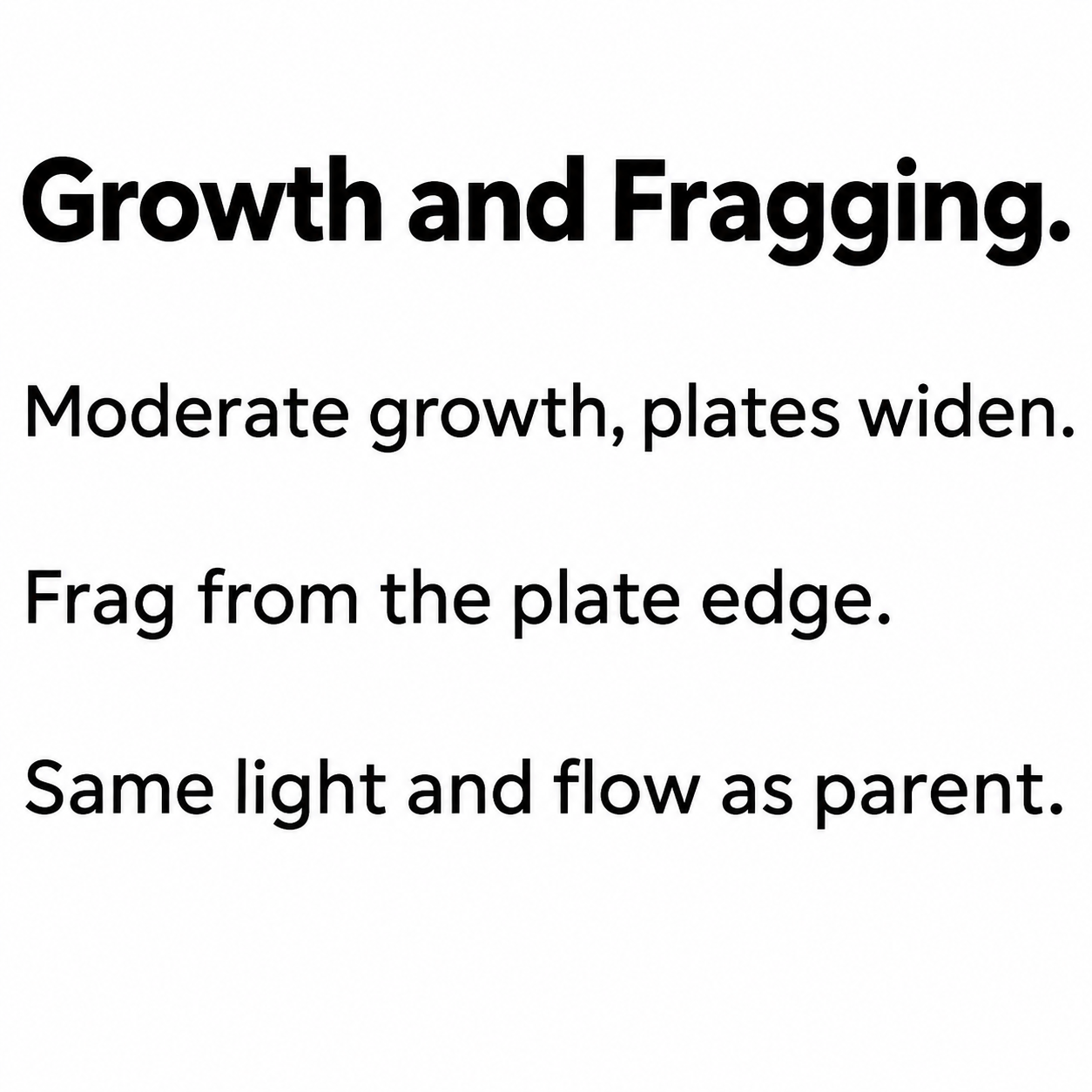
Moderate and steady. It grows at a moderate pace. Plates widen steadily. Bushy colonies stay compact. Give it months, not days, to show new growth.
Frag from the edge. Snip 2 to 3 cm from the plate edge with bone cutters. Glue the piece to a plug or rock with cyanoacrylate gel or reef epoxy. Keep the frag under the same light and flow as the parent colony.
Let it settle. A new frag needs time to lock on. Leave it in place. Do not move it around to check it. A settled frag grows. A moved frag sulks.
Trouble Spots
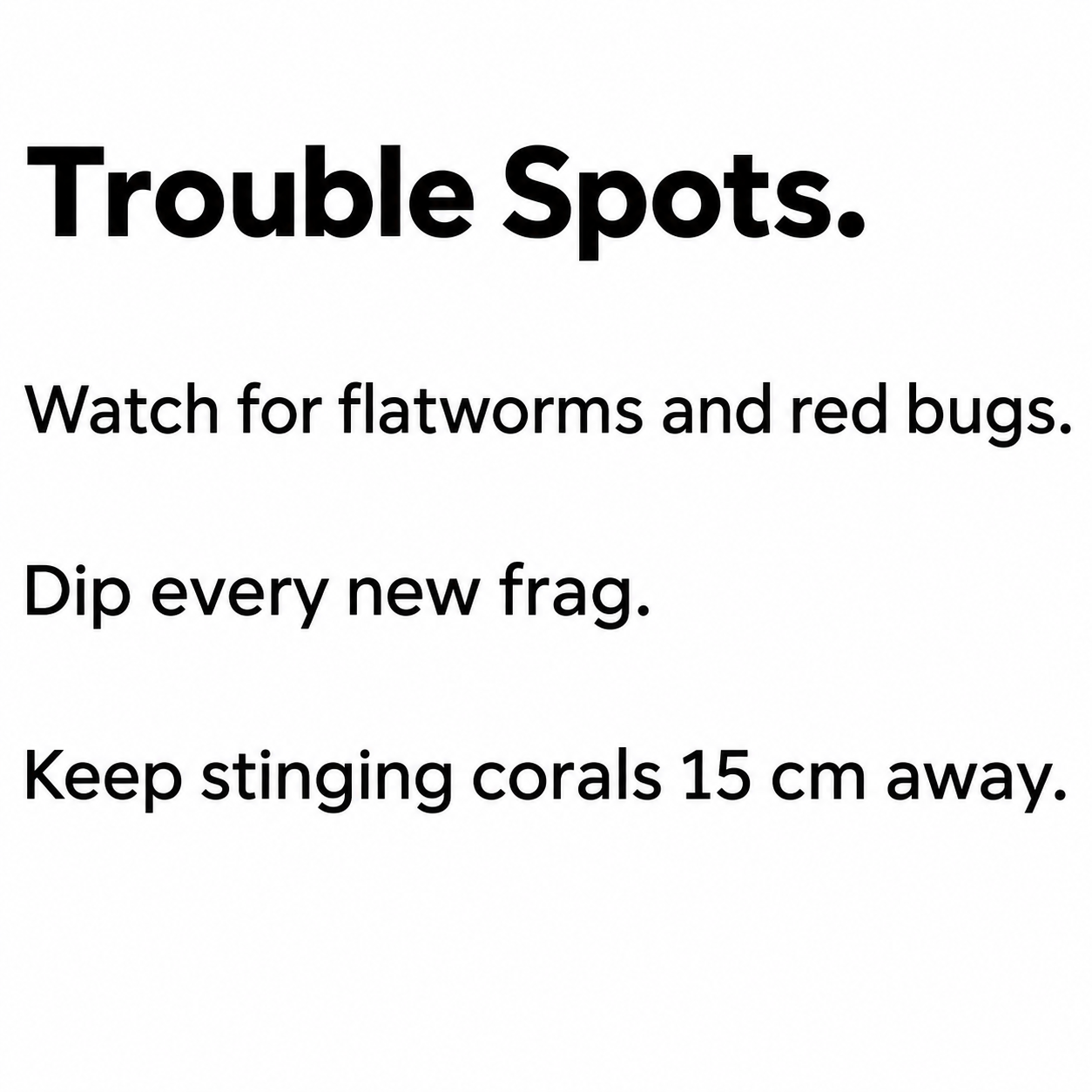
Peaceful, but it loses fights. It is peaceful, but it will not win against stinging neighbors. It can push out short, sweeper-like filaments. Keep stinging corals at least 15 cm away. LPS corals and leathers can overpower it.
Pests love Acropora. Watch for Acropora eating flatworms and red bugs. Dip every new frag before it goes in the tank. Check new growth often. Catch pests early, or they spread fast.
Fish can nip. Many angelfish and butterflyfish nip at polyps. Pick tank mates with care. A nipped colony closes up and stops growing.
Heat and swings bleach it. Hot water, a light jump, or an alkalinity crash can bleach it or cause rapid tissue loss. Fix the cause first. Then give it stable water and time.
Field Notes: What Keepers Report
Check the ID. One keeper found a granulosa in a shop mislabeled as A. latistella. Once the ID was fixed and the placement was fixed, its polyps opened out well. Shop labels get this coral wrong. Trust the tips, not the tag.
Top or middle? Some keepers put it right at the top for max light. Others keep it in the middle to upper rockwork and get good growth. The deeper water home points to the middle to upper spot. Start there, then move it up only if it asks for more light.
Color is a moving target. One bright morph shows blueberry blue corallites. In strong light its stems turn bluish cream. In lower light its stems turn fluorescent golden green. Another morph, the ORA Green Tip, shows soft teal to sage green branches with vivid fluorescent green tips that get brighter under reef light. A third, the CCH Icarus, shows a gold to chartreuse body, highlighter yellow polyps, and pale blue tips.
Tricky, not easy. One long term grower kept a blue polyp granulosa for eight or nine years, through many generations, and called it tricky. Another keeper repopulating a tank with SPS asked if granulosa encrusts first, then branches. That question is still open in the keeper thread. Do not expect a fast, easy grower. Expect a coral that rewards patience.

Granulosa Acropora is a deep slope coral with a plate habit, big round tips, and a grainy skin. Give it bright light, strong random flow, a middle to upper home, and water that holds steady. Give it room to spread, dip every frag, and keep stinging neighbors back. Do that, and you get a calm, elegant plate that grows wider every month and turns heads under blue light.
Field Notes
Related species
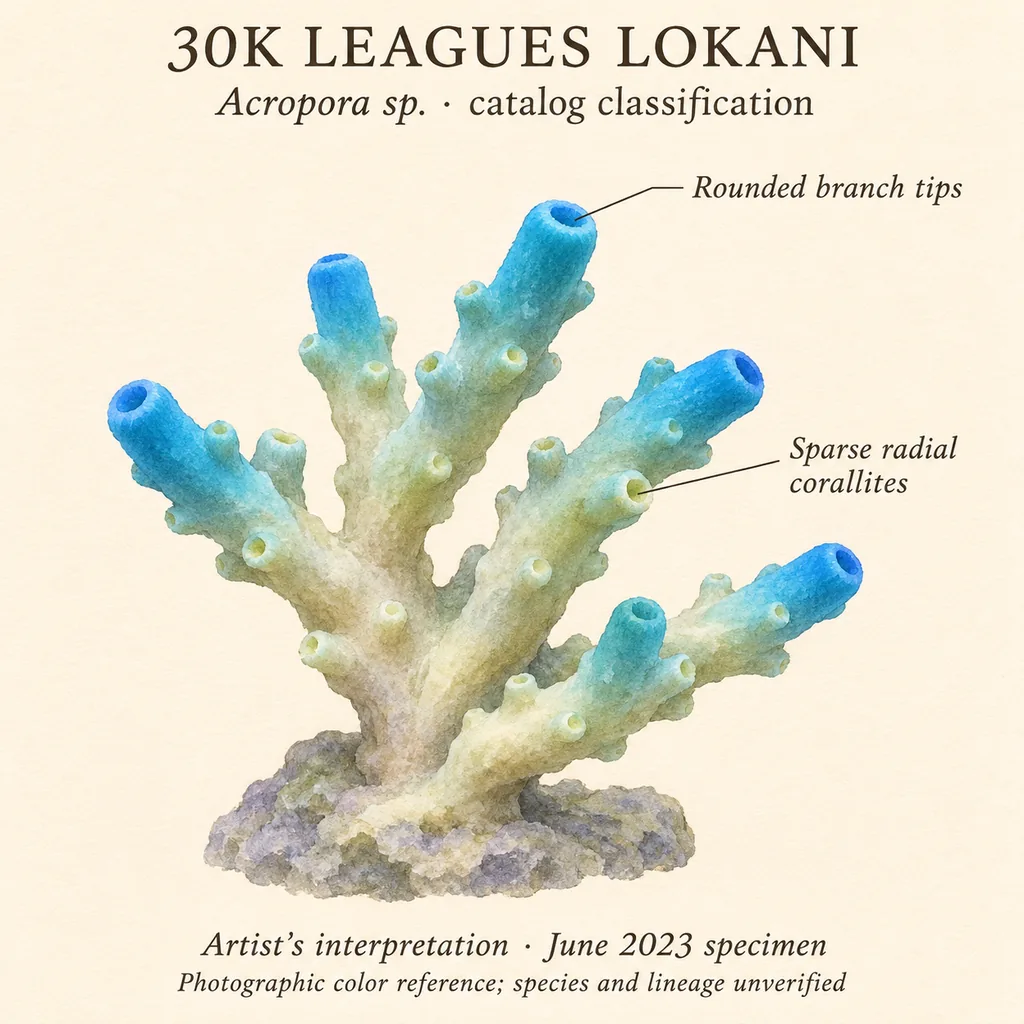
30K Leagues Lokani
Acropora sp.
Same genus
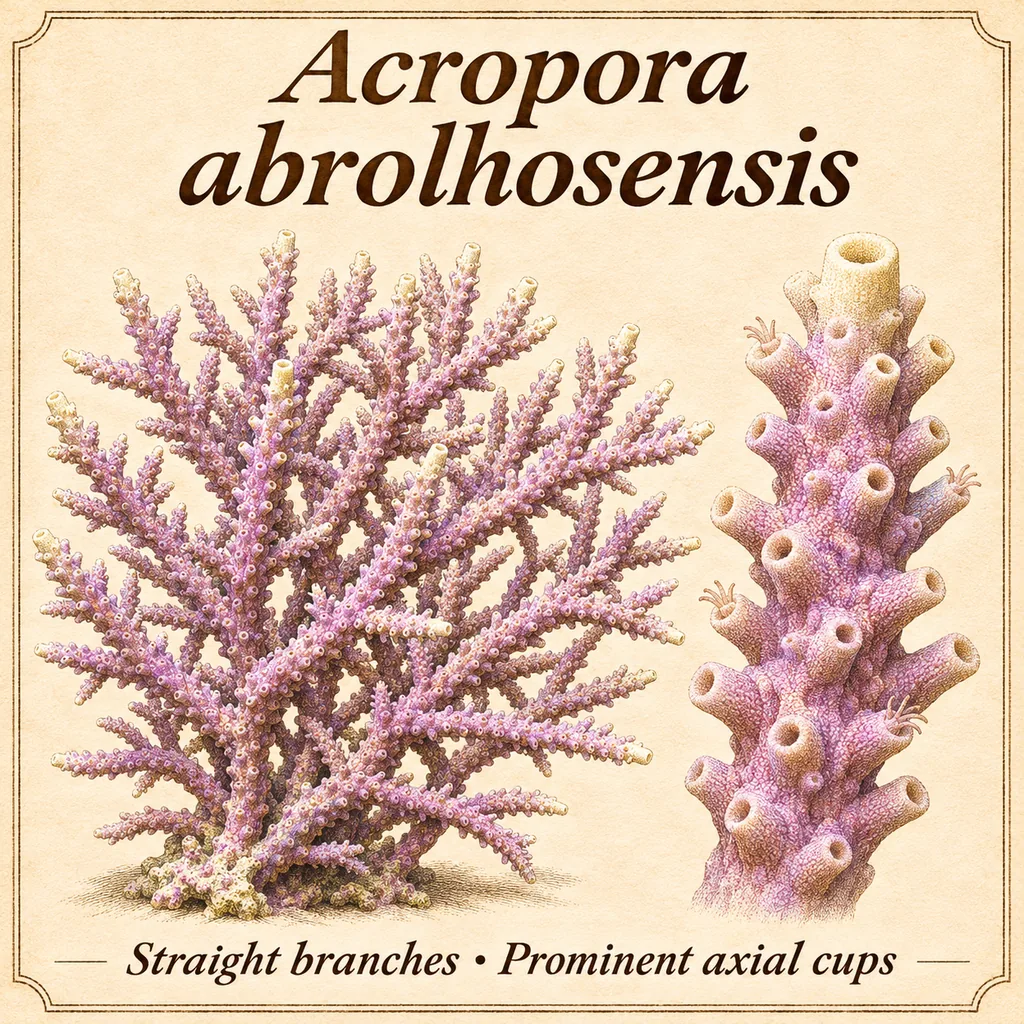
Acropora abrolhosensis
Acropora abrolhosensis
Same genus
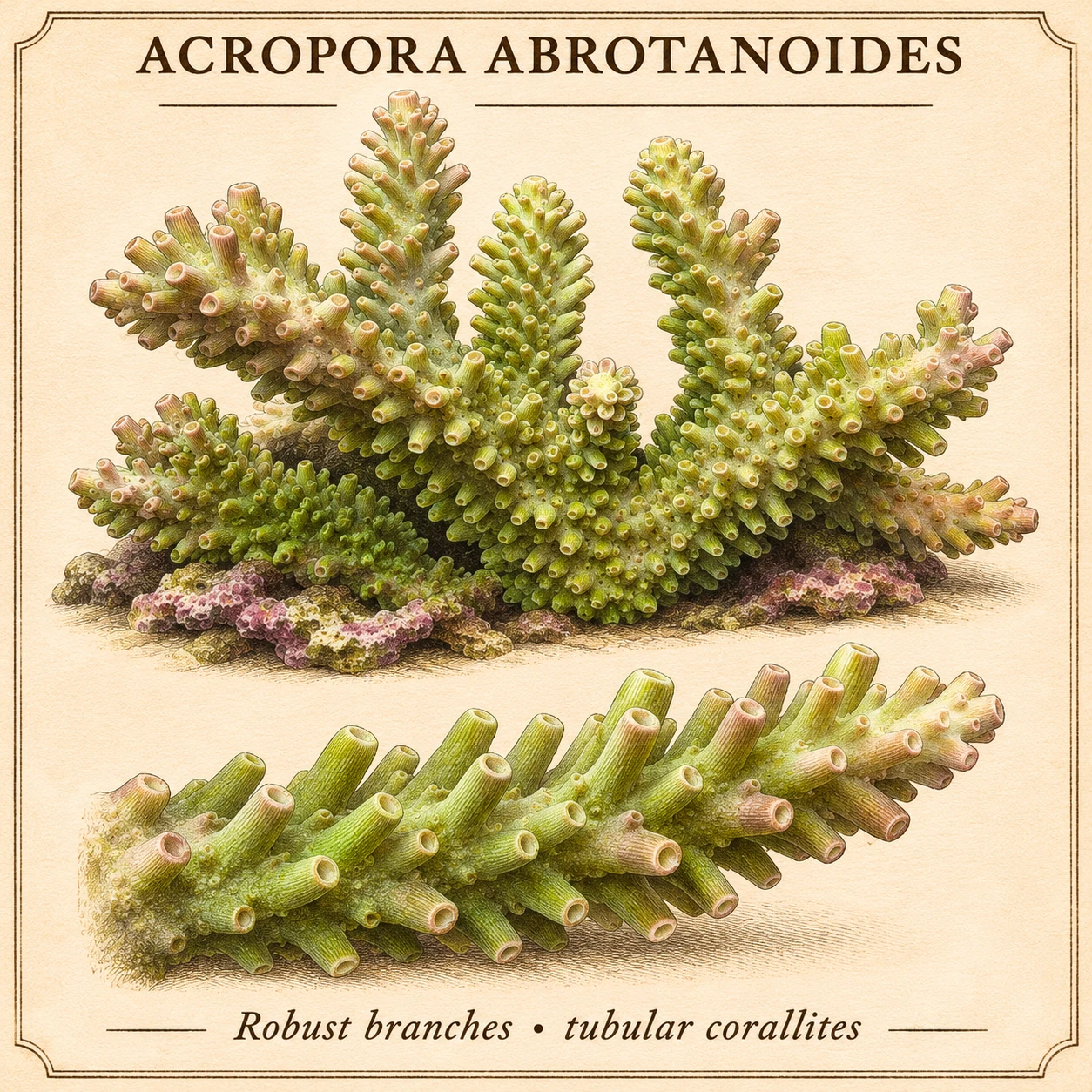
Acropora abrotanoides
Acropora abrotanoides
Same genus
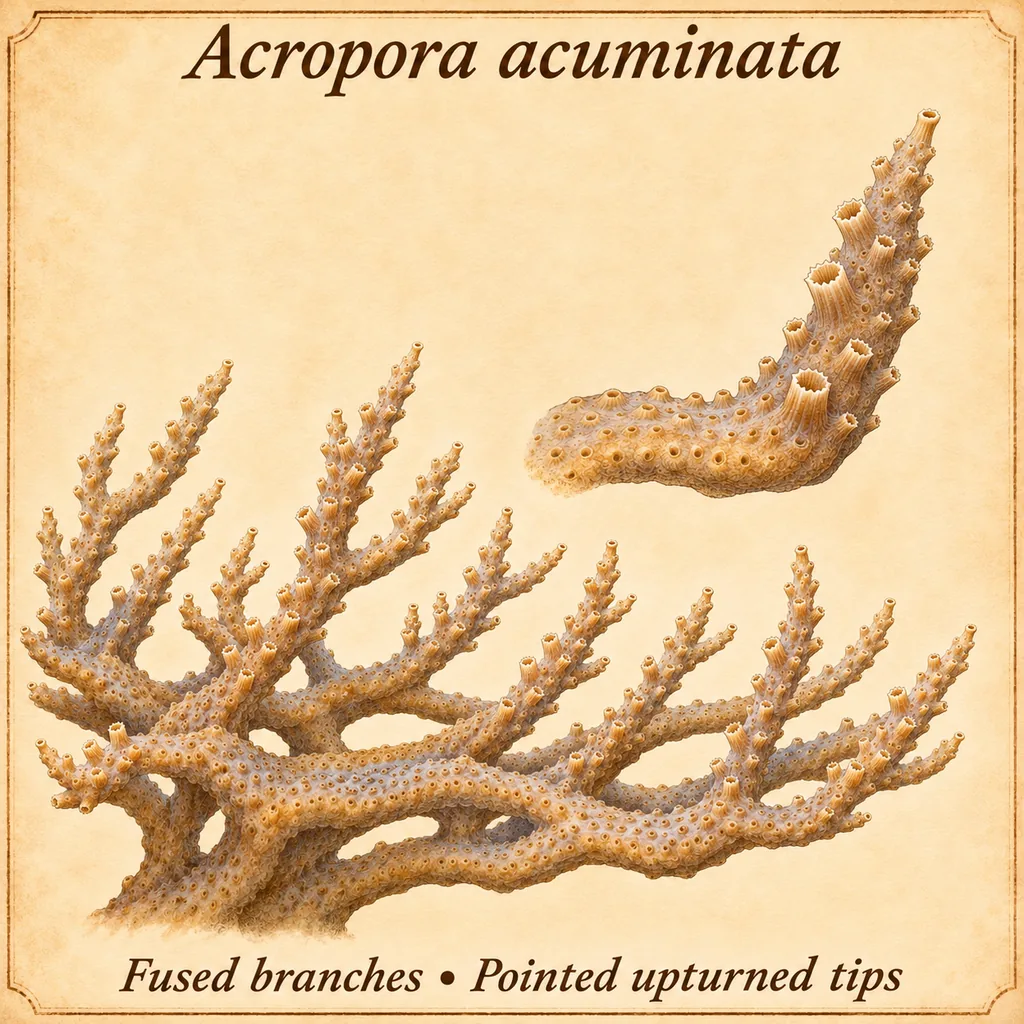
Acropora acuminata
Acropora acuminata
Same genus
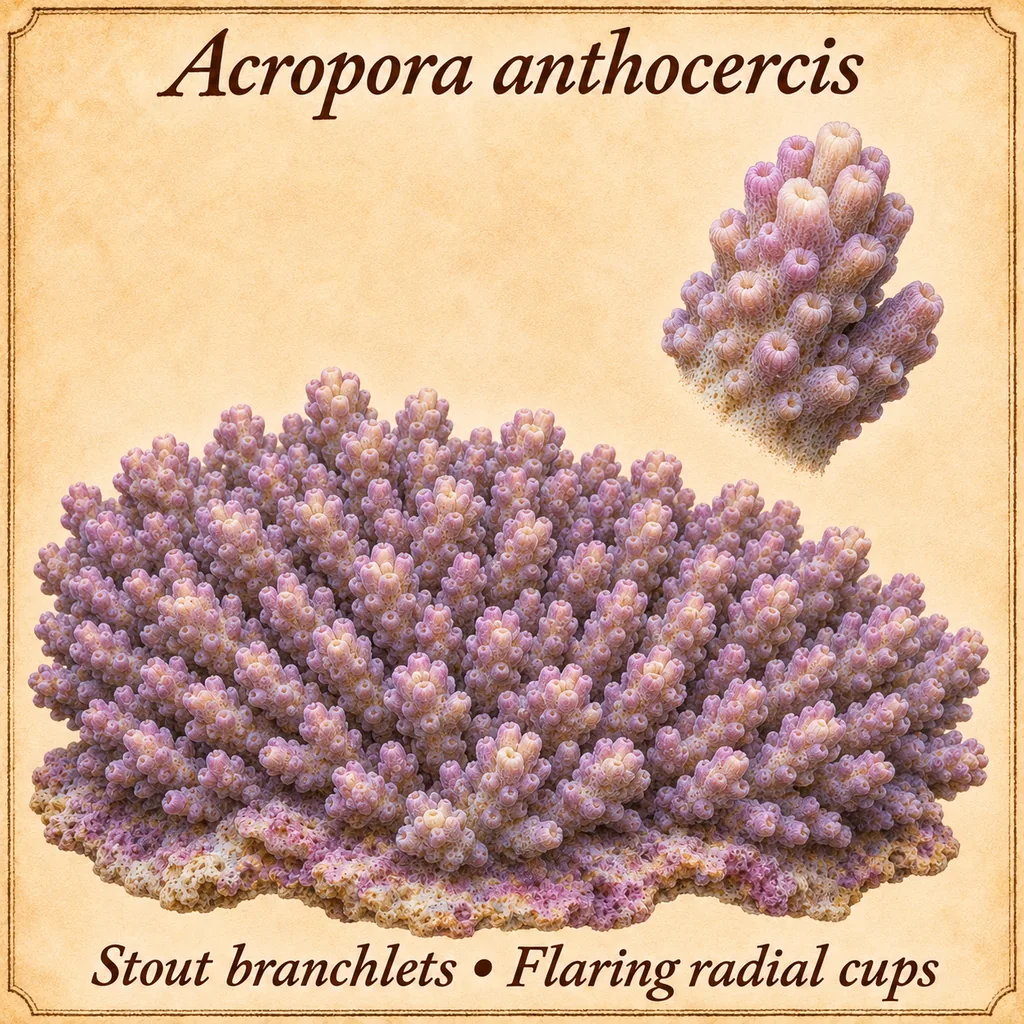
Acropora anthocercis
Acropora anthocercis
Same genus
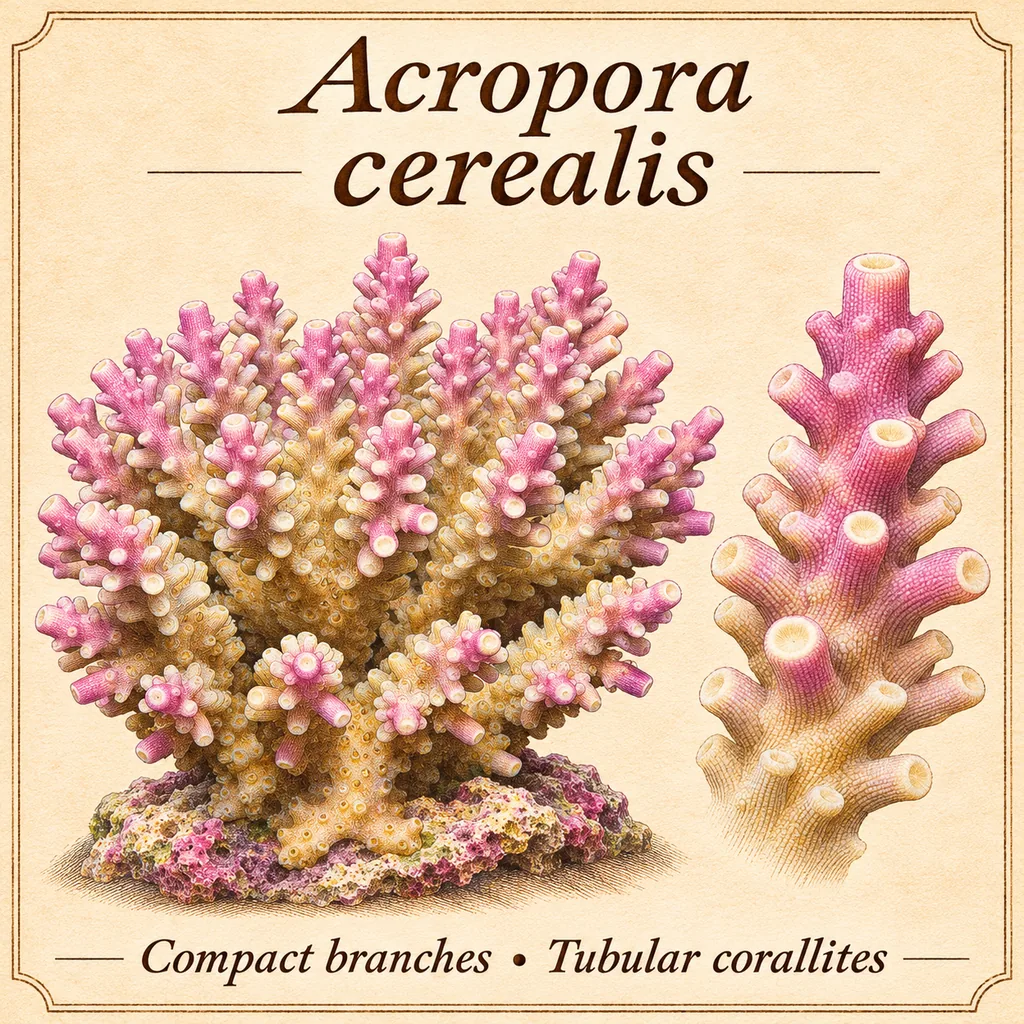
Acropora cerealis
Acropora cerealis
Same genus
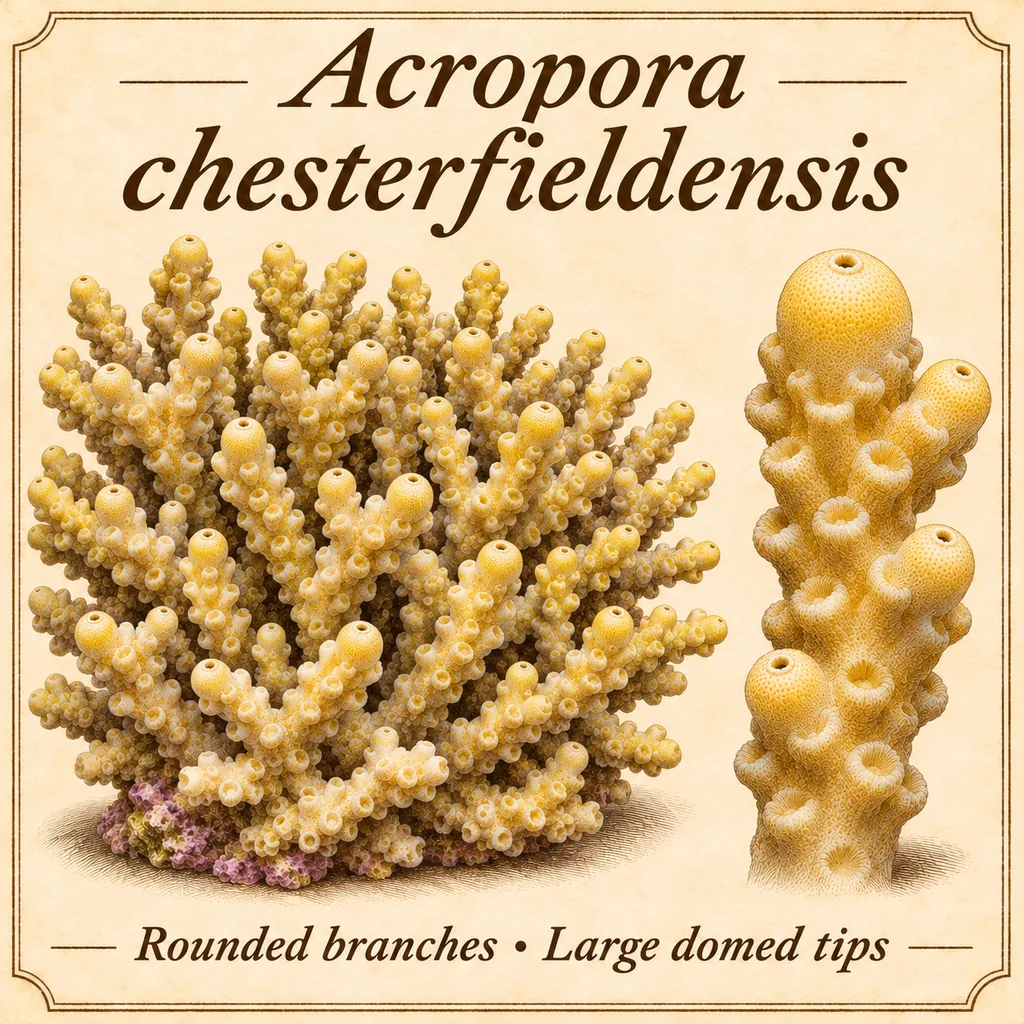
Acropora chesterfieldensis
Acropora chesterfieldensis
Same genus
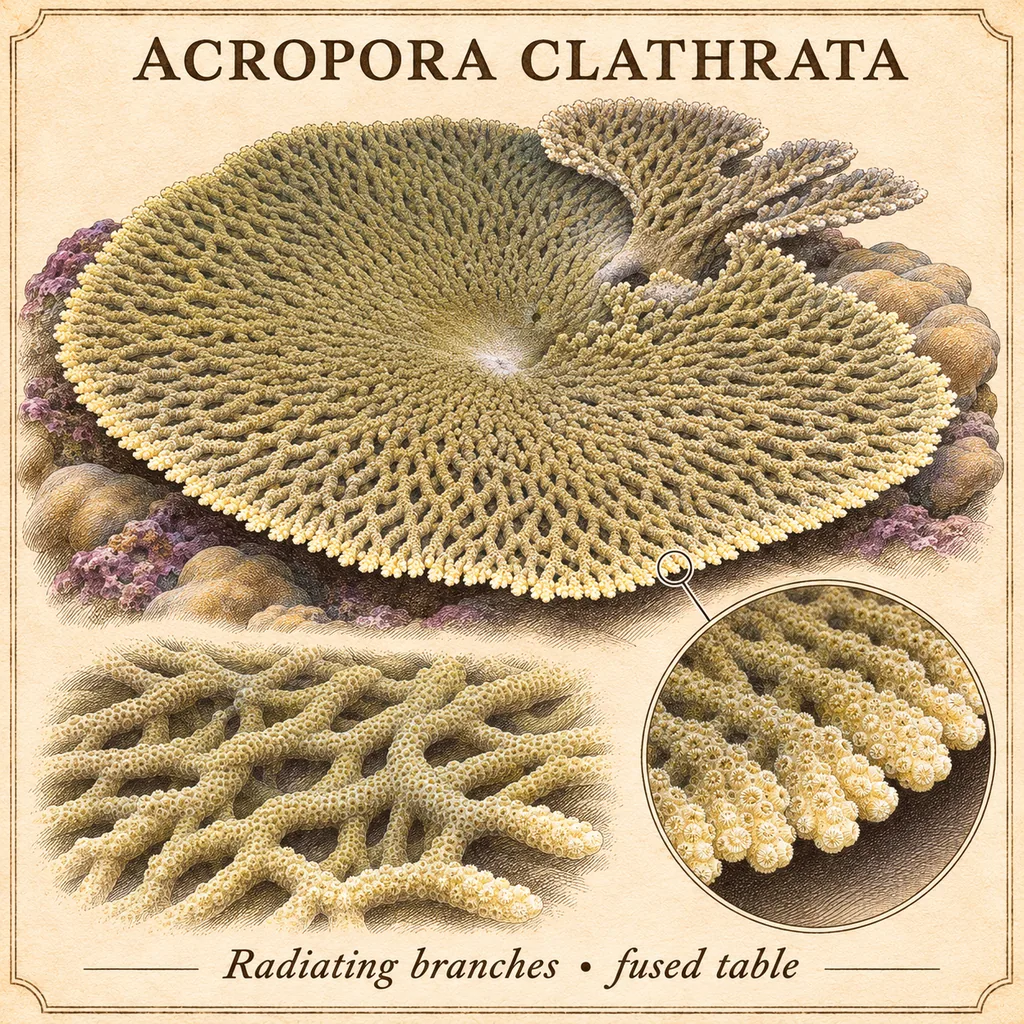
Acropora clathrata
Acropora clathrata
Same genus