Acropora millepora
Acropora millepora
Also known as: Acropora convexa

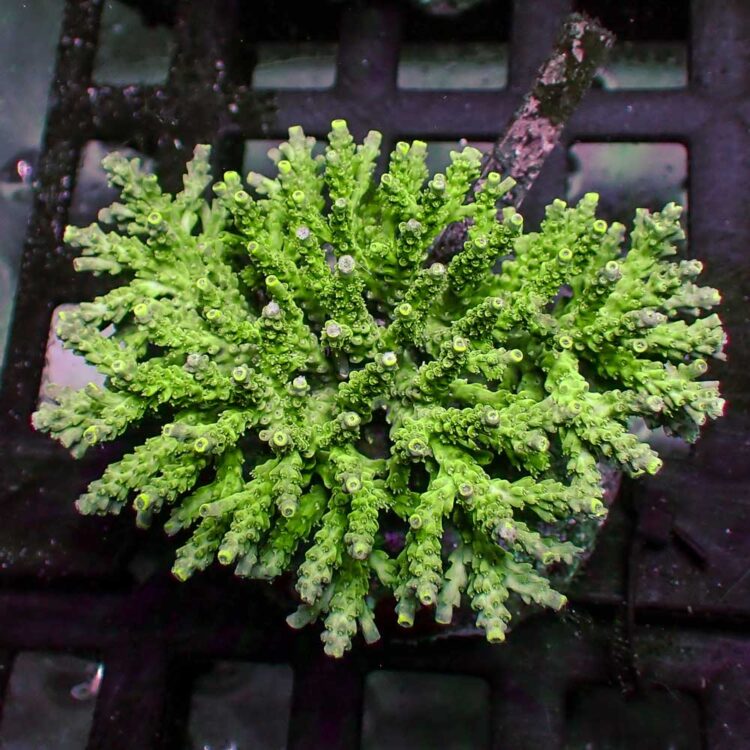
MDC Seamarc Maldives · CC BY-SA 4.0 · source
Photo: MDC Seamarc Maldives, [CC BY-SA 4.0](https://creativecommons.org/licenses/by-sa/4.0/), via [Wikimedia Commons](https://commons.wikimedia.org/wiki/File:Acropora_millepora_Maldives.jpg).*
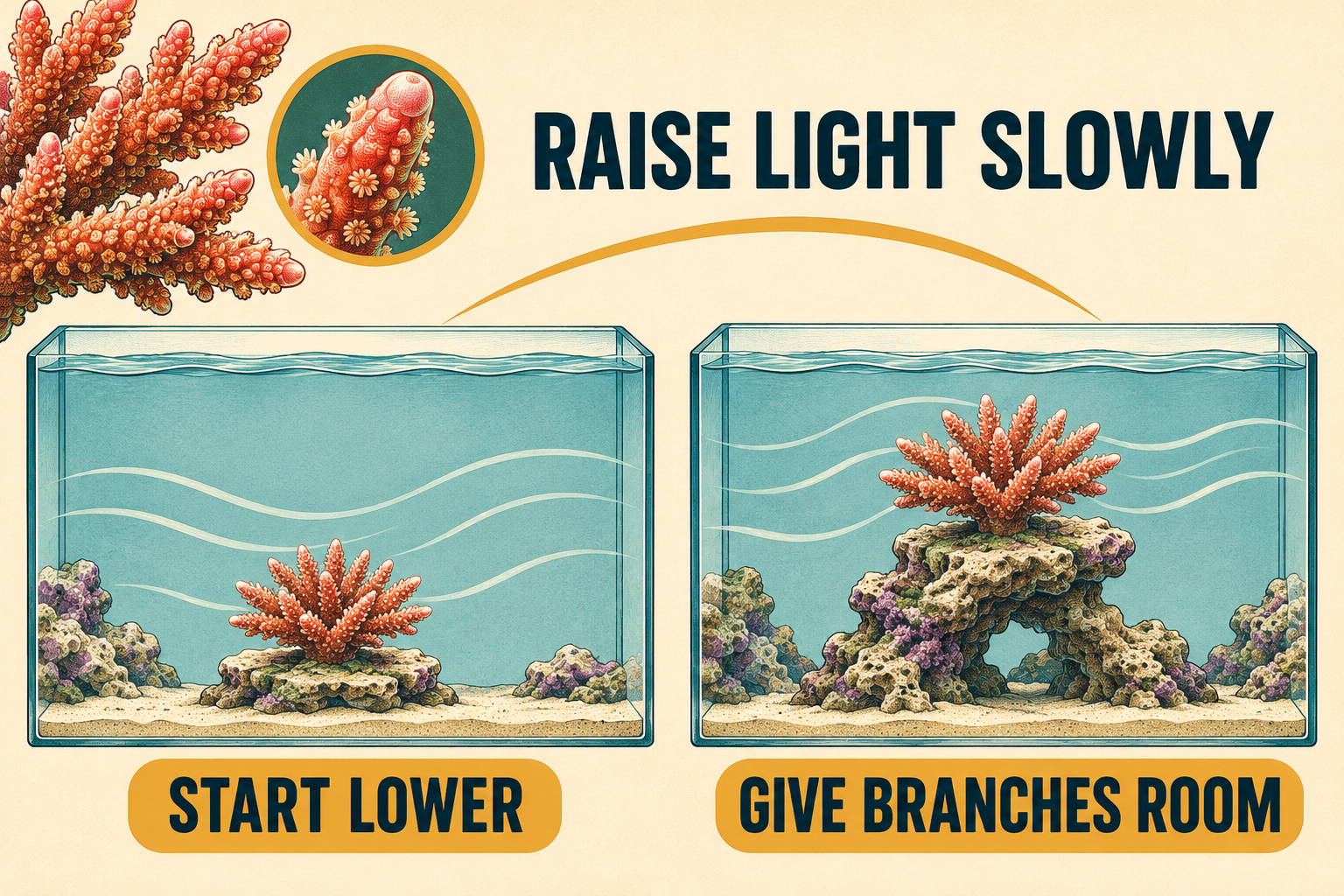
Care facts
- Care
- Advanced
- Light
- High
- Flow
- High
- Place
- High
- Space
- Semi-Aggressive
- Origin
- Indo-Pacific
- Growth Rate
- Fast
Gallery
Look close at a millepora branch. Its sides are packed with little cups like roof tiles. Each cup is home to a coral polyp. Those short branches can pack together into a low mound. Give this Acro bright light, moving water and time to settle in.
History of the coral
1. A name from 1834. Christian Gottfried Ehrenberg named this coral in 1834. The original skeleton sits in a museum in Berlin. Its collection site was never recorded.
2. Two names, one guide. The World Register of Marine Species (WoRMS) treats Acropora convexa as another name for Acropora millepora. Look up either name to find this guide. That name change does not identify any individual colony from a photo.

How they live in the wild
3. Life near the light. Look for millepora on shallow reefs. It grows on reef flats, and older field records also place it in lagoons and on upper reef slopes. Closely studied Indian Ocean colonies include shallow reef specimens from Singapore to Western Australia.
4. Short branches, busy polyps. Tiny algae inside the coral use sunlight to make food. Polyps also catch particles from the water. As the branches grow, water has to find its way between them.

Light, flow and placement
5. Work up to bright light. Start a new frag lower or use a dimmer lighting program. Increase light in small steps over several weeks. Use high rockwork once it has settled and is holding color.
6. Keep water moving around it. Aim for strong, changing flow around the whole colony. Turn a steady jet away from the tissue. Leave a gap on all sides and check the flow again as the mound fills in.
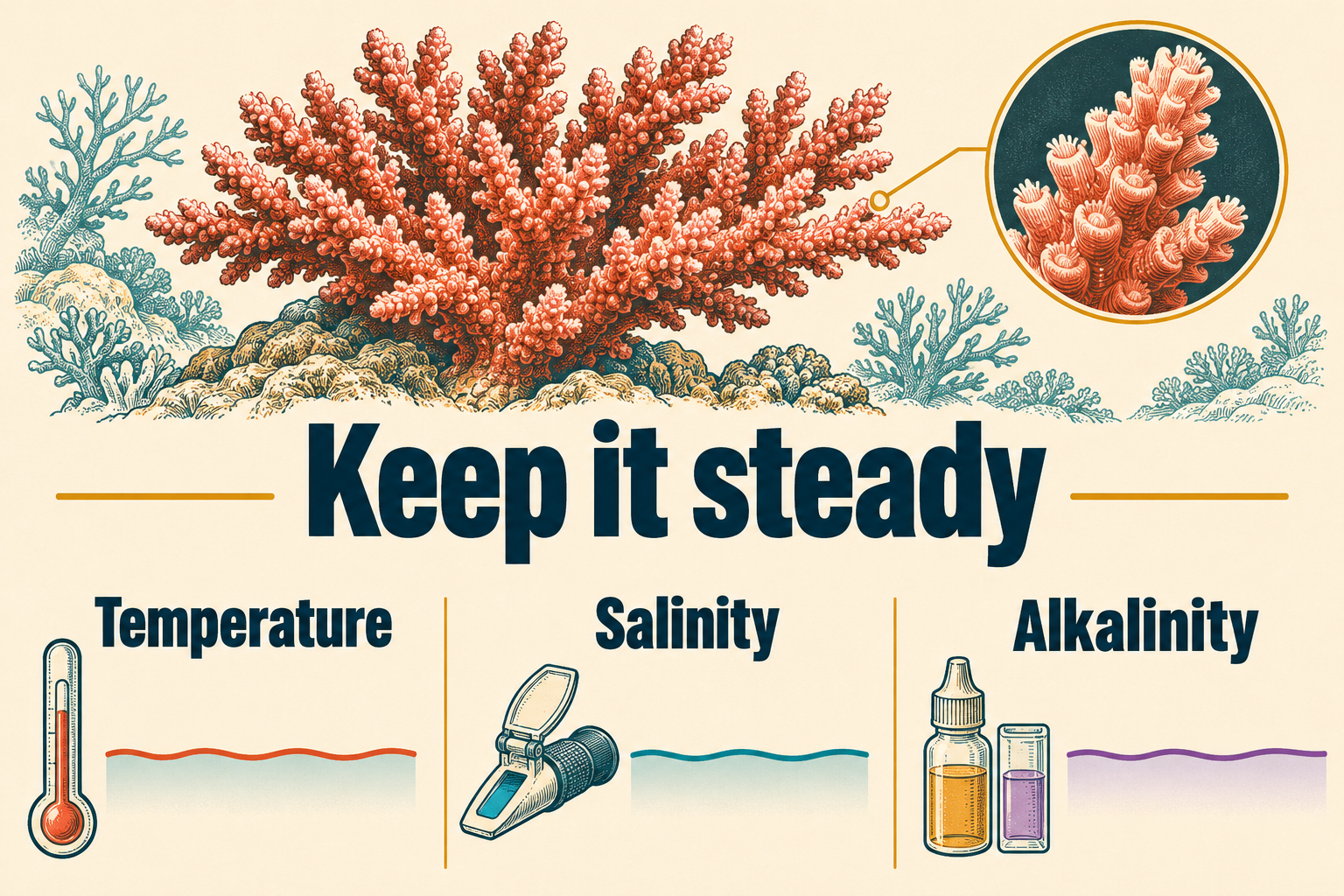
Keep the water steady
7. Give it a mature tank. Millepora is an advanced small-polyp stony coral. Track temperature, salinity and alkalinity. Correct drift gradually and check calcium as the colony builds more skeleton.
8. Find the trend first. If color fades or tissue starts to pull back, check recent changes to heat, light, flow and water chemistry. Make one correction at a time so you can tell what helped.
Growth and spacing
9. The base is part of the show. Look for a thin rim of living tissue spreading across a solid mount. Keep the frag secure. Leave the rim free of algae and settled debris.
10. Make room for the sides, too. The open space beside a frag shrinks as it branches. Keep it out of reach of stinging neighbors and keep growing colonies from touching. Look at the cups and branch shape together, not the color alone.

Field notes
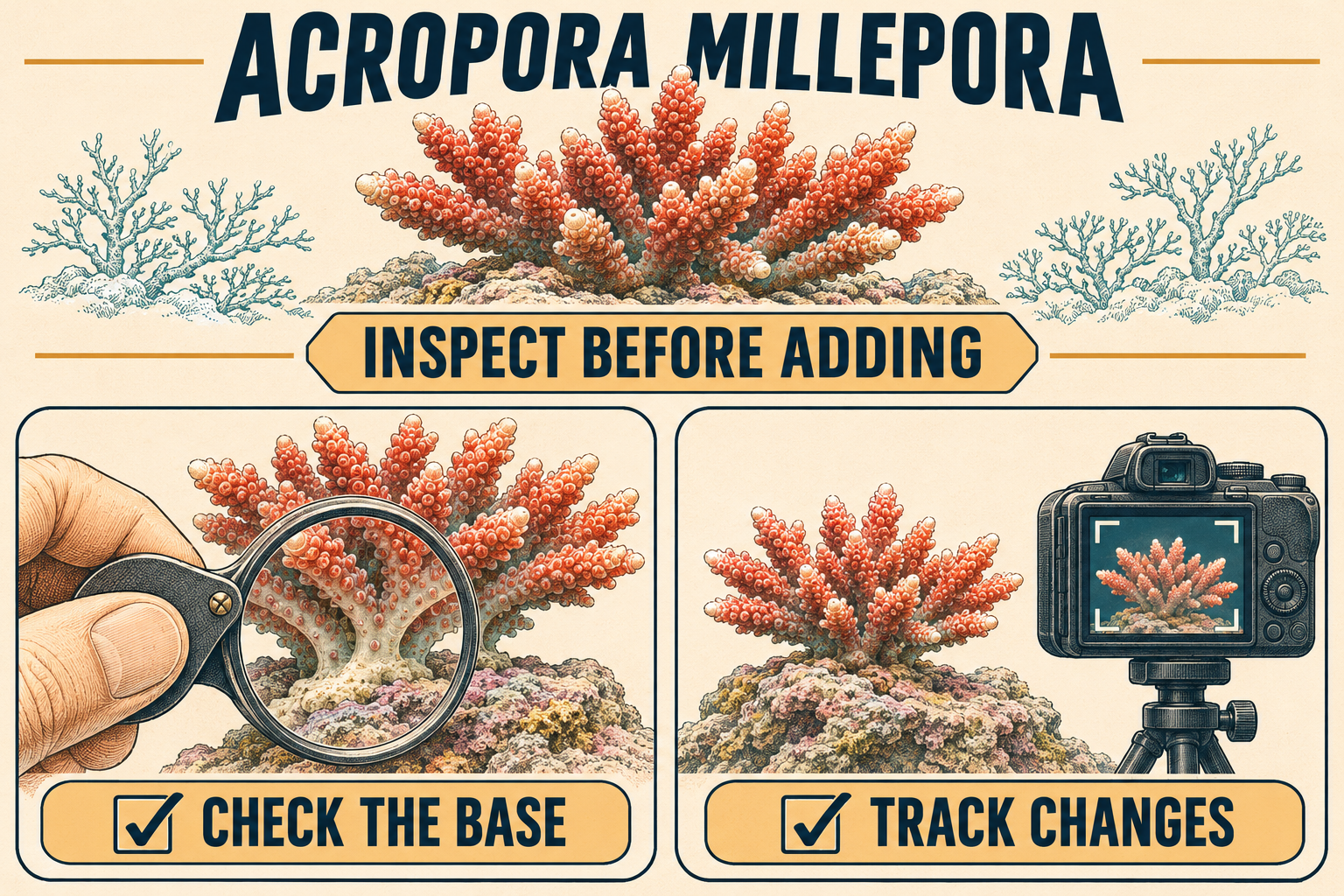
11. Check before it joins the reef. Inspect the base and undersides in white light. Look for bite marks, egg patches or fresh bare skeleton. Keep suspicious frags out of the display while you figure out what is wrong.
12. Take the same photo again. Use the same angle and lighting each week. Compare the base, side branches and tips. New growth and a patch of bare skeleton are easier to tell apart when you can see what changed.
Give millepora time to show you what it is doing. Watch the base spread and the short branches fill out. A steady reef gives those tiny builders room to work.
*Hero
Field Notes
Related species
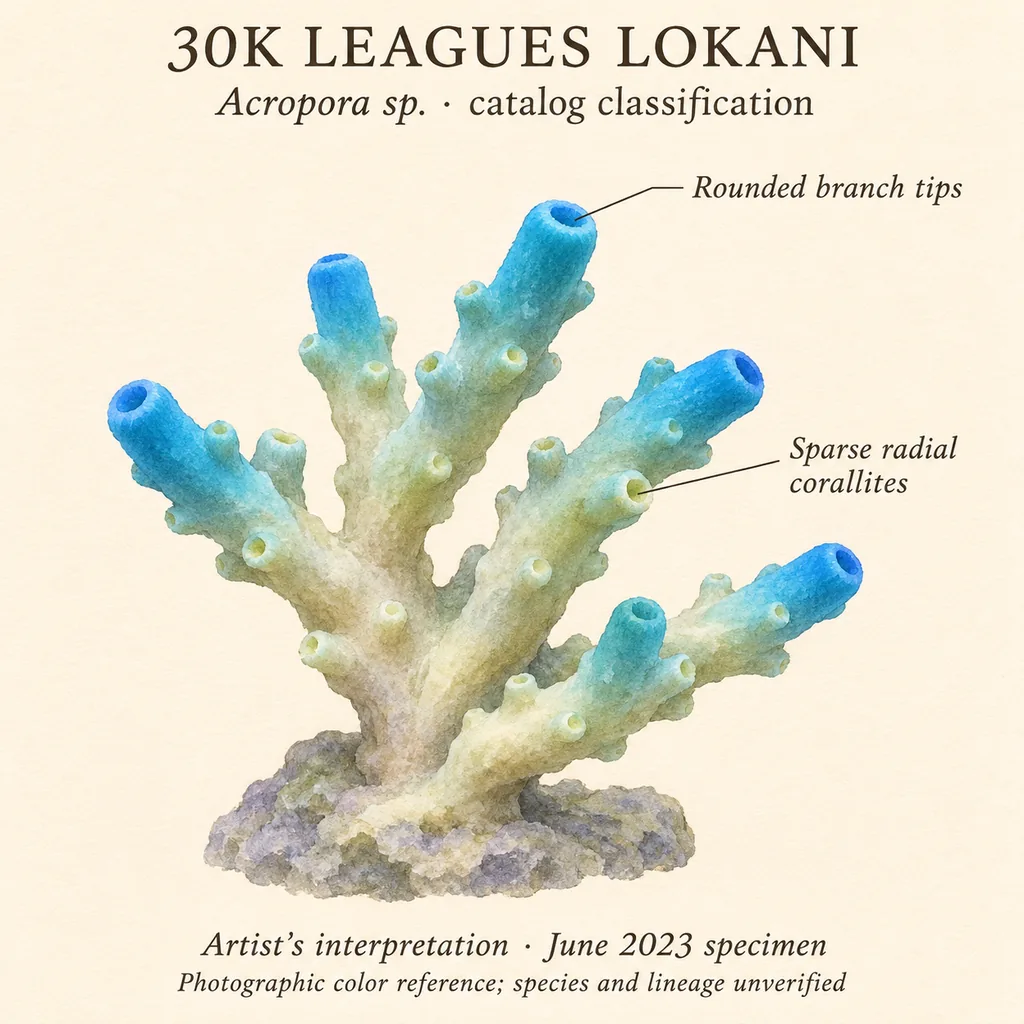
30K Leagues Lokani
Acropora sp.
Same genus
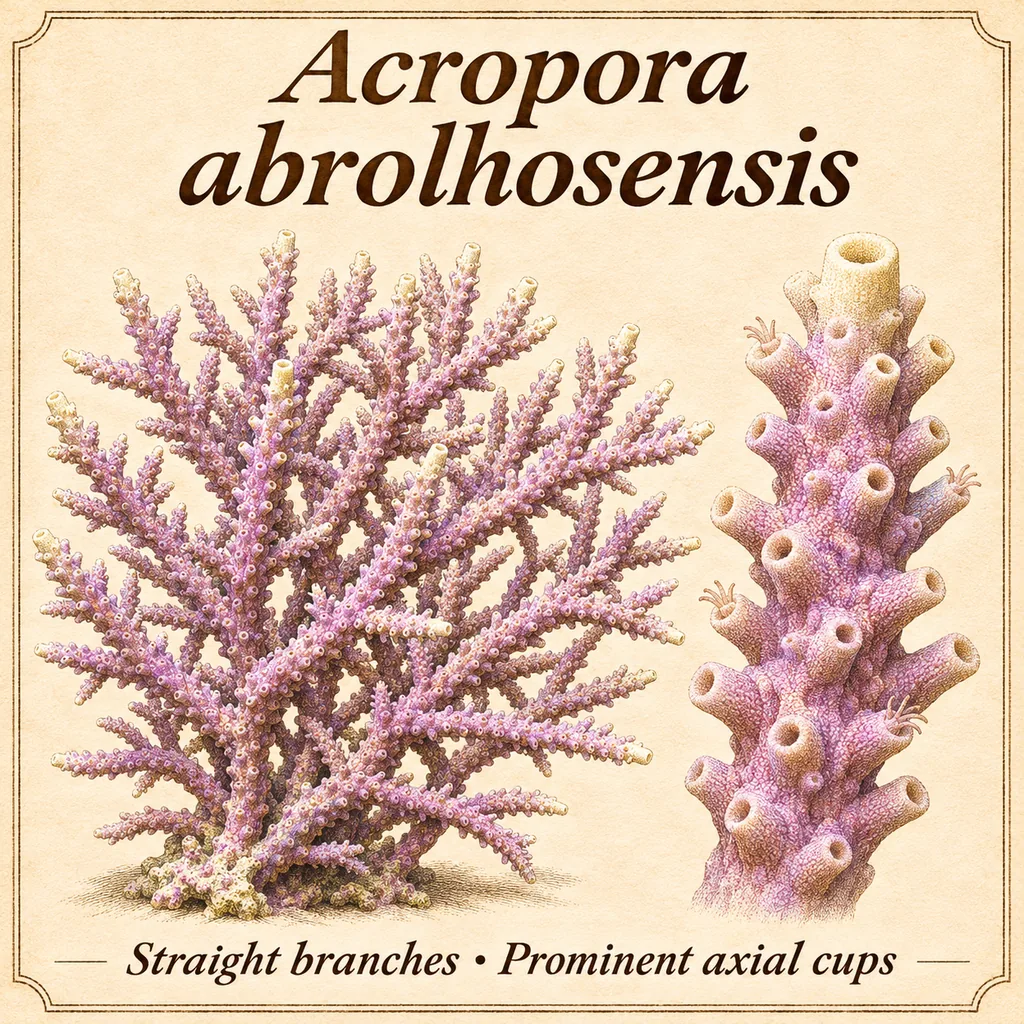
Acropora abrolhosensis
Acropora abrolhosensis
Same genus
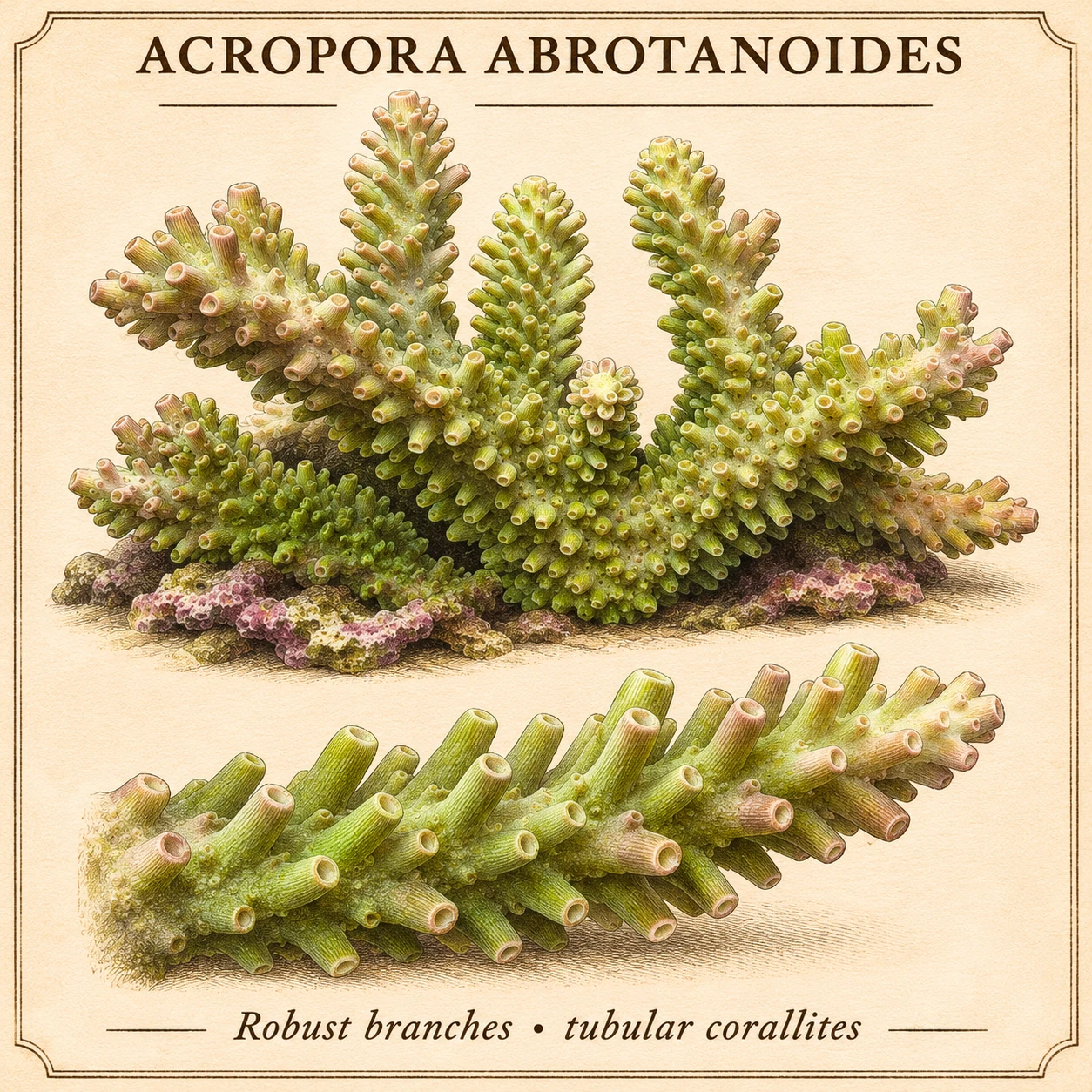
Acropora abrotanoides
Acropora abrotanoides
Same genus
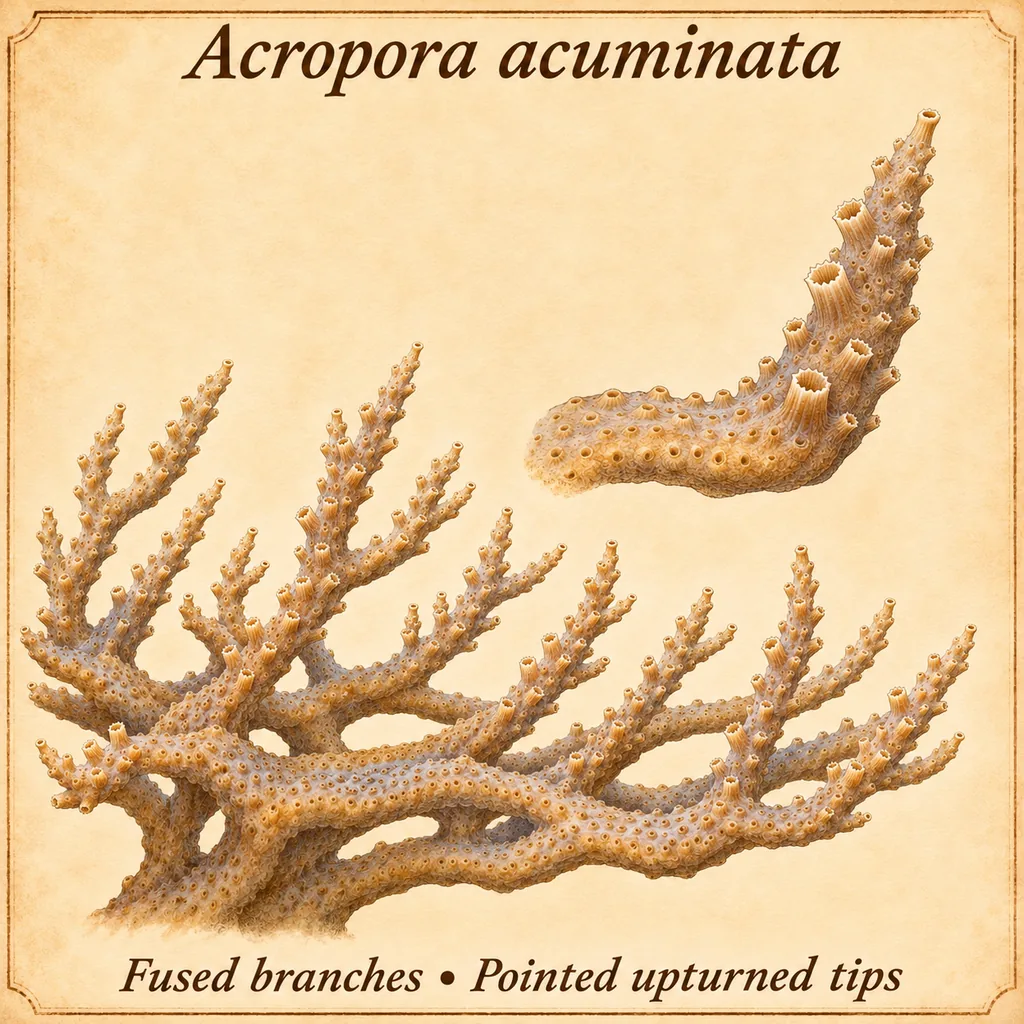
Acropora acuminata
Acropora acuminata
Same genus
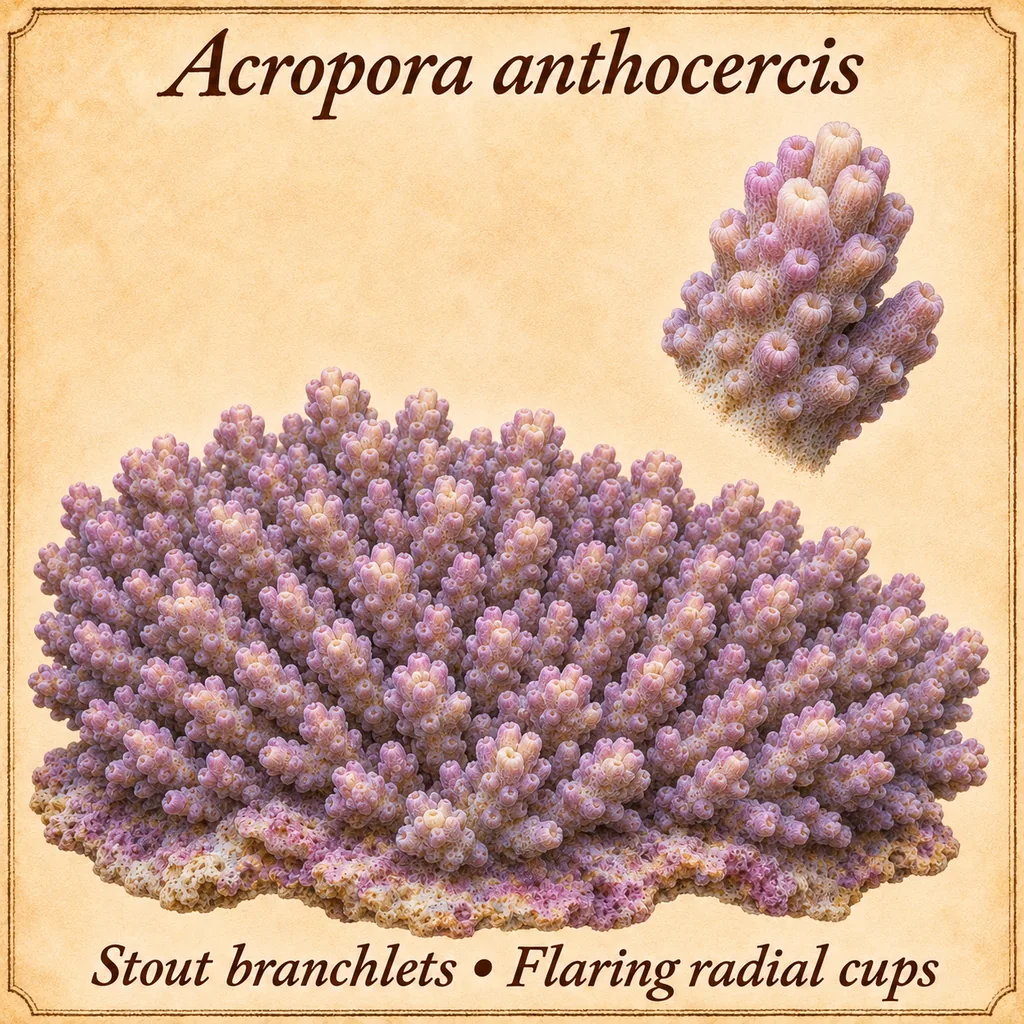
Acropora anthocercis
Acropora anthocercis
Same genus
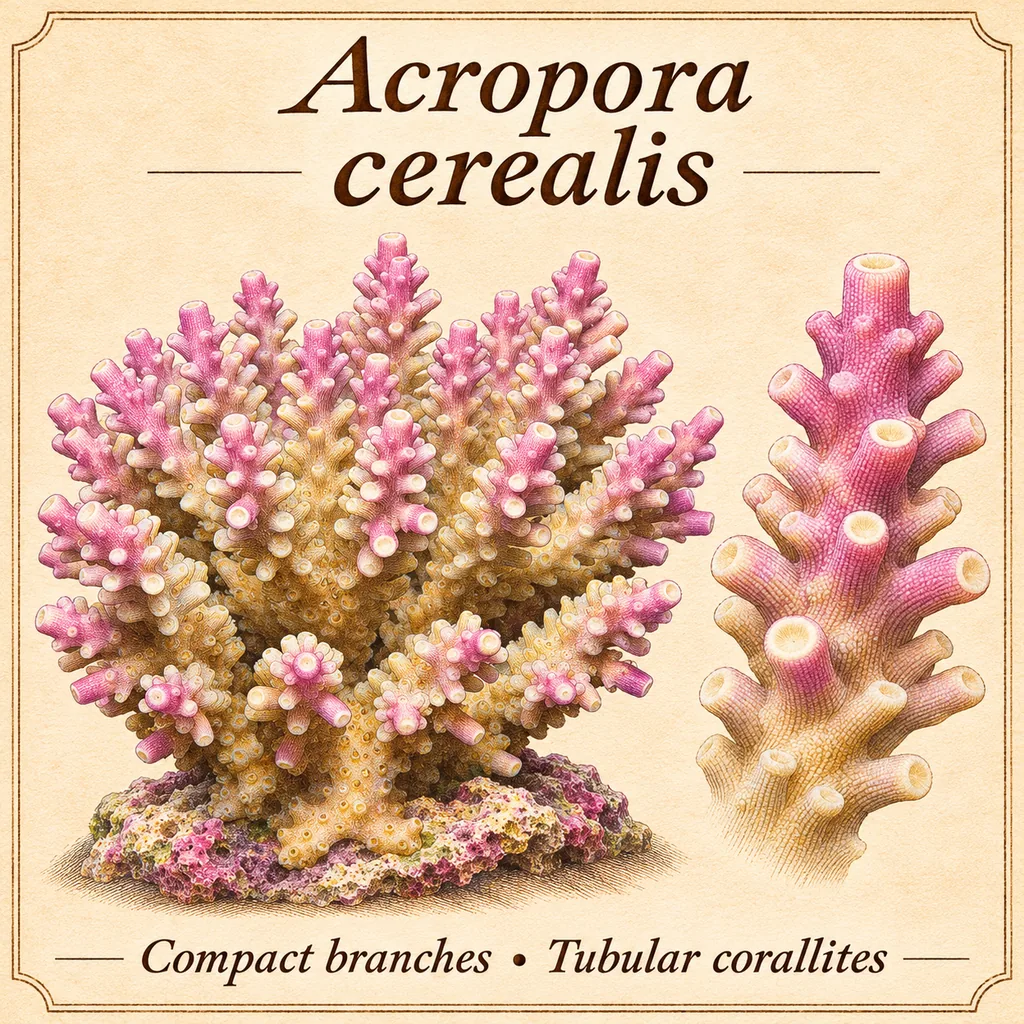
Acropora cerealis
Acropora cerealis
Same genus

Acropora chesterfieldensis
Acropora chesterfieldensis
Same genus
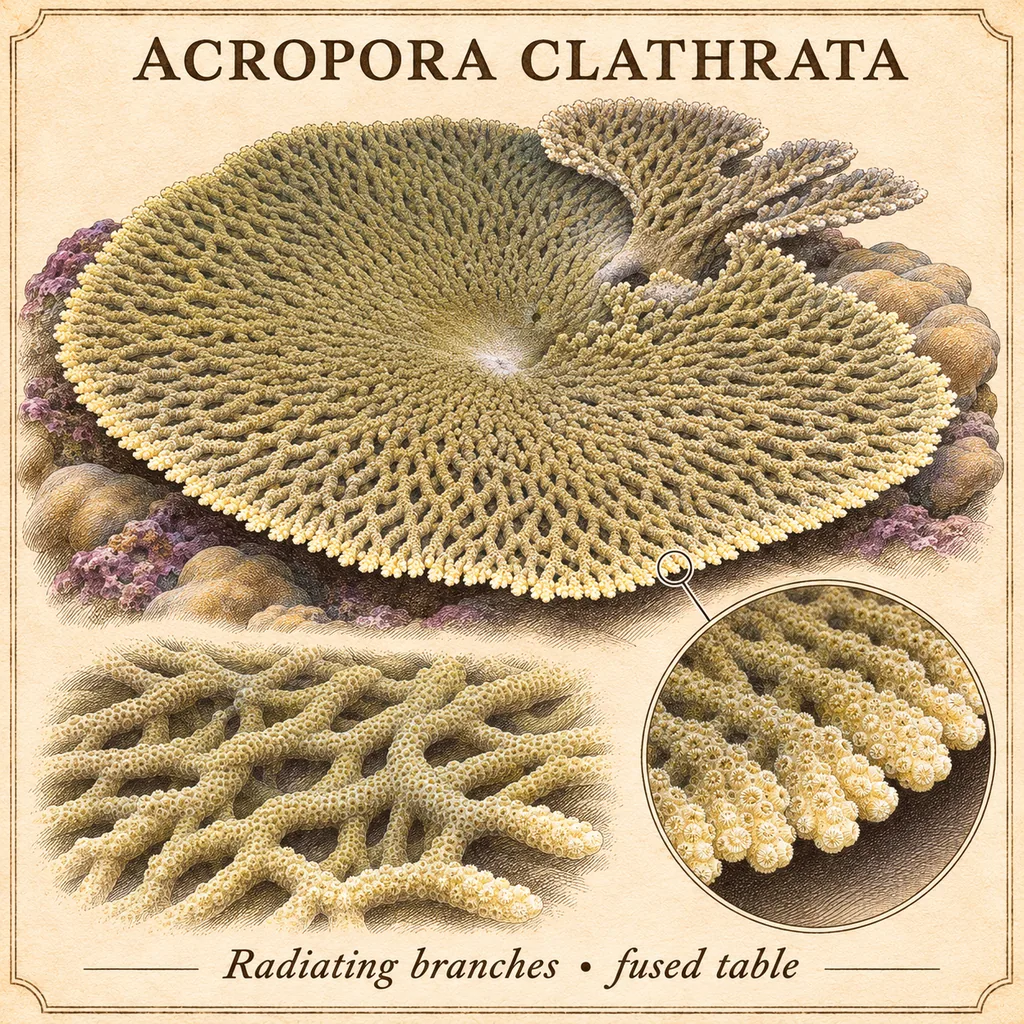
Acropora clathrata
Acropora clathrata
Same genus