Muricata Acropora
Acropora muricata

Philippe Bourjon · CC BY-SA 3.0 · source
Photo: Philippe Bourjon, CC BY-SA 3.0, via Wikimedia Commons.
Gallery
A staghorn starts as a little stick. Give it time and it grows into a whole underwater thicket. On some Indo-Pacific reefs, Acropora muricata stands stretch more than 30 feet across. In a tank, the fun starts with one sturdy branch and enough room for the next one.
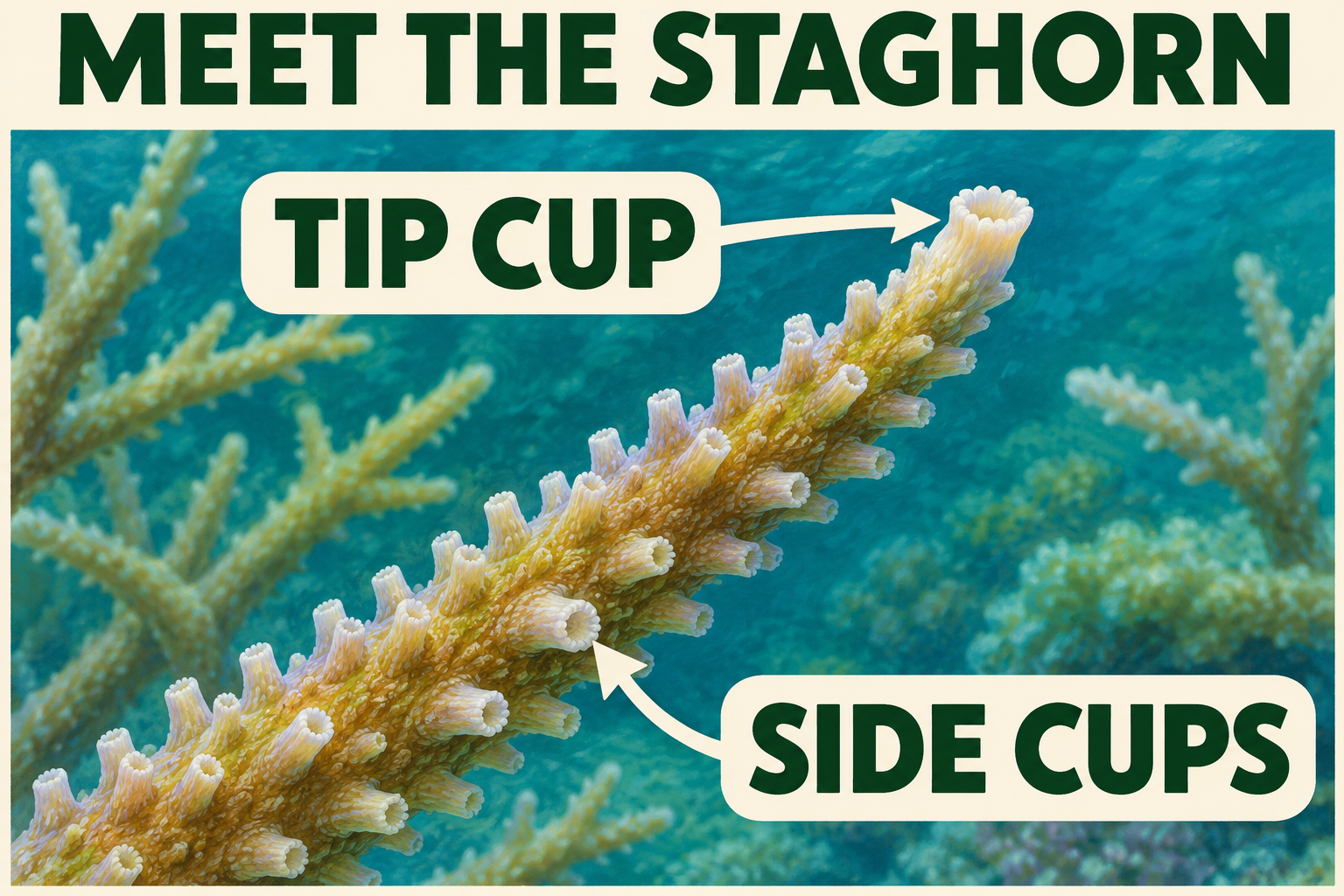
Meet the staghorn
1. Look at the tip. Each branch ends in a little raised cup. That's the axial corallite, the hard cup around the polyp at the tip. Smaller cups dot the sides all the way down.
2. Two names, one coral. Acropora formosa is an older name for Acropora muricata. Look for both names when reading up on this staghorn.
Ease into bright light
3. Give it a bright spot. Plan for bright light on the upper rockwork after acclimation. Start close to the light level the frag came from. If you don't know it, start gentler and work up gradually.
4. Watch the whole branch. Pale tips are part of this coral's look. Widespread paling or bare skeleton is a different story. Pause the light ramp and check recent changes in light and water before changing another setting.

Flow through the forks
5. Let the water weave. Give it strong, changing current that moves around and between the branches. Aim pumps across the tank so the coral doesn't sit in a direct jet.
6. Check the middle, too. As the branches fill in, water has a harder time getting to the center. Watch for debris caught in the forks. Adjust pump direction before adding more power.

Keep the water steady
7. Test for a pattern. Check alkalinity at a consistent time and write it down. Test calcium, too. Make small adjustments based on what the tank actually uses.
8. Keep the rest steady. Check salinity and temperature regularly. Keep nutrients measurable and avoid abrupt changes. Add this coral to an established reef you already know how to keep stable.

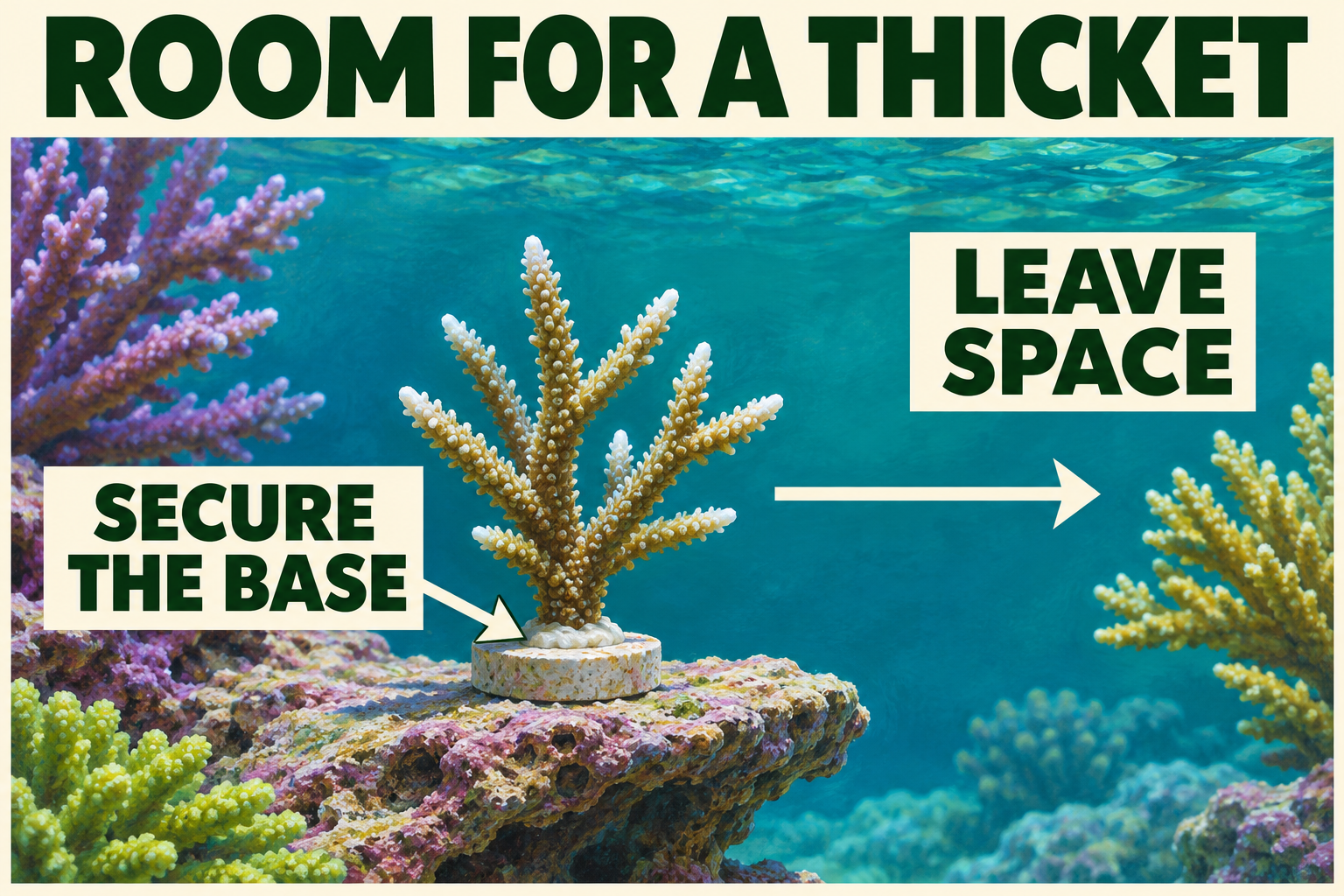
Room for a thicket
9. Give the base a grip. Seat the plug or frag securely on firm rock. Leave room for living tissue to spread around the base.
10. Leave room for next year's branches. Plan open water around the frag. Growing branches can shade a neighbor or run into it. Keep stinging corals well clear, even if the frag looks tiny today.
Field notes — what keepers report
11. One staghorn took off. A keeper growing a coral sold or traded as A. formosa described quick growth under bright light and strong current.
12. Some acros build a base first. In a general Acropora account, another keeper saw frags spread at the base for months before they grew upward. Take photos from the same angle so you can track both kinds of growth.

Get the current moving through the forks, ease the frag into the light, and give the branches space. A photo today makes it easier to spot the next little fork.
Field Notes
Related species
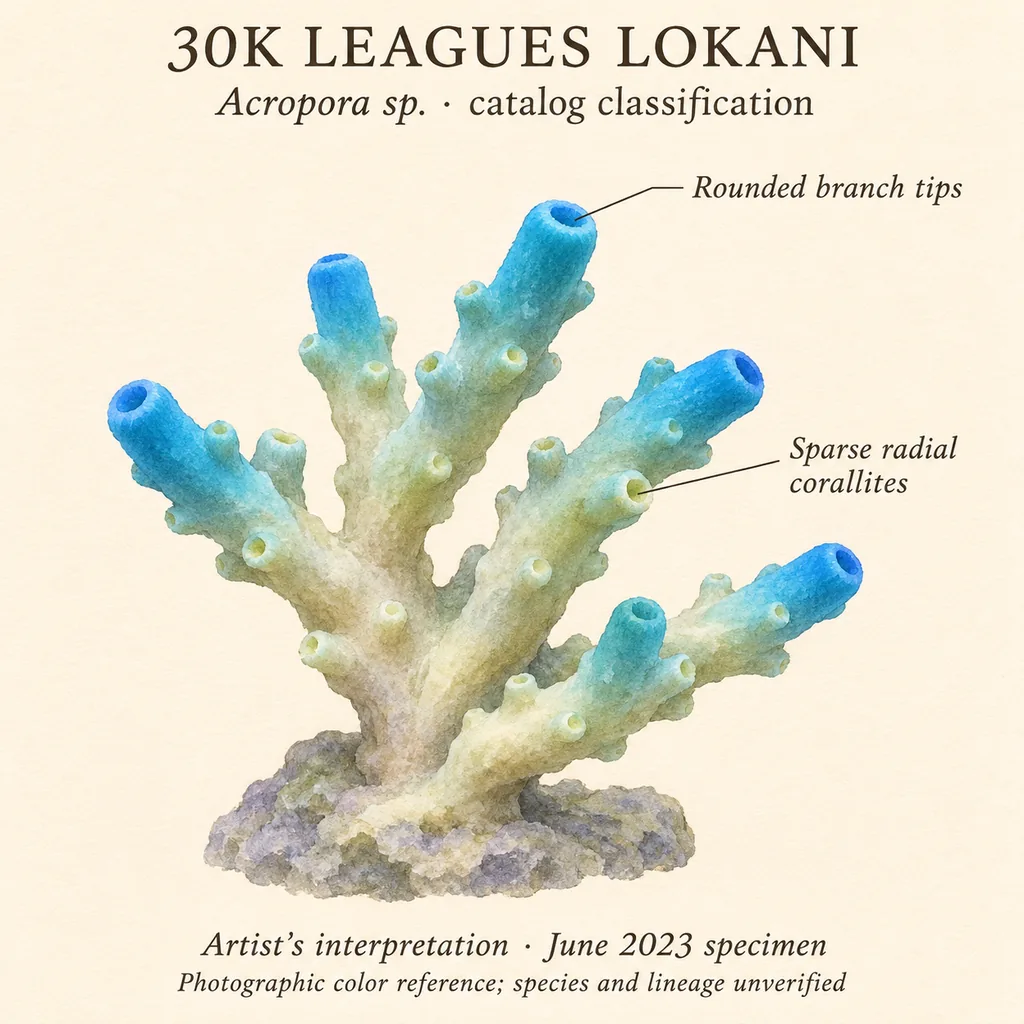
30K Leagues Lokani
Acropora sp.
Same genus
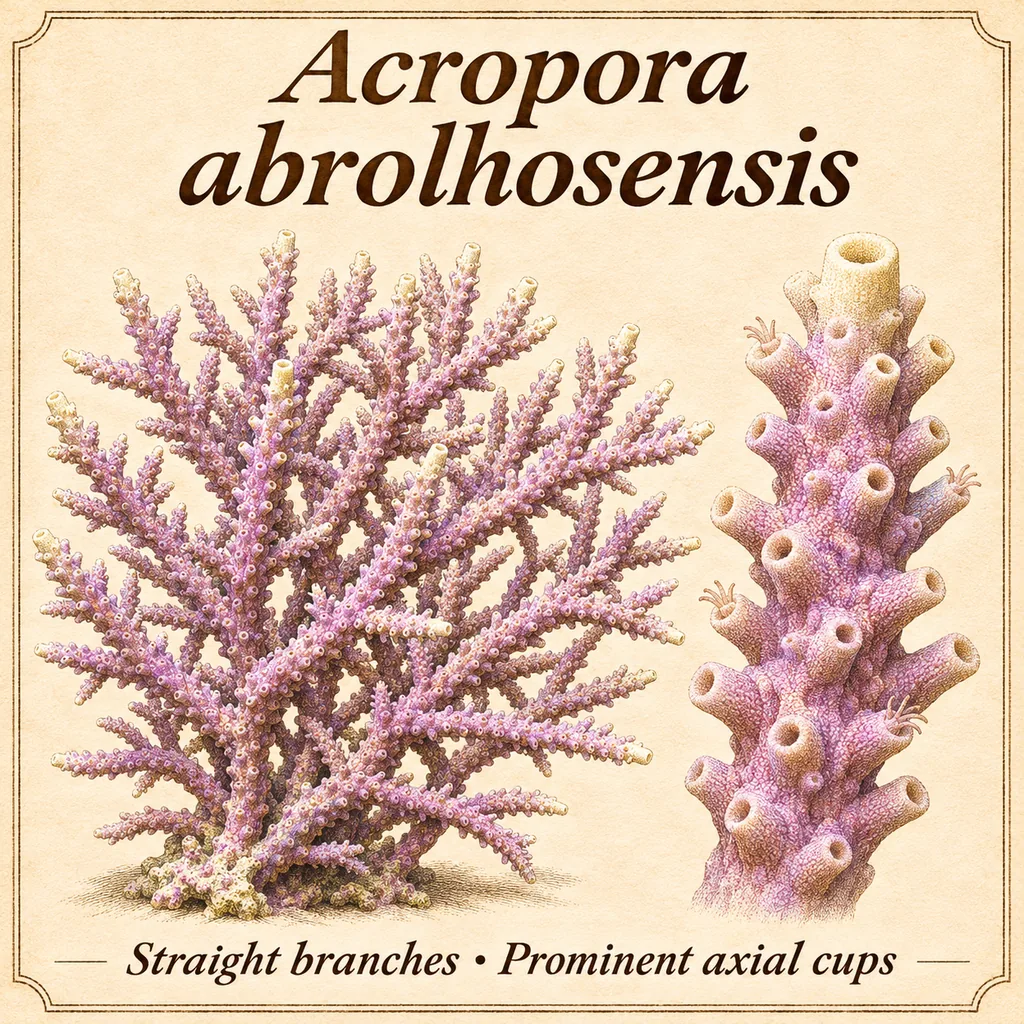
Acropora abrolhosensis
Acropora abrolhosensis
Same genus
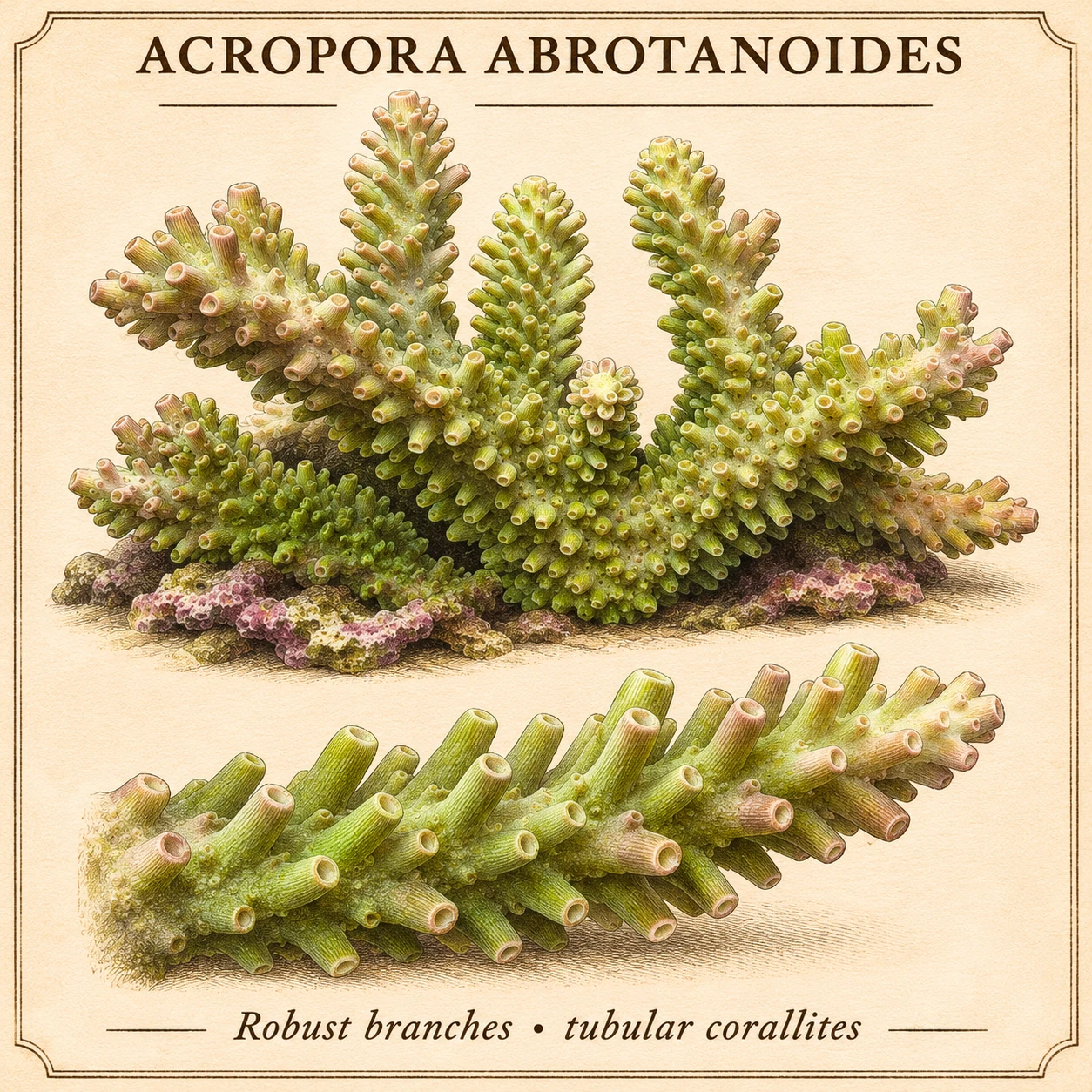
Acropora abrotanoides
Acropora abrotanoides
Same genus
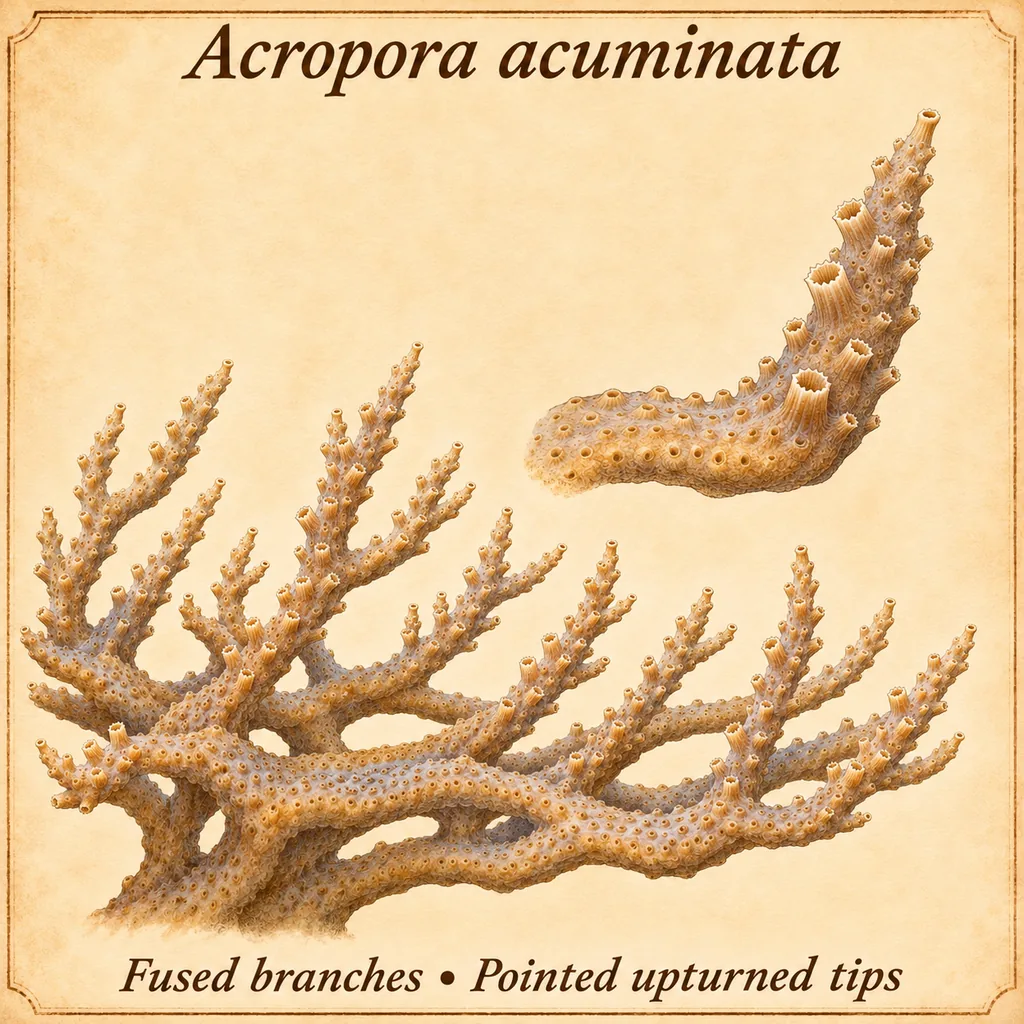
Acropora acuminata
Acropora acuminata
Same genus
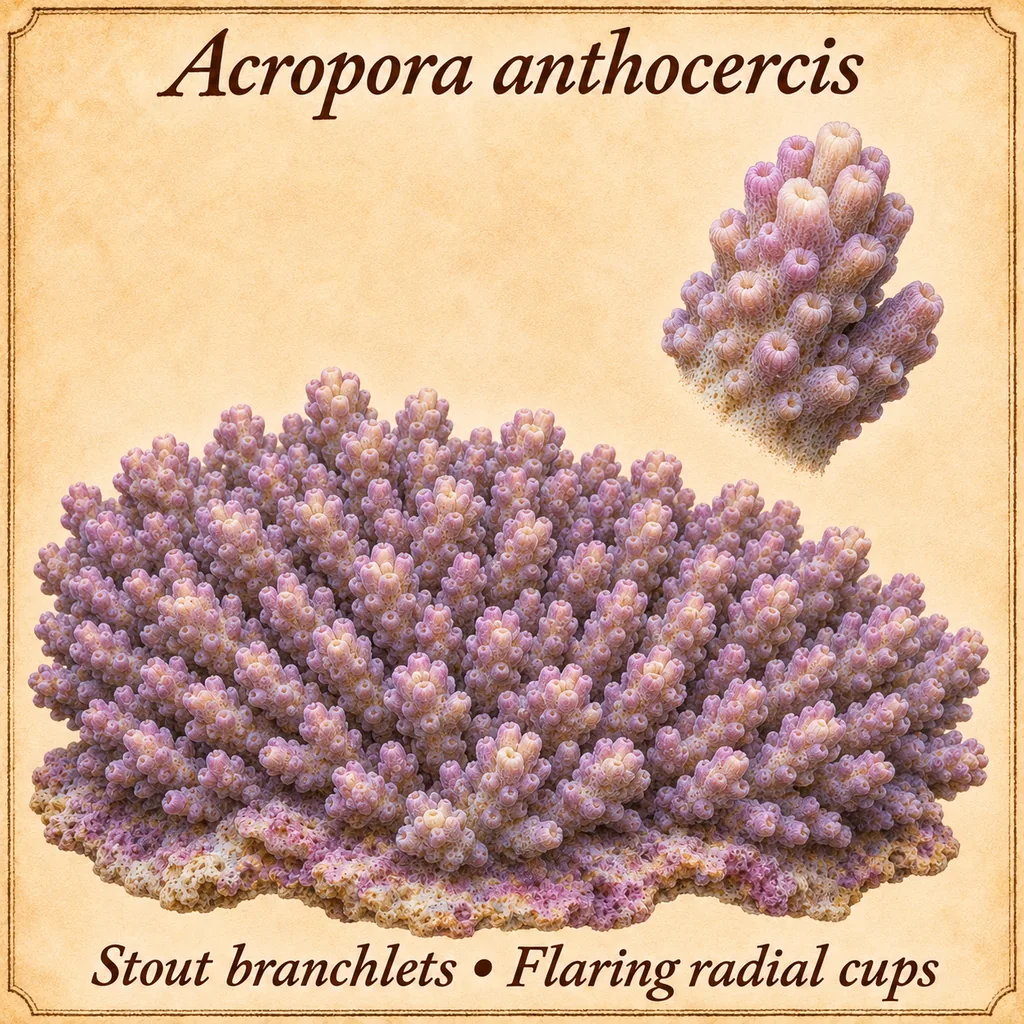
Acropora anthocercis
Acropora anthocercis
Same genus
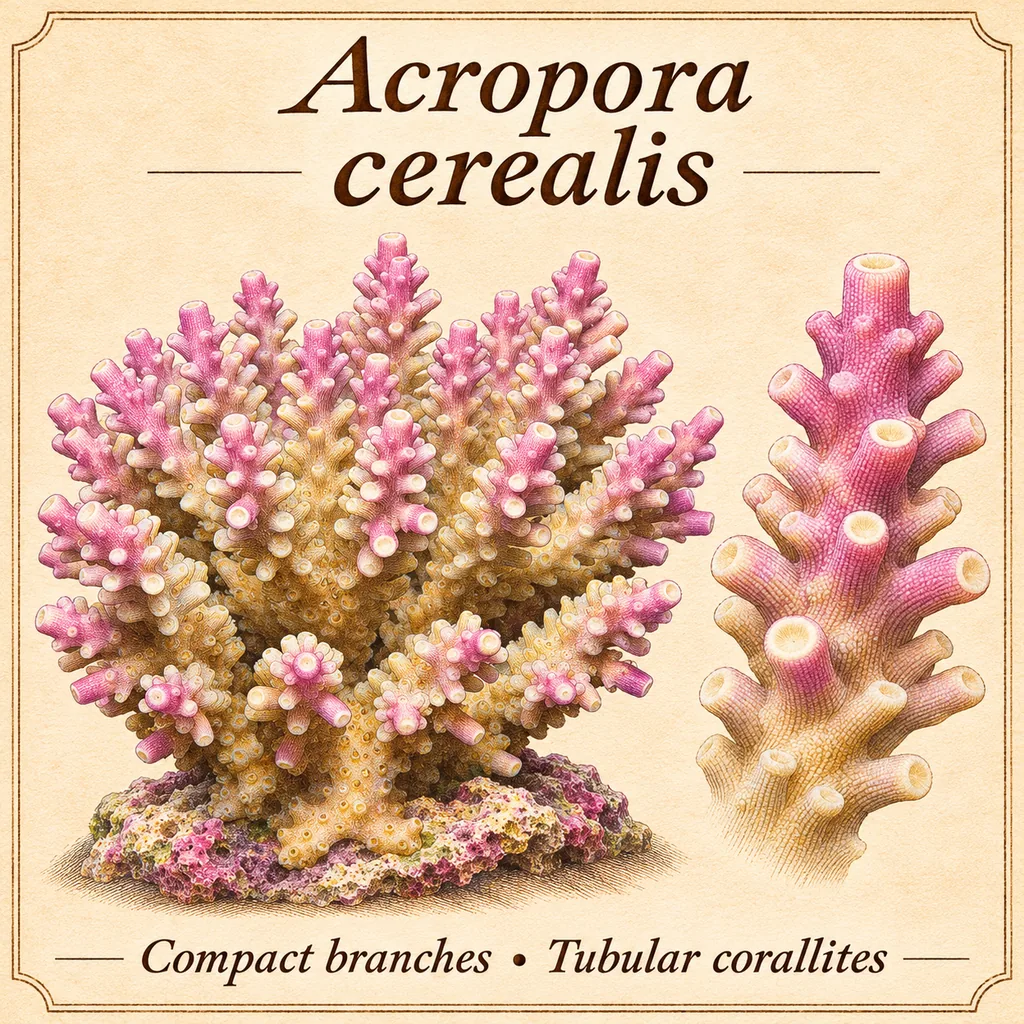
Acropora cerealis
Acropora cerealis
Same genus
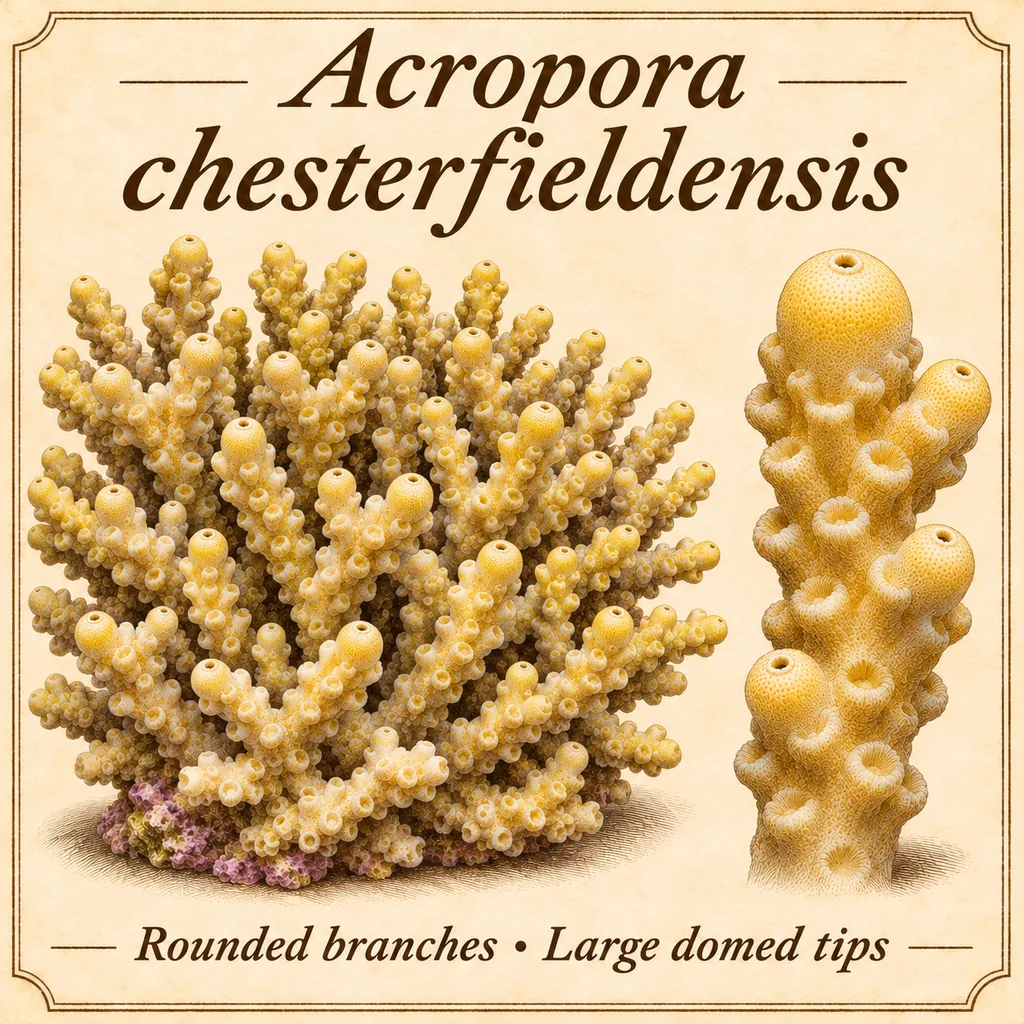
Acropora chesterfieldensis
Acropora chesterfieldensis
Same genus
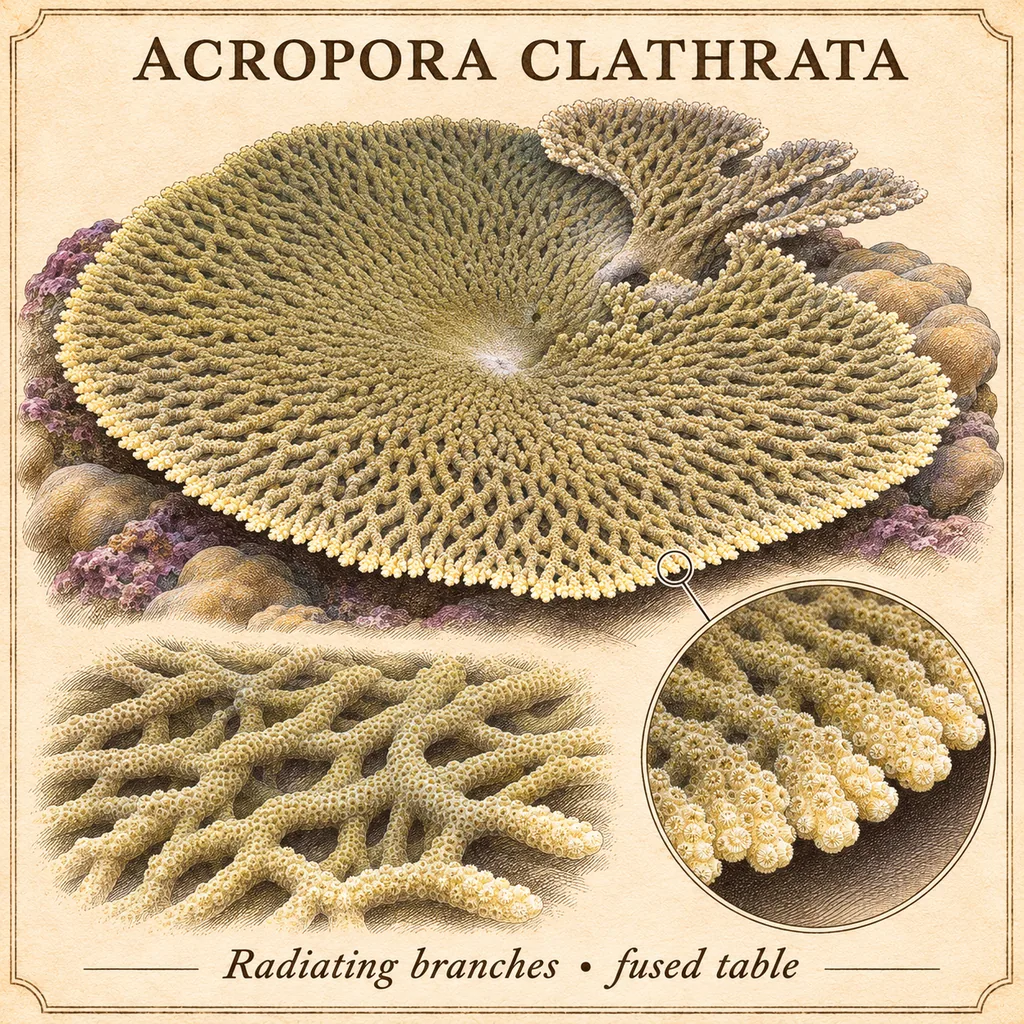
Acropora clathrata
Acropora clathrata
Same genus