
Armor of God
Palythoa sp.
Also known as: AoG, AOG
Care Summary
Armor of God is one of the classic large-polyp palythoa types every zoanthid collection eventually makes room for. The polyps are big — broad discs carried well above the mat — with a speckled, metallic face that runs orange to pink over a purple body, the speckle pattern shifting across each disc like hammered metal. Under blue light the oranges and pinks warm up and the purple base darkens, and a mature colony of a dozen polyps has a presence that small-polyp zoanthids cannot match.
Armor of God is traded as a Palythoa type, and it grows the way the large palys do: thick stalks rising from an encrusting mat, each polyp able to close down into a tough, leathery bud when disturbed. In the wild, Palythoa species colonize shallow reef rock and rubble zones, enduring strong sun and surge, and that toughness carries into the aquarium. This is a hardy coral once settled, and most losses happen in the first days after shipping or fragging rather than months into keeping it.
Care suits a beginner who respects the palytoxin warning below. Set the frag low to mid-level in medium light and medium flow, on rock it can encrust onto. It tolerates a wide range of light once acclimated — start new frags low and move them up over weeks — and stronger blue-leaning light brings out the pink and orange speckle that gives the strain its name. Standard reef parameters suit it: 77–79°F, salinity near 35 ppt, alkalinity 8–10 dKH, calcium 400–450 ppm. Keep flow moving across the colony so detritus does not settle between the stalks, where it can irritate polyps into staying closed.
Growth is moderate for a large paly and faster than the People Eater types: a settled colony buds new polyps around the edge of the mat through the season, and a single polyp can become a small colony across a year of steady conditions. It takes food readily — offer fine meaty coral food or small mysis over the open discs once a week with the pumps paused and the polyps will close around it. Give it room: the colony expands outward in every direction and will overgrow or sting slower neighbors planted inside its reach, so an island rock of its own is the cleanest placement.
Handle it with real care. Palythoa types are the zoanthid group most associated with palytoxin. Wear gloves when fragging or moving it, keep it away from open cuts, wash hands and tools well after handling, and never boil, steam, or pressure-wash rock that carries it.
Field notes — what keepers report
- Keepers report Armor of God as one of the hardier named palys, with colonies that close up tight after a move or a dip and then reopen within a day or two once conditions settle.
- The speckle pattern is the contested detail: some colonies show heavy orange-pink speckling over the whole disc, while others in lower light read mostly purple with the speckle concentrated near the mouth. Growers attribute the difference mainly to light intensity and spectrum rather than to different strains.
- Growth reports vary by placement — colonies given their own rock and regular feeding are reported to bud steadily, while colonies shaded under rockwork or crowded by faster zoanthids stall at a few polyps for months.
- Zoanthid keepers generally warn that a closed or shrunken colony is not always a lost one, and that large palys in particular can sit closed after stress and recover, so experienced keepers give a declining frag time and stable conditions before removing it.
Note on the photo: no openly licensed photo of this named strain itself is available, so the entry photo shows a wild Palythoa variabilis colony, a representative large-polyp Palythoa.
Care
Field Notes
Field Notes
Related species
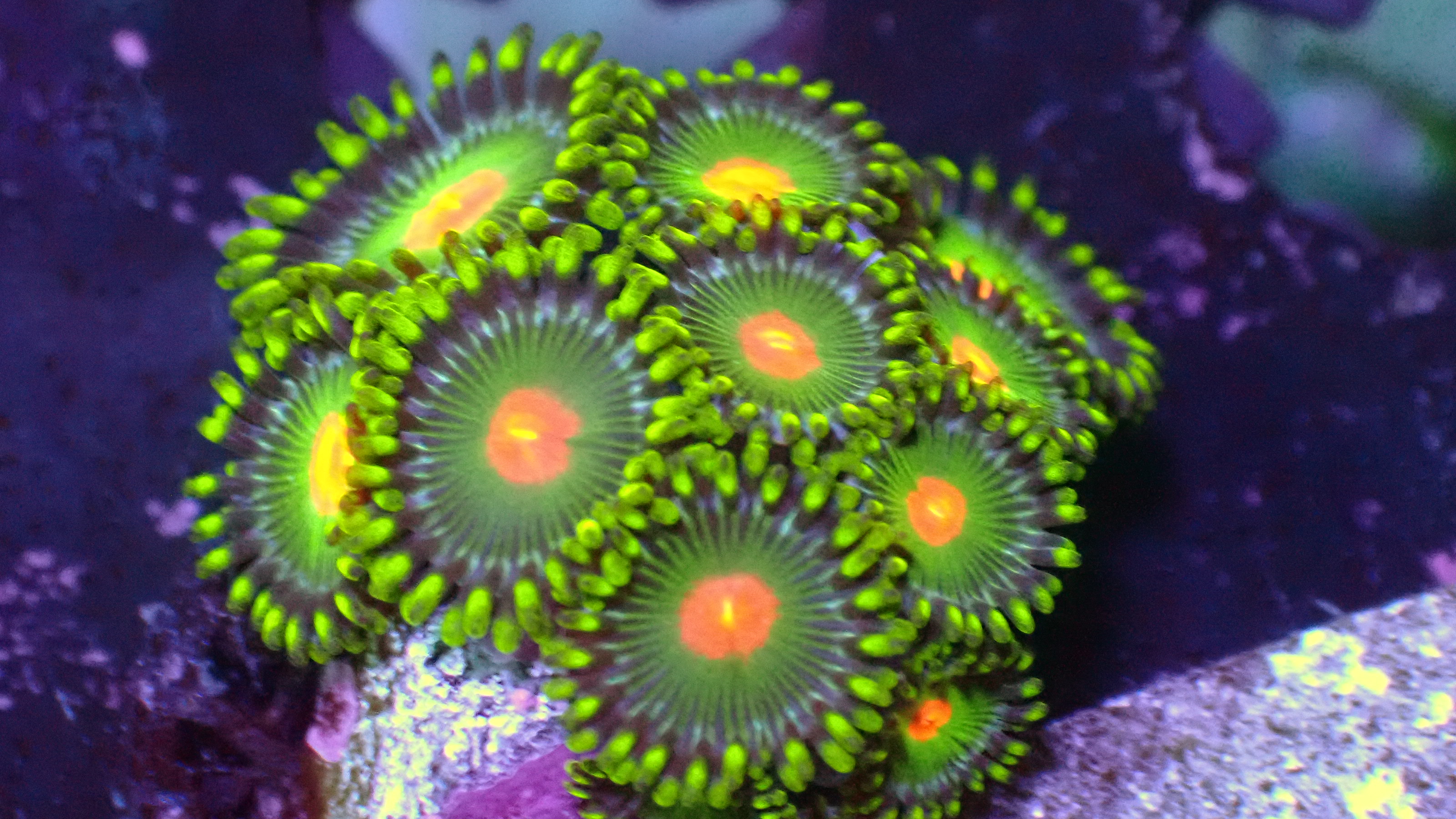
Green Bay zoas
Zoanthus sp
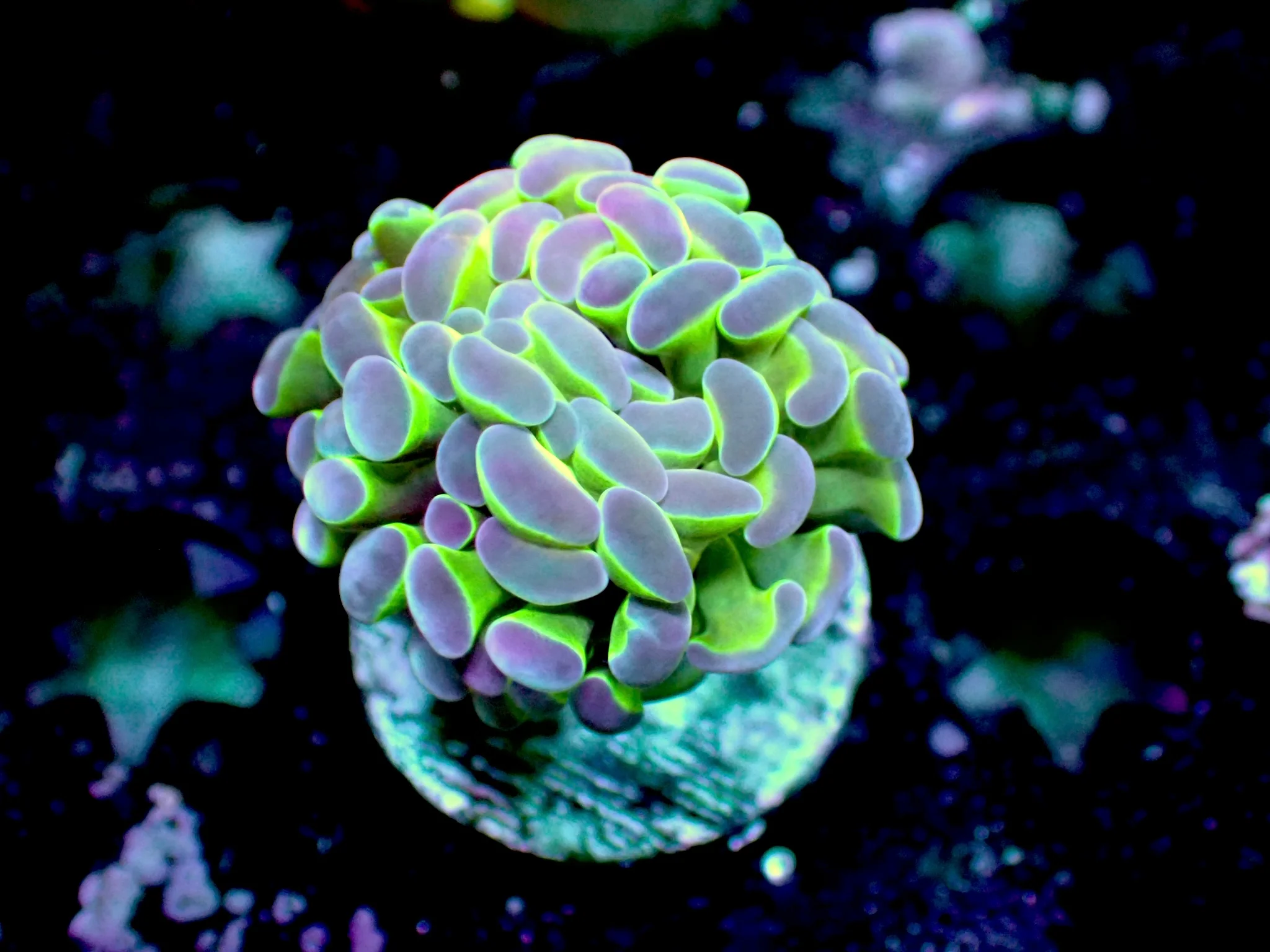
Hologram hammer
Fimbriaphyllia paraancora
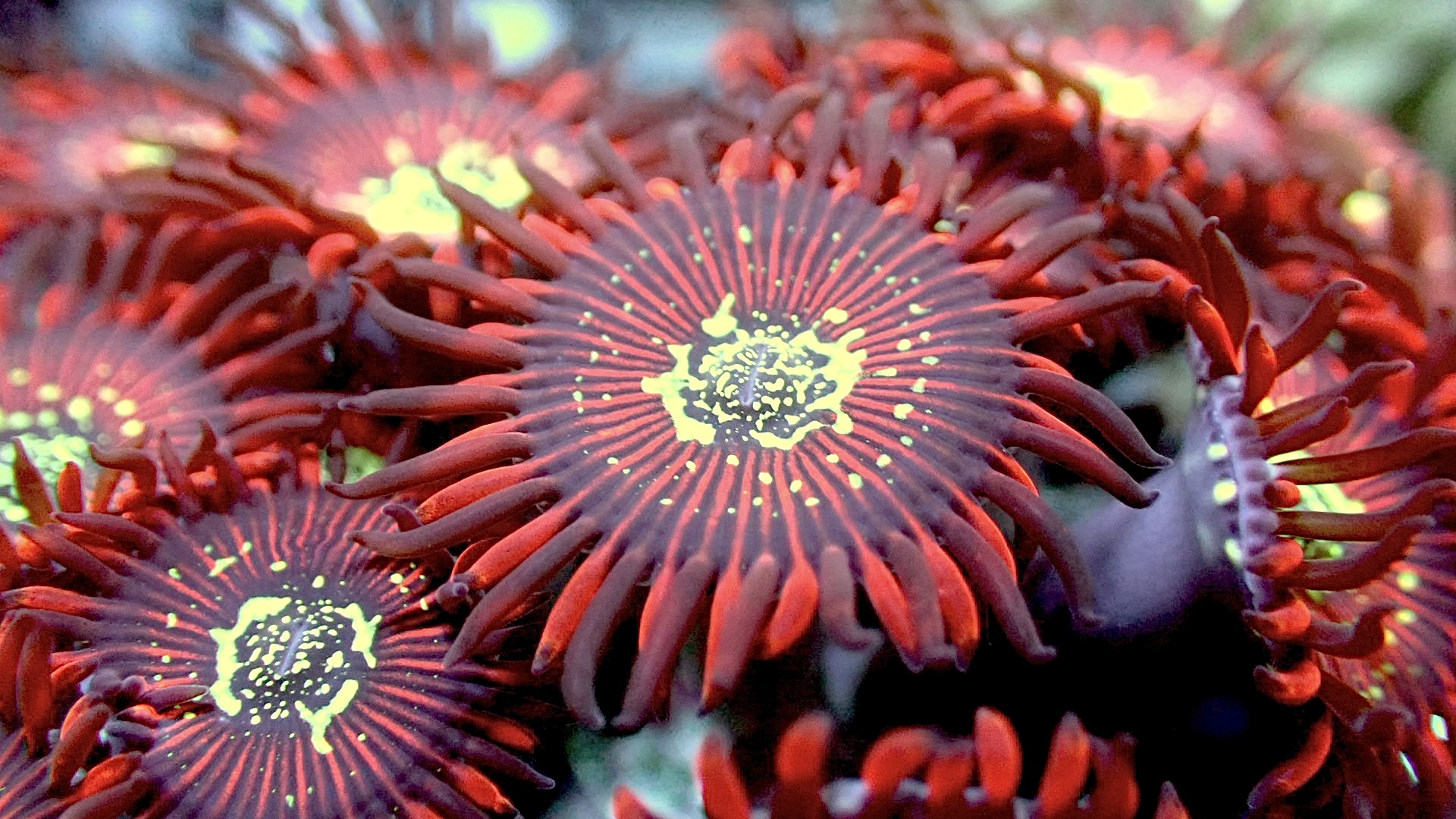
Magician zoanthids
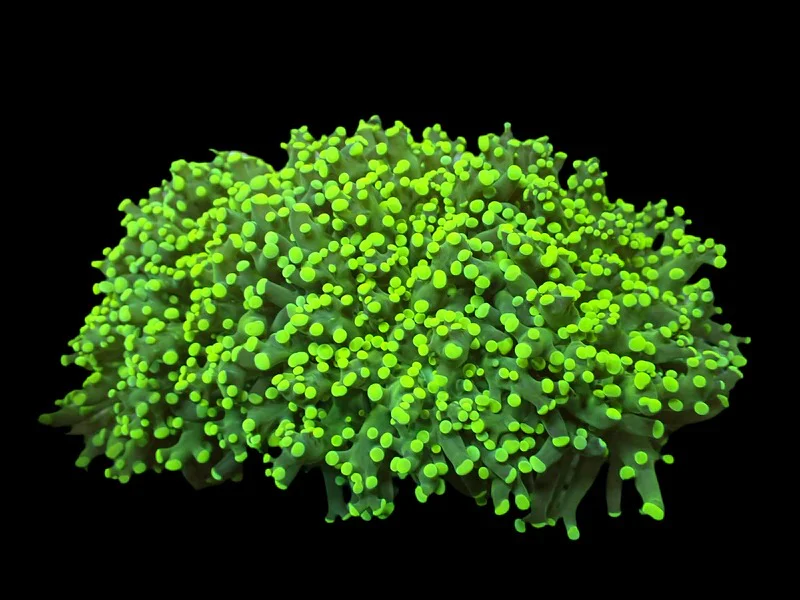
Frogspawn
Fimbriaphyllia divisa
Green star polyps
Pachyclavularia violacea
Lemon lime favia
Favites sp
Orange oxide zoanthids
Rainbow infusion zoanthids
Zoanthus sp