Gallery
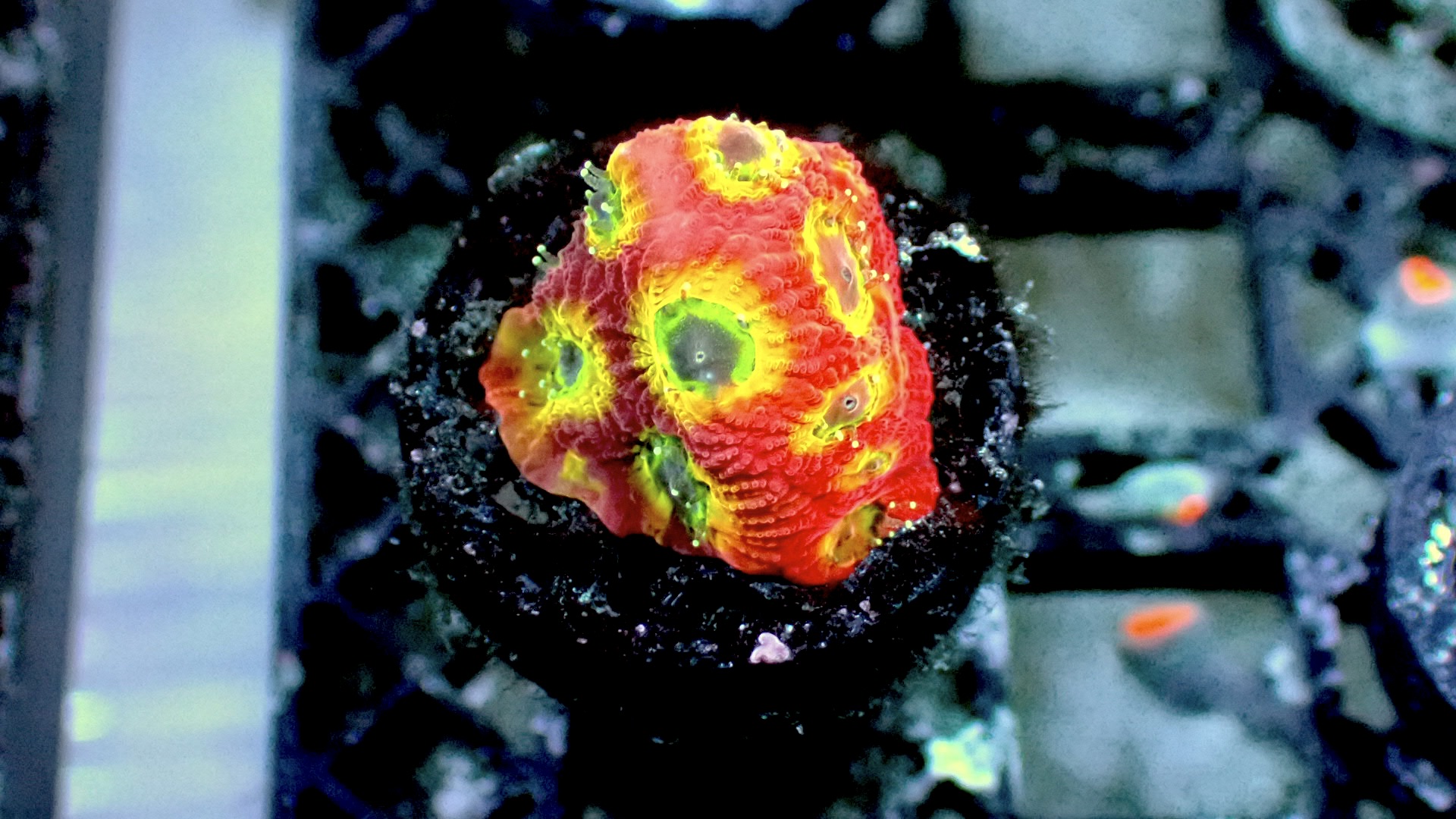
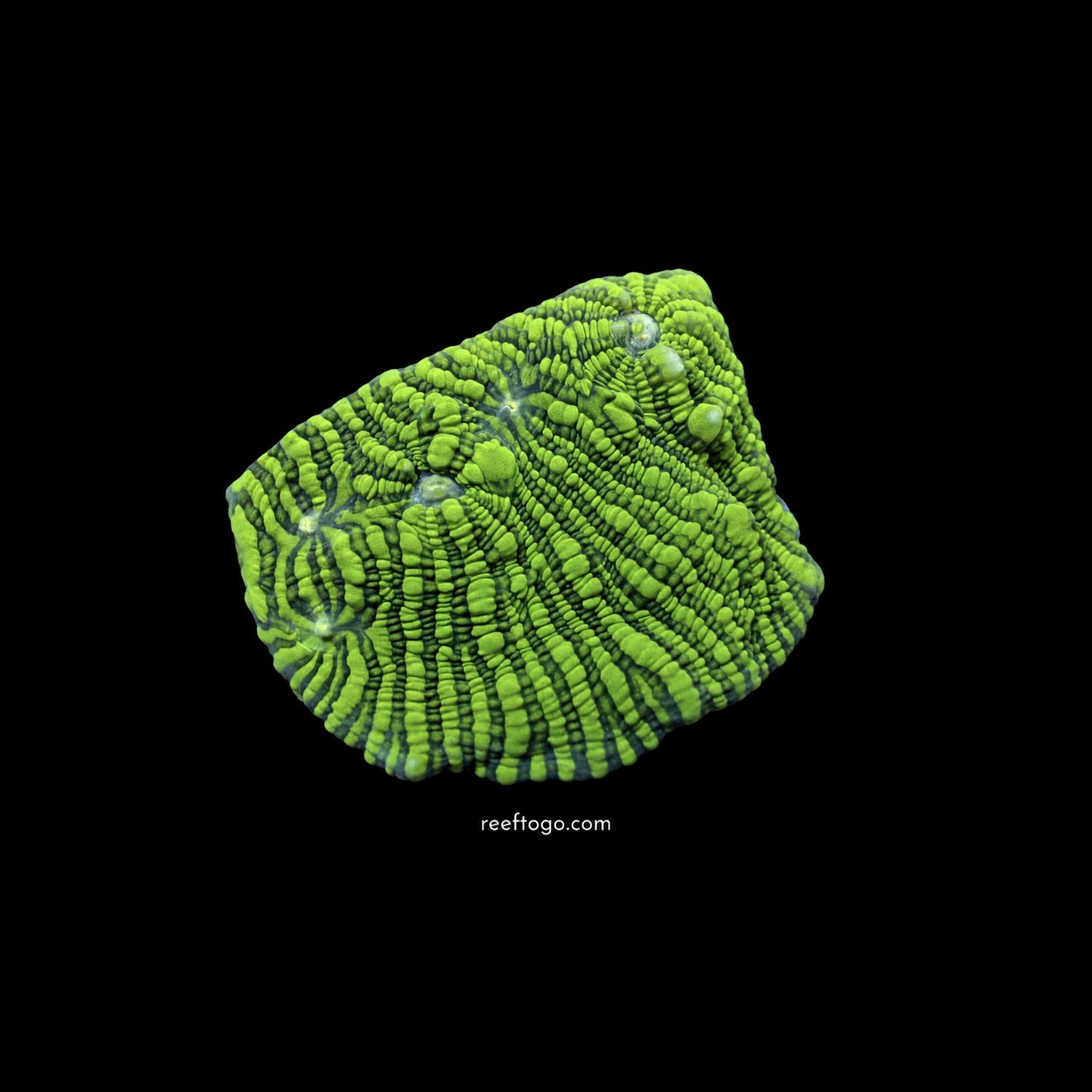
Lemon lime favia is a named favia-type coral, listed as Favites sp. Corals sold under the favia name grow an encrusting to mounding skeleton with tightly packed corallites, each holding a single fleshy polyp. The lemon lime pattern pairs yellow-green centers or tissue with contrasting darker grooves between corallites, giving the colony a bright, divided look when it is inflated and feeding well. At night, short sweeper tentacles emerge along the corallite walls.
The entry lists beginner care, medium light, medium flow, bottom placement, moderate aggression, and moderate growth. Place it low in the tank on stable rockwork or a flat base near the bottom. Medium light at that level keeps the yellow-green tones clear. Strong light from above can wash the color pale and keep tissue tight against the skeleton, so raise a settled piece slowly and only in small steps if it looks hungry for more.
Medium flow should cross the surface without blasting it. Steady movement clears sand and detritus off the colony, which matters for a low placement where waste settles. Flow aimed straight at the face can keep polyps retracted on that side. A broad, indirect pattern gives even inflation across the whole mound.
Aggression is the main spacing concern. The moderate rating reflects nighttime sweepers that can reach beyond the visible tissue and sting neighbors, especially other LPS sharing the bottom zone. Leave several inches of clearance around the colony and check its reach with a flashlight after dark before trusting a tight placement. It can also lose to stronger neighbors, so keep it clear of torches, hammers with long sweepers, and other aggressive LPS.
Feeding supports color and growth. At night or in dim light, offer fine meaty food or LPS pellets across the corallites once or twice a week, with flow lowered so food can settle and be taken in. Small amounts spread widely beat a heavy pile on one section. The colony still depends on light, and excess food left on the surface invites algae and pests at the base.
Growth is moderate and mostly encrusting. The edge advances over its base, new corallites form, and the mound thickens over months in a stable tank. Stable alkalinity, calcium, and magnesium support the skeleton. Tissue that pulls back at the edge, corallites that stay pinched, or pale patches spreading across the face usually point to light, flow, or a sting from a neighbor rather than a feeding gap alone.
Common pitfalls include burying the edge under sand on a low placement, parking it within sweeper range of a stronger coral, and judging its health only in daytime when its feeders stay hidden. A nighttime check shows both its feeding response and its true reach.
Field notes — what keepers report
- Nighttime behavior dominates keeper reports. Keepers describe sweeper reach that surprises them relative to the compact daytime footprint, and several describe moving bottom neighbors after a flashlight check showed contact. Other keepers with wide spacing report no sting events at all over long periods.
- Color reports split by light intensity. Keepers at low to medium light describe strong yellow-green contrast, while keepers who placed the coral higher describe washed tones that recovered after a move back down. Reports treat slow light changes as important, because color recovery gets described in weeks rather than days.
- Feeding reports lean positive. Keepers who offer small nighttime feedings describe fuller corallites and a faster advancing edge, while keepers who never target-feed describe a colony that holds color and grows more slowly. Reports agree that food left sitting on the colony through the next day signals too much was offered.
Field Notes
Related species
Fascination favia
Favites sp
Same genus
Joker favia
Favites sp
Same genus

Favites Brain Coral
Favites pentagona
Same genus
Hologram hammer
Fimbriaphyllia paraancora
Similar care · LPS

Brain Coral
Platygyra daedalea
Similar care · LPS

Candygram hammer
Fimbriaphyllia paraancora
Similar care · LPS
Convict chalice
Echinophyllia sp
Similar care · LPS

Dragon soul favia
Favia sp
Similar care · LPS