Austera Acropora
Acropora austera

MDC Seamarc Maldives · CC BY-SA 4.0 · source
Gallery
A young reef fish can hide inside a coral tree. On South African reefs, juvenile fish tuck into the gaps between Austera branches. In your tank, those same gaps are where you want water to move. Give this Acro a bright perch and room to branch out.
History of the coral
1. Meet the original Austera. James Dwight Dana described this coral in 1846 as Madrepora austera. Today its name is Acropora austera.
2. From spawn to speck. Austera can spawn in aquariums. Its young settle and start adding new polyps while they’re still tiny. A frag from a named aquarium line comes with a different history, so keep its original grower label.

How they live in the wild
3. From the Maldives to the Pacific. This Acro lives across the Indo-Pacific. It forms tree-like colonies with tapering branches. Look for a cup at each growing tip and smaller cups along the sides.
4. A reef with moving water. Austera grows on upper reef slopes where waves stir the water. It also lives in reef flats, back reefs and lagoons. At Rowley Shoals it has been recorded on outer slopes from 16 to 35 meters, where light changes with depth.

Light and flow
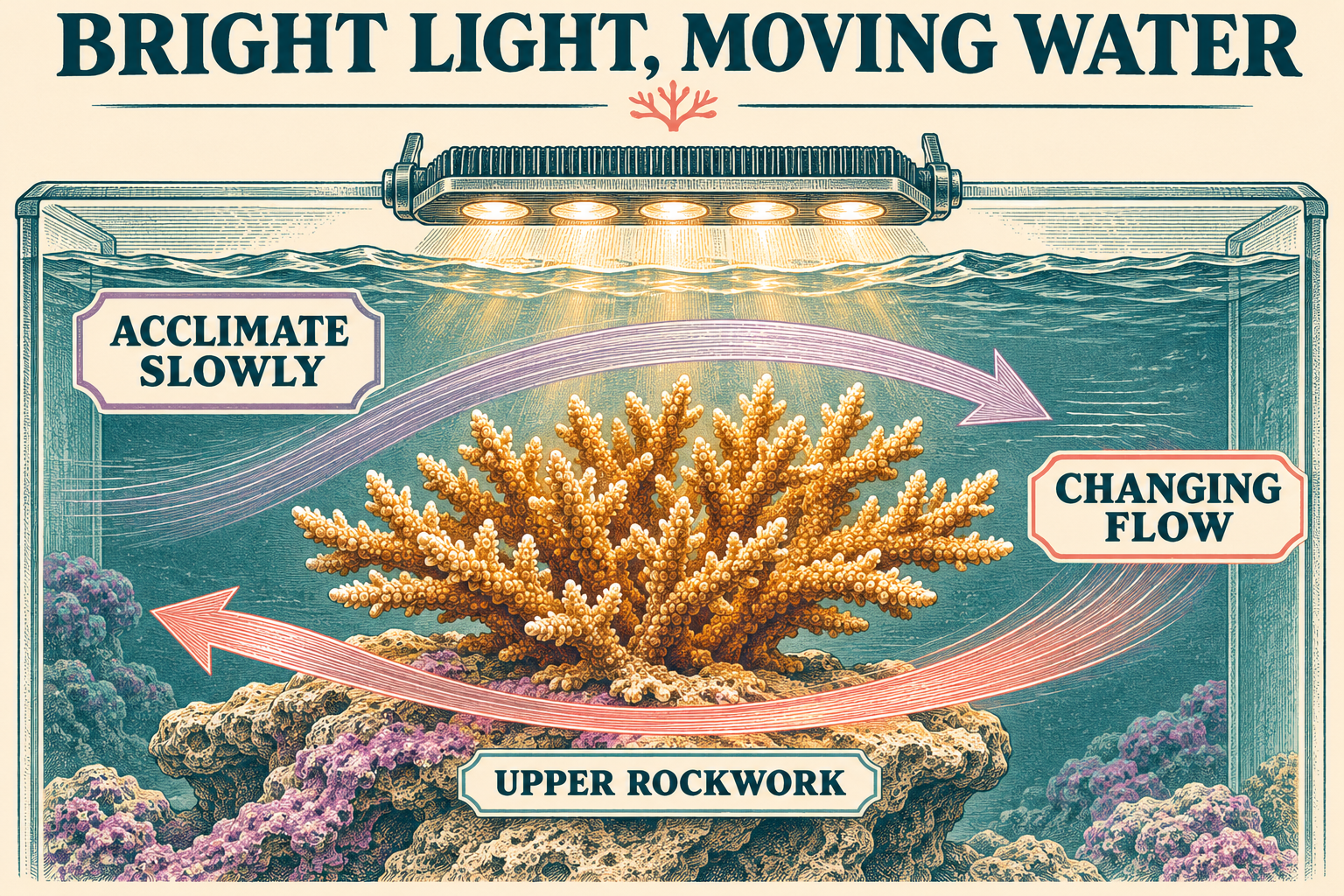
5. Bring up the light in steps. Start a new frag under gentler light. Increase exposure as it settles, then choose a bright upper perch. Check for paling after each change.
6. Let the current turn. Use strong, changing flow that reaches the branch bases. Aim pumps past the coral so water moves through the gaps. Redirect the flow if debris settles between branches.
Keep the water steady
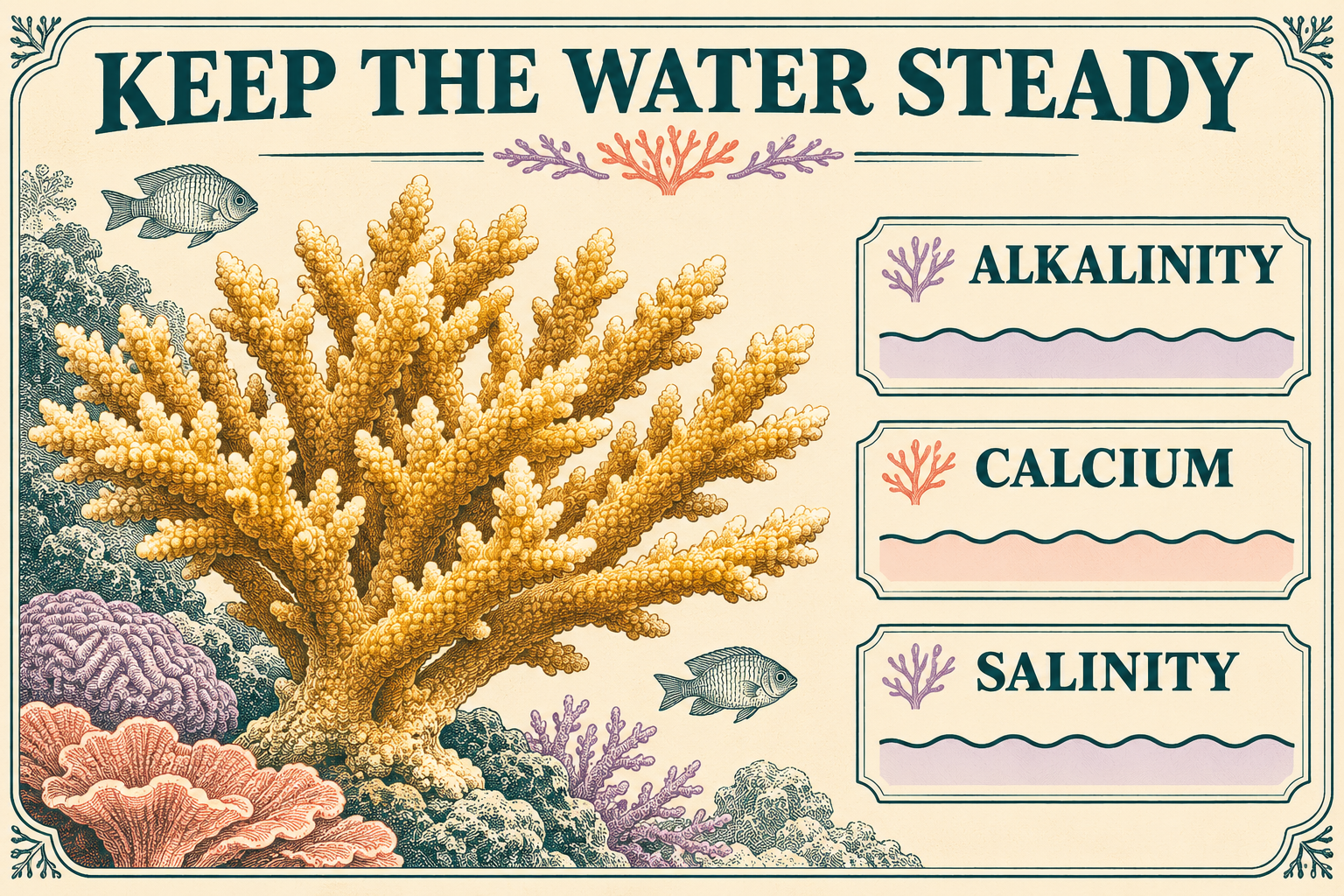
7. Test before you dose. Check alkalinity, calcium and salinity regularly. Match dosing to the tank’s measured use. Make small changes so you can see what each adjustment does.
8. Keep feeding simple. Feed the reef normally and watch nutrient trends. Keep your routine steady when you move a frag. Skip a special amino acid or carbon dosing schedule just to chase color.
Space for the branches
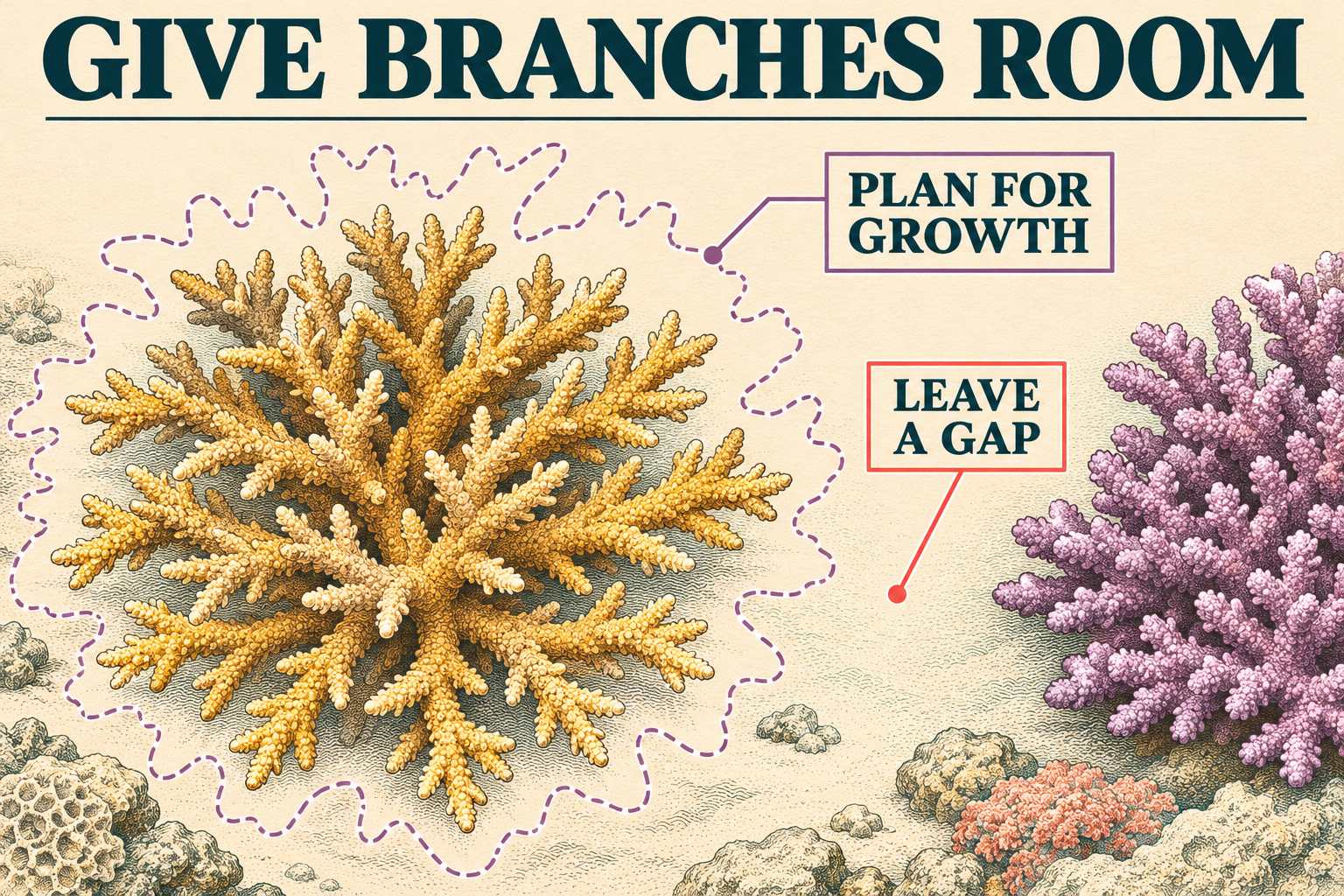
9. Plan for the wider crown. Leave open space around the frag as branches extend. Keep other light-loving corals out of the shade you expect underneath. Check those gaps as the colony fills in.
10. Leave yourself a viewing lane. Place the frag where you can see the base without lifting it. Take photos from the same angle to spot new growth or exposed skeleton.
Field notes
11. Two tanks, two outcomes. One keeper’s Austera-labeled frag grew well in bright light and strong flow. Another keeper saw a yellow-tip frag lose tissue during a broader tank problem and couldn’t pin down the cause. Check light changes, salinity and alkalinity before adjusting several things at once.
12. Know where to look. Inspect new frags and their plugs away from the display. Look along the base and under branches for pale bite marks, flatworms or eggs. Isolate suspicious frags for another look.
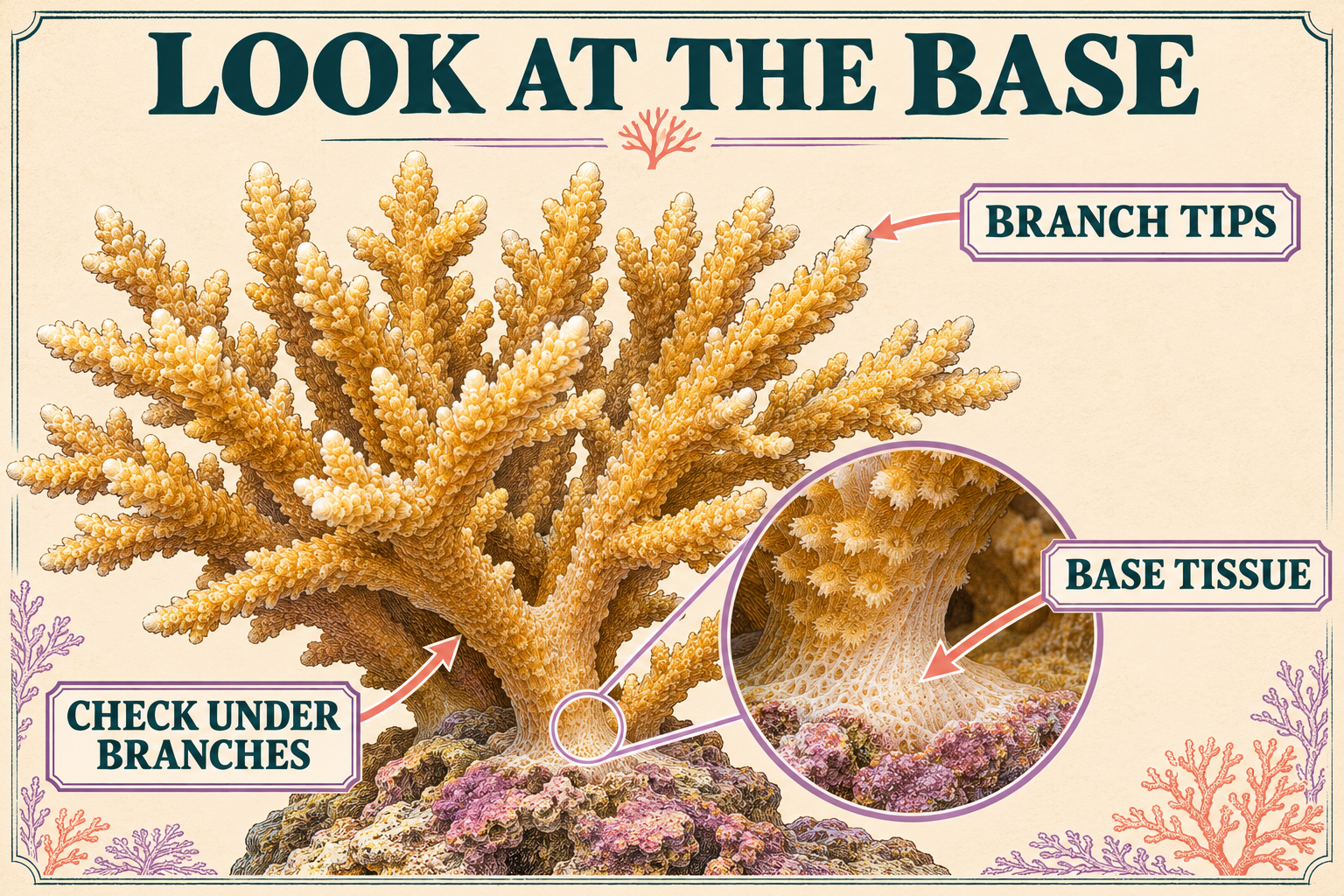
Start with a bright spot, moving water and an open view of the base. Take a photo when you set the frag down. As it grows, the gaps between branches are worth watching as closely as the tips.
Photo credit: [MDC Seamarc Maldives via Wikimedia Commons](https://commons.wikimedia.org/wiki/File:Acropora_austera_Maldives_macro.jpg), [CC BY-SA 4.0](https://creativecommons.org/licenses/by-sa/4.0/).
Field Notes
Related species
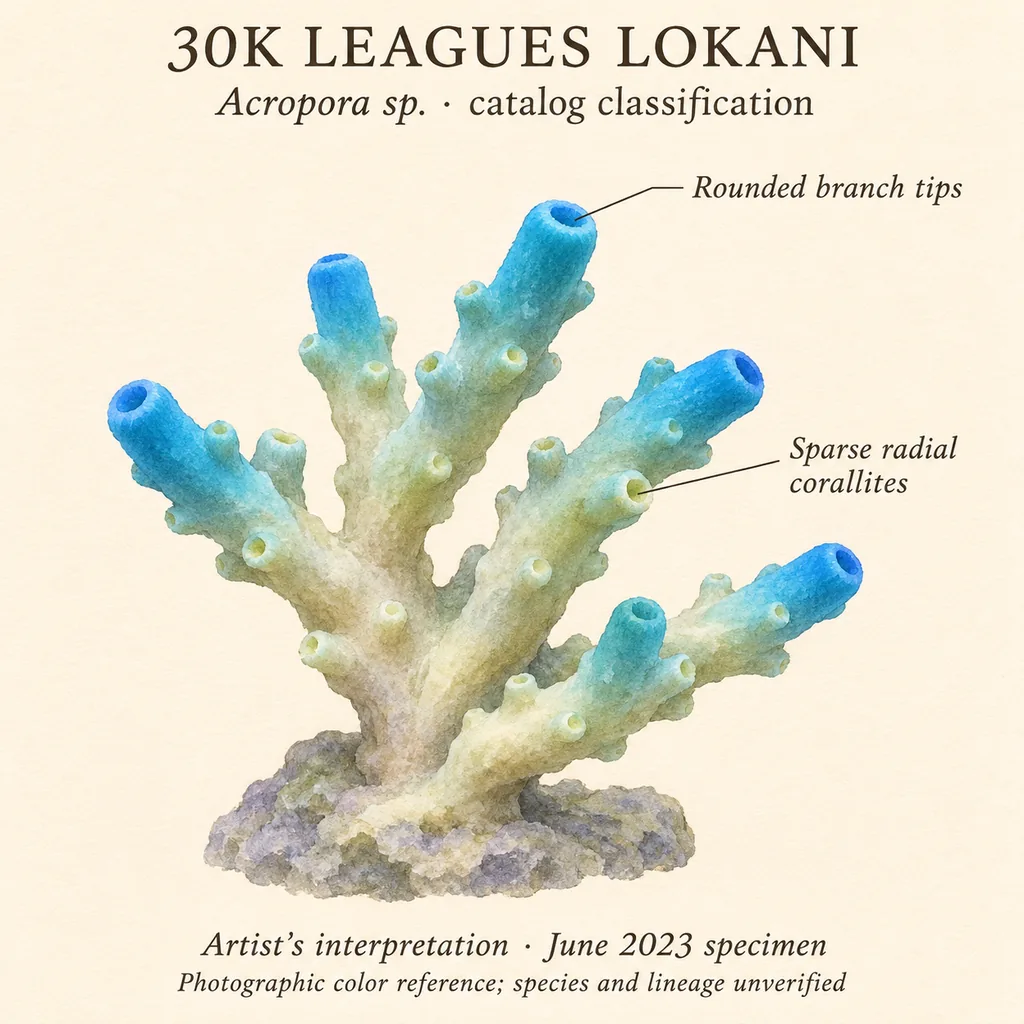
30K Leagues Lokani
Acropora sp.
Same genus
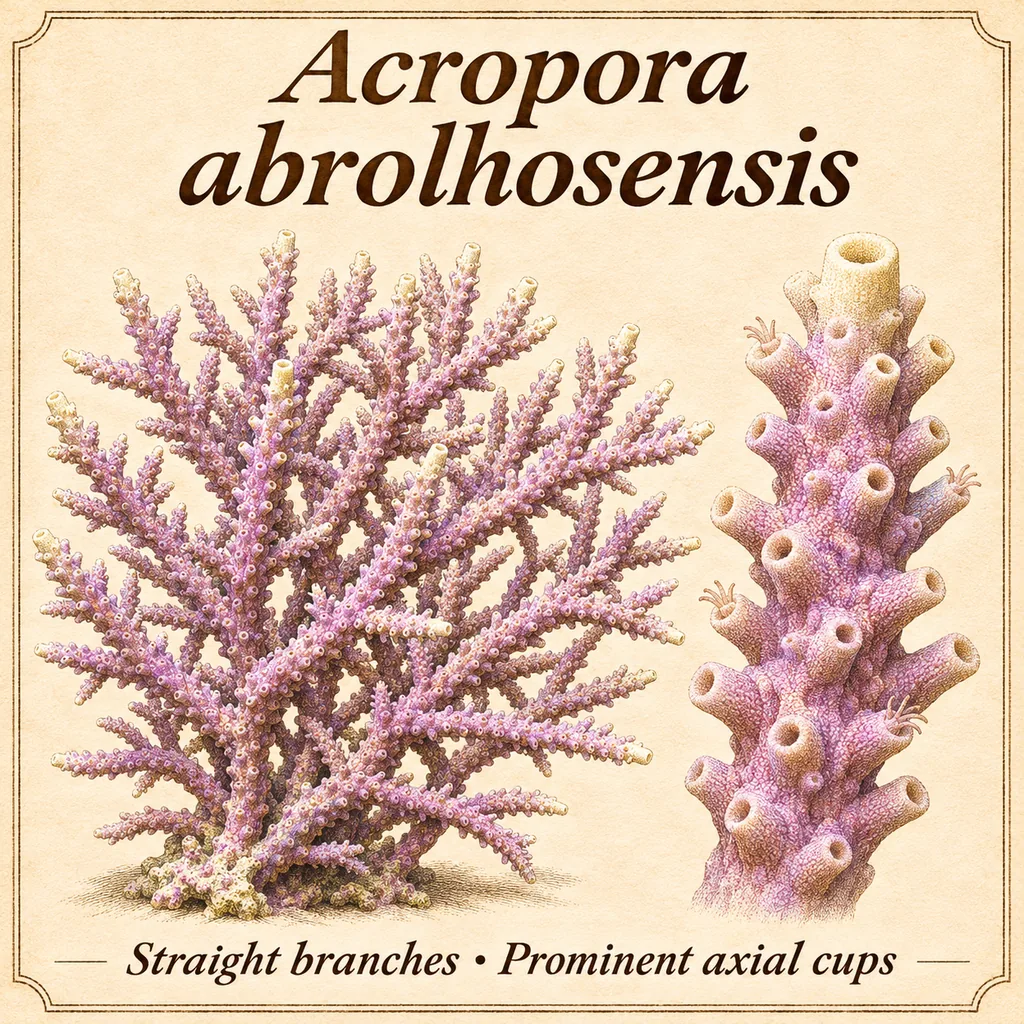
Acropora abrolhosensis
Acropora abrolhosensis
Same genus
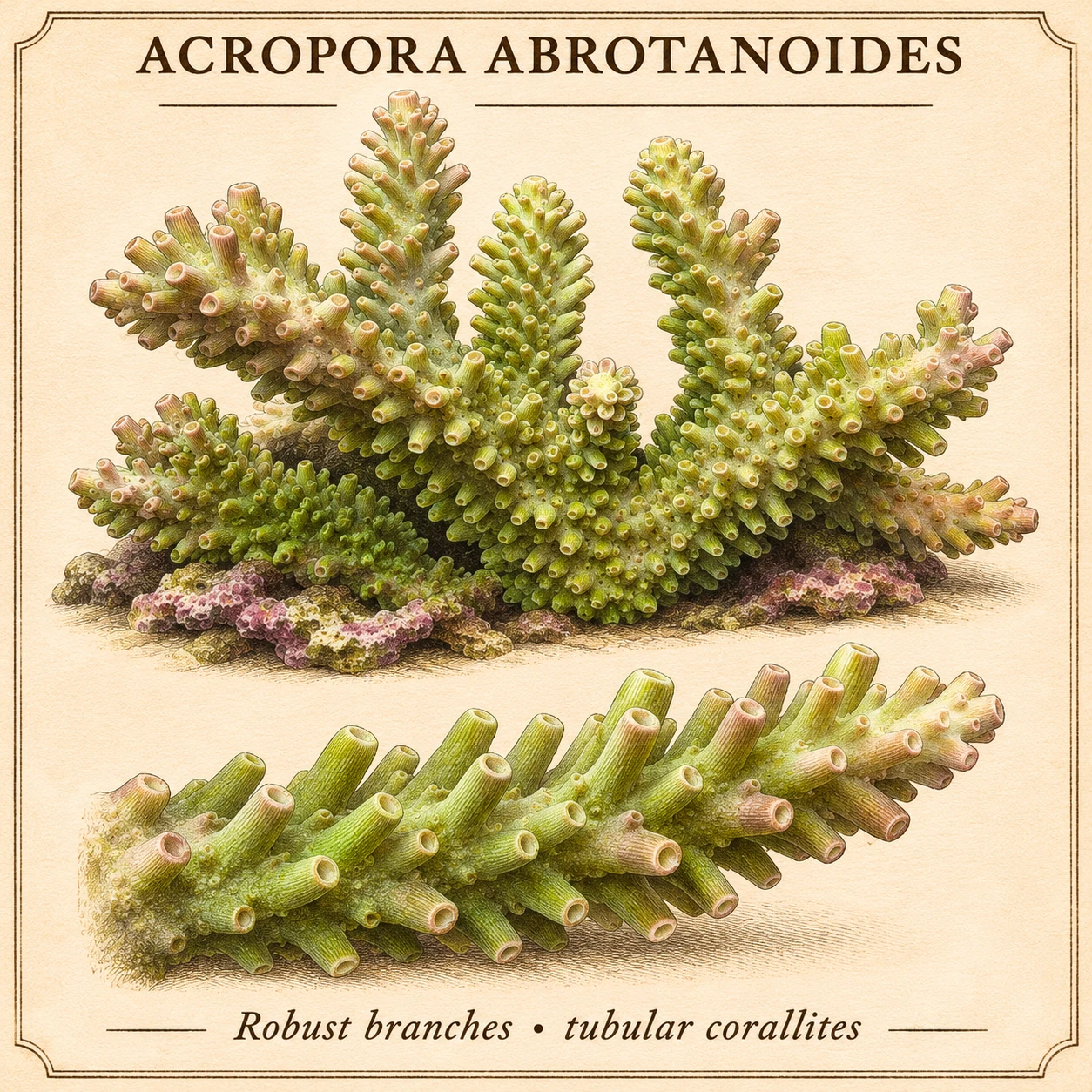
Acropora abrotanoides
Acropora abrotanoides
Same genus
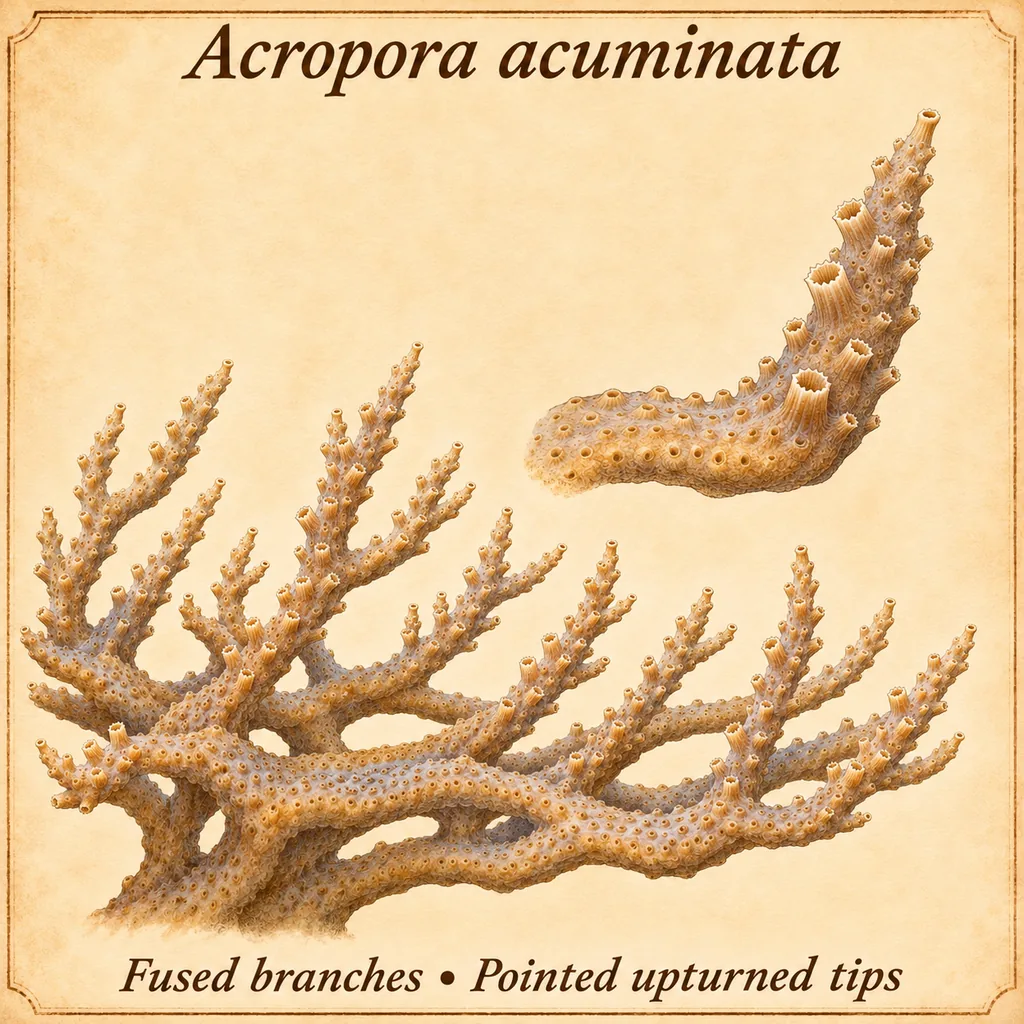
Acropora acuminata
Acropora acuminata
Same genus
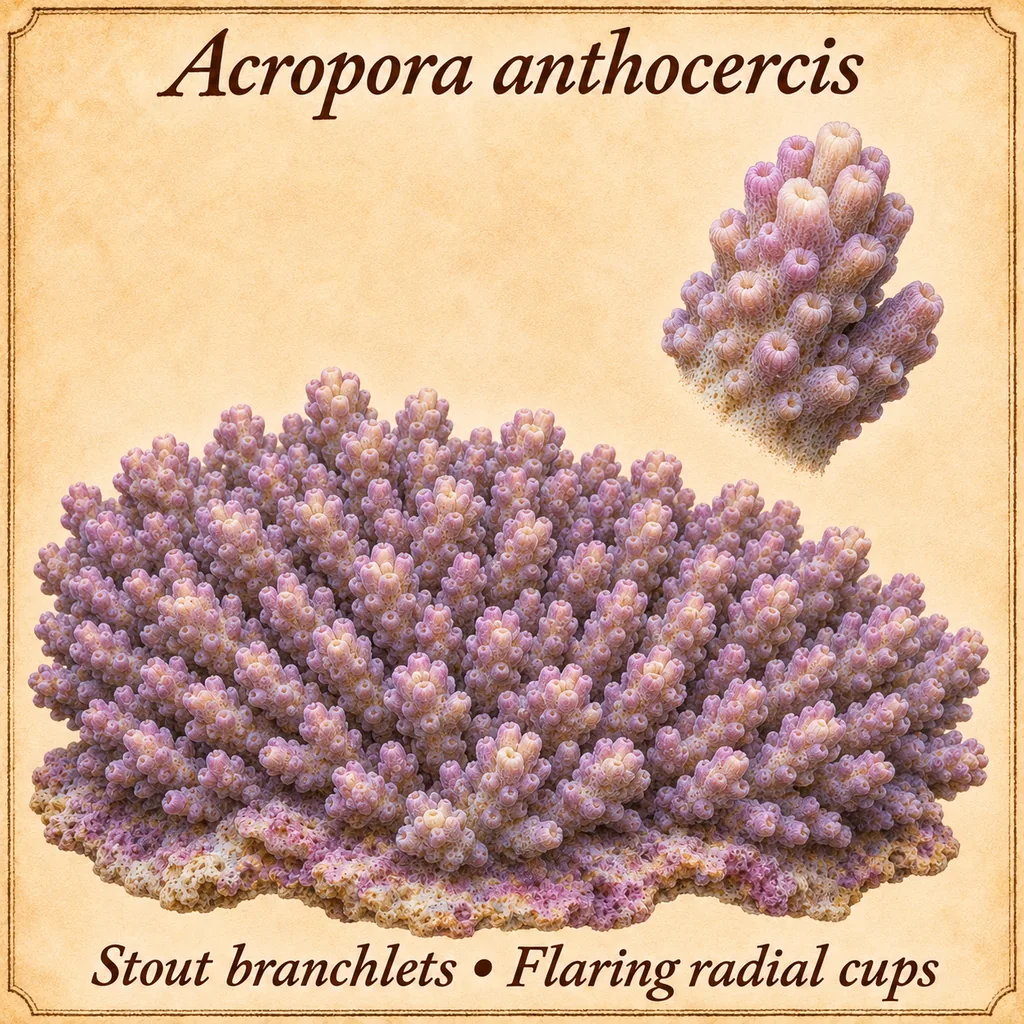
Acropora anthocercis
Acropora anthocercis
Same genus
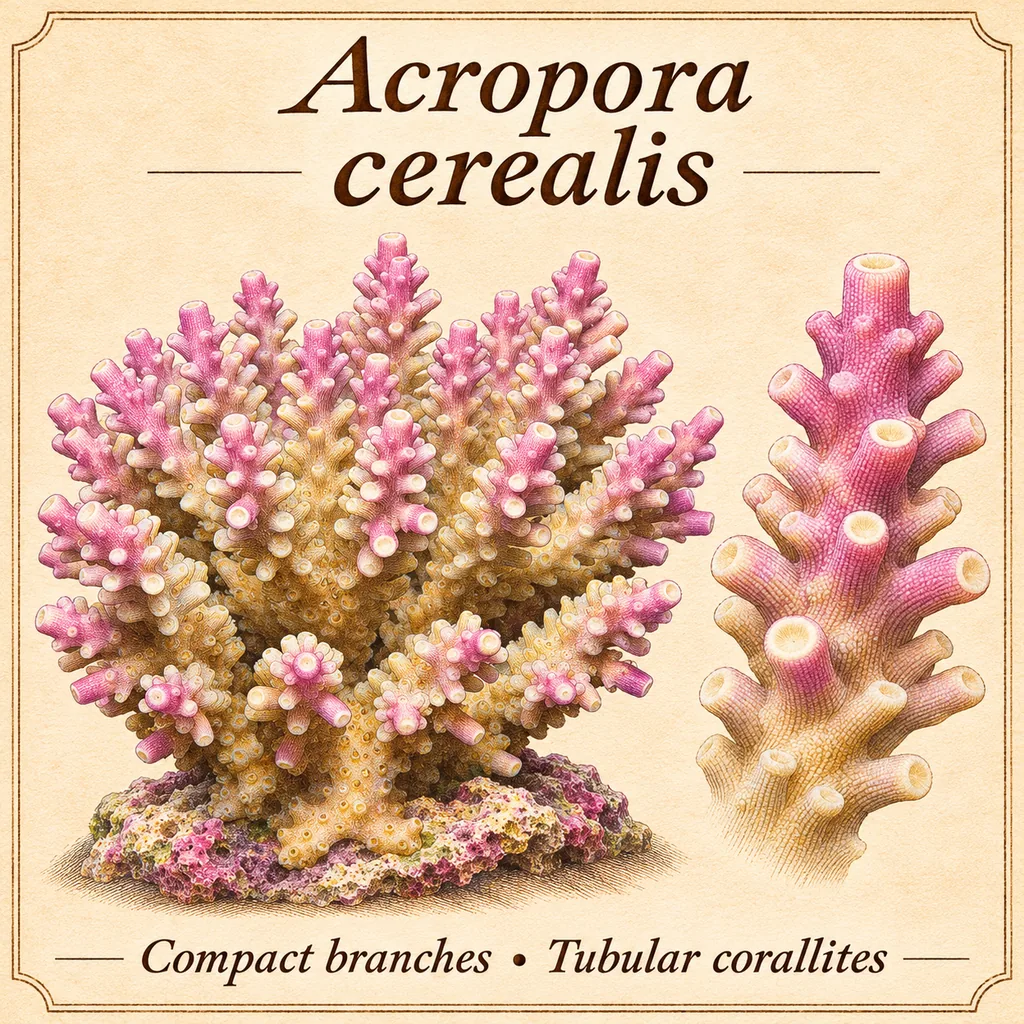
Acropora cerealis
Acropora cerealis
Same genus
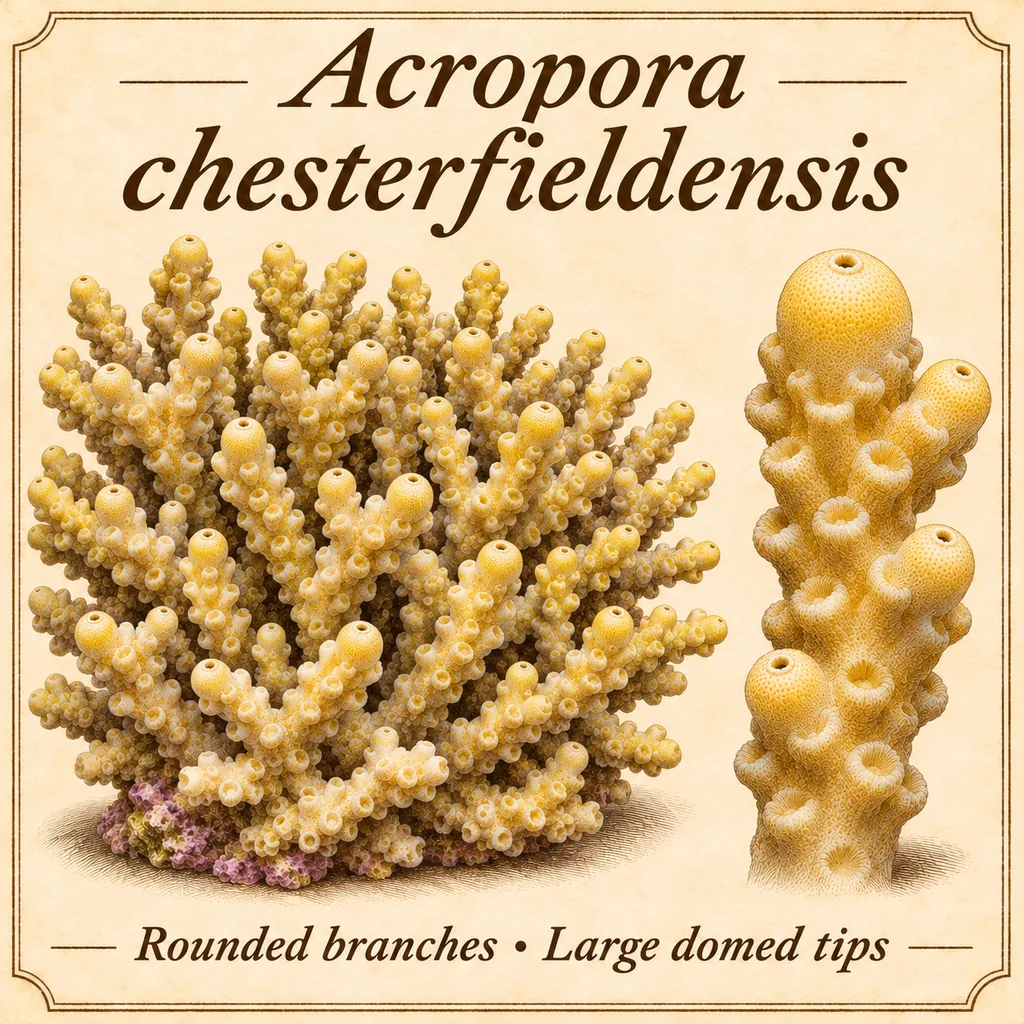
Acropora chesterfieldensis
Acropora chesterfieldensis
Same genus
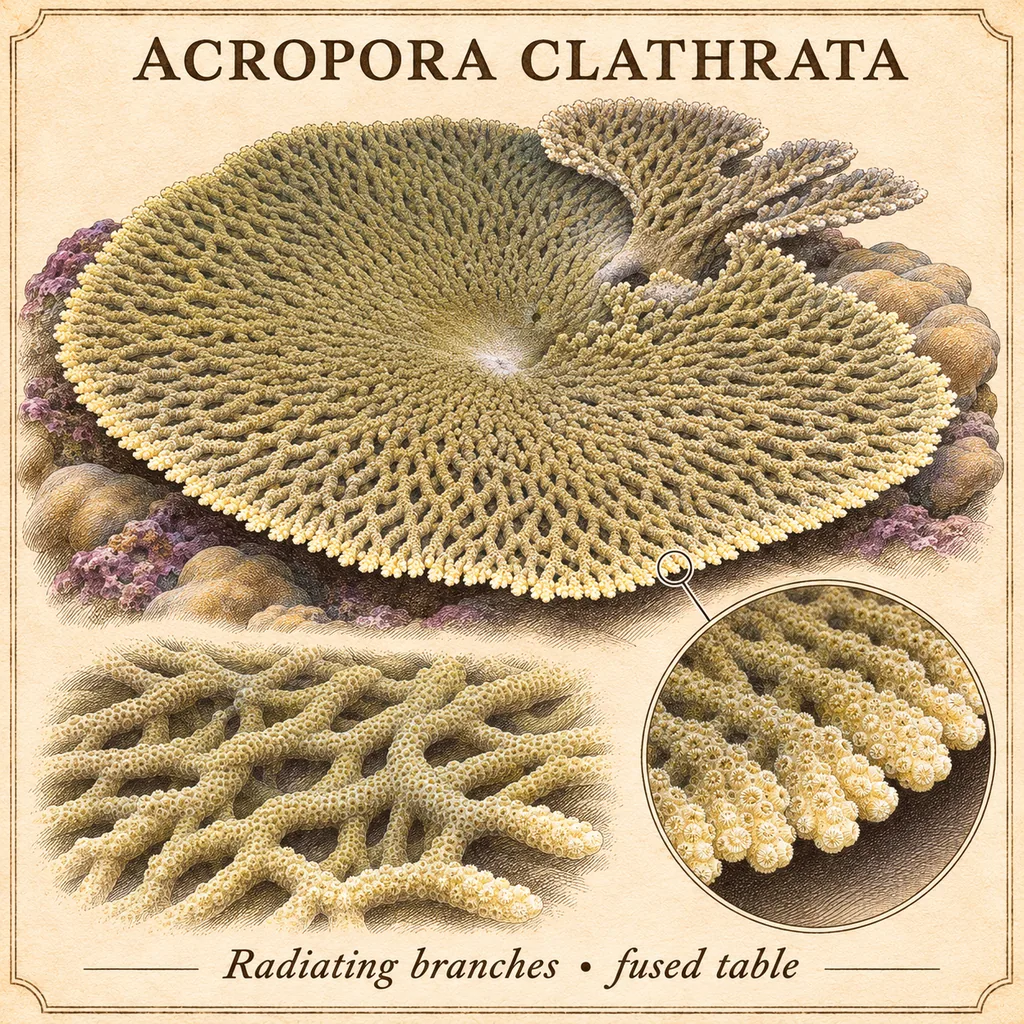
Acropora clathrata
Acropora clathrata
Same genus