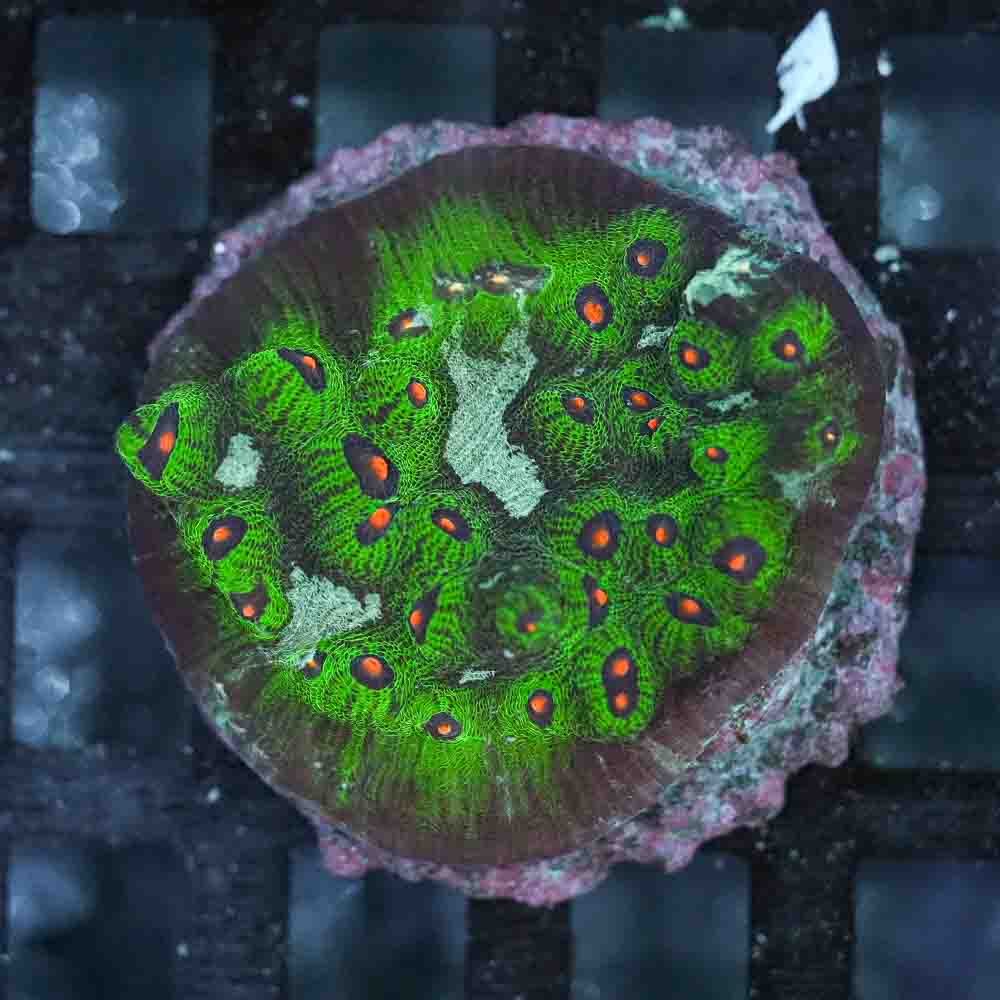
Care facts
- Care
- Intermediate
- Light
- Low
- Flow
- Medium
- Place
- Bottom
- Space
- Moderate
- Growth Rate
- Moderate
Gallery
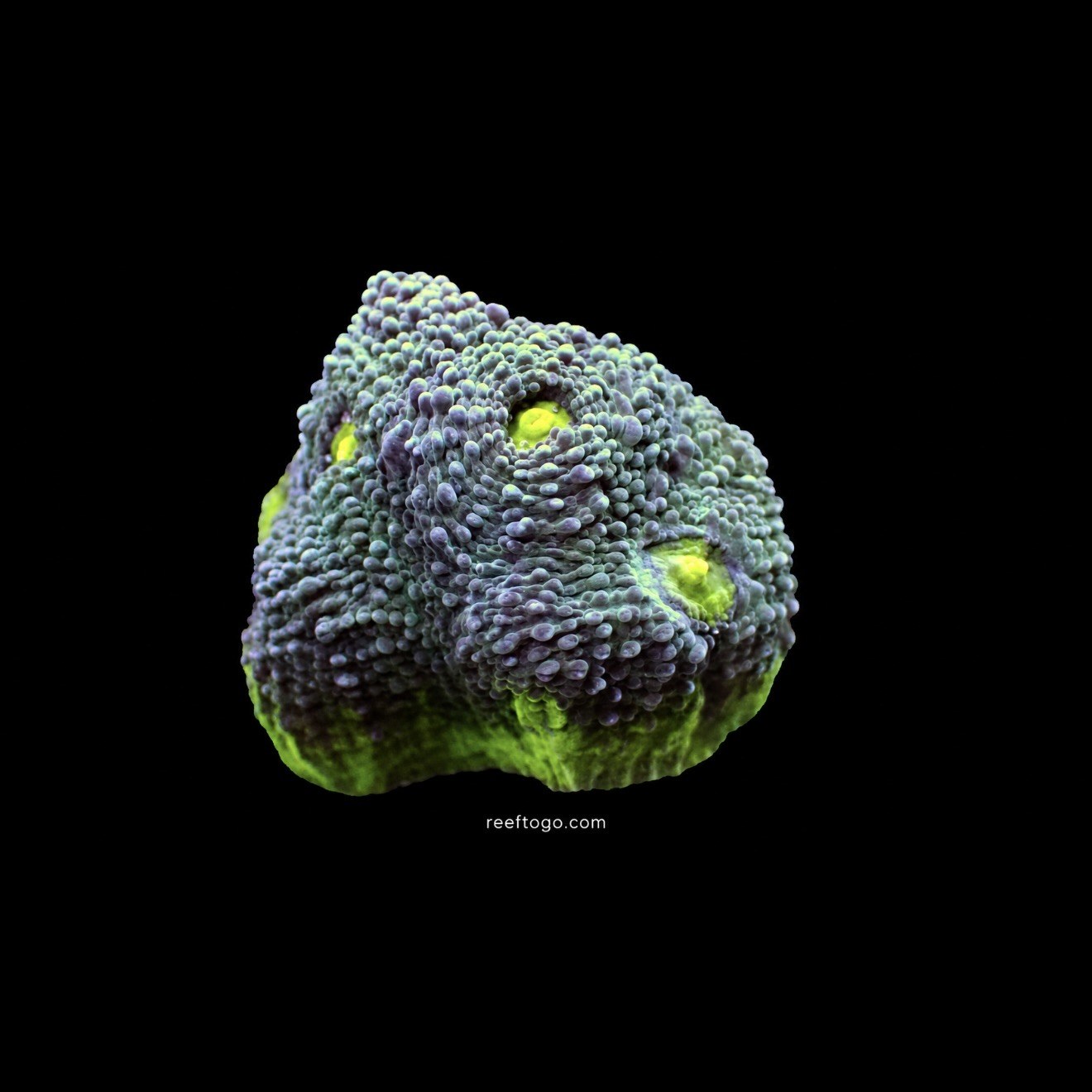
Avatar is a named chalice color form of Echinophyllia aspera, grown for the contrast between its body and its glowing eyes under blue light. Like other chalices it grows as an encrusting plate that follows the surface beneath it, budding new eyes across the surface as the rim advances. A small frag reads as a single bright disc at first; the full effect arrives as the plate widens and the eye pattern multiplies.

The entry lists low light, medium flow, bottom placement, intermediate difficulty, moderate aggression, and moderate growth. Keep it low on the sand bed or low rockwork. Low light protects the color, since strong light can wash a chalice pale and slow it down, and any move upward should happen slowly over weeks. Medium flow should be indirect. A direct stream lifts the thin tissue at the rim and stalls the growing edge, while still water lets detritus settle on the plate.
Give Avatar clearance on every side. Moderate aggression in a chalice means nighttime sweeper tentacles that reach well beyond the daytime footprint and sting neighbors. Leave a few inches of open space, more as the colony spreads, and check with a flashlight after lights-out before trusting a tight placement. Few placement mistakes in reef keeping happen as quietly as a chalice sting discovered weeks later.
Feed it at night. Chalices extend feeder tentacles after dark and take fine meaty coral food or powdered food settled onto the eyes once or twice a week. Regular feeding supports new eyes and steadier rim growth. Hold alkalinity stable in the 8 to 10 dKH range and avoid large swings, since chalices show instability first at the rim as recession or a stalled edge. Stable water, low light, and night feeding cover most of what this coral asks for.
Growth is moderate for the type, measured in rim advance and new eyes rather than height. A settled colony encrusts outward and can eventually drape over edges and down rock faces. Fragging involves cutting through skeleton and tissue with a saw, and cut pieces heal best kept low and shaded. Common pitfalls are placing a chalice in light meant for SPS, parking it within sweeper range of a favorite neighbor, and moving it often. Chalices sulk after moves and take time to resume growth, so pick a spot with room and leave it there.
Field notes — what keepers report
- Nighttime reach is the warning chalice keepers repeat most. Reports describe sweeper tentacles found only on a flashlight check, sometimes blamed after the fact for damage to a neighbor that looked safely distant by day. Other keepers with isolated placements report never seeing sweepers, and the difference is usually how much open space the colony has around it.
- Color reports divide by lighting. Keepers under blue-heavy, lower light describe strong eye contrast, while keepers under brighter or whiter light describe the same type of chalice going pale and flat. Moving a frag lower is the fix most often reported, with color returning gradually over the following weeks rather than days.
- Feeding reports lean positive. Keepers who target-feed at night describe plumper eyes and a faster-advancing rim, while keepers who never feed describe colonies that hold steady without much growth. Both groups describe the coral as durable once placed well, with stability valued above any feeding schedule.

Field Notes
Related species

Dragon ball chalice
Echinophyllia aspera
Same genus

Mars chalice
Echinophyllia aspera
Same genus

Miami hurricane chalice
Echinophyllia aspera
Same genus
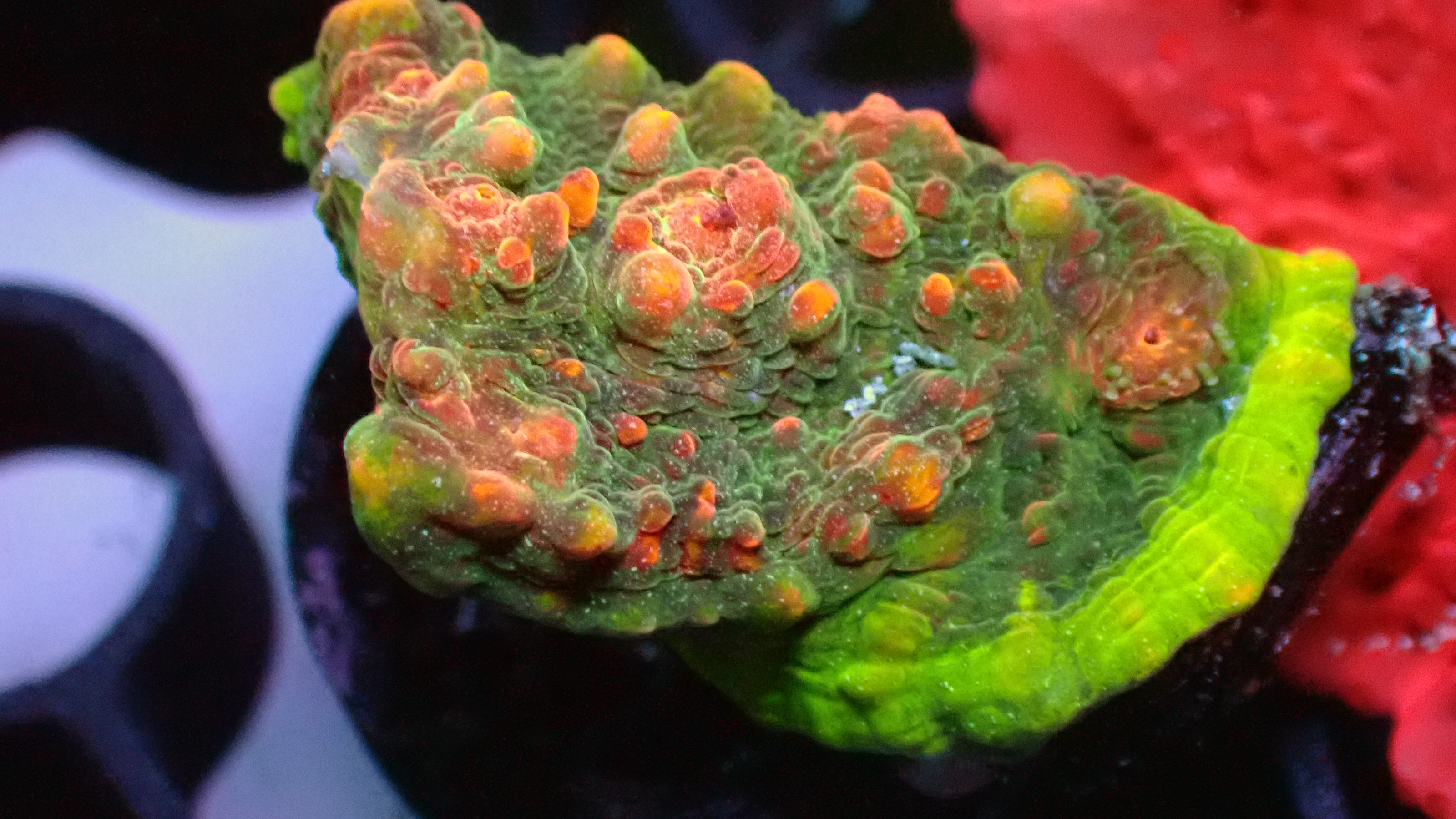
Area 51 chalice
Echinophyllia sp
Same genus
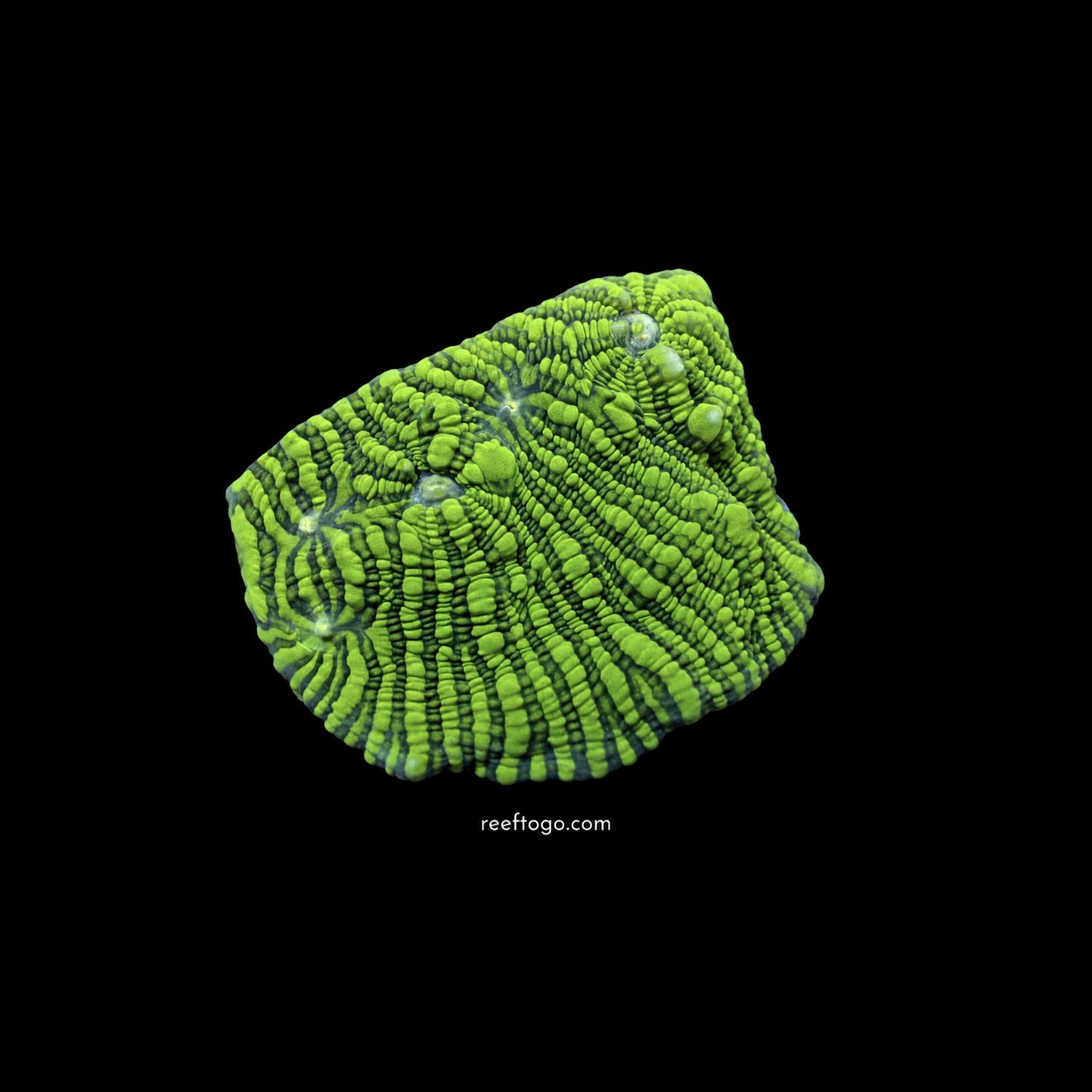
Convict chalice
Echinophyllia sp
Same genus

Space invader chalice
Echinophyllia sp.
Same genus
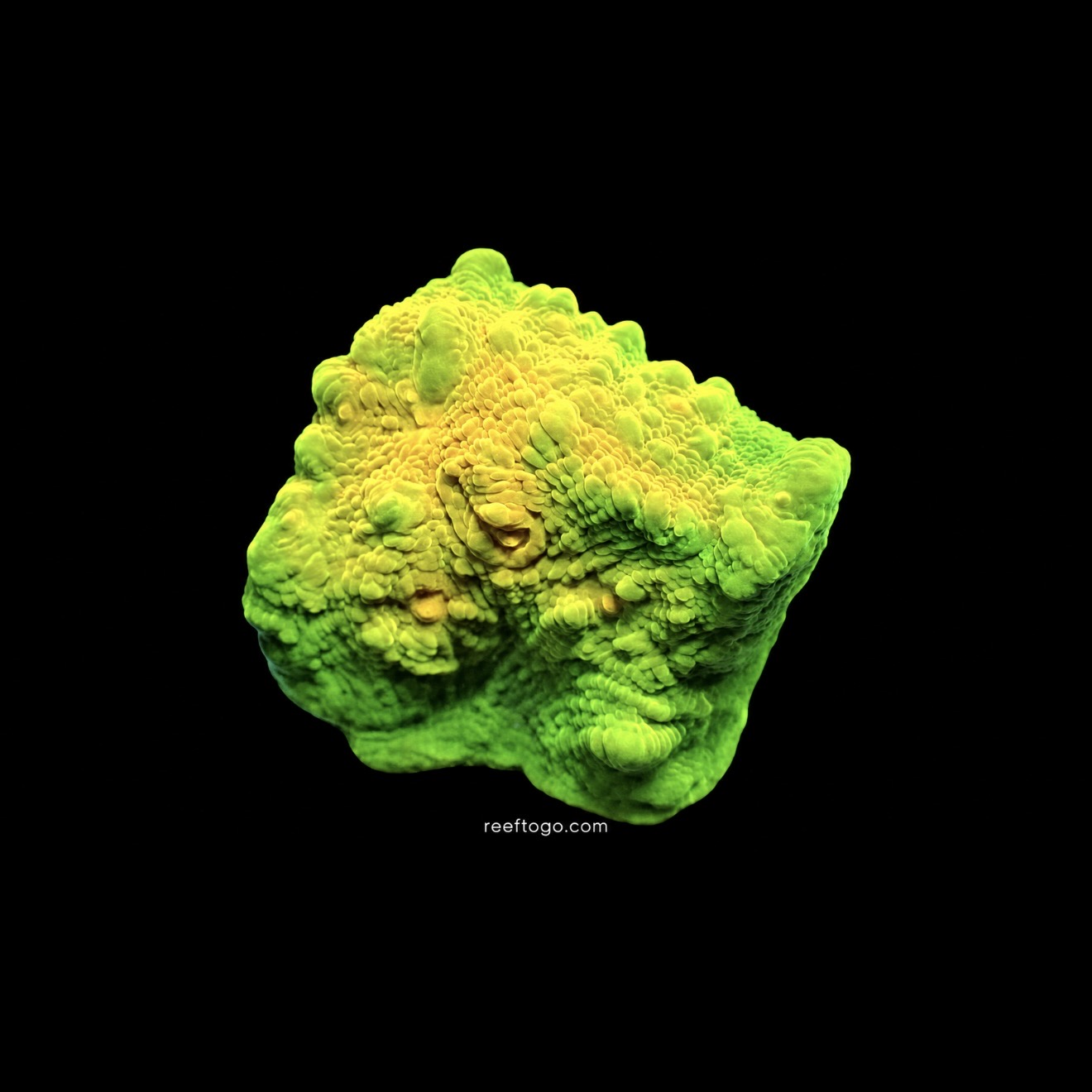
Yellow lambo chalice
Echinophyllia sp
Same genus
Blue boobie chalice
Echinophyllia sp.
Same genus